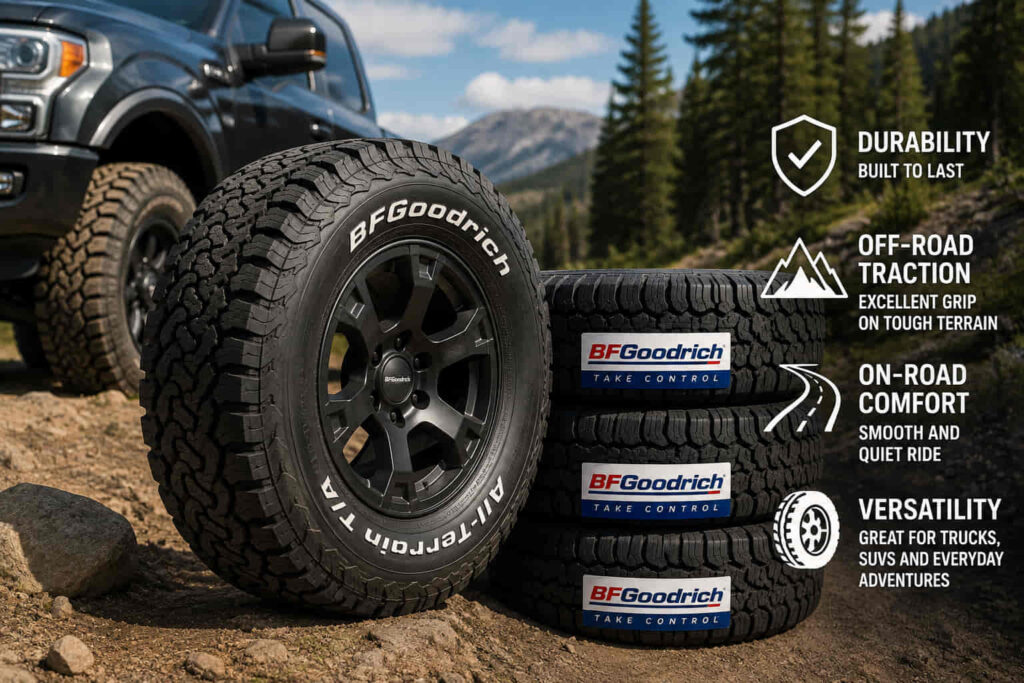
BFGoodrich tires are considered a strong choice for drivers who need durable tires with reliable traction, especially for trucks, SUVs, and vehicles used in demanding driving conditions. The brand has built a reputation around combining everyday usability with rugged performance, but whether BFGoodrich tires are good depends on the vehicle type, driving environment, and the performance characteristics a driver needs.
BFGoodrich is known for producing tires that focus on durability, traction, and versatility. The brand is particularly recognized in the truck and off-road segments, where tire strength and grip are critical factors. Products such as all-terrain and mud-terrain tires have helped establish BFGoodrich as a popular choice among SUV owners, pickup truck drivers, and outdoor enthusiasts.
However, a high-quality tire is not automatically the best choice for every driver. A tire designed for off-road capability may provide different levels of comfort, noise control, and fuel efficiency compared with a tire designed primarily for highway driving. Understanding the intended use of each tire category is essential when evaluating BFGoodrich.
BFGoodrich also has a strong connection with Michelin, which influences the brand’s engineering resources and market position. However, BFGoodrich maintains its own identity and focuses on delivering specific performance advantages for drivers who need dependable tires.
This guide explains BFGoodrich tire quality, durability, performance, advantages, limitations, and whether BFGoodrich tires are worth buying for different types of vehicles.
Who Makes BFGoodrich Tires?
BFGoodrich Tires is a tire brand owned by Michelin, one of the world’s major tire manufacturers, while maintaining its own product identity and market positioning. Understanding who makes BFGoodrich tires helps explain why the brand is widely recognized for durability, performance, and specialized tire applications.
BFGoodrich has a long history in the tire industry and developed its reputation through products focused on strength, traction, and reliability. After becoming part of Michelin, BFGoodrich gained access to broader engineering resources, manufacturing expertise, and global technology development while continuing to operate as a distinct brand.
The relationship between BFGoodrich and Michelin does not mean that every BFGoodrich tire is identical to a Michelin tire. The two brands serve different market segments and focus on different consumer needs. Michelin is often positioned around premium comfort, efficiency, and advanced tire technology, while BFGoodrich has developed a stronger identity in areas such as truck tires, all-terrain tires, and off-road performance.
This distinction is important because tire quality depends on the purpose behind the product. A BFGoodrich all-terrain tire is engineered for different priorities compared with a Michelin touring tire. The former may prioritize durability and traction on mixed surfaces, while the latter may focus more heavily on comfort and fuel efficiency.
For example, a pickup truck owner who regularly drives on gravel roads or outdoor trails may find BFGoodrich’s product philosophy more suitable than a tire designed primarily for luxury highway driving.
How Durable Are BFGoodrich Tires?
BFGoodrich tires are known for strong durability, especially in truck, SUV, and off-road applications where resistance to wear and damage is a major requirement. The brand’s reputation is built around producing tires that can handle demanding conditions while maintaining reliable performance over time.
Durability in a tire depends on several factors, including tread design, rubber compounds, sidewall construction, vehicle weight, driving habits, and maintenance. BFGoodrich emphasizes these areas through designs that target drivers who need stronger protection against rough surfaces, uneven terrain, and frequent use under challenging conditions.
One of the brand’s strongest areas is all-terrain performance. Tires such as the BFGoodrich All-Terrain T/A series are popular because they provide a balance between highway usability and off-road capability. Features such as reinforced construction and aggressive tread patterns help these tires handle gravel, dirt, mud, and other demanding surfaces more effectively than standard highway tires.
However, durability does not mean every BFGoodrich tire will last longer in every situation. An aggressive off-road tire may experience different wear characteristics compared with a highway-focused tire because its tread design prioritizes traction rather than maximum fuel efficiency or quiet operation.
For example, a driver using a BFGoodrich all-terrain tire on a pickup truck for commuting and weekend outdoor activities may benefit from its stronger construction. A driver using the same tire mainly on smooth highways may not fully utilize its durability advantages.
Read more: Are Studded Tires Worth It
Are BFGoodrich Tires Good for Trucks and SUVs?
BFGoodrich tires are especially well suited for trucks and SUVs because many of the brand’s most recognized products are designed around durability, traction, and performance on challenging surfaces. The brand has developed a strong reputation among pickup truck owners, Jeep drivers, and outdoor enthusiasts who need tires that can handle both daily driving and more demanding environments.
Truck and SUV tires often require stronger construction because these vehicles are heavier and may experience higher loads than standard passenger cars. BFGoodrich addresses these needs through tire designs that focus on sidewall strength, tread durability, and improved traction across different surfaces.
The brand’s all-terrain tires are particularly popular because they provide a balance between highway driving and off-road capability. Drivers can use these tires for normal commuting while still having additional traction when traveling on gravel roads, dirt trails, mud, or uneven terrain. This versatility is one reason BFGoodrich has become strongly associated with adventure and off-road driving.
However, the ideal BFGoodrich tire depends on how the vehicle is used. A driver who mainly drives on highways may benefit from a less aggressive tire designed for comfort and efficiency, while someone who frequently explores rough terrain may prefer a more durable all-terrain or mud-terrain option.
For example, a Jeep owner who regularly travels through trails and unpaved roads may value the traction and protection of a BFGoodrich off-road tire. In contrast, an SUV owner who only drives in urban areas may prioritize a quieter tire designed more specifically for pavement.
How Do BFGoodrich Tires Perform on Different Road Conditions?
BFGoodrich tires generally provide strong performance across different road conditions, but their effectiveness depends on the specific tire model and the environment where it is used. The brand offers multiple tire categories, meaning performance characteristics can vary significantly between highway, all-terrain, and mud-terrain designs.
On dry pavement, many BFGoodrich tires provide stable handling and predictable steering response. Their tread designs are engineered to maintain vehicle control during everyday driving, making them suitable for commuting and highway use. However, more aggressive off-road tires may produce additional road noise compared with tires designed exclusively for street driving.
On wet roads, BFGoodrich tires are designed to provide traction through tread patterns that help move water away from the contact area. This reduces the risk of losing grip during rain, although performance depends on the tire’s age, tread depth, and specific design.
In snow and off-road environments, BFGoodrich often demonstrates its strongest advantages. Tires developed for trucks and SUVs typically feature deeper tread patterns and stronger construction that help maintain traction on loose surfaces such as snow, dirt, gravel, and mud.
The trade-off is that specialized capability often comes with compromises. An aggressive all-terrain or mud-terrain tire may not deliver the same level of quietness, fuel efficiency, or smooth ride as a touring tire designed only for highways.
For example, a driver who frequently switches between paved roads and outdoor terrain may find BFGoodrich provides a useful balance. A driver seeking the quietest possible highway experience may prefer a tire designed specifically for comfort rather than versatility.
What Are the Advantages of BFGoodrich Tires?
The main advantages of BFGoodrich tires are durability, strong traction, off-road capability, and a wide range of products designed for trucks, SUVs, and performance-oriented drivers. These characteristics have helped BFGoodrich build a strong reputation among consumers who need tires that can handle more demanding driving conditions.
One of the biggest strengths of BFGoodrich is its focus on traction. Many BFGoodrich tire models are developed with tread designs that improve grip on loose surfaces such as dirt, gravel, mud, and snow. This makes the brand especially valuable for drivers who regularly travel beyond standard paved roads or need additional confidence in changing conditions.
Another advantage is construction strength. BFGoodrich tires, particularly truck and all-terrain models, are designed to handle heavier vehicle loads and more aggressive use. Reinforced sidewalls, durable tread compounds, and strong internal construction help these tires resist damage when driving over rough surfaces.
The brand also benefits from strong recognition in the off-road community. Products such as the BFGoodrich All-Terrain and Mud-Terrain lines are widely used by Jeep, SUV, and truck owners because they provide a combination of everyday usability and outdoor capability.
For example, a pickup truck owner who uses a vehicle for commuting during the week and outdoor activities on weekends may find BFGoodrich tires provide the right balance between road performance and off-road durability.
However, the biggest advantage of BFGoodrich depends on matching the tire with the driver’s needs. A tire designed for rugged conditions delivers the most value when those capabilities are actually used.
What Are the Limitations of BFGoodrich Tires?
BFGoodrich tires have some limitations because their focus on durability and traction can create trade-offs in areas such as comfort, road noise, and price. Understanding these limitations helps buyers determine whether BFGoodrich matches their driving priorities.
One common limitation is that aggressive BFGoodrich tires, especially all-terrain and mud-terrain models, can produce more road noise than standard highway tires. The deeper tread patterns that improve off-road grip also create more contact variation with pavement, which may result in a louder driving experience.
Another consideration is pricing. BFGoodrich is not positioned as a budget tire brand, so some models cost more than basic replacement tires. The higher price reflects features such as stronger construction, specialized tread designs, and performance capabilities, but it may not provide the best value for drivers who only need simple daily transportation.
Fuel efficiency can also be affected by more aggressive tire designs. Tires with heavier construction and deeper tread patterns may create more rolling resistance compared with highway-focused tires. This difference may be noticeable for drivers who spend most of their time on smooth pavement.
The right choice depends on the intended application. For example, an off-road enthusiast may consider additional noise and cost acceptable because traction and durability are more important. A commuter who drives only on city streets may prefer a quieter and more efficient tire designed specifically for pavement use.
BFGoodrich tires are not designed to be the perfect solution for every driver. Their value comes from providing specific advantages for people who need stronger performance in demanding conditions.