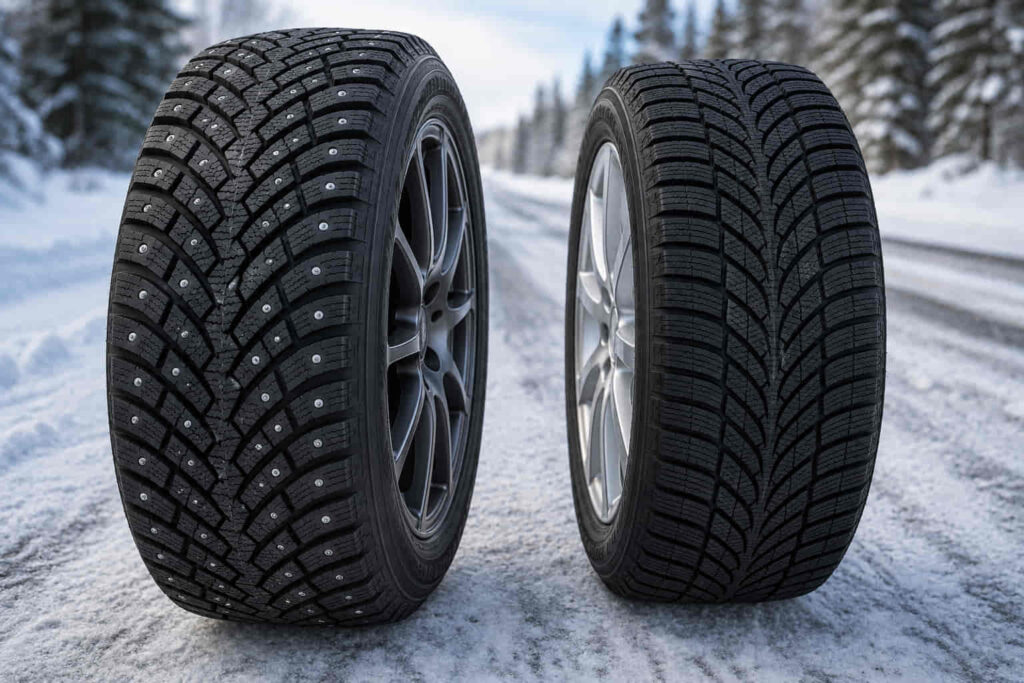
Studded tires are worth considering for drivers who regularly face icy roads, packed snow, and extreme winter conditions because metal studs provide additional traction on frozen surfaces. However, they are not the ideal choice for every driver because their benefits depend heavily on climate, road conditions, driving habits, and local regulations.
Unlike standard all-season tires, studded tires are specifically designed for winter environments where maintaining control on ice is the biggest challenge. Small metal studs embedded in the tread create additional contact with hard ice, helping improve traction when normal rubber compounds struggle to maintain grip.
The value of studded tires comes from solving a specific problem rather than providing better performance in every situation. Drivers living in regions with frequent freezing temperatures, icy roads, or mountain conditions may experience significant safety benefits. In contrast, drivers in areas with mild winters or mostly clear roads may not gain enough advantage to justify the additional cost, noise, and limitations.
Choosing whether studded tires are worth it requires understanding how they work, where they perform best, and what compromises they create. This guide explains the benefits, drawbacks, legal considerations, and situations where studded tires provide the most value compared with other winter tire options.
What Are Studded Tires and How Do They Work?
Studded tires are winter tires equipped with small metal studs embedded in the tread that improve traction by creating additional grip on icy and frozen surfaces. Unlike traditional winter tires that rely mainly on specialized rubber compounds and tread patterns, studded tires use physical contact between metal studs and ice to increase control in extreme winter conditions.
The metal studs are designed to penetrate the thin surface layer of ice, creating additional friction between the tire and the road. This mechanical grip helps reduce slipping during acceleration, improves braking control, and provides more confidence when cornering on frozen roads. The advantage becomes especially noticeable on hard-packed ice where even high-quality winter rubber may struggle to generate enough traction.
Studded tires still use winter-specific rubber compounds that remain flexible at low temperatures. The combination of soft winter rubber, aggressive tread design, and metal studs allows these tires to perform in environments where roads frequently remain covered with ice or compacted snow.
However, the technology is specialized for specific conditions. Studded tires do not provide the same advantages on dry pavement because the metal studs have less opportunity to interact with the road surface. In some situations, they may create more noise and deliver a less refined driving experience compared with non-studded winter tires.
For example, a driver in a northern region with frequent freezing temperatures and icy roads may benefit significantly from studded tires, while a driver who mainly encounters cold but dry winter roads may receive fewer advantages.
Are Studded Tires Better on Ice and Snow?
Studded tires generally provide better performance on ice than most other tire types because the metal studs create mechanical traction that improves grip on frozen surfaces. Their biggest advantage appears when roads become icy, slippery, and difficult for conventional tires to handle.
On black ice and hard-packed snow, the road surface often becomes extremely smooth, reducing the ability of rubber compounds alone to generate sufficient friction. The metal studs in studded tires help break through this slippery layer, allowing the tire to maintain stronger contact with the surface. This can improve acceleration, braking response, and vehicle stability.
In snowy conditions, studded tires also provide strong performance, but the advantage depends on the type of snow. Deep loose snow is usually influenced more by tread design and tire shape, while frozen snow and icy surfaces are where studs provide the greatest benefit. This distinction explains why studded tires are especially popular in areas with long winters and frequent ice formation.
The performance difference is most noticeable during emergency situations. A vehicle equipped with studded tires may have improved control when braking or changing direction on icy roads because the studs help maintain traction when the surface offers very little grip.
For example, drivers living in mountainous areas where roads frequently freeze overnight may experience a meaningful safety improvement from studded tires. However, drivers in cities where roads are quickly cleared and treated may find that high-quality studless winter tires provide sufficient performance with fewer compromises.
Read more: Who Makes Cooper Tires
What Are the Main Benefits of Studded Tires?
The main benefit of studded tires is their ability to provide stronger traction on icy roads where traditional tires may lose grip. The metal studs create additional contact points with frozen surfaces, helping drivers maintain better control when road conditions become extremely slippery.
The biggest advantage appears in regions where winter conditions frequently include ice, freezing temperatures, and compacted snow. In these environments, maintaining traction is more important than achieving maximum comfort or quiet operation. Studded tires help improve vehicle stability because the studs can grip the ice surface and reduce the amount of tire slip during acceleration and braking.
Another important benefit is improved driver confidence in severe winter conditions. When roads become unpredictable due to black ice or repeated freeze-thaw cycles, having additional traction can help drivers maintain better control during emergency situations. This is especially valuable for vehicles traveling on rural roads, mountain routes, or areas where snow and ice remain for long periods.
Studded tires are also useful because they provide consistent winter performance without depending only on chemical grip from rubber compounds. As temperatures drop and surfaces become harder, the mechanical interaction between studs and ice continues to provide an advantage.
For example, a driver who regularly travels through icy mountain passes may benefit more from studded tires than someone who only occasionally experiences light snowfall. The value comes from matching the tire technology with the environment where it will be used most often.
What Are the Drawbacks of Studded Tires?
The main drawbacks of studded tires include increased road noise, limited usefulness outside severe winter conditions, higher costs, and restrictions in some regions. While studs provide significant benefits on ice, they also create compromises that make them unsuitable for every driver.
One common disadvantage is increased noise. The metal studs repeatedly contact the road surface, creating a louder driving experience, especially on dry pavement. Drivers who prioritize a quiet cabin environment may find studded tires less comfortable compared with studless winter tires.
Studded tires can also provide less versatility when winter conditions are mild. On dry or wet pavement without ice, the advantage of metal studs becomes much smaller, while the disadvantages such as noise and reduced refinement remain. This means drivers in areas with occasional snow but limited ice may not receive enough benefit from using them.
Another limitation is that studded tires may be restricted by local regulations. Some regions limit their use during certain months or prohibit them entirely because metal studs can contribute to road surface wear. Drivers need to check local laws before purchasing and installing studded tires.
Cost is another factor because many drivers need a separate set of winter tires and storage for seasonal changes. For someone who experiences only occasional winter conditions, the additional expense may not provide enough value.
For example, a driver in a northern area with frequent ice storms may accept the extra noise and cost because safety benefits outweigh the disadvantages. However, someone in a region with mostly wet winter roads may find a high-quality studless winter tire to be a more practical choice.
Are Studded Tires Better Than Studless Winter Tires?
Studded tires and studless winter tires are both designed for cold-weather driving, but they provide different advantages depending on road conditions and driver priorities. Studded tires typically perform better on hard ice because the metal studs create mechanical grip, while studless winter tires provide a more balanced experience across different winter surfaces.
The main advantage of studded tires appears when roads are covered with thick ice or frozen surfaces. The metal studs physically interact with the ice, helping improve traction during acceleration, braking, and cornering. This makes them especially effective in regions where icy roads are common throughout the winter season.
Studless winter tires rely on advanced rubber compounds and specialized tread designs instead of metal components. These technologies allow the tire to remain flexible at low temperatures and provide strong grip on snow, cold pavement, and wet winter roads. They are often preferred by drivers who experience changing conditions rather than constant ice.
The difference becomes clearer when considering the driving environment. A driver in a rural northern area with frequent ice buildup may benefit from studded tires because maximum ice traction is the priority. A driver in an urban area where roads are regularly cleared may prefer studless winter tires because they provide quieter operation and better versatility.
Neither option is universally better. Studded tires are specialized tools for severe icy conditions, while studless winter tires offer broader winter capability with fewer compromises. The best choice depends on the type of winter roads a driver encounters most frequently.
When Are Studded Tires Worth Buying?
Studded tires are worth buying when a driver regularly faces severe winter conditions where ice traction is more important than comfort, noise, or year-round versatility. Their value increases as the frequency and severity of icy road conditions increase.
Drivers who live in areas with long winters, frequent freezing temperatures, and repeated ice formation are the most likely to benefit from studded tires. These conditions allow the metal studs to provide a meaningful performance advantage that standard winter tires may not fully match.
Studded tires are also valuable for specific driving situations, such as mountain roads, remote areas, and routes where snow removal or road treatment is limited. In these environments, maintaining vehicle control can be more challenging because drivers encounter untreated ice and compacted snow more often.
However, studded tires may not be worth the investment for drivers who mainly experience cold temperatures with occasional snow. If roads are usually dry, wet, or quickly cleared after snowfall, the additional traction benefit may not justify the extra cost, noise, and seasonal limitations.
For example, a driver who commutes daily through icy rural roads during winter may gain significant safety benefits from studded tires. In contrast, a driver in a city with moderate winters and frequent road maintenance may find premium studless winter tires provide enough performance with greater comfort.
The decision should be based on actual driving conditions rather than how severe winter feels in general. Studded tires provide the most value when their specialized ice-gripping capability is used frequently.
Should You Buy Studded Tires for Winter Driving?
Studded tires are a valuable option for drivers who regularly face severe winter conditions, especially icy roads where maximum traction is the highest priority. Their metal studs provide a unique advantage by creating mechanical grip on frozen surfaces, making them particularly effective in environments where black ice and compacted snow are common.
However, studded tires are not the right choice for every driver. Their benefits come with trade-offs, including increased road noise, higher ownership costs, reduced versatility on clear pavement, and possible legal restrictions depending on location. Drivers who experience mild winters or mostly drive on treated roads may find studless winter tires provide a better balance of performance and comfort.
The decision depends on understanding the conditions where the vehicle is used most often. A driver in a region with frequent ice, freezing temperatures, and untreated winter roads may receive significant safety benefits from studded tires. A driver in an area with occasional snow and mostly clear roads may not gain enough advantage to justify their limitations.
Studded tires should be viewed as a specialized winter tool rather than a universal upgrade. When matched with the right environment, driving habits, and local regulations, they can provide valuable traction and confidence during challenging winter conditions. Choosing the correct winter tire ultimately depends on whether the driver needs maximum ice performance or a more balanced winter driving experience.