Your GM vehicle was running normally until you cleaned the throttle body, replaced the idle air control valve, or disconnected the battery. Now the engine idles too high, drops too low, surges at stoplights, or even stalls when you shift into gear. In many cases, the new part is not defective. The engine control module may simply need time to relearn the correct idle settings.
The GM IAC reset procedure helps the computer reestablish the proper airflow needed to keep the engine running smoothly when your foot is off the accelerator. However, the correct process can vary depending on the vehicle model, engine, model year, and throttle system. Older GM vehicles often use a separate idle air control valve, while newer models may rely on an electronic throttle body instead.
This guide explains the GM IAC reset procedure step by step, including methods that do not require a scan tool. You will also learn how to identify your throttle system, when an idle relearn is necessary, how long the process may take, and what to check if the engine still runs poorly afterward.
Following the correct procedure can help you avoid unnecessary parts replacement, repeated repairs, wasted money, and the frustration of an unstable idle.
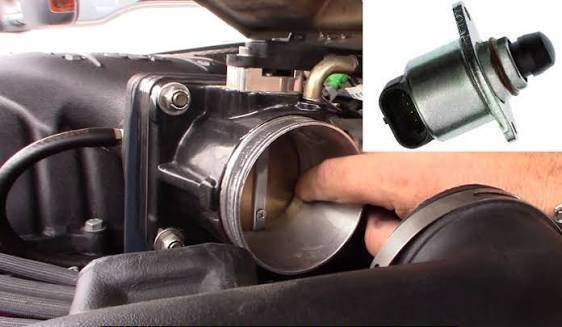
What Is the GM Idle Air Control (IAC) Valve?
The Idle Air Control (IAC) valve is an electronically controlled component designed to regulate the amount of air that bypasses the throttle plate when the accelerator pedal is not being pressed. By adjusting this airflow, the engine control module (ECM) or powertrain control module (PCM) can maintain a stable idle speed under a variety of operating conditions.
Whenever the engine is idling, the amount of air entering the intake manifold must be carefully controlled. If too much air enters the engine, the idle speed becomes excessively high. If too little air is available, the engine may idle roughly or stall altogether. The IAC valve constantly makes small adjustments to compensate for changes in engine load.
For example, when the air conditioning compressor turns on, the engine suddenly requires more torque to keep running. The ECM detects the additional load and commands the IAC valve to increase airflow, preventing the engine from stalling. Similar adjustments occur when the steering wheel is turned on vehicles equipped with hydraulic power steering or when the transmission is shifted into Drive.
Many older GM vehicles, including numerous Chevrolet, GMC, Buick, Cadillac, Pontiac, Oldsmobile, and Saturn models, rely on a dedicated IAC valve mounted directly on the throttle body. The valve contains a movable pintle that opens or closes an air bypass passage according to commands from the ECM.
It is important to understand that not every GM vehicle uses an external IAC valve. Most modern GM vehicles equipped with Electronic Throttle Control (ETC) regulate idle speed by slightly opening or closing the electronic throttle plate instead of using a separate idle air control valve. Because of this design difference, newer vehicles often require a throttle relearn procedure rather than a traditional IAC reset.
Before attempting any idle relearn procedure, identify whether your vehicle is equipped with a conventional IAC valve or an electronic throttle body. Using the wrong procedure can lead to unnecessary troubleshooting and may not resolve the idle issue.
IAC Reset vs. Idle Relearn vs. Throttle Relearn
One of the biggest sources of confusion among GM owners is the terminology used to describe idle calibration procedures. Many online guides use the terms “IAC reset,” “idle relearn,” and “throttle relearn” interchangeably, even though they refer to different processes.
An IAC reset generally applies to vehicles equipped with a traditional idle air control valve. After replacing the valve, cleaning the throttle body, disconnecting the battery, or clearing adaptive memory, the ECM may need to relearn the correct IAC position to maintain a smooth idle.
An idle relearn is a broader process in which the ECM recalculates the airflow required to keep the engine running at the target idle speed. During this learning period, the computer monitors engine temperature, engine load, battery voltage, accessory operation, and several sensor inputs before storing new adaptive values.
A throttle relearn is commonly performed on vehicles equipped with electronic throttle control. Since these vehicles no longer use a separate IAC valve, the ECM controls idle speed by making extremely small adjustments to the throttle plate. After cleaning or replacing the throttle body, the computer may need to relearn the minimum airflow position to prevent unstable idle conditions.
Although all three procedures are intended to restore normal idle operation, they are not interchangeable. Performing an IAC reset on a vehicle that actually requires a throttle relearn will rarely solve the problem. Likewise, replacing an IAC valve without addressing vacuum leaks, carbon buildup, or sensor faults may leave the engine idling poorly even after the relearn procedure has been completed.
The safest approach is to determine which throttle system your vehicle uses before beginning any reset procedure. Consulting the factory service information or repair manual for your specific GM model can help ensure that the correct procedure is followed.
When Should You Perform a GM IAC Reset?
A GM IAC reset should only be performed when there is a valid reason for the ECM to relearn its idle strategy. Resetting the system unnecessarily will not fix mechanical or electrical problems and may temporarily worsen idle quality while the computer adapts to new operating conditions.
One of the most common situations is after replacing the idle air control valve. Even if the replacement part is installed correctly, the ECM may still contain adaptive values that were learned with the old valve. Allowing the computer to establish new idle parameters helps restore stable engine operation.
Cleaning the throttle body is another common reason for an idle relearn. Carbon deposits gradually accumulate around the throttle plate and idle air passages. Over time, the ECM compensates for these restrictions by adjusting airflow. Once the deposits are removed, the engine may receive more air than expected, causing a higher-than-normal idle until new values are learned.
Disconnecting or replacing the battery can also erase adaptive memory on many GM vehicles. After power is restored, the ECM may require several minutes of idling and normal driving before idle speed becomes fully stabilized.
A reset may also be recommended after replacing the throttle body, repairing major intake components, correcting vacuum leaks, or updating the engine control module software. In each of these situations, the airflow characteristics of the engine may have changed enough to require a new idle calibration.
Drivers often notice symptoms indicating that an idle relearn may be necessary. These include unusually high idle speed after startup, fluctuating RPM at stoplights, engine stalling when shifting into gear, rough idle after replacing the IAC valve, or hesitation immediately after disconnecting the battery.
However, an idle relearn should never be used as a substitute for proper diagnosis. If the vehicle has a vacuum leak, damaged wiring, a faulty sensor, low battery voltage, or an internal engine problem, the reset procedure alone will not eliminate the underlying cause. Identifying and repairing these faults before performing the relearn will produce far more reliable results and prevent repeated idle problems.
Before You Begin the GM IAC Reset Procedure
Taking a few minutes to inspect your vehicle before performing an idle relearn can save hours of unnecessary troubleshooting later. Many failed reset attempts are not caused by the relearn procedure itself but by underlying mechanical or electrical problems that prevent the engine control module from establishing a stable idle.
The first step is identifying your throttle system. Older GM vehicles often use a cable operated throttle body with a dedicated idle air control valve mounted on the side. Newer models equipped with Electronic Throttle Control regulate idle speed using the throttle plate itself and do not have a separate IAC valve. Knowing which system your vehicle uses will determine the correct relearn procedure.
Next, inspect the battery condition. Low battery voltage can interfere with communication between the ECM and engine actuators, resulting in an incomplete relearn. If the battery is weak or recently discharged, charge or replace it before continuing.
Carefully examine the throttle body for excessive carbon buildup. Heavy deposits around the throttle plate can restrict airflow and prevent the ECM from accurately calculating the correct idle position. If necessary, clean the throttle body using an approved throttle body cleaner before attempting the relearn.
Inspect all intake hoses, vacuum lines, and electrical connectors. A disconnected vacuum hose, damaged intake duct, or loose IAC connector can produce symptoms that closely resemble a failed idle relearn. Even a small vacuum leak may cause the engine to idle significantly higher than expected.
If the Check Engine Light is illuminated, connect an OBD-II scan tool and retrieve any stored diagnostic trouble codes before beginning the reset procedure. Faults involving the throttle position sensor, mass airflow sensor, manifold absolute pressure sensor, coolant temperature sensor, or electronic throttle system should be repaired first because they can prevent the ECM from completing the learning process.
Finally, ensure the transmission is in Park or Neutral, apply the parking brake, and turn off all electrical accessories including the air conditioner, headlights, rear defroster, and audio system. Eliminating unnecessary engine load allows the ECM to learn a stable base idle under normal operating conditions.
GM IAC Reset Procedure Without a Scan Tool
Many older GM vehicles allow the idle control system to relearn without using a professional scan tool. Although the exact procedure varies by model and engine, the following method works as a general guideline for many vehicles equipped with a conventional idle air control valve.
Begin by parking the vehicle on a level surface with the transmission in Park or Neutral and the parking brake fully engaged. Turn off all electrical accessories so the engine does not have to compensate for additional loads during the learning process.
Start the engine without pressing the accelerator pedal. If the engine struggles to stay running, use only enough throttle to prevent stalling, then immediately release the pedal once the engine can idle on its own.
Allow the engine to reach normal operating temperature. This step is essential because the ECM uses coolant temperature as one of the primary inputs when calculating idle speed. Attempting to complete the relearn while the engine is still cold may produce inaccurate results.
After the engine reaches operating temperature, allow it to idle undisturbed for several minutes. Avoid revving the engine or repeatedly cycling the ignition during this period. The ECM continuously monitors engine speed and adjusts the idle air control valve until it determines the proper airflow required to maintain a steady idle.
Once the idle appears stable, turn the engine off and wait approximately thirty seconds. Restart the engine without touching the accelerator pedal and observe the idle speed. In many cases, the RPM will be noticeably smoother than during the initial startup.
The final step is completing a short road test. Drive under normal conditions for approximately ten to fifteen minutes using a combination of city streets and moderate highway speeds. Include several complete stops so the ECM can continue refining its idle strategy under different operating conditions.
When you return, allow the engine to idle for another minute. If the RPM remains stable with both the air conditioning on and off, the relearn procedure has likely been completed successfully.
GM Idle Relearn Using a Scan Tool
Some GM vehicles require a scan tool to complete the idle relearn process. This is especially common on newer models equipped with Electronic Throttle Control or vehicles that have recently received a replacement throttle body, updated ECM software, or major engine repairs.
Unlike a manual relearn, a scan tool can erase previously learned idle values and instruct the ECM to begin calculating new airflow parameters from the beginning. This method is generally faster and more accurate because it follows the manufacturer’s calibration procedure.
Begin by connecting a compatible diagnostic scanner to the vehicle’s OBD-II port. Turn the ignition on and establish communication with the engine control module. Before performing any reset, scan for diagnostic trouble codes and repair any active faults that could interfere with idle control.
Navigate to the service functions or special functions menu. Depending on the scan tool manufacturer, the procedure may be labeled Idle Learn Reset, Idle Airflow Reset, Throttle Relearn, Throttle Body Learn, or Minimum Airflow Calibration. Select the function recommended for your specific GM model.
Follow each instruction displayed on the scan tool. Some procedures require cycling the ignition several times, while others instruct the technician to start the engine and allow it to idle until the scan tool confirms that the relearn has been completed. Avoid pressing the accelerator pedal unless specifically instructed by the scan tool.
After the reset finishes, perform the recommended drive cycle. During this period, the ECM continues fine tuning idle speed under different engine loads and operating temperatures. It is normal for idle speed to fluctuate slightly during the first few minutes after the reset while adaptive values are being established.
If the idle remains unstable after completing both the scan tool procedure and the recommended drive cycle, additional diagnosis is required. Vacuum leaks, faulty sensors, wiring problems, incorrect replacement parts, or internal engine issues can all prevent the ECM from maintaining a consistent idle even after a successful relearn.
How Long Does a GM Idle Relearn Take?
One of the most common questions asked after replacing an idle air control valve or cleaning the throttle body is how long it takes for the ECM to relearn the correct idle settings. Unfortunately, there is no single answer because the relearn time varies depending on the vehicle’s model year, engine, throttle system, and the repair that was performed.
On many older GM vehicles equipped with a conventional IAC valve, the relearn process begins once the engine reaches normal operating temperature. After several minutes of uninterrupted idling, the ECM starts adjusting the IAC valve position based on engine speed, coolant temperature, electrical load, and other sensor inputs. Some vehicles may achieve a stable idle within a few minutes, while others continue making small corrections during normal driving.
Vehicles equipped with Electronic Throttle Control often require additional adaptation after the initial idle period. Even if the engine appears to idle normally immediately after a throttle relearn, the ECM may continue refining airflow calculations over multiple drive cycles. During this time, slight fluctuations in idle speed are generally considered normal as long as they gradually improve.
Driving conditions also affect how quickly the relearn completes. A proper drive cycle should include both city and highway driving, moderate acceleration, complete stops, and periods of steady cruising. These varying operating conditions allow the ECM to collect the information necessary to optimize idle control under different engine loads.
If the idle remains excessively high, unstable, or rough after multiple drive cycles, the relearn should not be repeated indefinitely. Persistent idle problems usually indicate an underlying mechanical or electrical fault rather than an incomplete learning process. At that point, inspecting the intake system, throttle body, sensors, and vacuum lines is more productive than performing another reset.
Signs the GM IAC Reset Was Successful
After completing the GM IAC reset procedure, several noticeable improvements should confirm that the relearn has been successful. While every vehicle behaves slightly differently, the engine should gradually return to smooth and predictable idle operation.
The most obvious sign is a stable idle speed. Instead of constantly rising and falling, the RPM should remain relatively steady once the engine reaches operating temperature. Small variations caused by the air conditioning compressor or other accessories are completely normal, but the engine should recover quickly without excessive surging.
Cold starts should also become more consistent. During the first few seconds after startup, the idle speed may initially be higher to help warm the engine. As coolant temperature increases, the RPM should smoothly decrease to its normal operating range without hesitation or sudden drops.
Another positive indication is improved drivability when shifting into gear. Vehicles that previously stalled or nearly stalled when moving from Park to Drive should transition much more smoothly. The ECM should compensate for the additional engine load without allowing the RPM to fall excessively.
Throttle response at low speeds often improves as well. When releasing the accelerator while approaching a stop sign or traffic light, the engine should return to idle smoothly instead of hanging at a high RPM or dropping low enough to stall.
If the vehicle was experiencing rough idle caused by incorrect adaptive values, engine vibration should be noticeably reduced after the relearn. The steering wheel, dashboard, and seats should feel smoother while the vehicle is stopped with the engine running.
Finally, a successful relearn typically occurs without new diagnostic trouble codes appearing. If the Check Engine Light remains off and the idle remains stable during several days of normal driving, the ECM has likely completed the adaptation process successfully.
Why the GM IAC Reset Procedure May Not Work
Although the reset procedure is straightforward, it cannot correct every idle problem. If the engine continues to idle poorly after completing the relearn, another issue is likely preventing the ECM from accurately controlling airflow.
One of the most common causes is a vacuum leak. Cracked vacuum hoses, leaking intake manifold gaskets, damaged throttle body gaskets, or loose intake ducts allow unmetered air to enter the engine. Because the ECM cannot accurately measure this additional airflow, idle speed often remains too high regardless of how many relearn attempts are performed.
A dirty throttle body is another frequent culprit. Even if the IAC valve has been replaced, heavy carbon deposits around the throttle plate can interfere with airflow calculations. Cleaning the throttle body thoroughly often resolves idle issues that appear to be related to the IAC valve.
Electrical problems should also be considered. Corroded connectors, damaged wiring, poor grounds, or insufficient battery voltage may prevent the IAC valve or electronic throttle body from responding correctly to ECM commands. These faults can produce intermittent idle problems that are difficult to diagnose without proper testing.
Sensor failures are another possibility. Incorrect readings from the mass airflow sensor, manifold absolute pressure sensor, throttle position sensor, or engine coolant temperature sensor can cause the ECM to calculate incorrect idle airflow. In these situations, replacing the IAC valve will not solve the underlying issue.
Some replacement parts can also create unexpected problems. Low quality aftermarket IAC valves may not match the original equipment specifications, resulting in improper pintle movement or inconsistent airflow. Whenever possible, using high quality OEM or reputable aftermarket components helps minimize compatibility issues.
Finally, remember that not every idle complaint is caused by the idle control system. Fuel delivery problems, ignition misfires, low engine compression, timing issues, and exhaust restrictions can all produce rough idle symptoms. If the engine continues to run poorly after confirming that the idle relearn completed successfully, a comprehensive diagnostic inspection is recommended instead of repeating the reset procedure.
Common Mistakes to Avoid During a GM IAC Reset
Many idle problems persist not because the relearn procedure was performed incorrectly, but because critical diagnostic steps were skipped beforehand. Understanding these common mistakes can save both time and money while preventing unnecessary parts replacement.
One of the biggest mistakes is assuming every GM vehicle uses the same idle relearn procedure. General Motors has produced numerous engine platforms over the years, and idle control strategies vary significantly between older cable operated throttle bodies and modern electronic throttle systems. Following a procedure intended for a different vehicle may produce little or no improvement.
Another common mistake is replacing the IAC valve before confirming that it has actually failed. High idle speed, rough idle, or stalling can also be caused by vacuum leaks, a dirty throttle body, faulty sensors, or damaged wiring. Replacing a perfectly functional IAC valve will not correct these underlying issues.
Many DIY mechanics also overlook the importance of cleaning the throttle body. Carbon deposits around the throttle plate can dramatically alter airflow characteristics, making it impossible for the ECM to calculate an accurate idle position. Cleaning the throttle body before beginning the relearn often improves idle quality immediately.
Pressing the accelerator repeatedly during the relearn process is another frequent error. The ECM expects the engine to idle under controlled conditions while adaptive values are being calculated. Frequent throttle input interrupts this process and may force the computer to restart portions of the learning cycle.
Ignoring battery condition can also create unnecessary problems. A weak battery or unstable charging system may cause inconsistent sensor readings or actuator performance, preventing the ECM from completing the relearn successfully.
Some owners repeatedly disconnect the battery whenever idle problems return. While this temporarily clears adaptive memory on certain vehicles, it does not repair the actual cause of the problem. In many cases, repeated resets simply force the ECM to relearn incorrect operating conditions.
Finally, avoid assuming that every rough idle is related to the IAC system. Engine vacuum leaks, fuel injector problems, ignition failures, timing issues, low compression, and electronic throttle faults can all produce symptoms that closely resemble a defective idle air control valve.
Frequently Asked Questions
Can I reset a GM IAC valve without a scan tool?
Yes. Many older GM vehicles equipped with a traditional idle air control valve can complete an idle relearn without a scan tool. The engine typically needs to reach normal operating temperature and idle undisturbed before a short drive cycle is performed. However, some newer vehicles require a manufacturer specific scan tool to complete the relearn.
Does disconnecting the battery reset the IAC valve?
Disconnecting the battery may erase adaptive memory stored by the ECM on some vehicles, but it does not repair mechanical faults or guarantee a successful idle relearn. If the underlying problem is caused by a vacuum leak or faulty sensor, the idle issue will usually return.
Why is my GM vehicle still idling high after replacing the IAC valve?
High idle after IAC replacement is commonly caused by vacuum leaks, carbon buildup inside the throttle body, incorrect installation, sensor faults, or an incomplete relearn procedure. The replacement valve itself is not always the source of the problem.
How long should I let the engine idle during the relearn?
The required idle time varies by vehicle. In general, allow the engine to reach full operating temperature and idle undisturbed for several minutes before performing a short road test. Always follow the service procedure for your specific GM model whenever possible.
Will the Check Engine Light turn off automatically?
If the idle problem has been corrected, some diagnostic trouble codes may clear automatically after several successful drive cycles. Other codes require clearing with an OBD-II scan tool after the repair has been completed.
How can I tell if my GM vehicle has an IAC valve?
Older GM vehicles with a mechanical throttle cable usually have a separate idle air control valve mounted on the throttle body. Many newer vehicles equipped with Electronic Throttle Control regulate idle speed electronically and do not use a standalone IAC valve. Checking your service manual or VIN specific parts catalog is the easiest way to confirm your vehicle’s configuration.
Should I replace or clean the IAC valve?
If the valve is functioning properly and only contaminated with carbon deposits, cleaning is often sufficient. Replacement is recommended only when the valve has failed electrically, is mechanically stuck, or has been confirmed defective through proper diagnostic testing.
Conclusion
Performing the correct GM IAC reset procedure can restore smooth idle operation after replacing the idle air control valve, cleaning the throttle body, disconnecting the battery, or completing certain engine repairs. However, the procedure is only effective when the rest of the engine management system is functioning properly.
Before attempting any relearn, identify whether your GM vehicle uses a traditional idle air control valve or an electronic throttle body. This distinction is essential because each system follows a different calibration strategy. Taking the time to inspect the throttle body, battery, vacuum hoses, and sensor connections before beginning the relearn will significantly improve the likelihood of success.
If the engine continues to idle poorly after completing the reset, avoid repeatedly performing the procedure. Persistent idle problems usually indicate a separate mechanical or electrical fault that requires further diagnosis. Inspect for vacuum leaks, throttle body contamination, sensor failures, wiring issues, or active diagnostic trouble codes before replacing additional components.
Following the correct repair sequence can help eliminate unnecessary parts replacement, reduce repair costs, and restore reliable engine performance. Whether you are maintaining your own vehicle or troubleshooting a customer’s GM engine, understanding how the idle control system operates is the first step toward achieving a smooth and stable idle.
If you are still experiencing idle problems after completing the GM IAC reset procedure, leave a comment with your vehicle’s year, make, model, engine size, recent repairs, and any diagnostic trouble codes that are present. Providing these details makes it much easier to determine whether the issue is related to the IAC valve, the throttle body, the engine management system, or another component entirely.