Imagine driving your Chevrolet Silverado on the highway. Suddenly, the truck loses power. Acceleration drops, and a warning appears on your dashboard saying “Reduced Engine Power.” This moment feels stressful and dangerous, especially when you are overtaking or driving fast.
Many Silverado owners face this issue at least once. Most of them do not understand what it really means. That confusion often leads to panic or expensive repair decisions.
The Chevy Silverado reduced engine power warning acts as a safety feature. It protects your engine from serious damage. However, it also limits performance and makes your truck harder to drive. For many drivers, the biggest concern is not just the power loss. It is the uncertainty behind the cause and the cost to fix it.
In this guide, you will learn the real causes of the Chevy Silverado reduced engine power issue. You will also discover simple ways to fix it and avoid unnecessary expenses. Whether you want a quick DIY solution or a clear repair estimate, this article gives you practical and easy to follow answers.
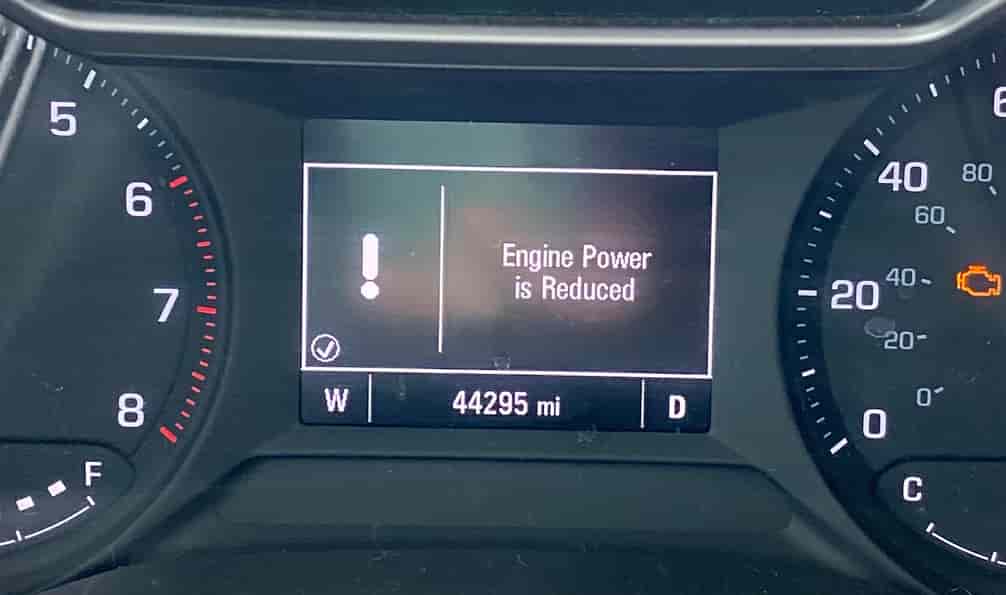
What Does “Reduced Engine Power” Mean on Chevy Silverado?
When your Chevrolet Silverado shows the “Reduced Engine Power” warning, the truck is protecting itself. The system detects a problem that could damage the engine or related components. It immediately limits performance to reduce risk.
This condition is often called limp mode. In this mode, your truck does not respond normally. Acceleration becomes slow. The engine may not go beyond a certain RPM. You may also feel delayed throttle response when you press the gas pedal.
The control system behind this behavior is the engine control module. It monitors sensors and engine data in real time. When it detects abnormal signals, it takes action right away. Instead of shutting down the engine completely, it reduces power to keep the vehicle moving safely.
Several triggers can activate this mode. A faulty sensor can send incorrect data. A throttle body issue can affect airflow. Electrical problems can interrupt communication between components. Even a small issue can cause the system to react.
It is important to understand that this warning is not the root problem. It is only a symptom. The real issue lies in the components connected to the engine management system. That is why proper diagnosis matters before any repair.
If you ignore this warning, the problem can get worse. In some cases, it can lead to higher repair costs. Acting early helps you save money and avoid unexpected breakdowns.
Common Causes of Chevy Silverado Reduced Engine Power
The “Reduced Engine Power” warning on your Chevrolet Silverado usually appears when the vehicle detects a problem in the engine management system and activates a safety mode. This condition often comes from issues related to airflow, sensors, or electronic communication inside the engine system.
One of the most common causes is a faulty throttle body. When carbon builds up inside the throttle body or the component becomes stuck, airflow into the engine becomes unstable. This leads to poor acceleration and triggers the system to reduce engine power as a protective response. Another frequent issue comes from the throttle position sensor. This sensor tracks how much you press the gas pedal, and if it sends incorrect signals, the engine control module cannot adjust fuel and air properly, which results in reduced performance.
Problems with the mass air flow sensor can also cause this warning. When this sensor becomes dirty or fails, it sends incorrect air intake data, which disrupts the fuel mixture and forces the system to limit engine output. Electrical issues are another major factor. Damaged or loose wiring can interrupt communication between sensors and the engine control module, causing unpredictable power loss. In some cases, the engine control module itself may malfunction or develop software errors, which leads to incorrect system responses and activates limp mode.
Even a simple issue like a clogged air filter can contribute to reduced engine power by restricting airflow and reducing combustion efficiency. Although this is a less severe problem, it still affects overall engine performance. Most of these issues are related to airflow restriction, sensor failure, or electrical miscommunication, and the system reacts immediately to protect the engine from further damage.
How to Fix Chevy Silverado Reduced Engine Power
When your Chevrolet Silverado enters reduced engine power mode, the first step is to stay calm and avoid forcing the vehicle to run at high load. This warning means the system has already detected a fault and is trying to protect the engine. In many cases, you can start with simple checks before moving to expensive repairs.
The first thing you should do is inspect and clean the throttle body. Dirt and carbon buildup can restrict airflow and cause incorrect throttle response. Cleaning it often restores normal performance if the issue is minor. Next, check the throttle position sensor and the mass air flow sensor. These components can send wrong signals when they are dirty or failing. In some cases, simply reconnecting or replacing a faulty sensor can immediately solve the problem.
You should also inspect all wiring connected to the engine sensors. Loose or damaged wires can interrupt communication with the engine control module and trigger limp mode. If you find corrosion or broken insulation, repairing the wiring can restore normal function. Another simple step is to reset the system by disconnecting the battery for a few minutes or using an OBD2 scanner to clear error codes. However, this only works if the underlying issue is minor and already fixed.
If these basic steps do not solve the problem, the issue may involve the engine control module or deeper electronic faults. In this case, professional diagnosis is required. A mechanic can read detailed error codes and identify the exact failing component. Ignoring persistent reduced engine power warnings can lead to higher repair costs and further engine damage, so early diagnosis is always the safest approach.
Chevy Silverado Reduced Engine Power Repair Cost
The cost to fix the reduced engine power issue on your Chevrolet Silverado can vary widely depending on the root cause of the problem. Some repairs are very affordable, while others can become expensive if major components are involved. Understanding the price range helps you avoid overpaying and choose the right repair approach.
If the issue comes from a dirty throttle body, the cost is usually low. Cleaning it at home may cost almost nothing, while a professional cleaning can range from 100 to 300 dollars. If the throttle body needs replacement, the cost can increase to around 150 to 500 dollars depending on the model year and labor fees.
Sensor related problems are also common. A faulty throttle position sensor or mass air flow sensor typically costs between 50 and 300 dollars for parts. Including labor, the total repair can go up to around 200 to 600 dollars. These are relatively moderate repairs and are often the most common causes of the warning.
More serious issues involve the engine control module. If the ECM fails or needs reprogramming, the cost can rise significantly. Repairs in this case may range from 500 to 1500 dollars or more depending on whether the unit needs replacement or software updates.
Electrical wiring problems are harder to estimate because they depend on damage level. Minor fixes may cost under 200 dollars, while complex electrical diagnostics and repairs can exceed 500 dollars.
Overall, the reduced engine power issue can be minor or expensive depending on early diagnosis. Delaying repairs often increases costs, especially if sensor failures affect other engine components. That is why identifying the problem early is the most cost effective approach.
Is It Safe to Drive with Reduced Engine Power?
When your Chevrolet Silverado shows the reduced engine power warning, the vehicle is still able to move, but it is not designed for normal driving conditions. This mode is activated by the engine control system when it detects a fault that could damage the engine or affect safe operation. The system limits acceleration and reduces overall engine performance to protect critical components.
In this condition, the truck may feel slow, unresponsive, and unstable during acceleration. This becomes especially dangerous in real driving situations such as merging onto highways, overtaking other vehicles, or climbing steep roads. The lack of full engine power increases the risk of delayed response, which can lead to unsafe driving decisions or unexpected traffic situations.
In most cases, it is safe to drive only for a short distance, such as moving the vehicle to a nearby repair shop or a safe parking area. However, continuing to drive for long distances or under heavy load is not recommended. Doing so can worsen the underlying issue and potentially increase repair costs. A small sensor or airflow problem can develop into a more serious engine or electronic failure if ignored.
The most important thing to understand is that reduced engine power is not just a performance limitation. It is a warning signal from the engine management system that something is not functioning correctly. While the vehicle may still operate, it is running in a protective mode that should not be used for normal daily driving. Prompt inspection and diagnosis are always the safest approach to avoid further damage and ensure your vehicle remains reliable on the road.
Conclusion
The Chevy Silverado reduced engine power issue is a common warning that appears when the engine management system detects a problem and activates a protective mode. In your Chevrolet Silverado, this usually means the vehicle has entered limp mode to prevent further damage to critical components. While the truck can still be driven, its performance is significantly limited, which affects acceleration, throttle response, and overall driving safety.
Most cases are caused by issues related to airflow, sensors, or electrical communication. A dirty throttle body, a faulty throttle position sensor, or a malfunctioning mass air flow sensor can all trigger this warning. In some situations, wiring problems or engine control module errors may also be responsible. The system reacts quickly to any abnormal signals, which is why the warning often appears suddenly without clear symptoms beforehand.
The key to handling this issue effectively is early diagnosis and proper repair. Simple problems like sensor contamination or minor airflow restrictions can often be fixed at low cost. However, if the issue is ignored, it can develop into more serious failures that require expensive repairs. Understanding the root cause early helps you avoid unnecessary expenses and keeps your vehicle reliable.
If you experience reduced engine power, the best approach is to avoid long-distance driving and have the vehicle inspected as soon as possible. Treat this warning as an early alert, not just a temporary inconvenience. By acting quickly, you protect your engine, reduce repair costs, and ensure safer driving conditions in the long term.