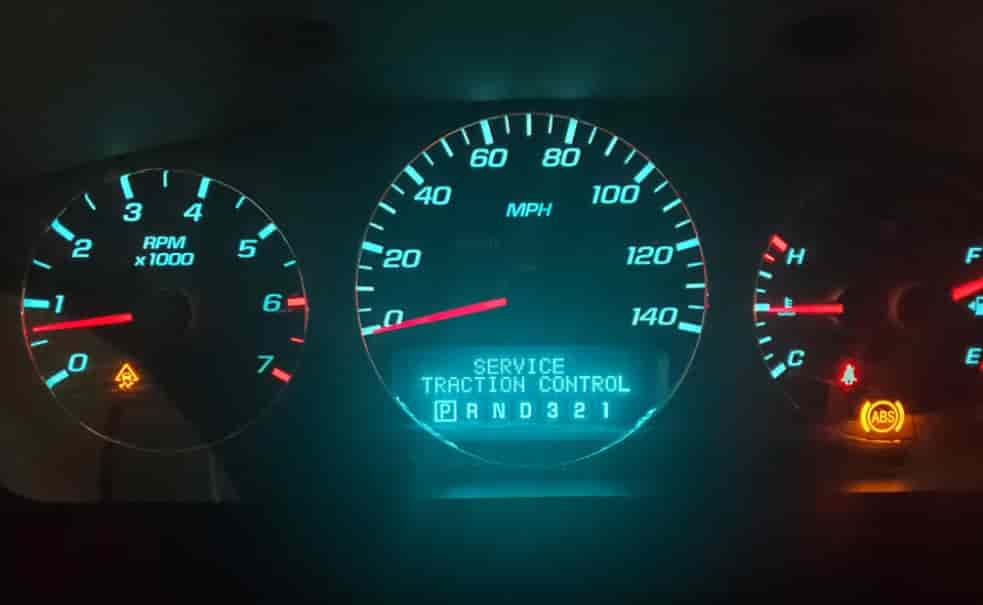
The “Service Traction Control” warning often appears suddenly on your Chevy Impala. It can make drivers feel uncertain and concerned about safety. This issue affects many owners of Chevy Impala and usually relates to the vehicle stability system.
The traction control system helps the car maintain grip on the road. It works with ABS and other sensors to detect wheel slip. When the system detects a problem, it turns on the warning light on the dashboard. In some cases, it also reduces engine power to improve control.
Drivers often do not know the exact cause when this warning appears. The issue can come from a faulty wheel speed sensor, ABS malfunction, or even a weak battery. Electrical glitches in the ECU can also trigger the warning. These problems may seem small at first but can affect driving stability.
You may still drive the car when the warning is on, but performance and safety can decrease. This is especially important on wet, icy, or uneven roads. The system may not respond correctly when traction is needed most.
This article explains the main causes of the warning. It also shows clear symptoms and practical solutions. You will learn how to diagnose the issue and fix it step by step. The goal is to help you restore full traction control performance quickly and safely.
What is the Traction Control System in Chevy Impala
The traction control system in Chevy Impala is a safety feature that helps your car maintain grip on the road. It prevents wheel spin when you accelerate on slippery or uneven surfaces. This system improves stability and helps the driver keep better control of the vehicle.
The system works by monitoring each wheel through speed sensors. These sensors send real time data to the vehicle control module. When the system detects that one wheel spins faster than the others, it reacts immediately. It reduces engine power or applies braking force to that wheel.
The traction control system does not work alone. It operates together with the ABS system and the stability control system. These systems share data to keep the car balanced during acceleration and braking. This coordination helps reduce the risk of skidding or losing control.
Modern Chevy Impala models rely heavily on electronic control units to manage traction. The ECU processes signals from multiple sensors in milliseconds. If any sensor sends incorrect data, the system may trigger the “Service Traction Control” warning.
When everything works correctly, the driver may not notice the system at all. It activates only when road conditions become difficult. This is why it is important for the system to function properly at all times.
Main Causes of “Service Traction Control” Warning
The “Service Traction Control” warning in Chevy Impala usually appears when the system detects that one or more critical components are not working correctly. This warning does not always point to a severe failure, but it does indicate that the traction and stability system is no longer operating at full performance. Understanding the root causes helps you avoid unnecessary repairs and diagnose the issue faster.
One of the most common causes is a faulty wheel speed sensor. Each wheel has a sensor that tracks its rotation speed and sends data to the control module. When this sensor becomes dirty, damaged, or fails completely, it sends incorrect signals. The system then loses accurate wheel data and activates the warning light. This issue often happens gradually and may worsen over time if not fixed.
Another frequent cause is a problem with the ABS system. The traction control system relies heavily on ABS data to function correctly. If the ABS module fails or the pump develops an issue, the system cannot calculate wheel grip properly. In many cases, the ABS warning light appears together with the traction control warning, which confirms a shared system fault.
A steering angle sensor error can also trigger the warning. This sensor tracks the direction of the steering wheel and helps the system understand vehicle movement. When it becomes misaligned or sends incorrect data, the system may misinterpret driving conditions and activate the warning.
Low battery voltage or unstable electrical connections can also affect system performance. When voltage drops, the ECU may receive inconsistent signals from multiple sensors. This can lead to temporary or repeated warnings even if no mechanical damage exists.
Finally, ECU or software glitches can cause false alerts. In some cases, a simple reset or software update can restore normal operation without replacing any parts.
Symptoms You Will Notice
When the traction control system starts to fail in Chevy Impala, the warning light is not the only sign. The vehicle usually shows several clear symptoms that help you identify the problem early. These symptoms can affect driving comfort, stability, and safety.
One of the most common signs is reduced engine power. The car may enter a limited performance mode to prevent further damage. In this mode, acceleration becomes slower and the vehicle feels less responsive. This is often called limp mode and it helps protect the system.
You may also notice the traction control light staying on continuously. In some cases, the ABS warning light appears at the same time. This indicates that both systems are affected or sharing a common fault. When this happens, the car may struggle more on wet or slippery roads.
Another symptom is loss of stability during acceleration. The wheels may spin more easily, especially when starting from a stop. This happens because the system can no longer control wheel slip effectively. You may feel the car is less secure when driving on uneven surfaces.
Some drivers also report unusual braking behavior. The brake pedal may feel different or less consistent than usual. This occurs when the ABS system is not fully synchronized with traction control functions.
In more advanced cases, steering may feel slightly heavier or less precise. This is caused by incorrect data from sensors that help the system understand vehicle movement.
These symptoms often appear together, but they can also show up gradually. Paying attention early helps prevent more serious system failures and costly repairs.
Is It Safe to Drive with Traction Control Warning?
When the “Service Traction Control” warning appears on Chevy Impala, many drivers continue driving without knowing the actual risk. In some cases, the car can still move normally, but the stability system is no longer fully active. This means the vehicle loses an important layer of safety support.
In normal driving conditions, you may not notice a big difference. The car can still accelerate, brake, and steer as usual. However, the risk increases when road conditions become difficult. Wet roads, gravel, or sudden turns can expose the weakness of the system. Without traction control support, the wheels may slip more easily and stability becomes harder to maintain.
It is generally safe to drive for a short distance if the car feels normal and no other critical warning lights appear. However, you should avoid aggressive acceleration and high speed driving. The system may not respond correctly when it is needed most, especially during sudden loss of grip.
If the ABS light appears together with the traction control warning, the situation becomes more serious. This combination often means both stability and braking assistance are affected. In this case, driving long distances is not recommended.
You should also pay attention to any changes in braking performance or steering response. If the vehicle feels unstable or unpredictable, it is better to stop driving and perform a diagnostic check.
In summary, short and careful driving may still be possible, but the safest decision is to diagnose and fix the issue as soon as possible. Ignoring the warning for too long can increase the risk of accidents and further damage to the system.
How to Fix “Service Traction Control” on Chevy Impala
Fixing the “Service Traction Control” warning on Chevy Impala depends on the root cause. In many cases, you can identify and resolve the issue step by step without replacing major components immediately. The goal is to restore correct sensor data and system communication.
A simple first step is to reset the system. You can turn off the engine, wait a few minutes, and restart the car. In some cases, disconnecting the battery for a short time can clear temporary ECU errors. This works when the warning is triggered by a short electrical glitch rather than a real hardware failure.
If the warning returns, you should inspect the wheel speed sensors. These sensors are often located near each wheel hub. Dirt, debris, or corrosion can block accurate readings. Cleaning the sensors may restore normal function. If a sensor is damaged, replacement is usually required.
Next, check the ABS system. A diagnostic scan using an OBD2 tool can reveal hidden error codes. These codes help identify whether the ABS module or pump is malfunctioning. If the ABS system fails, traction control will not work properly because both systems are connected.
You should also inspect the battery and electrical system. Low voltage or unstable power can trigger false warnings. Make sure the battery is fully charged and terminals are clean and tight. Alternator issues can also cause repeated errors.
If basic steps do not fix the issue, a professional diagnostic scan is recommended. A mechanic can read advanced ECU data and identify deeper software or communication problems. In some cases, a software update or module recalibration is needed to fully restore the system.
Common OBD2 Error Codes Related to Traction Control
When the “Service Traction Control” warning appears on Chevy Impala, an OBD2 scan often reveals specific error codes. These codes help identify which part of the system is failing and reduce guesswork during repair.
One of the most common codes is P0500, which relates to the vehicle speed sensor. This sensor sends speed data to the ECU. When it fails, the system cannot calculate wheel movement correctly, which leads to traction control errors.
Another group of codes includes C0035 and C0040. These codes usually point to wheel speed sensor issues. Each wheel has its own sensor, and a failure in any one of them can trigger the warning. Dirt, damage, or wiring issues often cause these errors.
ABS module communication errors can also appear during a scan. These codes indicate that the traction control system cannot properly communicate with the ABS unit. This problem often affects both traction control and braking stability at the same time.
In some cases, U codes appear, which relate to network communication failures between control modules. These errors usually suggest wiring issues, poor connections, or ECU communication faults.
Understanding these OBD2 codes is important because they guide the repair process. Instead of replacing parts randomly, you can focus on the exact component causing the issue. A proper scan tool helps confirm whether the problem comes from sensors, ABS modules, or electrical communication failures.
Once the correct code is identified, the next step is targeted repair. This approach saves time, reduces cost, and helps restore the traction control system more efficiently.
Repair Cost Overview
Repair costs for the “Service Traction Control” warning on Chevy Impala can vary widely depending on the root cause. Some issues are minor and inexpensive, while others require more advanced repairs involving electronic modules or ABS components.
If the problem comes from a wheel speed sensor, the cost is usually moderate. Each sensor is relatively affordable, and replacement does not take much time. Labor costs may vary depending on the workshop, but this is generally one of the cheapest fixes for traction control issues.
If the ABS system is involved, the cost increases significantly. The ABS module or pump is more expensive and requires specialized tools for replacement or calibration. In many cases, reprogramming the system is also necessary after installation, which adds to the total cost.
Electrical issues such as wiring faults or poor connections are usually less expensive to fix. However, they can take more time to diagnose because the problem is not always visible. Labor costs can become the main expense in these cases.
If the issue comes from the ECU or requires software updates, the cost depends on whether reprogramming is needed or a full module replacement is required. Dealership repairs are often more expensive than independent garages, but they may offer more accurate diagnostics.
Overall, minor sensor repairs are the most affordable, while ABS and ECU-related problems are the most costly. The total repair cost depends heavily on early diagnosis. Fixing the issue early can help avoid more expensive damage and keep the traction control system working properly.
Prevention Tips and Conclusion
Preventing the “Service Traction Control” warning on Chevy Impala starts with regular maintenance and early detection of small issues. The traction control system depends on accurate data from multiple sensors, so keeping these components in good condition is essential for long term stability and safety.
One of the most effective prevention methods is regular inspection of wheel speed sensors. These sensors are exposed to dirt, water, and road debris. Cleaning them during routine maintenance helps maintain accurate signal transmission and reduces the risk of false warnings. Wiring around the wheel hubs should also be checked for wear or corrosion.
Battery health is another important factor. A weak or unstable battery can cause voltage drops that affect the ECU and trigger random system errors. Keeping the battery fully charged and replacing it when needed helps prevent electrical instability in the vehicle system.
Routine brake system maintenance also plays a key role. Since traction control works closely with ABS, worn brake components can indirectly affect system performance. Regular brake inspections help ensure both systems operate in sync.
It is also recommended to use an OBD2 scan tool periodically. This allows early detection of hidden error codes before they become visible warnings. Addressing small issues early can prevent more serious failures later.
In conclusion, the traction control system is essential for maintaining vehicle stability and safety. Most issues come from sensors, electrical faults, or ABS communication errors. By maintaining key components and responding quickly to warning signs, you can keep the system working properly and avoid costly repairs. Proper care ensures that your driving experience remains safe, stable, and reliable in all road conditions.