The service traction control warning on the Chevrolet Cruze often appears without warning and confuses many drivers. It usually shows up during normal driving and creates immediate concern about safety and vehicle stability.
This warning does not point to a single fault. It often comes from a communication problem between key systems such as traction control, ABS, and electronic stability control. These systems constantly share data to help the car maintain grip on the road. When one system sends incorrect signals or stops working, the vehicle triggers a warning.
The message does not explain the exact cause. It only tells the driver that the traction control system has reduced function or shut down for safety. A weak battery, a damaged wheel speed sensor, or a faulty control module can all trigger this issue.
Many drivers feel uncertain when this warning appears. Some worry about safety risks. Others continue driving without knowing that reduced traction control can affect braking and stability in slippery or emergency conditions.
This article explains the real causes behind the warning in a clear way. It also shows how to diagnose the issue and apply proven fixes that restore normal system performance. You will understand what to check, what to avoid, and when you need professional repair instead of guessing.
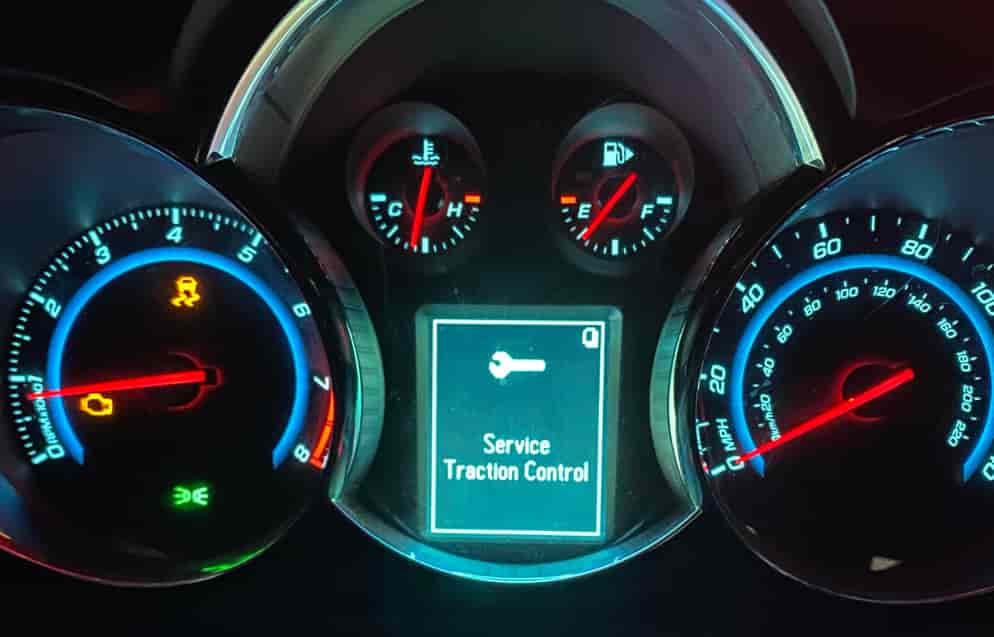
What “Service Traction Control” Means in Chevy Cruze
The service traction control warning on the Chevrolet Cruze indicates that the traction control system has detected a fault and has temporarily reduced or disabled its function. This system is designed to prevent wheel slip during acceleration by adjusting engine power and braking individual wheels when needed.
The traction control system does not work alone. It connects closely with the anti lock braking system and the electronic stability control system. These systems share real time data from sensors placed on each wheel. When the data becomes inconsistent, the vehicle safety network reacts by turning on a warning message.
In most cases, the car still drives normally after the warning appears. However, the system no longer helps stabilize the vehicle on wet, icy, or uneven roads. This means the driver must take full control of traction without electronic support.
The warning does not always mean a major failure. It can appear due to a temporary sensor glitch, low battery voltage, or a communication error between control modules. In other cases, it signals a more serious issue such as a failing wheel speed sensor or a malfunctioning ABS module.
Understanding this warning is important because it helps you separate minor electrical issues from real safety risks. Once you know how the system works, you can diagnose problems more accurately and avoid unnecessary repairs.
Common Causes of the Warning
The service traction control warning on the Chevrolet Cruze usually comes from issues within the braking and stability control network. These systems rely on accurate sensor data and stable electrical communication. When something interrupts this flow, the warning appears.
One of the most common causes is a faulty wheel speed sensor. Each wheel has a sensor that tracks rotation speed. When one sensor fails or sends incorrect data, the system loses accurate traction information and triggers the warning.
Another frequent cause is a problem with the anti lock braking system module. The ABS module processes data from all wheel sensors and helps control braking pressure. If the module fails or experiences internal errors, it can disable traction control as a safety measure.
Wiring issues also play a major role. Damaged, corroded, or loose connectors can interrupt communication between sensors and control units. This often happens in areas exposed to water, dirt, or road salt.
Low battery voltage can also trigger the warning. Modern vehicles depend heavily on stable electrical power. When the battery weakens or the charging system becomes unstable, control modules may misread data or shut down temporarily.
In some cases, the steering angle sensor causes the issue. This sensor tells the system the direction of the steering wheel. If it loses calibration, the stability control system cannot interpret vehicle direction correctly.
Each of these causes affects the same network of systems. That is why the warning often appears suddenly and without obvious symptoms at first.
Diagnostic Insights
When the service traction control warning appears on the Chevrolet Cruze, technicians do not rely on guessing. They follow a structured diagnostic process that focuses on sensor data, system communication, and stored error codes.
The first step is to scan the vehicle with an OBD2 diagnostic tool. This tool reads trouble codes stored in the ABS and stability control modules. These codes often point to specific areas such as wheel speed sensors, module communication errors, or voltage irregularities.
After reading the codes, mechanics analyze live data from each wheel speed sensor. They compare how each wheel reports speed during motion. If one wheel shows inconsistent or missing data, the system quickly identifies a faulty sensor or wiring issue.
Next, technicians check the ABS module. This module acts as the central processor for braking and traction control. If it fails to communicate properly with other systems, the traction control function shuts down to protect vehicle stability.
Battery health also becomes part of the diagnosis. Low voltage can create false error signals across multiple systems. Mechanics test battery output and alternator performance to confirm stable electrical supply.
In more complex cases, technicians inspect the steering angle sensor and perform recalibration. If this sensor sends incorrect direction data, the stability system cannot interpret vehicle movement correctly.
This structured process helps isolate the root cause instead of replacing parts randomly. It ensures the real issue is fixed and prevents the warning from returning after repair.
Proven Fixes for Chevy Cruze Traction Control Issue
Fixing the service traction control warning on the Chevrolet Cruze depends on the exact cause found during diagnosis. Each solution targets a specific part of the traction control and stability system, so accuracy matters more than trial and error.
If the issue comes from a faulty wheel speed sensor, replacement is usually the most effective fix. Mechanics remove the damaged sensor and install a new one, then clear the error codes to restore normal system function. In some cases, dirt or corrosion causes incorrect readings, so cleaning the sensor and connector can also solve the problem.
When the ABS module fails, repair or replacement becomes necessary. Some modules can be reprogrammed or rebuilt, while severe internal failures require a full replacement. After repair, the system must be recalibrated to communicate correctly with all sensors.
If low battery voltage causes the warning, replacing the battery or fixing the charging system often resolves the issue. A stable electrical supply is critical because all control modules depend on consistent voltage to function properly.
Wiring issues require careful inspection. Technicians repair damaged wires, clean corroded connectors, and secure loose connections. This restores proper communication between sensors and control units.
For steering angle sensor errors, recalibration is the key solution. Mechanics reset the sensor so it accurately tracks steering direction and sends correct data to the stability system.
After any repair, clearing error codes and performing a system reset ensures the warning does not return. This step confirms that all modules are communicating correctly and the traction control system is fully restored.
Can You Drive With This Warning On?
When the service traction control warning appears on the Chevrolet Cruze, the vehicle is usually still drivable. The engine and basic braking system continue to work, so the car does not stop functioning immediately. However, the loss of traction control and stability assistance changes how the car behaves on the road.
Without traction control, the wheels can spin more easily during acceleration. This becomes more noticeable on wet, icy, or uneven surfaces. The vehicle also loses part of its ability to automatically adjust braking force between wheels, which affects stability in sudden maneuvers.
In normal dry conditions, many drivers continue driving without major issues. The car still responds to steering and braking input. However, the driver must take full responsibility for maintaining control, especially during hard acceleration or emergency situations.
The risk increases significantly in poor weather. Rain, snow, or loose gravel can reduce tire grip. Without electronic assistance, the chance of slipping or skidding becomes higher.
In some cases, the warning appears alongside other issues such as ABS faults or reduced engine power. When multiple systems are affected, driving becomes less safe and should be limited until repairs are completed.
The safest approach is to treat the warning as an early alert. It does not always indicate immediate danger, but it does mean the vehicle is operating with reduced safety support. Getting the issue diagnosed quickly helps prevent further system failures and restores full driving stability.
Repair Cost Breakdown
The repair cost for a service traction control issue on the Chevrolet Cruze depends on the exact failed component and labor rates in each region. Because this system involves multiple electronic and braking components, costs can vary widely from simple fixes to more complex repairs.
If the problem comes from a wheel speed sensor, this is usually one of the more affordable repairs. The part itself is not expensive, and replacement work is relatively quick. However, costs increase if multiple sensors fail at the same time or if corrosion makes removal difficult.
ABS module repairs sit in a much higher cost range. This component is central to both braking and traction control systems. Repairing or replacing it often requires specialized programming after installation, which increases total service cost.
Battery related issues are usually the cheapest to fix. A weak battery or unstable charging system can trigger false warnings, and replacing the battery often restores normal system operation without further repairs.
Wiring repairs fall in a medium cost range. Simple connector cleaning is inexpensive, but damaged wiring harnesses require more labor time and can increase total cost depending on accessibility.
Steering angle sensor recalibration is generally a low to moderate cost service. It usually requires diagnostic equipment but does not involve major part replacement unless the sensor itself is defective.
Overall, minor issues can be resolved at a relatively low cost, while ABS or module related failures represent the most expensive scenarios. Early diagnosis helps reduce repair expenses by preventing damage from spreading across connected systems.
Prevention Tips
Preventing the service traction control warning on the Chevrolet Cruze is mainly about maintaining the health of sensors, electrical systems, and braking components. Since the traction control system depends on multiple inputs, small maintenance habits can reduce the chance of unexpected failures.
Regular battery checks are important because unstable voltage is one of the hidden triggers of this warning. A weak battery or failing alternator can create false signals across the ABS and stability systems. Keeping the electrical system stable helps all modules communicate correctly.
Wheel speed sensors should be kept clean and protected. Dirt, rust, or moisture can interfere with signal accuracy. During routine maintenance, inspecting these sensors and their wiring helps prevent data errors that trigger warning lights.
Brake system maintenance also plays a key role. Worn brake components or contaminated fluid can affect ABS performance. When the ABS system becomes unstable, traction control is often disabled as a safety response.
It is also useful to perform periodic diagnostic scans. Even if no warning light is active, an OBD2 scan can detect early error codes. This allows small issues to be fixed before they develop into full system failures.
Finally, keeping steering components properly calibrated after alignment or suspension work helps maintain accurate sensor readings. If the steering angle sensor is not correctly reset, the stability system may misinterpret vehicle direction.
Consistent maintenance across these areas helps reduce unexpected traction control warnings and keeps the vehicle’s safety systems working as designed.
Conclusion
The service traction control warning on the Chevrolet Cruze is not a random alert. It is a protective response from the vehicle when one or more stability related systems stop working correctly. These systems include traction control, ABS, and electronic stability control, all of which depend on shared sensor data and stable electrical communication.
Most cases come from a few common issues. A faulty wheel speed sensor, a weak battery, wiring damage, or an ABS module fault can all trigger the warning. In some situations, the problem is minor and temporary. In other cases, it points to a deeper system failure that needs professional diagnosis.
The key to handling this issue is understanding how connected the systems are. Replacing random parts without proper diagnosis often leads to repeated warnings and unnecessary cost. A structured approach using OBD2 scanning, sensor testing, and voltage checks gives a much clearer picture of the real cause.
Driving with this warning is usually possible, but the vehicle loses part of its stability support. This increases risk in poor road conditions and during sudden maneuvers. That is why early inspection is always the safer choice.
In most situations, the issue can be fixed effectively once the root cause is identified. Simple repairs like sensor replacement or battery correction solve many cases. More complex issues like ABS module failure require professional repair but are still fully manageable when diagnosed correctly.
Understanding this system helps you avoid confusion, reduce repair costs, and keep the vehicle safe. If the warning appears, treating it early is the best way to maintain full control and restore normal driving performance.