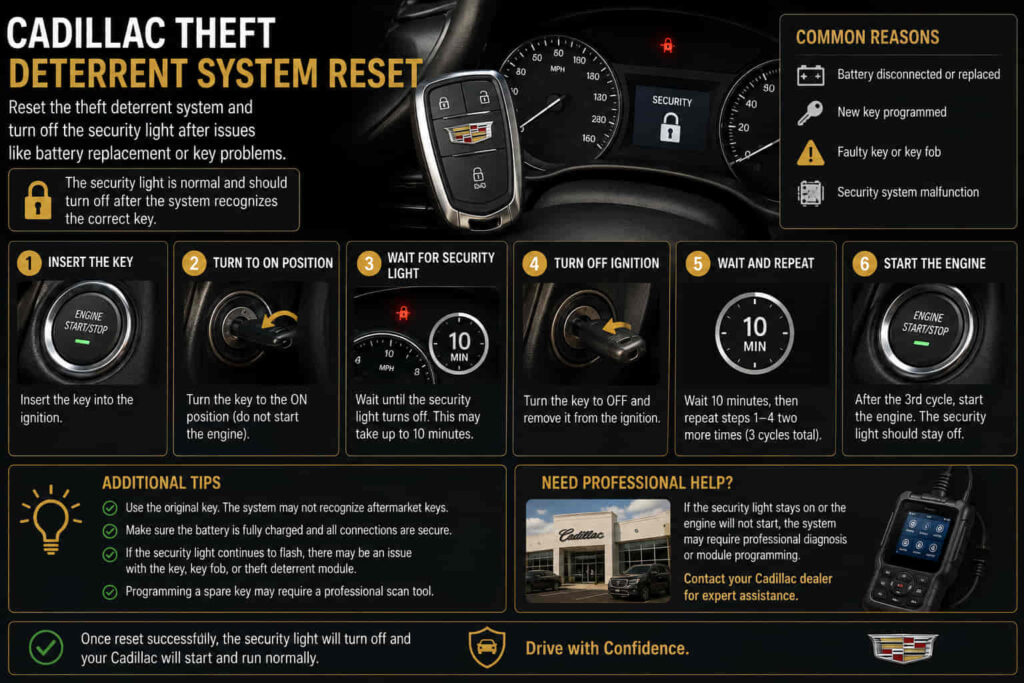
A Cadillac Theft Deterrent System reset can help restore vehicle operation when the security system experiences temporary communication errors, battery-related issues, or incorrect key recognition states. However, resetting the anti-theft system only restores communication between electronic components in certain situations; it cannot repair damaged keys, failed immobilizer components, or defective control modules.
The Cadillac Theft Deterrent System is designed to prevent unauthorized vehicle operation by verifying the identity of the key and allowing the engine to start only when the security system confirms valid authorization. This process involves several connected components, including the key transponder, theft deterrent module, Body Control Module (BCM), and Engine Control Module (ECM).
When these components fail to communicate correctly, Cadillac vehicles may display security warnings, flash the security indicator light, or prevent the engine from starting. These symptoms can appear after events such as a weak battery, key replacement, electrical interruption, or communication failure between vehicle modules.
A reset can resolve temporary system conditions, but repeated failures usually indicate a deeper issue that requires diagnosis. Understanding how the Cadillac Theft Deterrent System works helps owners determine whether the problem comes from the key, electrical system, software communication, or a failed security component.
This guide explains why a Cadillac Theft Deterrent System may need a reset, which problems a reset can solve, and when professional repair is required to restore normal vehicle operation.
Can a Weak Battery Cause Cadillac Theft Deterrent System Problems?
A weak battery can cause Cadillac Theft Deterrent System problems because the anti-theft system depends on stable electrical power to allow communication between the key recognition system, Body Control Module, and Engine Control Module. When battery voltage becomes too low, electronic modules may not operate correctly and the vehicle may incorrectly detect a security problem.
The theft deterrent system is not a single component. It is a network of electronic modules that must exchange information before the vehicle allows engine startup. The key transponder sends identification data, the BCM verifies authorization, and the ECM receives confirmation before enabling normal starting operation. A voltage interruption can disrupt this communication process.
Low battery voltage commonly affects Cadillac vehicles after situations such as a discharged battery, jump start, battery replacement, or long periods without use. The system may temporarily lose synchronization and display messages related to theft deterrent, security, or key recognition.
For example, a Cadillac owner may replace a weak battery and then find that the vehicle displays a theft deterrent warning or refuses to start. In some cases, restoring stable battery voltage and allowing the vehicle modules to restart can restore normal operation.
However, a battery reset will not solve problems caused by damaged security components or failed modules. If the warning continues after the electrical system is restored, further diagnosis is required to determine whether the issue involves the key, immobilizer, BCM, or another electronic component.
Can Key Fob or Transponder Problems Trigger Cadillac Theft Deterrent Reset?
Key fob or transponder problems can trigger Cadillac Theft Deterrent System issues because the vehicle must correctly identify the key before it authorizes engine operation. The anti-theft system uses electronic identification technology inside the key or key fob to confirm that the person attempting to start the vehicle has a valid authorization device.
A key fob problem may occur because of a weak key battery, damaged internal electronics, incorrect programming, or loss of synchronization between the key and the vehicle security system. When the vehicle cannot verify the key signal, it may activate theft deterrent protection and prevent normal starting.
The transponder chip inside the key plays a critical role because it communicates with the immobilizer system independently from the physical key shape or remote buttons. This means a key may still unlock doors manually while failing to provide the correct authorization signal required for engine startup.
For example, a Cadillac may display a security warning or fail to start even though the key fob buttons appear to work. The issue may come from the transponder communication rather than the remote locking function.
Resetting the theft deterrent system may restore synchronization in some temporary situations, but it will not repair a damaged key or replace a key that requires programming. When key recognition problems continue, checking the key condition and performing proper key programming are necessary steps.
Read more: Cadillac CUE Reset Not Working
Can Body Control Module Problems Affect Cadillac Theft Deterrent System?
Body Control Module (BCM) problems can affect Cadillac Theft Deterrent System operation because the BCM manages important security communication between the key authorization system, vehicle electronics, and engine control components. The BCM acts as a central controller for many body-related electrical functions and plays an important role in confirming whether the vehicle should allow engine startup.
The theft deterrent process requires accurate communication between multiple modules. When the key sends identification information, the BCM processes this data and communicates with the Engine Control Module to confirm that the vehicle has received valid authorization. If the BCM cannot complete this process, the system may activate security protection and prevent normal operation.
BCM problems can occur because of internal electronic failure, communication errors, voltage interruptions, or corrupted module information. Since the BCM controls several vehicle functions, a failure may create multiple symptoms, including security warnings, electrical problems, or difficulty starting the vehicle.
For example, a Cadillac may recognize the key correctly but still refuse to start because the BCM is unable to communicate the authorization signal to the engine control system. In this situation, repeatedly resetting the theft deterrent system will not solve the problem because the underlying issue exists within the control module.
Proper diagnosis is necessary before replacing the BCM because similar symptoms can also come from weak batteries, damaged keys, or other communication problems. Testing module communication and checking diagnostic trouble codes helps identify whether the BCM is the actual source of the security system failure.
Can Immobilizer Problems Prevent Cadillac From Starting?
Immobilizer problems can prevent a Cadillac from starting because the immobilizer system controls whether the engine receives authorization to operate after verifying the vehicle key. This security feature prevents unauthorized starting by blocking fuel delivery, ignition operation, or starter authorization when the system does not recognize a valid key.
The immobilizer works together with the key transponder, theft deterrent module, BCM, and ECM to create a security verification process. If any part of this communication chain fails, the vehicle may enter a security lockout condition even when the mechanical parts of the engine are functioning correctly.
Common immobilizer-related failures include incorrect key programming, damaged transponder signals, communication errors between modules, or internal faults within the security system. These problems often appear as a vehicle that cranks but does not start, a flashing security light, or a theft deterrent message on the dashboard.
For example, a Cadillac owner may install a new key but experience a no-start condition because the key has not been properly programmed to communicate with the immobilizer system. The vehicle detects the key physically but does not recognize it as an authorized device.
A reset may restore operation when the immobilizer issue is caused by a temporary communication error. However, persistent immobilizer failures require proper key programming, module testing, or professional diagnosis because the system must verify security authorization before allowing the engine to start.
Can Software Errors Cause Cadillac Theft Deterrent System Reset Problems?
Software errors can cause Cadillac Theft Deterrent System reset problems because the security system depends on electronic communication between multiple vehicle modules to verify key authorization and allow engine operation. When these modules lose synchronization or store incorrect security information, the system may activate protection mode even when no physical component is damaged.
The Cadillac anti-theft system operates through a network of control modules, including the Theft Deterrent Module, Body Control Module, and Engine Control Module. These modules exchange authorization data before the vehicle allows the engine to start. A temporary communication error can interrupt this process and create a false security condition.
Software-related problems may occur after battery interruptions, electrical events, module communication failures, or incorrect system states. In these situations, a reset can help the modules restart and establish communication again. This explains why some Cadillac owners experience a theft deterrent warning that disappears after the vehicle is restarted.
For example, a Cadillac may display a theft deterrent message after a low-voltage event, but the vehicle operates normally after the system resets and the modules reconnect correctly. The issue was caused by a temporary communication problem rather than a failed security component.
However, a reset cannot repair corrupted module programming or damaged electronic components. If the theft deterrent warning repeatedly returns, diagnostic testing is required to determine whether the problem involves software synchronization, module failure, or another electrical issue.
Can Reprogramming the Key Fix Cadillac Theft Deterrent Problems?
Reprogramming the key can fix Cadillac Theft Deterrent System problems when the vehicle cannot recognize a valid key because the key information is missing, incorrect, or no longer synchronized with the security system. The immobilizer system requires a programmed relationship between the transponder key and the vehicle modules before engine authorization can occur.
A replacement key, lost key, damaged transponder, or failed synchronization process can prevent the vehicle from accepting the key signal. The key may physically fit the ignition or unlock the doors, but the vehicle may still refuse to start because the electronic identification code is not recognized.
Key programming updates the vehicle’s security memory so that the key transponder can communicate correctly with the theft deterrent system. This process allows the BCM and ECM to confirm that the key is authorized for that specific Cadillac.
For example, a Cadillac owner may purchase a replacement key after losing the original, but the vehicle continues showing a security warning because the new key has not been programmed. Once the key is correctly synchronized, the theft deterrent system can recognize the authorization signal and allow normal starting.
However, key programming will not solve every anti-theft problem. If the issue comes from a failed BCM, damaged immobilizer system, or communication failure between modules, programming a new key may not change the vehicle behavior. Proper diagnosis is necessary to identify whether the key or another security component is responsible.
When Does Cadillac Theft Deterrent System Need Professional Diagnosis?
Cadillac Theft Deterrent System needs professional diagnosis when the security warning continues appearing after resets, the vehicle still cannot start, or multiple electronic components may be involved in the failure. A reset is useful for temporary system conditions, but it cannot correct a damaged key, failed module, or communication problem between security components.
The anti-theft system depends on several connected parts, including the transponder key, immobilizer system, Theft Deterrent Module, Body Control Module, and Engine Control Module. Because these components work together, a failure in one area can create symptoms that appear similar to another problem. A flashing security light, no-start condition, or theft deterrent message does not identify the exact failed component by itself.
Professional diagnosis usually involves checking diagnostic trouble codes, verifying module communication, testing key authorization signals, and inspecting the vehicle’s electrical condition. These checks help determine whether the problem comes from the key, battery voltage, BCM, immobilizer, or another electronic system.
For example, a Cadillac may continue displaying a theft deterrent warning after a battery reset and key replacement. Without diagnostic testing, replacing additional parts may not solve the issue because the actual failure could be a communication problem between control modules.
Understanding when to stop performing resets helps prevent unnecessary repairs. If the Cadillac Theft Deterrent System repeatedly disables vehicle operation, finding the root cause through proper diagnosis is the most effective way to restore reliable security system performance.
How Can You Successfully Reset Cadillac Theft Deterrent System Problems?
A successful Cadillac Theft Deterrent System reset requires identifying whether the issue comes from a temporary communication problem, electrical interruption, key recognition failure, or a damaged security component. Resetting the system can restore normal operation when the vehicle experiences temporary errors, but it cannot repair physical failures within the anti-theft system.
The Cadillac Theft Deterrent System relies on several connected components, including the key transponder, immobilizer, Theft Deterrent Module, Body Control Module, and Engine Control Module. These components must communicate correctly before the vehicle can authorize engine operation. A failure in any part of this system can trigger security warnings or prevent the vehicle from starting.
The most effective troubleshooting approach begins with checking simple causes such as battery condition, key functionality, and system synchronization. If the problem continues after basic resets, deeper diagnosis is required to identify whether the failure involves the key, module communication, or electronic components.
Repeatedly resetting the theft deterrent system without finding the root cause only delays the actual repair. Understanding how the security system operates helps Cadillac owners choose the correct solution and avoid replacing parts that are not responsible for the problem.
A properly functioning Cadillac Theft Deterrent System is essential for vehicle security and reliable starting performance. When resets fail repeatedly, professional diagnosis provides the most accurate path to restoring the system and returning the vehicle to normal operation.