The Volvo XC90 is a popular luxury SUV. It is known for safety, comfort, and Scandinavian design. Many families choose it for daily use and long trips.
Still, many buyers ask a simple question. Are Volvo XC90s reliable for long term ownership
This question matters because modern SUVs are more complex than before. They use turbocharged engines, hybrid systems, and advanced software. These systems improve performance, but they also increase complexity.
Some owners praise the XC90 for its smooth drive and safety features. Others report issues with electronics and repair costs after several years of use. This creates uncertainty for potential buyers.
Reliability now depends on more than just engine strength. It also depends on software stability, maintenance habits, and part quality over time.
The Volvo XC90 stands in a competitive luxury SUV segment. Buyers compare it with models like BMW X5, Audi Q7, and Mercedes GLE. Each model has strengths and weaknesses in long term durability.
This article explains the reliability of the Volvo XC90 in detail. It covers long term durability, engine performance, common problems, and ownership costs. The goal is to give a clear and practical view based on real world usage.
By the end, you will understand whether the Volvo XC90 is a dependable luxury SUV or a vehicle that requires careful long term maintenance planning.
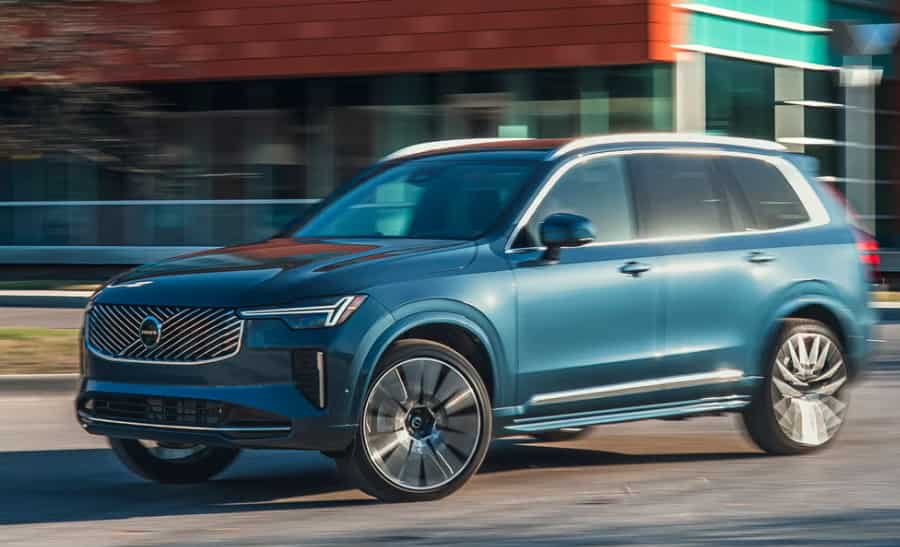
VOLVO XC90 OVERVIEW
The Volvo XC90 is a luxury midsize SUV produced by Volvo. It targets families who want safety, comfort, and premium design in one vehicle. It also represents the modern direction of Volvo engineering.
The current generation of the XC90 is built on the SPA platform. This platform supports advanced safety systems, hybrid technology, and improved structural rigidity. It also allows Volvo to integrate more software-based features into the vehicle.
The XC90 competes in a strong luxury SUV segment. Its main rivals include the BMW X5, Audi Q7, and Mercedes Benz GLE. These models offer similar performance and comfort, but each brand focuses on different priorities. Volvo focuses heavily on safety and calm driving experience.
The XC90 offers multiple powertrain options. These include turbocharged engines and a plug in hybrid system called Recharge. Each option affects long term reliability in different ways.
Volvo has built its reputation on safety engineering. The XC90 reflects this identity through advanced driver assistance systems and strong crash protection structure. Many buyers choose it for this reason alone.
However, modern Volvo vehicles rely more on electronics than older generations. This shift improves features but also increases system complexity. That complexity can influence long term reliability and repair needs.
Understanding this balance is important when evaluating whether the Volvo XC90 is reliable. It is not only a mechanical product. It is also a software driven vehicle with interconnected systems.
WHAT DOES RELIABILITY MEAN FOR VOLVO XC90
Reliability in a vehicle does not mean only whether the engine starts. It includes how the car performs over many years without major failures.
For the Volvo XC90, reliability includes three main factors. These are mechanical durability, electronic stability, and long term maintenance behavior.
Mechanical durability refers to how well the engine, transmission, and suspension last under normal use. A reliable SUV should handle high mileage without major breakdowns.
Electronic stability has become more important in modern vehicles. The XC90 uses many sensors and software systems. These systems control safety features, infotainment, and driving assistance. If they fail often, the vehicle feels less reliable even if the engine is strong.
Long term maintenance behavior describes how often the vehicle needs repairs and how expensive those repairs are. A car can be mechanically strong but still costly to maintain.
In the case of the XC90, reliability also depends on driving conditions. City driving creates more stress on brakes and electronics. Highway driving usually results in less wear over time.
Maintenance habits also play a key role. Regular servicing improves engine life and reduces unexpected failures. Poor maintenance can reduce reliability even in well engineered vehicles.
Modern Volvo models also depend heavily on software updates. These updates can improve performance, but they can also introduce temporary issues.
Because of these factors, reliability is not a single measurement. It is a combination of durability, stability, and ownership experience over time.
LONG TERM DURABILITY OF VOLVO XC90
The Volvo XC90 is designed for long term use. Many owners expect it to last well beyond 100,000 miles with proper maintenance.
The engine is built with durability in mind. It uses turbocharged technology that improves performance while maintaining efficiency. However, turbocharged systems also create more heat and stress compared to naturally aspirated engines.
The transmission system in the XC90 is generally smooth and stable. It performs well in normal driving conditions. Over time, its durability depends on how often the fluid is serviced and how the vehicle is driven.
The suspension system provides comfort and stability. In some versions, air suspension is used. This system improves ride quality but can increase long term repair risk due to its complexity.
Chassis durability in the XC90 is strong. Volvo uses high strength materials to improve safety and structural integrity. This helps the vehicle maintain stability even after many years of use.
However, long term durability is not only about mechanical parts. It also depends on electronic systems. The XC90 uses many sensors and control modules. These systems can age differently compared to mechanical components.
Environmental conditions also affect durability. Cold climates can stress the battery and electronics. Hot climates can increase wear on cooling systems and engine components.
Regular maintenance plays a major role in extending lifespan. Oil changes, software updates, and timely inspections help prevent major issues. Without proper care, even a well built SUV can lose reliability over time.
Overall, the XC90 offers solid long term durability. However, its performance depends heavily on maintenance quality and driving conditions.
ENGINE PERFORMANCE AND RELIABILITY ANALYSIS
The Volvo XC90 uses several engine types depending on the model year and trim. These engines directly affect long term reliability and ownership experience.
The T5 engine is a turbocharged four cylinder unit. It focuses on efficiency and daily usability. It delivers stable performance in normal driving conditions. Many owners consider it the simplest option in the XC90 lineup.
The T6 engine combines a turbocharger and a supercharger. This setup improves power output and acceleration. However, it also increases mechanical complexity. More components usually mean more potential points of failure over time.
The Recharge version uses a plug in hybrid system. It combines a gasoline engine with an electric motor. This system improves fuel efficiency and reduces emissions. At the same time, it introduces battery and electric system complexity. Long term reliability depends on battery health and software management.
All XC90 engines use modern turbocharging technology. This improves performance but increases thermal stress. Heat management becomes an important factor for long term durability.
The transmission system works closely with the engine to deliver smooth acceleration. It performs well in most driving conditions. However, aggressive driving or poor maintenance can reduce its lifespan.
Hybrid models add another layer of complexity. The interaction between engine, electric motor, and battery requires precise software control. If software issues occur, performance may feel inconsistent.
In general, Volvo XC90 engines provide strong performance and acceptable reliability. The trade off comes from increased complexity in newer engine designs.
COMMON PROBLEMS AND KNOWN ISSUES
The Volvo XC90 is generally considered a well built luxury SUV. However, like many modern vehicles, it still has some known issues over time.
One of the most reported problems involves the electrical system. Some owners experience infotainment glitches, slow response, or system restarts. These issues do not usually affect driving performance, but they reduce user experience.
Sensor related problems also appear in some cases. The XC90 uses many sensors for safety and driver assistance. When these sensors fail or misread data, warning lights can appear on the dashboard.
Air suspension is another area that may create long term concerns. It improves ride comfort and handling, but it adds mechanical complexity. Over time, components such as air struts or compressors may require replacement.
Some engine related issues have also been reported in certain models. These include turbo wear and cooling system stress. These problems are more likely in vehicles with high mileage or irregular maintenance history.
Hybrid versions may face software or battery related concerns. The system depends heavily on electronic control units. If software bugs occur, performance may feel inconsistent or less smooth.
It is important to note that most of these issues are not catastrophic failures. They are often minor to moderate problems that affect comfort or maintenance cost rather than basic drivability.
Overall, the XC90 does not suffer from extreme reliability failures. However, its complexity means that small issues can appear over time, especially in older models.
MAINTENANCE AND OWNERSHIP COSTS
The Volvo XC90 is positioned as a premium luxury SUV. This positioning directly affects its long term ownership costs.
Routine maintenance costs are generally higher than average mainstream SUVs. Services such as oil changes, brake replacements, and software diagnostics often require specialized tools and dealership support.
Repair costs can vary depending on the issue. Simple mechanical repairs are usually manageable. However, electronic system repairs tend to be more expensive due to the complexity of sensors and control modules.
Parts availability also influences total ownership cost. Volvo uses specialized components that are not always widely available in independent repair markets. This can increase both repair time and expense.
Compared to competitors like BMW X5, Audi Q7, and Mercedes GLE, the XC90 sits in a similar cost range. It is not the cheapest SUV to maintain, but it is also not the most expensive in its class.
Hybrid versions of the XC90 may have higher long term costs. The battery system and electric components require specialized servicing. Over time, this can increase ownership expenses compared to non hybrid versions.
Dealer labor rates also play a role. Many XC90 repairs require trained technicians familiar with Volvo software systems. This increases labor costs compared to simpler vehicles.
Despite these costs, many owners accept the trade off. They value safety, comfort, and driving experience more than low maintenance expenses.
In summary, the Volvo XC90 is not a low cost vehicle to own. However, its ownership costs are consistent with other luxury SUVs in its segment.
REAL OWNER EXPERIENCE AND RELIABILITY PERCEPTION
Owner experience plays a major role in how people judge the Volvo XC90. Real world usage often reveals details that specifications do not show.
Many owners report a positive driving experience. The XC90 feels smooth, quiet, and stable on the road. The cabin comfort is often described as one of the strongest in its class. Safety features also create a strong sense of confidence during daily driving.
However, not all feedback is positive. Some owners mention issues with electronics after several years of use. Infotainment lag, sensor warnings, and software glitches are commonly discussed in owner communities.
Maintenance cost perception also affects reliability ratings. Even when the vehicle runs well, higher repair bills can make owners feel that the car is less reliable than expected.
There is often a gap between mechanical reliability and perceived reliability. A vehicle can be mechanically sound but still feel unreliable if electronic issues appear frequently.
Long term owners tend to have a more balanced view. They understand that the XC90 requires consistent maintenance. When serviced properly, many report stable performance even at higher mileage.
New owners often expect lower maintenance needs. When unexpected issues appear, their perception of reliability becomes more negative.
Overall satisfaction depends on expectations. Owners who prioritize comfort and safety are usually more satisfied. Owners who prioritize low maintenance cost may feel less positive about long term reliability.
VOLVO XC90 RELIABILITY BY MODEL YEAR INSIGHT
The reliability of the Volvo XC90 can vary depending on the model year. Improvements in design and software have gradually changed its long term performance.
Earlier models in the modern generation show more software related issues. Owners of these versions report more frequent infotainment glitches and sensor warnings. These issues are usually not mechanical failures but can affect user experience.
Mid generation updates improved system stability. Volvo introduced software refinements and hardware updates to reduce electronic problems. These changes helped improve overall reliability perception.
Newer models benefit from continuous development. The manufacturer has refined engine calibration, transmission behavior, and electronic system performance. This has led to more consistent driving behavior and fewer reported issues.
Hybrid versions also evolved over time. Early plug in hybrid systems sometimes faced software inconsistencies. Later versions improved energy management and system integration between electric and combustion components.
In terms of mechanical durability, most model years perform similarly when properly maintained. The main differences appear in electronics and software stability rather than core engine strength.
Buyers in the used car market often prefer later model years. They tend to offer better system stability and improved user experience compared to early production versions.
Overall, reliability improves gradually across model years. The XC90 becomes more refined over time, especially in electronic and software related performance.
CONCLUSION
The Volvo XC90 is a well engineered luxury SUV with a strong focus on safety, comfort, and long term usability. It performs well in many real world driving conditions and remains a popular choice in the family SUV segment.
In terms of reliability, the XC90 shows a balanced profile. Its mechanical components such as the engine and transmission are generally durable when properly maintained. The vehicle can handle high mileage without major structural problems.
However, the XC90 is not free from issues. Modern electronic systems add complexity, and this can lead to occasional software glitches or sensor related warnings. These problems do not usually stop the car from functioning, but they can affect the ownership experience.
Ownership cost is another important factor. The XC90 sits in the premium SUV category, which means maintenance and repair costs are higher than average vehicles. This is especially true for hybrid versions and electronically advanced trims.
Overall, the Volvo XC90 can be considered a reliable luxury SUV when maintained correctly. It is best suited for drivers who value safety, comfort, and premium design over low maintenance cost.
For buyers who prioritize long term durability with controlled ownership expenses, the XC90 is a reasonable choice. However, it requires proper maintenance discipline to maintain its reliability over time.