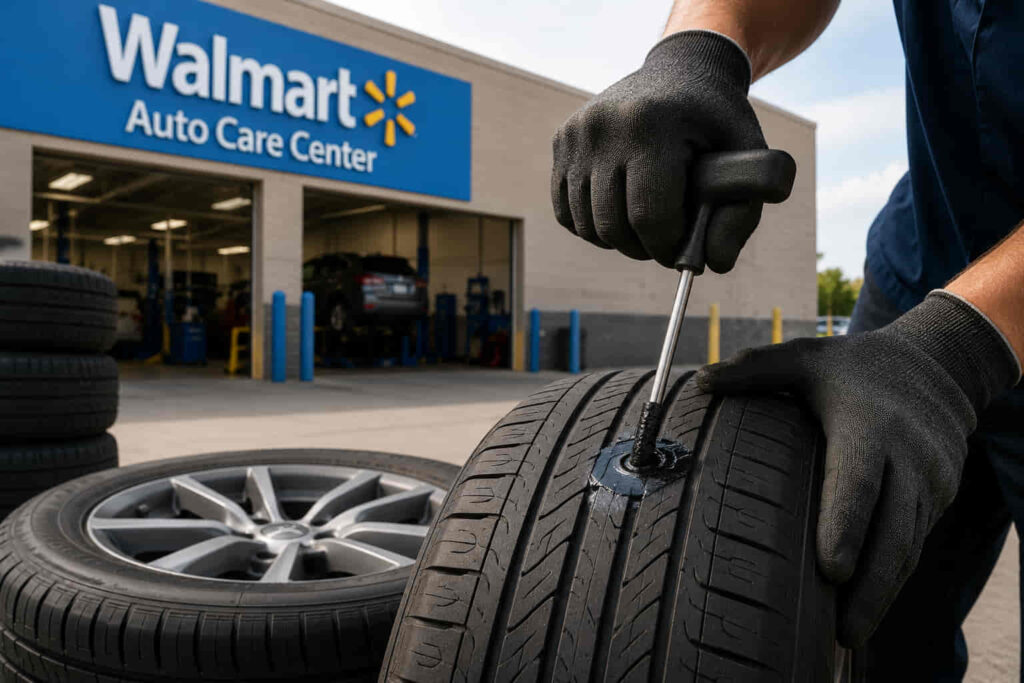
Walmart may not repair every flat tire because tire repair depends on the location, size, and severity of the damage rather than only the fact that the tire is losing air. Walmart Auto Care Center can inspect tire problems and provide certain tire services, but a tire must meet safety requirements before a repair is considered possible.
A flat tire caused by a small puncture in the repairable tread area may have a chance of being repaired, while damage affecting the tire structure may require replacement. The main purpose of a tire repair inspection is to determine whether the tire can safely return to service without creating a higher risk of failure while driving.
Many drivers assume that any puncture can be fixed with a patch or plug, but tire construction limits what repairs are considered safe. The tread area, sidewall structure, puncture size, tire age, and previous damage all influence the repair decision.
Understanding why Walmart may refuse certain flat tire repairs helps drivers avoid unnecessary frustration and make better decisions about whether to repair or replace a damaged tire. This guide explains the main situations where a tire may not qualify for repair and what options are available when repair is not recommended.
Can Walmart Repair a Tire With Sidewall Damage?
Walmart may not repair a tire with sidewall damage because the sidewall is a critical structural area that cannot be safely restored in the same way as a puncture in the tread area. The sidewall supports the weight of the vehicle, absorbs road impacts, and allows the tire to maintain its shape during driving. Damage in this area can weaken the internal structure even if the visible hole appears small.
A puncture caused by a nail or sharp object in the tread area may sometimes be repairable because that section has stronger internal reinforcement designed to maintain contact with the road. However, damage on the sidewall involves the flexible part of the tire that constantly bends while the vehicle moves. A patch or plug cannot reliably restore the original strength of the damaged sidewall.
Sidewall damage includes problems such as cuts, punctures, cracks, bulges, or exposed internal materials. These issues indicate that the tire’s structural integrity may already be compromised. Continuing to drive on a tire with this type of damage increases the risk of sudden air loss or tire failure, especially at highway speeds.
For example, if a vehicle runs over a sharp object and the puncture appears near the outer edge of the tread or directly on the sidewall, Walmart may recommend replacing the tire instead of repairing it. This decision is based on tire safety standards rather than simply the difficulty of completing the repair.
Can Walmart Patch Large or Unsafe Tire Punctures?
Walmart may refuse to patch a tire when the puncture is too large, irregular, or located in an area where a repair cannot safely restore the tire’s function. Tire repairs are designed for specific types of damage, and the size and shape of a puncture determine whether the internal structure remains strong enough for continued use.
Small punctures caused by common objects such as nails or screws in the central tread area are generally more suitable for repair because the damage is limited and easier to seal properly. Larger holes, torn rubber, or damage caused by sharp objects moving inside the tire can create internal problems that cannot be solved with a simple patch.
Multiple punctures close together can also make repair unsafe because removing too much material from the tread area can weaken the tire. In addition, punctures caused by impacts, such as hitting a pothole or road debris at high speed, may involve hidden internal damage that is not visible from the outside.
A proper tire inspection looks beyond the location of the hole. Technicians need to evaluate tread condition, internal damage, air loss severity, and overall tire safety before deciding whether repair is appropriate. For example, a small nail puncture in the center of a newer tire may be repairable, while a similar puncture combined with sidewall damage or excessive wear may require replacement.
Read more: Continental Tires vs Michelin
Can an Old or Damaged Tire Be Repaired at Walmart?
Walmart may not repair an old or heavily damaged tire because a puncture repair cannot restore a tire that has already lost its structural reliability. A tire must be evaluated as a complete component, not only by looking at the location of the hole. Even when the puncture itself appears repairable, the overall condition of the tire determines whether continuing to use it is safe.
Tire age is an important factor because rubber compounds naturally change over time due to exposure to heat, sunlight, moisture, and repeated stress. As a tire ages, cracks may develop, the rubber may become less flexible, and the internal structure may become more vulnerable. Repairing an aged tire may not solve the underlying safety concerns caused by deterioration.
Excessive tread wear can also prevent a tire from being repaired. When the tread depth becomes too low, the tire may already have reduced traction and increased risk during wet conditions. Previous repairs, uneven wear, visible cracking, or internal damage can further affect whether a repair is considered safe.
For example, a tire with a small nail puncture may qualify for repair if it has good tread depth and no structural problems. However, the same puncture on a worn tire with cracks or previous damage may lead Walmart to recommend replacement instead. The repair decision depends on the complete condition of the tire, not just the immediate cause of the flat.
Does Walmart Repair Every Type of Flat Tire?
Walmart does not repair every type of flat tire because tire service depends on the type of damage, available service capability, and whether the repair meets safety requirements. A tire repair is only appropriate when the damage can be corrected without reducing the tire’s ability to safely support the vehicle.
Repairable flat tires typically involve limited damage in the tread area where the puncture can be properly sealed. However, problems such as sidewall damage, large punctures, severe wear, and structural failures usually fall outside normal repair conditions because the tire may remain unsafe even after treatment.
The availability of repair services can also vary depending on the Walmart Auto Care Center location and the specific services offered at that facility. Some locations may have different equipment, operating hours, or service limitations, which means drivers should confirm availability before visiting.
For example, a driver with a slow leak caused by a small tread puncture may receive a different recommendation from someone with a tire damaged by a pothole impact or sidewall cut. The inspection process determines whether repair is a safe solution or whether replacement is the better option.
Understanding these limitations helps drivers avoid expecting every flat tire to be repaired. The goal of a tire inspection is not simply to stop air loss but to ensure the tire remains safe under normal driving conditions.
What Should You Do If Walmart Cannot Repair Your Tire?
If Walmart cannot repair your tire, the next step depends on the type of damage, the condition of the tire, and whether a safe repair option is available elsewhere. A tire that cannot be repaired at Walmart is not always unusable, but it requires a different solution based on the reason the repair was declined.
For a tire with repairable damage but limited service availability, drivers may consider visiting a dedicated tire repair shop that has specialized equipment for tire inspection and repair. These shops may provide additional evaluation and confirm whether the tire meets repair standards. However, a professional inspection should still focus on safety rather than attempting to repair every damaged tire.
If the tire has structural problems such as sidewall damage, severe wear, or internal damage, replacement is usually the safer option. Continuing to drive on an unsafe tire can increase the risk of sudden air loss, poor handling, or tire failure while driving.
Drivers should also check whether the tire is covered by a manufacturer warranty, road hazard protection plan, or previous service agreement. In some cases, coverage may reduce the cost of replacing a damaged tire.
For example, a tire with a small tread puncture may be evaluated by another repair provider, while a tire with a sidewall cut after hitting road debris may need immediate replacement. The correct decision depends on whether the tire can safely support normal driving after the repair.
When Should You Replace a Flat Tire Instead of Repairing It?
You should replace a flat tire instead of repairing it when the damage affects the tire’s structural integrity, occurs in a non-repairable area, or the tire is already unsafe due to age and wear. A repair can seal a puncture, but it cannot restore strength that has been permanently damaged.
Structural damage is one of the most important reasons to replace a tire. Problems such as sidewall punctures, large cuts, exposed internal materials, or visible bulges indicate that the tire may no longer be able to handle normal driving forces. These conditions create risks that a patch or plug cannot eliminate.
A tire should also be replaced when it has reached the end of its usable condition. Low tread depth, severe cracking, uneven wear, repeated repairs, or damage from a major impact can make replacement a safer choice than attempting another repair.
The decision should consider the entire tire condition rather than only the immediate flat. For example, replacing a tire with a small puncture but severe tread wear may prevent future problems, while repairing a newer tire with a simple tread puncture may be a practical solution.
Choosing replacement over repair is ultimately about maintaining vehicle safety. A tire is the only component connecting the vehicle to the road, so preserving its structural reliability is more important than saving the cost of a repair that may not provide a safe long-term solution.
What Should You Know Before Asking Walmart to Repair Your Flat Tire?
Walmart may repair some flat tires, but the final decision depends on whether the tire damage can be fixed safely without affecting the tire’s structural reliability. A simple tread puncture on a tire in good condition may have a repair option, while sidewall damage, large punctures, severe wear, or structural problems usually require replacement.
Understanding why Walmart may refuse certain tire repairs helps drivers make better decisions instead of assuming that every flat tire can be patched. Tire repair is not only about stopping air loss; it is about ensuring the tire can continue supporting the vehicle safely under normal driving conditions.
Before seeking repair, drivers should consider the location of the damage, tire age, tread condition, previous repairs, and overall tire health. These factors determine whether repairing the tire provides a reliable solution or only delays a more serious problem.
If Walmart cannot repair the tire, drivers can explore other professional tire service options or replace the tire when damage affects safety. Choosing the correct solution protects vehicle control, reduces the risk of tire failure, and helps maintain safe driving performance.
A proper tire inspection is always the first step. The goal is not simply to fix a flat tire but to ensure the repaired or replaced tire is suitable for continued use.