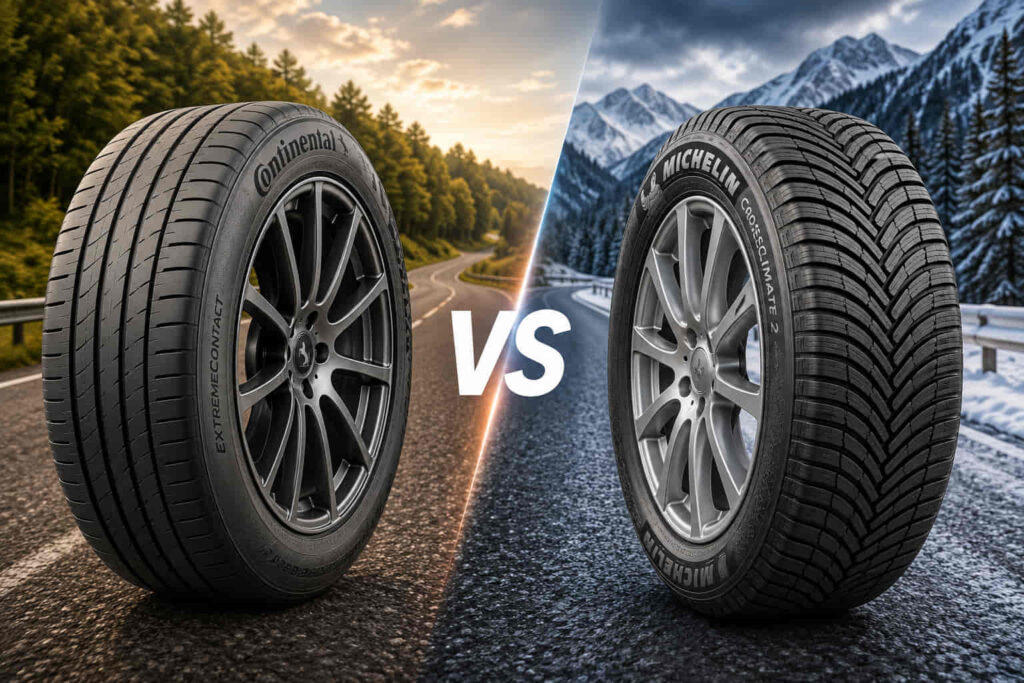
Continental and Michelin are two leading premium tire brands, but they differ in engineering priorities, driving characteristics, technology approach, and value proposition. Both manufacturers produce high-quality tires for passenger vehicles, SUVs, luxury cars, and performance applications, but they are designed around different customer expectations and driving conditions.
Michelin is widely recognized for its focus on long-term durability, refined comfort, and balanced performance across various environments. The brand has built a strong reputation among drivers who prioritize premium driving experience, consistent traction, and extended tire life.
Continental is known for emphasizing safety technology, wet-weather performance, and responsive handling. The brand has a strong presence in the European automotive market and is frequently selected as original equipment on many luxury vehicles because of its focus on stability, braking performance, and advanced tire engineering.
Choosing between Continental and Michelin depends on more than brand reputation. Factors such as vehicle type, climate, driving style, road conditions, and budget influence which tire provides the best value. A driver looking for maximum comfort and longevity may have different priorities from someone who needs superior wet grip and sharper handling.
This comparison explains the key differences between Continental and Michelin tires, including technology, durability, performance, comfort, pricing, and which brand may better match different driving needs.
Which Brand Has Better Tire Technology, Continental or Michelin?
Continental and Michelin both develop advanced tire technologies, but they focus on different performance priorities, with Michelin emphasizing overall efficiency and longevity while Continental placing strong attention on safety, traction, and driving control. Tire technology affects how a tire performs in areas such as grip, braking, fuel efficiency, comfort, and durability throughout its lifespan.
Michelin invests heavily in rubber compounds, tread design, and tire construction technologies that aim to maintain consistent performance over time. Many Michelin tires are engineered to balance multiple characteristics, including wet traction, dry handling, ride comfort, and wear resistance. This approach allows Michelin to serve drivers who want a premium tire experience across different driving environments.
Continental focuses strongly on technologies related to vehicle control and safety. The brand develops tire designs that improve braking performance, road contact, and handling stability, especially in challenging conditions. Continental tires are often recognized for their ability to provide strong wet-road performance because of tread designs and compounds developed to improve water evacuation and grip.
The difference between the two brands is not about one having better technology in every category. Michelin and Continental prioritize different engineering goals. A driver who values long-term balanced performance may prefer Michelin, while a driver who prioritizes braking response and traction confidence may find Continental more suitable.
Are Michelin Tires More Durable Than Continental Tires?
Michelin tires are often associated with excellent durability, but Continental tires can also provide strong tread life when the correct tire model is selected and maintained properly. Tire durability depends on the interaction between tire construction, rubber compound, driving habits, vehicle condition, and road environment.
Michelin’s reputation for longevity comes from its focus on maintaining performance throughout the tire’s service life. Many Michelin models are designed to provide consistent traction even as the tread wears, which is important for drivers who want predictable performance over many miles.
Continental also produces durable premium tires, but its product strategy often places greater emphasis on performance characteristics such as grip, braking, and handling response. Certain Continental models are designed for drivers who prioritize safety and control, especially in vehicles with higher performance capabilities.
Maintenance has a significant impact on the actual lifespan of both brands. Correct tire pressure, regular rotation, proper wheel alignment, and suitable driving habits can extend tire life significantly. For example, a Michelin tire with poor maintenance may wear faster than a properly maintained Continental tire.
The better choice depends on the driver’s priorities. Michelin may appeal more to drivers seeking maximum long-term value, while Continental may be preferred by drivers who want a balance between durability and performance-focused handling.
Which Performs Better in Wet Conditions, Continental or Michelin?
Continental and Michelin both offer strong wet-weather performance, but Continental often receives recognition for its focus on wet braking and traction while Michelin emphasizes balanced performance across different road conditions. Wet performance depends on how effectively a tire can maintain contact with the road surface, remove water from the tread area, and provide predictable handling during braking and cornering.
Continental develops many tire models with advanced tread patterns designed to improve water evacuation and maintain grip on wet roads. This focus on safety and control has helped Continental become a popular choice among drivers who frequently experience rainy conditions or want strong braking confidence. The brand’s tires are often selected for vehicles where stability and emergency response are important priorities.
Michelin approaches wet performance by balancing traction with overall tire longevity and comfort. Many Michelin tires are engineered to maintain reliable grip throughout their usable lifespan rather than focusing only on maximum initial performance. This makes the brand appealing to drivers who want consistent behavior across changing road conditions.
The difference between the two brands becomes more noticeable depending on the specific tire model. A Continental performance tire may outperform a Michelin touring tire in wet braking, while a Michelin all-season tire may provide a more balanced experience for everyday driving.
For example, a driver living in an area with frequent rainfall may value Continental’s wet-weather strengths, while a long-distance driver who experiences different climates may prefer Michelin’s overall balance.
Which Tire Brand Provides Better Dry Handling and Driving Feel?
Continental and Michelin both provide strong dry-road performance, but Continental often emphasizes responsive handling while Michelin focuses on creating a balanced combination of grip, comfort, and stability. Dry handling is influenced by tread stiffness, sidewall construction, steering response, and how effectively the tire transfers vehicle input to the road.
Continental tires are frequently recognized for providing a connected driving experience, especially in performance-oriented applications. Their designs often prioritize steering precision, cornering stability, and braking response, which can appeal to drivers who want more immediate feedback from their vehicles.
Michelin tires are known for delivering predictable and refined handling characteristics. Instead of focusing only on aggressive performance, many Michelin models aim to provide stability, comfort, and confidence across a wide range of driving situations. This approach makes Michelin suitable for drivers who want premium performance without sacrificing everyday usability.
High-performance vehicles may benefit from the sharper response of certain Continental models, while luxury vehicles and daily drivers may benefit from Michelin’s emphasis on smooth and controlled handling. For example, a sports sedan driver may prefer Continental for more direct steering feedback, while a premium SUV owner may prioritize Michelin’s balanced driving experience.
The better option depends on whether the driver values performance engagement or a more comfortable and refined driving style.
Read more: Yokohama vs Michelin
Which Is More Comfortable and Quieter, Continental or Michelin?
Michelin and Continental both produce premium tires with strong comfort characteristics, but Michelin often places greater emphasis on a refined ride experience while Continental focuses on balancing comfort with handling and safety performance. Tire comfort depends on several factors, including sidewall construction, tread pattern, internal materials, and the ability to absorb road impacts.
Michelin has developed a strong reputation among drivers who prioritize a quiet cabin environment and smooth highway driving. Many Michelin touring and passenger tire models are designed to reduce vibration and road noise while maintaining stable handling. This makes Michelin a common choice for luxury vehicles, family cars, and drivers who spend significant time on highways.
Continental also offers comfortable tire options, especially for premium vehicles. The brand uses technologies focused on reducing noise and improving ride quality while maintaining strong traction and braking performance. Continental tires are frequently selected as original equipment on European vehicles because they provide a balance between comfort, control, and safety.
The difference between the two brands becomes more noticeable depending on the vehicle and tire category. A touring tire designed for comfort will usually provide a quieter ride than a performance tire designed for sharper handling, regardless of brand.
For example, a luxury sedan owner who values a quiet and smooth driving experience may prefer Michelin, while a driver who wants comfort combined with stronger handling response may find Continental a better match.
Which Brand Offers Better Value for Money, Continental or Michelin?
Continental and Michelin offer different types of value, with Michelin focusing on premium ownership benefits and Continental emphasizing advanced performance and safety characteristics. The better value depends on how the driver measures cost, performance, durability, and long-term ownership experience.
Michelin tires typically have a higher purchase price because the brand is positioned in the premium tire segment. Many drivers consider Michelin worth the investment because of its reputation for durability, comfort, and consistent performance throughout the tire’s lifespan. For owners who keep vehicles for many years, the higher initial cost may provide value through reduced replacement frequency and refined driving quality.
Continental also operates in the premium segment but often attracts buyers who prioritize safety technology, wet-weather capability, and responsive handling. The brand provides strong performance characteristics that can justify its price, especially for drivers using luxury vehicles or driving in conditions where traction and braking performance are important.
The total value of a tire should be evaluated beyond the initial purchase price. Factors such as tread life, fuel efficiency, driving conditions, maintenance requirements, and replacement costs all influence ownership value.
For example, a driver who prioritizes maximum comfort and long-term reliability may consider Michelin a better investment, while someone who values wet-road safety and performance handling may find Continental provides stronger value.
Should You Buy Continental or Michelin Tires?
The choice between Continental and Michelin depends on your driving priorities because both brands deliver premium tire performance with different strengths. Michelin is often preferred by drivers who want long-term durability, refined comfort, and consistent performance across different driving conditions. Continental is often favored by drivers who prioritize wet-weather traction, braking confidence, and responsive handling.
Michelin provides strong value for drivers who consider tire longevity, ride comfort, and overall ownership experience as the most important factors. Its premium positioning makes it suitable for drivers who want a balanced tire that performs well in daily driving, highway travel, and long-term use.
Continental is a strong option for drivers who value safety-focused engineering and dynamic performance. The brand’s emphasis on grip, braking, and handling makes it particularly attractive for luxury vehicles, performance-oriented cars, and drivers who frequently encounter changing road conditions.
Neither brand is the universal winner because tire performance depends on the specific tire model, vehicle type, climate, and driving habits. A tire designed for maximum comfort may not be the best choice for aggressive driving, while a performance-focused tire may not provide the ideal experience for long-distance commuting.
The best decision between Continental and Michelin comes from matching the tire characteristics with your actual needs. Understanding differences in technology, durability, wet performance, comfort, and value allows drivers to choose the tire that provides the best balance for their vehicle and driving environment.