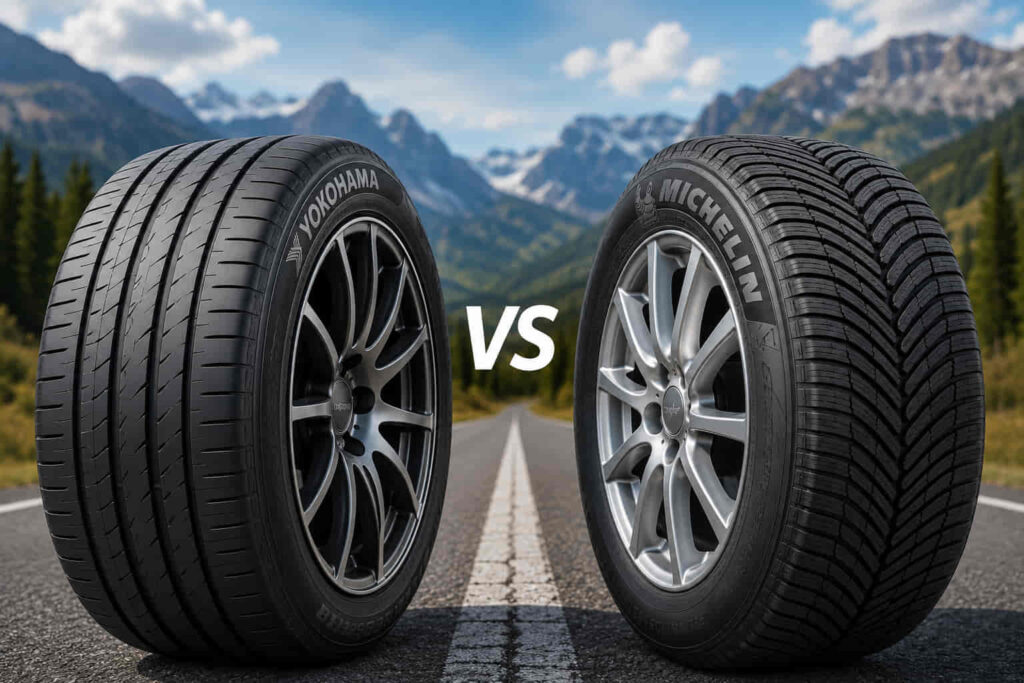
Yokohama and Michelin are both respected tire brands, but they differ in technology focus, pricing strategy, performance characteristics, and the type of drivers they are designed for. Choosing between Yokohama and Michelin requires understanding how each brand approaches tire engineering, durability, comfort, and value rather than assuming one brand is always better in every situation.
Michelin is widely recognized as a premium tire manufacturer that focuses on advanced technology, long-term durability, and balanced performance across multiple driving conditions. The brand often targets drivers who prioritize maximum reliability, refined driving comfort, and high-level engineering.
Yokohama focuses on combining performance, handling characteristics, and competitive pricing. The brand has developed a strong reputation among drivers who want responsive driving feel and dependable performance without moving into the highest price category.
The better choice between Yokohama and Michelin depends on factors such as vehicle type, driving environment, climate conditions, expected mileage, and budget. A commuter looking for practical daily performance may have different priorities from a driver seeking premium comfort or maximum tread life.
This comparison explains the key differences between Yokohama and Michelin tires, including technology, durability, handling, comfort, pricing, and which brand may better match different driving needs.
Which Brand Offers Better Tire Technology, Yokohama or Michelin?
Michelin and Yokohama use different approaches to tire technology, with Michelin focusing heavily on advanced engineering and long-term efficiency while Yokohama emphasizing performance balance and driving response. Both brands invest in research and development, but their product strategies target different customer priorities.
Michelin is known for developing tire technologies that focus on durability, fuel efficiency, ride comfort, and consistent performance throughout the tire’s lifespan. The brand uses advanced rubber compounds, optimized tread designs, and engineering methods designed to maintain traction while reducing wear. These technologies are commonly applied across touring tires, performance tires, and all-season products.
Yokohama places strong emphasis on handling characteristics, road feedback, and performance-oriented tire design. The brand has developed technologies focused on improving grip, steering response, and stability, especially for drivers who value a more connected driving experience. Yokohama’s performance tire lines are often recognized for providing responsive handling while maintaining practical everyday usability.
The difference between the two brands is not simply about which technology is superior, but how each technology serves different driving needs. A driver prioritizing maximum longevity and refined comfort may prefer Michelin, while someone looking for engaging handling and strong performance value may find Yokohama more suitable.
Are Michelin Tires More Durable Than Yokohama Tires?
Michelin tires are often recognized for strong durability, but Yokohama tires can also provide reliable tread life when the correct model is selected and properly maintained. Tire durability depends on multiple factors, including rubber compound, tread design, driving habits, road conditions, vehicle alignment, and maintenance practices.
Michelin generally positions many of its products around long-term ownership value. The brand focuses on creating tires that maintain performance characteristics over extended mileage, which is one reason Michelin is frequently chosen by drivers who want fewer replacements over time.
Yokohama also produces durable tires designed for different applications, including passenger vehicles, SUVs, and performance-focused vehicles. The actual lifespan depends heavily on the specific tire category because a high-performance tire designed for grip may wear differently from a touring tire designed for extended highway use.
For example, a Michelin touring tire and a Yokohama touring tire may both provide excellent mileage when installed on the correct vehicle and maintained properly. However, a tire used with incorrect inflation, poor wheel alignment, or aggressive driving habits will experience reduced lifespan regardless of the brand.
Durability should therefore be evaluated together with performance requirements. A tire that lasts longer is not automatically the best choice if it does not provide the traction, comfort, or handling characteristics required for the driver’s conditions.
Read more: Who Makes Mastercraft Tires
Which Performs Better in Wet and Dry Conditions, Yokohama or Michelin?
Michelin and Yokohama both provide strong wet and dry performance, but they achieve it through different tire designs and performance priorities. The ability of a tire to maintain grip depends on factors such as tread pattern, rubber compound, contact pressure distribution, and how the tire responds to different road conditions.
Michelin tires are widely recognized for providing balanced performance across various conditions. Many Michelin models use advanced tread designs that help maintain traction on wet roads while preserving stability during dry driving. This balance makes Michelin a popular choice for drivers who want predictable handling, strong braking performance, and consistent behavior throughout the tire’s service life.
Yokohama tires are known for responsive handling and road feedback, especially in performance-oriented tire categories. Many Yokohama models are designed to provide strong cornering ability, steering response, and driver engagement. This characteristic can appeal to drivers who prefer a more direct connection between the vehicle and the road.
In wet conditions, both brands offer tire models with channels and tread patterns designed to remove water and reduce the risk of losing traction. However, performance differences depend more on the specific tire model than the brand name alone. A premium touring tire from one brand may perform differently from a performance tire from the other brand.
For example, a driver who frequently travels on highways during rainy conditions may prioritize stable wet braking and comfort, while a driver who enjoys more responsive handling may prefer a tire designed around steering performance. The best choice depends on matching the tire characteristics with the driving environment.
Which Tire Brand Provides Better Comfort and Lower Road Noise?
Michelin generally has an advantage in ride comfort and noise reduction because many of its tire designs focus on creating a refined driving experience, while Yokohama emphasizes a balance between comfort and responsive handling. Tire comfort depends on internal construction, sidewall design, tread pattern, and how effectively the tire absorbs road imperfections.
Michelin has built a strong reputation among drivers who prioritize quiet operation and a smooth ride. Many Michelin touring and passenger tire models are engineered to reduce vibration and minimize road noise, making them suitable for luxury vehicles, family vehicles, and long-distance highway driving.
Yokohama also offers comfortable tire options, but some of its performance-focused products are designed with handling response as a higher priority. A more aggressive tread pattern or firmer construction can improve steering feel and cornering stability while creating different comfort characteristics compared with a tire designed primarily for quietness.
The difference becomes more noticeable during long-distance driving. A driver spending several hours on highways may value a tire that reduces cabin noise and provides a softer ride, while a driver who enjoys spirited driving may prefer sharper handling feedback.
For example, a luxury sedan owner may prefer Michelin because of its emphasis on refinement, while a sport-oriented vehicle owner may choose Yokohama for its balance between comfort and driving response. The right choice depends on whether comfort or handling is the higher priority.
Is Yokohama or Michelin Better for SUVs and Trucks?
The better choice between Yokohama and Michelin for SUVs and trucks depends on whether the driver prioritizes premium comfort, long-term durability, handling performance, or overall value. Larger vehicles place higher demands on tires because they require stronger load capacity, stable handling, and reliable traction under heavier weight conditions.
Michelin offers SUV and truck tires designed around stability, comfort, and long-distance reliability. Many Michelin models focus on providing a refined driving experience while maintaining strong traction and durability. This makes the brand suitable for SUV owners who frequently drive on highways, carry passengers, or want a premium tire experience with predictable performance.
Yokohama also provides SUV and truck tire options that focus on versatility and performance. The brand is known for producing tires that offer responsive handling, strong road feedback, and options for drivers who need capability beyond normal highway driving. Certain Yokohama models are designed for all-terrain applications, making them suitable for drivers who combine daily commuting with occasional off-road use.
The right choice depends on how the vehicle is used. A luxury SUV owner who prioritizes quiet operation and long-term comfort may prefer Michelin, while a pickup truck owner who values handling response and versatile performance may find Yokohama a better match.
For example, an SUV used mainly for family transportation and highway travel may benefit from Michelin’s comfort-focused designs, while a truck used for mixed road conditions may benefit from Yokohama’s performance-oriented options.
Which Tire Brand Offers Better Value for Money?
Yokohama and Michelin offer different types of value, with Michelin emphasizing premium ownership benefits and Yokohama focusing on performance balance at a competitive price. The better value depends on whether the buyer prioritizes lower upfront cost, longer-term durability, advanced features, or specific driving performance.
Michelin tires typically have a higher purchase price because the brand positions itself in the premium tire segment. Many buyers choose Michelin because they value refined performance, strong reputation, advanced engineering, and the potential for long-term reliability. For drivers who keep vehicles for many years, the additional investment may provide value through comfort and consistent performance.
Yokohama often attracts buyers who want strong performance without paying the highest premium prices. The brand provides a balance between handling, traction, comfort, and affordability, making it appealing to drivers who want quality tires while maintaining a reasonable budget.
The total ownership cost should include more than the initial purchase price. Factors such as tread life, fuel efficiency, maintenance requirements, driving conditions, and replacement frequency all influence the actual value of a tire.
For example, a driver who uses a vehicle mainly for daily commuting may find Yokohama provides sufficient performance at a lower cost, while a driver who prioritizes premium comfort and maximum refinement may consider Michelin worth the additional investment.
Should You Buy Yokohama or Michelin Tires?
The choice between Yokohama and Michelin depends on your driving priorities because both brands offer strong tire options with different strengths. Michelin is generally positioned as a premium tire brand that focuses on advanced engineering, long-term durability, comfort, and consistent performance across different driving conditions. Yokohama provides a balance between performance, handling response, and competitive pricing, making it attractive for drivers who want dependable tires without moving into the highest price category.
Drivers who prioritize maximum comfort, quiet operation, and long-term ownership value may find Michelin to be the better option. The brand’s focus on refined performance makes it suitable for vehicles where ride quality, highway stability, and durability are important factors.
Drivers who want responsive handling, practical performance, and better cost efficiency may prefer Yokohama. The brand offers tire options that provide strong everyday capability while maintaining a more accessible price position.
Neither brand is the universal winner because tire performance depends on the specific model, vehicle type, driving conditions, and maintenance habits. A premium tire installed on the wrong vehicle or used in unsuitable conditions may not provide the expected benefits.
The best choice between Yokohama and Michelin comes from matching the tire characteristics with your actual needs. Understanding differences in technology, durability, comfort, performance, and value allows buyers to select the tire that provides the most suitable balance for their driving environment.