Ford Escape thermostat replacement involves removing a faulty thermostat, installing a compatible replacement, refilling the cooling system, and verifying that the engine maintains its normal operating temperature. A malfunctioning thermostat can cause engine overheating, slow engine warm-up, poor cabin heating, or a check engine light. Replacing the defective component restores proper coolant flow when thermostat failure is the confirmed cause.
The replacement process depends on the Ford Escape’s model year, engine type, and thermostat housing design. Older models with naturally aspirated engines and newer models equipped with EcoBoost engines can have different thermostat locations, component configurations, and access requirements. Identifying the correct engine and replacement part is essential before beginning the repair.
Ford Escape thermostat replacement costs vary based on the thermostat assembly, labor rates, and additional cooling system components. DIY replacement eliminates professional labor charges but requires appropriate tools, compatible coolant, and correct installation procedures. An incorrect installation or trapped air in the cooling system can cause continued overheating, coolant leaks, or unstable engine temperatures.
This guide explains the symptoms of a failing Ford Escape thermostat, diagnostic methods, thermostat locations, required tools, replacement steps, and repair costs. It also covers post-replacement checks and troubleshooting procedures to help determine whether the cooling system is functioning correctly.
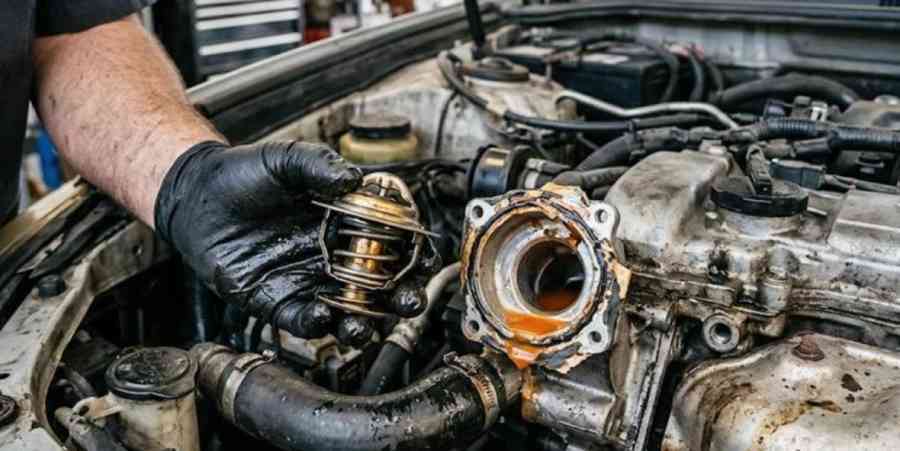
What Are the Symptoms of a Bad Ford Escape Thermostat?
The most common symptoms of a bad Ford Escape thermostat are engine overheating, slow engine warm-up, fluctuating temperature readings, weak cabin heating, and an illuminated check engine light. These symptoms occur when the thermostat becomes stuck open, stuck closed, or fails to regulate coolant circulation correctly. The severity depends on the thermostat’s failure position and the engine’s operating conditions.
Engine overheating is a serious symptom of a thermostat stuck closed. The thermostat normally opens as the engine warms up, allowing coolant to circulate through the radiator and release excess heat. When the valve remains closed, coolant flow through the radiator is restricted, causing engine temperature to rise. The temperature gauge may approach the hot zone, and the vehicle may display an engine overheating warning. Continued operation under these conditions can damage the cylinder head, head gasket, or other engine components.
A thermostat stuck open produces different symptoms. Coolant circulates through the radiator before the engine reaches its intended operating temperature, extending warm-up time. This condition can cause weak cabin heating, particularly during cold weather, and prevent the engine from maintaining its expected temperature. Some Ford Escape models may also experience reduced fuel efficiency because engine management strategies depend partly on coolant temperature.
Fluctuating temperature readings can indicate inconsistent thermostat operation, although low coolant levels, trapped air, or cooling system faults can produce similar behavior. A failing thermostat may also trigger diagnostic trouble code P0128 (Coolant Thermostat — Coolant Temperature Below Thermostat Regulating Temperature) when the powertrain control module detects that the engine is not warming up as expected. However, P0128 can also result from coolant temperature sensor faults or other cooling system problems. Confirming the cause through diagnostic testing is necessary before replacing the thermostat.
How Can You Diagnose a Bad Ford Escape Thermostat?
To diagnose a bad Ford Escape thermostat, check the coolant level, scan for diagnostic trouble codes, monitor engine coolant temperature, and evaluate the engine’s warm-up behavior. These checks help distinguish a thermostat stuck open or closed from other cooling system problems, including coolant leaks, faulty temperature sensors, radiator fan malfunctions, and water pump failures.
Start by inspecting the coolant reservoir when the engine is completely cold. The coolant level should fall within the markings specified for the vehicle. Low coolant can cause overheating, unstable temperature readings, and poor cabin heating, which may resemble thermostat failure. Inspect the radiator hoses, thermostat housing, coolant reservoir, and visible connections for leaks. Never remove the coolant reservoir cap while the cooling system is hot or pressurized.
Next, connect an OBD-II scanner and check for stored diagnostic trouble codes. P0128 is one of the most relevant codes associated with a thermostat stuck open because it indicates that the engine coolant temperature has not reached the expected regulating temperature under monitored operating conditions. However, a defective engine coolant temperature sensor, low coolant level, or other temperature regulation problem can also trigger this code. A P0128 reading should therefore be evaluated alongside live temperature data rather than treated as definitive proof of thermostat failure.
Monitor engine coolant temperature using the scanner during a cold start and subsequent warm-up. A functioning thermostat helps the engine reach and maintain its designed operating temperature. A thermostat stuck open may cause unusually slow warm-up or coolant temperatures that remain below the expected range. A thermostat stuck closed can contribute to rapid overheating because coolant circulation through the radiator is restricted. The expected temperature range varies by Ford Escape model year, engine configuration, and thermostat specification, so compare readings with the appropriate vehicle service information.
Finally, evaluate whether the symptoms match the thermostat’s suspected failure mode. Overheating accompanied by coolant loss may indicate a leak, while overheating with an inoperative radiator fan may point to a fan control problem. If the engine temperature rises into the overheating range, stop the engine safely rather than continuing the test. Replace the thermostat only after diagnostic findings support thermostat failure, since installing a new thermostat will not correct unrelated cooling system faults.
Where Is the Thermostat Located on a Ford Escape?
The Ford Escape thermostat is located within the engine cooling system, typically inside a thermostat housing connected to the engine’s coolant passages and radiator hoses. Its exact location depends on the model year, engine type, and thermostat housing configuration. Older Ford Escape models and newer EcoBoost-equipped vehicles use different cooling system layouts, so identifying the engine is necessary before locating or removing the thermostat.
On many older Ford Escape models equipped with the 2.0L, 2.3L, or 2.5L four-cylinder engines, the thermostat is positioned in a housing near the engine’s coolant hose connections. Access varies by engine design, and some configurations require removing nearby components to expose the housing. Models equipped with the 3.0L V6 use a different engine layout, which changes the thermostat’s position and the components that may obstruct access. Following the appropriate radiator hose to its engine connection can help identify the housing, but the correct service diagram should confirm its location.
Ford Escape models equipped with 1.5L, 1.6L, or 2.0L EcoBoost engines have engine-specific coolant routing and thermostat assemblies. Depending on the configuration, the thermostat may be integrated into a housing assembly with multiple coolant connections. Access can be restricted by surrounding engine components, hoses, and intake-related equipment. Some configurations require replacing the housing assembly rather than only the thermostat valve.
The following table summarizes the main differences between Ford Escape engine configurations.
| Engine configuration | Thermostat location considerations |
|---|---|
| 2.0L, 2.3L, and 2.5L four-cylinder | Engine-mounted thermostat housing connected to coolant hoses; access varies by engine |
| 3.0L V6 | Thermostat housing location and access differ from four-cylinder configurations |
| 1.5L and 1.6L EcoBoost | Engine-specific thermostat housing and coolant connections |
| 2.0L EcoBoost | Thermostat assembly and access depend on model year and engine layout |
| Hybrid powertrain | Cooling system configuration requires hybrid-specific service information |
Before purchasing replacement parts or disconnecting coolant hoses, verify the Ford Escape’s model year, engine displacement, and thermostat assembly using the vehicle identification number (VIN) or manufacturer service information. This prevents incorrect part selection and unnecessary disassembly, especially when different engines are offered within the same model year.
What Tools and Parts Do You Need for Ford Escape Thermostat Replacement?
Ford Escape thermostat replacement requires a compatible thermostat or thermostat housing assembly, replacement seals, the correct engine coolant, and basic automotive repair tools. The exact equipment depends on the vehicle’s model year, engine configuration, and thermostat accessibility. Preparing the required components before disassembly reduces repair interruptions and helps prevent coolant leaks or installation errors.
The following table lists the main tools and replacement parts used during the procedure.
| Tool or Part | Purpose |
|---|---|
| Replacement thermostat | Regulates coolant flow to maintain engine operating temperature |
| Thermostat housing assembly | Replaces the housing when required by the engine design or component condition |
| Gasket or O-ring | Seals the thermostat housing to prevent coolant leaks |
| Socket and ratchet set | Removes thermostat housing fasteners and surrounding components |
| Torque wrench | Tightens fasteners to manufacturer-specified torque values |
| Hose clamp pliers | Releases and reinstalls coolant hose clamps |
| Coolant drain pan | Collects coolant during draining and component removal |
| Compatible engine coolant | Restores the cooling system after thermostat installation |
| Safety gloves and eye protection | Protects against coolant exposure and mechanical injuries |
| OBD-II scanner | Monitors engine coolant temperature and checks diagnostic trouble codes |
Choosing the correct replacement thermostat is essential because Ford Escape engines do not all use the same thermostat design. Some configurations allow the thermostat valve to be replaced separately, while others use a thermostat integrated into a housing assembly. Installing an incompatible component can cause improper sealing, incorrect coolant temperature regulation, or difficulty connecting coolant hoses.
Replacement parts should match the vehicle’s VIN, engine displacement, model year, and applicable manufacturer specifications. Original Equipment Manufacturer (OEM) components are designed to meet the vehicle’s original requirements, while compatible aftermarket components provide alternative replacement options. Thermostat opening temperature, housing design, and seal dimensions must match the intended application.
Use coolant that meets the Ford specification for the particular model year and engine rather than selecting coolant by color alone. A torque wrench is also important because overtightening thermostat housing bolts can damage plastic housings, sealing surfaces, or threaded connections. Confirm the correct torque specifications and coolant refill procedure using the applicable Ford service information before starting the replacement.
How Do You Replace a Ford Escape Thermostat Step by Step?
To replace a Ford Escape thermostat, allow the engine to cool, drain the necessary coolant, remove the old thermostat assembly, install the replacement component, and refill and bleed the cooling system. The procedure varies by model year and engine configuration because thermostat locations, housing designs, and component access differ. Always follow the service instructions for the specific vehicle, particularly for fastener torque, coolant requirements, and air removal.
How Do You Prepare a Ford Escape for Thermostat Replacement?
Prepare the Ford Escape by parking on a level surface, switching off the engine, and allowing the cooling system to cool completely. Hot coolant remains pressurized after the engine stops and can cause serious burns when a reservoir cap or coolant hose is opened. Never attempt thermostat removal while the cooling system is hot.
Identify the replacement thermostat using the vehicle’s model year, engine configuration, and VIN. Gather the required tools, replacement seals, compatible coolant, and a suitable drain pan. Disconnect the negative battery terminal only when required by the vehicle-specific service procedure, and follow the manufacturer’s instructions for any electronic components that must be removed.
Position a drain pan beneath the appropriate coolant drainage point. Open the cooling system only after confirming that it is completely cool and depressurized. Drain enough coolant to lower the level below the thermostat housing, following the applicable service procedure. Collect the coolant in a clean, suitable container and dispose of used coolant according to local regulations.
How Do You Remove the Old Ford Escape Thermostat?
Remove the old Ford Escape thermostat by accessing its housing, disconnecting the necessary coolant hoses, and removing the housing fasteners. Depending on the engine, access may require removing an air intake duct, brackets, or other surrounding components. Identify the correct housing using the engine-specific service diagram before disassembly.
Release the hose clamps with suitable pliers and carefully separate the coolant hoses from the housing connections. Avoid excessive force on plastic fittings because aged components can become brittle. Remove the thermostat housing bolts using the appropriate socket, then separate the housing from its mounting surface without damaging the surrounding components.
Take out the thermostat or complete housing assembly according to its design. Note the original thermostat orientation and inspect the housing, gasket surfaces, and coolant connections for cracks, corrosion, or accumulated deposits. Remove the old gasket or O-ring and clean the sealing surfaces using methods approved for the housing material. Damaged sealing surfaces can cause coolant leaks even when a new thermostat is installed.
How Do You Install the New Ford Escape Thermostat?
Install the new Ford Escape thermostat by positioning the compatible replacement component correctly and securing the housing with the specified fasteners and seals. Confirm that the replacement matches the original component’s dimensions, operating specifications, and coolant connection arrangement.
For configurations with a separately replaceable thermostat, position the valve according to the manufacturer’s orientation requirements. Install a new gasket or O-ring in its designated groove, ensuring that it remains seated during assembly. If the thermostat is integrated into the housing, install the replacement assembly according to the engine-specific instructions.
Reattach the thermostat housing and tighten its fasteners in the sequence and to the torque specified in the appropriate Ford service information. Do not guess torque values or overtighten plastic housing components, as excessive force can crack the housing or damage the mounting threads. Reconnect the coolant hoses, secure their clamps, and reinstall any components removed to gain access.
How Do You Refill and Bleed the Ford Escape Cooling System?
Refill the Ford Escape cooling system using coolant that meets the manufacturer’s specification for the vehicle’s model year and engine. Follow the specified filling procedure because trapped air can interfere with coolant circulation, produce unstable temperature readings, and contribute to overheating.
Some Ford Escape cooling systems require particular air-purging procedures or specialized filling equipment. Use the vehicle-specific instructions to determine whether a vacuum filling tool, designated bleed point, or prescribed warm-up sequence is required. Do not assume that leaving the reservoir cap open while the engine idles is appropriate for every configuration.
After completing the required filling and bleeding procedure, inspect the thermostat housing, coolant hoses, and connections for leaks. Monitor engine coolant temperature using the instrument cluster or an OBD-II scanner and confirm that the engine warms up normally without overheating. Allow the engine to cool completely before rechecking the coolant level and adjusting it to the specified mark.
A successful thermostat replacement restores normal temperature regulation without coolant leaks, trapped air, or recurring overheating symptoms. If the engine continues overheating after installation, stop operation and investigate coolant circulation, air pockets, radiator fan performance, and other cooling system faults before driving the vehicle.
How Much Does Ford Escape Thermostat Replacement Cost?
Ford Escape thermostat replacement typically costs approximately $200–$500 at a professional repair shop, while DIY replacement may cost $40–$180 for parts and coolant. These are preliminary US-market budgeting estimates, not verified current quotes. The actual expense depends on the vehicle’s model year, engine configuration, thermostat design, local labor rates, and whether the repair requires replacing the complete thermostat housing.
Thermostat replacement costs consist of three main components: replacement parts, labor, and coolant. A thermostat located behind other engine components requires additional disassembly, increasing labor time. Repairs involving a complete housing assembly also cost more than replacing an individual thermostat valve. Additional expenses may arise when technicians discover damaged hoses, leaking connections, or other cooling system problems.
How Much Does a Ford Escape Replacement Thermostat Cost?
A Ford Escape replacement thermostat may cost approximately $20–$80 for a standalone component, while a complete thermostat housing assembly may cost $50–$150 or more. These illustrative ranges require confirmation against current parts listings for the specific vehicle.
OEM thermostats are designed to match the manufacturer’s specifications, while compatible aftermarket replacements offer alternative pricing. However, the cheapest component is not necessarily the most economical choice. Incorrect opening temperatures, incompatible housings, or poorly fitting seals can cause cooling system problems and require additional repairs.
How Much Does a Mechanic Charge to Replace a Ford Escape Thermostat?
Professional thermostat replacement labor depends on the engine layout, required disassembly, and repair shop’s hourly rate. For budgeting purposes, a repair taking approximately 1–3 labor hours at $100–$160 per hour would generate $100–$480 in labor charges. These figures are illustrative rather than verified Ford Escape labor-time specifications.
The following table summarizes preliminary replacement cost estimates.
| Cost Component | Estimated Cost (USD) |
|---|---|
| Standalone thermostat | $20–$80 |
| Thermostat housing assembly | $50–$150+ |
| Replacement coolant and seals | $20–$50 |
| Professional labor | $100–$480 |
| DIY replacement | $40–$180+ |
| Typical professional repair budget | $200–$500+ |
DIY replacement eliminates professional labor charges but requires suitable tools, mechanical experience, and correct cooling system servicing. Owners who already have a socket set, torque wrench, and coolant handling equipment may spend less than those purchasing tools for the first time. Professional replacement is the safer choice when thermostat access is restricted or the vehicle requires specialized cooling system filling procedures.
How Do You Know if a Ford Escape Thermostat Replacement Was Successful?
A Ford Escape thermostat replacement is successful when the engine reaches and maintains its normal operating temperature, the cooling system remains free of leaks, and the original thermostat-related symptoms no longer occur. Verification requires checking coolant levels, monitoring engine temperature, inspecting thermostat housing connections, and confirming that relevant diagnostic trouble codes do not return.
Start by inspecting the thermostat housing, coolant hoses, and surrounding connections for leaks after completing the manufacturer’s coolant filling and bleeding procedure. Coolant residue, visible dripping, or a declining reservoir level can indicate an improperly seated gasket, loose hose connection, or damaged housing. A cooling system pressure test can help identify leaks that are difficult to detect during a visual inspection. Check the coolant level again after the engine has cooled completely, as remaining air may be displaced during the initial operating cycle.
Next, monitor engine coolant temperature during warm-up and a controlled test drive. A properly functioning thermostat allows the engine to reach its specified operating temperature and regulate coolant flow as driving conditions change. Use an OBD-II scanner to observe live coolant temperature data and compare the readings with the expected range for the specific Ford Escape engine. The temperature should stabilize under normal operating conditions rather than remain unusually low or climb into the overheating range. Stop the engine safely if overheating occurs.
Finally, scan the vehicle for diagnostic trouble codes and verify that the original symptoms have been resolved. If P0128 was present before replacement, clearing the code alone does not confirm a successful repair. The engine must complete the applicable diagnostic monitoring conditions without the fault returning. Normal cabin heater performance, stable coolant temperature, and the absence of recurring warning lights provide additional evidence that the cooling system is functioning correctly.
Continued overheating, coolant loss, or recurring temperature-related fault codes indicate that further diagnosis is necessary. Possible causes include trapped air, insufficient coolant, radiator fan problems, water pump failure, or an incorrectly installed thermostat. Address these conditions before returning the vehicle to regular use.
What Does the Thermostat Do in a Ford Escape?
The Ford Escape thermostat regulates coolant flow between the engine and radiator to help maintain the engine’s designed operating temperature. It operates as a temperature-sensitive valve that restricts radiator circulation during engine warm-up and opens as coolant temperature increases. This regulation supports engine efficiency, consistent cabin heating, and protection against excessive engine temperatures.
When the engine is cold, the thermostat remains closed or restricts coolant flow through the radiator, depending on the cooling system design. This allows the engine to warm up more quickly instead of continuously releasing heat through the radiator. As coolant reaches the thermostat’s calibrated opening temperature, the valve begins to open, allowing heated coolant to circulate through the radiator. The radiator transfers heat to the surrounding air before coolant returns through the cooling system.
The thermostat’s opening temperature depends on the Ford Escape’s engine and thermostat specifications. It is not necessarily the same as the engine’s normal operating temperature because coolant temperature continues to change with engine load, ambient conditions, and cooling system operation. The thermostat works alongside the water pump, radiator, cooling fans, and engine coolant temperature sensor, but each component performs a different function. The water pump circulates coolant, the radiator dissipates heat, and the temperature sensor provides information to the engine control system.
A thermostat stuck open allows excessive radiator circulation during warm-up, while a thermostat stuck closed can restrict circulation and contribute to overheating. Understanding these two failure modes explains why Ford Escape thermostat problems can produce opposite temperature symptoms and why accurate diagnosis is necessary before replacement.
Can You Drive a Ford Escape With a Bad Thermostat?
Driving a Ford Escape with a bad thermostat is not recommended because improper coolant temperature regulation can cause engine overheating, reduced fuel efficiency, and long-term engine damage. The level of risk depends on whether the thermostat is stuck open or stuck closed. A stuck-closed thermostat presents an immediate overheating risk, while a stuck-open thermostat generally causes slower engine warm-up and lower-than-expected operating temperatures.
A Ford Escape with a stuck-closed thermostat can overheat because the restricted coolant flow prevents the radiator from removing sufficient engine heat. As coolant temperature rises, the vehicle may display an overheating warning, the temperature gauge may enter the hot zone, or engine protection systems may reduce power. Continued driving under these conditions can damage the cylinder head, head gasket, and other engine components. If the engine begins overheating, pull over safely, switch off the engine, and allow it to cool completely. Do not open the coolant reservoir while the system is hot or pressurized.
A stuck-open thermostat generally creates a less immediate risk because coolant continues circulating through the radiator. However, the engine may take longer to reach its intended operating temperature, especially during cold weather. Prolonged operation below the expected temperature can reduce cabin heating performance, affect fuel efficiency, and trigger diagnostic trouble code P0128. These symptoms still require diagnosis because low coolant levels, faulty temperature sensors, and other cooling system problems can produce similar results.
The safest approach is to diagnose and repair a suspected thermostat failure before continuing regular driving. If the Ford Escape has already overheated, do not assume that replacing the thermostat alone makes the vehicle safe to operate. The cooling system should be inspected for coolant loss, trapped air, damaged hoses, and other faults that may have caused or resulted from overheating. A vehicle that continues to overheat should not be driven until the underlying problem has been corrected.
Read more: Ford F250 Lug Nut Torque Specs by Year (Chart)
How Long Does a Ford Escape Thermostat Last?
A Ford Escape thermostat can last for many years, and it does not have a universal replacement interval based on mileage. Its service life depends on the thermostat’s construction, coolant condition, engine operating temperatures, and overall cooling system maintenance. A functioning thermostat generally does not require replacement unless testing identifies a malfunction or a specific service procedure calls for it.
Thermostat failure occurs when the internal temperature-sensitive mechanism stops regulating coolant flow correctly. Repeated heating and cooling cycles can contribute to component wear, while corrosion and coolant contamination can interfere with valve movement. Deteriorated seals and aging plastic thermostat housings may also develop leaks, even when the thermostat valve continues operating normally. These failures can produce overheating, slow engine warm-up, unstable temperature readings, or coolant loss.
Regular cooling system maintenance helps reduce conditions that contribute to premature thermostat failure. Using coolant that meets Ford’s specifications, following the recommended coolant service schedule, and repairing leaks promptly help protect cooling system components. Coolant should be inspected for contamination, and any unexplained loss should be investigated rather than repeatedly topping off the reservoir.
Ford Escape owners should consider thermostat replacement when diagnostic testing confirms that the valve is stuck open, stuck closed, or operating outside its specified temperature range. A recurring P0128 code, abnormal warm-up behavior, or overheating can justify further inspection, but these symptoms do not independently establish thermostat failure. Replacing the thermostat based on confirmed mechanical or diagnostic evidence avoids unnecessary repairs and helps maintain reliable engine temperature regulation.
Why Is a Ford Escape Still Overheating After Thermostat Replacement?
A Ford Escape may continue overheating after thermostat replacement because of trapped air, low coolant levels, radiator fan failure, water pump problems, or restricted coolant circulation. Installing a new thermostat corrects a defective thermostat but does not resolve unrelated cooling system faults. Persistent overheating can also result from incorrect thermostat installation, an incompatible replacement component, or a coolant leak introduced during the repair.
Trapped air is a common concern after cooling system service because removing the thermostat allows coolant to escape and air to enter the system. Air pockets can interfere with coolant circulation, cause inconsistent temperature readings, and reduce cabin heater performance. Low coolant levels create similar problems by reducing the amount of fluid available to absorb and transfer engine heat. If overheating begins immediately after replacement, inspect the coolant level, thermostat housing connections, and cooling system filling procedure before assuming the new thermostat is defective.
A malfunctioning radiator cooling fan can also cause overheating, particularly when the Ford Escape is idling or moving slowly. The radiator depends on airflow to release heat, and insufficient fan operation reduces cooling performance when natural airflow is limited. Water pump problems can restrict coolant circulation, while a clogged radiator can reduce heat transfer. These conditions may produce overheating even when the thermostat opens at the correct temperature.
How Can You Fix Overheating After Replacing a Ford Escape Thermostat?
To fix overheating after Ford Escape thermostat replacement, identify the underlying cooling system fault before replacing additional components. Begin with a cold-engine inspection of the coolant reservoir, thermostat housing, radiator hoses, and visible connections. Confirm that the coolant meets the vehicle’s specifications and that the cooling system was filled and bled according to the applicable Ford service procedure. Never remove the coolant reservoir cap while the system is hot or pressurized.
Next, use an OBD-II scanner to monitor engine coolant temperature and check for diagnostic trouble codes. Inspect radiator fan operation using the manufacturer’s diagnostic procedure and evaluate coolant circulation if the temperature continues rising. A cooling system pressure test can help identify external leaks, while additional testing may be required to assess water pump performance, radiator restrictions, or combustion gases entering the coolant.
If overheating started immediately after thermostat installation, verify that the replacement component matches the engine specifications, the thermostat is correctly positioned, and the housing seals are properly installed. Incorrect assembly can restrict coolant flow or introduce leaks. Avoid operating the engine for extended periods while diagnosing an overheating condition.
Do not drive a Ford Escape that continues to overheat after thermostat replacement. Shut off the engine safely and arrange professional inspection or towing when necessary. Resolving the actual cause of overheating protects the engine from further damage and confirms whether the thermostat replacement restored proper cooling system operation.