When shopping for a family minivan, most buyers focus on factors such as safety ratings, fuel efficiency, interior comfort, and advanced technology. However, another important question often arises during the research process: Where is the Toyota Sienna manufactured?
The manufacturing location of a vehicle can play a significant role in consumer confidence. Many buyers associate certain production facilities with higher quality standards, better craftsmanship, and more reliable long term performance. Others simply want to know whether their vehicle is built domestically or imported from overseas.
As one of the best selling hybrid minivans in North America, the Toyota Sienna has built a strong reputation for reliability, practicality, and family friendly features. Its combination of spacious seating, advanced safety technologies, and impressive fuel economy has made it a popular choice among families seeking a dependable vehicle for everyday life and long road trips alike.
In this complete factory guide, we will explore exactly where the Toyota Sienna is manufactured, examine the production facility responsible for building every modern Sienna, review the vehicle’s manufacturing history, and explain why Toyota chose its current production location. By the end of this guide, you will have a clear understanding of how and where the Toyota Sienna is made and what that means for quality, reliability, and ownership.
Where Is the Toyota Sienna Manufactured?
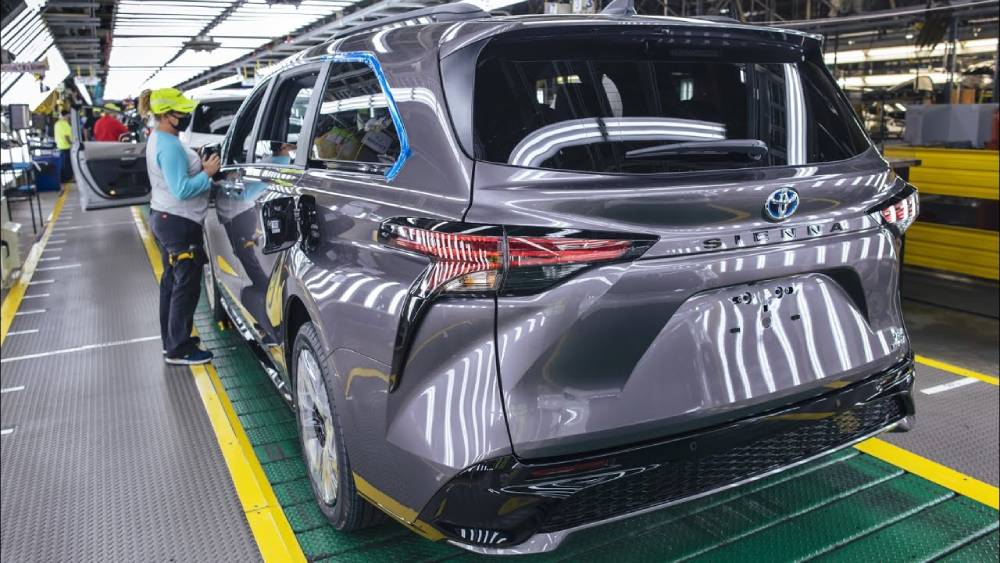
The Toyota Sienna is currently manufactured at Toyota Motor Manufacturing Indiana (TMMI), a state of the art production facility located in Princeton, Indiana, United States. Every Toyota Sienna sold in North America is assembled at this plant, making it the exclusive production hub for Toyota’s popular family minivan.
Toyota has invested heavily in the Indiana facility to ensure that the Sienna meets the company’s globally recognized quality standards. The plant is responsible for producing both gasoline powered models from previous generations and the latest hybrid only Toyota Sienna lineup. By centralizing production in one location, Toyota can maintain consistency in manufacturing processes while efficiently serving customers across the United States and Canada.
For buyers wondering whether the Toyota Sienna is made in the USA, the answer is yes. The vehicle is assembled by a highly skilled American workforce using a combination of locally sourced and globally supplied components. This approach allows Toyota to combine international engineering expertise with domestic manufacturing capabilities.
The Princeton facility plays a critical role in Toyota’s North American operations and has become an important contributor to the company’s reputation for quality and reliability. As demand for hybrid vehicles continues to grow, the Indiana plant remains at the center of Toyota’s strategy for delivering efficient and family friendly transportation solutions.
Overview of Toyota Motor Manufacturing Indiana
Toyota Motor Manufacturing Indiana is one of Toyota’s largest and most advanced vehicle production facilities in North America. Established in 1996, the plant has grown into a major manufacturing center that produces several of Toyota’s most popular vehicles.
Located in Princeton, Indiana, the facility covers hundreds of acres and employs thousands of team members dedicated to vehicle assembly, quality control, engineering, logistics, and production support. Over the years, Toyota has invested billions of dollars into the plant to expand capacity, introduce new technologies, and support the production of next generation vehicles.
The Indiana facility utilizes advanced robotics, precision manufacturing equipment, and Toyota’s world famous production system to ensure every vehicle meets strict quality standards. Despite the extensive use of automation, human expertise remains a crucial part of the manufacturing process. Skilled technicians perform inspections and quality checks throughout production to identify and address any potential issues before vehicles leave the assembly line.
One of the most impressive aspects of the facility is its commitment to continuous improvement. Toyota constantly evaluates production methods to improve efficiency, reduce waste, and maintain product quality. This philosophy has helped the Indiana plant become a benchmark for modern automotive manufacturing.
Today, Toyota Motor Manufacturing Indiana serves as a key pillar of Toyota’s North American manufacturing network and continues to play an essential role in meeting the growing demand for the Toyota Sienna and other vehicles.
Why Does Toyota Manufacture the Sienna in Indiana?
Toyota’s decision to manufacture the Sienna in Indiana is based on several strategic advantages that benefit both the company and its customers.
One major reason is proximity to the North American market. Since the majority of Toyota Sienna buyers live in the United States and Canada, producing the vehicle domestically allows Toyota to shorten delivery times and respond more quickly to changes in consumer demand. This localized production strategy helps ensure that dealerships receive inventory more efficiently.
Another important factor is supply chain optimization. Manufacturing vehicles closer to customers reduces transportation costs and minimizes logistical complexities. In an era where global supply chains can experience disruptions, having production located within the target market provides greater flexibility and stability.
The Indiana location also offers access to a strong network of automotive suppliers. Many component manufacturers operate throughout the Midwest, allowing Toyota to source parts efficiently while maintaining high quality standards. This supplier ecosystem supports faster production cycles and improved operational efficiency.
Economic considerations have also influenced Toyota’s decision. By investing in American manufacturing, Toyota supports thousands of jobs and contributes significantly to local communities. The company’s long term commitment to Indiana has strengthened relationships with local governments, educational institutions, and workforce development programs.
Perhaps most importantly, the Indiana facility has demonstrated its ability to consistently deliver vehicles that meet Toyota’s rigorous quality requirements. The plant’s experienced workforce, advanced technology, and proven production systems make it an ideal location for building one of Toyota’s most important family vehicles.
Has the Toyota Sienna Always Been Manufactured in Indiana?
The Toyota Sienna has a long manufacturing history that reflects Toyota’s evolving strategy for serving the North American market. Since its introduction in 1997, the Sienna has undergone several transformations in design, technology, and production methods.
The first generation Toyota Sienna was introduced as a replacement for the Toyota Previa. At the time, Toyota sought to create a minivan that would better meet the needs of North American families. Production initially took place in the United States, demonstrating Toyota’s commitment to manufacturing vehicles close to its primary customer base.
As the popularity of the Sienna grew, Toyota continued refining its production strategy. Over the years, manufacturing operations became increasingly concentrated within Toyota’s North American facilities. This approach allowed the company to improve efficiency, simplify logistics, and maintain greater control over quality standards.
The Indiana plant eventually became the primary and exclusive production facility for the Sienna. Significant investments in equipment, workforce training, and factory expansion enabled the facility to handle increasing demand while supporting the introduction of new vehicle generations.
The launch of the fourth generation Toyota Sienna in 2021 marked another important milestone. Toyota transitioned the entire model lineup to a hybrid powertrain, requiring additional manufacturing expertise and updated production processes. The Indiana facility successfully adapted to these changes and continues to produce every modern Sienna sold across North America.
Today, the Princeton plant represents the culmination of decades of manufacturing experience, technological advancement, and continuous improvement efforts that have helped establish the Toyota Sienna as one of the most trusted minivans on the market.
How Is the Toyota Sienna Manufactured?
The production of the Toyota Sienna involves a highly sophisticated manufacturing process designed to deliver exceptional quality, safety, and durability. Every vehicle passes through multiple stages before reaching dealerships.
The process begins in the stamping department, where massive sheets of steel are transformed into precisely shaped body panels. Advanced stamping machines apply tremendous force to create components that will eventually form the vehicle’s structure. Accuracy at this stage is critical because even small variations can affect the final assembly process.
Once the body panels are created, they move to the body assembly area. Here, hundreds of robotic systems work alongside skilled technicians to weld and assemble the vehicle’s frame. Precision is essential because the structural integrity of the vehicle directly impacts safety, handling, and long term durability.
After assembly, the vehicle enters the paint shop. Multiple layers of coatings are applied to protect the body from corrosion, environmental damage, and everyday wear. Modern painting techniques not only improve appearance but also contribute to the vehicle’s longevity.
The vehicle then moves to final assembly, where technicians install the hybrid powertrain, suspension components, electrical systems, interior materials, safety equipment, and advanced technology features. Every component is carefully fitted according to Toyota’s strict specifications.
Quality inspection is one of the most important stages of the process. Each Toyota Sienna undergoes extensive testing and inspection procedures to verify that all systems function correctly. Engineers and quality specialists evaluate everything from mechanical performance to fit and finish before the vehicle is approved for delivery.
Many consumers worry that vehicles built outside Japan may not meet the same standards. However, Toyota applies the same global manufacturing principles and quality controls across its production facilities, ensuring that every Sienna meets the company’s demanding requirements regardless of where it is assembled.
Does Manufacturing Location Affect Toyota Sienna Quality?
One of the most common questions among vehicle shoppers is whether a manufacturing location can influence quality. In the case of the Toyota Sienna, the evidence suggests that the vehicle’s reputation for reliability is driven more by Toyota’s production standards than by geographic location.
A major reason for this consistency is the Toyota Production System, often regarded as one of the most effective manufacturing philosophies in the automotive industry. This system emphasizes efficiency, quality control, continuous improvement, and problem prevention at every stage of production.
Employees at Toyota Motor Manufacturing Indiana undergo extensive training before participating in vehicle assembly. Team members learn detailed production procedures, quality assurance methods, and safety practices that align with Toyota’s global standards. Continuous education and performance monitoring help maintain consistency across the workforce.
Quality control measures are integrated throughout the manufacturing process rather than being limited to final inspections. Potential issues are identified and corrected early, reducing the likelihood of defects reaching customers. Advanced monitoring systems, automated inspections, and human oversight work together to maintain high production standards.
Customer satisfaction and long term reliability data further support the effectiveness of Toyota’s manufacturing approach. The Sienna consistently ranks among the most dependable minivans available, earning praise from owners for durability, fuel efficiency, and low maintenance costs.
For buyers concerned about where the Toyota Sienna is manufactured, it is important to understand that Toyota’s quality culture extends across all of its facilities. The Indiana plant follows the same principles that have helped make Toyota one of the most respected automotive brands in the world. As a result, the manufacturing location has little impact on the vehicle’s overall quality and reliability.
Toyota Sienna Manufacturing Compared to Other Popular Minivans
When evaluating a family minivan, many buyers compare not only features and pricing but also manufacturing locations. Understanding where a vehicle is built can provide insight into production strategies, supply chain efficiency, and market focus.
The Toyota Sienna is manufactured exclusively in Princeton, Indiana, giving Toyota a strong domestic production presence in the United States. This centralized approach allows the company to maintain consistent quality standards while efficiently serving customers across North America.
The Honda Odyssey is also produced in the United States, specifically in Alabama. Like Toyota, Honda has invested heavily in American manufacturing facilities to support demand from North American consumers. This strategy helps reduce transportation costs and enables quicker distribution to dealerships.
The Chrysler Pacifica is manufactured in Windsor, Ontario, Canada. As one of the most recognizable minivans in the segment, the Pacifica benefits from a long-established production facility that specializes in minivan manufacturing. Its Canadian location allows efficient access to both Canadian and American markets.
The Kia Carnival is primarily manufactured in South Korea before being exported to global markets. While Kia maintains a strong reputation for quality, international shipping and logistics play a larger role in delivering vehicles to North American customers.
From a manufacturing perspective, the Toyota Sienna benefits from being produced close to its largest customer base. This proximity helps Toyota manage inventory, respond to market demand, and maintain supply chain stability. Combined with Toyota’s strict production standards, the Indiana facility contributes to the Sienna’s reputation as one of the most dependable minivans available today.
Frequently Asked Questions
Is the Toyota Sienna made in the USA?
Yes. The Toyota Sienna is assembled in Princeton, Indiana, at Toyota Motor Manufacturing Indiana. All current Sienna models sold in North America are built at this facility.
Which factory builds the Toyota Sienna?
The Toyota Sienna is manufactured at Toyota Motor Manufacturing Indiana, commonly referred to as TMMI. This facility serves as the exclusive production site for the model.
Are all Toyota Sienna models manufactured in Indiana?
All current generation Toyota Sienna models are produced in Indiana. This includes every trim level and hybrid configuration available in the North American market.
Is the Toyota Sienna imported from Japan?
No. The Toyota Sienna sold in North America is not imported from Japan. It is assembled in the United States using a combination of domestic and globally sourced components.
Why did Toyota choose Indiana for Sienna production?
Toyota selected Indiana because of its strategic location, skilled workforce, established supplier network, and ability to efficiently serve customers throughout North America.
Does the manufacturing location affect Toyota Sienna reliability?
Toyota’s global quality standards help ensure consistency across production facilities. The Indiana plant follows the same rigorous manufacturing principles that have contributed to Toyota’s reputation for reliability worldwide.
Is the Toyota Sienna only available as a hybrid?
Yes. Since the launch of the fourth generation model, every Toyota Sienna has been equipped with a hybrid powertrain, making it one of the most fuel-efficient minivans in its class.
Conclusion
If you have ever wondered, “Where is the Toyota Sienna manufactured?” the answer is clear. Every modern Toyota Sienna is built at Toyota Motor Manufacturing Indiana in Princeton, Indiana. This advanced production facility serves as the exclusive manufacturing home of Toyota’s popular family minivan and plays a vital role in supplying vehicles to customers across North America.
Toyota’s decision to manufacture the Sienna in the United States provides several advantages, including improved supply chain efficiency, faster delivery times, and closer access to its largest customer base. More importantly, the Indiana facility operates under the same strict quality standards and production principles that have made Toyota a global leader in automotive manufacturing.
From advanced robotics and precision assembly to rigorous quality inspections and continuous improvement practices, every stage of the production process is designed to ensure exceptional reliability and customer satisfaction. These efforts have helped the Toyota Sienna earn a strong reputation as one of the most trusted and practical family vehicles on the road today.
Whether you are researching your next vehicle purchase or simply curious about Toyota’s manufacturing operations, understanding where the Toyota Sienna is manufactured offers valuable insight into the craftsmanship, engineering, and commitment to quality behind one of America’s favorite hybrid minivans.