Few dashboard warnings create as much concern for Toyota Tacoma owners as the check engine light. Whether you drive your Tacoma daily, use it for off-road adventures, or rely on it for work, seeing that small illuminated icon can leave you wondering if the problem is minor or potentially expensive.
The good news is that modern Toyota Tacoma models are equipped with an advanced On-Board Diagnostics II (OBD-II) system designed to detect problems before they become serious. When a malfunction is identified, the vehicle stores a diagnostic trouble code, commonly known as a check engine light code. These codes provide valuable insight into the health of your engine, emissions system, fuel delivery components, sensors, transmission, and other critical systems.
Ignoring a check engine light can lead to reduced fuel efficiency, poor engine performance, higher repair costs, and in some cases, severe mechanical damage. Understanding what these codes mean allows Tacoma owners to diagnose issues more accurately, make informed repair decisions, and potentially avoid unnecessary expenses.
In this complete guide, you will learn how Toyota Tacoma check engine light codes work, how to retrieve OBD-II trouble codes, the most common Tacoma error codes, their causes and symptoms, estimated repair costs, and practical solutions to keep your truck running reliably for years to come.
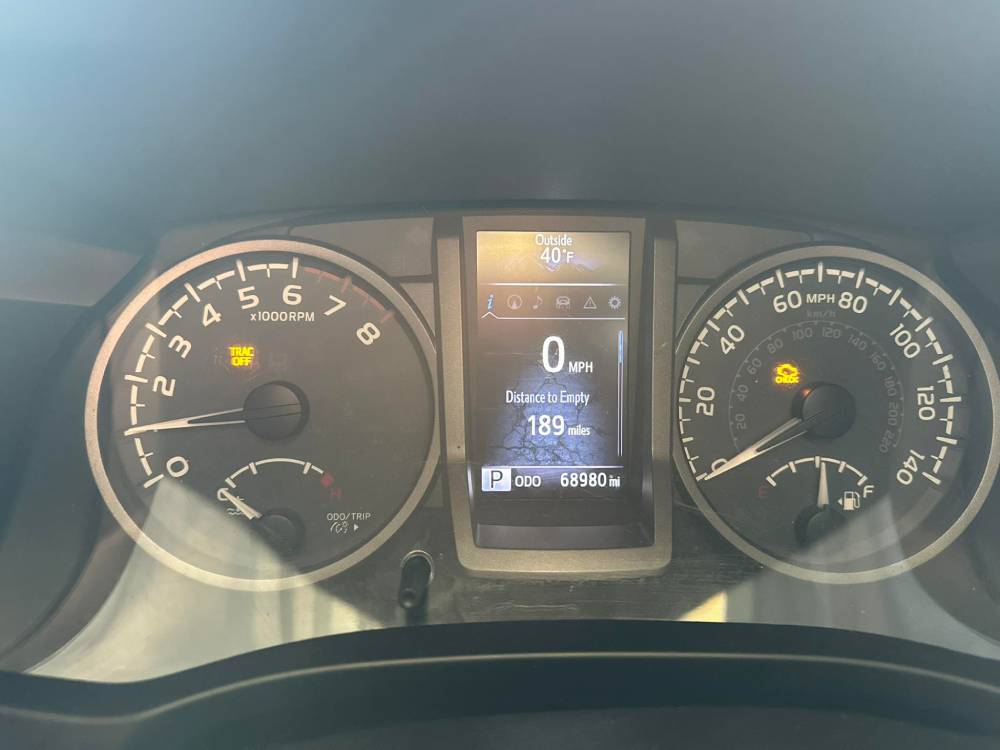
Understanding Toyota Tacoma Check Engine Light Codes
Before diagnosing any warning light, it is important to understand how Toyota Tacoma diagnostic systems work. Every Tacoma manufactured since 1996 uses the OBD II diagnostic standard. This system continuously monitors engine performance, emissions equipment, fuel delivery, ignition timing, transmission functions, and dozens of sensors throughout the vehicle.
When the Engine Control Module detects a condition operating outside normal parameters, it stores a Diagnostic Trouble Code and may illuminate the check engine light. These codes act as clues that help technicians and vehicle owners identify the source of a problem.
OBD II codes follow a standardized format consisting of one letter followed by four numbers. The letter identifies the affected system.
P codes relate to the powertrain, including the engine and transmission.
B codes involve body systems such as airbags and climate controls.
C codes refer to chassis components such as steering and braking systems.
U codes indicate communication issues between electronic control modules.
For example, code P0420 indicates a catalytic converter efficiency issue, while code P0300 points to random engine misfires. Understanding these codes is the first step toward accurate diagnosis and effective repairs.
Modern Toyota Tacoma models rely on hundreds of data points collected every second. When a sensor detects abnormal readings repeatedly, the computer records a fault code and alerts the driver. The check engine light itself is not the problem. It is simply a warning that a stored code requires investigation.
How to Read Toyota Tacoma Check Engine Light Codes
Reading Toyota Tacoma trouble codes is easier than many owners realize. The most common method involves using an OBD II scanner, which connects directly to the vehicle’s diagnostic port.
The OBD II port is typically located beneath the dashboard on the driver’s side, near the steering column. Most scan tools can connect within seconds and immediately retrieve stored trouble codes.
To read the codes, first turn the ignition key to the ON position without starting the engine. Connect the scanner to the OBD II port and allow it to communicate with the vehicle’s computer. Once connected, select the option to read diagnostic trouble codes. The scanner will display one or more codes along with brief descriptions.
Many modern Bluetooth adapters can connect to smartphone apps, making diagnostics even more accessible. These apps often provide additional information, including live sensor data, freeze frame information, emissions readiness status, and repair suggestions.
When retrieving codes, it is important to record every code before clearing them. Multiple codes may be related to the same underlying issue. Erasing codes too early can remove valuable diagnostic information and make troubleshooting more difficult.
Professional technicians often combine trouble codes with live engine data, fuel trim readings, and sensor performance metrics to determine the root cause of a problem rather than simply replacing parts based on code descriptions alone.
Most Common Toyota Tacoma Check Engine Light Codes
Certain diagnostic trouble codes appear more frequently in Toyota Tacoma trucks than others. Understanding these common codes can help owners quickly identify potential issues and estimate repair costs.
P0420 Catalyst System Efficiency Below Threshold
P0420 is one of the most common Tacoma trouble codes. It indicates that the catalytic converter is not operating efficiently enough to meet emissions standards.
Common symptoms include reduced fuel economy, failed emissions tests, sulfur odors from the exhaust, and occasional loss of engine performance.
Potential causes include a failing catalytic converter, damaged oxygen sensors, exhaust leaks, or prolonged engine misfires that have damaged the catalyst.
Repair costs can range from a relatively inexpensive oxygen sensor replacement to a catalytic converter replacement costing several hundred or even thousands of dollars.
P0171 System Too Lean Bank 1
This code indicates that the engine is receiving too much air or not enough fuel.
Drivers may notice rough idling, hesitation during acceleration, reduced power, or poor fuel economy.
Common causes include vacuum leaks, dirty mass airflow sensors, weak fuel pumps, clogged fuel injectors, or intake system leaks.
P0300 Random or Multiple Cylinder Misfire
A P0300 code signals that multiple cylinders are misfiring unpredictably.
Symptoms often include rough engine operation, loss of power, increased fuel consumption, and vibration during acceleration.
Typical causes include worn spark plugs, faulty ignition coils, fuel delivery problems, vacuum leaks, or internal engine issues.
P0440 EVAP System Malfunction
The EVAP system prevents fuel vapors from escaping into the atmosphere. A P0440 code indicates a malfunction within this system.
Common causes include damaged hoses, faulty purge valves, leaking charcoal canisters, or issues with the fuel tank ventilation system.
P0455 Large EVAP Leak Detected
This code frequently appears after a loose or damaged gas cap is left unsealed.
Although the repair may be simple, larger leaks within the EVAP system may require smoke testing and professional diagnosis to locate the exact source.
P0430 Catalyst System Efficiency Below Threshold Bank 2
Similar to P0420, this code affects the opposite exhaust bank and often points to catalytic converter or oxygen sensor issues.
Because catalytic converter repairs can be expensive, proper diagnosis is essential before replacing any components.
Toyota Tacoma Engine Misfire Codes Explained
Engine misfires are among the most serious issues that can trigger a check engine light. If left unresolved, a misfire can reduce performance, damage the catalytic converter, and lead to costly repairs. Toyota Tacoma models commonly generate individual cylinder misfire codes that help pinpoint the affected cylinder.
P0301 Cylinder 1 Misfire Detected
This code indicates that cylinder 1 is not firing correctly. Drivers may experience rough idling, reduced acceleration, engine shaking, and increased fuel consumption.
Possible causes include a worn spark plug, faulty ignition coil, clogged fuel injector, vacuum leak, or low cylinder compression.
P0302 Cylinder 2 Misfire Detected
A P0302 code identifies a misfire in cylinder 2. Symptoms are similar to other misfire codes and often become more noticeable under acceleration or heavy engine load.
Technicians typically inspect the ignition system first before moving on to fuel delivery and mechanical testing.
P0303 Cylinder 3 Misfire Detected
This code points to a combustion issue in cylinder 3. In many cases, replacing worn spark plugs or ignition coils resolves the problem. However, persistent misfires may indicate injector failure or internal engine damage.
P0304 Cylinder 4 Misfire Detected
Cylinder 4 misfires can result from ignition, fuel, or compression problems. Proper diagnosis is essential because replacing parts without testing can quickly become expensive.
Common Causes of Misfire Codes
Several components can contribute to misfires across Toyota Tacoma engines.
Spark plugs naturally wear over time and can fail to ignite the air-fuel mixture effectively.
Ignition coils may weaken and produce inconsistent spark energy.
Fuel injectors can become clogged, restricting fuel flow.
Vacuum leaks can disrupt the proper air-fuel ratio.
Internal engine issues such as burned valves, damaged pistons, or low compression may also trigger misfire codes.
A flashing check engine light combined with a misfire code should never be ignored because continued driving may damage the catalytic converter.
Oxygen Sensor and Fuel System Codes
Oxygen sensors play a critical role in maintaining fuel efficiency and emissions compliance. Toyota Tacoma engines use multiple oxygen sensors to monitor exhaust gases and help the engine control module adjust fuel delivery.
When an oxygen sensor fails or sends inaccurate data, the engine may run too rich or too lean, resulting in poor performance and increased fuel consumption.
P0135 Oxygen Sensor Heater Circuit Malfunction
This code indicates a problem with the heater circuit inside the upstream oxygen sensor.
Symptoms may include delayed sensor response, increased emissions, rough cold starts, and reduced fuel economy.
Common causes include damaged wiring, blown fuses, or a failed oxygen sensor.
P0138 Oxygen Sensor Circuit High Voltage
A P0138 code occurs when the downstream oxygen sensor reports a voltage higher than expected.
Potential causes include sensor failure, wiring problems, exhaust leaks, or engine conditions causing excessive fuel delivery.
Drivers may notice poor fuel economy and occasional hesitation.
P0155 Oxygen Sensor Heater Circuit Malfunction Bank 2
This code affects the heater circuit of an oxygen sensor located on the second engine bank.
As with P0135, common causes include wiring faults, electrical issues, or sensor failure.
Why Oxygen Sensor Codes Matter
Many vehicle owners underestimate the importance of oxygen sensors because the vehicle often remains drivable.
However, faulty sensors can significantly reduce fuel economy, increase emissions, and accelerate wear on expensive components such as catalytic converters.
Ignoring oxygen sensor codes for an extended period may transform a relatively inexpensive repair into a much larger expense. Prompt diagnosis and replacement of failed sensors can help maintain engine performance and prevent additional damage.
EVAP System Codes in Toyota Tacoma
The Evaporative Emission Control System, commonly known as the EVAP system, is designed to prevent gasoline vapors from escaping into the atmosphere. Instead of venting fuel vapors directly into the air, the system captures and stores them until they can be safely burned by the engine.
Because the EVAP system contains numerous hoses, valves, seals, and sensors, even a small leak can trigger a diagnostic trouble code.
What Is the EVAP System?
The EVAP system consists of several key components.
The fuel tank stores gasoline and fuel vapors.
The charcoal canister captures evaporated fuel.
The purge valve controls when stored vapors are sent to the engine.
Various hoses and sensors monitor system pressure and operation.
When any component fails, the engine control module records a fault code.
Common EVAP Trouble Codes
P0440 indicates a general EVAP system malfunction.
P0441 suggests incorrect purge flow.
P0442 points to a small leak in the EVAP system.
P0455 identifies a large leak, often caused by a loose gas cap or disconnected hose.
P0456 indicates a very small leak that may require specialized equipment to locate.
How to Diagnose EVAP Problems
Diagnosing EVAP codes can be challenging because leaks are often invisible.
Technicians frequently perform a visual inspection of hoses, connectors, and the gas cap.
A smoke machine is commonly used to introduce harmless smoke into the system, making leaks easier to identify.
Purge valves and vent valves may also be tested to ensure proper operation.
Although some EVAP repairs are simple, such as replacing a damaged gas cap, others require extensive testing to locate hidden leaks. Proper diagnosis is essential to avoid replacing parts unnecessarily.
Transmission and Powertrain Trouble Codes
While engine-related trouble codes receive most of the attention, transmission and powertrain codes can be equally important. These codes often indicate problems that affect shifting performance, drivability, fuel economy, and long-term reliability.
Because modern Toyota Tacoma transmissions rely heavily on electronic controls and sensors, even a minor electrical fault can trigger a check engine light.
P0700 Transmission Control System Malfunction
The P0700 code serves as a general warning that the transmission control system has detected a fault.
Unlike many other diagnostic codes, P0700 does not identify the specific problem. Instead, it signals that additional transmission-related codes are stored within the transmission control module.
Drivers may notice delayed shifts, harsh shifting, transmission slipping, or reduced performance.
P0715 Input Speed Sensor Malfunction
The input speed sensor monitors transmission input shaft speed and provides critical data for shift timing.
When this sensor fails, the transmission may struggle to determine proper gear changes.
Common symptoms include erratic shifting, delayed gear engagement, poor acceleration, and activation of limp mode.
P0720 Output Speed Sensor Malfunction
The output speed sensor measures the speed of the transmission output shaft.
A faulty sensor can cause inaccurate shift timing, speedometer issues, and transmission performance problems.
Symptoms may include harsh shifting, transmission warning lights, and inconsistent vehicle speed readings.
When Transmission Codes Require Immediate Attention
Unlike some emissions-related codes, transmission faults should never be ignored.
Continued operation with transmission problems can accelerate internal wear and dramatically increase repair costs.
If the vehicle enters limp mode, experiences severe slipping, or struggles to shift gears properly, professional diagnosis should be scheduled as soon as possible.
Early intervention can often prevent minor sensor or electrical issues from developing into major transmission failures.
Can You Drive With a Toyota Tacoma Check Engine Light On?
One of the most common questions Tacoma owners ask is whether it is safe to continue driving when the check engine light appears.
The answer depends on the behavior of the warning light and the symptoms accompanying it.
Solid Check Engine Light
A steady check engine light typically indicates a non-critical fault that should be diagnosed soon but does not necessarily require immediate shutdown.
Examples include oxygen sensor failures, EVAP system leaks, mass airflow sensor issues, and catalytic converter efficiency warnings.
In many cases, the vehicle remains drivable for a short period while diagnostic testing is arranged.
However, drivers should monitor performance carefully and avoid delaying repairs unnecessarily.
Flashing Check Engine Light
A flashing check engine light is much more serious.
This warning often indicates an active engine misfire capable of damaging the catalytic converter.
Drivers may notice rough operation, shaking, reduced power, or unusual engine noises.
When a flashing light appears, reducing speed and seeking immediate service is strongly recommended.
Ignoring this warning can lead to expensive repairs and potential engine damage.
Situations Requiring Immediate Service
Certain symptoms should always be treated as urgent.
These include severe engine vibration, significant power loss, overheating, transmission slipping, fuel odors, excessive smoke, or loud mechanical noises.
In such situations, continuing to drive may increase repair costs and compromise safety.
When in doubt, arranging professional inspection is the safest course of action.
How Much Does It Cost to Fix Toyota Tacoma Check Engine Light Codes?
Repair costs vary significantly depending on the fault code, affected component, labor rates, and vehicle condition.
Some repairs require only a simple replacement part, while others involve major mechanical work.
Minor Repairs
Minor repairs are often the least expensive and may include replacing a gas cap, cleaning a mass airflow sensor, repairing minor vacuum leaks, or replacing an oxygen sensor.
These repairs generally involve minimal labor and can often be completed quickly.
Moderate Repairs
Moderate repairs typically include ignition coil replacement, fuel injector service, EVAP system component replacement, and sensor-related repairs.
While more expensive than minor fixes, they are still relatively manageable compared to major powertrain work.
Major Repairs
Major repairs may involve catalytic converter replacement, transmission repairs, internal engine work, timing system repairs, or extensive electrical diagnostics.
These repairs can become costly, particularly when multiple components are affected.
Estimated Repair Cost Overview
A loose gas cap may cost very little to resolve.
Oxygen sensor replacement often falls within a moderate price range.
Ignition coil and spark plug repairs generally remain affordable when addressed early.
Catalytic converter replacement can become one of the most expensive emissions-related repairs.
Transmission repairs and internal engine work represent the highest potential costs and may require extensive labor.
The most effective way to control repair expenses is early diagnosis. Addressing a small issue before it affects other systems can save hundreds or even thousands of dollars over the life of the vehicle.
How to Reset Toyota Tacoma Check Engine Light
Many Toyota Tacoma owners want to clear the check engine light as soon as it appears. While resetting the light is relatively simple, it is important to understand that the warning exists for a reason. Clearing the light without fixing the underlying problem will not solve the issue, and in most cases the code will eventually return.
Scanner Method
The safest and most effective way to reset the check engine light is by using an OBD II scanner.
After diagnosing and repairing the fault, connect the scanner to the OBD II port beneath the dashboard. Access the diagnostic menu and select the option to erase or clear trouble codes.
Once the codes are cleared, restart the vehicle and verify that the check engine light remains off.
Most professional technicians prefer this method because it allows them to confirm that repairs have been completed successfully.
Battery Disconnect Method
Some owners disconnect the negative battery terminal for several minutes to reset the vehicle’s computer.
Although this method may temporarily clear the warning light, it also resets other stored data, including fuel trim adaptations and readiness monitors.
After reconnecting the battery, the vehicle may require additional drive cycles before emissions systems complete their self-tests.
Because this method provides limited diagnostic value, it is generally less desirable than using a scan tool.
Why Resetting Without Repair Is a Mistake
Many drivers mistakenly believe that clearing a code means the problem has been fixed.
In reality, the vehicle’s computer continuously monitors system performance. If the fault still exists, the code will eventually return and the check engine light will illuminate again.
Resetting the light without addressing the root cause can delay necessary repairs, increase long-term costs, and potentially allow additional damage to occur.
The best approach is always to identify the source of the fault, perform the required repair, and then clear the code to confirm the issue has been resolved.
Preventing Future Toyota Tacoma Check Engine Light Problems
While no vehicle is completely immune to mechanical issues, proper maintenance can significantly reduce the likelihood of check engine light warnings.
Consistent preventive care not only improves reliability but also helps avoid expensive repairs.
Follow the Recommended Maintenance Schedule
Toyota engineers design maintenance intervals to maximize vehicle longevity.
Routine oil changes, fluid inspections, spark plug replacement, and filter maintenance help keep critical systems operating efficiently.
Skipping scheduled maintenance often increases the risk of diagnostic trouble codes appearing later.
Inspect the Fuel System Regularly
Fuel-related issues frequently trigger check engine light codes.
Using quality fuel, replacing clogged fuel filters when applicable, and addressing injector problems early can help maintain optimal engine performance.
Drivers should also ensure the fuel cap is properly tightened after every refueling stop.
Monitor Engine Performance
Changes in fuel economy, rough idling, hesitation during acceleration, unusual engine noises, or hard starting conditions may indicate developing problems.
Addressing these symptoms before a warning light appears can prevent larger issues from occurring.
Keep Sensors and Emissions Components in Good Condition
Modern Tacoma trucks rely heavily on sensors to manage fuel delivery, ignition timing, and emissions control.
Faulty oxygen sensors, mass airflow sensors, and catalytic converters are common sources of trouble codes.
Periodic inspections can help identify aging components before they fail completely.
Use Diagnostic Scanners Proactively
Affordable OBD II scanners allow owners to monitor vehicle health and detect pending codes before they become active faults.
Early detection often reduces repair costs and minimizes unexpected breakdowns.
With proper maintenance and timely repairs, many Toyota Tacoma owners enjoy hundreds of thousands of miles of dependable service with minimal diagnostic issues.
Conclusion
Understanding Toyota Tacoma check engine light codes is essential for maintaining vehicle reliability, performance, and safety. While the warning light can be alarming, it serves as an important diagnostic tool that helps identify problems before they become severe.
The OBD II system provides valuable information about engine performance, fuel delivery, emissions equipment, transmission operation, and numerous other vehicle systems. By learning how to retrieve and interpret diagnostic trouble codes, Tacoma owners can make informed decisions about repairs and maintenance.
Common codes such as P0420, P0171, P0300, P0440, and P0455 often point to issues involving catalytic converters, fuel mixtures, engine misfires, and EVAP system leaks. Addressing these problems promptly can improve fuel economy, reduce repair costs, and prevent further damage.
Whether you perform your own diagnostics or rely on professional technicians, understanding what check engine light codes mean gives you greater control over vehicle maintenance.
The next time your Toyota Tacoma check engine light turns on, do not panic. Retrieve the stored code, investigate the cause, and take action early. A small repair today can often prevent a much larger repair tomorrow.
Frequently Asked Questions
What is the most common Toyota Tacoma check engine light code?
Some of the most frequently reported Toyota Tacoma trouble codes include P0420, P0171, P0300, P0440, and P0455. These codes commonly involve catalytic converter efficiency, fuel mixture issues, engine misfires, and EVAP system leaks.
Can I drive my Tacoma with the check engine light on?
If the light is steady and the vehicle is operating normally, short-term driving may be possible. However, diagnosis should be performed as soon as possible. If the light is flashing, immediate service is recommended to avoid potential engine or catalytic converter damage.
How do I read Toyota Tacoma OBD II codes?
You can read codes by connecting an OBD II scanner to the diagnostic port located beneath the driver’s side dashboard. The scanner communicates with the vehicle’s computer and displays stored trouble codes.
Will disconnecting the battery clear trouble codes?
Disconnecting the battery may temporarily clear some codes and reset the check engine light. However, this does not repair the underlying problem and may also erase useful diagnostic data.
How much does it cost to diagnose a check engine light?
Diagnostic costs vary depending on location and service provider. Basic code scanning may be inexpensive or even free at some locations, while advanced diagnostic testing involving live data analysis may cost more.
What does a flashing check engine light mean on a Toyota Tacoma?
A flashing check engine light typically indicates a severe engine misfire or another condition that could quickly damage the catalytic converter. Immediate diagnosis and repair are strongly recommended.