The Volvo SCR System Fault is a common warning on modern diesel vehicles. It relates to the emission control system. SCR stands for Selective Catalytic Reduction. Selective Catalytic Reduction helps reduce harmful nitrogen oxide emissions. It works by injecting Diesel Exhaust Fluid into the exhaust system. This process helps diesel engines meet strict emission standards.
Volvo diesel engines use a complex SCR system with multiple sensors. These sensors monitor exhaust gas quality in real time. The system also controls AdBlue injection accuracy. When one component fails, the system detects abnormal data. It then triggers a SCR system fault warning on the dashboard.
This warning does not always mean a serious engine failure at the beginning. The vehicle may still run normally in early stages. However, the system will limit engine performance if the problem continues. In some cases, the car may enter limp mode. It may also show a countdown to engine shutdown. This protects emission compliance and prevents further damage.
Many drivers feel confused when the warning first appears. The cause is not always easy to identify. The fault can come from several parts of the system. It may involve NOx sensors, DEF pumps, injectors, or software errors in the ECU. Each component plays an important role in emission control.
This guide explains the Volvo SCR System Fault in a clear way. It covers how the system works, what causes failures, and how to diagnose the problem correctly. It also shows how technicians approach SCR faults in real repair situations. By understanding this system, you can avoid unnecessary repairs and reduce long term maintenance costs.
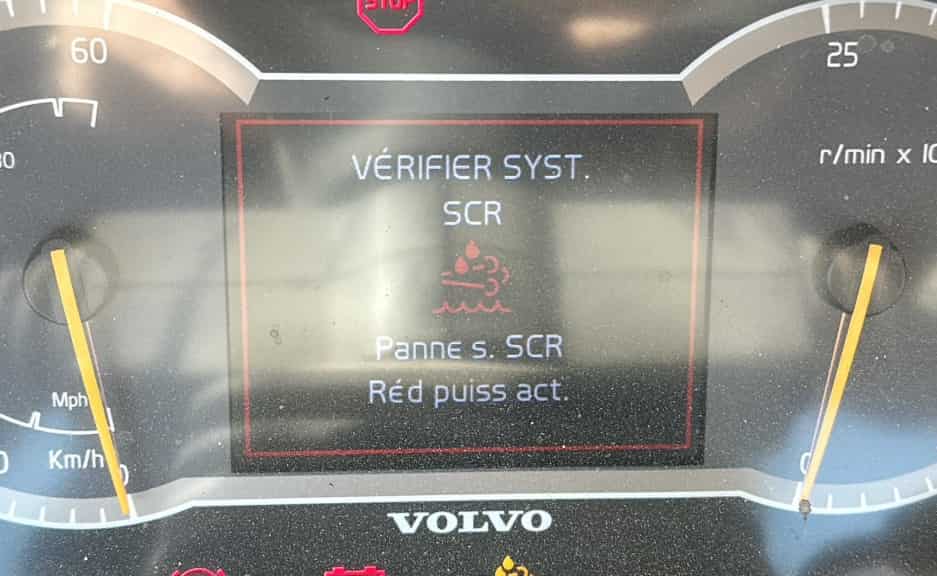
How the Volvo SCR System Works
The SCR system plays a central role in controlling diesel emissions. It reduces nitrogen oxide gases before they leave the exhaust. This system works continuously while the engine runs. It helps diesel engines meet strict environmental regulations in real driving conditions.
The system relies on a process called Selective Catalytic Reduction. Selective Catalytic Reduction converts harmful nitrogen oxides into harmless nitrogen and water vapor. It achieves this by injecting a fluid called Diesel Exhaust Fluid into the exhaust stream. This fluid is also known as AdBlue in many markets.
In Volvo diesel vehicles, the SCR system connects closely with the engine control unit. The ECU monitors exhaust gases through NOx sensors. These sensors measure pollution levels before and after the catalytic converter. The system uses this data to adjust AdBlue injection in real time.
The SCR system contains several key components. The AdBlue tank stores the Diesel Exhaust Fluid. The pump delivers the fluid under pressure. The injector sprays it into the exhaust system. The catalyst then triggers a chemical reaction that reduces emissions. NOx sensors provide feedback to ensure the process works correctly.
Temperature also plays an important role in system performance. The fluid can freeze at low temperatures. The system uses heaters to prevent crystallization inside the tank and lines. If heating fails, the system may trigger a fault warning.
The ECU constantly checks all signals from sensors and actuators. It looks for inconsistencies in pressure, flow rate, and emission levels. When it detects abnormal behavior, it activates a Volvo SCR System Fault warning. This warning indicates that one or more parts of the emission system are not working as expected.
Main Causes of Volvo SCR System Fault
The Volvo SCR System Fault usually appears when one or more parts of the emission system stop working correctly. The system is sensitive because it relies on precise chemical dosing and accurate sensor feedback. Even a small deviation can trigger a warning.
One of the most common causes is poor quality or contaminated Diesel Exhaust Fluid. The SCR system depends on clean AdBlue to create a correct chemical reaction. When the fluid contains impurities or water, the injection process becomes unstable. This leads to incorrect NOx reduction and system imbalance.
Another frequent cause comes from NOx sensor failure. These sensors measure nitrogen oxide levels in the exhaust before and after the catalytic converter. When a sensor becomes slow or inaccurate, the engine control unit receives wrong data. This leads to incorrect adjustment of AdBlue injection and triggers a fault warning.
DEF pump or injector malfunction is also a major issue. The pump controls fluid pressure, while the injector sprays AdBlue into the exhaust stream. If the pump loses pressure or the injector becomes clogged, the system cannot deliver the correct amount of fluid. This directly affects emission performance and activates the SCR fault message.
Software or ECU calibration errors can also trigger the warning. In some cases, the system software misinterprets sensor data or fails to update correctly after repairs. This creates false fault detection even when hardware components are still working.
Another possible cause is catalyst degradation inside the SCR unit. Over time, the catalytic material loses efficiency due to soot buildup or chemical contamination. When the catalyst cannot process emissions properly, the system detects reduced conversion efficiency and raises a fault alert.
Low temperature conditions can also contribute to SCR problems. Diesel Exhaust Fluid can crystallize in freezing weather if the heating system does not work properly. This blocks fluid flow and disrupts injection performance, leading to system errors.
Symptoms of Volvo SCR System Fault
The Volvo SCR System Fault often shows early warning signs before the system becomes fully restricted. These symptoms help drivers and technicians identify problems before they lead to serious driving limitations or no start conditions.
The most common symptom is a dashboard warning message related to the SCR system. The vehicle displays this alert when the emission control system detects abnormal behavior. In many cases, this warning appears even though the engine still runs normally at first.
Another frequent symptom is reduced engine performance. The engine control unit may limit power output to protect the emission system. This condition is commonly known as limp mode. The vehicle may feel slower during acceleration and may struggle under load.
In some cases, the system triggers a countdown to engine shutdown. This happens when the fault remains unresolved for a long period. The vehicle warns the driver that it may not restart after a certain number of miles. This is a protective measure to ensure emission compliance.
Increased fuel consumption can also appear as a secondary symptom. When the SCR system does not function correctly, the engine may compensate by adjusting fuel delivery. This leads to lower efficiency and higher operating costs over time.
A check engine light often appears alongside the SCR warning. This indicates that the engine control unit has detected one or more diagnostic trouble codes. These codes usually relate to NOx sensors, DEF system pressure, or catalyst efficiency.
Some drivers may also notice irregular idle behavior or delayed throttle response. These symptoms are less common but can occur when the emission system interferes with engine control strategies.
Diagnostic Process for Volvo SCR System Fault
Diagnosing a Volvo SCR System Fault requires a structured approach. The system is complex and involves sensors, fluid dosing, and electronic control. A correct diagnosis helps avoid unnecessary part replacement and reduces repair costs.
The first step is reading diagnostic trouble codes using an OBD2 scanner. The engine control unit stores fault codes when the SCR system detects abnormal behavior. Common codes often relate to NOx sensor performance, DEF dosing errors, or catalyst efficiency issues. These codes help narrow down the affected area of the system.
After reading fault codes, technicians analyze live data from the SCR system. This includes NOx sensor readings before and after the catalyst, DEF pressure levels, and injection timing. Stable and correct live data indicates that the system is functioning properly, while irregular values point to specific component failures.
The next step is a visual inspection of the DEF system. Technicians check the AdBlue tank, lines, and injector for contamination or crystallization. Blocked injectors or leaking lines can directly affect fluid delivery and trigger system faults. This inspection also helps identify freezing or residue buildup in cold conditions.
System pressure testing is also important. The DEF pump must maintain correct pressure for proper injection. Low or unstable pressure often indicates pump wear or internal blockage. This condition can lead to incomplete emission treatment and trigger a SCR warning.
In some cases, software diagnostics are required. The engine control module may need updates or recalibration after component replacement. Incorrect software calibration can cause false fault detection even when hardware is working correctly.
Finally, technicians may perform a controlled system reset after repairs. This allows the ECU to relearn sensor values and verify that the SCR system operates within normal parameters. If the fault returns after reset, further mechanical inspection is required.
Common Diagnostic Mistakes to Avoid
Diagnosing a Volvo SCR System Fault requires accuracy and patience. Many repair cases become more expensive because of incorrect diagnosis in the early stage. Understanding common mistakes helps avoid unnecessary part replacement and repeated failures.
One of the most frequent mistakes is replacing the NOx sensor too early. The NOx sensor is often blamed first because it is a common failure point. However, the real issue may come from DEF quality, wiring problems, or injector malfunction. Replacing the sensor without proper testing often does not solve the problem.
Another common mistake is ignoring AdBlue contamination. The SCR system depends on clean Diesel Exhaust Fluid to function correctly. When technicians skip fluid inspection, they may miss crystallization or diluted fluid issues. This leads to repeated faults even after replacing hardware components.
Misinterpreting intermittent sensor readings is also a serious issue. Some NOx sensors show unstable data only under certain driving conditions. If technicians test the system only at idle, they may miss the real failure that occurs under load or higher exhaust temperatures.
Another mistake is resetting fault codes without fixing the root cause. Clearing the error may temporarily remove the warning from the dashboard. However, the SCR system will detect the same problem again if the underlying issue remains. This creates a cycle of repeated warnings and ineffective repairs.
Some diagnostics also fail due to lack of live data analysis. Relying only on stored fault codes does not provide a full picture of system behavior. Without reviewing pressure values, injection rates, and sensor feedback, technicians may overlook hidden issues.
Software updates are sometimes ignored as well. In certain cases, Volvo engine control modules require calibration updates after part replacement. Skipping this step can cause incorrect system behavior and false fault detection.
Proper diagnosis always requires a combination of code reading, live data monitoring, and physical inspection. Skipping any of these steps increases the risk of incorrect repair decisions.
Repair Solutions for Volvo SCR System Fault
Repairing a Volvo SCR System Fault depends on identifying the exact root cause inside the emission system. Since the SCR system involves fluid dosing, sensors, and catalytic conversion, each repair step must match the failure source. A correct repair restores emission performance and prevents the warning from returning.
One of the most common repair solutions is replacing a faulty NOx sensor. When diagnostics confirm inaccurate readings or slow response, the sensor must be replaced. After installation, the system usually requires recalibration to ensure the engine control unit receives correct emission data.
Cleaning or replacing the DEF injector is another frequent solution. The injector can become blocked by crystallized AdBlue or contamination. When this happens, the system cannot spray fluid properly into the exhaust stream. Cleaning may solve minor blockage, but severe cases require full replacement.
The DEF pump is also a critical component in many repair cases. If the pump fails to maintain stable pressure, the SCR system cannot function correctly. Replacement of the pump restores proper fluid flow and ensures consistent dosing under all driving conditions.
In some situations, software updates or ECU recalibration are necessary. The engine control module may store incorrect adaptation values after repeated faults. Updating the software helps correct communication errors between sensors and dosing components. This step is often required after hardware replacement.
Another possible repair is addressing SCR catalyst degradation. When the catalyst loses efficiency due to long term contamination, it cannot convert NOx gases effectively. In severe cases, the catalytic converter must be replaced to restore emission performance.
System flushing may also be performed in cases of contamination. This process removes crystallized AdBlue from lines, tanks, and injectors. It helps restore proper fluid circulation and prevents future blockage.
After repairs, technicians usually perform a full system reset and validation test. This ensures the SCR system operates within normal pressure, flow, and emission limits before returning the vehicle to service.
Cost Breakdown for SCR System Repairs
The cost of repairing a Volvo SCR System Fault varies depending on the failed component and the severity of the issue. Since the SCR system includes sensors, pumps, injectors, and catalytic components, repair costs can range from relatively low to quite expensive.
One of the most common costs comes from NOx sensor replacement. These sensors are highly sensitive and essential for emission monitoring. When they fail, replacement is often necessary. Labor costs are usually added because the sensor may be difficult to access depending on the engine layout.
The DEF injector is another moderate cost repair item. Cleaning the injector is usually cheaper, but replacement becomes necessary when clogging or internal damage occurs. This cost also includes labor for removal and system testing after installation.
The DEF pump is typically a higher cost repair. The pump must maintain stable pressure under all driving conditions, so it is built with precision components. When it fails, replacement is often the only reliable solution. This repair also requires system bleeding and calibration.
In more serious cases, SCR catalyst replacement becomes the most expensive repair. The catalyst is a core emission control component and is expensive to manufacture. Replacement is usually required only when long term contamination or degradation has occurred.
Software updates and ECU recalibration are generally lower cost services. However, they are still important because incorrect software settings can cause repeated faults even after hardware repair.
Labor costs also vary depending on whether the repair is done at a dealership or an independent workshop. Dealerships often charge higher rates but provide factory level diagnostics and software tools. Independent workshops may offer lower costs but require strong technical expertise for accurate diagnosis.
Overall, the total repair cost depends on early detection. Addressing SCR issues early usually prevents expensive component failures and reduces long term maintenance expenses.
How to Prevent Volvo SCR System Fault in Diesel Engines
Preventing a Volvo SCR System Fault is much easier and cheaper than repairing it after failure occurs. The SCR system is sensitive to fluid quality, driving conditions, and maintenance habits. Proper care helps extend system life and keeps emission performance stable over time.
One of the most important prevention steps is using high quality Diesel Exhaust Fluid. The SCR system depends on clean AdBlue to perform chemical conversion correctly. Contaminated or low grade fluid can damage injectors and reduce catalyst efficiency. Drivers should always use fluid that meets manufacturer specifications.
Regular system usage also helps prevent crystallization inside the SCR system. When a vehicle stays unused for long periods, AdBlue can settle and form deposits in lines and injectors. Driving the vehicle regularly keeps the system active and reduces the risk of blockage.
Temperature management is another key factor. In cold climates, Diesel Exhaust Fluid can freeze and affect system flow. Modern SCR systems include heating elements, but they still require proper function. If the heating system fails, crystallization may occur and trigger fault warnings.
Routine diagnostic checks can also prevent unexpected failures. Scanning the vehicle for early fault codes helps detect issues before they become serious. Small problems such as slow sensor response or low pump pressure can be fixed early without major repairs.
Cleanliness during refilling is also very important. Dirt or moisture entering the AdBlue tank can contaminate the system. This can lead to injector clogging or sensor misreading. Careful handling during refilling helps maintain system stability.
Software updates should not be ignored. Engine control modules may receive improvements that optimize SCR performance. Keeping the system software updated helps reduce false fault detection and improves overall emission control accuracy.
Finally, following a proper maintenance schedule is essential. Regular inspections of sensors, pumps, and exhaust components help ensure the system continues to operate within normal parameters. Preventive maintenance significantly reduces the risk of Volvo SCR System Fault appearing during vehicle operation.
Conclusion
The Volvo SCR System Fault is not a single failure but a signal that the emission system is not working within expected parameters. It can come from sensors, fluid delivery components, software behavior, or catalytic efficiency issues. Understanding this system as a complete network is the key to accurate diagnosis and effective repair.
The SCR system relies heavily on precise coordination between multiple components. NOx sensors measure emission levels, the DEF pump controls fluid pressure, and the injector delivers Diesel Exhaust Fluid into the exhaust stream. The catalyst then completes the chemical conversion process. When any part of this chain fails, the system immediately reacts by triggering a warning.
Early symptoms such as dashboard alerts or minor performance reduction should never be ignored. These early signals often indicate developing issues that can still be resolved without major repairs. When left untreated, the system may enter limp mode or activate a no start countdown, which significantly increases repair urgency and cost.
Accurate diagnosis is essential to avoid unnecessary part replacement. Many cases are misdiagnosed due to skipping live data analysis or relying only on fault codes. A structured diagnostic process that includes scanning, sensor evaluation, and physical inspection ensures the real root cause is identified.
Prevention plays an equally important role. Using high quality Diesel Exhaust Fluid, maintaining regular system checks, and keeping software updated all help reduce the risk of SCR failures. Proper maintenance not only extends system life but also ensures consistent emission performance.
In conclusion, the Volvo SCR System Fault should be treated as an integrated system warning rather than an isolated error. A complete understanding of how the SCR system works allows for faster troubleshooting, more accurate repairs, and long term reliability of diesel emission systems.