You bought a Toyota Tacoma for a reason. Reliability. Durability. Long term value. Few midsize trucks have earned the kind of reputation the Tacoma enjoys. Owners regularly keep them for hundreds of thousands of miles, and used Tacomas often command surprisingly strong resale prices years after leaving the showroom.
Then the modification bug hits.
You see lifted Tacoma builds online with aggressive tires, giant wheels, roof racks, light bars, and performance upgrades that transform an ordinary truck into something that looks ready for an expedition across continents. Suddenly a small upgrade becomes several upgrades. Before long, many owners find themselves chasing appearance, capability, or horsepower without fully understanding the long term consequences.
The reality is that not every Toyota Tacoma modification improves the truck. Some upgrades can place extra stress on suspension parts, drivetrain components, steering systems, and electrical systems. Others may create hidden maintenance costs or make future buyers nervous when it is time to sell.
This is where many owners experience frustration. A modification that looked amazing on social media can later become the source of vibrations, uneven tire wear, poor fuel economy, expensive repairs, or lower resale offers.
In this guide, we will break down the Toyota Tacoma mods that hurt reliability and resale value so you can avoid costly mistakes and build your truck in a smarter way. The goal is not to stop modifications. It is to help you choose upgrades that enhance your Tacoma without sacrificing the qualities that made you buy it in the first place.
1. Massive Lift Kits Beyond Daily Use Needs
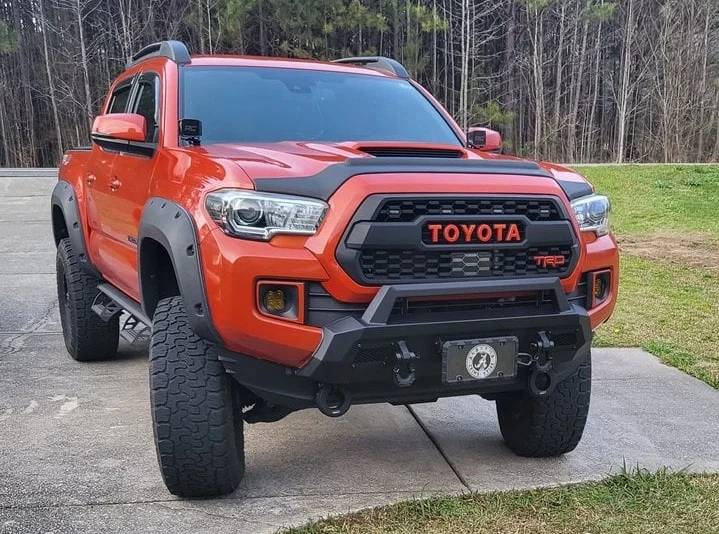
Lift kits are often one of the first upgrades Tacoma owners consider. The appeal is easy to understand. A taller truck looks more aggressive, gains additional ground clearance, and instantly creates an off road appearance that stands out. Social media is filled with heavily lifted Toyota Tacoma builds running oversized tires and extreme suspension setups.
The problem begins when lift height exceeds practical use.
Many owners install 5 to 8 inch lift kits even though their Tacoma spends most of its life on highways, city streets, and occasional weekend trails. Once suspension geometry changes dramatically, several components begin operating outside their ideal range.
CV axles can experience steeper angles that increase wear over time. Ball joints may experience added stress. Steering components work harder. Wheel bearings often see increased loads. The result may include vibrations, wandering steering feel, uneven tire wear, and recurring maintenance costs.
One common pain point appears after the excitement of installation fades. Owners discover they are replacing suspension parts more frequently than expected. Tire replacement costs can increase because alignment becomes more difficult to maintain.
There is another hidden issue involving resale value.
Many used truck buyers become cautious when they see extremely lifted Tacomas. They often wonder whether the vehicle was heavily abused off road or modified beyond factory engineering limits. Even if the truck remains mechanically healthy, perception alone can reduce buyer confidence.
Fun fact: Many experienced overland and trail Tacoma builders choose moderate lifts around two to three inches because this range often balances appearance, capability, and long term durability.
2. Oversized Wheels With Low Profile Tires
Large wheels create instant visual impact. Twenty two inch or twenty four inch wheel packages can transform a Tacoma from rugged pickup into something that resembles a custom show truck.
Unfortunately, appearance and long term practicality often move in opposite directions.
Larger wheels usually require lower profile tires. This reduces sidewall height and removes much of the cushioning that helps absorb impacts from rough roads. Ride quality becomes noticeably harsher. Small bumps that once felt insignificant suddenly become more noticeable during daily driving.
Another concern involves unsprung weight. Heavy aftermarket wheel packages place extra strain on suspension components, brakes, and steering systems. Over time, additional stress may contribute to premature wear.
Many Tacoma owners also discover fitment issues after upgrading. Tire rubbing becomes common during turns or suspension compression. Additional modifications may become necessary simply to make the wheel setup function properly.
Fuel economy can suffer as well. Increased rotating mass requires more effort from the drivetrain, particularly during acceleration.
From a resale perspective, oversized wheels create a narrower audience. Buyers interested in Tacoma trucks frequently prefer practical off road capability over dramatic appearance modifications. A truck equipped with oversized show wheels may appeal to fewer shoppers and take longer to sell.
3. Cheap Suspension Components
Suspension upgrades can dramatically improve ride quality and capability when quality parts are used. The problem occurs when owners prioritize low price over engineering and reliability.
The internet is filled with inexpensive spacer lifts, budget coilovers, and generic shock packages promising huge performance improvements for surprisingly low prices. For someone trying to save money, these kits can seem attractive.
The issue often appears months later.
Low quality suspension parts may develop oil leaks, premature wear, poor ride characteristics, and inconsistent performance. Some components simply are not designed for long term use under real world driving conditions.
Many owners initially feel excited because they saved several hundred dollars during installation. Then frustration appears when suspension problems begin creating secondary issues throughout the vehicle.
Ride quality may deteriorate. Alignment issues can develop. Tire wear can accelerate. Unexpected repair costs may quickly exceed the amount originally saved.
This creates one of the most expensive mistakes in the modification world.
Buy cheap once. Replace everything later.
Future buyers also notice suspension shortcuts. Unknown brands and questionable installation quality can create concerns about overall vehicle care. Buyers often assume that visible shortcuts may indicate hidden shortcuts elsewhere on the truck.
4. Aggressive ECU Tunes and Power Tuners
The Toyota Tacoma has never been known as the most powerful truck in its class. Because of that, many owners eventually start searching for extra horsepower and quicker throttle response. Performance tuners and ECU modifications often appear to offer an easy solution.
The marketing can be extremely tempting. More power. Better acceleration. Improved throttle response. Increased driving excitement.
What many owners do not realize is that power gains rarely come without tradeoffs.
Aggressive tuning changes the way the engine and transmission operate. Fuel mapping, ignition timing, and shift behavior can all be altered to create stronger performance. While moderate tuning from reputable sources may remain relatively safe, aggressive calibrations can increase stress across multiple systems.
Higher engine temperatures may develop during heavy loads. Transmission components may work harder. Additional strain can accumulate over thousands of miles rather than appearing immediately.
The frustrating part is that problems often develop gradually. Drivers may enjoy the extra power for months before small reliability concerns begin surfacing.
Another concern involves warranty and future resale confidence.
When buyers discover an aggressively tuned truck, many immediately begin asking questions. Was the truck driven hard? Was the engine repeatedly pushed beyond factory expectations? Even if no major issues exist, uncertainty itself can reduce buyer trust.
A truck known for reliability often becomes less attractive once heavy performance modifications enter the picture.
5. Extreme Tire Upsizing Without Re Gearing
Installing larger tires may be one of the most common Tacoma modifications on the market. Bigger tires improve appearance and can provide better off road capability. A Tacoma sitting on thirty five inch tires undeniably creates a strong visual presence.
However, appearance alone does not tell the full story.
Many owners increase tire size dramatically while leaving factory gearing untouched. This creates an imbalance that affects the entire driving experience.
Larger tires effectively change the vehicle’s final drive ratio. Acceleration can become slower. The truck may feel sluggish during daily driving. Transmission shift patterns may become inconsistent.
One major pain point appears during highway driving and climbing situations.
The transmission often hunts between gears more frequently because it struggles to maintain optimal power delivery. Constant shifting creates frustration for drivers and can increase wear over time.
Fuel economy usually suffers as well.
Some owners only realize the impact after weeks of ownership. The excitement of bigger tires slowly turns into disappointment as fuel costs rise and overall drivability declines.
Re gearing can solve many of these issues, but that introduces additional cost that many people fail to budget for during the original modification process.
Future buyers familiar with Tacoma ownership often recognize these setups immediately and may hesitate if they suspect drivetrain stress or incomplete modifications.
6. Poorly Installed LED and Electrical Mods
Lighting upgrades have become incredibly popular among Tacoma owners. Roof light bars, ditch lights, rock lights, bed lighting, and aftermarket audio systems can transform both appearance and functionality.
The issue is usually not the accessory itself.
The problem often comes from installation quality.
Electrical modifications require planning, proper wiring practices, and attention to detail. Unfortunately, many installations rely on shortcuts.
Wires may be routed near heat sources. Connections may lack protection. Fuse management can become disorganized. Some owners attempt large electrical projects without fully understanding system requirements.
At first everything may appear fine.
Then strange problems begin appearing months later.
Interior lights flicker unexpectedly. Battery drain develops overnight. Dashboard warning lights appear. Random electrical behavior begins creating confusion and frustration.
Electrical issues can become especially difficult because diagnosing them often takes significant time and labor.
Buyers also become cautious when they see messy aftermarket wiring. Tangled wires under the hood or poorly organized accessory installations can create immediate concern.
Even if the truck performs perfectly during a test drive, many buyers worry about hidden electrical problems waiting to appear later.
Poor wiring may be invisible at first glance, but experienced truck buyers know it can become one of the most expensive and frustrating ownership problems later.
7. Cheap Cold Air Intakes
Cold air intakes are often marketed as one of the easiest ways to improve performance. The promise sounds appealing. More horsepower, better throttle response, improved engine breathing, and a deeper intake sound that makes the Tacoma feel more aggressive.
For many owners, this becomes an early modification because installation usually appears simple and relatively affordable.
The problem is that not all intake systems are created equally.
Some low cost aftermarket systems focus more on appearance and sound than actual engineering. Instead of delivering meaningful performance improvements, they may simply create additional intake noise while sacrificing filtration quality.
This becomes particularly important for Tacoma owners who regularly drive in dusty environments, construction areas, gravel roads, or off road trails.
Poor filtration can allow more fine particles into the intake system. Over time, contaminants may contribute to increased engine wear. Certain intake designs can also disrupt airflow characteristics around sensors.
Mass airflow sensor problems can sometimes develop after installation. Small sensor inconsistencies may create rough idle behavior, inconsistent throttle response, or check engine lights.
The frustration comes when owners expect better performance but instead gain extra maintenance concerns.
Many experienced Tacoma owners eventually return to factory intake systems because Toyota engineers spent years balancing airflow, filtration quality, reliability, and durability.
Future buyers frequently trust original equipment more than unknown aftermarket components. A factory setup often communicates long term dependability rather than experimentation.
8. Cutting Fenders and Permanent Body Alterations
One of the most common side effects of oversized wheel and tire setups is fitment problems. Tires begin rubbing during turns or suspension movement, creating frustration after expensive upgrades.
Some owners solve the issue through permanent body modification.
Fender trimming, body cutting, aggressive reshaping, and structural alterations may appear like quick fixes during a build process.
Initially the result can look clean and functional.
The long term impact can tell a different story.
Permanent body modifications dramatically reduce flexibility. Returning the truck to factory condition becomes difficult and expensive. If priorities change later, reversing these changes may require body work, repainting, or replacement panels.
Resale value often suffers because many used buyers prefer vehicles that remain close to original condition.
Potential buyers may begin asking uncomfortable questions.
Was the truck modified aggressively for off road abuse?
Was damage repaired previously?
Were shortcuts used during installation?
Even perfectly executed modifications can create uncertainty.
Trust matters heavily in the used truck market. Permanent alterations often introduce doubt where none previously existed.
DIY modifications may feel personal and exciting during ownership, but future buyers frequently see them through a much different lens.
9. DIY Mods Done Poorly
Many Tacoma owners enjoy working on their own vehicles. The DIY culture surrounding trucks remains incredibly strong, and there is real satisfaction in completing upgrades yourself.
There is also potential for significant savings.
The problem is not DIY itself.
The issue begins when projects exceed experience levels.
Suspension installations, brake modifications, electrical systems, steering upgrades, and drivetrain work all require precision. Small mistakes that seem harmless during installation can create larger issues over time.
Loose fasteners. Improper torque specifications. Incorrect alignment procedures. Missing hardware. Poor wiring techniques.
Minor installation errors may not become obvious immediately.
Months later, owners can begin experiencing vibrations, unusual noises, uneven tire wear, handling problems, or intermittent electrical failures.
One of the biggest resale pain points appears when future buyers inspect modified vehicles.
Signs of rushed installation often stand out quickly.
Uneven cuts, exposed wiring, mismatched hardware, stripped fasteners, and inconsistent workmanship immediately reduce confidence.
Many buyers think the same thing:
If visible work looks questionable, what hidden problems might exist underneath?
Perception plays a major role in resale value. Even quality parts can lose appeal if installation quality raises concerns.
DIY can absolutely succeed when done carefully. Poor execution, however, can create expensive consequences that extend far beyond the original project.
10. Turbo Kits and Extreme Performance Builds
Few modifications generate excitement like forced induction. The idea of transforming a Toyota Tacoma into a high horsepower machine can be extremely appealing. Turbo kits promise dramatic gains in acceleration, stronger power delivery, and a completely different driving experience.
For many owners, the temptation becomes difficult to ignore.
The problem is that the Tacoma was never designed with extreme performance as its primary purpose. Its reputation was built on durability, simplicity, and long term reliability.
Adding turbo systems changes that equation significantly.
Forced induction increases cylinder pressure, operating temperatures, and stress across multiple components. The engine works harder. Cooling systems experience greater demands. Fuel systems may require upgrades. Transmission components often absorb additional load.
Some high quality builds perform well when engineered correctly, but many projects underestimate the complexity involved.
Owners sometimes focus only on horsepower numbers and installation cost while overlooking supporting modifications.
Additional cooling upgrades may become necessary.
Fuel system changes may follow.
Transmission upgrades may eventually enter the conversation.
The costs can grow quickly.
The bigger issue often appears years later when resale enters the picture.
Many Tacoma buyers actively seek trucks with untouched reliability records. When they see heavily modified performance builds, concerns naturally arise.
Questions begin immediately.
Was the truck driven aggressively?
How often was it pushed hard?
Was maintenance performed correctly?
Even if the truck remains mechanically healthy, buyer hesitation alone can reduce value.
Fun fact: In many used Tacoma communities, lightly modified trucks with practical upgrades often sell faster than heavily modified performance builds.
Conclusion
The best Tacoma builds do not try to turn the truck into something it was never designed to be. Toyota Tacoma owners often modify their vehicles because they want improved capability, stronger appearance, or a more personalized driving experience. There is absolutely nothing wrong with that.
The mistake happens when modifications begin sacrificing the qualities that made the Tacoma desirable in the first place.
Reliability, durability, and exceptional resale value are major reasons people choose this truck over competitors. Extreme lifts, oversized wheels, aggressive tuning, poor electrical work, and low quality components can slowly chip away at those strengths.
The good news is that smart modifications still exist.
Quality suspension upgrades, practical tire choices, protective equipment, and carefully selected accessories can improve capability without creating long term headaches.
Before installing your next upgrade, ask one important question.
Will this modification make ownership better five years from now, or will it become a problem I eventually regret?
That single question may save thousands of dollars and protect the value of your Tacoma for years to come.
What modifications have you installed on your Toyota Tacoma, and which upgrades would you never do again after real ownership experience?