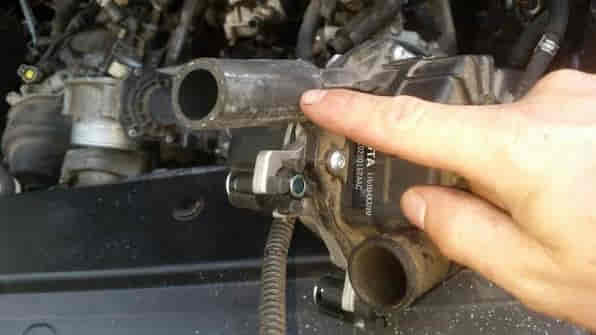
A Check Engine Light can turn a normal Toyota drive into an immediate question: what actually went wrong? When a diagnostic scan reveals Toyota P2445, the problem is connected to the vehicle’s secondary air injection system, specifically a condition in which the engine control module detects that the air injection pump is not operating as expected. Because the secondary air injection system is closely tied to emissions control, the vehicle may continue to run even when this fault is present, making the underlying problem easy to overlook.
The confusing part is that P2445 does not automatically mean the secondary air injection pump itself needs to be replaced. The pump may be faulty, but a failed fuse or relay, damaged wiring, poor electrical connection, blocked air passage, malfunctioning air switching valve, moisture intrusion, or a control problem can produce a similar diagnostic condition. Replacing the most expensive component first can therefore leave the real problem unresolved and increase repair costs unnecessarily.
Understanding how the system works makes Toyota P2445 much easier to diagnose. During specific operating conditions, particularly after a cold start, the ECM can command the secondary air injection system to operate. The pump supplies fresh air while related valves control where that air flows through the exhaust system. The ECM then monitors the system to determine whether the commanded operation is actually taking place.
This guide explains what Toyota P2445 means, how the secondary air injection system operates, the symptoms and causes associated with the code, and how technicians can diagnose the fault systematically. It also covers the appropriate repair approach, whether it is safe to drive with P2445, and what factors can influence the final repair cost. The goal is to identify the actual failure instead of assuming that every P2445 requires a new air injection pump.
What Does Toyota P2445 Mean?
Toyota P2445 indicates a malfunction associated with the secondary air injection system, specifically a condition in which the secondary air injection pump is detected as being stuck off. The engine control module monitors the system during operating conditions when secondary air injection is commanded and compares the expected system behavior with the feedback or electrical conditions it detects. When the expected operation does not occur, the ECM can store P2445 and illuminate the Check Engine Light.
The secondary air injection system is an emissions control system designed to introduce fresh air into the exhaust stream under specific conditions. Its purpose is to support the oxidation of certain exhaust gases, particularly during periods such as cold start when the engine and catalytic converter have not yet reached their normal operating temperature. By supplying additional oxygen to the exhaust, the system helps promote more complete oxidation of unburned hydrocarbons and carbon monoxide before the exhaust reaches the desired emissions-control state.
The air injection pump is the component responsible for supplying this fresh air. When the ECM commands the system to operate, the pump should run and produce the required airflow. Related valves then control the path through which the air enters the exhaust system. The ECM monitors the system to determine whether the commanded operation is occurring correctly.
The phrase “stuck off” is important because it describes the condition detected by the control system rather than automatically identifying the failed component. The ECM may command the secondary air injection pump on, but the expected response is not detected. The reason can be an electrical failure that prevents the pump from operating, a mechanical problem that stops the pump from producing airflow, a valve that prevents the air from reaching the expected location, or another fault that causes the system feedback to remain in an inactive state.
This distinction explains why replacing the pump is not always the correct first repair. If the pump has no electrical power because of a blown fuse, failed relay, damaged wiring, or poor connector connection, installing another pump will not solve the underlying electrical problem. Similarly, a functioning pump may still be associated with P2445 if an air switching valve is stuck or the airflow path is blocked.
The secondary air injection system also contains components that can be exposed to moisture, heat, exhaust gases, and environmental contamination. Depending on the Toyota model and system design, these conditions can contribute to component deterioration over time. A pump may become damaged or unable to operate correctly, while valves or passages can develop mechanical restrictions that prevent the system from responding as the ECM expects.
P2445 should also be distinguished from a simple statement that the vehicle has an exhaust leak or an oxygen sensor problem. Although the secondary air injection system interacts with the exhaust system and emissions monitoring, the code specifically concerns the operation of the secondary air injection system. Other diagnostic trouble codes may appear at the same time if a broader electrical or emissions problem exists, but each code should be interpreted according to the system it monitors.
The exact diagnostic strategy can vary between Toyota models, model years, and engine configurations. Some vehicles use additional sensors or feedback mechanisms to verify secondary air injection performance, while others may use different electrical and pneumatic control arrangements. For this reason, the factory wiring diagram and vehicle-specific service information are more reliable than applying one generic P2445 procedure to every Toyota.
In practical terms, Toyota P2445 means that the ECM has detected that the secondary air injection pump or its associated system is not responding as expected when operation is commanded. The code identifies a system condition, not necessarily a single failed part. Determining whether the fault is caused by the pump, power supply, relay, fuse, wiring, valve, airflow path, or control system is the essential next step in an accurate diagnosis.
Read more: Toyota P1135
How the Toyota Secondary Air Injection System Works
The Toyota secondary air injection system is designed to help control exhaust emissions during specific periods of engine operation, particularly shortly after a cold start. When the engine is first started, the catalytic converter may not yet be at its most effective operating temperature. The secondary air injection system helps support the emissions-control process during this warm-up period by introducing fresh air into the exhaust stream.
The process begins when the engine control module determines that the operating conditions are appropriate for secondary air injection. The ECM commands the air injection pump to operate, allowing the pump to draw in and supply fresh air. The system then uses air switching valves or related control valves to direct that air toward the appropriate portion of the exhaust system.
The additional oxygen supplied by the pump supports oxidation reactions involving unburned hydrocarbons and carbon monoxide in the exhaust. These reactions can generate additional heat and assist the catalytic converter as it moves toward its effective operating range. The secondary air injection system is therefore not designed to continuously supply air to the engine intake. It is an emissions-control mechanism that operates according to the vehicle’s programmed strategy.
The pump is only one part of this process. For the system to function correctly, the electrical supply must allow the pump motor to operate, the wiring and connectors must maintain reliable electrical continuity, and the relevant valves must open and close as commanded. The air passages must also remain sufficiently clear for the required airflow to reach the exhaust system.
The ECM monitors the system because simply commanding the pump on does not guarantee that the expected airflow is actually occurring. Depending on the Toyota application, the control system can evaluate electrical conditions, pressure, airflow, valve operation, or other feedback to determine whether the secondary air injection system responded correctly. When the expected response is absent, the ECM can recognize a fault and store an appropriate diagnostic trouble code such as P2445.
This monitoring strategy is important when interpreting Toyota P2445. If the pump does not run when commanded, the problem may be electrical or mechanical. If the pump runs but the system does not produce the expected result, the investigation may need to move toward the switching valves, air passages, pressure or airflow feedback, or another component involved in system operation.
The system’s location also influences its reliability. Secondary air injection components are installed in an environment where temperature changes, moisture, vibration, and contamination can affect electrical and mechanical components. A pump that is exposed to moisture or contamination can develop internal problems, while connectors and wiring can deteriorate over time. Valves and air passages can also become restricted depending on the condition of the system.
A functioning secondary air injection system should therefore be viewed as a complete chain rather than a single pump. The ECM provides the command, the electrical circuit enables the pump and valves to operate, the pump produces airflow, the valves control its direction, and the exhaust-side components receive the additional air. A failure anywhere in this chain can prevent the system from achieving the result expected by the ECM.
This operating relationship explains why Toyota P2445 requires system-level diagnosis. The code may appear to point directly at the pump, but the actual fault can exist before the pump, after the pump, or within the control and feedback system. Understanding how air, electrical power, valve control, and ECM monitoring interact provides the foundation for identifying the real cause instead of replacing components based solely on the code definition.
What Are the Symptoms of Toyota P2445?
The symptoms of Toyota P2445 can vary depending on the vehicle’s engine, secondary air injection design, and whether the fault is limited to the pump or affects other parts of the system. In many cases, the driver may notice very little change in normal engine performance because the secondary air injection system primarily operates as an emissions-control system during specific conditions. The Check Engine Light is therefore often the first and most obvious indication that something is wrong.
A Toyota with P2445 may start and drive normally under everyday conditions. The engine can continue to produce normal power because the secondary air injection system is not responsible for the primary fuel and ignition functions that keep the engine running. However, the ECM can still recognize that the commanded secondary air injection operation is not occurring and store the fault even when the driver does not feel a significant difference behind the wheel.
The Check Engine Light may appear after the ECM performs its monitoring routine and determines that the air injection pump is not responding as expected. Depending on the vehicle’s diagnostic strategy, the code may not be triggered immediately after every startup. Certain operating conditions may need to occur before the ECM can verify the system and determine that the pump or related components remain inactive.
Unusual sounds during cold startup can also provide a useful clue. A properly functioning air injection pump may produce an audible mechanical or electrical operating sound for a limited period after the engine starts. If the pump fails to run when commanded, the expected sound may be absent. Conversely, an unusual buzzing, grinding, whining, or intermittent noise can indicate that the pump motor is struggling, damaged, or operating under abnormal conditions.
Some vehicles may experience changes in engine behavior during the initial warm-up period, although this is not necessarily caused directly by P2445. Because the secondary air injection system supports emissions control rather than normal engine combustion, significant hesitation, stalling, severe rough running, or major power loss should prompt investigation for additional faults rather than being attributed to P2445 alone.
An emissions inspection failure can also be associated with an unresolved P2445. A stored emissions-related DTC can prevent a vehicle from meeting inspection requirements in jurisdictions where diagnostic trouble codes and readiness monitors are checked. Even when the Toyota appears to drive normally, the fault may therefore have practical consequences for registration or emissions testing.
In some Toyota applications, a secondary air injection malfunction can lead the engine control system to activate a protective or fail-safe strategy. The exact behavior depends on the vehicle and control system. If reduced power or another warning message appears together with P2445, the vehicle should be diagnosed as a broader engine-management issue rather than assuming the pump is the only component involved.
Additional diagnostic trouble codes can provide important information about the symptoms. A P2445 appearing alongside other secondary air injection, electrical, valve, or airflow-related codes may indicate a common underlying problem. For example, a power supply fault could affect more than one component, while a valve or airflow problem could cause the pump to operate without producing the system response expected by the ECM.
The timing of the symptoms can also be useful. If the Check Engine Light and unusual pump behavior occur primarily after a cold start, that pattern is consistent with the conditions under which the secondary air injection system is commonly commanded. If the vehicle develops symptoms throughout the entire drive, especially significant drivability problems, additional systems should be examined.
Ultimately, the most common experience with Toyota P2445 is a Check Engine Light with little or no noticeable change in everyday driving. However, unusual pump noises, emissions-related problems, additional warning indicators, or changes in vehicle behavior can provide valuable clues. The absence of obvious symptoms does not mean the fault should be ignored, because the ECM has detected a problem in a system that is important for the vehicle’s emissions-control strategy.
What Causes Toyota P2445?
The causes of Toyota P2445 can range from a failed secondary air injection pump to an electrical or mechanical problem elsewhere in the system. Although the code mentions the pump being stuck off, that description does not prove that the pump itself has failed. The ECM is identifying an unexpected system condition, so the diagnosis must determine why the commanded operation is not producing the expected response.
A failed secondary air injection pump is one of the most direct causes. The pump contains an electric motor and mechanical components that can wear, seize, or become damaged over time. If the motor cannot run when commanded, the system cannot generate the airflow required for secondary air injection. Internal contamination, mechanical wear, electrical failure, or moisture intrusion can all contribute to pump failure depending on the vehicle’s design and operating environment.
Moisture is particularly important on Toyota applications where the secondary air injection components are vulnerable to water or condensation. Water entering the pump or related components can damage electrical and mechanical parts, potentially causing the pump to seize or stop operating correctly. Simply replacing a damaged pump without investigating how moisture reached the component can allow the same failure to happen again.
A blown fuse can also prevent the pump from operating. The fuse protects the electrical circuit from excessive current, and when it opens, power to the affected component is interrupted. However, the fuse itself is not necessarily the root cause. An internal pump short, damaged wiring, or another electrical problem may have caused excessive current and triggered the fuse to fail.
A faulty relay can create a similar condition. If the ECM commands the secondary air injection system to operate but the relay does not deliver electrical power to the pump, the pump can remain inactive even though the pump motor itself is functional. Relay contacts can deteriorate, electrical resistance can increase, or an internal relay failure can interrupt the circuit.
Damaged wiring and connectors are another important source of P2445. The secondary air injection system depends on reliable electrical connections between the power supply, pump, valves, and control components. Heat, vibration, moisture, abrasion, and previous repairs can damage the harness or create poor terminal contact. An open circuit can prevent operation, while a short circuit can alter the electrical behavior of the system.
The air switching valve can also be involved. The pump may operate correctly but the valve may fail to open, close, or respond to the ECM’s command. If the valve remains stuck or the airflow path is restricted, the system may not produce the expected result even though the pump itself is running. This distinction is critical because replacing a functional pump will not correct a valve or airflow problem.
Blocked or restricted air passages can create another form of secondary air injection failure. The system requires a clear path for the pump to move fresh air toward the exhaust. Carbon deposits, contamination, damaged components, or other restrictions can interfere with airflow. When the ECM expects a specific system response but the required airflow does not occur, a secondary air injection code can be stored.
Electrical power and ground problems should also be considered. A pump may receive some voltage but still fail to operate correctly if the circuit has excessive resistance or a poor ground connection. Voltage-drop testing can reveal conditions that a simple voltage check may miss, particularly when the circuit is under load.
The ECM or its control circuitry represents a less common possibility. The ECM is responsible for commanding and monitoring the secondary air injection system, so a fault in the control side can prevent the system from operating as intended. However, ECM failure should generally be considered only after the pump, valves, fuse, relay, wiring, connectors, power supply, and other relevant components have been tested according to the appropriate Toyota diagnostic procedure.
Previous repairs or incorrect component installation can also contribute to P2445. A connector that is not fully secured, wiring routed near excessive heat, or a component installed without correcting an underlying moisture problem can create a recurring fault. When a previously repaired vehicle develops P2445 again, the repair history can provide an important diagnostic clue.
Multiple DTCs should always be interpreted together. If P2445 appears with other secondary air injection or electrical codes, the codes may point toward a shared circuit or system problem. Treating P2445 as an isolated pump failure can therefore lead to unnecessary component replacement.
Ultimately, Toyota P2445 is caused by a failure that prevents the secondary air injection system from responding as the ECM expects. The pump may be defective, but the real source can also be the fuse, relay, wiring, connector, valve, airflow path, power supply, or control system. Identifying which part of that chain has failed is the key to an effective and lasting repair.
How to Diagnose Toyota P2445
Diagnosing Toyota P2445 correctly requires determining why the secondary air injection system is not responding when the ECM expects it to operate. Reading the code only identifies the detected condition. It does not establish whether the pump, electrical circuit, air switching valve, airflow path, or control system is responsible. A systematic diagnosis is therefore essential before replacing any major component.
The process should begin with a complete scan of the vehicle rather than focusing exclusively on P2445. Stored, pending, and history codes can reveal whether other electrical, valve, airflow, or emissions-related faults are present. Freeze-frame data can also show the operating conditions under which the ECM detected the problem. Because secondary air injection is commonly activated during specific operating conditions, understanding when the code was set can provide an important diagnostic direction.
The vehicle’s exact model, model year, engine, and secondary air injection configuration should then be confirmed. Toyota has used different system designs across its vehicles, so the location of the pump, valve arrangement, electrical circuits, and monitoring strategy can vary. The correct wiring diagram and service information should be used rather than assuming that a procedure from another Toyota applies to the vehicle being diagnosed.
The physical condition of the air injection pump should be examined next. The technician can look for signs of corrosion, water intrusion, damaged housing, abnormal wiring, or evidence of previous repairs. If the pump is accessible, its connector and surrounding harness should receive particular attention. A pump that has been exposed to moisture may have an internal failure that cannot be identified through a simple visual inspection.
The electrical supply should then be verified. The pump requires appropriate power and ground to operate when commanded. Checking the relevant fuse and relay is part of this process, but a visual inspection of a fuse is not enough to establish that the entire circuit is healthy. The circuit should be tested according to the Toyota wiring diagram to determine whether the pump receives the required electrical conditions under the appropriate operating state.
The pump can also be evaluated through an appropriate active test when the vehicle’s scan tool and control system support this function. Commanding the secondary air injection system on allows the technician to determine whether the pump responds to the ECM request. If the pump does not operate, the investigation can focus on the pump itself and its power, ground, relay, fuse, and wiring circuits.
If the pump operates during an active test, the diagnosis should not automatically end there. The system must also be able to move air through the intended path. The air switching valve and related passages can prevent correct system operation even when the pump motor is functioning. A valve that remains closed when it should open, or a restricted passage that prevents sufficient airflow, can produce a condition that the ECM interprets as a secondary air injection malfunction.
The electrical behavior of the valve should be checked according to the vehicle-specific diagnostic procedure. The technician may need to verify its power supply, control signal, wiring integrity, and mechanical response. A valve can have a normal electrical appearance while still being mechanically stuck, so both electrical and functional testing may be necessary.
Airflow or pressure feedback should also be considered where the Toyota system uses a method of monitoring the actual secondary air injection result. The important diagnostic question is whether the system produces the expected response after the ECM commands operation. If the pump runs but the expected airflow or pressure change does not occur, the problem may be located downstream of the pump rather than inside the pump motor.
Wiring and connector inspection remains essential throughout the diagnosis. A circuit can appear intact but develop excessive resistance under load. Heat damage near exhaust components, corrosion inside terminals, broken conductors, and loose connections can all interfere with system operation. Voltage-drop testing and continuity testing performed under appropriate conditions can help distinguish a healthy circuit from one that merely appears functional during a basic inspection.
If all mechanical components, electrical circuits, valves, and feedback conditions meet the applicable specifications, the ECM control side may require further investigation. This is normally a later diagnostic step because ECM replacement is significantly more expensive than repairing a fuse, relay, wiring connection, valve, or pump. The control module should not be blamed simply because P2445 remains after another component has been replaced.
After the suspected fault has been repaired, the code should be cleared and the secondary air injection system retested under the conditions required by the vehicle. A scan tool can be used to monitor whether the system responds correctly, while a subsequent drive cycle may be necessary for the ECM to complete its monitoring routine. The vehicle should then be rescanned to confirm that P2445 has not returned.
The most reliable approach to Toyota P2445 diagnosis is to follow the system from the ECM command through the electrical circuit, pump operation, valve control, airflow path, and feedback response. If the pump does not run, investigate power, ground, relay, wiring, and the pump itself. If the pump runs but the system response is incorrect, investigate valves, passages, and feedback. This method narrows the fault logically and helps prevent unnecessary replacement of expensive components.
How to Fix Toyota P2445
Fixing Toyota P2445 depends on the component or circuit that has actually failed. Because the code describes a secondary air injection pump condition rather than conclusively identifying a defective pump, the repair should follow the diagnostic results. This prevents unnecessary replacement of expensive components and increases the likelihood that the fault will not return.
If testing confirms that the secondary air injection pump itself has failed, replacing the pump with the correct component for the specific Toyota is the appropriate repair. A pump may fail because of an internal electrical fault, worn motor, mechanical seizure, contamination, or moisture damage. Before installing a replacement, the surrounding electrical circuit and air passages should still be inspected to make sure the new pump will receive the correct power and can operate without encountering the same condition that damaged the original component.
Moisture-related pump failure requires particular attention. If water has entered the secondary air injection system, replacing the pump alone may provide only a temporary solution. The source of the moisture should be identified and the related components inspected for corrosion or contamination. Any affected wiring, connectors, valves, or other components should be repaired or replaced as necessary before the system is returned to normal operation.
If the diagnosis identifies a blown fuse, the fuse can be replaced once the reason for its failure has been investigated. A fuse that opens because of a short circuit or excessive current indicates that another problem may exist in the circuit. Simply installing a new fuse without correcting the underlying electrical fault can cause the replacement fuse to fail again and may expose the circuit to further damage.
A faulty relay can also be replaced when testing confirms that it is not supplying the required electrical power to the pump. Relay failure can prevent a functional pump from operating when the ECM commands the system on. The relay circuit should be tested rather than replacing it solely because P2445 is present, particularly when multiple electrical components share the same power source.
Damaged wiring or connectors should be repaired when they are responsible for the loss of electrical continuity or excessive resistance. Heat-damaged insulation, broken conductors, corroded terminals, and loose connections can all prevent the pump or valve from responding correctly. The repair should restore the circuit according to appropriate automotive electrical standards and should also address poor harness routing or other conditions that contributed to the damage.
If the air injection pump operates but the air switching valve does not respond correctly, the valve may need to be repaired or replaced. A valve that is mechanically stuck can prevent air from reaching the exhaust even when the pump is producing airflow. In this situation, replacing the pump would not address the actual restriction in the system.
Restricted air passages should also be corrected when diagnosis shows that airflow cannot reach the intended exhaust path. The specific repair depends on the location and nature of the restriction. Because the secondary air injection system relies on controlled airflow, a component that appears electrically functional can still cause P2445 if the mechanical air path is obstructed.
A power or ground problem requires restoration of the affected circuit. A pump can fail to operate when the circuit has excessive resistance, inadequate grounding, or an unstable electrical supply. Correcting the connection or repairing the affected wiring can restore proper operation without requiring replacement of the pump.
An ECM-related repair should only be considered after the pump, valves, fuse, relay, wiring, connectors, power supply, and relevant feedback circuits have been verified. The ECM controls and monitors the secondary air injection system, but a persistent P2445 does not automatically mean the module has failed. Proper circuit testing is essential before considering module replacement or programming.
Once the identified fault has been repaired, the stored P2445 code should be cleared with an appropriate scan tool. The secondary air injection system should then be tested under the operating conditions specified for the vehicle. Where supported, an active test can confirm pump and valve operation, while the appropriate drive cycle can allow the ECM to complete its emissions monitoring routine.
A repair should be considered successful only when the underlying fault has been corrected and the system can complete its monitoring without setting P2445 again. If the code returns after a component has been replaced, the original diagnosis should be reconsidered rather than assuming that another expensive part is automatically required.
The most effective solution to Toyota P2445 is therefore a cause-based repair. A failed pump requires a pump replacement, while a fuse, relay, wiring, valve, airflow restriction, moisture problem, or control fault requires a different remedy. Matching the repair to the verified failure is the best way to restore the secondary air injection system and avoid paying for parts that were never defective.
Can You Drive With Toyota P2445?
A Toyota with P2445 may still be drivable, but whether it is appropriate to continue driving depends on how the vehicle is behaving and whether other diagnostic trouble codes or warning signs are present. Because the secondary air injection system is primarily an emissions-control system, a failure does not necessarily prevent the engine from running. Some vehicles can feel completely normal even though the Check Engine Light remains illuminated.
If the Toyota starts normally, maintains normal engine performance, and has no additional warning indicators, a short drive to a qualified repair facility may generally be reasonable. The vehicle’s primary combustion systems can continue to operate even when the secondary air injection pump is not functioning as expected. However, normal drivability does not mean the emissions system is operating correctly.
The main concern with leaving P2445 unresolved is that the secondary air injection system may no longer perform its intended emissions-control function. The system is designed to operate under specific conditions, particularly during certain phases of engine warm-up. If the pump remains inactive when commanded, the ECM may continue detecting the fault and the vehicle may fail applicable emissions monitoring or inspection requirements.
The condition can become more significant if P2445 is accompanied by other symptoms. Severe hesitation, stalling, substantial loss of power, unusual engine behavior, overheating, or multiple warning lights may indicate that another fault exists alongside the secondary air injection problem. Those symptoms should not automatically be attributed to P2445 because the secondary air injection system is not normally responsible for the basic operation of the engine.
A flashing Check Engine Light requires particular caution. A flashing warning light can indicate an active engine misfire that may damage the catalytic converter. P2445 itself does not necessarily represent such a condition, but if the Check Engine Light is flashing or the engine is running severely rough, the vehicle should be treated as having a potentially more serious problem and diagnosed promptly.
Unusual sounds from the secondary air injection pump can also provide useful information. A grinding, whining, buzzing, or intermittent noise may indicate that the pump is struggling or mechanically damaged. Continuing to operate a component that is failing mechanically may allow the problem to worsen or create additional electrical stress within the circuit.
A P2445 fault can also be intermittent. A pump, relay, connector, or wiring connection may function under one temperature or vibration condition and fail under another. The fact that the vehicle drives normally on one trip does not guarantee that the problem will remain minor. Intermittent electrical faults can become permanent as components continue to deteriorate.
Clearing the code without repairing the underlying problem is not a reliable solution. The ECM can monitor the secondary air injection system again when the required conditions occur, and P2445 can return once the same fault is detected. Repeatedly clearing the code may also make it harder to understand the history of the problem during diagnosis.
For an otherwise normally operating Toyota, the priority is usually to arrange diagnosis rather than immediately stop driving. The vehicle should be inspected sooner rather than later, especially if the Check Engine Light remains on or the code is accompanied by other emissions or electrical faults. Prompt diagnosis can also prevent an inexpensive wiring, relay, or connector problem from developing into a more extensive repair.
In practical terms, Toyota P2445 is often not an immediate engine-failure condition, but it should not be ignored indefinitely. A short trip for diagnosis may be reasonable when the vehicle operates normally, while severe drivability symptoms, a flashing Check Engine Light, or additional serious warnings call for a more cautious response. The safest decision depends on the vehicle’s complete symptom and diagnostic picture, not on P2445 alone.
Toyota P2445 Repair Cost
The cost to repair Toyota P2445 can vary significantly because the code can be triggered by several different failures within the secondary air injection system. A defective air injection pump, faulty relay, blown fuse, damaged wiring, failed air switching valve, restricted airflow path, or control problem can all require different repairs. For that reason, the P2445 code alone is not enough to provide a reliable fixed repair price.
The most affordable repairs are often associated with simple electrical problems. A loose connection, damaged wire, corroded terminal, fuse, or relay can sometimes be corrected without replacing the secondary air injection pump. The final cost depends on how accessible the affected circuit is, how extensive the damage is, and the labor rate of the repair facility.
A failed relay or fuse may initially appear to be a straightforward repair, but proper diagnosis remains important. If a fuse has opened because the pump motor has developed an internal short or another component is drawing excessive current, replacing only the fuse will not provide a lasting repair. The underlying electrical problem must be corrected first.
Air injection pump replacement is generally more expensive because the component itself can represent a significant portion of the repair cost. The price varies according to the Toyota model, engine configuration, part availability, and whether an original-equipment or aftermarket component is selected. Labor can also vary depending on the location of the pump and the condition of its mounting hardware and connectors.
A failed air switching valve can create another cost category. If the pump operates correctly but the valve is stuck, electrically faulty, or unable to direct air through the intended path, the valve may need to be serviced or replaced. In some cases, additional diagnosis is required to determine whether the problem is mechanical, electrical, or related to an airflow restriction.
Moisture-related damage can increase the overall repair cost when more than one component has been affected. Water intrusion may damage the pump, connectors, wiring, or associated control components. Replacing only the visibly failed component without addressing the source of the moisture can result in another failure and additional repair expense later.
Diagnostic labor should also be considered part of the repair process rather than an unnecessary extra charge. P2445 does not identify one guaranteed failed component, so a technician may need to inspect the electrical circuit, test power and ground, operate the pump through an active test, evaluate valve function, and verify airflow or system feedback. Spending money on diagnosis can prevent the much more expensive mistake of replacing a functional pump.
An ECM-related problem represents a less common and potentially more expensive repair. Because the ECM is responsible for commanding and monitoring the secondary air injection system, a control fault can theoretically produce P2445. However, the ECM should only be considered after the pump, fuse, relay, wiring, connectors, valves, airflow path, and feedback circuits have been properly tested.
The total cost can also differ between a Toyota dealership and an independent repair shop. Labor rates, diagnostic procedures, parts pricing, warranty coverage, and access to specialized equipment can all influence the final invoice. Owners should therefore compare estimates based on the diagnosed fault rather than comparing a generic “P2445 repair price.”
The most effective way to reduce Toyota P2445 repair cost is to identify the failed part before purchasing replacement components. If the pump is healthy but a relay or wiring connection is faulty, replacing the pump wastes money. Conversely, if the pump has an internal mechanical or electrical failure, repeatedly repairing surrounding circuits without addressing the defective pump will not resolve the code.
Ultimately, the price of fixing Toyota P2445 is determined by the cause, not by the code itself. A minor electrical repair may be relatively simple, while a complete pump or valve replacement can require considerably more investment. A vehicle-specific diagnosis provides the most accurate estimate and gives the owner a much clearer understanding of what actually needs to be repaired.
Frequently Asked Questions About Toyota P2445
What does Toyota P2445 mean? Toyota P2445 indicates that the engine control module has detected a problem with the secondary air injection system in which the air injection pump is not operating as expected. The code does not automatically prove that the pump itself has failed because the fault can also involve the electrical circuit, relay, fuse, wiring, valves, airflow path, or control system.
What causes Toyota P2445? Common possibilities include a failed secondary air injection pump, electrical power loss, a blown fuse, faulty relay, damaged wiring, poor connector contact, moisture intrusion, a malfunctioning air switching valve, or restricted airflow. The correct cause must be established through vehicle-specific testing.
Can a bad relay cause P2445? Yes. If the relay fails to supply power to the secondary air injection pump when the ECM commands operation, the pump may remain inactive and contribute to a P2445 condition. The relay and its circuit should be tested before replacing the pump.
Can water damage cause Toyota P2445? Moisture intrusion can damage secondary air injection components, particularly electrical components such as the pump, connectors, and wiring. If water is found around a failed component, identifying and correcting the source of the moisture is important to prevent repeat failure.
Can I drive with Toyota P2445? A Toyota may remain drivable with P2445 when the engine operates normally and no other serious symptoms are present. However, the fault should be diagnosed rather than ignored because the secondary air injection system is part of the vehicle’s emissions-control strategy. Severe drivability problems or a flashing Check Engine Light require more immediate attention.
Does P2445 mean I need a new air injection pump? Not necessarily. The pump should be replaced only when testing confirms that it has failed. A fuse, relay, wiring problem, connector issue, air switching valve, restricted passage, or control fault can produce a similar system condition.
How is Toyota P2445 diagnosed? Diagnosis normally begins with a complete scan for related DTCs and a review of vehicle-specific service information. The technician can then inspect the pump and wiring, verify power and ground, check the fuse and relay, perform an appropriate active test, evaluate valve operation, and verify airflow or system feedback where applicable.
How much does it cost to fix Toyota P2445? Repair cost depends on the failed component. A simple fuse, relay, wiring, or connector repair can be less expensive than replacing the secondary air injection pump or valve. Labor rates, parts availability, Toyota model, engine configuration, and the extent of moisture or component damage can also affect the final cost.
Can Toyota P2445 come back after replacing the pump? Yes. If the original problem was caused by damaged wiring, a faulty relay, a defective valve, restricted airflow, or moisture intrusion, replacing the pump alone may not correct the underlying fault. The system should be diagnosed as a complete circuit before and after component replacement.
Conclusion
Toyota P2445 identifies a problem with the secondary air injection system in which the air injection pump is detected as being stuck off or otherwise not responding as expected. Although the pump is an obvious suspect, the code does not provide enough information to conclude that the pump itself is defective. The actual fault may be located in the fuse, relay, wiring, connector, power supply, air switching valve, airflow path, or control system.
The most reliable diagnostic strategy is to follow the system from the ECM command through the electrical supply, pump operation, valve control, airflow, and available feedback. This approach makes it possible to distinguish a genuine pump failure from a much simpler electrical or mechanical problem.
In many cases, a Toyota with P2445 can continue to operate normally because the secondary air injection system is primarily associated with emissions control. Nevertheless, an unresolved fault can cause emissions-related problems, trigger inspection issues, or develop into a more complicated repair if the underlying cause is ignored.
The key to fixing Toyota P2445 is therefore not replacing parts based on the code definition alone. Accurate diagnosis should determine exactly why the secondary air injection system is not responding as commanded. Once that cause is identified, the appropriate repair can restore system operation, prevent unnecessary expense, and reduce the likelihood of the Check Engine Light returning.