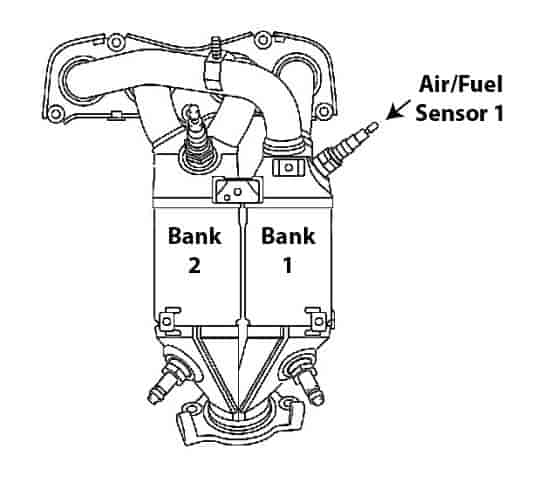
Seeing the Check Engine Light come on is frustrating enough, but finding a code such as Toyota P1135 can make the problem even more confusing. The code points toward the air-fuel sensor system, specifically a heater circuit malfunction involving Bank 1 Sensor 1 on applicable Toyota vehicles. Because the air-fuel sensor plays an important role in helping the engine control module monitor and adjust the air-fuel mixture, a problem with its heater circuit can affect how quickly the sensor reaches its required operating temperature.
The challenge is that P1135 does not necessarily mean the air-fuel sensor itself has failed. A damaged wire, poor electrical connection, blown fuse, abnormal heater resistance, power supply problem, or control circuit fault can create a similar condition. Replacing the sensor without testing the surrounding circuit can therefore turn a relatively simple electrical repair into an unnecessary expense.
Understanding what Toyota P1135 actually monitors makes diagnosis much easier. The engine control module evaluates the electrical behavior of the sensor heater circuit to determine whether the heater is operating within the expected range. When the detected condition does not match the specified parameters, the ECM can store P1135 and illuminate the Check Engine Light.
This guide explains what Toyota P1135 means, how the Bank 1 Sensor 1 heater works, the symptoms and causes associated with the code, and the diagnostic process used to identify the actual fault. It also explains the most appropriate repair strategies, whether it is safe to continue driving, and what can influence the cost of fixing the problem. Most importantly, the goal is to diagnose the circuit before replacing expensive components unnecessarily.
What Does Toyota P1135 Mean?
Toyota P1135 refers to a malfunction in the heater circuit of the air-fuel ratio sensor on Bank 1 Sensor 1 for applicable Toyota vehicles. The code is associated with the electrical heating element built into the sensor rather than simply indicating that the sensor is producing an incorrect air-fuel measurement. This distinction is important because the heater circuit has its own power, wiring, resistance, and control requirements, and a failure in any of these areas can trigger the code.
The air-fuel ratio sensor, often called an A/F sensor, is positioned in the exhaust system upstream of the catalytic converter on applicable Toyota engines. Its purpose is to provide the engine control module with information about the oxygen content of the exhaust so the ECM can manage fuel delivery more precisely. Unlike a conventional oxygen sensor, a Toyota A/F sensor is designed to provide a broader and more precise indication of the air-fuel mixture under the operating conditions for which it is used.
The sensor needs to reach a specific operating temperature before it can provide accurate information to the ECM. This is where the internal heater becomes important. Rather than relying entirely on exhaust heat to warm the sensor, the heater uses electrical energy to bring the sensing element up to operating temperature more quickly and help maintain the required temperature during engine operation. The ECM monitors the electrical characteristics of this heater circuit and can recognize conditions that indicate an abnormality.
The terms Bank 1 and Sensor 1 identify the location of the affected component. On an engine with multiple cylinder banks, Bank 1 is the bank containing cylinder number one. Sensor 1 generally identifies the sensor located upstream of the catalytic converter, closer to the engine. Therefore, P1135 is not simply a generic oxygen sensor code. It identifies a particular air-fuel sensor location and specifically points toward the heater circuit associated with that sensor.
The word “circuit” is especially important when interpreting P1135. A heater circuit consists of more than the heating element inside the sensor. It also depends on electrical power, ground or control paths, wiring, connectors, fuses where applicable, and the ECM’s ability to monitor or control the circuit. A fault in any of these areas can cause the ECM to detect an electrical condition outside its expected parameters.
For this reason, replacing the A/F sensor immediately is not always the correct solution. A sensor with an open heater element can certainly cause P1135, but the same code can also occur when a wire is damaged, a connector has poor contact, a fuse has failed, or the heater is not receiving the expected electrical supply. Proper diagnosis must therefore determine whether the problem originates inside the sensor or somewhere else in the circuit.
P1135 should also be distinguished from codes that indicate an A/F sensor signal, range, or performance problem. A sensor can produce an abnormal signal for reasons unrelated to its heater circuit, while a heater circuit fault can exist even when the sensing element itself is capable of producing an appropriate signal after reaching operating temperature. This is why the diagnostic approach for P1135 should begin with the heater circuit rather than assuming that every sensor-related code requires the same repair.
In practical terms, Toyota P1135 means the ECM has detected an abnormal condition in the Bank 1 Sensor 1 air-fuel sensor heater circuit. The code identifies the system and location, but it does not by itself identify the failed component. Determining whether the sensor, wiring, connector, fuse, power supply, ground, or control side is responsible is the key to making an accurate repair.
Read more: Toyota Powertrain Warranty
How the Toyota Air-Fuel Sensor Heater Works
The air-fuel ratio sensor used on applicable Toyota engines depends on a built-in heating element to reach its operating temperature quickly and maintain stable sensing performance. This heater is an essential part of the sensor system because the sensing element cannot provide the intended level of accuracy when it is too cold. The Toyota P1135 code is therefore closely connected to the electrical circuit that supplies and controls this heater rather than simply to the sensor’s ability to measure exhaust gases.
When the engine starts, the air-fuel sensor is initially close to ambient temperature. Exhaust heat gradually increases its temperature as the engine runs, but relying only on exhaust heat would delay the point at which the sensor can operate effectively. The internal heater accelerates this warm-up process by converting electrical energy into heat inside the sensor assembly. This allows the sensor to reach the required operating range sooner, which helps the ECM begin using reliable air-fuel information under appropriate operating conditions.
The heater operates as part of an electrical circuit that includes the sensor’s heating element, electrical power, wiring, connectors, and the ECM’s monitoring or control strategy. Depending on the Toyota application, the exact circuit design and control method can differ. What remains important for diagnosing P1135 is that the ECM expects the heater circuit to exhibit specific electrical behavior. If the circuit is open, shorted, has excessive resistance, lacks the expected power supply, or otherwise operates outside its calibrated range, the ECM can recognize the abnormal condition and store the trouble code.
The heating element itself can develop an internal electrical failure. A broken element can create an open circuit, preventing current from flowing through the heater. Internal damage can also change the resistance of the element so that the electrical characteristics no longer match the expected specification. In either situation, the sensor may not reach its intended operating temperature as quickly or consistently as designed.
The circuit outside the sensor is equally important. Wiring between the sensor and vehicle harness can become damaged by heat, vibration, abrasion, corrosion, or previous repair work. A connector can also develop poor terminal contact or corrosion, increasing electrical resistance or interrupting the circuit. Because the air-fuel sensor is located in a high-temperature area of the exhaust system, its wiring and connector are exposed to conditions that can accelerate deterioration.
The power supply is another critical part of the system. If the heater does not receive the required electrical supply, the heating element cannot operate regardless of whether the sensor itself is healthy. Depending on the vehicle design, a fuse or related power distribution component may protect the circuit. A failed fuse can therefore create a heater circuit malfunction, although replacing the fuse without investigating why it failed can leave the underlying problem unresolved.
The ECM also plays an important role in monitoring the heater circuit. It uses electrical information from the circuit to determine whether the heater is operating within the expected range. This means a P1135 diagnosis should not stop at the sensor. If the sensor heater, wiring, connectors, and power supply all test correctly, the control side of the circuit may require further investigation.
The heater’s operation also affects the broader fuel-control system. Once the A/F sensor reaches the required temperature, the ECM can use its feedback more effectively to manage fuel injection and maintain the desired air-fuel relationship. A heater malfunction does not necessarily mean that the engine immediately loses the ability to run, but it can interfere with the speed and conditions under which reliable sensor feedback becomes available.
This explains why Toyota P1135 should be approached as a circuit diagnosis rather than a simple sensor replacement problem. The code identifies an abnormal heater condition, while the actual cause can exist inside the sensor or anywhere along the electrical path that allows the heater to function. Understanding that relationship provides the foundation for interpreting the symptoms and selecting the correct diagnostic tests.
What Are the Symptoms of Toyota P1135?
The symptoms associated with Toyota P1135 can vary considerably depending on the vehicle, engine, driving conditions, and whether the heater circuit is the only fault present. Because the code identifies a problem with the Bank 1 Sensor 1 air-fuel sensor heater circuit, some vehicles may continue to drive almost normally while others can develop noticeable changes in starting, fuel control, or overall engine behavior. The Check Engine Light is usually the clearest indication that the ECM has detected a fault.
A Check Engine Light can appear when the ECM determines that the air-fuel sensor heater is not operating within its expected electrical parameters. In some cases, the driver may notice the warning light without experiencing any obvious drivability problem. This can happen because the vehicle can continue operating using other available engine-control strategies even when the sensor heater is not functioning correctly.
Fuel economy can also be affected. The air-fuel sensor is an important source of feedback for the ECM, and reaching its operating temperature efficiently helps the engine enter the intended fuel-control strategy. If the heater does not bring the sensor to temperature as expected, the ECM may take longer to obtain reliable sensor feedback after startup or may use alternative control strategies under certain conditions. The resulting effect on fuel consumption depends on the specific vehicle and the nature of the fault.
Some Toyota vehicles may experience rougher engine operation, hesitation, or changes in throttle response when an A/F sensor heater problem occurs alongside other sensor or engine-control issues. However, these symptoms should not automatically be attributed to P1135 alone. Problems such as ignition faults, vacuum leaks, fuel delivery issues, or other DTCs can produce similar drivability symptoms, which is why a complete scan and proper diagnosis are important.
Difficult starting can occur in certain circumstances when a sensor-related fault affects the engine’s control strategy, particularly during conditions where accurate feedback becomes important. However, P1135 by itself does not necessarily cause a no-start condition. If a Toyota cranks normally but fails to start, additional diagnostic codes and fuel, ignition, and engine-management conditions should be investigated rather than assuming the heater circuit is the sole cause.
Emissions performance can also be affected because the A/F sensor contributes to the engine’s ability to maintain the desired air-fuel mixture. A heater malfunction can delay proper sensor operation and potentially increase emissions during the period when the sensor has not yet reached its required temperature. This is one reason a P1135 fault can be detected even when the driver notices little or no change in vehicle performance.
The location of the problem can also help explain why symptoms may be limited. Bank 1 Sensor 1 is positioned upstream in the exhaust system and provides important feedback to the ECM. If the sensing element itself can still operate after reaching temperature, the vehicle may behave normally once the sensor becomes sufficiently hot. The main problem may therefore be most noticeable during warm-up rather than throughout the entire drive.
Additional diagnostic trouble codes can change the interpretation significantly. If P1135 appears alongside other A/F sensor, fuel mixture, engine misfire, or electrical codes, those codes should be considered together rather than treated as unrelated problems. A shared wiring fault or power supply problem, for example, can affect more than one circuit at the same time.
The absence of severe symptoms should not be interpreted as proof that the problem can be ignored indefinitely. A heater circuit malfunction means the ECM has detected an abnormal electrical condition that should be identified and corrected. Continuing to drive may be possible in some cases, but delaying diagnosis can make it more difficult to identify an intermittent wiring or connector problem before it becomes a more persistent failure.
Ultimately, the most recognizable symptom of Toyota P1135 is often the Check Engine Light, while changes in fuel economy, warm-up behavior, drivability, or emissions may vary by vehicle. Because these symptoms overlap with many other engine problems, the code itself should be treated as a starting point for diagnosis rather than as a complete explanation of what the vehicle is experiencing.
What Causes Toyota P1135?
The causes of Toyota P1135 can range from a failed air-fuel sensor heater to a problem somewhere in the electrical circuit that supplies and controls the heater. Because the code identifies a heater circuit malfunction rather than a specific failed part, replacing the Bank 1 Sensor 1 sensor immediately is not always the correct approach. The most effective diagnosis follows the circuit from the sensor outward, checking the component, wiring, power supply, connections, and control system.
A failed heater element inside the air-fuel sensor is one of the most direct causes. The heating element is an electrical resistance component that can deteriorate over time or fail internally. When the element becomes open, develops abnormal resistance, or otherwise cannot operate within its designed electrical range, the ECM can detect the abnormal condition and store P1135. In this situation, replacing the appropriate air-fuel sensor may resolve the problem, but that conclusion should be supported by electrical testing rather than the code alone.
Damaged wiring is another common area that deserves attention. The Bank 1 Sensor 1 sensor operates in a high-temperature environment near the exhaust, so its wiring is exposed to heat, vibration, movement, and potential contact with surrounding components. Insulation can become brittle, wires can break internally, or a harness can become damaged from abrasion. An open circuit can interrupt current to the heater, while a short can alter the electrical behavior of the circuit and cause the ECM to recognize a fault.
Connector problems can create similar symptoms. A loose terminal, corroded contact, damaged connector housing, or poor electrical connection can increase resistance or intermittently interrupt the heater circuit. Because these faults may occur only under vibration or temperature changes, the vehicle may behave normally during part of a drive while still storing P1135. Visual inspection combined with appropriate electrical testing is therefore more reliable than assuming the sensor itself is defective.
A blown fuse can also cause a heater circuit malfunction when the applicable Toyota circuit uses a dedicated or shared fuse for the sensor heater. If the fuse opens, electrical power may no longer reach the heating element. However, a blown fuse should be treated as a symptom that requires further investigation rather than simply replacing the fuse and considering the repair complete. A short circuit or damaged component may have caused the fuse to fail in the first place.
Poor power supply or ground can prevent the heater from operating correctly even when the sensor itself is functional. Voltage drop, a damaged power circuit, weak electrical connections, or an inadequate ground path can change the current flowing through the heater. Depending on the circuit design, the ECM may recognize that the electrical response does not match its expected operating conditions and set P1135.
An abnormal heater resistance can also be responsible. Electrical resistance directly affects current flow through a heating element, so a resistance value outside the manufacturer’s specification can indicate an internal problem with the sensor. Measuring resistance with the sensor disconnected and comparing the result with the correct Toyota specification can help determine whether the heater element is functioning as expected. Because specifications vary by sensor and application, using a generic resistance value can lead to an incorrect diagnosis.
The ECM or its control circuit is a less common but important possibility. The engine control module monitors and, depending on the Toyota application, controls aspects of the sensor heater circuit. If the sensor, power supply, wiring, connectors, and other relevant circuit components all test correctly, the control side may require additional testing. Replacing an ECM should generally be considered only after the rest of the circuit has been thoroughly verified because module replacement is significantly more expensive and requires appropriate programming or initialization procedures.
Previous repair work can also contribute to P1135. A sensor may have been installed incorrectly, wiring may have been routed too close to a hot exhaust component, or a connector may not have been fully secured after service. These conditions can create an electrical fault that appears to be a component failure even though the underlying problem is related to installation or harness routing.
Other engine or exhaust problems can sometimes appear alongside P1135 without actually causing the heater circuit malfunction. Vacuum leaks, fuel mixture problems, ignition issues, and exhaust leaks can produce separate diagnostic codes and drivability symptoms. If several codes are present, they should be analyzed together to determine whether there is a common electrical or engine-management cause rather than assuming that P1135 explains every symptom.
The most important diagnostic principle is that Toyota P1135 identifies the affected circuit, not necessarily the failed component. A faulty sensor is certainly possible, but wiring, connectors, fuse protection, power supply, ground, and control circuitry must also be considered. Following the electrical path systematically can prevent unnecessary sensor replacement and make it much easier to identify the repair that actually resolves the fault.
How to Diagnose Toyota P1135
Diagnosing Toyota P1135 correctly requires more than reading the trouble code and replacing the Bank 1 Sensor 1 air-fuel sensor. The code identifies an abnormality in the sensor heater circuit, but the actual fault can exist in the sensor, wiring, connector, fuse, power supply, ground, or control side of the circuit. A systematic electrical diagnosis is therefore the most reliable way to determine the failed component and avoid unnecessary repairs.
The diagnostic process should begin by confirming the code with a capable scan tool and checking whether P1135 is accompanied by other diagnostic trouble codes. Additional codes can provide important clues about a shared power supply, wiring problem, engine-control issue, or another condition affecting sensor operation. The freeze-frame information should also be reviewed when available because it can show the operating conditions under which the ECM detected the fault.
Once P1135 has been confirmed, the Bank 1 Sensor 1 air-fuel sensor and its surrounding wiring should be located according to the specific Toyota model and engine configuration. The physical condition of the harness and connector deserves careful attention because the sensor is installed near the exhaust, where high temperatures can damage insulation and electrical connections. Melted insulation, exposed conductors, corrosion, loose terminals, or evidence of previous repairs can provide an immediate indication of where the problem may be located.
The electrical supply to the heater should then be verified. The exact circuit arrangement varies between Toyota applications, so the correct wiring diagram and service specification for the vehicle are essential. With the appropriate testing equipment, a technician can determine whether the heater circuit is receiving the expected voltage under the required operating conditions. If the expected power is missing, attention should shift away from the sensor itself and toward the fuse, power distribution circuit, wiring, relay or control components applicable to that particular Toyota.
The fuse should be inspected as part of this process when the vehicle’s circuit design includes heater fuse protection. A blown fuse can interrupt power to the air-fuel sensor heater and create P1135, but simply installing another fuse does not prove that the problem has been repaired. If a replacement fuse fails again, an underlying short circuit or excessive current condition must be investigated before further operation.
The heater element inside the sensor can then be evaluated electrically. With the sensor disconnected and the correct Toyota specification available, resistance across the appropriate heater terminals can be measured. A reading that indicates an open circuit or falls substantially outside the manufacturer’s specified range can point toward an internal heater failure. The exact terminal identification and resistance specification must come from the vehicle-specific service information because air-fuel sensor designs and electrical values differ between applications.
Voltage-drop testing can provide additional information when the heater appears to have the correct resistance but P1135 remains present. A circuit can show voltage with little or no load and still have excessive resistance when current flows through it. Testing the circuit under appropriate operating conditions can therefore reveal poor connections, damaged conductors, or inadequate power and ground paths that a simple visual inspection may miss.
The connector should also be evaluated for terminal tension and corrosion. A connector can look physically intact while still producing an unreliable electrical connection. Heat cycles and vibration near the exhaust can gradually weaken terminals or cause intermittent contact. If the fault appears and disappears under certain driving conditions, an intermittent connection becomes particularly important to investigate.
If the sensor heater and its external circuit meet the applicable specifications, the ECM control side may need to be examined. This is a more advanced stage of diagnosis and should not be reached simply because replacing the sensor did not clear the code. The technician must establish that the power supply, wiring, connector, heater element, and other relevant circuit conditions are correct before considering an ECM-related fault.
After the underlying problem has been repaired, the stored DTC can be cleared and the vehicle operated through the appropriate drive conditions. The system should then be rescanned to determine whether P1135 returns. A code that does not immediately reappear is encouraging, but confirmation should follow the appropriate Toyota diagnostic procedure because some monitoring routines require specific operating conditions before the ECM can complete its checks.
The key to diagnosing Toyota P1135 is therefore to follow the electrical path logically rather than treating the code as a direct instruction to replace the sensor. Confirming the code, checking related DTCs, inspecting the wiring and connector, verifying power and circuit integrity, testing heater resistance, and evaluating the control system when necessary creates a much more reliable diagnostic path. This approach not only improves repair accuracy but also reduces the risk of spending money on a new sensor when the actual problem is a fuse, damaged wire, poor connection, or another electrical fault.
How to Fix Toyota P1135
Fixing Toyota P1135 begins with identifying why the Bank 1 Sensor 1 air-fuel sensor heater circuit is malfunctioning. Because the code can originate from the sensor itself or from the electrical circuit around it, the correct repair depends entirely on the diagnostic findings. Replacing parts based only on the trouble code can result in unnecessary expense and may leave the original fault unresolved.
If testing confirms that the air-fuel sensor’s internal heater element has failed, replacing the appropriate Bank 1 Sensor 1 A/F sensor is usually the direct repair. The replacement sensor should match the vehicle’s specific engine and electrical configuration. Using the correct component is particularly important because air-fuel sensors are calibrated for specific applications, and a sensor that physically fits the exhaust system may not necessarily provide the correct electrical characteristics or signal behavior for the vehicle.
If the sensor itself passes testing, attention should move to the wiring and connectors. A damaged conductor can interrupt the heater circuit, while insulation damage can allow a wire to short against another circuit or the vehicle body. Repairing the affected wiring according to appropriate automotive electrical repair practices can restore circuit continuity. Where a connector or terminal has corrosion, poor contact, or physical damage, repairing or replacing the affected connection may be sufficient to resolve the P1135 condition.
A blown fuse requires a different approach. If the applicable Toyota circuit uses fuse protection for the A/F sensor heater and the fuse has failed, replacing it may restore power to the heater. However, the reason the fuse opened should be investigated first. If an internal sensor short, damaged wiring, or another electrical fault caused excessive current, installing a new fuse without correcting the underlying condition can cause the replacement fuse to fail again.
A power supply or ground problem should be repaired when testing shows that the heater is not receiving the required electrical conditions. Poor electrical connections can create resistance that reduces the effective voltage available to the heater. Cleaning or repairing an appropriate connection, restoring damaged wiring, or correcting a power distribution problem can resolve the fault without replacing the sensor.
When the heater resistance is outside Toyota’s specified range, the sensor may be unable to produce the expected electrical response even if its wiring and connector appear normal. In this situation, replacing the sensor is generally more appropriate than attempting to repair an internal heater element that is not designed to be serviced separately. The exact resistance specification should always come from the service information for the particular Toyota rather than from a generic value found online.
An ECM-related repair should be considered only after the rest of the circuit has been verified. Because the engine control module is a relatively expensive component and can require programming or initialization, replacing it based solely on the presence of P1135 is poor diagnostic practice. The control circuit should first be tested to establish that the sensor, wiring, power supply, connector, and other relevant components are functioning correctly.
After the identified repair is completed, the diagnostic trouble code can be cleared using an appropriate scan tool, followed by the drive conditions required for the vehicle’s monitoring system to evaluate the repaired circuit. The vehicle should then be rescanned to verify that P1135 does not return. If the code comes back, the repair should be reconsidered rather than repeatedly replacing components.
The repair process should also account for the original cause of the problem. If heat damaged the sensor wiring, simply replacing the damaged section without correcting its routing could allow the same problem to occur again. If corrosion caused a poor connector connection, restoring the electrical contact without addressing moisture or contamination could produce another intermittent fault. A successful repair should correct both the immediate electrical failure and the condition that allowed it to develop.
Ultimately, the correct fix for Toyota P1135 depends on whether the failure is inside the air-fuel sensor or elsewhere in the heater circuit. A faulty sensor may require replacement, while damaged wiring, a poor connector, a blown fuse, or a power supply problem may require a much simpler repair. Following the diagnostic results rather than assuming that P1135 automatically means “replace the sensor” is the most effective way to restore the system and avoid unnecessary repair costs.
Can You Drive With Toyota P1135?
Whether you can continue driving with Toyota P1135 depends on how the vehicle is running and whether other warning signs or diagnostic trouble codes are present. Because P1135 identifies an air-fuel sensor heater circuit malfunction, the vehicle may continue to operate even when the heater is not functioning correctly. However, the fact that the engine still runs normally does not mean the underlying electrical fault should be ignored.
In many cases, the most immediate indication is the Check Engine Light without a major change in drivability. The engine can continue operating because the ECM has alternative strategies for managing fuel control while the affected sensor is not operating under its intended conditions. If the vehicle starts normally, accelerates normally, and does not display additional serious warnings, a short drive to a repair facility may be possible.
The potential concern is the effect of the heater malfunction on sensor warm-up. The air-fuel sensor relies on its heater to reach its intended operating temperature more quickly, particularly after a cold start. If the heater circuit is not functioning, the sensor may take longer to become effective, which can affect how the ECM manages fuel control during the relevant operating period. Depending on the vehicle and fault condition, this can contribute to reduced fuel economy or increased emissions.
A longer period of driving with an unresolved P1135 is therefore not ideal. If the underlying problem is a damaged wire or electrical connection, continued vibration and heat exposure can cause an intermittent fault to become more severe. If the sensor heater has an internal failure, the problem may remain limited to sensor warm-up, but delaying diagnosis can still leave the vehicle operating outside the intended control strategy.
The situation becomes more concerning when P1135 appears with significant drivability symptoms or additional warning lights. Severe hesitation, repeated stalling, substantial loss of power, abnormal engine noise, an overheating condition, or a flashing Check Engine Light can indicate that another problem exists alongside the heater circuit fault. In such circumstances, the vehicle should not be treated as though P1135 is the only issue.
A flashing Check Engine Light deserves particular attention because it can indicate an active misfire capable of damaging the catalytic converter. P1135 itself does not necessarily mean that a dangerous mechanical failure is occurring, but another code or engine condition may be responsible for a more serious symptom. This is why reading all stored and pending codes is important before deciding whether continued driving is appropriate.
The safest approach is to arrange a diagnosis as soon as reasonably possible, especially if the Toyota is approaching a major trip, has developed new drivability symptoms, or has other warning messages. A technician can determine whether the problem is limited to the heater circuit or whether the vehicle has a broader electrical, fuel-control, or engine-management issue.
Owners should also avoid assuming that clearing P1135 solves the problem. Erasing the code can turn off the warning temporarily, but the ECM will continue monitoring the heater circuit. If the underlying fault remains, the code can return once the appropriate diagnostic conditions are met.
In practical terms, Toyota P1135 may not require an immediate tow when the vehicle otherwise runs normally, but it should not be ignored indefinitely. A short trip for diagnosis may be reasonable in a normally operating vehicle, while severe drivability problems, multiple warning lights, or a flashing Check Engine Light warrant a more cautious response. The priority should be identifying and correcting the heater circuit fault before it develops into a larger or more expensive problem.
Toyota P1135 Repair Cost
The cost to fix Toyota P1135 depends primarily on what caused the air-fuel sensor heater circuit malfunction. The same diagnostic code can result from a failed A/F sensor, damaged wiring, a poor connector, a blown fuse, an electrical supply problem, or a control circuit issue. Because the required repair can range from a relatively simple electrical fix to replacement of a specialized sensor, there is no single repair price that accurately applies to every Toyota.
The least expensive scenario can occur when the problem is caused by a simple wiring or connection issue. A damaged wire, loose terminal, or corroded connector may require inspection and electrical repair rather than replacement of the entire air-fuel sensor. The final cost depends on how accessible the affected wiring is, how much of the harness is damaged, and the labor rate charged by the repair facility.
A blown fuse can also appear to be an inexpensive fix, but the diagnosis should not stop after replacing the fuse. If the fuse failed because of a short circuit or excessive current from a damaged component, the underlying problem must be corrected. Otherwise, the replacement fuse may fail again and the P1135 condition will return.
If the air-fuel sensor heater itself has failed, sensor replacement generally represents a larger expense. The price of the correct A/F sensor varies considerably between Toyota models and engines, while labor can depend on the sensor’s location and how easily it can be removed from the exhaust system. A sensor exposed to years of heat can also become difficult to remove, potentially increasing labor time if the component is seized or the surrounding hardware requires additional work.
The choice between an original Toyota component and an aftermarket replacement can also influence the total repair cost. Although a lower-priced aftermarket sensor may appear attractive, compatibility and electrical characteristics are important for an air-fuel sensor because the component is part of the engine’s fuel-control system. The appropriate replacement should match the specific Toyota application and meet the required specifications.
An electrical diagnosis can add to the initial repair bill but may ultimately reduce the total cost. Spending time to test the heater resistance, power supply, wiring, connector, and circuit integrity can prevent an unnecessary sensor replacement. If the actual problem is a damaged wire, installing a new sensor without repairing the wiring will not resolve P1135 and creates an avoidable expense.
An ECM-related problem represents a substantially different cost category. The engine control module is more expensive than most individual circuit components and may require programming, initialization, or additional diagnostic procedures. Because ECM failure is generally considered only after the rest of the heater circuit has been verified, it should not be treated as the first or most likely repair based solely on P1135.
Vehicle-specific factors also influence the final price. The Toyota model and model year, engine configuration, sensor design, geographic location, labor rate, parts source, and condition of the exhaust hardware can all change the amount charged for the repair. A dealership may also have a different labor rate from an independent repair shop.
For this reason, a useful estimate should be based on a confirmed diagnosis rather than the P1135 code alone. A repair facility that immediately quotes the price of an A/F sensor without testing the heater circuit may be assuming the cause rather than establishing it. A more reliable estimate identifies the failed component or circuit first and then calculates parts and labor for the specific Toyota.
The best way to control Toyota P1135 repair cost is therefore to diagnose before replacing. A simple electrical problem can sometimes be repaired without replacing the sensor, while a confirmed internal heater failure may justify sensor replacement. Understanding this distinction helps prevent unnecessary parts costs and ensures that the money spent on the repair addresses the actual source of the fault.
Toyota P1135 vs Related A/F Sensor Codes
Toyota P1135 belongs to a broader group of diagnostic trouble codes associated with the air-fuel ratio sensor and engine fuel-control system. Although these codes can involve the same sensor assembly, they do not necessarily identify the same type of failure. Understanding the difference between a heater circuit malfunction and a sensor signal or performance problem is important because the diagnostic process and repair can be completely different.
The defining characteristic of Toyota P1135 is the heater circuit associated with Bank 1 Sensor 1. The ECM is concerned with the electrical operation of the heating element and the circuit that allows it to operate. This means the diagnostic focus should initially remain on electrical continuity, heater resistance, power supply, wiring, connectors, and the relevant control circuit.
A different air-fuel sensor code may indicate that the sensor’s output signal is outside the expected range or that its performance does not match the ECM’s calibrated expectations. In that situation, the sensor may actually be receiving the correct heater power and reaching operating temperature, but the signal it produces may be incorrect or inconsistent. Replacing a sensor for a signal-related code without identifying the reason for the abnormal reading can therefore be just as problematic as replacing a sensor unnecessarily for P1135.
Heater circuit faults and sensor performance faults can also occur together. A damaged sensor may develop an internal heater failure while also affecting its ability to provide accurate air-fuel information. Similarly, a wiring problem may affect more than one circuit within the sensor harness. When multiple related DTCs appear simultaneously, the diagnostic process should consider whether they share a common electrical or component-level cause.
The distinction between an air-fuel sensor and a conventional oxygen sensor is also important. Toyota uses different sensor technologies and control strategies depending on the engine and model. An air-fuel ratio sensor is designed to provide information that allows the ECM to manage the mixture more precisely than a traditional narrowband oxygen sensor under the conditions for which it is used. As a result, generic advice written for oxygen sensor codes may not accurately describe how a Toyota A/F sensor circuit should be diagnosed.
Fuel mixture codes represent another category that can overlap with sensor-related problems without necessarily identifying the same root cause. A lean or rich condition can be caused by fuel delivery, air intake, exhaust leaks, vacuum leaks, sensor problems, or other engine conditions. If such a code appears alongside P1135, the technician should determine whether the heater fault is contributing to the mixture problem or whether two separate issues exist.
This is why the presence of P1135 should not automatically lead to a broad diagnosis of “bad oxygen sensor.” The code provides information about a specific electrical function of a specific sensor location. The correct diagnostic path starts with understanding that function and then testing the circuit against the specifications for the particular Toyota.
The vehicle’s model and engine configuration are especially important when comparing related codes. Toyota has used different A/F sensor designs, wiring configurations, and engine control systems across its vehicles and model years. A diagnostic procedure that is correct for one Toyota engine may not be appropriate for another. Vehicle-specific service information should therefore take priority over generalized code definitions.
Ultimately, the difference between Toyota P1135 and related A/F sensor codes comes down to what the ECM has detected. P1135 points specifically toward the Bank 1 Sensor 1 heater circuit, while other codes may concern sensor output, range, performance, or the resulting air-fuel mixture. Recognizing this distinction helps narrow the diagnostic path and reduces the risk of replacing the wrong component.
Frequently Asked Questions About Toyota P1135
What does Toyota P1135 mean?
Toyota P1135 indicates a malfunction in the air-fuel ratio sensor heater circuit associated with Bank 1 Sensor 1 on applicable Toyota vehicles. The code does not necessarily mean that the entire sensor has failed. The problem can originate from the sensor’s internal heater, wiring, connector, fuse, power supply, or control circuit.
Is Toyota P1135 a bad oxygen sensor?
Not necessarily. P1135 is specifically associated with the heater circuit of the Bank 1 Sensor 1 air-fuel ratio sensor. A failed sensor heater can cause the code, but an electrical problem outside the sensor can produce the same result. Testing the circuit before replacing the sensor is therefore important.
What is Bank 1 Sensor 1 on a Toyota?
Bank 1 identifies the engine bank containing cylinder number one on engines with multiple cylinder banks. Sensor 1 generally refers to the sensor located upstream of the catalytic converter, closer to the engine. The exact location can vary with the Toyota engine configuration, so vehicle-specific service information should be used when locating the component.
Can a blown fuse cause Toyota P1135?
Yes, a blown fuse can cause a heater circuit malfunction when the applicable Toyota uses fuse protection for the air-fuel sensor heater circuit. However, the reason for the blown fuse should be investigated before installing another fuse and considering the repair complete. A short circuit or failed component may have caused the original fuse to open.
Can bad wiring cause Toyota P1135?
Yes. Damaged, broken, shorted, or excessively resistant wiring can prevent the Bank 1 Sensor 1 heater from receiving the electrical conditions it needs to operate. Wiring near the exhaust can be particularly vulnerable to heat and physical damage, making harness inspection an important part of the diagnostic process.
How do you test the Toyota P1135 sensor heater?
The heater can be evaluated by checking the relevant electrical circuit and measuring heater resistance with the sensor disconnected, using the correct Toyota service specification for the particular model and engine. Power supply, circuit continuity, connector condition, and voltage under appropriate operating conditions may also need to be tested. A resistance reading alone does not always provide a complete diagnosis.
Can I drive with Toyota P1135?
A Toyota may remain drivable when P1135 is present, particularly if the engine starts and operates normally and no serious symptoms are present. However, the fault should not be ignored indefinitely because the heater malfunction can affect sensor warm-up and engine fuel-control operation. If the vehicle has a flashing Check Engine Light, severe drivability problems, stalling, major power loss, or additional serious warning conditions, it should be evaluated promptly.
Does Toyota P1135 affect fuel economy?
It can. Because the air-fuel sensor relies on its heater to reach the required operating temperature efficiently, a heater malfunction can delay reliable sensor feedback and influence fuel-control strategies during certain operating conditions. The actual effect on fuel economy varies depending on the vehicle and the nature of the fault.
How much does it cost to fix Toyota P1135?
There is no universal repair cost because P1135 can be caused by a sensor, wiring, connector, fuse, power supply, or control problem. A wiring repair can cost significantly less than replacing an air-fuel sensor, while an ECM-related repair can be substantially more expensive. The most accurate estimate comes after the specific fault has been diagnosed.
Should I replace the sensor when Toyota P1135 appears?
Not automatically. P1135 identifies a heater circuit malfunction rather than directly identifying a failed sensor. The sensor should be replaced when testing shows that its internal heater or another internal sensor condition is responsible. If the actual problem is wiring, a connector, fuse, power supply, or another part of the circuit, replacing the sensor alone will not correct the fault.
Can Toyota P1135 come back after the sensor is replaced?
Yes. If the original cause was outside the sensor, such as damaged wiring, a poor connector, or a circuit power problem, installing a new sensor may not resolve the underlying condition. P1135 can return when the ECM repeats its heater circuit monitoring and detects the same abnormality. This is why circuit diagnosis should precede component replacement.
P1135 can have an emissions-related impact because the air-fuel sensor contributes to engine fuel-control operation. A heater malfunction can delay the sensor’s ability to reach its intended operating temperature, potentially affecting emissions during certain operating conditions. The vehicle’s emissions inspection requirements and consequences of a stored DTC depend on the applicable location and regulations.
What is the best way to fix Toyota P1135?
The best repair is the one that addresses the verified cause of the heater circuit malfunction. A proper diagnostic process should establish whether the problem is inside the air-fuel sensor or in the surrounding electrical circuit. Once the repair is completed, the DTC should be cleared and the vehicle should be operated under the appropriate conditions before being rescanned to confirm that the fault has been resolved.
Conclusion
Toyota P1135 is more specific than a generic oxygen sensor fault. The code points to a malfunction in the heater circuit of the Bank 1 Sensor 1 air-fuel ratio sensor on applicable Toyota vehicles, which means the diagnostic process should focus on the electrical operation of that heater rather than immediately assuming that the sensor itself needs to be replaced.
The most important distinction is between the component and the circuit surrounding it. A failed internal heater can cause P1135, but damaged wiring, a poor connector, blown fuse, abnormal power supply, excessive resistance, or a control-side problem can produce the same diagnostic code. Understanding this distinction can prevent unnecessary parts replacement and make the repair more efficient.
A proper diagnosis should therefore move logically from the stored DTC and related codes to the sensor location, wiring, connector, fuse and power supply, heater resistance, and control circuit. Once the actual cause has been identified, the appropriate repair can range from repairing a damaged wire to replacing the A/F sensor. An ECM-related problem should only be considered after the rest of the circuit has been thoroughly verified.
For most vehicles, P1135 may not create an immediate drivability emergency when the Toyota otherwise runs normally, but the fault should still be addressed rather than ignored. A persistent heater malfunction can affect sensor warm-up, fuel-control behavior, fuel economy, and emissions, while an accompanying warning light or additional engine problem may indicate a more serious condition.
Ultimately, fixing Toyota P1135 is about accurate diagnosis rather than simply replacing parts. If your Toyota has stored P1135, identifying the exact model, model year, engine, mileage, symptoms, and any additional DTCs can provide a much clearer starting point for determining the most likely cause and the appropriate repair.