A Range Rover Suspension Fault warning can worry any driver. In most cases, the message appears without warning and affects your vehicle’s ride height, handling, or comfort. Modern Range Rover models rely on an advanced electronic air suspension system. Therefore, even a small problem can trigger a dashboard warning.
Several issues can cause a Range Rover Suspension Fault. For example, a weak battery, a leaking air spring, a worn compressor, a faulty height sensor, or a damaged air line can all trigger the warning. Fortunately, some problems are simple and affordable to fix. However, others require immediate attention to prevent further damage and higher repair costs.
Understanding the warning helps you make better decisions. As a result, you can identify problems earlier and avoid unnecessary repairs. In addition, early diagnosis protects expensive suspension components and improves driving safety. Most importantly, it helps stop a minor fault from becoming a major repair.
This guide explains everything you need to know about a Range Rover Suspension Fault. Specifically, you will learn the most common causes, warning symptoms, diagnostic procedures, and typical repair costs. Whether you drive a Range Rover, Range Rover Sport, Velar, Evoque, or another model with electronic air suspension, this guide will help you identify the problem and choose the right solution with confidence.
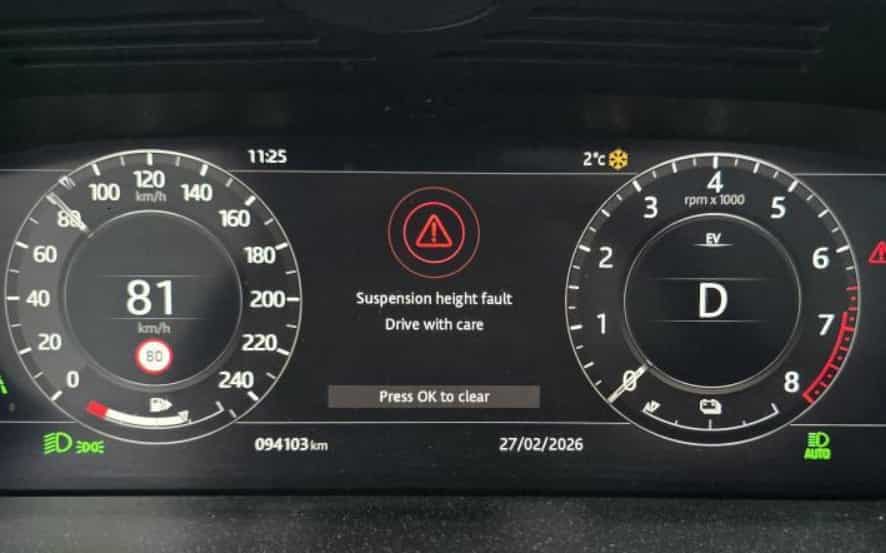
What Does a Range Rover Suspension Fault Mean?
A Range Rover Suspension Fault warning means the electronic air suspension system has detected a problem. In most cases, the system finds an issue before it affects your safety. As a result, the dashboard displays a warning to encourage you to inspect the vehicle as soon as possible.
The air suspension system controls your vehicle’s ride height, stability, and driving comfort. In addition, it adjusts the suspension automatically to match different driving conditions. For example, the system can lower the vehicle at higher speeds to improve aerodynamics. It can also raise the suspension when you drive off road or travel over rough surfaces.
Several components work together to keep the system operating correctly. These parts include the air compressor, air springs, valve block, height sensors, air reservoir, control module, and air lines. If one component stops working properly, then the control module detects the fault and stores a diagnostic trouble code. Consequently, the warning message appears on the instrument cluster.
A Range Rover Suspension Fault does not always mean the suspension has failed completely. Instead, it tells you that the system needs attention. Some faults result from low battery voltage or a temporary sensor error. However, other problems involve leaking air springs or a worn compressor that requires replacement.
Ignoring the warning can create additional problems over time. Therefore, you should inspect the vehicle as soon as possible. Early diagnosis often reduces repair costs and helps protect expensive suspension components. Most importantly, it keeps your Range Rover safe, comfortable, and reliable on every journey.
Common Symptoms of a Range Rover Suspension Fault
A Range Rover Suspension Fault can appear in several ways. In some cases, the warning message appears before you notice any change in driving performance. However, most vehicles develop clear symptoms as the problem becomes more serious.
The most common sign is a suspension warning on the dashboard. At first, the message may disappear after restarting the engine. However, it usually returns if the underlying problem remains.
Another common symptom is uneven ride height. For example, one corner of the vehicle may sit lower than the others after parking overnight. As a result, the Range Rover may lean to one side while driving or standing still.
You may also notice that the suspension no longer changes height. Instead, the vehicle may remain in Access Height or Normal Height. Consequently, the system cannot adapt to different road conditions, which reduces both comfort and performance.
A failing air compressor often creates another warning sign. In many cases, the compressor runs longer than normal because it struggles to maintain air pressure. Eventually, continuous operation causes excessive wear and may lead to complete compressor failure.
Ride quality can also change as the fault develops. Instead of delivering a smooth and controlled ride, the suspension may feel firm, unstable, or bouncy. Furthermore, the vehicle may react more sharply when driving over potholes, speed bumps, or uneven roads.
Some drivers also hear unusual sounds. For instance, you may notice hissing noises from leaking air lines or air springs. Likewise, clicking sounds near the valve block can indicate that the system is trying to adjust suspension pressure.
In more severe cases, the vehicle may display a restricted driving message. As a result, the suspension locks at a fixed height to protect important components. Therefore, you should avoid driving long distances until a technician diagnoses the problem.
Recognizing these symptoms early can save both time and money. Most importantly, early repairs reduce the risk of damaging other suspension components and help restore the comfort and performance that drivers expect from a Range Rover.
Main Causes of a Range Rover Suspension Fault
Several mechanical and electrical issues can trigger a Range Rover Suspension Fault. Although the dashboard displays the same warning message, the actual cause can vary from one vehicle to another. Therefore, you should identify the problem before replacing any suspension component. In many cases, the most common cause is a leaking air spring. Over time, the rubber material wears out because it remains under constant pressure and faces heat, moisture, and road debris. As a result, compressed air escapes from the suspension system, causing one corner of the vehicle to sit lower than the others. The air compressor must then work harder to restore the correct ride height, which increases wear and may lead to compressor failure.
Another common cause is a worn air compressor that can no longer generate enough pressure. When this happens, the suspension reacts slowly or fails to adjust its height. Likewise, faulty height sensors can send incorrect information to the suspension control module. Consequently, the system may calculate the wrong ride height and display a warning even when the air springs remain in good condition. Valve block problems can also restrict airflow between suspension components. Therefore, the vehicle may lean to one side or remain stuck at a fixed height.
Electrical issues should not be overlooked either. A weak battery, damaged wiring, or poor electrical connections can interrupt communication between suspension components and trigger a Range Rover Suspension Fault. In addition, leaking air lines reduce system pressure and force the compressor to run more often. For this reason, technicians always inspect the entire air suspension system before replacing expensive parts. An accurate diagnosis saves money, prevents unnecessary repairs, and helps restore the smooth ride and comfort that every Range Rover owner expects.
How to Diagnose a Range Rover Suspension Fault
Diagnosing a Range Rover Suspension Fault begins with identifying the exact cause instead of replacing parts based on guesswork. First, connect a professional diagnostic scanner that supports Land Rover systems. The scan tool reads fault codes stored in the suspension control module and provides valuable information about sensors, air pressure, and electrical components. As a result, technicians can narrow down the problem much faster. However, fault codes only provide a starting point, so a complete inspection remains essential.
Next, inspect the entire air suspension system for visible damage or air leaks. Carefully examine the air springs, air lines, valve block, and air reservoir for cracks, loose fittings, or signs of wear. In addition, listen for hissing sounds because they often indicate escaping air. Technicians also test the air compressor to confirm that it builds pressure within the manufacturer’s specifications. If the compressor runs continuously or struggles to raise the vehicle, it may require repair or replacement. At the same time, each height sensor should move freely and provide accurate readings to the suspension control module.
Finally, check the vehicle’s battery and charging system because low voltage can trigger suspension warnings even when the mechanical components work correctly. After completing the inspection, clear the fault codes and recalibrate the suspension if necessary. Then perform a road test to verify that the warning does not return. Therefore, a systematic diagnosis helps identify the real problem, prevents unnecessary part replacements, and reduces overall repair costs while restoring the smooth ride and reliable performance expected from a Range Rover.
Range Rover Suspension Fault Repair Costs
The cost of repairing a Range Rover Suspension Fault depends on the failed component, the vehicle model, and local labor rates. In some cases, a simple battery replacement or suspension recalibration solves the problem at a relatively low cost. However, major air suspension components require more time and specialized equipment, which increases the overall repair bill. Therefore, obtaining an accurate diagnosis before replacing parts is the best way to avoid unnecessary expenses.
Air spring replacement typically costs between $600 and $1,500 per corner, depending on the model and the quality of the replacement part. Likewise, replacing a faulty air compressor usually costs $900 to $2,000, including parts and labor. A new valve block generally ranges from $400 to $900, while height sensor replacement often costs $200 to $500 for each sensor. If damaged air lines or leaking fittings cause the warning, repairs may cost as little as $100 to $400. In addition, a diagnostic scan and suspension calibration normally add $100 to $300 to the final invoice.
Several factors influence the total repair cost. For example, genuine OEM parts usually cost more than aftermarket alternatives, while dealership labor rates often exceed those of independent Land Rover specialists. Furthermore, delaying repairs can increase expenses because a leaking air spring often forces the compressor to work harder until it fails. Therefore, fixing small suspension problems as soon as they appear usually saves money and helps preserve the comfort, safety, and performance that drivers expect from a Range Rover.
Can You Drive With a Range Rover Suspension Fault?
Many drivers continue using their vehicle after seeing a Range Rover Suspension Fault warning. However, the answer depends on the severity of the problem. In some situations, the suspension system continues to operate normally, and the warning appears because of a temporary sensor issue or low battery voltage. Therefore, you may drive a short distance to reach a repair shop. Even so, you should avoid long trips until a technician identifies the cause of the warning.
The situation becomes more serious when the vehicle sits lower than normal, leans to one side, or refuses to change ride height. In addition, unusual noises from the air compressor or visible suspension movement while driving often indicate a mechanical problem. These symptoms suggest that the air suspension system can no longer maintain the correct pressure. As a result, vehicle handling, ride comfort, and braking stability may decline, especially on rough roads or at highway speeds. Continuing to drive under these conditions can place additional stress on the compressor, air springs, and other suspension components.
The safest approach is to inspect the vehicle as soon as the warning appears. If the suspension drops significantly, displays a restricted driving message, or feels unstable, you should stop driving and arrange professional assistance. On the other hand, if the vehicle remains level and drives normally, you can usually travel a short distance with caution before scheduling a diagnostic inspection. Addressing the problem early helps prevent expensive repairs, improves driving safety, and keeps your Range Rover performing as intended for many years.
How to Prevent a Range Rover Suspension Fault
Although you cannot prevent every suspension problem, regular maintenance can significantly reduce the risk of a Range Rover Suspension Fault. First, inspect the air suspension system during routine servicing and address small issues before they become expensive repairs. For example, replacing a worn air spring early can prevent excessive strain on the air compressor. Likewise, checking air lines and fittings for leaks helps maintain the correct system pressure and improves long term reliability.
Keeping the battery and charging system in good condition is equally important. The electronic air suspension depends on a stable power supply to communicate with sensors and control modules. Therefore, a weak battery can trigger warning messages even when the suspension components work correctly. In addition, avoid overloading the vehicle because extra weight places more stress on the air springs, compressor, and valve block. If you frequently drive on rough roads or off road trails, inspect the suspension more often for signs of wear or physical damage.
Regular diagnostic checks also play an important role in preventing unexpected failures. A professional scan can identify stored fault codes before noticeable symptoms appear. As a result, technicians can repair minor problems before they affect other suspension components. Following the recommended maintenance schedule, repairing leaks promptly, and replacing worn parts with high quality components will help extend the life of the suspension system. Most importantly, preventive maintenance reduces repair costs, improves driving comfort, and keeps your Range Rover operating safely in every driving condition.
Conclusion
A Range Rover Suspension Fault should never be ignored because it often signals an issue within the electronic air suspension system. Although some warnings result from a weak battery or a temporary sensor error, others point to more serious problems such as leaking air springs, a failing air compressor, or damaged suspension components. Therefore, identifying the exact cause as early as possible is the best way to avoid unnecessary repairs and higher maintenance costs.
Throughout this guide, you have learned what a Range Rover Suspension Fault means, the most common warning signs, the leading causes, the correct diagnostic process, and the typical repair costs. In addition, you now understand when it is safe to drive and when you should seek professional assistance immediately. This knowledge allows you to make informed decisions and protect your vehicle from further damage.
Regular inspections, timely repairs, and preventive maintenance remain the most effective ways to keep the air suspension system in excellent condition. As a result, your Range Rover will continue to deliver the smooth ride, outstanding comfort, and confident handling that it was designed to provide. If the warning message appears on your dashboard, do not ignore it. Instead, schedule a professional inspection, repair the problem promptly, and restore your vehicle’s performance before a minor issue becomes a costly repair.