The Ford 5.4 firing order is the sequence that each cylinder follows when receiving ignition during the combustion cycle. For most Ford 5.4L Triton V8 engines, the firing order is 1 3 7 2 6 5 4 8. This sequence controls how the spark plugs ignite the air and fuel mixture inside each cylinder, allowing the engine to produce balanced power and smooth operation.
Understanding the Ford 5.4 firing order helps vehicle owners and technicians correctly identify cylinder positions, install ignition components, and diagnose engine performance problems. A wrong firing order can cause symptoms such as engine misfires, rough idle, reduced power, and an illuminated Check Engine Light.
The Ford 5.4L Modular V8 engine uses a specific cylinder arrangement that works together with the ignition system, including spark plugs, ignition coils, and the Powertrain Control Module. Knowing the difference between cylinder numbers and firing sequence is important because the cylinder location does not represent the order in which combustion occurs.
This guide explains the Ford 5.4 firing order, cylinder numbering system, ignition sequence, common misfire problems, and maintenance considerations to help you understand how the Triton V8 ignition system operates.
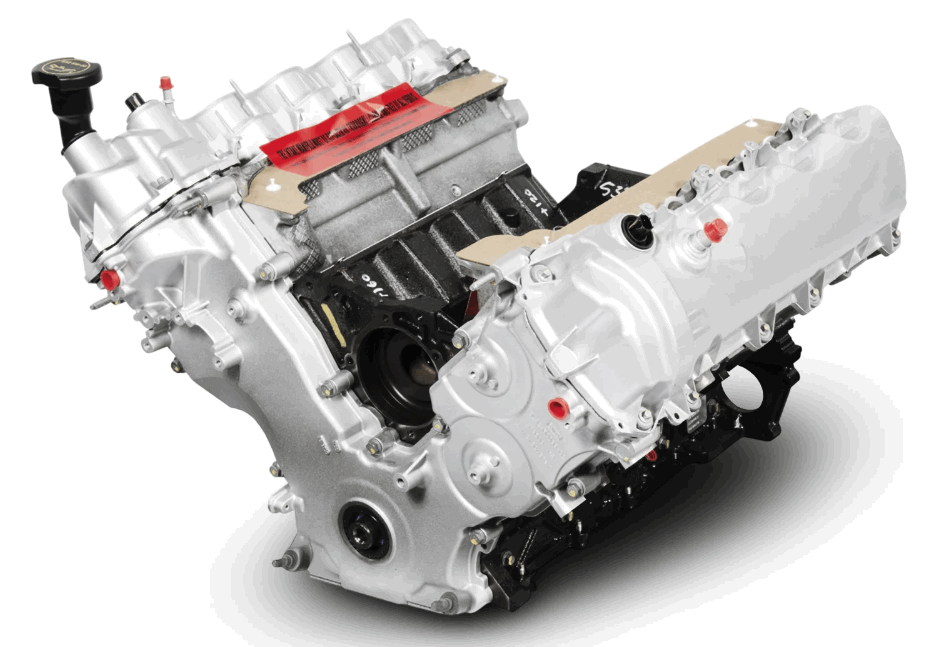
What Is the Ford 5.4 Firing Order?
The Ford 5.4 firing order is 1 3 7 2 6 5 4 8 for most Ford 5.4L Triton V8 applications. The firing order defines the exact sequence that each cylinder receives a spark during the engine combustion cycle. This sequence allows the V8 engine to distribute combustion events evenly across the crankshaft rotation, creating balanced power delivery and reducing vibration.
A firing order is not the same as cylinder numbering. Cylinder numbers identify the physical location of each cylinder inside the engine block, while the firing order identifies when each cylinder ignites. For example, cylinder number 1 fires first, but cylinder number 2 does not fire second. The ignition sequence continues through cylinders 3, 7, 2, 6, 5, 4, and 8 according to the programmed combustion pattern.
The Ford 5.4L Modular V8 engine uses this sequence because the arrangement improves engine balance and supports efficient power production. The crankshaft, camshaft position sensor, crankshaft position sensor, ignition coils, and Powertrain Control Module work together to ensure each cylinder receives ignition at the correct moment.
When the firing order is incorrect, the combustion process becomes unstable. A misplaced ignition coil connector or incorrect spark plug wire installation on older configurations can cause cylinders to ignite at the wrong time. This creates symptoms such as rough engine operation, hesitation during acceleration, reduced fuel efficiency, and misfire trouble codes.
Understanding the Ford 5.4 firing order is the first step in diagnosing ignition problems because every cylinder inspection, spark plug replacement, and misfire repair depends on identifying the correct ignition sequence.
How Are Ford 5.4 Cylinder Numbers Arranged?
The Ford 5.4 cylinder numbering system identifies the physical location of each cylinder inside the Modular V8 engine. Unlike the firing order, which describes the ignition sequence, cylinder numbering shows where each cylinder is positioned on the engine block. Understanding this arrangement is essential when diagnosing misfires because diagnostic trouble codes identify specific cylinders by their numbers.
The Ford 5.4L V8 engine uses two cylinder banks, known as Bank 1 and Bank 2. Each bank contains four cylinders arranged from the front of the engine toward the rear. On most Ford 5.4L applications, cylinders 1, 2, 3, and 4 are located on one side of the engine, while cylinders 5, 6, 7, and 8 are located on the opposite side. The front cylinder is closest to the radiator, and the rear cylinder is closest to the transmission.
A common mistake during ignition repairs is confusing cylinder location with firing sequence. The cylinder numbers do not follow the order in which combustion occurs. For example, cylinder 1 is the first cylinder in the firing order, but cylinder 3 fires immediately after it, followed by cylinder 7. The physical position of each cylinder only provides an identification reference for maintenance and diagnosis.
When a Ford 5.4 engine produces a misfire code, such as P0301 or P0308, the number after the code indicates the affected cylinder. Technicians use the cylinder numbering system to locate the ignition coil, spark plug, fuel injector, and compression condition of that specific cylinder.
Correct cylinder identification helps prevent unnecessary part replacement and allows repairs to focus on the actual source of the problem. Whether replacing spark plugs, testing ignition coils, or diagnosing engine performance issues, knowing the Ford 5.4 cylinder arrangement is a fundamental part of accurate troubleshooting.
How Does the Ford 5.4 Ignition Sequence Work?
The Ford 5.4 ignition sequence controls when each cylinder receives a spark during the combustion process. The firing order determines the pattern, while the ignition system components control the timing and delivery of the spark. In the Ford 5.4L Triton V8 engine, the Powertrain Control Module (PCM) manages this process by using information from engine sensors to maintain accurate ignition timing.
The ignition sequence begins when the crankshaft position sensor detects the crankshaft rotation and position. The camshaft position sensor provides additional information about valve timing and cylinder position. The PCM combines these signals to determine when each ignition coil should activate. This process allows the spark plug in each cylinder to ignite the air and fuel mixture at the correct moment.
Most Ford 5.4L engines use a coil on plug ignition system, where each cylinder has its own ignition coil mounted directly above the spark plug. This design improves ignition efficiency because the electrical signal travels a shorter distance compared with traditional spark plug wire systems. When the PCM activates an ignition coil, the coil creates a high voltage charge that travels through the spark plug and creates combustion inside the cylinder.
The ignition sequence must remain synchronized with the engine’s mechanical components. If the ignition timing becomes incorrect because of a faulty sensor, damaged ignition coil, or incorrect component installation, the combustion process becomes inefficient. The engine may experience rough idle, hesitation, reduced acceleration, and increased emissions.
Understanding how the Ford 5.4 ignition sequence works helps technicians connect firing order information with real engine behavior. When a cylinder fails to ignite correctly, checking the ignition sequence provides a structured way to identify whether the problem comes from the spark plug, ignition coil, sensor input, or another engine component.
What Happens When the Ford 5.4 Firing Order Is Incorrect?
The Ford 5.4 firing order must remain correct to maintain proper combustion timing and engine performance. When the ignition sequence does not match the designed order, the air and fuel mixture inside the cylinders may ignite at the wrong time. This creates an uneven combustion process that reduces engine efficiency and can damage ignition components if the problem continues.
The most common symptoms of an incorrect Ford 5.4 firing order are engine misfires, rough idle, poor acceleration, reduced fuel economy, and an illuminated Check Engine Light. A misfire occurs when one or more cylinders fail to produce the expected combustion force. Because the engine depends on all eight cylinders working in the correct sequence, one incorrect ignition event can affect overall engine balance.
A wrong firing order often happens after maintenance work involving ignition components. Common causes include installing ignition coils on the wrong cylinders, incorrectly connecting spark plug wires on older Ford 5.4 configurations, or replacing components without confirming cylinder locations. Since cylinder numbers and firing order are different systems, incorrect identification can lead to installation mistakes.
The Powertrain Control Module detects combustion problems by monitoring changes in crankshaft speed and sensor signals. When the PCM identifies a cylinder that is not contributing properly, it can store diagnostic trouble codes such as P0301 through P0308. Each code corresponds to a specific cylinder, allowing technicians to locate the affected area.
Correcting a firing order problem requires verifying cylinder identification, checking ignition component connections, and confirming that each cylinder follows the correct sequence. A proper diagnosis prevents unnecessary replacement of parts and helps restore normal Ford 5.4L engine operation.
How Do You Diagnose Ford 5.4 Misfire Problems?
The Ford 5.4 misfire diagnosis process starts by identifying the affected cylinder and checking the ignition system components connected to that cylinder. A firing order problem is only one possible cause of a misfire, so a complete diagnosis requires checking ignition, fuel delivery, compression, and sensor signals.
The first step is reading diagnostic trouble codes with an OBD II scanner. The Ford 5.4 engine commonly generates misfire codes from P0301 to P0308, where the final number identifies the cylinder experiencing the problem. For example, P0301 indicates a misfire on cylinder 1, while P0308 indicates a misfire on cylinder 8. These codes help narrow the inspection area before replacing any parts.
After identifying the cylinder, technicians should inspect the ignition coil and spark plug. A faulty ignition coil is a common cause of Ford 5.4 misfires because the coil must generate enough voltage to ignite the air and fuel mixture. Worn spark plugs, damaged connectors, or incorrect spark plug installation can also prevent proper combustion.
The next diagnostic step is checking the fuel injector and compression condition. A cylinder may misfire because it does not receive enough fuel or because it cannot create sufficient compression during the combustion cycle. Compression testing helps identify mechanical problems such as valve issues or piston ring wear.
A structured diagnosis prevents unnecessary repairs. Replacing all ignition coils or spark plugs without confirming the actual failure can increase repair costs without solving the problem. By following the firing order, identifying the correct cylinder, and testing each related component, technicians can accurately restore Ford 5.4L engine performance.
Which Vehicles Use the Ford 5.4 Triton V8 Engine?
The Ford 5.4 Triton V8 engine was used in several Ford and Lincoln vehicles, including trucks, SUVs, vans, and performance models. This engine became one of Ford’s most recognized Modular V8 engines because of its durability, torque output, and wide application across different vehicle platforms. Knowing which vehicles use the Ford 5.4L engine helps owners identify the correct firing order, cylinder arrangement, and ignition system configuration before performing repairs.
The most common application of the Ford 5.4L Triton V8 is the Ford F 150 pickup truck. This engine was available in multiple F 150 generations and was commonly paired with automatic transmissions for towing and daily driving applications. The 5.4L engine was also installed in Ford Expedition and Lincoln Navigator models, where its torque characteristics supported larger SUV platforms and heavier vehicle loads.
Ford also used the 5.4L engine in E Series vans, including commercial models that required reliable V8 power for transportation and work applications. In performance vehicles, a specialized version of the 5.4L engine was used in the Ford Mustang Shelby GT500, featuring different internal components and forced induction technology to produce significantly higher power output.
Although these vehicles share the Ford 5.4L engine family, ignition components and calibration can vary depending on the model year and engine version. Differences in PCM programming, ignition coil design, and engine configuration mean that technicians should verify the exact vehicle specifications before replacing parts or diagnosing ignition problems.
Understanding the vehicle applications of the Ford 5.4 Triton V8 creates better context when working with firing order information. The correct firing order remains essential across these platforms, but accurate repair procedures depend on matching the engine details to the specific vehicle.
How Can You Maintain a Ford 5.4 Ignition System?
The Ford 5.4 ignition system requires regular maintenance to maintain reliable combustion, consistent engine performance, and accurate ignition timing. The firing order depends on every ignition component working correctly, including spark plugs, ignition coils, sensors, and electrical connections. Preventive maintenance reduces the risk of misfires and helps identify problems before they affect engine operation.
Spark plug inspection and replacement are important parts of Ford 5.4 maintenance. Worn or damaged spark plugs can create weak ignition, incomplete combustion, and cylinder misfires. When replacing spark plugs, technicians should verify the correct specifications for the specific engine model and install each component according to the manufacturer’s requirements. Incorrect installation can affect ignition performance and create unnecessary engine problems.
Ignition coils should also be inspected because the Ford 5.4L Triton V8 commonly uses an individual coil for each cylinder. A failing ignition coil can interrupt the firing sequence by preventing one cylinder from receiving enough spark energy. Symptoms such as engine hesitation, rough idle, and repeated misfire codes often indicate that the ignition coil system requires inspection.
Regular inspection of electrical connections, sensor performance, and engine operating conditions helps maintain proper ignition control. The crankshaft position sensor and camshaft position sensor provide essential information to the Powertrain Control Module, allowing it to control the ignition sequence accurately.
Maintaining the Ford 5.4 ignition system is not only about replacing failed parts. It involves keeping every component involved in the combustion process working together. Proper maintenance supports smoother engine operation, better fuel efficiency, and longer service life for the Triton V8 engine.
What Should You Know About Ford 5.4 Firing Order?
The Ford 5.4 firing order is a critical part of the engine’s combustion system because it determines the sequence in which each cylinder receives ignition. For most Ford 5.4L Triton V8 engines, the firing order is 1 3 7 2 6 5 4 8, and this sequence works together with the cylinder numbering system, ignition coils, spark plugs, and Powertrain Control Module to maintain proper engine operation.
Understanding the difference between cylinder numbers and firing order helps prevent common repair mistakes. Cylinder numbers identify the physical location of each cylinder, while the firing order defines when each cylinder ignites during the combustion cycle. Confusing these two systems can result in incorrect ignition installation, engine misfires, and poor performance.
When diagnosing Ford 5.4 engine problems, technicians should use the firing order as a reference point while inspecting ignition components, sensor signals, fuel delivery, and mechanical conditions. Misfire codes such as P0301 through P0308 provide additional information by identifying which cylinder requires further inspection.
Maintaining a correct ignition sequence and performing regular ignition system maintenance helps the Ford 5.4L Triton V8 deliver consistent power and reliability. Proper cylinder identification, accurate diagnosis, and correct component installation are the foundation for solving firing order related problems.