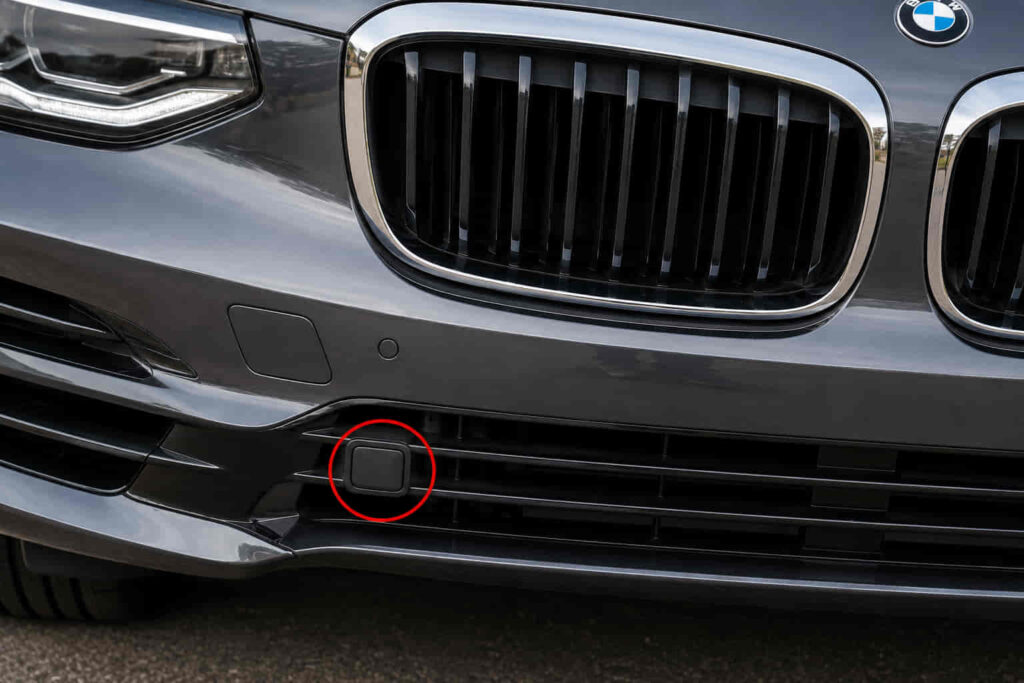
A BMW ambient temperature sensor generally does not have a dedicated manual reset procedure like the oil service or maintenance reminder. The correct way to restore an inaccurate outside temperature reading is to identify whether the system needs time to update or whether the sensor, connector, or wiring has a fault. After a working sensor is installed and its electrical circuit is restored, the vehicle can process the new ambient temperature signal and update the outside temperature displayed on the instrument cluster.
This distinction matters because disconnecting the battery, clearing fault codes, or repeatedly restarting the vehicle will not repair a damaged sensor or an open or shorted circuit. If the displayed temperature remains implausibly high or low, the sensor circuit should be inspected before replacing additional components. A BMW-compatible diagnostic scanner can also help identify stored faults and compare the reported ambient temperature with actual outside conditions.
This guide explains how to reset or restore the BMW ambient temperature sensor reading, how the temperature update process works, what to check when the reading remains incorrect, and when sensor replacement or electrical diagnosis is required. The goal is to correct the underlying cause rather than rely on a temporary reset procedure.
Does a BMW Ambient Temperature Sensor Need to Be Reset?
A BMW ambient temperature sensor does not normally require a separate manual reset after it is replaced or reconnected. The sensor measures the outside air temperature and sends an electrical signal that the vehicle uses to determine the temperature shown on the instrument cluster. When the sensor and its circuit operate correctly, the displayed value should return toward the actual ambient temperature as the vehicle processes the new signal. This means the practical “reset” is usually a matter of restoring a valid sensor signal and allowing the system to update rather than pressing a specific reset button.
Resetting, relearning, clearing fault codes, and replacing the sensor are different procedures. A relearn or update describes the vehicle accepting and displaying a valid temperature signal after the underlying problem has been corrected. Clearing a diagnostic trouble code removes stored fault information from a control module, but it does not repair the component that caused the fault. Sensor replacement is necessary only when diagnosis identifies the ambient temperature sensor itself as defective. Treating these procedures as interchangeable can result in replacing a working sensor or repeatedly clearing codes while an electrical fault remains.
An incorrect outside temperature reading should therefore be diagnosed before attempting repeated resets. If the reading became inaccurate after front bumper work, collision repair, or sensor replacement, the sensor connector and wiring deserve particular attention because the circuit may have been disconnected or damaged. If the sensor is connected correctly but the displayed value remains implausible, diagnostic data can help determine whether the vehicle is receiving a realistic ambient temperature signal.
Disconnecting the battery should not be treated as the standard solution for a BMW outside temperature sensor fault. A battery disconnect may reset electronic states on a vehicle, but it cannot restore a broken wire, repair a damaged connector, or make a failed temperature sensor measure correctly. The underlying sensor circuit must provide valid information before the outside temperature display can operate normally.
How Do You Reset the Ambient Temperature Sensor in a BMW?
To reset the BMW ambient temperature reading, first restore a valid signal from the ambient temperature sensor, then operate the vehicle and allow the displayed temperature to update. There is no single reset sequence that should be presented as universal across every BMW model and generation. The correct procedure depends on whether the inaccurate reading results from a temporary update delay, a disconnected sensor, a damaged circuit, or an actual sensor failure.
Start by comparing the temperature displayed on the instrument cluster with the actual outside conditions. A small difference does not automatically prove that the sensor is defective because the vehicle does not necessarily display every rapid temperature change immediately. A reading that is clearly unrealistic or remains far from the actual ambient temperature provides a stronger reason to inspect the sensor system. The sensor itself, its mounting position, electrical connector, and nearby wiring should be checked before any component is replaced.
Once the sensor is correctly installed and connected, start the vehicle and monitor the outside temperature display while the vehicle is operated under normal conditions. The objective is to determine whether the displayed value moves toward a realistic ambient temperature once the system receives a valid signal. The reading may not change instantly because temperature information can be processed rather than displayed as an immediate response to every short-term temperature fluctuation. This behavior also explains why installing a new sensor does not necessarily produce an instant change on the instrument cluster.
A BMW-compatible diagnostic scanner provides a more reliable troubleshooting path when the temperature remains incorrect. The scanner can be used to check relevant fault information and, where supported, inspect the temperature value reported to the vehicle’s electronic systems. Comparing this data with the actual outside temperature helps separate a display-update issue from a sensor or circuit problem. For example, a reported temperature that remains physically implausible despite normal outdoor conditions points toward a fault that requires diagnosis rather than another reset attempt.
Fault codes should be cleared after the physical or electrical cause has been corrected, not as a substitute for the repair. If a damaged wire creates an open circuit, clearing the stored fault leaves the open circuit unchanged. The same principle applies to a loose connector, damaged sensor, or short circuit. A successful BMW ambient temperature sensor reset ultimately depends on restoring a valid temperature signal; clearing codes alone cannot create that signal.
This distinction is especially important when the problem appears immediately after sensor replacement. Installing another sensor without verifying the connector and wiring can reproduce the same incorrect reading because the new component still depends on an intact electrical path. Diagnosis should therefore follow the complete signal path from the ambient temperature sensor through its connector and wiring before another replacement is considered.
Read more: BMW Exclamation Mark in Triangle
How Long Does a BMW Ambient Temperature Sensor Take to Update?
A BMW ambient temperature reading may not update immediately after the sensor is reconnected or replaced because the vehicle can process the outside temperature signal before changing the value shown on the instrument cluster. For this reason, a short delay in the displayed temperature does not by itself indicate that the new ambient temperature sensor is defective. The important diagnostic point is whether the reading begins moving toward a realistic outside temperature after the sensor circuit has been restored and the vehicle is operated normally.
An exact update time should not be applied to every BMW. Different models, chassis generations, instrument clusters, and control-system configurations can process the ambient temperature signal differently. Driving conditions also matter because a stationary vehicle can be exposed to heat from the road surface, engine compartment, direct sunlight, or surrounding components. The system can therefore avoid treating every rapid temperature change as an accurate representation of the outside air temperature. This filtering helps explain why the instrument cluster may continue displaying an older value for a period after a repair.
The direction of the temperature change is more useful for troubleshooting than expecting a universal number of minutes. For example, if the display showed a clearly unrealistic temperature before a damaged connector was repaired, a gradual movement toward the actual outdoor temperature indicates that the system is receiving and processing a different signal. If the value remains fixed at an implausible level despite the sensor being properly connected and the vehicle being driven, waiting longer becomes less useful than testing the sensor circuit.
A diagnostic scanner can shorten this troubleshooting process because live data, where available for the applicable BMW system, allows the reported temperature value to be compared with actual ambient conditions. If the electronic data itself is unrealistic, the problem is upstream of the instrument-cluster display and the sensor circuit requires further inspection. If the diagnostic value is plausible while the displayed value behaves differently, diagnosis can then focus on how that information is being processed or displayed on the specific BMW model.
Why Is the BMW Outside Temperature Reading Still Wrong After a Reset?
A BMW outside temperature reading that remains wrong after a reset usually indicates that the underlying temperature signal has not been restored correctly. Resetting electronic states or clearing a stored fault cannot compensate for a failed ambient temperature sensor, disconnected connector, open circuit, short circuit, or damaged wiring. The next step is therefore diagnosis of the sensor and its electrical path rather than repeating the same reset procedure.
The ambient temperature sensor itself is one possible failure point. A defective sensor can provide a signal that does not correspond with the actual outside temperature, causing the vehicle to calculate or display an incorrect value. Physical damage deserves particular attention when the sensor is mounted in an area exposed to road debris, previous collision damage, or front-end repair work. However, an inaccurate display alone does not prove that the sensor has failed because the component depends on the rest of its circuit to transmit a usable signal.
The connector and wiring create another important failure path. A functioning ambient temperature sensor cannot produce a correct displayed reading when its electrical signal cannot reach the vehicle correctly. A disconnected plug interrupts the signal path, while damaged wires can create an open or short circuit. Poor connector contact can also produce unreliable information. This is why replacing the sensor without inspecting its connector and wiring can leave the original symptom unchanged.
An extremely low, extremely high, or otherwise physically implausible outside temperature should be treated as a diagnostic clue rather than proof that the sensor needs another reset. Electronic control systems interpret electrical inputs according to expected ranges. When the sensor circuit is interrupted or its signal falls outside an expected range, the resulting temperature value can be far removed from actual weather conditions. The precise displayed value and fault behavior can vary by BMW model and system configuration, so diagnosis should rely on model-specific information rather than assuming one extreme reading always identifies one component.
The timing of the failure also helps narrow the cause. If the outside temperature became inaccurate immediately after bumper removal, collision repair, wiring work, or ambient temperature sensor replacement, inspect the components affected by that work first. A connector that was not fully seated or wiring damaged during disassembly provides a more direct explanation than an unrelated electronic reset problem. This diagnostic sequence follows the physical path of the temperature signal and reduces unnecessary parts replacement.
Repeatedly disconnecting the battery or clearing codes is not an effective repair when the temperature remains wrong. The BMW outside temperature display will return to reliable operation only when the system receives a valid ambient temperature signal and processes that signal correctly. Once the physical fault is repaired, stored fault information can be cleared when appropriate and the temperature reading can then be monitored to confirm that the repair solved the original problem.
How Can You Test a BMW Ambient Temperature Sensor?
You can test a BMW ambient temperature sensor by comparing its reported temperature with actual outside conditions and then checking the sensor, connector, wiring, and diagnostic data for an abnormal signal. The purpose of testing is to determine whether the incorrect temperature originates from the sensor itself or from the electrical circuit carrying its signal. This distinction should be established before replacing the sensor because a new component will not correct an open circuit, short circuit, damaged connector, or broken wire.
Begin with the physical condition of the ambient temperature sensor and its connection. The sensor should be securely mounted in its intended location and connected to an undamaged electrical plug. A sensor that has been displaced during bumper work or collision repair deserves closer inspection because physical damage can occur at the same time as connector or wiring damage. The surrounding wiring should also be examined for cuts, pinching, broken insulation, loose connections, or evidence that previous repair work disturbed the harness. Finding visible damage at this stage provides a direct troubleshooting path without relying on repeated resets.
The displayed outside temperature provides another diagnostic clue. Compare the BMW instrument-cluster reading with the actual outdoor temperature under stable conditions rather than expecting both values to match immediately after moving the vehicle between environments. A modest temporary difference is less significant than a reading that remains fixed, changes in an implausible direction, or stays far outside realistic ambient conditions. The objective is not simply to decide whether the display is inaccurate but to determine whether its behavior is consistent with a valid temperature signal.
A BMW-compatible diagnostic scanner provides a more precise test when the physical inspection does not identify the problem. Where the applicable control system exposes ambient temperature data, compare the temperature reported in diagnostic data with the actual outside temperature. A realistic sensor value indicates that the system is receiving useful temperature information, while an implausible value directs diagnosis toward the sensor or its circuit. Relevant stored fault codes can provide additional evidence of an electrical problem, but a fault code should be interpreted together with physical inspection and live data rather than used as automatic proof that the sensor itself has failed.
Distinguishing a failed sensor from damaged wiring requires following the electrical signal path. If a replacement sensor produces the same implausible reading as the previous sensor, the connector and wiring become stronger diagnostic targets. Conversely, if the wiring and connector are verified and the sensor output remains inconsistent with actual ambient conditions, the sensor itself becomes a more credible failure point. Model-specific wiring diagrams and diagnostic procedures should be used when electrical measurements are required because connector layouts and control-system architecture differ among BMW chassis and model generations.
The test is complete when the cause of the incorrect signal has been identified and the displayed temperature responds realistically after repair. A successful diagnosis should explain both the original incorrect reading and why the repaired system now reports a plausible outside temperature. This verification is more reliable than assuming the repair worked simply because a fault code was cleared.
When Should You Replace the BMW Ambient Temperature Sensor?
Replace a BMW ambient temperature sensor when diagnosis confirms that the sensor cannot provide a valid temperature signal despite an intact connector and electrical circuit. An inaccurate outside temperature display alone is not sufficient evidence for replacement because the same symptom can result from connector damage, wiring faults, or an interrupted sensor circuit. Sensor replacement should therefore follow diagnosis rather than serve as the first troubleshooting step.
Physical damage provides one strong reason for replacement. An ambient temperature sensor with a damaged housing, broken electrical connection, or damage associated with an impact may no longer measure outside air temperature reliably. This is particularly relevant when the problem begins after front-end collision damage or repair work near the sensor location. The sensor and nearby harness should still be inspected together because an impact capable of damaging the component can also damage its wiring.
Persistent implausible temperature data provides another reason to investigate sensor replacement. If diagnostic testing confirms that the electrical path is intact but the sensor continues reporting a value inconsistent with actual ambient conditions, replacement addresses the component responsible for generating the signal. By contrast, replacing the sensor when the connector is disconnected simply places a new sensor on the same incomplete circuit and leaves the displayed temperature incorrect.
The replacement process should also include post-repair verification. After the new ambient temperature sensor is installed and connected correctly, operate the vehicle under suitable conditions and monitor the outside temperature reading. The displayed value does not need to change instantaneously to prove that the repair succeeded; it should progress toward a realistic value as the vehicle processes the restored signal. Diagnostic data can provide additional confirmation when the displayed temperature takes time to update.
Clearing relevant stored faults can be performed after the underlying problem has been corrected when the applicable BMW diagnostic procedure requires it. Fault-code clearing is the final electronic cleanup of a successful repair, not the repair itself. If the same fault or implausible temperature returns after replacement, further diagnosis should focus on the connector, wiring, electrical circuit, or model-specific control system instead of installing another sensor.
Where Is the Ambient Temperature Sensor Located on a BMW?
The BMW ambient temperature sensor is generally mounted toward the front of the vehicle where it can measure outside air temperature, but its exact location varies by model and chassis generation. Depending on the BMW, accessing the sensor may involve the lower bumper, air duct, splash shield, or another component around the front exterior of the vehicle. For this reason, the sensor location should be confirmed for the specific model before removing trim or replacing parts.
The mounting location matters because the sensor needs exposure to outside air while remaining positioned to reduce misleading temperature measurements from nearby heat sources. The temperature displayed in the instrument cluster therefore depends not only on whether the sensor works electrically but also on whether it is installed correctly. A sensor displaced from its intended mounting point after collision damage or bumper repair may be exposed to conditions different from those anticipated by the vehicle’s temperature-processing system.
Sensor location is also relevant when an incorrect outside temperature reading appears immediately after front-end work. The ambient temperature sensor, connector, and nearby wiring can be disturbed when bumper components or underbody panels are removed. If the temperature display worked normally before the repair and became implausible immediately afterward, inspecting this area provides a stronger diagnostic starting point than disconnecting the battery or attempting repeated resets.
BMW uses different body designs and electrical architectures across its model range, so one sensor location should not be assumed to apply to every 3 Series, 5 Series, X-series vehicle, or other BMW. Model-specific repair information should be used to identify the correct mounting point and access procedure. This prevents unnecessary disassembly and reduces the risk of damaging the connector or wiring while searching for the sensor.
What Are the Symptoms of a Bad BMW Ambient Temperature Sensor?
The primary symptom of a bad BMW ambient temperature sensor is an outside temperature reading that remains inconsistent with the actual ambient temperature, although the same symptom can also be caused by connector or wiring faults. The diagnostic value comes from examining how the temperature behaves rather than assuming every inaccurate reading confirms sensor failure.
A persistent implausible reading is a stronger warning sign than a small temporary difference between the instrument cluster and another temperature source. For example, a display that remains far outside realistic weather conditions despite the vehicle being driven in stable ambient conditions indicates that the temperature signal requires investigation. A reading that does not respond appropriately after the sensor has been reconnected or replaced also justifies checking the entire sensor circuit.
Another symptom is temperature data that remains abnormal when inspected through compatible diagnostic equipment. If the diagnostic value itself is implausible, the problem is not simply how the number appears on the instrument cluster. The sensor, connector, wiring, and associated circuit should then be checked to identify where the valid temperature signal is being lost or distorted.
These symptoms should be treated as evidence of an ambient temperature sensor system problem rather than automatic proof of a failed sensor. A disconnected connector can interrupt the signal, damaged wiring can create an open or short circuit, and physical damage around the sensor mounting area can affect the system without an internal sensor failure. Diagnosis should establish which component is responsible before a replacement part is installed.
Can You Drive a BMW With a Bad Ambient Temperature Sensor?
A BMW may remain drivable with a faulty ambient temperature sensor, but the defect should still be diagnosed because the vehicle can no longer rely on an accurate outside temperature signal. The ambient temperature sensor is not equivalent to a primary engine-speed, braking, or steering input, so an inaccurate outside temperature display by itself does not automatically mean the vehicle must be stopped. The practical significance depends on the actual fault and on how the specific BMW model uses ambient temperature information.
The most obvious consequence is unreliable outside temperature information on the instrument cluster. This becomes more relevant when outside conditions approach freezing because the driver should not depend on a clearly incorrect temperature display to judge road conditions. Actual road-surface temperature can also differ from ambient air temperature, so even a functioning outside temperature sensor should not replace direct observation of weather and road conditions.
Ambient temperature information may also be shared with other vehicle functions depending on the BMW model and system architecture. This is another reason to avoid treating the problem as a purely cosmetic dashboard fault without diagnosis. Claims about a specific HVAC, engine-management, or other control response should be verified against the applicable model rather than generalized to every BMW generation.
An implausible temperature reading that appears after collision damage, bumper repair, or electrical work deserves prompt inspection because the visible symptom may point to damaged wiring or a disconnected component. Continuing to reset the display does not identify that cause. Checking the sensor circuit establishes whether the problem is limited to temperature measurement or is part of physical damage that requires repair.
How Can You Prevent BMW Ambient Temperature Sensor Problems?
BMW ambient temperature sensor problems can be reduced by protecting the sensor, connector, and wiring during front-end repairs and by correcting physical damage before it develops into an intermittent electrical fault. Prevention should focus on the components that create and carry the temperature signal rather than on periodically resetting the system.
Front bumper, lower trim, and related repair work should be performed without pulling on the sensor wiring or leaving the electrical connector partially attached. When the sensor has been disconnected during a repair, its connector should be correctly seated during reassembly and the harness should return to its intended routing. Wiring positioned incorrectly can become pinched, stretched, or exposed to damage after surrounding panels are installed.
The sensor’s mounting condition should also be checked after front-end impact or body repair. A sensor that remains electrically connected but is no longer secured in its intended position can be exposed to abnormal local conditions and physical damage. Correct mounting helps the sensor measure the outside environment under the conditions anticipated by the vehicle’s temperature system.
Finally, diagnose an abnormal reading when it first becomes persistent instead of repeatedly clearing faults or disconnecting the battery. Protecting the BMW ambient temperature sensor system means maintaining the complete signal path from the sensor through its connector and wiring, not merely keeping the sensor itself intact. When that path remains physically and electrically sound, the vehicle has the valid input required to maintain a realistic outside temperature reading.