Pilot car drivers in the United States earn money by escorting oversized and overweight loads, with compensation varying by experience, location, employment type, and trip distance. Their earnings are typically calculated using hourly wages, daily rates, or per-mile payments. Company-employed drivers receive wages based on their employment agreements, while self-employed pilot car operators generate revenue from escort assignments and pay their own operating expenses.
A pilot car driver, also known as an escort vehicle operator, travels ahead of or behind trucks transporting oversized loads to warn other motorists, identify potential road hazards, and help ensure compliance with state transportation regulations. Drivers working on long-distance heavy haul assignments may generate higher gross revenue than those handling shorter routes, but fuel costs, insurance, vehicle maintenance, and unpaid return mileage reduce their actual earnings.
Understanding pilot car driver income requires comparing hourly pay, per-mile rates, annual earnings, and net business income rather than relying on a single salary figure. This guide examines how pilot car drivers are compensated across the United States, what affects their earning potential, which expenses reduce take-home pay, and whether pilot car driving offers a financially worthwhile career.
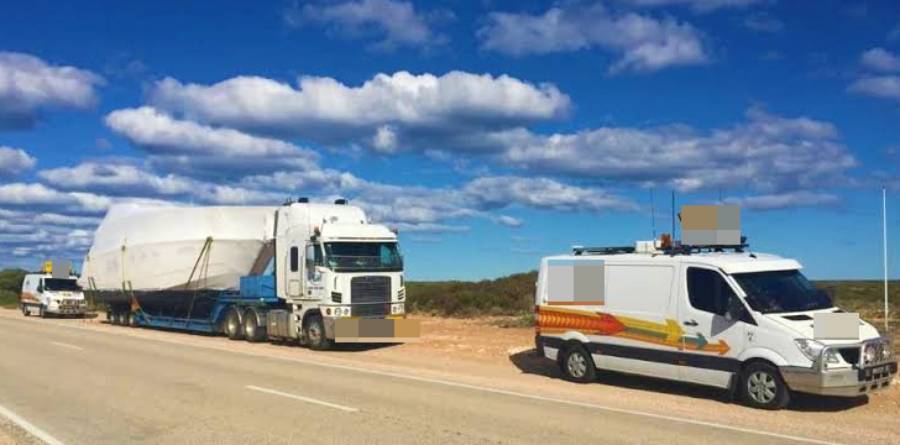
How Much Does a Pilot Car Driver Make in the United States?
Pilot car drivers in the United States earn income through hourly wages, daily payments, or per-mile rates, depending on their employment arrangements. Annual earnings depend on the number of paid assignments, compensation rates, and operating expenses. Company-employed escort drivers receive wages from transportation businesses, while independent operators negotiate their own rates with heavy haul carriers and freight companies. Because these payment structures differ, a single national salary average does not accurately represent every pilot car driver’s income.
A pilot car driver’s annual income is determined by the amount of paid work completed throughout the year. For example, an employee earning $20 per hour and working 40 paid hours per week for 50 weeks would receive $40,000 in annual gross wages. At $25 per hour under the same schedule, annual gross wages would reach $50,000. These figures are illustrative calculations rather than verified national salary averages. Actual compensation depends on employer agreements, available assignments, overtime arrangements, and regional demand for oversize load escorts.
Monthly earnings follow the same compensation structure. A driver receiving $4,000 in gross monthly wages would earn $48,000 annually if that income remained consistent for 12 months. Independent operators face greater fluctuations because escort assignments depend on freight schedules, route requirements, and customer demand. A contractor may generate substantial revenue during a month with several long-distance assignments but earn considerably less during periods with limited work. Gross revenue also includes money needed to cover business expenses, so it should not be treated as personal take-home income.
Entry-level pilot car drivers generally have fewer established carrier relationships and less experience handling complex oversize load movements. Their initial earning opportunities depend on local certification requirements, employer training, and the availability of escort assignments. Experienced operators who meet additional state requirements and maintain relationships with heavy haul companies may qualify for a wider range of assignments. However, experience alone does not guarantee higher income because the number of billable miles, working hours, and operating costs also determines financial results.
Current Salary Data for Pilot Car Drivers
Published salary estimates differ substantially. ZipRecruiter reported an average of $130,916 annually for the pilot car driver category in September 2026, while individual job advertisements show considerably different compensation ranges. For example, Indeed listed a pilot car escort position in Mississippi at $75,000–$90,000 annually and another nationwide escort operator position at $30,000–$60,000. These figures describe different datasets and employment opportunities, so they should not be treated as directly comparable or as guaranteed take-home income.
| Compensation reference | Annual amount |
|---|---|
| ZipRecruiter category estimate | $130,916 |
| Mississippi escort job advertisement | $75,000–$90,000 |
| Nationwide escort operator advertisement | $30,000–$60,000 |
Editorial note: These are published estimates and advertised compensation, not a verified representative national wage survey. The article should retain these distinctions.
How Much Do Pilot Car Drivers Make Per Hour?
Pilot car drivers can earn hourly wages as employees or charge hourly rates as independent escort vehicle operators. An hourly rate of $20–$30 produces $160–$240 in gross compensation for an eight-hour workday. This range is an illustrative calculation, not a verified national pay average. Actual hourly compensation depends on the employer, geographic location, driver experience, and responsibilities associated with oversize load transportation.
Company-employed pilot car drivers receive wages according to their employment agreements. Their paid duties may include inspecting escort equipment, communicating with truck drivers, monitoring traffic conditions, and accompanying oversized loads along approved routes. Independent contractors operate under different payment arrangements because their hourly charges must also cover business expenses such as fuel, commercial insurance, vehicle maintenance, and equipment replacement. Consequently, a contractor charging $30 per hour does not necessarily earn more take-home income than an employee receiving $25 per hour.
Waiting time is another factor affecting hourly earnings. Oversize load shipments may experience delays caused by permit restrictions, weather conditions, loading schedules, or temporary road closures. Employees are compensated for waiting periods according to applicable wage laws and employment arrangements, while independent operators generally rely on negotiated detention or standby charges. For example, a contractor charging $30 per hour for six billable escort hours would generate $180. If two additional waiting hours were billable at the same rate, gross revenue would increase to $240. Without a waiting-time provision, those two hours would produce no additional revenue.
How Much Do Pilot Car Drivers Make Per Mile?
Pilot car drivers working as independent contractors may receive per-mile payments based on the distance traveled while escorting an oversize load. Per-mile compensation is particularly relevant to long-distance heavy haul transportation, where assignments extend across multiple cities or states. The total payment depends on the negotiated mileage rate, billable distance, minimum trip charges, and additional services required during transportation.
A per-mile agreement generally specifies which miles qualify for payment. Billable escort miles typically cover the distance traveled while accompanying the oversized shipment. However, drivers may also travel to the pickup location, return home after completing an assignment, or reposition their vehicles for another job. These additional distances are not automatically compensated unless the service agreement includes them. As a result, total vehicle mileage can exceed paid escort mileage, reducing the operator’s effective earnings per mile driven.
Minimum trip charges also affect compensation, particularly for short-distance assignments. An operator may negotiate a minimum payment to account for travel preparation, equipment inspections, scheduling, and time spent reaching the escort location. Additional charges may apply to overnight assignments, extended waiting periods, or specialized escort responsibilities when agreed upon with the customer. These payment conditions should be established before accepting an assignment because they directly affect gross revenue and profitability.
How Is Per-Mile Pay Calculated for Pilot Car Drivers?
Pilot car driver per-mile pay is calculated by multiplying the negotiated rate per mile by the number of billable escort miles. The resulting amount represents gross trip revenue before operating expenses, taxes, and any additional contractual charges.
The basic calculation is:
Gross Trip Revenue = Billable Escort Miles × Rate Per Mile
For example, consider an independent pilot car operator completing a 400-mile escort assignment at an illustrative rate of $1.50 per mile.
| Calculation component | Amount |
|---|---|
| Billable escort distance | 400 miles |
| Negotiated rate | $1.50 per mile |
| Gross escort revenue | $600 |
| Additional unpaid return distance | 200 miles |
| Total vehicle distance | 600 miles |
| Effective gross revenue per mile driven | $1.00 |
The operator generates $600 in gross revenue but drives 600 total miles when the unpaid return journey is included. Dividing $600 by 600 miles produces an effective gross revenue rate of $1.00 per actual mile driven. This calculation demonstrates why billable mileage and total vehicle mileage must be evaluated separately when estimating pilot car driver earnings.
Fuel expenses further reduce profitability. If the escort vehicle averages 25 miles per gallon across the 600-mile journey, it consumes approximately 24 gallons of fuel. At an illustrative fuel price of $3.50 per gallon, the trip incurs $84 in fuel expenses, leaving $516 before insurance, maintenance, depreciation, taxes, and other business costs. The example shows that a higher per-mile contract rate does not automatically translate into higher net income when an assignment involves substantial unpaid travel.
Editorial note: The hourly rates, mileage rate, fuel price, and trip scenario are illustrative assumptions used to explain compensation calculations. They are not presented as verified current U.S. market averages.
How Much Do Self-Employed Pilot Car Drivers Make?
Self-employed pilot car drivers earn money by providing escort services to heavy haul trucking companies, freight carriers, and specialized transportation contractors. Their actual earnings equal gross business revenue minus operating expenses, with personal take-home income also affected by taxes. Unlike salaried employees, independent escort vehicle operators negotiate their own rates, manage business expenses, and depend on available assignments to generate consistent income.
Monthly revenue depends on the number of completed assignments, billable mileage, and negotiated compensation. For example, an independent pilot car driver completing 15 assignments per month at an average gross payment of $500 per assignment would generate $7,500 in monthly revenue, equivalent to $90,000 annually if the same workload continued for 12 months. These figures illustrate a business revenue scenario rather than verified average earnings. Actual revenue changes with transportation demand, weather restrictions, permit schedules, and the availability of oversize load movements.
Independent operators also face financial responsibilities that company-employed drivers generally do not carry directly. They must maintain an escort vehicle, purchase appropriate insurance, pay for fuel, replace worn equipment, and cover business administration costs. Long-distance assignments can increase gross revenue but also require additional spending on fuel, lodging, meals, and vehicle maintenance. A driver generating $90,000 in annual revenue therefore does not receive $90,000 in personal income because business expenses must be deducted before calculating profit.
Self-employment offers greater control over assignment selection, pricing, and customer relationships. Operators who establish repeat business with heavy haul carriers can reduce time spent searching for assignments and improve scheduling consistency. However, independent drivers also bear the financial risk of unpaid mileage, canceled assignments, unexpected repairs, and periods without work. Their earning potential depends on maintaining profitable contracts rather than simply completing more trips.
What Expenses Reduce a Pilot Car Driver’s Take-Home Pay?
Six major operating expense categories reduce a self-employed pilot car driver’s earnings: fuel, insurance, maintenance, vehicle depreciation, travel expenses, and business administration. These costs affect profitability differently because some increase with mileage while others continue even when the operator has no active assignments.
Fuel is a significant variable expense because escort vehicles travel both billable and nonbillable miles. A pilot car operator driving 4,000 miles per month in a vehicle averaging 25 miles per gallon consumes approximately 160 gallons of fuel. At an illustrative gasoline price of $3.50 per gallon, monthly fuel expenses would total $560. Increasing unpaid travel distance raises fuel consumption without necessarily increasing revenue, making route planning and contract terms important for profitability.
Insurance and vehicle maintenance represent additional operating costs. Independent operators may need commercial auto liability coverage and other insurance required by customers or applicable jurisdictions. Premiums depend on factors such as driving history, coverage limits, vehicle type, and operating territory. Maintenance expenses include oil changes, tires, brakes, inspections, and unexpected mechanical repairs. These expenses increase with vehicle use and can interrupt revenue generation when repairs prevent the driver from accepting assignments.
Vehicle depreciation and travel expenses also affect net earnings. Depreciation reflects the decline in a vehicle’s economic value as it ages and accumulates mileage, while travel expenses include lodging, meals, parking, and other costs associated with overnight assignments. Business administration adds expenses such as certification renewals, accounting services, communication equipment, and recordkeeping. The treatment of individual expenses for tax purposes depends on applicable rules, so deductible business expenses should not be confused with immediate cash savings.
The following example illustrates how operating costs affect monthly business income for an independent pilot car driver.
| Monthly financial component | Illustrative amount |
|---|---|
| Gross escort revenue | $7,500 |
| Fuel | $560 |
| Commercial insurance | $300 |
| Vehicle maintenance | $250 |
| Vehicle depreciation | $350 |
| Lodging and travel | $450 |
| Business administration | $140 |
| Total operating expenses | $2,050 |
| Net business income before taxes | $5,450 |
Under this scenario, the operator retains $5,450 in monthly business income before taxes, representing approximately 72.7% of gross revenue. Annualizing the same figures produces $65,400 in business income before taxes. This calculation assumes consistent monthly revenue and expenses and does not account for unexpected repairs, unpaid invoices, or seasonal changes in assignment availability.
Business income before taxes is not equivalent to disposable personal income. A self-employed operator must also account for applicable federal and state income taxes, self-employment taxes, and financial reserves for future vehicle replacement or business interruptions. For example, setting aside money for taxes and major repairs reduces the amount available for personal spending even when those reserves are not classified as current operating expenses.
The most useful measure of independent pilot car driver profitability is therefore net income relative to total working time and total vehicle mileage. An operator earning $5,450 before taxes after 160 working hours generates approximately $34.06 per working hour before personal taxes. However, this effective rate decreases when unpaid administrative work, travel to assignments, and additional waiting time are included. Evaluating these factors helps independent drivers determine whether an escort contract provides sufficient compensation for the time, distance, and financial risk involved.
Editorial note: All revenue, expense, mileage, and profitability figures in this section are illustrative calculations, not verified industry averages. Actual business costs depend on the vehicle, location, insurance requirements, and operating conditions.
Which States Pay Pilot Car Drivers the Most?
No consistently verified national ranking identifies which U.S. states pay pilot car drivers the most. Compensation varies by regional demand for oversize load transportation, escort vehicle regulations, assignment distance, and employment arrangements. Texas, California, and Florida are relevant markets to examine because each has established oversize load transportation operations and state-specific escort requirements. However, transportation activity alone does not establish that a state offers higher pilot car driver wages.
Texas offers opportunities for escort vehicle operators working with heavy haul transportation companies serving industrial facilities, construction projects, and energy infrastructure. Oversized machinery, industrial equipment, and large structural components may require pilot cars when shipments exceed applicable dimensional limits. The Texas Department of Motor Vehicles regulates oversize and overweight vehicle movements, including escort requirements associated with certain permits. Drivers working in Texas must consider route distances, permit restrictions, and the availability of return assignments when evaluating compensation. Long-distance escort jobs can generate substantial gross revenue, but unpaid repositioning miles and operating expenses reduce profitability.
California has a different operating environment because escort assignments must account for state transportation regulations, highway infrastructure, and traffic conditions. The California Department of Transportation oversees oversize load permits on state highways, while the California Highway Patrol has responsibilities related to traffic safety and certain escort operations. Routes involving mountainous terrain, urban congestion, or restricted highway clearances can require additional planning and coordination. These operational conditions influence assignment duration and costs, but they do not automatically translate into higher hourly wages or per-mile compensation.
Florida provides escort opportunities associated with construction materials, industrial equipment, manufactured structures, and other oversized shipments. The Florida Department of Transportation establishes requirements for oversize and overweight movements, including applicable escort vehicle provisions. Operators must account for route restrictions, permit conditions, and certification requirements when accepting assignments. Florida’s transportation network also connects ports, construction markets, and inland freight corridors, creating different types of escort assignments. Actual earnings depend on the contracts available to individual drivers rather than statewide transportation activity alone.
The following comparison summarizes the principal operational factors affecting earnings in these three states.
| State | Relevant transportation activity | Earnings considerations |
|---|---|---|
| Texas | Energy equipment, industrial machinery, construction loads | Long-distance routes, billable mileage, return travel |
| California | Construction equipment, specialized freight, industrial loads | Traffic delays, route restrictions, operating costs |
| Florida | Manufactured structures, construction loads, port-related freight | Assignment availability, permit conditions, trip distance |
Comparing state-level earnings requires consistent compensation data. An advertised annual salary for a company employee in Texas cannot be directly compared with the gross revenue of an independent escort operator in California. Similarly, higher per-mile charges do not necessarily produce greater take-home income when fuel, insurance, vehicle costs, and unpaid travel differ.
For drivers considering relocation or interstate assignments, the most useful comparison includes verified local compensation, expected billable mileage, certification requirements, and total operating expenses. State transportation agencies provide regulatory information, while current employer advertisements and documented contractor agreements provide more relevant evidence of compensation. Without comparable salary data, identifying a single highest-paying state would be misleading.
What Factors Affect a Pilot Car Driver’s Earnings?
Five primary factors affect pilot car driver earnings: employment arrangement, professional experience, billable mileage, load requirements, and assignment availability. These factors determine how drivers are compensated, how frequently they receive paid work, and how much revenue remains after expenses. Their financial impact differs between company-employed drivers and independent escort vehicle operators.
Employment arrangement determines the basic compensation structure. Company-employed drivers receive wages under employment agreements, while independent contractors negotiate hourly, daily, or per-mile charges. Employees may receive employer-provided vehicles, equipment, and benefits, depending on the position. Contractors generally have greater responsibility for operating costs and business administration. For example, an employee earning $25 per hour for eight paid hours receives $200 in gross wages, while a contractor billing $250 for the same assignment must deduct applicable business expenses before determining profit.
Professional experience and qualifications influence the types of escort assignments a driver can accept. Experienced operators develop skills in route assessment, communication with heavy haul truck drivers, clearance monitoring, and compliance with transportation permits. State-specific qualifications also affect access to work. For example, Florida requires qualified escorts to satisfy training and documentation requirements, while Texas distinguishes ordinary escort vehicle operation from traffic-directing escort flagger duties that require additional training. Drivers who meet the requirements of multiple states can pursue a broader range of interstate assignments.
Billable mileage directly affects revenue under per-mile contracts. An operator receiving an illustrative $1.50 per mile generates $450 from 300 billable miles and $750 from 500 billable miles. However, additional driving does not guarantee greater profit because fuel consumption, maintenance costs, and unpaid return trips also increase with distance. A 500-mile assignment with 200 unpaid return miles may produce a lower effective return per total mile than a shorter assignment with a paid return journey.
Load characteristics and escort responsibilities influence the complexity of an assignment. Oversized shipments may require front escorts, rear escorts, height-measuring equipment, or additional traffic coordination depending on the load dimensions and applicable permits. For example, Texas generally requires both front and rear escort vehicles for loads exceeding 16 feet in width, subject to the relevant permit rules. More complex assignments can involve additional preparation, equipment, and working time, although higher compensation depends on the negotiated contract rather than load size alone.
Assignment availability determines how consistently drivers generate income throughout the year. Heavy haul transportation schedules depend on construction projects, industrial equipment deliveries, permit approvals, and weather conditions. Independent operators with repeat customers may spend less time searching for assignments, while drivers relying on occasional bookings face greater income variability. For example, completing 15 assignments at $500 each produces $7,500 in gross monthly revenue, whereas completing eight assignments at the same rate produces $4,000. This difference demonstrates how workload directly affects earnings even when compensation per assignment remains unchanged.
The interaction between these five factors determines a pilot car driver’s overall financial performance. Higher contract rates, additional certifications, and longer assignments can improve revenue opportunities, but operating costs and unpaid working time determine whether those opportunities translate into greater take-home income.
What Qualifications Do You Need to Become a Pilot Car Driver?
Pilot car drivers need a valid driver’s license, the ability to operate an escort vehicle safely, and any certifications required by the states where they work. Qualifications vary across the United States because escort vehicle operations are regulated primarily at the state level. Drivers must understand oversize load permits, traffic safety procedures, communication protocols, and the responsibilities associated with escorting heavy haul trucks.
A valid driver’s license is the basic requirement for operating a standard pilot car. However, some states impose additional minimum age, training, examination, or certification requirements. For example, Florida requires escort vehicle operators to meet qualification standards established under state regulations, while Washington has a pilot/escort vehicle operator certification program. Drivers transporting oversized loads across state lines must verify whether their qualifications satisfy the requirements of every jurisdiction along the assigned route. Certification issued in one state is not automatically accepted nationwide.
Pilot car drivers also need practical knowledge of oversize load transportation. Their responsibilities include monitoring road conditions, identifying overhead obstructions, maintaining communication with truck operators, and warning surrounding motorists about unusually large shipments. A lead escort vehicle may help identify clearance restrictions or hazards ahead of the truck, while a rear escort helps alert approaching traffic. The exact duties depend on the shipment, route, permit conditions, and applicable state regulations.
Do Pilot Car Drivers Need a Commercial Driver’s License?
Pilot car drivers generally do not need a commercial driver’s license (CDL) when operating a standard passenger car, pickup truck, or SUV that does not meet federal or state CDL classification thresholds. A regular driver’s license is generally sufficient for the vehicle itself, provided the operator also meets applicable escort certification and training requirements. A CDL becomes relevant when the vehicle being operated falls within a commercial vehicle classification requiring that license.
Under Federal Motor Carrier Safety Administration regulations, CDL requirements depend on vehicle characteristics and operations, including applicable weight ratings, passenger capacity, and hazardous materials transportation. Operating a conventional escort pickup does not automatically require a CDL simply because the vehicle accompanies an oversized commercial shipment. The escort driver’s licensing obligations are separate from those of the heavy haul truck driver transporting the load.
Certification requirements must also be distinguished from commercial driver licensing. A state may require pilot car training or certification even when the escort vehicle does not require a CDL. For example, an operator may need instruction in flagging procedures, route safety, height measurement, or emergency communication. Drivers planning interstate work should confirm the current requirements with the relevant state departments of transportation before accepting assignments.
Read more: How Do You Become a Pilot Car Driver? Full Guide
How Much Does It Cost to Start a Pilot Car Business?
Starting a pilot car business requires investment in a suitable escort vehicle, safety equipment, insurance, licensing, and initial operating capital. The total startup cost depends primarily on whether the operator already owns a qualifying vehicle, the equipment required for planned assignments, and the states where the business will operate. Purchasing a dedicated vehicle creates a substantially different financial commitment from converting an existing pickup truck or SUV into an escort vehicle.
Vehicle acquisition is typically the largest initial expense for an operator who does not already own a suitable automobile. Pilot car drivers commonly use pickup trucks, SUVs, and passenger vehicles that meet applicable state requirements. Vehicle selection should account for reliability, fuel efficiency, cargo capacity, visibility, and the ability to install required warning equipment. A fuel-efficient vehicle reduces operating expenses during long-distance assignments, while a reliable vehicle helps prevent missed bookings and costly interruptions.
Initial business expenses also include insurance, registration, certification, and working capital. Independent operators may need commercial auto liability coverage, general liability insurance, or additional coverage specified by transportation companies. Insurance requirements differ by jurisdiction and customer contract. Operators should also budget for fuel, maintenance, lodging, and unexpected repairs before receiving payment for completed assignments. A business that has sufficient equipment but lacks operating capital may struggle to complete long-distance escort jobs.
The following table illustrates a hypothetical startup budget for an operator who already owns a suitable vehicle.
| Startup expense | Illustrative budget |
|---|---|
| Warning lights and signage | $500 |
| Communication equipment | $200 |
| Safety equipment and accessories | $150 |
| Training and certification | $300 |
| Initial insurance allocation | $1,000 |
| Initial fuel and operating reserve | $1,500 |
| Total illustrative startup budget | $3,650 |
These amounts are budgeting assumptions rather than verified nationwide prices. The example excludes vehicle purchase costs, major modifications, and any additional equipment required for specialized assignments. Actual costs must be confirmed with equipment suppliers, insurance providers, and the relevant state authorities.
What Equipment Does a Pilot Car Driver Need?
Pilot car drivers need an escort vehicle equipped with the warning, communication, and safety devices required for their assignments. Standard equipment categories include warning lights, oversize load signs, two-way radios, safety flags, reflective clothing, and emergency accessories. Additional equipment, such as height poles, may be required for particular escort roles or load configurations.
Warning lights and identification signs help other road users recognize that an escort vehicle is accompanying an oversized shipment. The required light colors, visibility specifications, sign dimensions, and mounting positions vary by state. Operators must follow the regulations applicable to their route rather than assuming that equipment approved in one jurisdiction satisfies every state’s requirements. Equipment that fails to meet permit conditions can prevent an operator from legally completing an assignment.
Communication equipment is essential for coordinating movements between escort vehicles and heavy haul truck drivers. Two-way radios allow operators to report obstacles, changing traffic conditions, and clearance concerns without relying entirely on cellular communication. For example, a lead pilot car approaching a narrow bridge can alert the truck driver before the shipment reaches the restricted section. Reliable communication reduces the risk of unsafe maneuvers and supports coordinated movement along the permitted route.
Specialized equipment depends on the operator’s responsibilities. Height poles are used on certain high-load escorts to help identify potential overhead clearance problems before the shipment reaches an obstruction. Safety vests, flags, traffic cones, and emergency warning devices may also be required for specific assignments or roadside situations. Drivers should inspect their equipment before each trip and replace damaged or malfunctioning components to maintain compliance and operational readiness.
Equipment investment affects business profitability because purchase costs must be recovered through paid assignments. An operator who spends $1,000 on specialized equipment and earns an additional $100 in net business income per qualifying assignment would need 10 such assignments to recover that investment, assuming no additional costs. This illustrates why equipment purchases should be matched to actual customer requirements and expected work opportunities rather than purchased solely to expand the vehicle’s capabilities.
Is Being a Pilot Car Driver a Good-Paying Job?
Pilot car driving can be a profitable career for operators who secure consistent escort assignments, negotiate competitive rates, and control vehicle operating expenses. The financial value of the job depends on whether a driver works as an employee or operates an independent escort business. Company-employed drivers receive wages under their employment agreements, while self-employed operators have greater control over pricing but must cover fuel, insurance, maintenance, and other business expenses.
Pilot car driving offers income opportunities within the specialized transportation industry because oversize and overweight shipments require escort services under certain state regulations and permit conditions. Construction equipment, industrial machinery, manufactured structures, and other oversized loads create demand for qualified escort vehicle operators. However, assignment availability depends on transportation schedules, infrastructure projects, regional freight activity, and regulatory requirements. Drivers who establish ongoing relationships with heavy haul carriers have more opportunities to maintain a consistent workload than operators relying entirely on occasional bookings.
Working conditions also influence whether pilot car driving is financially worthwhile. Long-distance assignments may require overnight travel, irregular schedules, extended waiting periods, and driving through multiple states. A driver completing a 10-hour assignment at an illustrative gross payment of $300 earns an effective rate of $30 per working hour before expenses. If the assignment also requires four hours of unpaid travel and preparation, the effective rate falls to approximately $21.43 per hour across 14 hours. This difference demonstrates why total working time matters when evaluating compensation.
Pilot car driving and commercial truck driving also have different financial structures. Heavy haul truck drivers operate vehicles transporting freight, while pilot car drivers provide escort and traffic-warning services. Truck drivers generally need a commercial driver’s license for vehicles meeting applicable CDL requirements, whereas standard pilot car operators generally do not. Comparing earnings requires equivalent compensation measures, such as employee wages versus employee wages or contractor net income versus contractor net income. Comparing a pilot car operator’s gross business revenue with a truck driver’s salary would produce a misleading result.
The career is financially attractive when earnings consistently exceed operating costs and adequately compensate drivers for their working hours, travel demands, and business risks. Employees may prioritize predictable wages and employer-provided benefits, while independent operators may prioritize flexible scheduling and the opportunity to develop a transportation service business. Neither employment arrangement guarantees higher personal income because profitability depends on contract terms, assignment volume, and expense management.
How Can Pilot Car Drivers Increase Their Earnings?
Pilot car drivers can increase their earnings through five strategies: negotiating better contracts, reducing unpaid mileage, obtaining additional qualifications, securing repeat customers, and controlling operating expenses. Each strategy improves revenue opportunities or reduces the cost of completing escort assignments. Independent operators benefit particularly from combining these approaches because their profitability depends on both customer payments and business expenditures.
Negotiating clear contract terms helps drivers receive appropriate compensation for their services. Independent operators should establish payment rates, minimum trip charges, waiting-time provisions, and reimbursement conditions before accepting an assignment. For example, an operator completing a 400-mile escort at an illustrative rate of $1.50 per mile generates $600 in gross revenue. Negotiating a rate of $1.75 per mile for the same assignment increases gross revenue to $700, an additional $100 before expenses. Higher rates must still be supported by customer demand, service requirements, and competitive market conditions.
Reducing unpaid mileage improves effective earnings by limiting travel that generates expenses without additional revenue. Operators can coordinate assignments along compatible routes, negotiate repositioning charges, or seek return-trip opportunities near their delivery destinations. For example, a driver completing a 500-mile paid escort followed by a 300-mile unpaid return journey travels 800 miles to generate revenue from only 500 miles. Securing a second paid assignment along the return route increases billable mileage while reducing the proportion of travel that produces no income.
Obtaining additional qualifications expands the range of assignments an operator is eligible to accept. Drivers who meet certification requirements in multiple states may pursue interstate escort work, while specialized training can support assignments involving height clearance monitoring or other responsibilities. However, qualifications must match actual regulatory and customer requirements. Additional certifications do not guarantee higher rates, but they can reduce eligibility restrictions and create access to assignments unavailable to less-qualified operators.
Building repeat relationships with heavy haul carriers and transportation brokers helps operators reduce gaps between assignments. Reliable communication, punctual arrival, compliant equipment, and accurate documentation contribute to professional service quality. Carriers coordinating recurring oversize load shipments benefit from working with escort drivers who understand their operating procedures and meet relevant requirements. Repeat customers can provide a more predictable source of assignments, although actual booking frequency depends on freight demand and carrier schedules.
Controlling operating expenses increases net income without requiring additional assignments. Fuel-efficient driving, preventive maintenance, route planning, and appropriate insurance coverage help operators manage recurring costs. Consider an independent pilot car driver generating $7,500 in monthly gross revenue with $2,050 in operating expenses. Reducing expenses by $250 while maintaining the same revenue increases monthly business income before taxes from $5,450 to $5,700. Across 12 months, that improvement represents an additional $3,000 in annual business income before taxes.
Successful pilot car operators evaluate each assignment using gross revenue, total mileage, working hours, and expected expenses rather than relying exclusively on advertised payment rates. A contract offering a higher per-mile rate may produce less profit than a lower-paying assignment with shorter unpaid travel and fewer overnight expenses. Tracking these figures allows drivers to identify profitable routes, improve future contract negotiations, and make informed decisions about accepting additional work.