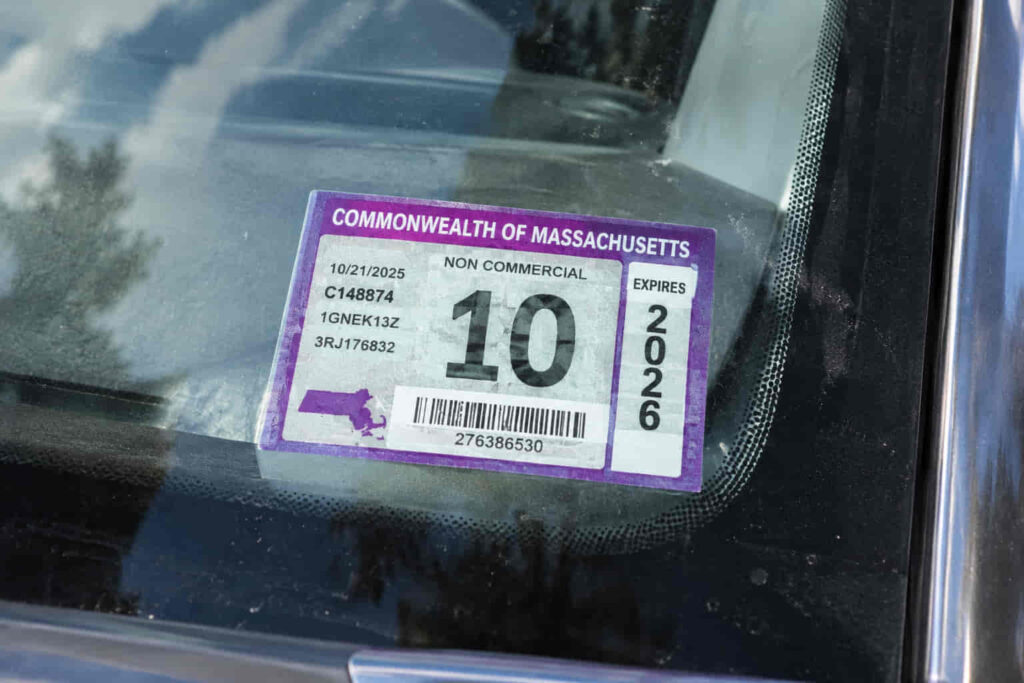
A Massachusetts inspection sticker confirms that a registered vehicle has completed the state’s required motor vehicle inspection. Massachusetts requires most registered vehicles to undergo an annual safety inspection, with emissions testing included when applicable. These inspections help ensure that vehicles meet state safety and environmental standards before continuing to operate on public roads. Vehicle owners must understand the inspection schedule, expiration rules, and requirements established by the Massachusetts Registry of Motor Vehicles (RMV).
The standard inspection fee for most passenger vehicles is $35, and newly registered vehicles generally must be inspected within seven days of registration. The inspection sticker displays an expiration month that determines when the next annual inspection is due. If a vehicle fails inspection, the owner receives a rejection sticker and an inspection report explaining the identified problems. The required repairs and reinspection procedures depend on the type of failure and applicable state regulations.
Understanding Massachusetts inspection sticker requirements helps drivers avoid expired inspection violations, unexpected repair expenses, and registration-related problems. This guide explains how the Massachusetts vehicle inspection program works, how much an inspection costs, what inspectors check, how long a sticker remains valid, and what to do when a vehicle fails inspection.
What Is a Massachusetts Inspection Sticker?
A Massachusetts inspection sticker is an official vehicle inspection certificate issued to a motor vehicle that passes the state’s required safety inspection and applicable emissions testing. The sticker serves as visible proof that the vehicle has met the inspection standards established by the Massachusetts Registry of Motor Vehicles (RMV). It is part of the Massachusetts Vehicle Check program, a joint initiative involving the RMV and Massachusetts Department of Environmental Protection (MassDEP) to promote road safety and reduce vehicle-related air pollution. Mass.gov+2
The inspection sticker is more than a decorative label attached to a vehicle’s windshield. Under Massachusetts General Laws, Chapter 90, Section 1, a certificate of inspection is defined as a serially numbered adhesive sticker, device, or symbol indicating that a motor vehicle has met the state’s inspection requirements. When a vehicle passes its inspection, the licensed inspection station issues the appropriate certificate. If the vehicle fails the inspection, it receives a certificate of rejection instead, documenting that it has not met the required safety or emissions standards. malegislature.gov+1
Massachusetts uses the inspection program to verify that registered vehicles remain safe to operate and comply with applicable emissions standards. During the safety inspection, certified inspectors examine essential vehicle components, including brakes, tires, lights, steering, suspension, and other required safety equipment. Vehicles subject to emissions testing must also meet the applicable environmental standards. This process helps identify mechanical defects and emissions-related problems that could affect public safety or air quality. malegislature.gov+1
The inspection sticker also communicates when the vehicle’s next inspection is due. Massachusetts introduced a revised sticker expiration system on November 1, 2022, under which vehicles passing inspection generally receive a sticker displaying the month of the previous sticker’s expiration. Newly purchased vehicles follow a separate initial inspection rule. Understanding what the sticker represents and how its expiration month works helps vehicle owners maintain compliance with Massachusetts inspection requirements.
Does Massachusetts Require Annual Vehicle Inspections?
Yes. Massachusetts requires most registered motor vehicles to undergo a vehicle inspection every year to verify that they meet the state’s safety and applicable emissions standards. The requirement applies to passenger cars and other covered vehicles registered in Massachusetts, regardless of whether they are privately owned or used for business. Vehicle owners must obtain a valid inspection certificate from a licensed inspection station to remain compliant with Massachusetts vehicle inspection regulations. Massachusetts Government+1
The annual inspection requirement serves two primary purposes: maintaining road safety and reducing harmful vehicle emissions. During a safety inspection, certified inspectors examine essential components such as brakes, tires, headlights, turn signals, steering, suspension, windshield condition, and other required safety equipment. Vehicles subject to emissions testing must also demonstrate compliance with the applicable environmental standards. These inspections help identify mechanical defects that could increase accident risks or contribute to excessive air pollution.
Newly purchased vehicles have a separate inspection deadline. A vehicle newly registered in Massachusetts generally must receive its initial inspection within seven days of registration. This requirement means that purchasing a vehicle or transferring its registration does not eliminate the responsibility to obtain an inspection within the prescribed period. For example, if a driver registers a newly purchased car on November 10, the vehicle must generally complete its initial inspection within the following seven days. Owners should retain their registration information and arrange an appointment promptly to avoid missing the deadline. Massachusetts Government+1
The specific inspection requirements depend on vehicle classification, model year, and applicable emissions regulations. Most passenger vehicles undergo an annual safety inspection, while emissions testing applies to vehicles equipped with systems covered by Massachusetts emissions requirements. Certain vehicle categories, including motorcycles and commercial vehicles, may follow different inspection procedures and fee structures. Therefore, vehicle owners should verify the requirements applicable to their particular vehicle through the Massachusetts RMV and Mass Vehicle Check program.
Failure to maintain a valid inspection certificate can create legal and financial consequences. A vehicle operating without the required inspection may be subject to a traffic citation, while unresolved safety defects can create additional risks for the driver and other road users. Maintaining the annual inspection schedule helps owners identify mechanical problems early and avoid unnecessary compliance issues.
Massachusetts annual vehicle inspections are a legal requirement, not an optional maintenance service. Vehicle owners should monitor their inspection expiration month, complete required testing on time, and address any safety or emissions problems identified during the inspection.
How Long Is a Massachusetts Inspection Sticker Valid?
A Massachusetts inspection sticker is generally valid for one year, and its expiration month determines when the vehicle must complete its next annual inspection. Vehicles inspected on time receive a sticker displaying the month in which the previous inspection sticker expired. This system helps the Massachusetts Registry of Motor Vehicles (RMV) maintain a consistent annual inspection schedule and discourages drivers from delaying inspections to obtain additional months of validity. Massachusetts Government+1
Massachusetts introduced a revised inspection sticker expiration rule on November 1, 2022. Under this rule, vehicles passing inspection receive a new sticker displaying the original expiration month rather than automatically receiving a full year from the date of a late inspection. For example, if a vehicle’s previous inspection sticker expired in March but the owner waits until May to complete the inspection, the replacement sticker will display March rather than May. This prevents late inspections from extending the annual inspection cycle. Massachusetts Government+1
Vehicles with inspection stickers that expired during the previous calendar year follow a different rule. When these vehicles pass inspection, they receive a January sticker for the current inspection year, regardless of the month in which the inspection takes place. For example, a vehicle whose sticker expired in October 2025 and passes inspection in November 2026 will receive a January 2026 sticker. This rule applies to vehicles that have remained overdue beyond the previous calendar year and is important for drivers who have significantly delayed their inspections. Massachusetts Government+1
Newly purchased vehicles follow a separate initial inspection schedule. Massachusetts requires newly purchased vehicles to complete their first inspection within seven days of registration. These vehicles receive a sticker displaying the month in which the inspection was completed, and the sticker is valid for one year. This exception prevents the late-inspection rule from incorrectly affecting vehicles that have just been registered in Massachusetts. Massachusetts Government+1
Vehicle owners should check the expiration month printed on their Massachusetts inspection sticker instead of relying only on the date they last visited an inspection station. Scheduling the inspection before the expiration month ends helps maintain compliance and prevents complications associated with late inspections. Drivers who are unsure about their sticker status can consult the official Massachusetts Vehicle Inspection Program for current information.
A Massachusetts inspection sticker generally covers a one-year inspection cycle, but a late inspection does not necessarily provide another full year from the date of testing. Understanding the expiration rules helps drivers avoid overdue inspections, traffic violations, and unnecessary registration complications.
Read more: how to keep mice out of your car
How Much Does a Massachusetts Inspection Sticker Cost?
A Massachusetts inspection sticker costs $35 for most passenger vehicles and $15 for motorcycles. These are the standard inspection fees established by the Massachusetts Vehicle Inspection Program. The $35 fee applies to typical passenger cars, SUVs, minivans, and light-duty pickup trucks with a gross vehicle weight rating (GVWR) of 10,000 pounds or less. Commercial vehicle inspections may cost more because inspection stations are permitted to charge additional labor fees. Massachusetts Government+2
The standard $35 passenger vehicle inspection fee covers the required safety inspection and applicable emissions testing. Drivers do not normally pay separate standard fees for the safety and emissions portions of the inspection. During the process, a licensed inspector checks the vehicle’s safety equipment and performs an emissions test when the vehicle falls under Massachusetts emissions requirements. For example, an eligible passenger car undergoing its annual inspection pays the standard $35 fee rather than paying $35 separately for safety testing and another $35 for emissions testing. Massachusetts Government+1
Motorcycle owners pay a separate annual inspection fee of $15. Motorcycle inspections must be completed at a licensed Class M motorcycle inspection station because motorcycles follow a specific inspection procedure. Unlike standard passenger vehicle inspections, motorcycle inspections primarily focus on applicable safety requirements. The inspection sticker is attached to the motorcycle’s license plate rather than the windshield. Mass Vehicle Check+1
Commercial vehicles have a different fee structure. Massachusetts lists a base commercial inspection fee of $35, but inspection stations may charge additional labor costs depending on vehicle size, classification, and inspection requirements. Heavy-duty commercial trucks, trailers, and other regulated vehicles may require more extensive inspections than ordinary passenger cars. Drivers and fleet operators should contact a licensed commercial inspection station to confirm the total price before scheduling the inspection. Mass Vehicle Check+1
Vehicle owners should also distinguish the inspection fee from repair expenses. If a car fails its safety or emissions inspection, the owner may need to pay for replacement parts, mechanical repairs, or emissions-related services before the vehicle can pass a reinspection. Massachusetts allows one free reinspection within 60 calendar days at the original inspection station, subject to the program’s conditions. A second inspection at a different station or after the applicable period may require another payment. Mass Vehicle Check+1
For most Massachusetts drivers, obtaining an annual inspection sticker costs $35. Motorcycle owners pay $15, while commercial vehicle owners should expect additional labor charges when applicable. Understanding these fee differences helps drivers budget for annual inspections and avoid confusing the standard inspection charge with repair costs after a failed test.
What Does a Massachusetts Vehicle Inspection Include?
A Massachusetts vehicle inspection includes a safety examination of 14 key vehicle systems and an emissions test when required by the state’s environmental regulations. The safety inspection applies annually to vehicles registered in Massachusetts, while emissions testing depends on the vehicle’s model year, weight classification, fuel type, and onboard diagnostic (OBD) system. Both applicable inspection requirements must be satisfied before a vehicle receives a passing inspection sticker. Massachusetts Government+2
The safety inspection examines the vehicle’s brakes, steering, suspension, tires, wheels, lighting devices, horn, windshield, windows, mirrors, and other essential safety equipment. Inspectors also evaluate the exhaust system, bumpers, fenders, fuel tank, vehicle frame, seat belts, airbags, and altered vehicle height. The inspection begins with a visual overview that includes checking the registration document, vehicle identification number (VIN), and license plates. These components are evaluated because defects can affect vehicle control, visibility, occupant protection, and the safety of other road users. Mass Vehicle Check+1
Brake testing is an important part of the Massachusetts safety inspection because both the service brake and parking brake must meet applicable safety requirements. Inspectors also examine steering and suspension components, including the steering mechanism, springs, and shock absorbers. Tire and wheel condition matters because damaged tires, unsafe wheels, or improper vehicle modifications can affect stability and handling. Lighting inspections cover headlights, brake lights, turn signals, hazard lights, reverse lights, license plate lights, and required reflectors. A vehicle with defective safety equipment may receive a rejection sticker until the identified problems are corrected.
Emissions testing is required for applicable vehicles equipped with onboard diagnostic systems. Under the current Massachusetts program, covered vehicles generally include OBD-equipped vehicles from the last 15 model years, subject to vehicle classification and applicable exemptions. During an OBD emissions test, the inspector connects the vehicle’s diagnostic port to an inspection analyzer to retrieve emissions-related information stored in the onboard computer. The system checks communication, readiness status, and diagnostic trouble codes that may indicate problems with emissions-control components. Massachusetts Government+2
Certain medium-duty and heavy-duty diesel vehicles that are not subject to OBD testing must undergo an opacity emissions test instead. This procedure measures the amount of smoke produced by the diesel engine during controlled acceleration. The analyzer evaluates exhaust opacity to determine whether the vehicle meets the applicable emissions standards. This distinction is important because not every Massachusetts vehicle receives the same type of emissions test. Mass Vehicle Check+1
If the vehicle passes all applicable safety and emissions requirements, the inspection station issues a passing inspection sticker. If the inspector identifies a safety defect or an emissions failure, the vehicle receives a rejection certificate and a Vehicle Inspection Report explaining the results. The report helps owners and repair technicians identify the specific problems that must be addressed before the vehicle can pass its reinspection.
A Massachusetts vehicle inspection evaluates both roadworthiness and environmental compliance. Understanding the 14 safety inspection areas and applicable emissions procedures helps vehicle owners prepare their cars, identify potential problems early, and reduce the likelihood of receiving a rejection sticker.
How Do You Get a Massachusetts Inspection Sticker?
To get a Massachusetts inspection sticker, take your registered vehicle to a state-licensed inspection station, provide a current and active vehicle registration, and pay the required inspection fee. A certified inspector will examine the vehicle’s safety equipment and perform emissions testing when applicable. If the vehicle passes all required tests, the inspection station issues a passing inspection certificate and applies the appropriate sticker. Massachusetts has approximately 1,800 licensed inspection stations where vehicle owners can complete this process. Massachusetts Government+1
The first step is finding a licensed inspection station through the official Massachusetts Vehicle Check Inspection Station Locator. Vehicle owners can search for nearby facilities and contact a station to confirm operating hours, inspection availability, and accepted payment methods. Choosing a licensed station is essential because only authorized facilities can perform official Massachusetts vehicle inspections and issue valid inspection certificates. Massachusetts Government+1
Before the inspection begins, drivers should bring their current and active vehicle registration document. The inspector checks the registration information and verifies that the vehicle identification number (VIN) matches the number displayed on the vehicle’s dashboard. The vehicle also undergoes a preliminary visual inspection to identify immediately dangerous conditions, such as a gasoline leak. If the inspector identifies a condition that presents an immediate danger, it must be corrected before the inspection can proceed. Massachusetts Government
After the initial verification, the inspector performs the required safety examination and emissions testing when applicable. The process evaluates essential vehicle components and determines whether the vehicle meets Massachusetts inspection standards. Most passenger vehicles require a $35 inspection fee, while motorcycles require a $15 fee at a licensed Class M inspection station. Commercial vehicles may have additional labor charges depending on their inspection classification. Massachusetts Government+1
If the vehicle passes, the inspection station issues the appropriate inspection sticker and provides an electronic or printed inspection record according to the program’s procedures. Drivers should check the expiration month on the sticker and retain their inspection documentation for future reference. If the vehicle fails, the station issues a rejection sticker and a printed Vehicle Inspection Report identifying the problems that require attention.
Newly purchased vehicles must complete their initial inspection within seven days of registration. Drivers do not need to wait for permanent license plates if they already have valid temporary registration documents that allow the vehicle to be inspected. This helps newly registered vehicles meet Massachusetts inspection requirements without unnecessary delays. Massachusetts Government+1
Getting a Massachusetts inspection sticker requires valid registration, a licensed inspection station, and successful completion of the applicable safety and emissions tests. Preparing the registration document and checking the vehicle’s basic safety equipment before visiting the station can help make the inspection process smoother.
What Happens If Your Vehicle Fails a Massachusetts Inspection?
If your vehicle fails a Massachusetts inspection, the inspection station issues a rejection sticker and a Vehicle Inspection Report (VIR) explaining which safety or emissions requirements the vehicle did not meet. The rejection certificate means the vehicle has not passed the required inspection, but the consequences depend on whether the failure involves a safety defect or an emissions problem. Massachusetts requires vehicle owners to address the identified issues and complete the applicable reinspection or obtain an authorized waiver or extension when eligible. Mass.gov+2
A safety inspection failure requires immediate attention because a vehicle with an unresolved safety-related defect cannot legally continue operating until the defect has been corrected. Examples include defective brakes, unsafe tires, malfunctioning lights, and other components that affect roadworthiness. After correcting the safety defects, the owner can operate the vehicle under the applicable rejection-certificate period while arranging reinspection. Drivers should keep repair receipts in the vehicle as evidence that the identified safety problems have been addressed. Massachusetts Government+1
An emissions inspection failure follows a different process because the vehicle may have a problem with its emissions-control system rather than an immediate road-safety defect. Common causes include an illuminated check engine light, emissions-related diagnostic trouble codes, or an OBD system that does not meet the required readiness criteria. The Vehicle Inspection Report identifies the failure and provides information about the next steps. Drivers generally have 60 days from the initial inspection to complete the necessary repairs and pass a reinspection, obtain an applicable emissions waiver, or qualify for an economic hardship failure repair extension. Mass Vehicle Check+1
Massachusetts generally allows one free reinspection when the vehicle returns to the same inspection station that issued the rejection certificate within 60 calendar days for ordinary motor vehicles. Motorcycles have a shorter 20-day reinspection period. If the owner returns to a different inspection station or misses the applicable deadline, additional inspection fees may apply. These deadlines are calculated from the original inspection date, not from the date the repairs are completed. mass.gov+2
The Vehicle Inspection Report is important because it documents the exact reason for the failed inspection and helps determine which repairs are necessary. If the vehicle fails an emissions test, the report may also identify a Registered Emissions Repair Facility that can diagnose and repair the emissions-control problem. Owners should retain repair invoices and supporting documents because they may be needed when requesting an emissions waiver or economic hardship extension. Mass Vehicle Check+1
If a vehicle does not pass the required inspection or obtain an applicable waiver within the permitted period, its Massachusetts registration may be suspended. This can create additional legal and financial problems for the owner, particularly if the vehicle continues operating without meeting the state’s requirements. Therefore, addressing the rejection promptly is more effective than waiting until the inspection deadline has passed. Massachusetts Government+1
A failed Massachusetts inspection does not always mean the vehicle must be taken off the road immediately. The key distinction is the type of failure. Safety defects must be corrected before the vehicle is driven again, while emissions failures follow a separate repair and reinspection process. Understanding this distinction helps owners avoid unsafe driving, additional fees, and registration problems.
What Happens If Your Massachusetts Inspection Sticker Expires?
Driving with an expired Massachusetts inspection sticker is a traffic violation that can result in a $50 fine, additional court-related charges, and potential increases in vehicle insurance costs. Massachusetts law requires registered vehicles to maintain a valid inspection certificate, and drivers who operate an uninspected vehicle may receive a citation from law enforcement. An expired sticker can also create registration renewal problems if the vehicle does not complete the required inspection. Massachusetts Government+2
The financial penalty is established under Massachusetts General Laws Chapter 90, Section 20. This provision imposes a $50 fine on individuals who own or operate vehicles without the required inspection certificate or certificate of rejection. A separate $5 surcharge may also apply to qualifying motor vehicle violation fines under Massachusetts law. The actual amount owed can depend on the citation and applicable court assessments. Justia Law
An expired inspection sticker can also affect vehicle insurance costs. Massachusetts identifies driving with an expired sticker or an uninspected vehicle as a violation that may be treated as a surchargeable incident. This means the violation can affect the driver’s insurance record and potentially increase insurance premiums. The financial impact depends on the driver’s insurance policy, driving history, and applicable insurance rating rules. Massachusetts Government+1
Registration renewal is another important concern. Massachusetts allows the RMV to place a nonrenewal status on a vehicle registration when the vehicle does not have a valid inspection sticker. This can prevent the owner from renewing the registration until the required inspection is completed. Drivers should therefore avoid assuming that an expired sticker only creates a one-time traffic fine. Leaving the inspection overdue can create additional administrative problems when renewing vehicle registration. Massachusetts Government+1
Massachusetts also changed its inspection sticker expiration system on November 1, 2022. When a vehicle’s sticker expires during the current calendar year, a late inspection generally results in a replacement sticker displaying the original expiration month rather than the month in which the inspection is finally completed. If the previous sticker expired in the preceding calendar year, the vehicle generally receives a January sticker for the current year after passing inspection. This means delaying an inspection does not provide an additional year of validity. Massachusetts Government+1
The best way to resolve an expired inspection sticker is to schedule an inspection at a licensed Massachusetts inspection station as soon as possible. If the vehicle passes, the station issues the appropriate inspection certificate. If it fails, the owner must follow the applicable rejection and repair procedures. Drivers should also address any outstanding citation rather than assuming that passing a new inspection automatically cancels a previous violation.
An expired Massachusetts inspection sticker can create three main consequences: a traffic fine, potential insurance surcharges, and registration renewal restrictions. Completing the annual inspection on time is the most effective way to avoid these problems and maintain compliance with Massachusetts vehicle regulations.
Can You Drive Without a Valid Massachusetts Inspection Sticker?
No. In most circumstances, you cannot legally operate a registered vehicle on Massachusetts public roads without a valid inspection certificate. Massachusetts General Laws Chapter 90, Section 20 requires motor vehicles subject to inspection regulations to display the appropriate inspection certificate or rejection certificate. Driving with an expired, missing, or otherwise invalid inspection sticker can result in a traffic citation and a $50 fine. Justia Law+1
Newly purchased vehicles have a specific exception that allows owners to complete their initial inspection within seven days of registration. This period gives drivers time to arrange an inspection after registering a vehicle in Massachusetts. For example, someone who registers a newly purchased car on November 10 generally has until November 17 to complete the initial inspection. However, this seven-day period should not be confused with permission to drive a vehicle that has failed a safety inspection or has an otherwise invalid registration. Massachusetts Government+1
A vehicle that receives a rejection sticker must follow different operating rules depending on the reason for failure. If the inspection identifies a safety-related defect, the vehicle cannot legally continue operating until the defect has been corrected. Examples include defective brakes, unsafe tires, malfunctioning headlights, or other conditions that create an immediate road safety concern. Owners should arrange the necessary repairs and reinspection before returning the vehicle to public roads. Massachusetts Government+1
An emissions-related rejection generally follows a different procedure because the vehicle may still satisfy basic safety requirements despite failing its emissions test. Owners must address the emissions problem and complete the applicable reinspection or qualify for an authorized waiver or extension. However, an emissions rejection does not automatically authorize unrestricted operation in every circumstance. Drivers should follow the instructions on the Vehicle Inspection Report and confirm their vehicle’s legal status with the inspection station or Massachusetts RMV. Mass Vehicle Check+1
Driving without a valid inspection sticker can also create additional administrative and financial consequences beyond the initial citation. Massachusetts may place a registration nonrenewal status on a vehicle that does not maintain the required inspection certificate. An expired sticker can also affect the driver’s insurance record if the violation is treated as surchargeable under applicable insurance rules. Completing the inspection promptly helps prevent these complications. Massachusetts Government+1
Massachusetts generally requires vehicles to maintain valid inspection documentation before operating on public roads. The seven-day initial inspection period for newly registered vehicles is an important exception, while vehicles with safety-related rejection defects must remain off the road until the problems are corrected.
How Do You Replace a Lost or Damaged Massachusetts Inspection Sticker?
If you lose or damage your Massachusetts inspection sticker, you should contact the inspection station that performed the original inspection or the Massachusetts Registry of Motor Vehicles (RMV) to determine the appropriate replacement procedure. An inspection sticker serves as official proof that a vehicle has completed the required inspection, so a missing or unreadable sticker can create difficulties when demonstrating compliance with Massachusetts vehicle regulations. The replacement process depends on whether the original inspection certificate remains valid and whether the inspection record can be verified.
The first step is to identify the inspection station that issued the original sticker. Massachusetts inspection stations maintain electronic inspection records through the Massachusetts Vehicle Check system, which helps verify whether a vehicle previously passed its required safety and emissions tests. Providing the vehicle registration information, license plate number, and vehicle identification number (VIN) can help the station locate the original inspection record. If the original station cannot assist, vehicle owners should contact the Massachusetts RMV for guidance on the appropriate next step.
A damaged or unreadable sticker should also be addressed promptly because Massachusetts requires vehicles to display the appropriate inspection certificate. Drivers should not attempt to create, reproduce, alter, or transfer an inspection sticker themselves. Inspection certificates are controlled documents issued through authorized inspection stations, and unauthorized reproduction can create additional legal problems. If the sticker has become detached, faded, or damaged, the inspection station can explain whether the existing certificate can be replaced or whether another inspection procedure is necessary.
Vehicle owners should distinguish replacing a lost inspection sticker from obtaining a new annual inspection. If the original inspection remains valid and the electronic record confirms that the vehicle passed, the owner should follow the official replacement instructions rather than automatically paying for another complete inspection. However, if the vehicle’s inspection certificate has expired, the owner must complete a new inspection to obtain a valid certificate. A replacement request does not extend the original sticker’s expiration date.
Keeping a copy of the Vehicle Inspection Report or other inspection documentation can help when contacting the original station or RMV. Although supporting documents do not replace the required windshield sticker, they can make it easier to verify the vehicle’s inspection history and resolve questions about a missing certificate.
Replacing a lost or damaged Massachusetts inspection sticker requires verification through an authorized inspection station or the RMV. Confirming the original inspection record before arranging another inspection can help vehicle owners avoid unnecessary expenses while maintaining compliance with Massachusetts inspection requirements.