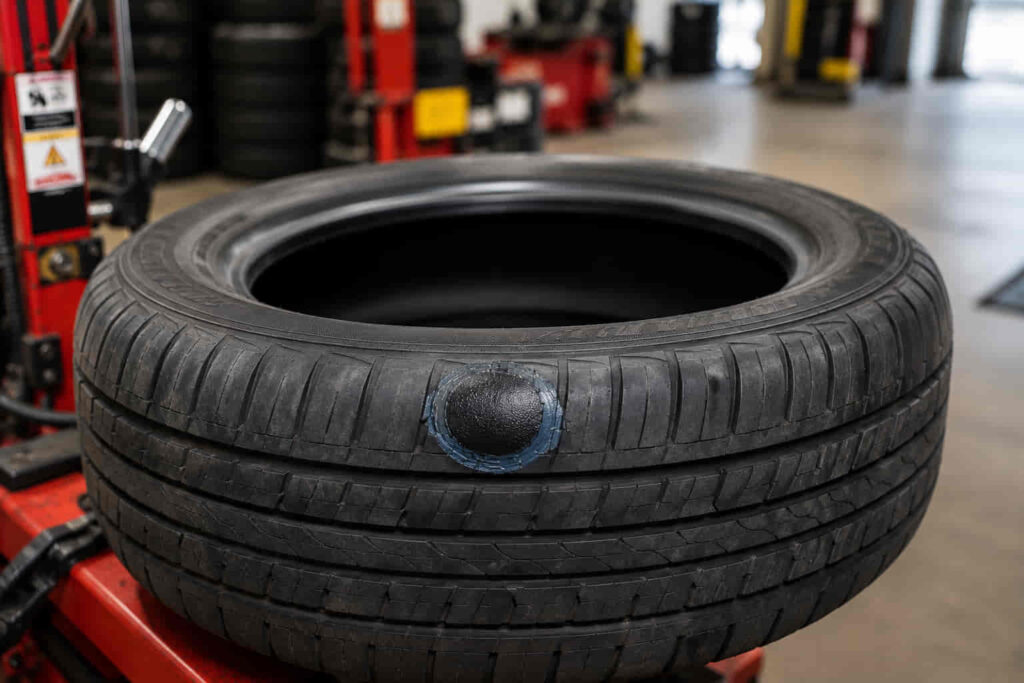
Les Schwab may provide tire repair services at no charge in certain situations, but whether a tire can be patched for free depends on the condition of the tire and the service eligibility requirements. A flat tire must first be inspected to determine whether the damage is repairable and whether a patch is a safe solution.
Tire repair is not based only on the presence of a puncture. A technician needs to evaluate the location of the damage, the size of the puncture, the overall condition of the tire, and whether the tire structure has been compromised. A small puncture in the tread area may be suitable for repair, while sidewall damage or severe structural problems usually require tire replacement.
The purpose of a tire inspection is to determine whether repairing the existing tire can restore safe operation. Even when a free repair service is available, the tire must meet safety requirements before a patch or other repair method can be performed.
Understanding how Les Schwab evaluates damaged tires helps drivers know what to expect when they bring in a flat tire. This guide explains the important factors behind free tire repair services, the inspection process, repair limitations, and situations where replacing the tire is the safer option.
What Conditions Does Les Schwab Check Before Repairing a Tire?
Les Schwab checks several tire conditions before repairing a flat tire because a safe repair depends on whether the tire damage can be restored without creating a safety risk. A puncture alone does not determine whether a tire can be patched. The technician must evaluate the complete condition of the tire before deciding between repair and replacement.
The location of the damage is one of the most important factors during inspection. A small puncture in the main tread area is generally more suitable for repair because this section has stronger structural support and experiences less movement compared with other parts of the tire. Damage near the sidewall or shoulder area is more complicated because these sections flex significantly during driving.
The size and severity of the puncture also affect repair eligibility. A small nail or screw puncture may be repairable when the internal structure remains intact, while large holes, cuts, or damage caused by driving on a flat tire may require replacement.
The tire’s overall condition is also evaluated during inspection. Factors such as tread wear, previous repairs, cracking, and signs of internal damage influence whether repairing the tire is a reliable solution. For example, a newer tire with a small tread puncture may be a good repair candidate, while an older tire with multiple repairs may not provide the same level of safety.
A proper inspection ensures that tire repair decisions are based on safety standards rather than only the ability to stop an air leak. This process helps determine whether a free repair service, paid repair, or replacement is the most appropriate option.
Can Les Schwab Repair Any Type of Flat Tire?
Les Schwab cannot repair every type of flat tire because some tire damage affects the structural strength of the tire and cannot be safely corrected with a patch or plug. Tire repair is only appropriate when the damage is limited and the tire remains capable of supporting normal driving conditions.
Punctures located in the tread area are usually the most common type of damage considered for repair. These punctures often occur from objects such as nails or screws and may be repaired when they are small and have not caused internal damage. However, the repair process requires inspection to confirm that the tire has not been weakened.
Sidewall damage is different because the sidewall provides flexibility and supports the weight of the vehicle during movement. A cut, puncture, or bulge in this area can indicate structural damage that a patch cannot safely restore. In these cases, replacing the tire is usually the safer recommendation.
Tires that have been driven while completely flat may also become unsafe to repair because internal components can be damaged from excessive heat and friction. For example, a driver who continues driving several miles after losing air pressure may damage the tire beyond what a simple patch can fix.
Understanding repair limitations helps customers make better decisions when visiting a tire service center. A tire that cannot be safely repaired should be replaced because preventing tire failure is more important than extending the life of a damaged tire.
Read more: How Long Does a Patched Tire Last
Does Les Schwab Patch Tires You Did Not Buy There?
Whether Les Schwab patches tires that were not purchased there depends on the specific service situation, store policy, and condition of the tire being inspected. Tire repair decisions are usually based on whether the damage can be repaired safely rather than only where the tire was originally purchased.
A tire service center evaluates the condition of the tire before recommending any repair. This means a customer with a flat tire may still receive an inspection even if the tire was purchased from another retailer. The important factors are the type of damage, repair location, tire condition, and whether a repair meets safety requirements.
Customers should understand that tire service policies can vary depending on location and circumstances. Some situations may qualify for complimentary repair services, while others may involve a repair charge or require replacement if the tire cannot be safely repaired.
For example, a customer bringing a vehicle with a small tread puncture may have a different outcome compared with someone bringing a tire with sidewall damage or a tire that has been driven while flat. The inspection result determines the appropriate solution.
Checking service availability before visiting a store can help customers understand what to expect. However, the final decision depends on whether the tire repair is technically safe and appropriate.
What Happens When You Bring a Flat Tire to Les Schwab?
When you bring a flat tire to Les Schwab, the process begins with a tire inspection to determine whether the damage can be repaired or whether replacement is necessary. The purpose of this evaluation is to identify the cause of air loss and confirm that the tire can continue operating safely after service.
The inspection process focuses on identifying the location and severity of the damage. Technicians examine the tread area, sidewalls, and overall tire condition to determine whether the puncture affects the structural integrity of the tire. This evaluation helps separate repairable issues from damage that requires replacement.
If the tire is considered repairable, the appropriate repair method can be recommended based on the type of puncture and tire condition. A proper repair restores the ability of the tire to hold air and allows the tire to continue being used when the structure remains safe.
If the tire cannot be repaired safely, replacement may be recommended instead. For example, a tire with a sidewall puncture or severe internal damage may still lose its ability to handle normal driving forces even if the air leak appears manageable.
Understanding this process helps customers avoid the assumption that every flat tire can simply be patched. Tire repair decisions are based on safety evaluation, not only on stopping the immediate air leak.
What Is the Difference Between a Free Tire Patch and Tire Replacement?
The difference between a free tire patch and tire replacement is that a patch restores a repairable tire, while replacement is required when the tire has damage that affects its structural safety. A tire repair focuses on restoring air retention after a puncture, but it does not rebuild areas of the tire that have been weakened or damaged beyond repair.
A tire patch is usually considered when the puncture is small, located in an acceptable repair area, and the tire has enough remaining tread and structural strength. In this situation, repairing the existing tire can be a practical solution because the original tire can continue providing normal performance after proper service.
Tire replacement becomes necessary when the damage creates a safety concern. Conditions such as sidewall punctures, large cuts, severe wear, multiple previous repairs, or internal damage may prevent a tire from safely returning to service. A replacement tire provides a complete structure that has not been compromised by previous damage.
Cost is often a factor when drivers decide between repair and replacement, but safety should remain the primary consideration. For example, repairing a small tread puncture can prevent an unnecessary tire purchase, while replacing a damaged tire can prevent potential failure during driving.
Understanding the difference between these options helps customers make better decisions after a flat tire. A free patch service is valuable when the tire is suitable for repair, but replacement is the correct choice when the tire no longer meets safety requirements.
How Can You Avoid Tire Repair Problems in the Future?
You can avoid tire repair problems in the future by maintaining proper tire condition, monitoring air pressure, and addressing tire damage before it becomes more serious. Preventive tire care reduces the chance of unexpected flats and helps preserve the condition of tires that may require repair later.
Maintaining the correct tire pressure is one of the most important steps because incorrect pressure increases stress on the tire structure. Underinflated tires generate more heat and flexing, while overinflated tires are more vulnerable to impact damage. Both conditions can accelerate wear and increase the risk of tire problems.
Regular tire inspections also help identify issues early. Checking tread depth, looking for cracks or uneven wear, and inspecting for embedded objects can prevent small problems from developing into major damage. For example, removing a small nail before it causes a complete air loss situation may allow for a simpler repair.
Proper driving habits also protect tires from unnecessary damage. Avoiding potholes, road debris, excessive loads, and aggressive driving reduces stress on the tire structure and extends tire life.
Consistent maintenance makes tire problems easier to manage and helps ensure that any future repair is more likely to be successful. A well-maintained tire has a better chance of remaining safe and repairable when unexpected punctures occur.
What Should You Know Before Using Les Schwab Free Tire Repair Service?
Les Schwab free tire repair service can be a useful solution for drivers with a flat tire, but the availability of a free patch depends on the tire’s condition, repair eligibility, and service requirements. A tire must first be inspected to determine whether the damage can be safely repaired or whether replacement is the better option.
The most important factor in tire repair is safety. A small puncture in the tread area may be suitable for repair when the tire structure remains intact, while sidewall damage, large punctures, severe wear, or internal damage may require a new tire. A patch can restore air retention, but it cannot repair a tire that has lost its structural strength.
Understanding how Les Schwab evaluates tires helps customers have realistic expectations when seeking flat tire assistance. The inspection process identifies whether a repair is possible and ensures that the recommended solution supports safe driving performance.
Regular tire maintenance also plays an important role in reducing repair problems. Maintaining correct tire pressure, checking for damage, and addressing punctures early can help extend tire life and improve the chance that future damage can be repaired.
A free tire repair service provides value when a tire is a safe repair candidate. However, the final decision should always consider the overall condition of the tire rather than focusing only on the cost of repair. Proper inspection and professional recommendations help drivers choose between repairing and replacing a damaged tire.