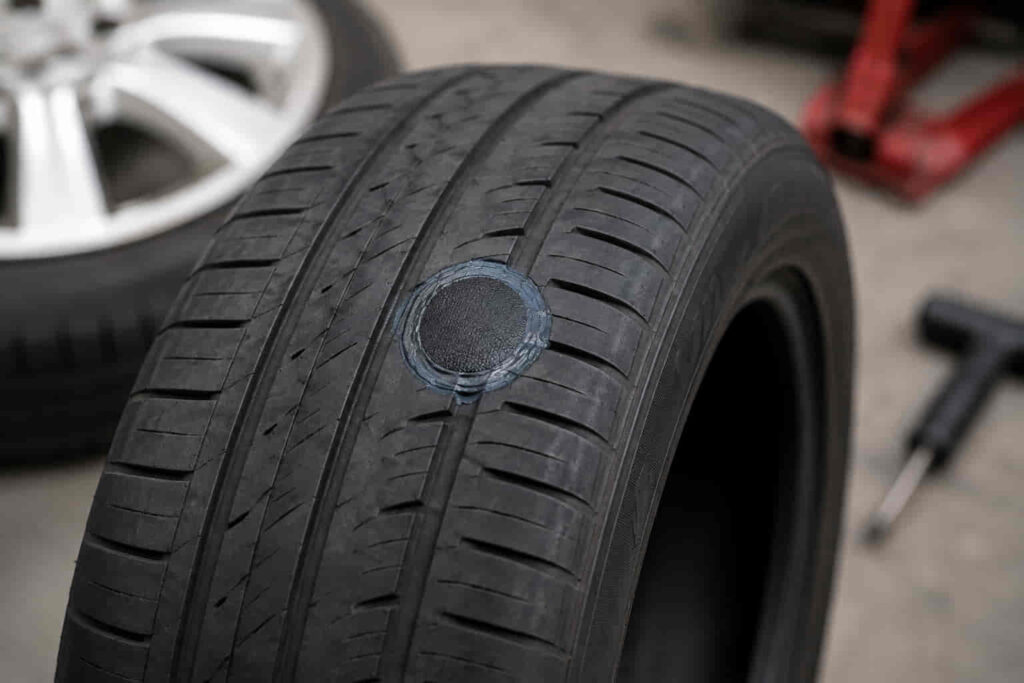
A properly patched tire can last for the remaining usable life of the tire when the repair is performed correctly and the damage meets tire repair safety standards. However, the lifespan of a patched tire is not determined only by the patch itself. Factors such as the repair method, puncture location, tire condition, driving environment, and maintenance habits all influence how long the tire can continue operating safely.
A tire patch works by sealing the damaged area and restoring the tire’s ability to maintain air pressure. When a puncture is located in the repairable tread area and the repair is performed using the correct internal patch or plug-patch method, the repaired tire can provide long-term service similar to an undamaged tire. The remaining lifespan mainly depends on the condition of the tire structure and the quality of the repair.
However, not every damaged tire can be safely repaired. Damage to the sidewall, large punctures, severe wear, or internal structural damage may make replacement the safer option. A patch can restore air retention, but it cannot repair weakened rubber, damaged steel belts, or a tire that has reached the end of its service life.
Understanding the factors that affect patched tire lifespan helps drivers decide whether a repaired tire remains safe to use or whether replacement is necessary.
Does the Type of Tire Repair Affect How Long a Patched Tire Lasts?
The type of tire repair affects how long a patched tire lasts because different repair methods provide different levels of sealing, structural support, and long-term reliability. A properly performed repair does more than close the hole; it must restore the tire’s ability to maintain air pressure while preserving the strength of the tire structure.
A professional tire repair usually involves removing the tire from the wheel, inspecting the inside for damage, and applying a patch or plug-patch combination from the inner surface. This method allows technicians to evaluate whether the puncture has caused internal damage and creates a stronger seal compared with temporary external repairs.
A simple tire plug inserted from the outside may stop air leakage, but it does not always address internal damage caused by the puncture. Since the inside of the tire is not inspected during a basic plug repair, hidden issues such as liner damage or weakened rubber may remain unnoticed.
The location and severity of the puncture also determine whether a repair method is appropriate. For example, a small nail puncture in the center tread area can often be repaired effectively with a proper patch or plug-patch method, while damage near the sidewall may require tire replacement because the structure experiences greater flexing during driving.
Choosing the correct repair method helps maximize tire lifespan after a puncture. A high-quality repair performed according to tire industry standards allows the tire to continue operating safely for the remaining usable life of the tire.
Does the Location of Tire Damage Affect Patch Lifespan?
The location of tire damage strongly affects how long a patched tire lasts because different areas of a tire experience different levels of stress during driving. The tread area, sidewall, and shoulder section of a tire do not have the same structure or movement characteristics, which directly affects whether a repair can maintain long-term safety.
Punctures located in the central tread area are generally the most suitable for repair because this section contains thicker rubber and experiences less structural movement compared with the sidewall. When the puncture is small and properly repaired, the patch can maintain an effective seal while allowing the tire to continue performing normally.
Damage near the tire shoulder or sidewall is more difficult to repair because these areas flex significantly during acceleration, braking, and cornering. A patch may seal the hole, but it cannot restore the original strength of damaged sidewall materials or internal reinforcement layers.
For example, a tire with a small screw puncture in the middle of the tread may remain usable after a professional repair, while a tire with a cut on the sidewall usually requires replacement even if the air leak can be temporarily stopped.
The repair location is one of the most important factors when evaluating patched tire safety. A correct assessment of the damage area helps determine whether repair is a reliable solution or whether replacing the tire is the safer choice.
Does Tire Age Affect How Long a Patched Tire Lasts?
Tire age affects how long a patched tire lasts because the rubber compounds and internal materials naturally weaken over time, even when the puncture repair is performed correctly. A patch can restore the damaged area and prevent air loss, but it cannot reverse the aging process that affects the entire tire structure.
As tires age, the rubber becomes less flexible and more vulnerable to cracking, especially when exposed to sunlight, heat, and environmental conditions. Internal components such as steel belts and reinforcement layers can also lose strength over time. This means an older tire may have a shorter remaining lifespan after repair compared with a newer tire that receives the same quality patch.
A repaired tire with low mileage is not automatically safe if it has significant age-related deterioration. For example, a tire that has been used for several years and shows visible surface cracks may have structural weaknesses that are unrelated to the puncture repair. In this situation, replacing the tire may be safer than continuing to rely on a patch.
Evaluating tire age is an important part of determining whether a repair is worthwhile. Drivers should consider the overall condition of the tire, including tread depth, cracking, previous repairs, and manufacturer recommendations, rather than focusing only on whether the patch is holding air.
A high-quality patch can extend the service life of a tire, but the tire must still have enough structural integrity to handle normal driving conditions.
How Do Driving Conditions Affect a Patched Tire?
Driving conditions affect patched tire lifespan because heat, speed, load, and road conditions increase the stress placed on the repaired area and the entire tire structure. A patched tire operating under normal conditions experiences less stress than a tire regularly exposed to high temperatures, heavy loads, or aggressive driving.
High-speed driving generates more heat inside the tire, and excessive heat can accelerate rubber deterioration. Heavy vehicle loads also increase pressure on the tire structure, which may place additional stress on the repaired area. These conditions do not automatically cause a patch to fail, but they can reduce the margin of safety when the tire already has age or structural damage.
Road conditions also influence tire durability after repair. Frequent driving on rough roads, potholes, or uneven surfaces creates repeated impacts that can affect the tire’s internal structure. A properly repaired tread puncture may continue performing normally, but repeated severe impacts can create new damage around the repair area.
For example, a patched tire used mainly for city driving at moderate speeds may last much longer than the same tire used regularly for high-speed highway travel while carrying heavy loads. The repair quality remains important, but the operating environment determines how much stress the tire experiences.
Maintaining appropriate driving habits, avoiding excessive loads, and monitoring tire condition regularly help maximize the remaining lifespan of a patched tire.
Read more: Cadillac Parking Assist Not Working
Does Tire Maintenance Affect Patched Tire Lifespan?
Tire maintenance affects patched tire lifespan because proper care reduces stress on the repaired area and helps the tire maintain its structural condition over time. A patch can seal a puncture effectively, but the tire still needs correct inflation, balanced wear, and regular inspection to continue operating safely.
Maintaining the correct tire pressure is one of the most important factors affecting a repaired tire. Underinflated tires create excessive flexing and heat buildup, while overinflated tires reduce contact with the road and increase impact stress. Both conditions can place additional pressure on the tire structure and the repaired area.
Regular tire rotation and wheel alignment also help extend the life of a patched tire by promoting even tread wear. Uneven wear can create additional stress on certain sections of the tire and may reduce overall performance. For example, a repaired tire on a vehicle with poor wheel alignment may wear faster on one edge, shortening the remaining service life.
Tire inspections are especially important after a repair because they help detect problems before they become serious. Checking air pressure, examining tread condition, and monitoring changes in driving behavior allow drivers to identify potential issues early.
A properly maintained patched tire can continue providing reliable performance for the remaining life of the tire. However, maintenance cannot compensate for structural damage, excessive wear, or an unsafe repair location, which is why regular evaluation remains essential.
How Can You Tell If a Patched Tire Needs Replacement?
A patched tire needs replacement when the tire develops structural damage, loses air repeatedly, or no longer provides safe performance despite the repair. A patch can restore the ability to hold air, but it cannot repair every type of tire damage or restore a tire that has reached the end of its usable condition.
One of the clearest warning signs is repeated air pressure loss after a repair. If the tire continues losing air, the problem may come from an ineffective repair, additional punctures, valve issues, or internal damage that was not visible during the initial repair.
Visible changes in the tire structure are also important indicators. Bulges, cracks, exposed reinforcement materials, severe tread wear, or deformation near the repair area suggest that the tire may no longer have enough structural strength for continued use.
Driving symptoms can also reveal problems with a repaired tire. Vibration, unusual handling, steering changes, or repeated tire pressure warnings may indicate that the tire requires further inspection. For example, a patched tire that was operating normally but later develops a sidewall bulge should be replaced because the issue involves structural integrity rather than the original puncture.
A repaired tire should be evaluated as a complete tire system, not only by whether the patch remains sealed. When the tire shows signs of weakness beyond the original puncture, replacement becomes the safer option.
When Should You Replace a Patched Tire Instead of Repairing It?
You should replace a patched tire instead of repairing it when the damage affects the structural integrity of the tire or when the tire no longer meets safety requirements for continued use. A repair can restore air retention and seal a puncture, but it cannot rebuild damaged internal materials or reverse severe tire deterioration.
Tire replacement is usually the safer option when the puncture is located in the sidewall, when the damaged area is too large, or when the tire has multiple previous repairs. These conditions increase the possibility of structural weakness because the tire experiences significant stress while supporting vehicle weight and absorbing road impacts.
The overall condition of the tire also determines whether repair is practical. A tire with very low tread depth, visible cracking, uneven wear, or signs of overheating may not have enough remaining service life to justify another repair. In these situations, installing a new tire provides better reliability and reduces the risk of unexpected failure.
For example, a relatively new tire with a small tread puncture can often continue operating safely after a professional patch repair. However, an older tire with a sidewall cut and previous repairs may require replacement even if the current puncture appears repairable.
The decision between repairing and replacing a tire should be based on safety, not only cost. A proper inspection considers the puncture location, repair history, tire age, and overall condition before determining the best solution.
How Can You Extend the Life of a Patched Tire?
You can extend the life of a patched tire by maintaining proper tire pressure, monitoring tire condition, and reducing unnecessary stress on the repaired area. A quality repair provides the foundation for long-term use, but continued performance depends on how the tire is maintained after the repair.
Keeping the tire inflated to the manufacturer’s recommended pressure helps prevent excessive flexing and heat buildup. Correct pressure allows the tire to distribute load evenly and reduces stress on both the repaired section and the surrounding rubber structure.
Regular inspections help identify problems before they become safety concerns. Drivers should monitor pressure changes, check for unusual wear patterns, and inspect the repaired area during routine tire maintenance. Early detection of air leaks or structural changes can prevent more serious tire problems.
Driving habits also influence how long a patched tire remains reliable. Avoiding excessive speeds, heavy overloading, and harsh impacts from potholes reduces mechanical stress on the tire. A repaired tire used under normal conditions generally experiences less strain than one exposed to extreme driving environments.
A patched tire can provide dependable service when the repair is appropriate and the tire is maintained correctly. Understanding the limits of tire repair and following proper maintenance practices allows drivers to maximize the remaining usable life of the repaired tire.
How Long Can You Safely Use a Patched Tire?
A patched tire can often remain in service for the rest of its usable life when the repair is performed correctly, the damage is located in a repairable area, and the tire remains structurally sound. The lifespan of a patched tire depends on more than the patch itself because the entire tire condition determines whether it can continue operating safely.
Factors such as repair method, puncture location, tire age, driving conditions, and maintenance habits directly affect how long a repaired tire lasts. A professional patch repair on a properly maintained tire can provide reliable performance, while an incorrectly repaired tire or one with existing structural damage may require replacement.
The most important step is evaluating whether the tire was a suitable candidate for repair in the first place. Damage to the sidewall, excessive wear, large punctures, repeated repairs, or signs of structural failure can make replacement a safer choice than continued use.
Regular inspection after a tire repair helps identify problems early. Maintaining correct tire pressure, monitoring tread condition, and responding to warning signs such as air loss, vibration, or visible damage can help maximize the remaining service life of a patched tire.
A patched tire is not automatically unsafe, but its reliability depends on proper repair quality and overall tire condition. Understanding these factors allows drivers to make better decisions about when a repaired tire can continue being used and when replacement is the safer option.