The air conditioning system in a Hyundai Sonata keeps the cabin comfortable during hot weather and long drives. Many drivers notice a problem over time. The AC still blows air, but it no longer feels cold. This issue often builds up slowly, so people think the system has failed. In most cases, the real cause is low refrigerant. This situation leads to the need for a Hyundai Sonata AC Recharge.
Low refrigerant reduces cooling performance. The compressor still runs, but the system cannot produce cold air effectively. The airflow feels weak or warm, especially when the car idles or moves slowly. This creates confusion for many drivers because the AC system still turns on normally. However, the cooling cycle cannot maintain proper pressure without enough refrigerant.
This guide explains the full Hyundai Sonata AC Recharge process in a simple and practical way. You will learn how the system works and why refrigerant loss happens. You will also see clear steps to refill the AC system safely. The article also helps you decide when to do it yourself and when to visit a professional mechanic. By the end, you will understand how to restore cooling performance and avoid mistakes that can damage the AC system.
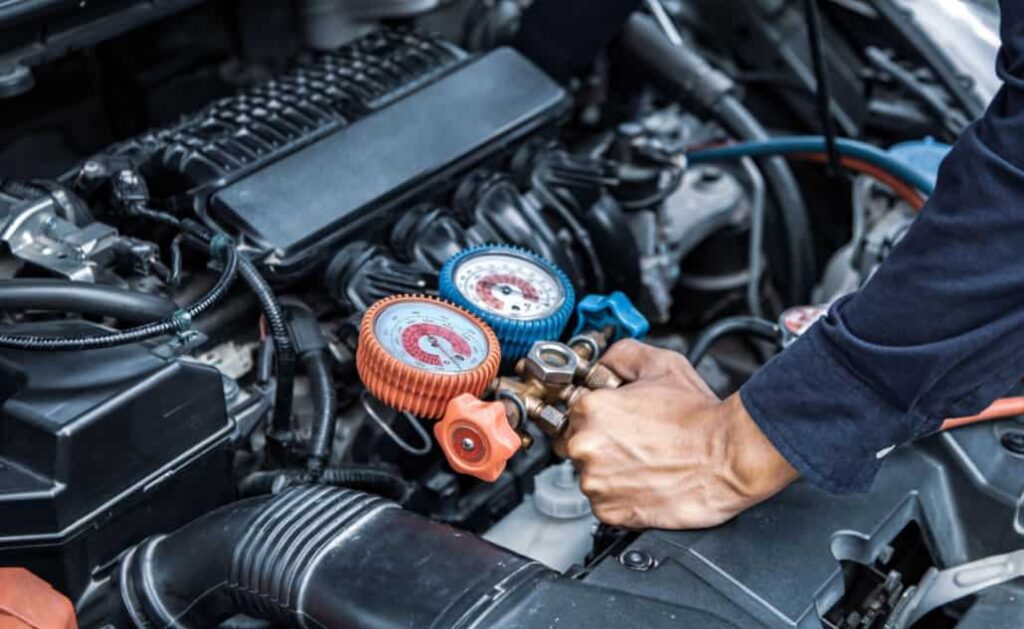
Hyundai Sonata AC System Overview
The air conditioning system in a Hyundai Sonata works through a closed loop cooling cycle. This system moves refrigerant through several key components to remove heat from the cabin. When everything works correctly, the system absorbs hot air inside the car and releases it outside, leaving the cabin cool and comfortable.
The process starts with the compressor. The compressor pressurizes the refrigerant and pushes it through the system. High pressure gas then moves to the condenser. The condenser cools the gas and turns it into a liquid state. After that, the refrigerant flows into the expansion valve. This part reduces pressure and prepares the refrigerant for cooling.
Next, the refrigerant enters the evaporator inside the cabin. The evaporator absorbs heat from the air that passes through it. The blower fan pushes this cooled air into the cabin. The refrigerant then returns to the compressor and repeats the cycle.
The system depends heavily on the correct refrigerant level. If the level drops, the system loses efficiency. The compressor may still run, but cooling performance decreases quickly. This is why a Hyundai Sonata AC Recharge becomes necessary when refrigerant leaks or slowly decreases over time.
Most Hyundai Sonata models use refrigerants like R134a or R1234yf depending on the production year. Each type requires the correct handling method. Using the wrong refrigerant can reduce performance or damage the system. The AC system also relies on stable pressure to maintain cooling efficiency. Any imbalance affects the entire cycle.
Understanding this system helps you diagnose problems more accurately. It also helps you decide whether the issue comes from low refrigerant or from a mechanical failure in the compressor or condenser.
Signs Your Hyundai Sonata Needs an AC Recharge
A Hyundai Sonata often shows clear warning signs when the refrigerant level drops. These signs usually appear gradually, so drivers may not notice them at first. Recognizing them early helps you avoid weak cooling performance and larger AC system problems.
One of the most common signs is weak cooling. The air conditioner still runs, but the air coming from the vents feels warm or only slightly cool. This usually becomes more noticeable during hot weather or when the car stays idle in traffic.
Another sign is inconsistent cooling. The AC may feel cold while driving at higher speeds but lose performance when the vehicle slows down. This happens because the system struggles to maintain proper pressure when refrigerant levels are low.
You may also notice that the AC compressor runs continuously. In a healthy system, the compressor cycles on and off. When refrigerant is low, the system forces the compressor to run longer to compensate for poor cooling performance. This increases wear on the system.
Some drivers hear a faint hissing sound from the AC system. This can indicate a refrigerant leak. In other cases, frost may form on AC components due to unstable pressure inside the system. These symptoms often point to a deeper issue that requires attention before performing a Hyundai Sonata AC Recharge.
Another common symptom is reduced airflow combined with poor cooling. The blower fan still works, but the air does not feel strong or cold enough. This combination usually indicates that the cooling cycle is not operating efficiently.
Understanding these warning signs helps you identify refrigerant loss early. It also helps you decide when a simple recharge is enough and when the system may need leak inspection or repair.
Causes of Low Refrigerant in Hyundai Sonata
Low refrigerant in a Hyundai Sonata usually develops over time. The system is sealed, but it is not completely immune to leaks or gradual loss. When the refrigerant level drops, the AC system loses cooling efficiency and may eventually require a Hyundai Sonata AC Recharge.
One of the main causes is refrigerant leakage. Small leaks can appear in hoses, seals, or connection points. These leaks often develop slowly, so drivers may not notice them until the cooling performance becomes weak. Even a tiny leak can reduce system pressure over time.
Another common cause is worn rubber seals. The AC system uses multiple seals to keep refrigerant inside the closed loop. Heat, vibration, and age can cause these seals to harden or crack. Once this happens, refrigerant can escape gradually without visible signs.
Damage to AC components also contributes to refrigerant loss. The condenser and evaporator can develop micro cracks due to corrosion or physical impact. Road debris or minor accidents may also affect the system integrity. When this happens, refrigerant escapes and cooling performance drops.
Natural loss over time is another factor. Even in a well maintained system, a small amount of refrigerant can escape each year. This slow reduction is normal but still affects long term performance. When the level becomes too low, the system can no longer maintain proper cooling pressure.
Improper previous servicing can also lead to low refrigerant. If the system was not filled correctly or if a leak was not fixed before recharge, the issue may return quickly. This often leads drivers to repeat the Hyundai Sonata AC Recharge process without solving the root cause.
Understanding these causes helps you avoid repeated failures. It also ensures you address the real problem before adding refrigerant again.
Hyundai Sonata AC Recharge Step by Step Guide
Recharging the AC system in a Hyundai Sonata requires careful steps to restore cooling performance safely. You need to follow the correct process to avoid overcharging or damaging the system. This section explains a clear method that many technicians use during a Hyundai Sonata AC Recharge.
Step 1 Check the refrigerant type
Start by identifying the correct refrigerant for your vehicle. Most Hyundai Sonata models use either R134a or R1234yf depending on the year. Using the wrong type can reduce cooling performance and may damage internal components.
Step 2 Inspect AC pressure
Use a pressure gauge to check the current system pressure. Connect it to the low pressure service port. This step helps you confirm if the system is low on refrigerant or if another issue exists.
Step 3 Prepare the recharge kit
Choose a compatible AC recharge kit that matches your refrigerant type. Make sure the hose and gauge are secure before connecting to the vehicle. This helps maintain safety during the process.
Step 4 Start the engine and AC system
Turn on the engine and set the AC to maximum cooling. Keep the fan at a medium or high level. This allows the refrigerant to circulate properly during the recharge process.
Step 5 Connect to the low pressure port
Attach the recharge hose to the low pressure port only. Do not connect to the high pressure side. The correct port ensures safe and stable refrigerant flow into the system.
Step 6 Add refrigerant slowly
Begin adding refrigerant in small amounts. Watch the pressure gauge closely while filling. Stop periodically to allow the system to stabilize. This helps prevent overcharging and protects the compressor.
Step 7 Monitor cooling performance
Check the air temperature inside the cabin during the process. When the air becomes consistently cold and the pressure reaches the correct range, stop adding refrigerant.
Step 8 Finish and disconnect
Turn off the engine and safely disconnect the recharge kit. Make sure all caps are securely reinstalled on the service port.
A proper Hyundai Sonata AC Recharge restores cooling efficiency and improves cabin comfort. However, if the system loses refrigerant quickly after recharge, it usually indicates a leak that needs repair.
DIY vs Professional Hyundai Sonata AC Recharge
Many Hyundai Sonata owners consider doing an AC recharge at home. Others prefer to visit a repair shop. Both options can restore cooling performance, but each method has different risks, costs, and results.
A DIY Hyundai Sonata AC Recharge is often chosen because it is cheaper and more convenient. You can buy a recharge kit and complete the process at home. This option works well when the system only has a minor refrigerant drop and no leaks exist. It also allows you to fix the issue quickly without waiting for an appointment.
However, DIY recharge also carries risks. Many drivers do not measure pressure accurately. Overcharging can increase system pressure and damage the compressor. Using the wrong refrigerant type can also reduce cooling efficiency. Another issue is that DIY kits do not detect leaks. This means the problem may return after a short time.
A professional Hyundai Sonata AC Recharge service offers more accuracy and safety. Technicians use specialized tools to measure pressure and check system health. They can also detect refrigerant leaks before refilling the system. This helps prevent repeated failures and protects long term performance.
Professional service costs more, but it provides a more complete solution. The technician not only refills refrigerant but also inspects key components like the compressor, condenser, and seals. This reduces the risk of future breakdowns and improves system reliability.
Choosing between DIY and professional service depends on the condition of your AC system. If the issue is simple and temporary, DIY may work. If the system shows repeated loss of cooling, professional inspection is the better option.
Common Mistakes When Recharging Hyundai Sonata AC System
Many drivers try to restore cooling performance quickly, but small mistakes during a Hyundai Sonata AC Recharge can lead to serious AC system damage. Understanding these errors helps you avoid costly repairs and keep the system working efficiently.
One of the most common mistakes is overcharging the system. When too much refrigerant enters the AC system, pressure increases beyond safe levels. This puts stress on the compressor and can reduce cooling efficiency instead of improving it. Many DIY users make this mistake because they rely only on visual or basic gauge readings.
Another frequent issue is using the wrong refrigerant type. A Hyundai Sonata may require R134a or R1234yf depending on the model year. Mixing refrigerants or choosing the wrong type can reduce cooling performance and damage internal components over time.
Some drivers also skip leak inspection before recharging. This is a major problem because refrigerant will continue to escape if the leak is not fixed. As a result, the AC system loses cooling again shortly after the recharge, leading to repeated service and wasted cost.
Improper connection to the high pressure port is another dangerous mistake. The recharge process must always use the low pressure port. Connecting incorrectly can create unsafe pressure conditions and damage AC components.
Many people also ignore system pressure readings. The AC system depends on correct pressure balance to function properly. Without monitoring pressure, it becomes easy to underfill or overfill the system, both of which reduce performance.
Finally, some users recharge the system without running the engine or setting the AC correctly. This prevents proper refrigerant circulation and leads to inaccurate results.
Avoiding these mistakes ensures a safer and more effective Hyundai Sonata AC Recharge. It also helps maintain long term reliability of the air conditioning system.
Hyundai Sonata AC Recharge Cost Breakdown
The cost of a Hyundai Sonata AC Recharge can vary depending on how the service is performed and the condition of the AC system. Understanding the price range helps you choose the right option and avoid unnecessary spending.
A DIY Hyundai Sonata AC Recharge is usually the most affordable option. Recharge kits sold in auto stores are relatively low cost and allow you to refill refrigerant at home. This option can work well for minor refrigerant loss. However, it does not include professional diagnostics, so hidden issues like leaks may remain unresolved.
A basic workshop service costs more but provides better accuracy. In most repair shops, technicians check system pressure, inspect refrigerant levels, and refill the system with the correct type of gas. This option is more reliable because it reduces the risk of overcharging or undercharging the system.
A dealership service is typically the most expensive option. However, it offers the highest level of inspection and precision. Dealership technicians follow factory standards and often perform additional checks on components such as the compressor, condenser, and seals. This makes it a suitable option for newer Hyundai Sonata models or systems with complex issues.
The final cost also depends on the type of refrigerant used. R1234yf is generally more expensive than R134a. Labor costs may also vary depending on location and service quality. If the system has a refrigerant leak, the total cost will increase because repair work is required before recharging.
In general, the price of a Hyundai Sonata AC Recharge is influenced by three factors which are refrigerant type, service method, and system condition. Choosing the right option depends on whether you need a quick refill or a full diagnostic and repair solution.
How Often Should You Recharge Hyundai Sonata AC
A Hyundai Sonata AC system does not require frequent recharging under normal conditions. The system is designed as a closed loop, so refrigerant should stay inside for a long time. However, small leaks and natural loss can reduce the refrigerant level over time, which eventually leads to a Hyundai Sonata AC Recharge.
In most cases, drivers may only need to recharge the AC system every two to three years. This depends on how often the vehicle is used and the environmental conditions. Cars that operate in hot climates or heavy traffic may experience faster refrigerant loss because the AC system works harder for longer periods.
If the AC system is well maintained and has no leaks, the refrigerant can last even longer without needing a refill. However, if you notice weak cooling performance sooner than expected, it usually indicates a problem such as a leak or worn seals rather than normal refrigerant consumption.
Regular inspection is more important than frequent recharging. Checking system pressure and inspecting components like hoses, seals, and the compressor helps identify issues early. This prevents repeated loss of refrigerant and reduces the need for frequent Hyundai Sonata AC Recharge services.
It is also important to avoid unnecessary recharging. Adding refrigerant without confirming a real need can lead to overcharging. This can reduce cooling efficiency and put stress on the compressor.
In summary, the best approach is to recharge only when needed and not on a fixed short schedule. A properly maintained Hyundai Sonata AC system should remain stable for several years before requiring attention.
Conclusion
Understanding the Hyundai Sonata AC Recharge process helps you maintain stable cooling performance and avoid unnecessary repair costs. The AC system depends on the correct refrigerant level to function efficiently. When the level drops, the cooling ability decreases and the cabin becomes less comfortable, especially in hot weather or heavy traffic conditions.
Throughout this guide, you have learned how the Hyundai Sonata AC system works and why refrigerant plays a key role in the cooling cycle. You also learned how to recognize early warning signs such as weak airflow, warm air from vents, and inconsistent cooling performance. These signs help you identify problems before the system completely loses efficiency.
You now understand the main causes of refrigerant loss, including natural leakage, worn seals, and component damage. You also know the correct step by step process for a safe Hyundai Sonata AC Recharge. This includes checking refrigerant type, monitoring system pressure, and adding refrigerant carefully to avoid overcharging.
It is also clear that mistakes during the recharge process can damage the AC system. Overfilling, using the wrong refrigerant, or skipping leak inspection often leads to repeated issues. That is why choosing between DIY and professional service depends on the condition of the system and your technical confidence.
A properly maintained Hyundai Sonata AC system does not need frequent recharging. Most vehicles only require service every few years if no leaks are present. Regular inspection is the best way to keep the system stable and avoid unexpected failures.
If your Hyundai Sonata AC system shows signs of weak cooling, it is best to act early. A timely Hyundai Sonata AC Recharge or professional inspection can restore comfort and protect key components for long term use.