Nothing feels worse than turning on your car AC during a hot summer day only to realize warm air is blowing through the vents. Many Hyundai Elantra owners experience this problem without understanding what causes it. In most cases, low refrigerant levels are one of the first warning signs that the AC system needs attention. Unfortunately, many drivers ignore the issue until the cooling performance becomes almost useless during traffic jams or long drives.
A Hyundai Elantra AC recharge can often restore cold airflow and improve cabin comfort quickly. However, many vehicle owners still confuse an AC recharge with a full AC repair. Adding refrigerant may solve minor cooling problems, but it will not fix damaged compressors, leaking hoses, or electrical failures. Understanding the difference can save you from unnecessary repair costs and prevent more serious AC system damage in the future.
Modern Hyundai Elantra models use advanced air conditioning systems designed to maintain efficient cooling even in extreme temperatures. Over time, refrigerant can slowly leak from seals, connections, or aging components. When refrigerant levels drop, the AC system works harder to cool the cabin. This extra strain may reduce fuel efficiency and shorten compressor lifespan.
In this Hyundai Elantra AC recharge guide, you will learn the most common symptoms of low refrigerant, the correct refrigerant type for different model years, average recharge costs, and detailed DIY recharge steps. You will also discover why some AC systems continue blowing warm air even after a recharge and when professional repair becomes necessary.
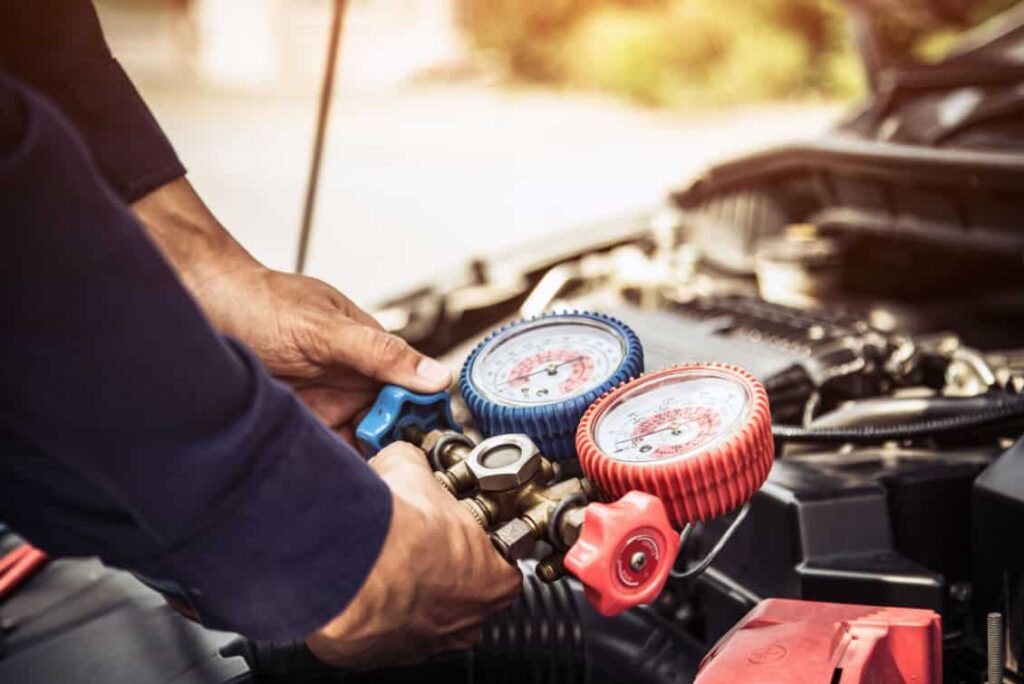
What Does an AC Recharge Do in a Hyundai Elantra?
The air conditioning system inside a Hyundai Elantra depends on refrigerant to remove heat from the cabin and deliver cold air through the vents. Without the correct refrigerant level, the entire system struggles to maintain comfortable temperatures. An AC recharge restores lost refrigerant and helps the cooling system operate efficiently again.
Most Hyundai Elantra air conditioning systems work through a continuous cycle involving the compressor, condenser, expansion valve, and evaporator. The refrigerant absorbs heat from inside the cabin and releases it outside the vehicle. When refrigerant levels become too low, the cooling cycle loses pressure and the air coming from the vents gradually becomes warmer.
Low refrigerant does more than reduce cooling performance. It can also place additional stress on the AC compressor. The compressor relies on refrigerant for both pressure balance and lubrication. If the system continues operating with insufficient refrigerant, internal compressor components may overheat or wear out faster. This is one reason why many drivers notice expensive AC repairs after ignoring weak cooling symptoms for too long.
A Hyundai Elantra AC recharge is designed to refill refrigerant to the proper manufacturer level. During the process, technicians or DIY users connect refrigerant cans to the low pressure service port and monitor system pressure carefully. Once the correct pressure range is restored, the AC system can usually produce colder air again.
However, it is important to understand that an AC recharge is not always a complete repair solution. If the system has refrigerant leaks, damaged hoses, faulty sensors, or compressor failure, the cooling issue may return quickly after recharging. In some cases, the AC may stop blowing cold air again within days or weeks. This is why diagnosing the root cause of refrigerant loss is essential for long term reliability.
Many Hyundai Elantra owners choose a recharge because it is cheaper than replacing major AC components. While this approach can work well for minor refrigerant loss over time, persistent leaks should never be ignored. Proper maintenance and early diagnosis can prevent larger repair bills and help your Hyundai Elantra maintain strong cooling performance for years.
Signs Your Hyundai Elantra Needs an AC Recharge
One of the earliest signs of low refrigerant in a Hyundai Elantra is weak cooling performance. At first, the difference may seem minor. The air still feels cool during short drives or mild weather, but the cabin takes much longer to reach a comfortable temperature. Over time, the problem becomes more noticeable, especially during hot afternoons or heavy traffic conditions.
Warm air coming from the vents is the most common symptom drivers experience before searching for a Hyundai Elantra AC recharge. In many situations, the AC system may start cold for a few minutes and then gradually blow warmer air as refrigerant pressure drops. This issue often becomes worse while idling because the system struggles to maintain stable cooling without sufficient refrigerant circulation.
Some Hyundai Elantra owners also notice weaker airflow from the vents. While low airflow can result from a dirty cabin air filter or blower motor problem, refrigerant imbalance may also reduce overall cooling efficiency. Drivers sometimes increase the fan speed to maximum but still feel uncomfortable inside the vehicle. This creates frustration during long commutes or family trips in hot weather.
Strange noises from the AC compressor can also indicate refrigerant problems. Clicking sounds, rapid cycling, or unusual buzzing may occur when the compressor struggles to maintain pressure inside the system. Low refrigerant forces the compressor to work harder, which may eventually lead to overheating or internal damage. Ignoring these warning signs can transform a simple recharge into a costly compressor replacement.
Another important symptom is inconsistent cooling performance. Some Hyundai Elantra vehicles cool properly while driving at highway speeds but lose cooling efficiency during stop and go traffic. This behavior often points to low refrigerant pressure or condenser airflow issues. Drivers may assume the AC system still works normally because cooling improves temporarily at higher speeds.
Visible refrigerant leaks are another major warning sign. Refrigerant itself usually evaporates quickly, but oily residue around AC hoses, fittings, or compressor components may indicate leakage. Some repair shops use UV dye inside the system to identify leak locations more easily. Small leaks can slowly reduce refrigerant levels over several months before cooling performance drops significantly.
Humidity inside the cabin can also increase when refrigerant levels become too low. Windows may fog more frequently, and the interior may feel sticky even with the AC running. Many drivers mistake this for normal summer conditions without realizing the air conditioning system is losing efficiency.
Recognizing these symptoms early can help prevent larger repair costs. A simple Hyundai Elantra AC recharge may restore proper cooling if refrigerant loss is minor. However, continuing to drive with low refrigerant can increase compressor wear and shorten the lifespan of important AC components.
Hyundai Elantra Refrigerant Type by Model Year
Before performing a Hyundai Elantra AC recharge, it is critical to identify the correct refrigerant type for your specific model year. Using the wrong refrigerant can damage the air conditioning system, reduce cooling efficiency, and create expensive repair problems. Many drivers assume all Hyundai Elantra models use the same refrigerant, but refrigerant specifications have changed over the years due to environmental regulations and evolving automotive technology.
Older Hyundai Elantra models commonly use R134a refrigerant. This refrigerant became widely used in the automotive industry because it provided reliable cooling performance while replacing older ozone damaging chemicals. Many Hyundai Elantra vehicles produced before the transition to newer refrigerants still rely on R134a systems. Recharge kits for these models are usually more affordable and easier to find in auto parts stores.
Newer Hyundai Elantra generations often use R1234yf refrigerant instead. This refrigerant was introduced to reduce environmental impact and lower greenhouse gas emissions. While R1234yf performs similarly to R134a in cooling applications, it requires different service equipment and usually costs more during recharge or repair procedures. Many drivers are surprised by the higher recharge cost associated with modern AC systems using R1234yf.
The easiest way to confirm refrigerant type is by checking the information label under the hood. Hyundai typically places a sticker near the radiator support or AC system components listing refrigerant specifications and capacity. The owner’s manual also provides this information. Some repair shops may use the vehicle identification number to verify the correct refrigerant type before servicing the system.
Refrigerant capacity is equally important during a Hyundai Elantra AC recharge. Adding too little refrigerant may fail to restore cooling performance, while overcharging the system can increase pressure and damage the compressor. Each Hyundai Elantra model year has a specific refrigerant capacity measured in ounces or grams. Following manufacturer specifications helps maintain proper cooling efficiency and protects sensitive AC components.
Many DIY recharge problems occur because drivers purchase the wrong refrigerant can or fail to verify compatibility before adding refrigerant. Mixing refrigerant types can contaminate the system and increase repair costs significantly. Some AC service machines cannot recover mixed refrigerants safely, forcing shops to perform additional cleaning procedures before repairs can continue.
Understanding refrigerant type and capacity is one of the most important steps before attempting any AC maintenance. Correct refrigerant selection helps improve cooling performance, maintain system pressure, and extend compressor lifespan. It also prevents unnecessary damage that could turn a simple recharge into a major repair expense.
How Much Does a Hyundai Elantra AC Recharge Cost?
The cost of a Hyundai Elantra AC recharge can vary depending on the model year, refrigerant type, labor charges, and the overall condition of the air conditioning system. Many drivers search for recharge prices after noticing weak cooling performance because they hope the problem can be solved quickly without paying for major repairs. In some situations, an affordable recharge restores cold air immediately. In other cases, hidden leaks or damaged components increase repair expenses significantly.
DIY AC recharge kits are usually the cheapest option for Hyundai Elantra owners who want to restore cooling performance at home. Basic recharge cans with built in pressure gauges often cost between thirty and eighty dollars depending on refrigerant type and brand quality. Older Hyundai Elantra models using R134a refrigerant generally cost less to recharge because the refrigerant is more common and widely available. Newer systems using R1234yf refrigerant tend to cost more due to stricter environmental regulations and higher refrigerant prices.
Although DIY kits appear convenient, they also carry risks. Many vehicle owners accidentally overcharge the system or fail to identify refrigerant leaks before adding more refrigerant. Overfilling the AC system can increase internal pressure and damage the compressor. Some drivers also purchase the wrong refrigerant type, creating contamination problems that require expensive repairs later.
Professional Hyundai Elantra AC recharge services usually cost more but provide better diagnostic accuracy. Most repair shops inspect system pressure, check for leaks, and verify refrigerant levels before recharging the system. Depending on location and vehicle model, professional recharge services commonly range from one hundred to three hundred dollars. Vehicles using R1234yf refrigerant often sit at the higher end of the price range because the refrigerant itself is more expensive.
Additional repairs can increase the final bill quickly. If the AC system has leaking hoses, damaged seals, or a failing compressor, technicians may recommend repairs before adding refrigerant. Ignoring leaks often leads to repeated refrigerant loss and poor long term cooling performance. Some Hyundai Elantra owners recharge the system several times without realizing the refrigerant is escaping through small leaks hidden inside the system.
Compressor replacement is one of the most expensive AC repairs. A damaged compressor can push total repair costs well above one thousand dollars depending on parts and labor. This is why early diagnosis matters. Addressing low refrigerant symptoms quickly may help prevent larger failures that develop from excessive compressor strain.
Climate also affects recharge frequency and cost. Drivers living in extremely hot regions often use air conditioning systems more aggressively throughout the year. Constant AC usage increases wear on seals, hoses, and compressors over time. As a result, refrigerant loss may occur more frequently in hotter environments.
For many Hyundai Elantra owners, a recharge is worth the investment if the system only suffers from normal refrigerant loss over several years. Restoring proper cooling can improve comfort dramatically during summer driving and reduce strain on the AC system. However, if cooling problems return shortly after recharge, a deeper inspection is usually necessary to identify hidden leaks or failing components.
Tools and Supplies Needed for a DIY Hyundai Elantra AC Recharge
Performing a Hyundai Elantra AC recharge at home requires the correct tools and safety equipment. Many drivers assume the process only involves connecting a refrigerant can and filling the system, but proper preparation is essential for both safety and cooling performance. Using incorrect tools or skipping important checks can damage the air conditioning system and increase repair costs later.
The most important item is the refrigerant itself. Before purchasing any recharge kit, you must confirm the correct refrigerant type for your Hyundai Elantra. Older models often use R134a refrigerant, while newer models commonly require R1234yf. Using the wrong refrigerant can contaminate the system and create serious AC problems.
Most DIY recharge kits include a refrigerant can, charging hose, and pressure gauge. The pressure gauge helps monitor system pressure during the recharge process. This is extremely important because overcharging the system may increase compressor strain and reduce cooling efficiency. Some advanced recharge kits also include leak seal additives, but many professionals recommend avoiding these products because they can damage AC service equipment and create future repair complications.
Safety gloves and eye protection are also necessary during a Hyundai Elantra AC recharge. Refrigerant becomes extremely cold when released under pressure and can cause skin burns or eye injuries if handled carelessly. Working in a well ventilated area is equally important because refrigerant vapors should not accumulate in enclosed spaces.
A thermometer is another useful tool during the recharge process. Measuring vent temperature helps determine whether cooling performance improves after refrigerant is added. Many drivers rely only on airflow sensation, but temperature readings provide a more accurate way to evaluate AC performance.
More experienced DIY users sometimes use manifold gauge sets instead of basic recharge hoses. These tools provide detailed pressure readings for both high and low pressure sides of the AC system. While manifold gauges offer better diagnostic capability, they also require more technical knowledge. Incorrect usage can damage the AC system or create unsafe pressure conditions.
Leak detection tools can also help identify refrigerant loss before recharging the system. UV dye kits and electronic leak detectors are commonly used to locate leaks around hoses, fittings, condensers, and compressors. Recharging a leaking system without repairing the source of refrigerant loss often results in temporary cooling improvement followed by recurring AC problems.
Proper preparation makes the recharge process safer and more effective. Many Hyundai Elantra AC problems become worse because drivers rush through the process without verifying refrigerant type, checking system pressure, or inspecting for leaks. Taking the time to use the correct tools and follow safe procedures can improve cooling performance while reducing the risk of expensive AC damage.
Step by Step Hyundai Elantra AC Recharge Process
Before starting a Hyundai Elantra AC recharge, park the vehicle on a flat surface and allow the engine to cool for several minutes. Open the hood and make sure you have the correct refrigerant type, charging hose, pressure gauge, gloves, and eye protection ready. Preparation is important because rushing through the process can lead to incorrect pressure levels or accidental refrigerant release.
Start by locating the low pressure service port. Most Hyundai Elantra models place this port near the AC lines between the compressor and firewall. The low pressure port usually has a black or blue cap marked with an “L.” Never connect a recharge can to the high pressure port because the pressure difference can become dangerous and damage the recharge equipment.
Once the low pressure port is located, start the engine and turn the air conditioning system to maximum cooling. Set the fan speed to the highest setting and allow the AC to run for several minutes. This helps stabilize system pressure before checking refrigerant levels.
Connect the recharge hose and pressure gauge to the low pressure port carefully. Most recharge kits are designed to fit only the correct port size, which helps reduce installation mistakes. After connecting the gauge, read the current pressure level. Low pressure readings often confirm that the Hyundai Elantra AC system needs refrigerant.
Shake the refrigerant can gently before use if the manufacturer recommends it. Attach the can to the charging hose and begin adding refrigerant slowly. During the recharge process, keep the can upright unless the instructions specify a different position. Adding refrigerant too quickly may cause inaccurate pressure readings and increase the risk of overcharging.
While refrigerant enters the system, monitor the pressure gauge closely. Most recharge kits provide a recommended pressure range based on outdoor temperature. Staying within the proper pressure range is critical because excessive pressure can reduce cooling performance and place extra strain on the compressor.
As the refrigerant level increases, check the air temperature coming from the cabin vents. In many cases, the air gradually becomes colder within several minutes. A thermometer can help verify cooling improvement more accurately. Consistent cold airflow usually indicates the recharge is working correctly.
After reaching the recommended pressure level, disconnect the recharge hose carefully and reinstall the service port cap securely. Allow the AC system to continue running for several minutes while monitoring cabin temperature and airflow consistency. If the Hyundai Elantra AC system still struggles to produce cold air, additional problems such as leaks or compressor issues may exist.
Many DIY users make mistakes during the recharge process that create larger AC problems later. Overcharging is one of the most common issues. Excess refrigerant increases internal system pressure and may damage the compressor or reduce cooling efficiency. Using the wrong refrigerant type is another serious mistake that can contaminate the entire system.
Ignoring refrigerant leaks is equally dangerous. If the AC system loses cooling performance again shortly after recharge, refrigerant is likely escaping through a damaged seal, hose, condenser, or compressor connection. Repeatedly adding refrigerant without repairing leaks only increases long term repair costs.
A careful Hyundai Elantra AC recharge can restore cabin comfort and improve cooling performance significantly when done correctly. However, understanding the limits of a recharge is important because some AC failures require professional diagnosis and repair.
Why Your Hyundai Elantra AC Still Does Not Blow Cold Air After Recharge
Many Hyundai Elantra owners expect an AC recharge to solve cooling problems immediately. While refrigerant replacement often restores cold airflow, some vehicles continue blowing warm air even after the recharge process is completed correctly. This situation usually indicates deeper mechanical or electrical problems inside the air conditioning system.
Refrigerant leaks are one of the most common reasons cooling problems return after recharge. Small leaks can develop around hoses, seals, condensers, or compressor connections over time. In some cases, the AC system may cool properly for several days before refrigerant pressure drops again. Drivers often assume the recharge failed when the real issue is refrigerant escaping from damaged components.
A failing AC compressor can also prevent proper cooling. The compressor is responsible for circulating refrigerant throughout the system. If internal compressor components wear out or seize, refrigerant cannot move efficiently even when pressure levels appear normal. Some Hyundai Elantra owners notice clicking noises, weak cooling during idle conditions, or inconsistent airflow before complete compressor failure occurs.
Condenser fan problems may also reduce cooling performance after recharge. The condenser removes heat from the refrigerant as air passes through the front of the vehicle. If the cooling fan stops working correctly, refrigerant temperatures rise and cabin airflow becomes warmer. This issue is especially noticeable during traffic jams or slow driving conditions where natural airflow is limited.
Expansion valve malfunctions can create additional AC performance problems. The expansion valve regulates refrigerant flow inside the system. If the valve becomes blocked or damaged, refrigerant pressure may become unstable and cooling efficiency may decrease. Some vehicles experience freezing evaporator conditions followed by warm airflow because refrigerant flow becomes inconsistent.
Electrical faults are another possible cause of continued cooling failure. Modern Hyundai Elantra air conditioning systems rely on sensors, relays, pressure switches, and control modules to operate properly. A damaged sensor or faulty electrical connection may prevent the compressor from activating even when refrigerant levels are correct.
Cabin air filter restrictions can also reduce perceived cooling performance. A dirty or clogged air filter limits airflow through the vents, making the cabin feel warmer even when the AC system itself is functioning correctly. Many drivers overlook this simple maintenance item while focusing only on refrigerant levels.
Temperature blend door problems inside the dashboard may create similar symptoms. If the blend door becomes stuck, warm air from the heater core may mix with cooled air before it reaches the cabin vents. This issue can make the AC system appear weak even when refrigerant pressure remains normal.
Understanding these possible causes is important because repeated Hyundai Elantra AC recharge attempts will not fix mechanical or electrical failures. In many situations, proper diagnosis saves money by identifying the real source of the cooling problem before unnecessary refrigerant is added again.
How Long Does an AC Recharge Last?
The lifespan of a Hyundai Elantra AC recharge depends on the overall condition of the air conditioning system, driving habits, climate conditions, and whether refrigerant leaks are present. Many drivers expect a recharge to last forever, but refrigerant systems naturally lose small amounts of pressure over time as seals and components age. Understanding how long a recharge should last can help identify whether the AC system is operating normally or developing hidden problems.
In a healthy Hyundai Elantra AC system, refrigerant can last several years without requiring additional service. Some vehicles maintain strong cooling performance for five years or longer before noticeable refrigerant loss occurs. Modern AC systems are designed as sealed systems, which means refrigerant should not disappear rapidly under normal conditions.
However, older Hyundai Elantra models often experience gradual refrigerant leaks as rubber seals, hoses, and compressor connections wear down over time. Extreme heat, constant AC usage, and vibration from daily driving can accelerate seal deterioration. Drivers living in hotter climates may notice cooling performance decline sooner because the AC system works harder throughout the year.
A recharge that only lasts a few weeks or months usually indicates a refrigerant leak somewhere in the system. Small leaks may initially go unnoticed because cooling performance improves temporarily after recharge. Over time, the refrigerant escapes again and warm airflow returns. This pattern often frustrates drivers who repeatedly recharge the system without addressing the root cause.
Driving habits also influence AC system lifespan. Frequent stop and go traffic places additional stress on compressors and cooling fans because airflow through the condenser becomes limited at lower speeds. Long periods of maximum AC usage during summer heat can also increase wear on internal components. Vehicles exposed to dusty or humid environments may experience faster condenser buildup and reduced cooling efficiency as well.
Regular maintenance helps extend AC system performance significantly. Running the air conditioner periodically during colder months keeps seals lubricated and prevents internal components from drying out. Many drivers avoid using the AC during winter, but occasional operation helps maintain system health and reduces the risk of seal shrinkage.
Inspecting the cabin air filter regularly is another simple way to improve cooling performance. Restricted airflow forces the AC system to work harder and may create the impression that refrigerant levels are low even when pressure remains normal. Keeping the condenser clean also helps maintain proper heat exchange efficiency.
Ignoring weak cooling symptoms can shorten compressor lifespan dramatically. The compressor depends on proper refrigerant circulation for lubrication and pressure balance. Operating the system with low refrigerant increases friction and heat inside the compressor, eventually leading to expensive mechanical failure.
A properly functioning Hyundai Elantra AC recharge should provide reliable cooling for an extended period when the system is free from leaks and mechanical issues. If cooling performance drops quickly after recharge, a professional inspection is usually necessary to identify damaged seals, hoses, or failing AC components before larger repair costs develop.
Should You Recharge the AC Yourself or Visit a Mechanic?
Many Hyundai Elantra owners consider performing an AC recharge themselves because DIY recharge kits are widely available and appear simple to use. For drivers looking to save money, the idea of restoring cold air at home can seem very appealing. However, deciding between a DIY recharge and professional service depends on your experience level, the condition of the AC system, and whether hidden problems already exist.
A DIY Hyundai Elantra AC recharge offers several advantages. The biggest benefit is lower cost. Purchasing a recharge kit is usually much cheaper than visiting a repair shop for professional service. Many drivers also appreciate the convenience of completing the recharge at home without scheduling appointments or waiting for repairs.
Basic recharge procedures are relatively straightforward for minor refrigerant loss. If the AC system only needs a small amount of refrigerant and no leaks or mechanical failures are present, a DIY recharge may restore cooling performance quickly. Some vehicle owners successfully improve cabin comfort within minutes using simple recharge kits with built in pressure gauges.
Despite these benefits, DIY AC recharge procedures also involve significant risks. Overcharging the system is one of the most common mistakes. Excess refrigerant increases internal pressure and may reduce cooling performance or damage the compressor. Many inexperienced users rely only on gauge readings without understanding how outdoor temperature affects pressure levels.
Using the wrong refrigerant type creates another major problem. Older Hyundai Elantra models often use R134a refrigerant, while newer models commonly require R1234yf. Mixing refrigerants can contaminate the AC system and increase repair costs dramatically. Some repair shops may even refuse service if contaminated refrigerant is detected.
DIY users may also overlook refrigerant leaks or mechanical issues. Adding refrigerant without repairing leaks often provides only temporary cooling improvement. In some cases, repeated recharges allow compressor damage to worsen over time because the underlying issue remains unresolved.
Professional mechanics offer several important advantages beyond simply adding refrigerant. Most repair shops perform pressure testing, leak inspections, and system diagnostics before completing the recharge process. Technicians can identify failing compressors, damaged condensers, faulty sensors, or electrical problems that may not be obvious during a basic DIY inspection.
Professional AC service becomes especially important when cooling issues persist after recharge. Strange noises, rapid refrigerant loss, inconsistent cooling, or compressor cycling problems often indicate deeper system failures requiring specialized tools and expertise. Attempting to solve these problems without proper diagnosis may increase repair expenses later.
Environmental regulations are another factor to consider. Refrigerant handling laws in some areas require proper recovery procedures to prevent harmful emissions. Professional shops use specialized equipment designed to recover and recycle refrigerant safely during repairs.
Choosing between DIY recharge and professional service ultimately depends on the condition of your Hyundai Elantra AC system. Minor refrigerant loss may be manageable for experienced DIY users, but persistent cooling problems usually require professional diagnosis. Understanding the limitations of a recharge can help prevent unnecessary damage and maintain reliable cabin comfort for years.
Frequently Asked Questions About Hyundai Elantra AC Recharge
How Often Does a Hyundai Elantra Need an AC Recharge?
Most Hyundai Elantra vehicles do not require frequent AC recharges if the air conditioning system remains sealed and free from leaks. In many cases, refrigerant can last several years while maintaining stable cooling performance. However, older vehicles may slowly lose refrigerant as seals and hoses age. Drivers who notice weaker cooling, warm airflow, or longer cabin cooling times should inspect the AC system before summer temperatures become extreme.
Can Low Refrigerant Damage the Compressor?
Yes. Low refrigerant levels can place serious strain on the AC compressor over time. Refrigerant helps maintain proper pressure while also assisting with compressor lubrication. When refrigerant levels drop too low, internal compressor components experience increased friction and heat buildup. Continuing to operate the AC system under these conditions may eventually lead to compressor failure and expensive repair costs.
Can I Drive With Low AC Refrigerant?
Driving with low refrigerant is possible, but it is not recommended for long periods. The AC system may continue producing weak cooling temporarily, but low refrigerant increases compressor workload and reduces overall system efficiency. Extended operation with insufficient refrigerant can accelerate wear on critical AC components and lead to larger mechanical failures later.
How Long Does a DIY AC Recharge Take?
A basic Hyundai Elantra AC recharge usually takes between fifteen and thirty minutes when using a standard DIY recharge kit. The exact time depends on refrigerant level, outdoor temperature, and user experience. Additional inspection time may be necessary if leaks, pressure irregularities, or cooling performance issues are discovered during the process.
What Happens if You Overcharge the AC System?
Overcharging the AC system can create excessive internal pressure and reduce cooling efficiency. In severe cases, excess refrigerant may damage the compressor, hoses, or seals. Many drivers assume adding more refrigerant automatically improves cooling, but incorrect pressure levels often create the opposite effect. Monitoring pressure carefully during a Hyundai Elantra AC recharge is essential for safe operation.
Is R1234yf Better Than R134a?
R1234yf and R134a both provide effective cooling performance, but R1234yf was developed to reduce environmental impact and lower greenhouse gas emissions. Many newer Hyundai Elantra models now use R1234yf because of updated environmental regulations. While R1234yf is considered more environmentally friendly, recharge and repair costs are usually higher compared to older R134a systems.
Conclusion
A Hyundai Elantra AC recharge can restore cold airflow, improve cabin comfort, and help the air conditioning system operate more efficiently during hot weather. Understanding the warning signs of low refrigerant is important because weak cooling performance often develops gradually before becoming a major problem. Warm air from the vents, unusual compressor noises, inconsistent cooling, and visible refrigerant leaks should never be ignored.
Choosing the correct refrigerant type is equally important for protecting the AC system and maintaining proper pressure levels. Older Hyundai Elantra models commonly use R134a refrigerant, while newer generations often require R1234yf. Using the wrong refrigerant or overcharging the system can create expensive repair issues that are easily avoided with proper preparation.
For some drivers, a DIY Hyundai Elantra AC recharge offers a convenient and affordable way to restore cooling performance. However, persistent cooling issues may indicate deeper mechanical or electrical problems that require professional diagnosis. Refrigerant leaks, compressor failures, condenser fan problems, and electrical faults can all prevent the AC system from operating correctly even after recharge.
Regular maintenance plays a major role in extending AC system lifespan. Inspecting refrigerant levels, replacing dirty cabin air filters, and addressing leaks early can help prevent larger repair costs in the future. Drivers who maintain their Hyundai Elantra AC system properly often enjoy stronger cooling performance and improved reliability for many years.
Before purchasing recharge kits or scheduling repairs, always verify the correct refrigerant type and inspect the system carefully for signs of leaks or component damage. Taking action early can help protect the compressor, reduce long term repair expenses, and keep your Hyundai Elantra comfortable in every season.