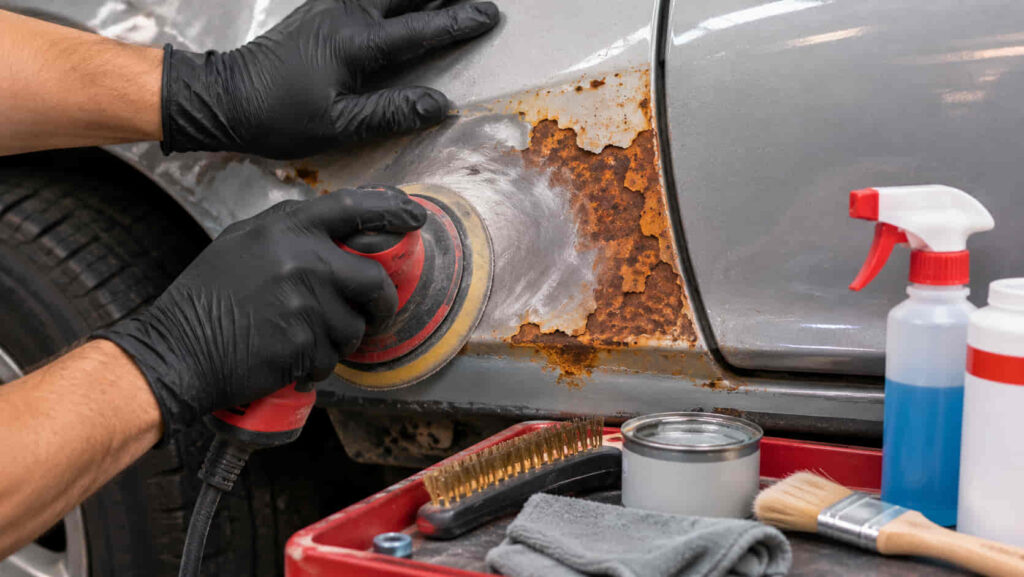
To remove rust from a car, start by identifying how deeply the corrosion has affected the metal, then remove the rust, prepare the exposed surface, and restore its protective coating with compatible automotive primer and paint. Light surface rust can often be repaired with careful sanding and proper refinishing, while severe corrosion that has weakened or penetrated the metal may require professional body repair or panel replacement.
Rust develops when exposed steel reacts with oxygen and moisture, a process accelerated by road salt, damaged paint, and trapped water. Once the protective paint layer breaks down, corrosion can spread beneath the surrounding finish and gradually damage the underlying metal. Removing visible rust without addressing the exposed surface or the conditions that caused it allows corrosion to return.
The correct repair method depends on whether the vehicle has surface rust, rust beneath bubbling paint, or penetrating corrosion. Each condition requires a different level of surface preparation and repair. This guide explains how to assess rust damage, choose suitable removal methods, prepare and refinish affected areas, and protect the vehicle against future corrosion. It also identifies situations where DIY rust removal is insufficient to restore the strength or safety of damaged automotive components.
How Do You Remove Rust From a Car?
Removing rust from a car requires eliminating corrosion from the affected metal, preparing the surface for refinishing, and restoring a protective coating that prevents moisture from reaching the steel. For light surface rust on a nonstructural body panel, the process generally involves cleaning the area, removing loose paint and corrosion, sanding the damaged surface, and applying compatible automotive primer and paint. The repair must address both the visible rust and the surrounding coating damage because corrosion can extend beyond the orange or brown discoloration initially visible on the vehicle.
The first consideration is whether the metal remains structurally sound. Surface rust develops on exposed steel without necessarily causing significant material loss, making it suitable for localized repair when the affected area is accessible. Mechanical removal methods, including hand sanding and controlled wire brushing, can expose the underlying metal and reveal the true extent of the corrosion. However, aggressive abrasion can damage surrounding paint or remove additional metal, so the removal method must match the condition and thickness of the affected panel. A rusted fender with intact steel requires a different approach from a rocker panel that has developed holes or weakened mounting areas.
Once the corrosion has been removed or appropriately treated, the exposed surface must be cleaned and refinished using a compatible coating system. Automotive primer provides a prepared foundation for subsequent coatings, while the specified paint system restores the exterior finish and helps protect the metal from environmental exposure. Product instructions determine the required surface condition, application method, and curing intervals. Leaving bare steel exposed after sanding allows moisture and oxygen to initiate corrosion again, even if the surface initially appears clean.
A successful rust repair removes or controls the existing corrosion and restores the barrier that protects the metal from future exposure. If the affected area contains deep pitting, perforation, or damage to a load-bearing component, sanding and repainting alone are not adequate repairs. Those conditions require further assessment to determine whether the damaged metal must be repaired or replaced before protective coatings are applied.
How Can You Tell What Type of Rust Is on Your Car?
Car rust can be classified into three practical categories: surface rust, scale rust, and penetrating rust. The distinction depends on how far corrosion has progressed into the steel and whether the metal has lost thickness or structural integrity. Identifying the severity of corrosion before beginning a repair helps prevent a cosmetic treatment from concealing damage that requires more extensive work. Visible color alone is not a reliable measure of severity because paint and accumulated corrosion products can hide the condition of the underlying metal.
Surface rust is the earliest category and generally appears as orange-brown discoloration on exposed steel. It commonly develops where paint has been chipped or scratched, allowing moisture to contact the metal. When the underlying steel remains solid and has not experienced meaningful material loss, the affected area can often be restored through localized corrosion removal and refinishing. For example, a small rust spot around a paint chip on a steel fender may be suitable for a DIY repair after the surrounding surface has been inspected for hidden corrosion.
Scale rust indicates more advanced deterioration. As corrosion progresses, the metal surface can become rough, flaky, or visibly pitted, and the surrounding paint may crack or bubble. These changes occur because corrosion products occupy more volume than the original steel and can disrupt the protective coating. Removing loose rust may reveal a larger damaged area than the visible spot suggested. A wheel arch with bubbling paint, for instance, may have corrosion extending beneath the finish or along the inner edge of the panel. The remaining metal thickness and accessibility of the affected area determine whether a localized repair is appropriate.
Penetrating rust occurs when corrosion has consumed enough metal to create holes or substantial weakening. At this stage, removing rust cannot restore the steel that has already been lost. Perforation in a nonstructural exterior panel may require a properly executed metal repair or panel replacement, while corrosion affecting a frame, suspension attachment, or other load-bearing area requires professional evaluation. The critical difference is that surface corrosion primarily requires cleaning and protection, whereas penetrating corrosion requires an assessment of the remaining metal and its ability to perform its intended function.
Read more: chevy 350 engine weight
What Tools and Safety Equipment Do You Need to Remove Car Rust?
Removing rust from a car requires suitable abrasive tools, surface-cleaning materials, protective equipment, and automotive refinishing products matched to the affected metal. For a small area of surface rust on a steel body panel, common tools include automotive sandpaper, a sanding block, a wire brush, masking materials, and a compatible cleaning product. Automotive primer and paint are also necessary when the repair exposes bare metal because rust removal alone does not restore the original corrosion barrier. The exact materials depend on the severity of the rust, the location of the damage, and the coating system used to complete the repair.
Sandpaper and wire brushes serve different purposes during corrosion removal. Abrasives help remove damaged paint, corrosion products, and surface irregularities, while a wire brush can dislodge loose rust from accessible metal. A sanding block provides more controlled pressure on relatively flat body panels, reducing the risk of creating uneven areas. The appropriate abrasive grade depends on the condition of the surface and the refinishing product manufacturer’s requirements. For example, a lightly rusted steel fender may require controlled hand sanding, whereas a deeply pitted panel needs further inspection before additional material is removed. Aggressive grinding is not a substitute for evaluating metal thickness.
Eye protection, suitable gloves, respiratory protection, and effective dust control are essential when working on rusted automotive surfaces. Sanding can release metal particles, paint dust, and potentially hazardous material from older coatings. The required respiratory protection depends on the contaminants and the work being performed; a simple disposable dust mask is not adequate for every automotive refinishing task. Chemical rust treatments also require precautions based on their safety data sheets, including appropriate ventilation and protection against skin or eye contact. When paint spraying involves hazardous solvents or isocyanate-containing products, specialized controls and professional equipment may be necessary.
The repair area should also be equipped for safe handling of dust, chemicals, and nearby vehicle components. Masking materials protect adjacent paint, glass, and trim from accidental abrasion or chemical contact. Cleaning cloths and manufacturer-approved surface cleaners help remove contamination before coating application. For example, repairing a rust spot near a wheel arch requires protecting the surrounding painted surface and avoiding damage to nearby wiring or other components. Selecting the correct tools and protective measures improves repair quality while reducing the risk of injury and unintended vehicle damage.
How Do You Prepare a Rusted Car Surface for Repair?
Preparing a rusted car surface begins with cleaning the affected area, inspecting the surrounding paint and metal, and isolating the repair zone from components that could be damaged during treatment. Proper preparation makes the corrosion easier to assess and helps ensure that subsequent rust removal and refinishing materials contact a suitable surface. Dirt, grease, road salt, and moisture can interfere with both inspection and coating adhesion. A repair performed over contaminated metal may fail even when the visible rust has been removed.
The first consideration is surface cleanliness. Washing away road grime and accumulated contaminants reveals paint chips, corrosion staining, and damaged coating edges that may otherwise be difficult to distinguish. The area must then be allowed to dry before further preparation. Where appropriate, a surface cleaner compatible with the existing finish can remove remaining grease or residue. For example, a rust spot along the lower edge of a car door may be surrounded by road film and trapped moisture. Cleaning the area helps reveal whether the corrosion is limited to a visible paint chip or extends along the panel seam.
Inspection should extend beyond the most obvious rust discoloration. Bubbling paint, lifting coating edges, and rough or flaky metal can indicate corrosion beneath the surrounding finish. The condition of the panel’s reverse side also matters when it is safely accessible, particularly around seams and folded metal edges where moisture can remain trapped. If inspection reveals perforation or weakened structural material, the repair plan must be reassessed before sanding or applying coatings. Covering these conditions with primer or body filler would conceal the damage rather than restore the metal.
The final preparation requirement is to establish a clean, accessible repair area without unnecessarily damaging intact paint or adjacent components. Masking the surrounding finish helps define the working area, while removing or protecting nearby trim reduces the chance of accidental damage. The precise preparation method should follow the instructions for the selected rust treatment and coating products because some chemical treatments require specific surface conditions. For instance, a rust converter may have different cleaning and application requirements from a repair that involves removing corrosion to bare steel. Completing these preparations creates a controlled starting point for rust removal and improves the reliability of the finished repair.
How Do You Remove Surface Rust From a Car?
To remove surface rust from a car, clean the affected area, sand away the corrosion until sound metal is exposed, inspect the remaining steel, and restore the protective coating with compatible automotive primer and paint. This method is appropriate for localized rust on nonstructural steel panels when corrosion has not caused significant metal loss. The objective is to remove the rust while preserving as much undamaged metal and surrounding paint as possible. Simply covering the orange discoloration with paint does not stop corrosion if rust or contamination remains beneath the new coating.
After the repair area has been cleaned and dried, controlled sanding can remove loose corrosion and damaged paint. Hand sanding with an appropriate abrasive and sanding block provides greater control over small areas than aggressive grinding. The work should extend far enough to expose the full boundary of the affected coating, but unnecessary removal of intact paint should be avoided. For example, a small rust spot around a stone chip on a steel hood may require sanding the corroded area and feathering the surrounding paint edges so the repaired surface can be refinished smoothly. Abrasive selection and final surface texture should follow the requirements of the intended primer system.
The condition of the exposed steel determines whether the area is ready for refinishing. Sound metal should be free of loose corrosion, unstable coating, and contaminants that could interfere with adhesion. If sanding reveals deep pits, thinning metal, or holes, the damage is no longer a straightforward surface-rust repair. Additional abrasion cannot restore lost metal thickness and may worsen an already weakened panel. A shallow stain on otherwise intact steel presents a different repair condition from a rough, deeply pitted surface that continues to shed corrosion products.
Once the metal has been adequately prepared, the repair must be protected promptly to limit renewed exposure to moisture. A compatible corrosion-resistant automotive primer provides the foundation for the specified paint system, which restores the exterior barrier. The required cleaning procedure, primer application, and coating intervals depend on the products being used. Bare steel should not be left exposed while waiting for refinishing because moisture can initiate new oxidation. When the surrounding finish is blended correctly and the coating system is applied according to its instructions, the repair can restore both appearance and corrosion protection.
How Do You Treat Rust Under Bubbling Car Paint?
Treating rust beneath bubbling car paint requires removing the loose or lifted coating, exposing the affected metal, and determining whether the corrosion can be repaired without replacing the panel. Paint bubbles associated with rust indicate that the protective coating has lost adhesion or that corrosion products have expanded beneath it. Because the visible bubble may cover only part of the affected area, applying new paint directly over the damaged finish will not address the underlying corrosion. The repair must begin by establishing the actual extent of the damage.
Rust can spread beneath paint when moisture reaches steel through chips, scratches, seams, or defects in the coating. As corrosion develops, its products occupy more volume than the original metal and can lift the surrounding finish. This process explains why a small paint blister may conceal a larger patch of damaged steel. For example, bubbling along the lower edge of a car door may indicate moisture trapped inside the door or corrosion developing around a folded metal seam. Repairing only the visible exterior bubble may leave the source of the corrosion untouched.
The affected coating must be removed far enough to identify stable paint boundaries and assess the underlying steel. Loose rust and damaged paint can then be removed using a method appropriate for the panel’s condition. If the metal remains sound, the area may be suitable for localized surface preparation and refinishing. However, extensive pitting, perforation, or corrosion extending through a seam changes the repair requirements. Where corrosion originates from the reverse side of a panel, treating the visible surface alone may not provide lasting protection because the inaccessible corrosion can continue to develop.
A durable repair depends on addressing both the rust beneath the paint and the conditions that allowed moisture to reach the metal. After the affected steel has been repaired or appropriately treated, the surface must receive a compatible primer and paint system. Seams, drainage openings, and accessible reverse surfaces may also require attention when they contribute to moisture retention. For example, a door panel with blocked drainage openings can accumulate water even after its exterior paint has been restored. If the metal has become perforated or structurally weakened, refinishing is not a substitute for proper metal repair or replacement.
Should You Use Rust Remover or Rust Converter on a Car?
Use a rust remover when the goal is to eliminate corrosion from the metal, and consider a rust converter only when its intended application, surface requirements, and coating compatibility match the repair. These products perform different functions and are not interchangeable. Rust removers are designed to dissolve or loosen corrosion products so they can be removed from the surface, while rust converters chemically react with certain iron oxides to form a more stable treated layer. The correct choice depends on the condition of the steel, the accessibility of the affected area, and the refinishing system that will be applied afterward.
Chemical rust removers are useful when corrosion remains in surface irregularities that are difficult to address through mechanical abrasion alone. Depending on the formulation, a remover may contain acids, chelating agents, or other ingredients that act on iron oxide. Some products require rinsing, neutralization, or additional surface preparation before primer application, while others have different handling requirements. For example, a removable steel bracket with light corrosion may be suitable for treatment with a compatible rust-removal product. However, applying the same chemical to an assembled body panel without considering drainage, surrounding paint, or trapped residue can create additional problems. Product instructions determine where and how the treatment should be used.
Rust converters work differently because they are intended to react with remaining corrosion rather than remove it completely. Many formulations use tannic acid, phosphoric acid, or related chemical systems, although their reaction products and application requirements vary. These treatments generally require the removal of loose, flaky rust before application and may be unsuitable for clean bare metal or surfaces that do not meet the manufacturer’s specifications. A converter also cannot restore metal thickness or structural strength. For example, applying rust converter to a heavily corroded rocker panel does not repair perforation or make weakened steel safe.
The compatibility between the rust treatment and the subsequent primer or paint system is essential for a durable repair. A product that leaves a reactive residue or requires a specific curing period can interfere with coating adhesion if the next material is applied incorrectly. Some rust converters specify compatible topcoats, while others require an additional primer or preparation step. When corrosion can be removed completely from an accessible, sound steel panel, preparing the metal for an approved automotive coating system is generally a straightforward approach. When chemical treatment is necessary, the selected product should be used only within its stated limitations, with appropriate ventilation, protective equipment, and disposal procedures.
How Do You Prime and Paint Metal After Rust Removal?
To prime and paint metal after rust removal, prepare the repaired steel to the coating manufacturer’s specifications, apply a compatible corrosion-resistant primer, and complete the finish with the appropriate automotive paint system. The purpose is to restore the protective barrier that separates steel from moisture, oxygen, and environmental contaminants. Removing corrosion without applying a suitable coating leaves the metal vulnerable to renewed oxidation. A lasting repair therefore depends on both the condition of the prepared surface and the compatibility of the materials applied over it.
Surface preparation determines how effectively primer bonds to the repaired area. The metal must be free of loose rust, dust, grease, and residues that could interfere with adhesion. Abrasive texture and cleaning requirements vary between products, so the surface should be prepared according to the selected primer’s technical instructions rather than an assumed universal sanding grade. For example, a small repair on a steel fender may require the surrounding intact paint to be feathered into the exposed repair area, creating a gradual transition between the original finish and the prepared metal. This helps the refinishing system cover the repaired area without an abrupt coating edge.
The primer must also be appropriate for the substrate and the intended topcoat. Automotive epoxy primers are commonly used in corrosion-resistant refinishing systems, but their suitability depends on the specific formulation and the condition of the metal. Other primer types may serve different purposes, including surface leveling or preparation for subsequent paint layers. A primer-surfacer, for example, should not automatically be treated as a substitute for a corrosion-protective primer on bare steel. If body filler or additional surface correction is necessary, the application sequence must follow the approved product system because not every filler, primer, and coating combination is compatible.
The final paint system restores the vehicle’s appearance while protecting the repaired surface from environmental exposure. Modern automotive refinishing commonly uses a color basecoat followed by a compatible clear coat, although other coating systems are also used. The required film thickness, application conditions, drying intervals, and curing procedures depend on the products involved. For example, applying a clear coat outside the specified recoat window may compromise adhesion even when the color appears correct. Paint spraying can also introduce hazardous airborne chemicals, including isocyanates in certain products, requiring controls and respiratory protection appropriate to the materials. A professional refinishing facility is the safer choice when the necessary spray equipment and exposure controls are unavailable.
The repair is not complete until the protective coating has cured as specified and the surrounding area has been checked for exposed metal, coating defects, and potential moisture-entry points. Rust can return where damaged seams, chipped paint, or inaccessible corrosion remain untreated. On a repaired door edge, for instance, restoring the exterior paint without addressing corrosion inside the folded seam may allow deterioration to continue beneath the new finish. Proper refinishing therefore combines surface preparation, compatible protective coatings, and attention to the conditions that originally allowed corrosion to develop.
Can You Repair Rust Holes in a Car?
Rust holes in a car can be repaired when the damaged metal is accessible and a suitable repair method can restore the panel’s intended function, but perforated or structurally weakened steel cannot be repaired by sanding, rust converter, or body filler alone. A rust hole forms when corrosion consumes enough metal to penetrate the panel, leaving an opening where sound steel previously existed. Unlike surface rust, penetrating corrosion involves permanent material loss. The correct repair therefore depends on the affected component, the extent of deterioration, and whether the metal contributes to vehicle strength or occupant protection.
For a nonstructural exterior body panel, a lasting repair generally requires removing the severely corroded material and restoring the damaged section with suitable replacement metal or a replacement panel. The surrounding steel must be assessed because corrosion frequently extends beyond the visible opening. For example, a small hole near the lower edge of a steel fender may be surrounded by thin, pitted metal that cannot reliably support a localized repair. Simply covering the opening conceals the damage without addressing the weakened material around it. The repair must establish a sound foundation before the surface can be prepared and refinished.
Body filler has a different purpose from metal replacement. Automotive body filler is intended for appropriate surface correction within the limits specified by its manufacturer, not for restoring the structural strength of missing steel. Applying filler directly over a rust hole does not replace the lost metal or stop corrosion from progressing behind the repair. Likewise, rust converter may treat certain remaining corrosion products, but it cannot rebuild the thickness of a perforated panel. These distinctions matter because a cosmetically smooth repair can still conceal ongoing deterioration beneath the finish.
Rust holes affecting structural components require professional assessment before the vehicle is repaired or returned to service. Rocker structures, frame sections, suspension attachment points, and other load-bearing areas may contribute to crash protection or vehicle stability. Their repair can require vehicle-specific procedures, approved materials, and specialized equipment. For example, perforation near a suspension mounting point is not equivalent to a hole in a replaceable outer fender. Once damaged metal has been properly repaired or replaced, the exposed surfaces, seams, and accessible internal cavities must receive appropriate corrosion protection to reduce the risk of future deterioration.
How Do You Remove Rust From Wheel Arches and Rocker Panels?
Removing rust from wheel arches and rocker panels begins with inspecting both the visible surface and the accessible inner areas, then choosing a repair method based on the remaining metal’s condition. These locations are particularly vulnerable because they are exposed to water, road debris, and, in colder regions, deicing salt. Moisture can accumulate along folded edges, seams, and enclosed sections, allowing corrosion to develop where it is difficult to see. A successful repair must therefore address the actual source and extent of corrosion rather than treating only the most visible rust stain.
Wheel arches frequently develop corrosion where road debris damages protective coatings along the panel edge. Once bare steel becomes exposed, moisture and salt can accelerate oxidation, especially around seams between the outer body panel and the inner wheel housing. If the corrosion is limited to sound, accessible metal, the affected area can be cleaned, treated, and refinished using a compatible automotive coating system. However, bubbling paint along the wheel arch may indicate that rust has spread beneath the finish or originated from the inner lip. For example, sanding the outside of a rusted rear wheel arch will not eliminate corrosion trapped between overlapping metal sections.
Rocker panels require particular attention because their construction and function vary by vehicle. On many unibody cars, the rocker assembly contributes to body stiffness and side-impact protection. The visible outer rocker panel may cover internal reinforcement and enclosed cavities that are difficult to inspect without specialized access. Surface rust on an intact exterior section may be suitable for localized treatment, but perforation, severe scaling, or deterioration near structural connections requires professional evaluation. A rocker panel that appears solid after cosmetic refinishing may still contain corrosion within its internal structure.
Long-term protection depends on restoring damaged coatings and controlling moisture inside the affected areas. After appropriate rust removal or metal repair, the exposed surfaces should receive compatible primer, paint, seam protection, and cavity corrosion protection where specified by the vehicle manufacturer. Drainage openings must remain functional because trapped water can accelerate corrosion from inside the panel. For example, a repaired rocker panel may develop rust again if internal moisture remains trapped behind the exterior finish. Protecting both accessible surfaces and relevant internal areas is therefore more effective than applying a new coating only to the visible rust spot.
How Should You Handle Rust on a Car’s Undercarriage?
Rust on a car’s undercarriage should be handled by identifying the affected components, assessing the depth of corrosion, and applying an appropriate repair or protective treatment based on the condition of the metal. Light surface rust on sound, noncritical steel components may be suitable for cleaning and corrosion protection, while severe rust affecting the frame, suspension mounts, brake lines, or other safety-related parts requires professional inspection. The undercarriage contains components with different structural and mechanical functions, so a single rust-removal method is not appropriate for every affected area.
Undercarriage corrosion develops when exposed metal remains in contact with moisture, road salt, mud, and other contaminants. Protective coatings can deteriorate through abrasion from road debris, allowing water and oxygen to reach the underlying steel. Corrosion can also progress inside enclosed frame sections or along overlapping metal joints where moisture becomes trapped. For example, a vehicle driven regularly on salted winter roads may develop visible rust on suspension components and hidden corrosion around mounting points. The appearance of the outer surface does not necessarily reveal how much metal remains beneath accumulated rust.
Before treating undercarriage rust, the affected area must be inspected under safe working conditions. A vehicle should be supported using manufacturer-approved lifting and support points, and no one should work beneath a vehicle supported only by a hydraulic jack. Loose corrosion on an accessible, nonstructural surface may be removed using suitable mechanical methods, followed by cleaning and a compatible protective coating. However, aggressive grinding or wire brushing around brake lines, fuel lines, wiring, and rubber components can cause damage. Rusted brake lines and weakened suspension attachments require appropriate component repair or replacement rather than cosmetic treatment.
Undercoating should be applied only when the underlying surface is suitable for the selected product and significant corrosion damage has been addressed. Covering loose rust, trapped moisture, or deteriorated metal can conceal ongoing corrosion and make later inspections more difficult. Some protective coatings require clean, dry surfaces, while others specify different preparation conditions. For example, applying a thick coating over a heavily rusted frame section does not restore its original load-bearing capacity. Where structural integrity is uncertain, a qualified technician should inspect the affected area before corrosion treatment or refinishing proceeds.
Long-term undercarriage protection also depends on controlling the conditions that promote corrosion. Removing accumulated road salt and mud, maintaining drainage paths, and inspecting damaged protective coatings can reduce prolonged exposure to corrosive contaminants. Enclosed cavities may require specialized corrosion-protection products when specified by the vehicle manufacturer. These measures are most effective when applied to sound or properly repaired metal, not as substitutes for repairing components that have already lost structural strength.
When Does Car Rust Need Professional Repair?
Car rust needs professional repair when corrosion has weakened structural metal, created significant perforation, affected safety-critical components, or extended beyond the scope of a reliable surface repair. Surface rust on an intact exterior panel may be manageable through careful cleaning, rust removal, and refinishing. However, corrosion that reduces metal thickness or damages a load-bearing connection requires a different level of assessment. The main consideration is not the visible size of the rust spot but whether the affected component can still perform its intended function safely.
Structural corrosion is particularly concerning because automotive body and chassis components distribute forces during driving and collisions. In unibody vehicles, rocker structures, floor reinforcements, suspension mounting areas, and other integrated sections contribute to overall body strength. In body-on-frame vehicles, corrosion of frame rails and crossmembers can compromise the structure supporting the body and drivetrain. For example, a small perforation near a suspension mounting bracket may be more serious than a larger rust spot on a replaceable exterior fender. A professional inspection is necessary when corrosion affects these load-bearing areas or when the remaining metal thickness cannot be established reliably.
Rust involving brake lines, fuel system components, steering connections, and suspension hardware also requires specialized attention. Corrosion can weaken metal tubing, fasteners, and attachment points even when the surrounding body panels appear relatively unaffected. A heavily corroded brake line, for instance, may fail under hydraulic pressure and should not be treated as a cosmetic rust problem. If corrosion suggests that a safety-critical component is weakened, the vehicle should not be driven until a qualified technician has assessed whether it is safe to operate.
Professional body repair may also be necessary when rust has spread through overlapping panels, enclosed cavities, or welded seams. These areas can contain hidden corrosion that remains inaccessible during ordinary sanding and refinishing. Repairing them may require removal of damaged metal, replacement sections, specialized joining methods, and restoration of factory-specified corrosion protection. Modern vehicles can also contain high-strength steels and other materials that require manufacturer-approved repair procedures. An unsuitable cutting, heating, or welding method can compromise the properties of these components.
The purpose of professional rust repair is to restore the affected component’s required function, not merely improve its appearance. A qualified repair facility can determine whether the damage is repairable, whether replacement is necessary, and which vehicle-specific procedures apply. For example, a rusted outer door skin may require cosmetic panel repair, while extensive corrosion around a seat-belt anchorage demands a safety-focused structural assessment. Recognizing this distinction helps vehicle owners avoid spending money on surface treatments that conceal deterioration without correcting the underlying problem.
How Much Does It Cost to Remove Rust From a Car?
The cost to remove rust from a car depends on the severity of corrosion, the size and location of the affected area, and whether the repair requires surface refinishing or replacement of damaged metal. Small surface-rust repairs generally cost less than extensive bodywork because they require fewer materials and less labor. However, the visible size of a rust spot does not always reflect the full extent of the damage. Corrosion beneath paint, inside panel seams, or behind exterior body panels can increase the amount of work required once the affected area is inspected.
For minor surface rust on an accessible, nonstructural panel, the main expenses involve abrasive materials, cleaning products, compatible primer, paint, and any necessary protective equipment. A DIY repair may reduce labor expenses when the owner has suitable tools and can perform the work safely. Nevertheless, the total cost depends on whether existing equipment can be reused and whether professional refinishing is needed to achieve an acceptable finish. For example, repairing a small rust spot on a steel fender may involve limited surface preparation and localized paintwork, while restoring a larger section of the same panel can require additional preparation and color blending.
Professional rust repair becomes more expensive when corrosion has damaged the underlying metal. Removing perforated sections, fabricating replacement pieces, repairing welded seams, and restoring corrosion protection require more labor than sanding and repainting intact steel. The location of the damage also affects repair complexity. A rusted outer body panel may be replaceable as a separate component, whereas corrosion inside a rocker structure or around a suspension mounting point can require specialized inspection and vehicle-specific repair procedures. Labor rates, replacement-part availability, and paint-matching requirements further influence the final estimate.
The most reliable way to determine car rust removal cost is to obtain a repair estimate based on the actual condition of the affected metal. A body shop should evaluate whether the corrosion is superficial, extends beneath surrounding coatings, or has compromised the panel itself. When hidden damage is suspected, the initial estimate may change after additional inspection reveals the full repair requirements. Comparing estimates is most useful when each describes the same repair scope, including metal restoration, surface preparation, refinishing, and corrosion protection. A low-cost cosmetic treatment is not equivalent to a repair that restores damaged metal and addresses the conditions responsible for the corrosion.
How Do You Prevent Rust From Returning After Removal?
To prevent rust from returning after removal, protect exposed steel with a compatible coating system, eliminate moisture-trapping conditions, and inspect vulnerable areas before corrosion spreads. Rust develops when iron-containing metal reacts with oxygen and moisture, so long-term prevention depends on maintaining a barrier between the steel and its environment. Removing visible corrosion is only the first part of the process. If the repaired surface remains unprotected or the original source of moisture is not addressed, oxidation can begin again.
A properly applied automotive coating system provides the primary defense for repaired exterior body panels. Corrosion-resistant primer prepares and protects the metal according to its intended application, while compatible paint and clear coat help shield the surface from water and environmental exposure. The durability of this protection depends on correct surface preparation, coating compatibility, and adherence to the manufacturer’s application requirements. For example, a repaired rust spot on a car door may deteriorate again if the surrounding paint contains untreated chips or if corrosion remains beneath an adjacent seam. Protecting the complete affected area is more effective than covering only the original visible stain.
Moisture control is equally important because corrosion can develop from inside body panels and enclosed cavities. Door drainage openings, wheel-arch seams, and rocker-panel cavities can collect water and debris when their drainage or protective systems are compromised. Keeping designed drainage paths clear helps reduce prolonged moisture contact, while appropriate seam sealers and cavity-protection products can protect areas that ordinary exterior paint cannot reach. For example, a rocker panel repaired on the outside may develop new corrosion if trapped moisture continues to affect the internal metal. Any cavity treatment must be compatible with the vehicle’s construction and should not obstruct drainage openings.
Regular cleaning helps limit exposure to contaminants that accelerate corrosion. Road salt is particularly damaging because dissolved salts increase the electrical conductivity of moisture on metal surfaces, supporting electrochemical corrosion. Washing accumulated salt and mud from accessible underbody areas, wheel wells, and lower body panels reduces the time these contaminants remain in contact with protective coatings. Cleaning methods should avoid forcing water into vulnerable electrical components or damaging existing underbody protection. Vehicles operated in regions with salted winter roads benefit from particular attention to these exposed areas.
Routine inspection is the final requirement for preventing small coating defects from becoming extensive rust damage. Paint chips, scratches, loose seam sealer, and damaged underbody coatings should be assessed before the underlying steel deteriorates. For example, repairing a fresh stone chip on a wheel arch is generally less involved than restoring the same area after corrosion has spread beneath the paint. Periodic checks of lower doors, wheel arches, rocker panels, and accessible undercarriage surfaces help identify problems while the metal remains sound. Combining effective protective coatings, moisture management, contaminant removal, and timely maintenance provides the strongest practical defense against recurring automotive rust.