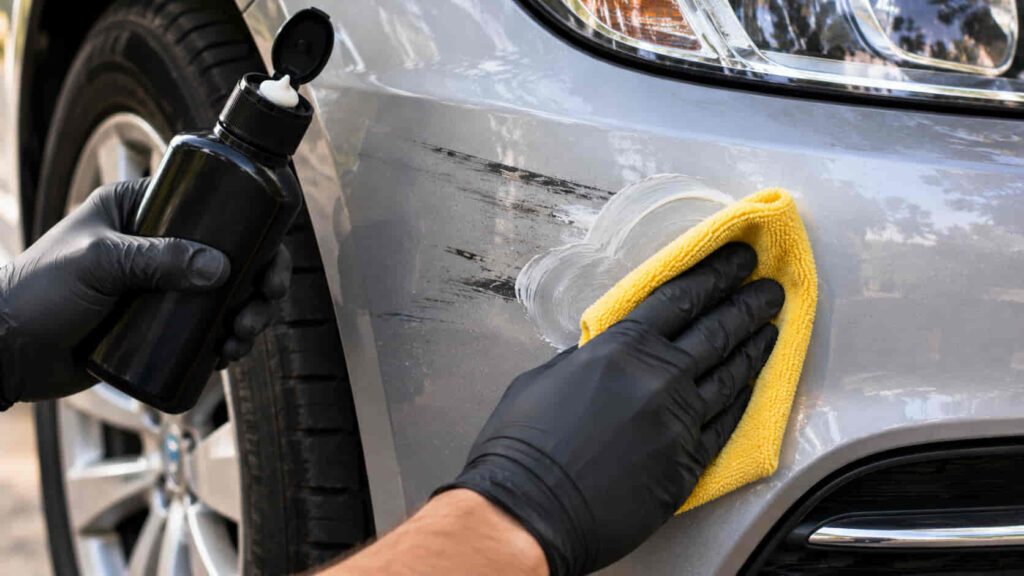
Scuff marks on a car can often be removed without repainting if the damage is limited to surface contamination, transferred material, or minor clear coat abrasion. To remove scuff marks safely, start by washing the affected area, identifying whether the mark is paint transfer or an actual scratch, and using the least aggressive cleaning method that can address the damage. If cleaning does not remove the mark, a suitable automotive polish may improve light clear coat scuffs without requiring professional paint repair.
The correct removal method depends on how deeply the mark affects the vehicle’s finish. Paint transfer occurs when material from another object adheres to the car’s surface, while a scratch involves damage to the vehicle’s own paint layers. Light scuffs may respond to careful cleaning or polishing, but scratches that penetrate the clear coat cannot always be eliminated through these methods. Aggressive rubbing, unsuitable solvents, and excessive polishing can make the damage worse by removing or weakening the protective finish.
This guide explains how to identify different types of car scuff marks, prepare the painted surface, remove light scuffs and paint transfer, and choose between automotive polish and rubbing compound. It also covers scuffs on painted bumpers and plastic trim, when professional repair is necessary, and how to protect the finish after treatment.
How Do You Remove Scuff Marks From a Car?
To remove scuff marks from a car, clean the affected surface, determine whether the mark is transferred material or damaged paint, and use the least aggressive treatment that can remove or reduce the defect. Light surface marks may disappear after washing or careful cleaning, while minor clear coat abrasions may require automotive polish. Scuffs that penetrate the paint layers cannot be completely removed through cleaning or polishing because the original coating has been physically damaged.
The removal process begins with washing the affected panel using automotive car shampoo and clean water. Dirt, sand, and road debris must be removed before rubbing the surface because trapped particles can create additional scratches. After rinsing and drying the area with a clean microfiber towel, inspect the mark under adequate lighting. A contrasting streak left by another vehicle, a painted wall, or a rubber object may indicate material deposited on top of the finish rather than damage extending through the paint.
If the mark remains after washing, the next treatment should match the condition of the surface. A paint-safe cleaner may remove certain transferred contaminants without requiring abrasive polishing. When the defect is a light abrasion within the clear coat, an appropriate automotive polish can improve its appearance by leveling a small amount of the surrounding coating. For example, a faint scuff caused by brushing against a painted object may respond to mild polishing if the underlying color coat remains intact. The product should be tested on a small area first, and the surface should be inspected frequently rather than repeatedly rubbed without checking the result.
Stop attempting to remove the mark when the treatment begins affecting the surrounding finish or when the damage extends below the clear coat. Polishing does not replace missing basecoat, primer, or exposed substrate. Continued abrasion can thin the remaining protective layer without eliminating a deeper scratch. If the affected area shows missing paint, a visible primer layer, or a gouge in the panel, the appropriate solution may involve touch-up paint or professional refinishing. The objective is to remove the defect without creating more damage than the original scuff.
How Can You Tell Whether a Car Scuff Is Paint Transfer or a Scratch?
You can distinguish paint transfer from a scratch by examining whether foreign material is sitting on the car’s finish or whether the vehicle’s own paint surface has been physically damaged. Paint transfer is material deposited during contact with another object, while a scratch is an abrasion or cut in one or more layers of the vehicle’s coating. Both can appear as streaks or lines, but their repair requirements differ because removing deposited material is not the same as restoring missing paint.
Paint transfer commonly appears as a contrasting color on the affected panel. For example, a white car that brushes against a black-painted object may develop a dark streak even when the underlying white finish remains largely intact. The transferred material may have a different texture or reflect light differently from the surrounding paint. After washing, a suitable paint-safe cleaning product may reduce or remove the streak. However, a single contact event can leave both transferred material and scratches, so removing the visible deposit does not guarantee that the original finish is undamaged.
A clear coat scratch affects the transparent protective layer above the vehicle’s color coat. Shallow abrasions may appear as faint lines or cloudy areas that become more visible under direct lighting. Because the color layer remains intact, careful polishing may reduce their visibility. Deeper scratches can extend into the basecoat or primer, producing a noticeable color change or exposing a different underlying material. For example, a scratch that reveals a gray primer beneath a colored exterior panel cannot be corrected by polishing the surrounding clear coat.
The fingernail test can provide a preliminary indication of scratch severity, but it does not precisely determine which paint layer has been damaged. A mark that catches a fingernail may be relatively deep, while a mark that does not catch may still involve coating damage. Surface shape, coating thickness, and the type of transferred material can affect the result. Visual inspection after cleaning is therefore more informative than relying on this test alone.
The most useful distinction is whether the original paint remains present beneath the mark. If the defect consists mainly of foreign material, careful cleaning may restore the original appearance. If the clear coat is lightly abraded, polishing may improve the finish within the limits of the remaining coating thickness. If the basecoat, primer, or substrate is exposed, the repair requires restoring the damaged coating rather than continuing to remove material. Identifying these conditions before treatment helps prevent unnecessary abrasion and protects the vehicle’s finish.
Read more: how to remove rust on a car
What Tools and Products Do You Need to Remove Scuff Marks Safely?
To remove scuff marks from a car safely, you need clean microfiber towels, automotive car shampoo, water, a paint-safe cleaner, and an appropriate automotive polish if the mark cannot be removed through cleaning alone. A soft foam applicator can help distribute products evenly during hand treatment, while rubbing compound should be reserved for defects that justify a more abrasive approach. The correct materials depend on whether the scuff consists of surface contamination, transferred paint, or shallow clear coat damage. Using the least aggressive suitable product reduces unnecessary abrasion and helps preserve the vehicle’s protective finish.
Microfiber towels are essential because their soft fibers can lift dirt and product residue when used correctly. However, a microfiber towel is not automatically safe if it contains trapped grit, hardened residue, or debris from previous cleaning. Separate clean towels should be used for washing, drying, product application, and final residue removal to reduce the chance of transferring abrasive particles back onto the paint. For example, wiping a scuffed door with a towel previously used to clean dirty wheels can introduce fine scratches even if the original scuff was superficial.
Automotive car shampoo and a compatible surface cleaner serve different purposes. Car shampoo removes ordinary road dirt and loose contamination before closer inspection, while a paint-safe cleaner may help release certain deposits that remain after washing. Product compatibility matters because automotive finishes vary in age, condition, and coating type. A cleaner intended for glass, bare metal, or household surfaces should not be assumed suitable for clear-coated paint. Strong solvents and abrasive household products can soften, stain, or damage certain finishes, making the repair more difficult than the original scuff.
Automotive polish and rubbing compound are correction products rather than ordinary cleaning agents. They contain abrasives or use other formulation-specific mechanisms to reduce visible surface defects, and their cutting ability varies between products. A mild finishing polish is generally more appropriate for light clear coat scuffs than a heavy-cut compound because it removes less coating under comparable conditions. Rubbing compound may be considered for more noticeable defects, but it cannot replace missing paint and can reduce clear coat thickness when used aggressively. A product labeled as a scratch remover should therefore be evaluated according to its actual intended use and manufacturer instructions rather than its marketing name.
Additional equipment may be necessary depending on the treatment. A portable inspection light helps reveal fine abrasions and remaining transferred material, while suitable gloves can reduce direct contact with cleaning chemicals. Machine polishers require compatible pads, controlled technique, and an understanding of paint thickness, making them less suitable for inexperienced users working on an unknown finish. For a small scuff on an otherwise intact door panel, careful hand application with a mild product is often a more controlled starting point. The objective is to select tools that match the defect without introducing unnecessary mechanical or chemical stress.
How Should You Prepare Car Paint Before Removing Scuff Marks?
Before removing scuff marks, wash the affected panel, eliminate loose contamination, dry the surface with clean materials, and inspect the remaining defect under adequate lighting. Proper preparation prevents dirt and abrasive particles from being dragged across the paint during cleaning or polishing. It also makes the scuff easier to evaluate because road film, dust, and other deposits can obscure the boundary between transferred material and actual coating damage. Treating an unwashed surface increases the risk of creating new scratches while attempting to remove an existing mark.
Begin by allowing the painted surface to cool and positioning the vehicle away from direct sunlight when practical. Hot panels can cause cleaning products to dry too quickly, potentially leaving residue or reducing the time available for controlled application. Rinse the affected area to remove loose dirt, then wash it using automotive car shampoo and a clean wash mitt or microfiber material intended for painted surfaces. The washing motion should be gentle, with sufficient lubrication to avoid grinding contaminants against the clear coat. For example, a scuff near the lower section of a door may be surrounded by road grit that must be removed before the mark is touched with a polishing applicator.
After washing, rinse away the shampoo and dry the area with a clean, soft microfiber towel. Inspect the mark from different viewing angles and under consistent lighting. This helps distinguish surface deposits from scratches that remain visible within the coating. If bonded contamination is still present, additional decontamination may be appropriate, but the product and method must be compatible with the paint. Abrasive decontamination methods can introduce fine marring, so they should not be used automatically when ordinary washing has already left the surface clean.
A small test area should be used before applying an unfamiliar cleaner or polishing product across the entire scuff. Testing allows you to observe whether the product removes the mark, changes the surrounding gloss, or leaves unwanted residue. The test should be performed on a clean, inconspicuous section of the same finish, following the manufacturer’s instructions. If the product causes discoloration, haze, softening, or another unexpected change, stop the treatment rather than increasing pressure or repeating the application. This precaution is especially important on older vehicles, previously repainted panels, and finishes with unknown maintenance histories.
Surface preparation should also include checking for damaged paint edges, exposed primer, and signs of previous repair. These conditions can change how the finish responds to cleaning chemicals and abrasion. A scuff that crosses a chipped paint edge, for instance, requires more caution than a similar mark on an intact clear-coated panel because polishing cannot restore the missing coating. Once the surface is clean, dry, and assessed, the removal method can be selected according to the actual defect rather than its initial appearance.
How Do You Remove Light Scuff Marks From Car Paint?
To remove light scuff marks from car paint, start with a paint-safe cleaning method and use a mild automotive polish only if the remaining defect is a shallow clear coat abrasion. Light scuffs affect the appearance of the vehicle’s finish without necessarily penetrating the underlying color coat. When the mark consists of removable surface material, cleaning may restore the original appearance. When it involves minor abrasion within the clear coat, careful polishing may reduce its visibility by leveling a small amount of the surrounding transparent coating.
The first treatment should be performed on a clean, dry, and cool painted surface. Apply a small amount of a compatible paint-safe cleaner to a clean microfiber towel or suitable applicator, following the product’s instructions. Work gently over the affected area without excessive pressure, then remove the residue with a separate clean towel. Inspect the result under good lighting before repeating the treatment. For example, a faint dark mark left when a rubber object brushes against a painted door may disappear after suitable cleaning because the visible discoloration is deposited material rather than a scratch.
If the mark remains after cleaning and appears to be a shallow clear coat defect, a mild automotive polish may be appropriate. Apply the polish with a clean foam or microfiber applicator designed for paint correction, using the amount and technique specified by the manufacturer. Work within a small section and inspect the finish frequently instead of continuing until the product appears to have removed the mark. Automotive polishing reduces certain defects through controlled abrasion, which means each corrective application can remove a small amount of clear coat. The objective is to improve the scuff while preserving as much of the original protective coating as possible.
Light polishing should stop when the defect no longer improves or when the surrounding finish begins to show haze, discoloration, or uneven gloss. Increasing pressure or repeating an abrasive treatment does not guarantee better results, particularly on older paint, previously refinished panels, or areas with unknown clear coat thickness. Panel edges and sharp body lines require additional caution because coating thickness and polishing behavior may differ from broad, flat surfaces. A mark that remains visible after a controlled test may extend deeper than initially expected.
After treatment, wipe away the remaining product residue and examine the area from several angles. A successful result should show reduced or eliminated scuff visibility without introducing additional scratches or an obvious difference in surface gloss. If the color coat remains intact and the finish responds well to cleaning or light polishing, repainting is generally unnecessary. However, visible primer, missing color, or a deep groove indicates damage that cannot be corrected by removing more clear coat. In those cases, further polishing should be avoided in favor of an appropriate paint-repair assessment.
How Do You Remove Paint Transfer From a Car?
To remove paint transfer from a car, clean the affected panel and use a paint-compatible product to lift the transferred material without unnecessarily abrading the vehicle’s original finish. Paint transfer occurs when a painted or coated object rubs against the car and deposits some of its material onto the surface. Because the transferred material may sit above an otherwise intact clear coat, it can sometimes be removed without repainting. However, the same contact can also scratch or chip the underlying finish, so the remaining surface must be inspected after the deposit is removed.
Paint transfer commonly occurs during low-speed contact with another vehicle, a painted post, or a garage wall. The transferred material may appear as a streak of contrasting color, a raised deposit, or an irregular patch that differs from the surrounding paint. For example, a black car that brushes against a white-painted barrier may show a white mark across the bumper. The visible white material may be foreign paint rather than exposed primer, but its appearance alone cannot confirm that the black finish beneath it is undamaged.
Begin by washing the affected area thoroughly to remove loose contamination. Once the surface is clean and dry, test a product specifically approved for removing surface deposits from automotive paint. Apply it according to the manufacturer’s instructions using a clean, suitable applicator, and work gently over a small section. Avoid scraping the deposit with hard objects or using household solvents whose compatibility with the finish is unknown. A chemical strong enough to dissolve transferred material may also affect the vehicle’s own coating, particularly on repainted or deteriorated surfaces.
Paint transfer should be removed gradually, with the underlying finish inspected after each controlled application. If the foreign material begins to lift, remove the residue using a clean microfiber towel and reassess the surface before continuing. Some deposits may respond to a compatible cleaning product, while more stubborn transfer may require a manufacturer-approved polishing process. The choice depends on the material involved and the condition of the clear coat. Repeated aggressive rubbing should not be used as a substitute for identifying why the deposit remains attached.
After the transferred material has been removed, inspect the area for scratches, chipped paint, and changes in gloss. The contact may have left a light clear coat scuff that can be improved through careful polishing, or it may have removed part of the original paint. For example, removing white paint transfer from a dark bumper may reveal a narrow scratch beneath the deposit. If that scratch extends into the color coat or primer, additional cleaning will not restore the missing material. The appropriate repair must address the actual coating damage rather than continuing to polish the surrounding finish.
Should You Use Polish or Rubbing Compound on Car Scuff Marks?
Use a mild automotive polish for light clear coat scuffs, and consider rubbing compound only when the defect requires greater corrective action and the paint has enough remaining clear coat to tolerate abrasion. Both products can improve certain surface imperfections, but they differ in their intended cutting ability and the amount of coating they may remove. Automotive polish is generally suitable for reducing fine abrasions and restoring surface gloss, while rubbing compound is designed for more substantial paint correction. The appropriate choice depends on the defect’s depth, the condition of the finish, and the specific product formulation.
Automotive polish works by reducing small differences in the surface of the clear coat. Many polishing products contain abrasives that gradually level microscopic irregularities, making shallow scratches and scuffs less visible. Some formulations also contain ingredients that temporarily improve appearance without fully correcting the underlying defect. For example, a faint scuff visible under direct sunlight may become less noticeable after a suitable finishing polish because the surrounding surface reflects light more uniformly. However, polishing does not rebuild damaged coating layers or replace missing paint.
Rubbing compound provides stronger corrective action when a light polish cannot adequately reduce a defect that remains within the clear coat. Compounds generally use more aggressive abrasive systems, although cutting strength varies considerably between manufacturers and product lines. This increased correction capability also creates a greater risk of removing unnecessary clear coat. A compound may reduce a noticeable abrasion on a sound painted panel, but the same treatment can damage thin, deteriorated, or previously refinished paint. Product selection must therefore account for the coating’s condition rather than relying only on how visible the scuff appears.
The safest approach is to test the least aggressive suitable product before increasing abrasive strength. A small test area allows the user to evaluate whether the finish responds to the selected polish and whether additional correction is justified. If a mild polish improves the defect sufficiently, a stronger compound offers little practical benefit. If the mark remains unchanged, the cause may be deeper coating damage rather than insufficient polishing pressure. For example, a scratch that extends into the color coat will remain visible even after surrounding clear coat has been abraded.
Paint thickness and panel geometry further limit how aggressively scuffs can be corrected. Clear coat is a finite protective layer, and every abrasive correction can reduce the material available for future polishing. Sharp edges, body lines, and areas with previous repairs deserve particular caution because their coating condition may differ from adjacent surfaces. A paint thickness gauge can provide useful information in some circumstances, but conventional readings do not directly establish the remaining clear coat thickness on every vehicle. When the coating’s condition is uncertain or substantial correction appears necessary, professional assessment is preferable to repeated aggressive polishing.
How Do You Protect Car Paint After Removing Scuff Marks?
Protect car paint after removing scuff marks by checking the corrected surface, removing polishing residue, and applying a compatible paint-protection product when the finish is intact. The appropriate protection depends on whether the removal process involved cleaning, abrasive polishing, or actual coating repair. An intact clear coat can generally receive a suitable wax, paint sealant, or other compatible protective product, while exposed primer or missing paint requires restoration of the damaged coating. Surface protection helps maintain the finish but cannot replace material that has already been removed.
The first step is to inspect the treated area under adequate lighting after all cleaning or polishing residue has been removed. Residual oils and polishing compounds can temporarily alter the appearance of fine defects, making the finish seem more uniform than it actually is. A product-compatible residue-removal process may be useful when an accurate assessment is required, but strong solvents should not be applied indiscriminately. For example, a scuff that appears to disappear immediately after polishing may become visible again when temporary filling ingredients are removed. This does not necessarily indicate new damage; it may reveal that the original defect was concealed rather than fully corrected.
When the clear coat remains intact, paint-protection products can help reduce exposure to environmental contaminants and simplify routine cleaning. Automotive waxes and paint sealants form protective surface layers, while certain ceramic coatings provide different durability and maintenance characteristics depending on their formulation. These products do not restore clear coat thickness or make the finish resistant to every form of physical abrasion. For example, applying a paint sealant to a corrected door panel may help maintain its appearance, but it will not prevent a hard object from scratching the paint during another contact event.
Protection products must be compatible with the condition of the repaired finish and any previous treatments. A panel that has only been cleaned or lightly polished may be ready for an appropriate protective product once preparation requirements are satisfied. Freshly repainted surfaces, however, can have specific curing and product restrictions established by the paint manufacturer or repair facility. Applying an unsuitable coating before the refinishing system has completed its required curing process may interfere with the intended finish. Manufacturer instructions should determine the application sequence and timing rather than a universal waiting period.
Long-term protection also depends on maintenance practices that avoid introducing new abrasions. Clean washing materials, adequate lubrication, and careful removal of road contamination help preserve the corrected surface. Regular inspection can reveal new scuffs, damaged paint edges, or changes in gloss before additional treatment becomes necessary. Repeated polishing should not be used as routine maintenance because abrasive correction consumes part of the protective coating. Maintaining the existing finish through appropriate cleaning and surface protection is generally preferable to removing more clear coat whenever a minor mark appears.
How Do You Remove Scuff Marks From a Painted Car Bumper?
To remove scuff marks from a painted car bumper, clean the affected area, identify whether the mark is transferred material or damaged paint, and use a compatible cleaning or polishing method only when the bumper’s finish remains intact. Painted bumpers commonly have automotive coating systems similar to those used on exterior body panels, but their underlying substrates and repair requirements can differ. A superficial mark may respond to cleaning, while a gouge that penetrates the paint requires coating repair rather than continued polishing.
Most modern passenger vehicles use plastic bumper covers with flexible painted surfaces. These covers are exposed to contact with parking barriers, shopping carts, other vehicles, and roadside objects. Such contact can deposit foreign material on the paint, abrade the clear coat, or remove portions of the finish. For example, a dark-colored bumper that brushes against a white-painted parking post may develop a pale streak. The streak could consist primarily of transferred paint, but the same contact may also leave scratches beneath the deposit.
The treatment should begin with a careful inspection of the cleaned bumper surface. If the mark appears to be deposited material, a paint-compatible cleaner may remove it without abrasive correction. When the remaining defect is a shallow clear coat scuff, a suitable mild automotive polish may improve its appearance. The product should be tested on a small, inconspicuous area, and application pressure should remain controlled. Curved bumper sections, sharp edges, and raised contours deserve particular caution because aggressive polishing can damage the finish or remove coating unevenly.
Scuffs that expose the bumper substrate cannot be fully repaired with cleaning products or polishing compounds. A deep scrape may remove the clear coat, color coat, and primer, revealing the plastic beneath. Because polishing works by modifying the existing coating surface, it cannot restore paint that is no longer present. A damaged area may require appropriate plastic-surface preparation, compatible primer, color matching, and refinishing. Cracks, displaced mounting points, or deformation also require assessment of the bumper cover’s physical condition rather than cosmetic treatment alone.
The bumper’s construction matters when selecting a repair method. Plastic substrates can require adhesion promoters, flexible coating systems, or other manufacturer-specified materials during refinishing. Products designed for bare metal should not automatically be applied to exposed bumper plastic. For example, a deep scrape on a painted plastic bumper may require a different primer system from a similar-looking scrape on a steel fender. Using materials compatible with the substrate helps reduce adhesion problems, peeling, and premature coating failure.
After removing a superficial scuff, inspect the treated area for remaining scratches, uneven gloss, and exposed paint layers. If the original finish remains intact, a compatible protective product may be applied according to its instructions. If the bumper has missing paint or significant physical damage, professional refinishing may provide a more durable result than repeated DIY polishing.
How Do You Remove Scuff Marks From Unpainted Plastic Trim?
To remove scuff marks from unpainted plastic trim, clean the surface with a plastic-compatible product and determine whether the visible mark is removable contamination or permanent damage to the plastic itself. Unpainted exterior trim differs from clear-coated body panels because its appearance depends on the plastic’s material, texture, and surface condition rather than a transparent automotive clear coat. Products designed to correct painted surfaces may be ineffective or unsuitable for textured plastic.
Black and gray plastic trim commonly appears around wheel arches, bumpers, lower body panels, and exterior moldings. These components can develop light-colored marks when they rub against walls, clothing, footwear, or other objects. A pale streak may consist of transferred material sitting on the plastic, while a deeper scuff may result from abrasion that changes the surface texture. For example, a black textured bumper insert that contacts a concrete post may develop a gray mark caused by concrete residue, scratched plastic, or both. The correct treatment depends on which condition is present.
Begin by washing the trim with a suitable automotive cleaner and a soft microfiber towel or other manufacturer-approved cleaning material. Textured surfaces may retain dirt inside small grooves, so cleaning should reach the affected texture without excessive scrubbing. After rinsing and drying, inspect whether the mark has changed. If a contrasting deposit remains, a cleaner specifically approved for that type of plastic may help remove it. Any unfamiliar product should be tested on an inconspicuous area because certain chemicals can discolor, soften, or alter the appearance of exterior plastics.
Permanent scratches in unpainted plastic cannot always be removed without changing the original surface texture. Unlike clear-coated paint, textured trim does not have a uniform transparent coating that can simply be polished to reduce shallow defects. Abrasive compounds may flatten raised texture, create shiny patches, or leave residue inside the material’s surface pattern. For example, using a conventional paint-polishing compound on matte black wheel-arch trim may produce a glossy spot that contrasts with the surrounding finish. This appearance difference can remain even after the original scuff becomes less visible.
Plastic trim restoration products serve a different purpose from abrasive paint correction. Some formulations improve the appearance of faded or lightly marked plastic by depositing conditioning ingredients, pigments, or protective materials on the surface. Their effectiveness depends on the plastic type and the nature of the damage. A restoration product may make a shallow scuff less noticeable, but it does not necessarily restore material removed by a deep scratch. The result may also change as the product wears away, particularly on surfaces exposed to sunlight, rain, and repeated washing.
Heat-based plastic restoration methods require particular caution. Excessive heat can permanently deform trim, alter its texture, or damage adjacent painted surfaces. Because exterior plastics differ in composition and thermal behavior, applying a heat gun without material-specific knowledge is not a reliable general repair method. Deep gouges, melted areas, or severely damaged texture may require specialized plastic repair or component replacement.
The final treatment should preserve the trim’s intended texture and appearance. After cleaning or applying a compatible restoration product, inspect the surface for discoloration, uneven sheen, and remaining damage. A suitable exterior trim protectant may help maintain the finish, but it should not be presented as a permanent solution for missing or deformed plastic. The most effective approach is to remove surface deposits without unnecessarily altering the underlying material.
What Should You Avoid When Removing Scuff Marks From Car Paint?
When removing scuff marks from car paint, avoid abrasive household cleaners, unsuitable solvents, dirty applicators, excessive pressure, and repeated aggressive polishing. These methods can damage the clear coat even when they successfully remove the visible mark. Automotive paint is a layered coating system, and its transparent outer layer provides protection against environmental exposure. Removing or damaging that layer to correct a minor cosmetic defect can create a more serious problem than the original scuff.
Household cleaning products are a common source of unnecessary paint damage because they are not necessarily formulated for automotive finishes. Abrasive powders, scouring pads, and cleaning sponges designed to remove stubborn household stains can scratch or dull clear-coated surfaces. Some aggressive cleaning sponges work through fine abrasion rather than chemical cleaning, which means they can remove material from the finish. For example, rubbing a painted door with a household scouring pad may eliminate a transferred mark while leaving a visibly hazy patch surrounded by fine scratches. The resulting damage may require professional paint correction.
Strong solvents present a different risk because their chemical action can affect coating materials. A solvent capable of dissolving transferred paint may also soften, discolor, or damage the vehicle’s original finish, particularly when the panel has been repainted or the coating has deteriorated. Products such as acetone, lacquer thinner, and other aggressive solvents should not be treated as universal solutions for paint transfer. Their suitability depends on the specific coating and product instructions. A chemical that appears effective during the first few seconds of contact may still cause changes in gloss or surface texture.
Excessive rubbing and repeated polishing should also be avoided because clear coat thickness is limited. Polishing compounds correct certain defects by removing or leveling a small amount of the coating. Increasing pressure, extending polishing time, or repeatedly treating the same spot can remove more material than necessary. The risk is especially significant near panel edges, raised body lines, and previously repaired areas. For example, attempting to eliminate a deep scratch with repeated rubbing compound applications may eventually expose the underlying color coat without removing the scratch itself.
Dirty towels and contaminated applicators can introduce additional defects through mechanical abrasion. Even a soft microfiber cloth becomes unsuitable for paintwork when it contains sand, hardened polishing residue, or other abrasive particles. Reusing a towel that has fallen onto the ground can drag contamination across the surface and produce new scratches. The same problem occurs when a polishing pad becomes loaded with debris or dried product. Clean materials and controlled application are therefore essential parts of safe scuff removal.
Another mistake is assuming that every visible mark can be removed through polishing. A transferred deposit, shallow clear coat abrasion, and deep paint scratch require different treatments. Continuing to polish when the color coat or primer is exposed does not restore missing material. Instead, it removes more of the surrounding finish and can enlarge the area requiring repair. The correct stopping point is reached when the selected treatment no longer improves the defect or when inspection reveals damage beyond the clear coat.
When Do Car Scuff Marks Need Professional Paint Repair?
Car scuff marks need professional paint repair when the damage extends through the clear coat, exposes the basecoat or primer, removes paint, or involves a cracked or deeply gouged bumper. Professional assessment is also appropriate when a mark remains after careful cleaning and limited polishing, especially if the paint’s condition or repair history is unknown. The main distinction is whether the existing coating can be safely corrected or whether damaged material must be restored.
Light clear coat defects are different from scratches that penetrate the vehicle’s paint system. A shallow abrasion may be reduced through controlled paint correction because the underlying color coat remains intact. However, a scratch that removes the clear coat and damages the basecoat cannot be eliminated simply by leveling the surrounding surface. For example, a long scrape on a red door that reveals a gray primer layer requires replacement of missing coating material. Polishing may improve nearby fine scratches, but it cannot recreate the original red paint where that layer has been removed.
Professional paint correction and automotive refinishing are separate services. Paint correction focuses on improving defects within the existing finish through controlled abrasive processes. Refinishing involves restoring damaged coating layers using suitable surface preparation, primer, color, and protective clear coat when required by the paint system. A detailing professional may be able to reduce visible clear coat scuffs, while a body shop may be needed for deep scratches, chipped paint, or substantial bumper damage. Selecting the appropriate service prevents unnecessary work and helps establish realistic expectations for the result.
Professional evaluation is particularly important when the affected panel has thin, deteriorated, or previously repaired paint. Refinished panels may have different coating thicknesses, materials, and curing histories from the original factory finish. Without knowing the condition of the coating, aggressive machine polishing can increase the risk of clear coat failure. A qualified technician can inspect the surface, assess the defect, and determine whether further correction is appropriate. Paint thickness measurements may support this evaluation, although they do not always reveal the remaining clear coat thickness independently.
Painted bumpers may require specialized repair when the damage affects both the coating and the plastic substrate. A shallow surface scuff can be cosmetic, but a deep gouge, crack, or distorted bumper cover involves physical damage that cleaning products cannot correct. For example, a parking impact may leave paint transfer across the bumper while also cracking the plastic near a mounting point. Removing the transferred paint improves appearance but does not address the damaged component. Professional repair may involve plastic restoration, replacement, or refinishing according to the bumper’s construction and condition.
The decision to seek professional repair should consider both the appearance of the damage and the consequences of further DIY treatment. If the mark has been reduced to an acceptable level without compromising the finish, additional polishing may provide little benefit. If the defect remains visible because paint is missing, continued abrasion increases risk without correcting the underlying problem. A professional assessment helps determine whether the most appropriate solution is limited paint correction, localized refinishing, or replacement of a damaged component.
How Much Does It Cost to Remove Scuff Marks From a Car?
The cost to remove scuff marks from a car depends on the type of surface damage, the size of the affected area, and whether the repair requires cleaning, paint correction, or refinishing. Superficial marks caused by transferred material are generally less expensive to address than scratches that penetrate the vehicle’s paint layers. The difference comes from the work required to restore the surface. Removing a deposit may involve cleaning products and limited labor, while repairing missing paint requires additional preparation, coating materials, and color matching.
For light scuff marks that remain on top of an intact clear coat, DIY removal may involve only automotive shampoo, clean microfiber towels, and a compatible paint-safe cleaner. If the defect includes shallow clear coat abrasion, a mild automotive polish and suitable applicator may also be needed. The actual expense depends on which supplies the vehicle owner already has and whether the products are appropriate for the finish. For example, removing a small rubber scuff from a painted door may require fewer materials than correcting a broad area of fine scratches left by repeated contact with another object.
Professional detailing services generally evaluate scuff marks according to the amount of cleaning and paint correction required. A minor transferred mark may be addressed during a localized treatment, while a larger area of clear coat abrasion may require additional polishing and inspection. The service cost depends on labor rates, paint condition, correction time, and the level of finish improvement requested. A heavily marked panel may also require more than one correction stage, although additional polishing is appropriate only when the remaining coating can safely tolerate it.
Scuff marks become more expensive to repair when the damage extends beyond the clear coat and requires repainting. Automotive refinishing involves restoring the damaged coating system rather than simply improving the existing surface. The repair may require surface preparation, compatible primer, color application, clear coat, and blending into adjacent areas to achieve an acceptable visual match. For example, a bumper with superficial white paint transfer may need only cleaning, while a bumper with deep scratches exposing plastic may require specialized preparation and refinishing. If the bumper is cracked or physically deformed, repair or replacement of the component can further increase the cost.
Vehicle characteristics also influence the final estimate. Complex paint colors, specialty finishes, panel shape, and previous repairs can affect the materials and labor needed to restore a consistent appearance. The repair location matters because a small defect near a sharp body line or panel edge may require a different approach from a similar mark on a broad, flat surface. Regional labor rates and the repair facility’s equipment also contribute to pricing differences.
The most reliable way to estimate scuff removal cost is to have the damage evaluated before selecting a repair method. A professional should distinguish removable contamination from coating damage and explain whether cleaning, polishing, or refinishing is necessary. Comparing estimates is most useful when they describe the same repair scope and expected finish quality. A low-cost cosmetic improvement should not be treated as equivalent to restoring missing paint or repairing a damaged bumper.
How Can You Prevent Scuff Marks on a Car?
You can prevent scuff marks on a car by reducing contact with surrounding objects, using paint-safe washing methods, and maintaining suitable protection on exterior surfaces. Scuff marks develop when another material rubs against the vehicle’s finish, leaving transferred residue, surface abrasion, or deeper scratches. Prevention therefore depends on limiting physical contact and avoiding cleaning practices that introduce unnecessary friction. Protective products can help maintain the finish, but they cannot eliminate the risk of damage from every impact or abrasive object.
Parking habits play an important role because low-speed contact is a common cause of exterior scuffs. Leaving sufficient clearance from walls, posts, shopping carts, and neighboring vehicles reduces the chance of objects rubbing against painted panels. Narrow parking spaces can increase the risk of door-edge contact and bumper scuffs, particularly when vehicle dimensions or nearby obstacles are difficult to judge. For example, repeatedly parking close to a painted garage wall may cause transferred paint and shallow abrasions along the same bumper corner. Maintaining additional clearance addresses the source of the damage rather than repeatedly removing the resulting marks.
Safe washing practices help prevent fine scuffs caused by dirt and abrasive particles. Road dust, sand, and other contaminants can scratch clear coat when they are dragged across the surface with insufficient lubrication. Rinsing loose debris before contact washing and using clean, suitable wash materials reduces this risk. A contaminated towel or wash mitt can introduce defects even when the cleaning product itself is compatible with automotive paint. For example, wiping a dusty hood with a dry cloth may leave fine scratches that become visible under direct sunlight. Removing loose contamination before wiping is therefore an important part of routine paint maintenance.
Paint-protection products help maintain exterior finishes, but their ability to prevent physical scuffing depends on the product and the type of contact. Automotive waxes and paint sealants can make routine cleaning easier and reduce the adhesion of certain contaminants. Ceramic coatings may provide different levels of chemical resistance and maintenance benefits, depending on their formulation. However, these products do not make paint scratch-proof. Paint protection film provides a separate physical barrier that can help reduce damage from certain minor abrasions and road debris, although its performance depends on film construction, installation quality, and the force of contact.
Exterior plastic trim also benefits from appropriate maintenance because its texture can be permanently altered by abrasion. Cleaning textured plastic with compatible products helps remove contamination without unnecessarily changing the surface. Trim protectants may improve appearance and reduce weather-related deterioration, but they cannot prevent deep scratches caused by hard objects. For example, a textured black bumper insert can still develop visible gouges when it contacts a rough concrete surface, regardless of whether a protective dressing has been applied.
Regular inspection helps identify minor damage before additional cleaning or environmental exposure makes the affected area harder to maintain. Fresh transferred material may be easier to assess before it becomes mixed with accumulated road contamination, while chipped paint should be addressed before the exposed coating edges deteriorate further. Inspection should focus on areas frequently exposed to contact, including bumper corners, door edges, lower body panels, and wheel-arch trim.
Long-term scuff prevention combines careful vehicle use with maintenance methods that preserve the original finish. Avoiding unnecessary contact reduces the likelihood of new marks, while suitable cleaning materials and protective treatments help maintain the condition of painted and plastic surfaces. Because every abrasive paint correction removes some material from the existing coating, preventing new defects is preferable to repeatedly polishing them away. Maintaining the original finish also reduces the need for cosmetic repair and helps preserve the vehicle’s appearance over time.