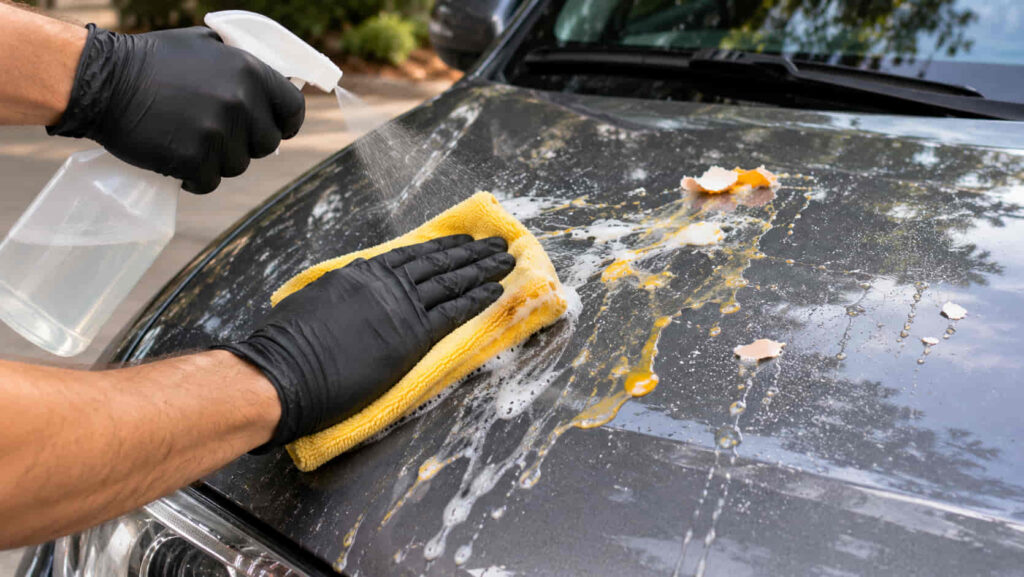
Removing egg from a car without damaging the paint requires softening the residue with water, rinsing away eggshell fragments, and gently cleaning the affected surface with a pH-neutral car shampoo and a clean microfiber wash mitt. The safest approach is to remove loose debris before touching the paint, because dragging sharp eggshell fragments across the clear coat can cause scratches.
Fresh egg is easier to remove because the yolk and egg white have not dried onto the vehicle’s surface. Dried egg requires additional soaking to loosen the hardened residue before washing. Scrubbing dried egg, scraping it with hard tools, or applying abrasive household cleaners increases the risk of damaging the paint finish.
Egg residue should be removed as soon as possible, particularly when the vehicle is exposed to direct sunlight or high temperatures. Although washing removes surface contamination, it cannot repair scratches or paint damage that occurred during the impact.
This guide explains how to remove fresh and dried egg from car paint, which cleaning products are safe to use, how to prevent scratches during washing, and when remaining stains or paint damage require professional attention.
How Do You Remove Egg From a Car Without Damaging the Paint?
To remove egg from a car without damaging the paint, rinse away loose eggshell fragments, soften the remaining egg residue with water, and wash the affected area using a pH-neutral car shampoo and a clean microfiber wash mitt. This method minimizes friction between the cleaning tools and the vehicle’s clear coat, reducing the risk of scratches during removal. Fresh egg should be cleaned immediately, while dried egg requires additional soaking before washing.
Start by parking the car in a shaded area and allowing the painted surface to cool. Direct sunlight and high surface temperatures accelerate water evaporation, causing cleaning solutions to dry before the egg residue has softened. Inspect the affected area for broken eggshells, particularly around body panel gaps, door handles, and windshield edges. Avoid wiping the surface at this stage because eggshell fragments can become trapped beneath a towel and scratch the paint when dragged across it.
Rinse the contaminated area with a gentle stream of clean water, beginning above the egg residue and allowing the water to flow downward. This helps carry loose eggshell fragments and liquid egg away from the painted surface without direct contact. Continue rinsing until visible shell pieces have been removed. Avoid directing a concentrated high-pressure water jet at chipped paint, damaged clear coat, or loose trim because excessive pressure can worsen existing damage.
Once the loose debris is gone, apply water and a properly diluted pH-neutral automotive shampoo to the remaining egg residue. Allow the solution to soften the contamination according to the product’s instructions, keeping the surface wet throughout the process. Egg white contains proteins that form a more persistent residue as they dry, making moisture particularly important when cleaning areas where the egg has started to harden. Do not scrape or scrub the residue if it remains firmly attached.
Gently wash the affected area with a clean microfiber wash mitt using straight, light passes. Rinse the mitt frequently to prevent loosened egg particles from being dragged across the paint. If the residue does not release with minimal pressure, apply more cleaning solution and repeat the soaking process rather than increasing friction. A separate clean mitt is preferable when the affected area contains substantial contamination.
Finish by rinsing the entire cleaned area with fresh water until no shampoo or egg residue remains. Dry the surface using a clean, soft microfiber drying towel, blotting rather than rubbing wherever possible. Inspect the paint under natural light for remaining stains, fine scratches, or changes in gloss. If the surface is clean but visible marks remain, additional washing may not resolve the problem, because the marks could indicate damage to the clear coat or underlying paint.
This cleaning process is suitable for intact automotive paint and clear coat. Vehicles with peeling paint, exposed primer, or existing paint damage require extra care, since even gentle cleaning can dislodge weakened material.
Read more: chevy 350 engine weight
How Do You Remove Dried Egg From Car Paint?
To remove dried egg from car paint safely, soften the hardened residue with water and pH-neutral car shampoo before gently lifting it from the surface with a clean microfiber wash mitt. Dried egg adheres more firmly to automotive paint than fresh egg because moisture evaporates from the egg white and yolk, leaving concentrated proteins and other organic compounds on the clear coat. Attempting to scrape away this hardened material can create scratches, particularly when small eggshell fragments remain embedded in the residue.
Begin by moving the vehicle into a shaded location and allowing the painted surface to cool. Thoroughly rinse the affected area with clean water to remove loose contaminants and rehydrate the dried egg. Apply a properly diluted automotive shampoo solution and allow it to remain on the residue for several minutes, following the manufacturer’s instructions. Keep the surface wet throughout the soaking process because dried cleaning solution can leave additional deposits and make the contamination harder to remove. For stubborn patches, place a clean microfiber cloth saturated with the shampoo solution over the affected area to maintain moisture without applying pressure or rubbing.
Once the dried egg begins to soften, rinse the area again to carry away loosened particles. Gently move a clean microfiber wash mitt across the remaining residue using light, straight passes. Avoid circular scrubbing, stiff brushes, plastic scrapers, or fingernails, as these methods can drag hardened particles across the clear coat. If the egg remains attached, repeat the soaking and rinsing process instead of applying greater force. Multiple gentle cleaning cycles are safer than a single aggressive attempt, especially on dark-colored vehicles where fine surface scratches are more noticeable.
After removing the visible contamination, rinse the panel thoroughly and dry it with a clean microfiber towel. Examine the cleaned surface under indirect sunlight or a detailing inspection light. Remaining discoloration, roughness, or dull patches may indicate persistent contamination or damage to the paint finish rather than removable egg residue. Stop cleaning if repeated gentle washing does not improve the affected area, since additional friction can worsen existing scratches without removing marks beneath the surface.
What Cleaning Products Are Safe for Removing Egg From a Car?
The safest products for removing egg from car paint are clean water, pH-neutral automotive shampoo, and soft microfiber cleaning materials designed for painted vehicle surfaces. These products remove organic contamination while limiting unnecessary friction and exposure to aggressive chemicals. A pH-neutral car shampoo is particularly suitable for routine egg removal because its surfactants help loosen dirt and organic residue, while its lubricating ingredients reduce direct contact between contaminants and the clear coat.
Automotive shampoo should be diluted according to the manufacturer’s recommended ratio rather than applied in an unnecessarily concentrated form. Its cleaning action comes from surfactant molecules that help water spread across the contaminated surface and carry loosened material away during rinsing. For example, a dedicated car wash shampoo can soften and remove egg residue without requiring abrasive scrubbing. A clean microfiber wash mitt complements this process by providing a soft contact surface, although it must be rinsed frequently to prevent trapped eggshell particles from scratching the paint.
Dedicated automotive pre-wash cleaners are another option when dried egg remains firmly attached after an initial rinse. Choose a product explicitly labeled as safe for automotive paint and clear coats, and follow its dilution, dwell-time, and rinsing instructions. Some stronger cleaning products can reduce the effectiveness of existing waxes or sealants, making product compatibility important for vehicles with protective coatings. Test unfamiliar cleaners on a small, inconspicuous area before treating a larger painted panel.
Household vinegar and baking soda are not recommended as first-line cleaning products for egg-contaminated car paint. Vinegar is acidic, while baking soda particles can create unnecessary abrasion when rubbed against a painted surface. Their effects depend on concentration, application method, and the condition of the finish, but neither offers a clear advantage over a properly formulated automotive shampoo for routine egg removal. Dishwashing detergents should also be avoided for regular automotive cleaning because their formulations are not necessarily designed to preserve automotive waxes and sealants.
Avoid using abrasive sponges, steel wool, stiff-bristled brushes, razor blades, and concentrated household degreasers on painted surfaces. These tools and chemicals can introduce scratches, reduce gloss, or affect protective coatings. Solvents such as acetone and paint thinner are particularly unsuitable for routine egg removal because they may damage automotive finishes and surrounding plastic components. Even a paint-safe cleaning product can cause scratches when used with a dirty towel containing grit or broken eggshell fragments.
Choosing the correct cleaning product is only one part of protecting car paint. Effective egg removal also depends on allowing sufficient soaking time, using minimal contact pressure, and thoroughly rinsing loosened contamination before drying. When a paint-safe shampoo and repeated gentle soaking cannot remove the remaining marks, professional inspection is preferable to experimenting with increasingly aggressive chemicals.
How Can You Prevent Scratches While Cleaning Egg Off a Car?
To prevent scratches while cleaning egg off a car, remove loose eggshell fragments with water, soften dried residue before touching the surface, and use clean microfiber materials with minimal pressure. Scratches occur when hard particles become trapped between a cleaning tool and the vehicle’s clear coat. Because an egg impact can scatter broken shell fragments across several areas of a body panel, removing visible egg residue without first eliminating these particles increases the risk of damaging the paint.
Eggshell fragments present a particular concern because their broken edges can concentrate pressure on small areas of the painted surface. When a towel or wash mitt drags these fragments across the clear coat, the resulting friction can create fine scratches or visible surface marks. The severity depends on the size and shape of the fragments, the pressure applied, and the condition of the paint. An egg thrown against a vehicle can also cause damage during the initial impact, meaning scratches discovered after cleaning were not necessarily caused by the washing process.
A thorough pre-rinse is the most important precaution before contact washing. Direct a gentle stream of water across the contaminated panel to dislodge loose shell fragments and carry them away from the surface. Avoid placing a dry microfiber towel directly onto the egg residue, even when the material feels soft. Microfiber fibers can trap hard particles, which may then scratch the clear coat during wiping. Once loose debris has been removed, use a lubricated wash mitt and a properly diluted automotive shampoo to clean the remaining contamination.
Cleaning pressure should remain light throughout the process. A wash mitt should glide across the surface rather than be pressed into hardened egg deposits. Straight, overlapping passes help maintain controlled contact, although the direction of movement alone does not prevent scratches. The primary protective factors are adequate lubrication, clean washing materials, and the absence of abrasive contamination. Rinse the wash mitt frequently, and replace it if eggshell fragments or grit remain trapped in its fibers.
High-pressure washing also requires caution. A pressure washer operated at an unsuitable distance or with a concentrated nozzle can worsen existing paint chips, loose clear coat, or damaged trim. A gentle water stream is sufficient for the initial removal of loose eggshell fragments. If a pressure washer is used, follow the equipment and vehicle manufacturer’s guidance for automotive paint, maintain an appropriate distance, and avoid directing concentrated pressure at damaged areas.
After washing, inspect the surface before drying. Remaining particles should be rinsed away rather than wiped across the panel. Use a clean microfiber drying towel and blot the surface gently to absorb water without unnecessary rubbing. If visible scratches remain after the egg residue has been removed, stop cleaning and assess the paint condition before attempting further treatment. Surface scratches may require professional polishing, while deeper damage extending through the clear coat can require more extensive paint repair.
How Do You Remove Egg Stains Left on Car Paint?
To remove egg stains left on car paint, wash the affected area with a pH-neutral automotive shampoo, rinse away remaining contamination, and inspect the surface to determine whether the marks are removable residue or actual paint damage. Egg stains that remain after the initial cleaning may consist of dried organic deposits, residue trapped along panel edges, or changes in the appearance of the clear coat. Identifying the cause is essential because additional washing removes surface contamination but cannot reverse physical damage to the paint.
Egg white and yolk contain proteins, fats, and other organic compounds that can leave visible deposits after moisture evaporates. These deposits may form an uneven film, particularly when the egg has dried under direct sunlight. If the stain feels slightly raised or appears as a removable film, additional soaking with a paint-safe shampoo may loosen the remaining material. Apply the cleaning solution according to the manufacturer’s instructions, keep the surface wet during the recommended contact time, and rinse thoroughly before attempting gentle contact washing.
Persistent stains require a closer inspection of the painted surface. Examine the affected panel under consistent lighting and compare its appearance with an adjacent clean area. Surface contamination may produce visible residue or a slightly uneven texture, while clear coat damage can appear as fine scratches, localized dullness, or a change in gloss. However, visual inspection alone cannot always distinguish bonded contamination from surface etching. Avoid repeatedly rubbing the same area when the stain remains unchanged after proper washing.
A dedicated automotive decontamination product may help remove certain bonded contaminants, but it should not be assumed to dissolve every type of egg residue. Select a product specifically approved for the vehicle’s finish and follow the manufacturer’s instructions. Mechanical decontamination methods, including detailing clay, can introduce fine scratches when used incorrectly or when abrasive particles remain on the surface. These methods are therefore unsuitable as an automatic next step for every egg stain, especially on paint that may already have been damaged by the impact.
If the remaining mark is caused by superficial clear coat damage, professional paint correction may improve its appearance by carefully leveling a small amount of the surrounding clear coat. This process requires an assessment of the paint’s condition and available clear coat thickness because excessive polishing permanently removes protective material. Deeper scratches, chipped paint, and damage extending into the color coat cannot be repaired through ordinary washing or polishing alone. These defects may require touch-up paint or refinishing.
Egg stains should be addressed promptly, but not every visible mark requires aggressive cleaning or professional paint correction. A stain that disappears after gentle washing was likely caused by removable contamination, while a mark that persists despite thorough cleaning deserves further inspection. Distinguishing these conditions prevents unnecessary chemical exposure, repeated abrasion, and avoidable damage to the vehicle’s finish.
Can Egg Damage Car Paint?
Yes, egg can damage car paint by causing scratches, paint chips, and persistent surface marks, particularly when an egg strikes the vehicle with force or its broken shell is dragged across the finish. The severity of the damage depends on the impact, the condition of the automotive paint, the presence of eggshell fragments, and how the residue is removed. Although egg contamination does not automatically cause permanent damage, leaving it on the vehicle increases the difficulty of cleaning and the risk of scratches during removal.
The most immediate risk comes from the physical impact of the egg and its broken shell. Automotive paint typically consists of multiple layers, including primer, a color coat, and a protective clear coat. When an egg hits a painted panel, the impact can chip or scratch these layers, while broken shell fragments may create additional marks. The clear coat provides protection against environmental exposure, but it is not resistant to every form of mechanical damage. If an impact penetrates the protective layers, the affected area may require more than routine cleaning.
Dried egg residue creates a separate cleaning problem. Egg white contains proteins that become concentrated as water evaporates, allowing the remaining material to adhere more firmly to the vehicle’s surface. Egg yolk also contains fats and proteins that contribute to persistent residue. Heat and direct sunlight accelerate drying, making the contamination more difficult to remove without repeated soaking. However, the presence of dried egg does not establish that chemical damage has occurred. A persistent mark may result from bonded contamination, mechanical scratches, or an existing defect in the paint finish.
There is no scientifically established time limit after which egg will always cause permanent damage to automotive paint. The outcome varies with environmental temperature, sunlight exposure, paint condition, and the force of the original impact. For example, egg residue left on a hot vehicle panel in direct sunlight may dry faster than residue on a shaded, cool surface. The safest approach is to remove egg contamination as soon as it is discovered, rather than waiting for visible staining or assuming the paint will remain unaffected for a specific number of hours.
After cleaning, inspect the affected area for scratches, chipped paint, discoloration, and changes in surface gloss. Fine scratches confined to the clear coat may be suitable for professional paint correction, while deeper chips exposing the color coat, primer, or underlying metal can require touch-up paint or refinishing. If the surface appears clean and retains its original finish, additional treatment is unnecessary. Early cleaning and careful inspection help prevent avoidable damage without subjecting intact paint to aggressive restoration methods.
How Do You Remove Egg From Car Windows and Plastic Trim?
To remove egg from car windows and plastic trim, rinse away loose eggshell fragments, soften the remaining residue with water, and clean each surface using a compatible automotive cleaning product and a soft microfiber cloth. Although the basic removal process resembles cleaning painted panels, automotive glass and exterior plastic trim have different surface properties. Using the appropriate cleaning method prevents scratches, residue buildup, and unnecessary damage to surrounding seals or protective coatings.
Car windows should first be rinsed with clean water to remove loose eggshell fragments before any wiping begins. Automotive glass is generally harder than clear-coated paint, but abrasive particles can still scratch the surface or damage aftermarket window films and coatings. Apply water or a glass cleaner specifically approved for automotive use, allowing dried egg residue to soften before gently wiping it away with a clean microfiber cloth. For stubborn contamination, repeat the soaking process instead of scraping the glass with a razor blade or other hard tool.
Special care is necessary around windshield wipers and window seals. Egg residue can collect beneath wiper blades, along the windshield’s lower edge, and inside narrow gaps surrounding the glass. If shell fragments remain trapped against a wiper blade, operating the wipers can drag those particles across the windshield and potentially create scratches. Lift the wiper arms only when permitted by the vehicle manufacturer’s instructions, clean accessible rubber blade surfaces with a damp microfiber cloth, and rinse away visible contamination before operating the wipers.
Plastic exterior trim requires a different approach because its textured surface can trap dried egg in small grooves. Begin by rinsing the affected area and applying a diluted automotive shampoo approved for exterior plastics. Allow the solution to soften the residue before wiping with a clean microfiber cloth. On textured plastic, a soft detailing brush may help loosen contamination from recessed areas, provided the brush is designed for automotive trim and used with minimal pressure. Avoid stiff brushes and abrasive cleaning pads, which can permanently change the appearance of the plastic surface.
Unpainted plastic trim can also react differently to cleaning chemicals than painted body panels. Strong solvents, concentrated degreasers, and unsuitable household cleaners may cause discoloration, staining, or changes in surface texture. For example, a cleaner formulated for bare automotive glass should not automatically be considered safe for adjacent rubber seals, plastic moldings, or protective window coatings. Follow the product manufacturer’s compatibility instructions and prevent cleaning solutions from drying on surrounding materials.
Once the egg residue has been removed, rinse the cleaned surfaces thoroughly and dry them with separate, clean microfiber towels. Inspect glass for streaks or remaining particles and check plastic trim for residue lodged in textured areas or panel gaps. If a mark remains after gentle cleaning, identify whether it is surface contamination or material damage before applying stronger products. This prevents unnecessary abrasion and helps preserve the appearance of automotive glass, rubber seals, and exterior plastic components.
When Should You Get Professional Help for Egg Damage on a Car?
You should seek professional help for egg damage on a car when stains remain after proper cleaning, visible scratches affect the clear coat, or the egg impact has chipped or cracked the paint. Professional auto detailing and paint repair services can identify whether the remaining damage involves surface contamination, clear coat defects, or deeper paint deterioration. This distinction determines whether the vehicle needs additional cleaning, paint correction, localized touch-up work, or repainting.
Professional detailing is appropriate when dried egg residue remains attached despite repeated gentle soaking and washing. Detailers use automotive cleaning products, controlled decontamination techniques, and specialized equipment to remove bonded contaminants while minimizing unnecessary abrasion. For example, a persistent mark that feels raised above the surrounding paint may indicate remaining surface contamination rather than damage beneath the clear coat. A professional can assess the affected area before selecting a cleaning method, reducing the risk of using abrasive products on an already compromised finish.
Paint correction becomes relevant when egg removal reveals fine scratches, localized dullness, or superficial defects within the clear coat. Professional paint correction uses controlled machine polishing and suitable polishing compounds to reduce the visibility of certain surface imperfections. The process works by removing a small amount of clear coat to level the surrounding surface. Because automotive clear coat has a finite thickness, polishing must be performed carefully to avoid excessive material removal. Deep scratches extending through the clear coat cannot be fully repaired through polishing alone.
More extensive paint damage requires a different repair method. An egg impact can chip the painted surface, exposing the color coat, primer, or underlying metal. When the protective paint layers have been breached, ordinary detailing cannot restore the missing material. Small isolated chips may be suitable for touch-up paint, while larger damaged areas or defects requiring a uniform finish may need professional refinishing. Exposed metal should be evaluated promptly because moisture and environmental contaminants can contribute to corrosion.
The cost of professional egg damage repair depends on the affected surface area, depth of damage, vehicle paint system, and required labor. Removing remaining surface contamination generally involves a different level of work than correcting scratches or repainting an entire panel. For example, a vehicle with minor clear coat marks may require localized polishing, while a panel with chipped paint and exposed primer may need preparation, color application, and clear coat refinishing. A professional inspection provides a more reliable repair estimate than judging the damage from the presence of an egg stain alone.
Professional repair is not necessary when the egg residue has been completely removed and the paint remains undamaged. However, persistent discoloration, visible paint chips, or scratches that remain after safe cleaning should be assessed before further treatment. Identifying the type and depth of damage prevents unnecessary polishing, repeated chemical cleaning, and repairs that do not address the underlying problem.
How Can You Protect Your Car Paint From Future Egg Damage?
You can reduce the risk of future egg-related paint damage by maintaining a protective wax, paint sealant, or ceramic coating, cleaning contamination promptly, and using safe washing techniques. These measures help preserve the automotive finish and make certain contaminants easier to remove. However, no conventional wax, sealant, or ceramic coating can guarantee protection against scratches or paint chips caused by the physical impact of a thrown egg.
Car wax and synthetic paint sealants create a protective layer over the clear coat that can reduce the direct adhesion of some environmental contaminants. This additional barrier may make fresh egg residue easier to rinse away before it dries. The effectiveness of the protection depends on the product formulation, application quality, maintenance, and environmental exposure. Wax and sealants gradually lose effectiveness through washing, weathering, and normal vehicle use, making periodic maintenance necessary according to the product manufacturer’s recommendations.
Ceramic coatings provide another form of surface protection by creating a chemically resistant layer with water-repellent properties. Their hydrophobic behavior can make routine washing easier by reducing how strongly water and certain contaminants remain on the surface. However, ceramic coatings do not make automotive paint scratch-proof or impact-resistant. Broken eggshell fragments can still damage the finish, particularly when an egg strikes the vehicle with force. Ceramic-coated vehicles therefore require the same careful rinsing and low-friction cleaning methods used on uncoated paint.
Paint protection film offers a different type of protection because it creates a physical barrier between the painted panel and external contact. High-quality automotive paint protection films are designed to absorb certain minor abrasions and impacts that would otherwise affect the clear coat. Nevertheless, their protective performance varies with film thickness, installation quality, impact force, and the condition of the underlying paint. A strong impact can still damage the film or the vehicle surface, so paint protection film should not be considered a guarantee against egg-related damage.
Regular vehicle maintenance also helps preserve the condition of the paint. Washing removes environmental contaminants before they accumulate, while periodic inspection makes it easier to identify weakened coatings, scratches, and paint chips. Keeping a small automotive cleaning kit containing clean water, a paint-safe cleaning product, and microfiber towels allows egg residue to be addressed promptly. The first action should always be rinsing away loose eggshell fragments rather than wiping the contaminated surface immediately.
Parking choices can reduce exposure to deliberate vandalism, although they cannot eliminate the risk. Using a secure garage or a monitored parking area limits opportunities for unwanted contact with the vehicle. If an egg strikes the car, document any visible damage before cleaning when an insurance claim or vandalism report may be necessary. After documenting the condition, remove the contamination promptly using a gentle cleaning method to avoid allowing the residue to dry further.
The most effective long-term strategy combines preventive paint protection with immediate, low-friction cleaning. Protective coatings can simplify maintenance, but careful handling of eggshell fragments and dried residue remains essential. Maintaining the clear coat, inspecting the paint after contamination, and addressing damaged areas promptly helps preserve the vehicle’s appearance without unnecessary abrasive treatment.