BMW thermostat replacement involves removing a faulty engine coolant thermostat, installing a compatible replacement, refilling the cooling system, and bleeding trapped air to restore proper engine temperature regulation. The procedure varies by BMW model and engine, particularly between N52, N54, N55, B48, and B58 engines, which use different cooling system configurations.
A failing BMW thermostat can cause engine overheating, slow engine warm-up, inconsistent cabin heating, coolant leaks, or a check engine light. A thermostat stuck closed can restrict coolant circulation and cause the engine to overheat, while one stuck open can prevent the engine from reaching its intended operating temperature. Accurate diagnosis is essential because water pump failures, coolant leaks, and other cooling system problems can produce similar symptoms.
BMW thermostat replacement costs depend on the engine, thermostat assembly, labor rates, and accessibility of the component. Replacing the thermostat also requires appropriate tools, compatible coolant, correct sealing procedures, and engine-specific coolant bleeding instructions. This guide explains how to identify thermostat failure, estimate replacement costs, replace the thermostat step by step, and verify cooling system operation after installation.
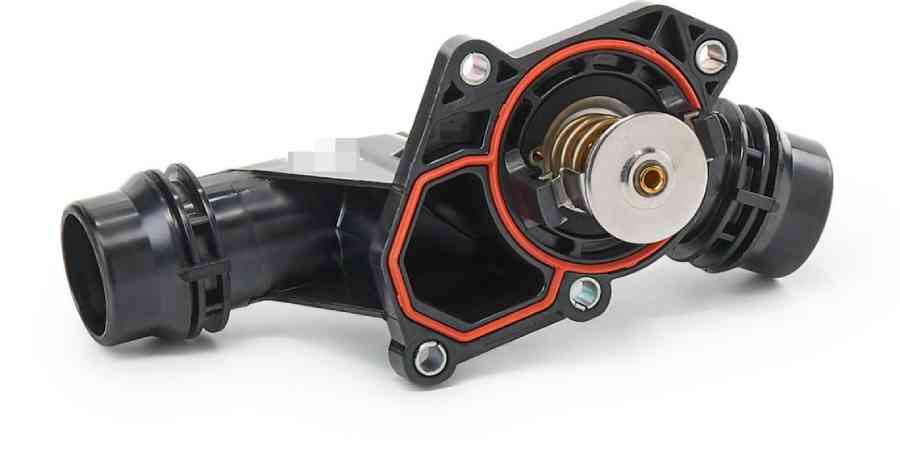
What Does BMW Thermostat Replacement Involve?
BMW thermostat replacement involves removing the defective thermostat or thermostat housing assembly, installing a compatible replacement, and restoring proper coolant circulation through the engine and radiator. The thermostat regulates coolant flow according to engine temperature, helping the engine reach and maintain its designed operating range. When the thermostat fails, the cooling system may struggle to control engine temperature, affecting engine performance, fuel efficiency, and heating operation.
The replacement procedure depends on the BMW engine and cooling system design. For example, BMW N52, N54, and N55 engines use electronically controlled thermostat assemblies that work alongside electric coolant pumps. These components regulate coolant temperature under different operating conditions. Newer BMW engines, including certain B48 and B58 variants, use different thermal management arrangements that require engine-specific replacement procedures.
A complete thermostat replacement generally includes inspecting the surrounding hoses and connections, removing the defective component, installing new seals, refilling the cooling system with approved coolant, and removing trapped air. The technician must also check for coolant leaks and verify that the engine reaches its intended operating temperature. Incorrect installation or incomplete coolant bleeding can cause overheating even after a new thermostat has been installed.
What Are the Symptoms of a Bad BMW Thermostat?
The main symptoms of a bad BMW thermostat include engine overheating, slow engine warm-up, inconsistent cabin heating, coolant leaks near the thermostat housing, and a check engine light. These symptoms depend on whether the thermostat remains open, stays closed, responds incorrectly to electronic commands, or develops a housing or seal failure. Identifying the failure pattern helps distinguish thermostat problems from water pump malfunctions and other cooling system faults.
Engine overheating is a serious symptom of a thermostat that fails to open properly. When the thermostat restricts coolant flow to the radiator, heat accumulates in the engine instead of being transferred efficiently to the surrounding air. The engine temperature may rise rapidly, particularly during prolonged driving or heavy engine loads. BMW vehicles may display a coolant temperature warning or an overheating message. Driving should stop safely when an overheating warning appears because continued operation can cause severe engine damage.
Slow engine warm-up occurs when a thermostat remains open and allows coolant to circulate through the radiator before the engine reaches its intended operating temperature. The engine consequently takes longer to warm up, especially in cold weather. This condition can reduce heating efficiency and increase fuel consumption because the engine management system may operate outside its intended warm operating conditions. A diagnostic scan may also reveal a coolant temperature regulation fault.
Inconsistent cabin heating can indicate abnormal coolant temperature regulation. The passenger compartment heater depends on heated engine coolant to transfer warmth into the cabin. A thermostat stuck open may prevent coolant from reaching the expected temperature quickly, resulting in weak heating during short trips or cold-weather driving. However, low coolant levels, trapped air, and heater system faults can produce similar symptoms, so cabin heating performance alone cannot confirm thermostat failure.
Coolant leaks around the thermostat housing may develop when the housing cracks, a sealing gasket deteriorates, or a hose connection loses its seal. Leaking coolant can leave visible residue around the thermostat assembly, create puddles beneath the vehicle, or trigger a low-coolant warning. Because thermostat location varies by engine, the source of a leak should be inspected directly before replacing the assembly. Nearby water pump connections and coolant hoses can also leak.
A check engine light may appear when the engine control module detects abnormal coolant temperature behavior or a thermostat control fault. Diagnostic trouble code P0128, for example, indicates that coolant temperature is below the expected thermostat regulating temperature under specified operating conditions. Some BMW engines may also store manufacturer-specific thermostat activation or electrical fault codes. These codes provide diagnostic direction but do not independently prove that the thermostat requires replacement. Coolant temperature readings, wiring condition, and cooling system operation should be checked before confirming the repair.
How Much Does BMW Thermostat Replacement Cost?
BMW thermostat replacement typically costs approximately $250 to $700 at an independent repair shop in the United States, including parts and labor. This is a general planning estimate rather than a verified quote for a specific BMW. The actual cost depends on the vehicle model, engine configuration, thermostat design, and local labor rates. Repairs involving integrated thermal management assemblies or additional cooling system components can exceed this range.
Replacement thermostat parts account for approximately $50 to $250 of a conventional thermostat repair, although complete assemblies for certain engines can cost more. The price varies according to whether the vehicle requires a standalone thermostat, an electronically controlled thermostat with a housing, or a more complex coolant regulation assembly. For example, thermostat assemblies used on older BMW N52 and N54 engines differ from the thermal management components found on certain B48 and B58 engine variants. Original BMW parts generally cost more than aftermarket alternatives, but compatibility must be confirmed using the vehicle identification number (VIN), engine variant, and applicable part number.
Labor costs commonly represent a substantial portion of the replacement expense because thermostat accessibility differs between BMW engines. Some thermostat assemblies are located near the water pump and require removal of surrounding hoses, underbody panels, or other components. A repair requiring two to four labor hours would cost approximately $240 to $720 at a shop charging $120 to $180 per hour. These figures illustrate how labor rates affect the total bill; they are not a universal labor-time specification for BMW thermostat replacement.
The following table provides an illustrative breakdown of replacement expenses for a conventional thermostat assembly.
| Expense | Estimated Cost (USD) |
|---|---|
| Thermostat or housing assembly | $50–$250 |
| Replacement coolant and seals | $25–$75 |
| Professional labor | $120–$450 |
| Total professional replacement | $250–$700 |
| DIY parts and consumables | $75–$325 |
These ranges are approximate budgeting figures, not model-specific quotations. Individual expenses do not necessarily reach their minimum or maximum values together, and additional diagnostics or cooling system repairs can increase the final cost.
DIY BMW thermostat replacement eliminates professional labor charges but requires suitable tools, safe access to the component, and knowledge of the vehicle’s coolant bleeding procedure. A DIY repair may cost approximately $75 to $325 in parts and consumables when no additional components or specialized tools are needed. However, incorrectly installed seals, damaged coolant connections, or trapped air can cause coolant loss and overheating. Professional replacement is preferable when the thermostat is difficult to access, the vehicle uses a complex thermal management assembly, or the underlying fault has not been confirmed.
What Tools and Parts Are Needed for BMW Thermostat Replacement?
BMW thermostat replacement requires basic automotive hand tools, cooling system service equipment, and replacement components matched to the vehicle’s engine. The exact requirements depend on the thermostat location, fastener design, and coolant bleeding system. Preparing the correct equipment before disassembly reduces the risk of damaged connections, coolant contamination, and incomplete installation.
Essential hand tools include metric sockets, a ratchet, socket extensions, screwdrivers, hose clamp pliers, and a torque wrench. Certain BMW engines also require Torx or E-Torx sockets for nearby mounting hardware. A torque wrench is important because thermostat housings and their mounting fasteners can be damaged by excessive tightening. Fastener torque values must come from the applicable BMW repair instructions rather than a universal specification.
Cooling system service equipment includes a coolant drain pan, protective gloves, suitable filling equipment, and a diagnostic scanner when electronic testing or service functions are required. A coolant drain pan collects the existing coolant during hose disconnection or system draining. A vacuum filling tool may help remove air from compatible cooling systems, while certain BMW engines use a specific electronic coolant bleeding routine. Not every BMW supports the same bleeding procedure, so the correct method must be identified before refilling.
Replacement components generally include the thermostat or thermostat housing assembly, appropriate O-rings or gaskets, and coolant that meets the vehicle’s specified BMW approval. Some thermostat assemblies include integrated seals, while others require separate replacement gaskets or additional hardware. Existing hoses and connectors should also be inspected for cracks, deterioration, or damaged sealing surfaces. Reusing a compromised seal can cause a coolant leak even when the new thermostat operates correctly.
Part compatibility must be verified using the BMW model, production date, engine code, and VIN. For example, an N52 thermostat assembly is not automatically interchangeable with a thermostat used on an N55 engine, even when both vehicles belong to the BMW 3 Series. Newer B48 and B58 applications may also differ by production year and cooling system configuration. Confirming the correct part number and coolant specification before beginning the repair prevents installation delays and reduces the risk of cooling system damage.
How Do You Replace a BMW Thermostat Step by Step?
BMW thermostat replacement involves five main stages: preparing the vehicle, removing the faulty thermostat, installing the replacement assembly, refilling and bleeding the cooling system, and verifying engine temperature regulation. The procedure differs between BMW engine families because thermostat location, cooling system design, and bleeding requirements are not identical. The following steps provide a general replacement workflow; vehicle-specific BMW service instructions must determine the exact disassembly sequence, fastener torque values, and coolant filling procedure.
How Do You Prepare a BMW for Thermostat Replacement?
To prepare a BMW for thermostat replacement, allow the engine to cool completely, secure the vehicle, identify the thermostat location, and prepare the necessary tools and replacement components. Opening a pressurized cooling system while the engine is hot can release boiling coolant and steam, causing serious burns. The coolant expansion tank cap should only be opened after the engine has cooled and system pressure has dissipated.
Park the BMW on a level surface, engage the parking brake, and use appropriately rated jack stands or a vehicle lift if access beneath the engine is required. Never work beneath a vehicle supported only by a hydraulic jack. Remove the necessary underbody panels or engine covers according to the vehicle’s service instructions. Before disconnecting any components, confirm the replacement thermostat matches the original assembly and identify the coolant hoses, electrical connectors, and mounting fasteners that require removal.
Position a suitable drain pan beneath the cooling system and drain enough coolant to prevent uncontrolled spillage when the thermostat connections are opened. Depending on the BMW model, coolant may be drained through a designated drain point or by disconnecting an appropriate lower cooling system hose. Collect used coolant in a sealed container because ethylene glycol-based coolant is toxic to people and animals and must be disposed of according to local regulations.
How Do You Remove the Old BMW Thermostat?
To remove the old BMW thermostat, gain access to the thermostat housing, disconnect its coolant hoses and electrical connections, and release the mounting fasteners. The thermostat is commonly located near the engine’s coolant circulation components, but its exact position depends on the engine family. On several BMW N52, N54, and N55 applications, the thermostat assembly is positioned near the electric water pump, requiring access from beneath the vehicle.
Start by identifying the hoses connected to the thermostat housing. Release the hose clamps or retaining clips using the appropriate tools, then carefully separate the hoses from their connections. Plastic coolant fittings can become brittle after repeated heat cycles, so excessive twisting or prying may crack the fittings. Disconnect the thermostat’s electrical connector if the assembly uses electronic temperature control, checking that the locking mechanism is fully released before pulling the connector apart.
Remove the thermostat mounting fasteners while supporting the assembly to prevent unnecessary strain on surrounding hoses or wiring. Once the thermostat is free, inspect the housing connections, sealing surfaces, and nearby coolant components for cracks, corrosion, or accumulated coolant residue. Remove the old gasket or O-ring if it remains attached to the mounting surface. A damaged sealing surface or deteriorated hose connection should be addressed before installing the replacement thermostat.
How Do You Install the New BMW Thermostat?
To install a new BMW thermostat, position the compatible replacement assembly, fit the required seals, secure the mounting hardware, and reconnect the coolant hoses and electrical connections. Correct seal placement and fastener tightening are essential because improper installation can cause coolant leaks or damage the thermostat housing.
Compare the replacement thermostat with the removed component before installation. Check the housing shape, coolant ports, electrical connector, mounting points, and part number compatibility. Install new O-rings or gaskets according to the manufacturer’s instructions, ensuring each seal sits correctly in its designated groove. Use only the specified lubricant or coolant on seals when permitted by the component manufacturer. Avoid applying general-purpose sealants unless the repair instructions explicitly require them.
Position the thermostat assembly without forcing the coolant connections or placing tension on nearby wiring. Start the mounting fasteners by hand to reduce the risk of cross-threading, then tighten them in the specified sequence using the correct torque values for the particular BMW engine. Reconnect the coolant hoses, secure their retaining clips or clamps, and verify that every connection is fully seated. Reattach the electrical connector and confirm its locking mechanism engages properly.
How Do You Refill and Bleed the BMW Cooling System?
To refill and bleed a BMW cooling system after thermostat replacement, use coolant meeting the vehicle’s specified approval, follow the correct filling procedure, and remove trapped air before normal operation. Air pockets can interrupt coolant circulation, reduce cabin heating performance, and create localized engine overheating even when the replacement thermostat functions correctly.
Select the coolant according to the vehicle’s BMW-approved specification rather than relying on color alone. Different BMW production years and cooling system configurations may require different coolant formulations. Mix concentrated coolant with the specified water quality and ratio when required, or use an approved premixed coolant. Fill the system through the designated filling point according to the vehicle’s service procedure.
The bleeding method depends on the cooling system design. Certain BMW vehicles equipped with electric coolant pumps support an electronic bleeding routine that circulates coolant while the engine remains off. Other applications require a different procedure, specialized service equipment, or vacuum filling. The familiar ignition-on and accelerator-pedal bleeding sequence used on some BMW models is not universal and should not be applied without confirming compatibility.
Monitor the coolant level throughout the specified bleeding process and follow the manufacturer’s instructions for completing the fill. Do not open the expansion tank while the system is hot or pressurized. After bleeding, inspect the thermostat housing and connected hoses for visible coolant leakage before proceeding to the final operational checks.
How Do You Test a BMW Thermostat After Replacement?
To test a BMW thermostat after replacement, inspect the cooling system for leaks, monitor engine coolant temperature, confirm normal warm-up behavior, and check for stored diagnostic faults. These checks help verify that the new thermostat regulates coolant flow correctly and that the cooling system has been refilled without significant trapped air.
Begin with a visual inspection of the thermostat housing, coolant hose connections, and surrounding components. Check for coolant seepage or dripping, particularly around newly installed seals and fittings. Start and operate the engine only after the cooling system has been filled and bled according to the applicable service instructions. Use a compatible diagnostic scanner to monitor coolant temperature during warm-up and compare the readings with the expected operating behavior for that BMW engine. A single universal thermostat opening temperature should not be used because electronically controlled BMW cooling systems can adjust temperature targets according to operating conditions.
Check cabin heater operation and monitor the instrument cluster for coolant temperature warnings. If the engine overheats, displays an abnormal temperature warning, or develops a significant coolant leak, shut it down safely and investigate the cause before further operation. Once the engine has cooled completely, recheck the coolant level and adjust it according to the vehicle’s specifications. A final diagnostic scan can identify remaining thermostat control faults or related cooling system errors. Successful replacement is confirmed by stable temperature regulation, normal coolant circulation, and the absence of leaks or recurring faults.
How Does BMW Thermostat Replacement Differ by Engine?
BMW thermostat replacement differs by engine because thermostat location, cooling system architecture, component accessibility, and coolant bleeding requirements vary across BMW engine families. The N52, N54, and N55 engines use electronically controlled thermostat assemblies in cooling systems equipped with electric water pumps, while newer B48 and B58 engines incorporate more advanced thermal management arrangements. Identifying the exact engine and production variant is essential before selecting replacement parts or following a repair procedure.
BMW N52 thermostat replacement generally involves accessing the thermostat assembly near the electric water pump in the lower engine compartment. The N52 is a naturally aspirated inline-six engine found in vehicles such as the E90 328i and certain E60 5 Series models. Depending on the chassis, technicians may need to remove underbody protection panels and disconnect coolant hoses to reach the thermostat. The thermostat and water pump are separate components, although their proximity makes it practical to inspect both during the same repair. After installation, applicable N52 cooling systems require the specified electric water pump bleeding procedure to remove trapped air.
BMW N54 thermostat replacement follows a similar general approach but requires attention to the cooling system layout of the twin-turbocharged engine. The N54 appears in models such as the E90 335i and E82 135i. Its thermostat assembly operates alongside an electronically controlled electric water pump, and access can be restricted by surrounding hoses and engine components. The thermostat housing, electrical connector, and coolant connections must be inspected carefully during removal. A failed thermostat should also be distinguished from electric water pump faults because both components can contribute to engine overheating.
BMW N55 thermostat replacement also involves an electronically controlled thermostat and electric coolant pump on many applications. The N55 is a turbocharged inline-six engine used in vehicles such as the F30 335i and certain BMW X3 and X5 variants. Although its cooling system shares general operating principles with the N54, thermostat assemblies, hose arrangements, mounting hardware, and access requirements can differ by chassis and production year. Replacement parts should therefore be selected using the vehicle’s VIN rather than assuming interchangeability between N54 and N55 engines.
BMW B48 thermostat replacement requires identifying the specific cooling system configuration because this turbocharged four-cylinder engine has undergone several design revisions. The B48 is used in vehicles such as the BMW 330i and X3 30i, depending on model year and market. Certain variants incorporate electronically managed coolant regulation components that differ substantially from the conventional thermostat arrangements found on older BMW engines. These designs may involve integrated coolant control assemblies, additional connections, or model-specific service procedures. The exact component location and replacement method must be confirmed through the applicable BMW repair documentation.
BMW B58 thermostat replacement also varies according to engine generation and vehicle application. The B58 turbocharged inline-six engine is found in models such as the BMW 340i, M340i, and several X5 variants. Its thermal management architecture differs from the older N52, N54, and N55 systems, and some applications use integrated coolant regulation components rather than a directly comparable standalone thermostat assembly. Replacement may require additional disassembly, specialized filling equipment, or diagnostic service functions depending on the vehicle. Identifying the correct component and procedure is particularly important because B58 cooling system configurations have changed across production generations.
The following table summarizes the principal differences between these BMW engine families.
| BMW Engine | Cooling System Characteristics | Replacement Considerations |
|---|---|---|
| N52 | Electronically controlled thermostat and electric water pump | Lower engine access and applicable electronic bleeding procedure |
| N54 | Electronically controlled thermostat and electric water pump | Restricted access and inspection of nearby coolant connections |
| N55 | Electronically controlled thermostat and electric water pump on many applications | Chassis-specific component layout and part compatibility |
| B48 | Variant-dependent electronic thermal management | Identify the exact coolant regulation assembly and service procedure |
| B58 | Generation-dependent thermal management architecture | Confirm component design, access requirements, and filling procedure |
These differences demonstrate why a single thermostat replacement procedure cannot be applied to every BMW. Even vehicles sharing an engine family may use different components or service instructions depending on production date, chassis, and cooling system configuration.
How Can You Tell if a BMW Thermostat or Water Pump Is Bad?
To distinguish a bad BMW thermostat from a failing water pump, compare coolant temperature behavior, diagnostic fault codes, coolant circulation, and the operating condition of each component. Both failures can cause engine overheating, coolant temperature warnings, and reduced cabin heating performance. However, a thermostat primarily regulates coolant flow according to temperature, while the water pump provides the circulation needed to transfer heat through the cooling system.
A faulty thermostat typically produces temperature regulation problems associated with incorrect coolant flow. When the thermostat remains closed, coolant cannot circulate through the radiator as intended, causing engine temperature to rise. When it remains open, the engine may take longer to reach its operating temperature and produce insufficient cabin heat during warm-up. An electronically controlled thermostat can also develop electrical or control faults that trigger diagnostic trouble codes. For example, P0128 indicates that the engine has not reached the expected coolant temperature under specified operating conditions, although this code does not independently confirm thermostat failure.
A failing BMW water pump primarily affects coolant circulation. On BMW engines equipped with electric coolant pumps, electrical faults, internal motor failures, or mechanical problems can reduce or interrupt coolant movement. A severely malfunctioning pump may cause rapid overheating because heated coolant cannot circulate effectively between the engine and radiator. Certain pump failures can also trigger manufacturer-specific diagnostic codes or communication faults. However, the absence of a water pump fault code does not guarantee that the pump is operating correctly.
The following table compares common diagnostic indicators.
| Diagnostic Indicator | Faulty Thermostat | Faulty Water Pump |
|---|---|---|
| Engine overheating | Possible, especially when stuck closed | Possible when circulation is insufficient |
| Slow engine warm-up | Common with a stuck-open thermostat | Not a typical primary symptom |
| Weak cabin heating | Possible | Possible |
| Coolant temperature regulation fault | Possible | Possible |
| Water pump electrical fault code | Not a direct thermostat indicator | Stronger evidence of a pump-related problem |
| Abnormal coolant circulation | Possible due to flow restriction | Possible due to insufficient pumping |
| Coolant leakage | Possible at the thermostat housing | Possible at the pump housing or seals |
Diagnostic scanning provides a more reliable starting point than symptom comparison alone. A BMW-compatible diagnostic tool can retrieve manufacturer-specific fault codes, display coolant temperature readings, and identify electrical problems associated with electronically controlled cooling components. On supported vehicles, diagnostic service functions may also help evaluate electric water pump operation. These tests should be performed according to the applicable BMW service instructions rather than by disconnecting components or opening a hot cooling system.
For example, a BMW N52 engine that consistently warms up too slowly and stores a thermostat regulation fault may have a thermostat stuck open. In contrast, a vehicle that overheats rapidly while storing an electric water pump activation fault requires investigation of the pump, its electrical supply, and related control circuits. Neither symptom pattern alone is sufficient to authorize replacement without confirming the underlying fault.
A complete diagnosis should also inspect the coolant level, hoses, radiator, temperature sensors, and electrical connections. Low coolant, trapped air, damaged wiring, and radiator restrictions can produce symptoms resembling thermostat or water pump failure. Replacing the thermostat without identifying the actual cause may leave the overheating problem unresolved and expose the engine to further damage.
How Long Does a BMW Thermostat Last?
A BMW thermostat can last approximately 80,000 to 120,000 miles, although this range is a general maintenance estimate rather than a manufacturer-specified replacement interval. Actual lifespan depends on the engine design, thermostat construction, coolant condition, operating temperatures, and maintenance history. Some thermostats fail earlier because of electrical faults or housing deterioration, while others remain functional well beyond 120,000 miles.
Repeated heating and cooling cycles contribute to thermostat wear by placing thermal stress on internal regulating components, seals, and plastic housings. In electronically controlled BMW thermostats, electrical heating elements and associated control circuits introduce additional potential failure points. For example, an N52 or N54 thermostat may develop an electrical control fault even when its mechanical valve is not completely stuck. Aging seals and plastic connections can also develop coolant leaks independently of the thermostat’s temperature regulation function.
Coolant condition affects thermostat reliability because the cooling system depends on proper corrosion protection and stable coolant chemistry. Incorrect coolant formulations, contamination, and neglected maintenance can contribute to deposits or deterioration within cooling system components. These conditions may interfere with thermostat operation or damage surrounding seals and connections. Using coolant that meets the applicable BMW specification and following the vehicle’s maintenance requirements helps protect the thermostat and related cooling system components.
BMW thermostats generally do not require replacement solely because a vehicle reaches a particular mileage. Replacement is appropriate when diagnostic testing confirms incorrect thermostat operation, an electrical malfunction, or leakage from the thermostat assembly. For higher-mileage vehicles, inspecting the thermostat during water pump repairs or other cooling system maintenance can help identify deteriorated components before they cause overheating.
Read more: BMW Cabin Air Filter Replacement: Step-by-Step Guide
Can You Drive a BMW With a Bad Thermostat?
Driving a BMW with a bad thermostat is not recommended until the failure has been diagnosed, particularly when the vehicle displays an overheating warning or abnormal coolant temperature. A thermostat that remains closed can prevent sufficient coolant flow through the radiator, causing engine temperature to rise rapidly. A thermostat stuck open generally creates a different problem by allowing excessive cooling during warm-up. The severity of the driving risk depends on the failure mode and the condition of the remaining cooling system.
A stuck-closed thermostat presents an immediate overheating risk because hot coolant cannot circulate through the radiator as intended. Continued operation at excessive temperatures can damage cylinder head gaskets, distort engine components, and lead to expensive internal engine repairs. BMW engines with electronically controlled cooling systems may display temperature warnings or activate protective operating strategies when overheating is detected. If an overheating warning appears, stop in a safe location, switch off the engine, and arrange professional assistance. Do not remove the coolant expansion tank cap while the system is hot or pressurized.
A stuck-open thermostat generally causes prolonged engine warm-up and lower-than-intended operating temperatures rather than immediate overheating. The engine may struggle to reach its normal temperature during cold weather, reducing cabin heating performance and potentially increasing fuel consumption. Although this failure mode is generally less urgent than a stuck-closed thermostat, continued driving without diagnosis is not advisable because another cooling system fault may be responsible for the symptoms.
The safest decision is to confirm the thermostat failure before continuing normal vehicle operation. A BMW showing stable coolant temperatures but slow warm-up should be inspected and repaired promptly. A vehicle displaying an overheating warning, losing coolant, or exhibiting rapidly rising engine temperatures should not be driven until the underlying problem has been corrected. Towing is preferable to risking engine damage when overheating is suspected.
Should You Replace the BMW Water Pump With the Thermostat?
Replacing the BMW water pump together with the thermostat is worth considering when both components are aging, share significant repair access, or show evidence of deterioration. However, simultaneous replacement is not mandatory for every BMW. The decision should depend on the engine configuration, water pump condition, maintenance history, and additional labor required to replace the pump during thermostat service.
On BMW engines such as the N52, N54, and many N55 applications, the thermostat and electric water pump are located near each other within the cooling system. Accessing the thermostat may require removing underbody panels and disconnecting coolant hoses around the pump assembly. Because some disassembly and coolant service operations overlap, replacing both components during one repair can reduce duplicated labor compared with performing two separate repairs. The actual savings depend on the vehicle and workshop labor procedure.
Water pump condition is more important than mileage alone when deciding whether to replace both components. A pump that produces abnormal operating behavior, stores relevant electrical fault codes, leaks coolant, or fails a manufacturer-specified diagnostic test requires further investigation and may need replacement. Conversely, a recently replaced water pump that operates correctly does not automatically need replacement because the thermostat has failed. BMW electric water pumps and thermostats are separate components on many older engine applications, so one component can fail while the other remains functional.
For example, a high-mileage BMW 335i with an original electric water pump and a confirmed thermostat failure may be a reasonable candidate for combined replacement, particularly when the owner intends to keep the vehicle for several more years. Replacing both components during the same service can reduce the likelihood of repeating overlapping labor if the aging pump fails later. However, the additional parts cost should be weighed against the pump’s current condition and expected service requirements.
The best replacement strategy is to inspect the water pump before completing the thermostat repair. Review the vehicle’s service history, check for coolant leakage, retrieve relevant diagnostic fault codes, and evaluate pump operation using the appropriate BMW diagnostic procedure. Replace the water pump when testing confirms a fault or when preventive replacement is justified by component age, repair accessibility, and the owner’s maintenance objectives. This approach avoids unnecessary parts replacement while supporting long-term cooling system reliability.