A reliable air conditioning system keeps every drive comfortable, especially during hot weather. If your Kia Optima AC blows warm air instead of cold air, low refrigerant could be the cause. Many owners choose to recharge the AC themselves to save money and restore cooling performance. Learning how to recharge your Kia Optima AC can help you fix a minor issue before it becomes an expensive repair.
Before you begin, remember that the AC system is completely sealed. Refrigerant should not disappear under normal conditions. A low refrigerant level often points to a leak somewhere in the system. If you only add more refrigerant without finding the leak, the cooling problem will likely return. In some cases, you may also damage important AC components.
This guide explains every step in a clear and simple way. You will learn how to recognize the signs of low refrigerant. You will also find the low pressure service port, choose the correct refrigerant, and recharge the system safely. Each step focuses on protecting your AC system while improving its cooling performance.
Different Kia Optima model years use different refrigerants. Some older models require R134a, while many newer models use R1234yf. Always check the information label under the hood before purchasing refrigerant. Using the correct product helps your air conditioner work efficiently and reduces the risk of costly repairs.
By the end of this guide, you will know when a DIY AC recharge makes sense. You will also understand when a professional inspection is the safer option. This knowledge will help you keep your Kia Optima AC running at its best throughout the year.
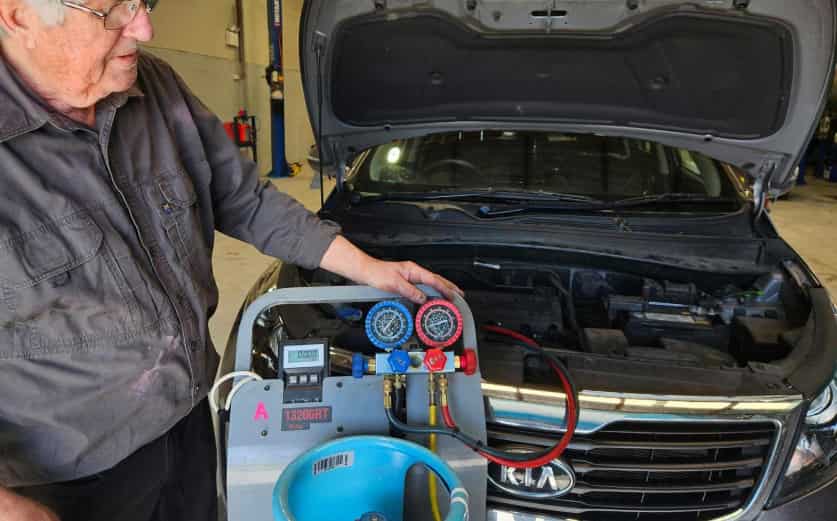
Before You Recharge Your Kia Optima AC
Before you recharge your Kia Optima AC, take a few minutes to inspect the system. This simple step helps you avoid unnecessary repairs and improves your chances of restoring cold air successfully. Many drivers assume that warm air always means the refrigerant level is low. However, other problems can produce the same symptom. A worn compressor, a faulty condenser fan, or a clogged cabin air filter may all reduce cooling performance. Checking these components first can save both time and money.
Next, inspect the air conditioning system for signs of a refrigerant leak. A properly sealed AC system should not lose refrigerant during normal operation. If the refrigerant level has dropped, a leak is often the real cause. Look around the compressor, refrigerant lines, condenser, and service ports for oily residue or visible dirt buildup. These areas often reveal small leaks that allow refrigerant to escape. Recharging the system without repairing the leak will only provide temporary results because the refrigerant will continue to leak out over time.
You should also confirm the correct refrigerant before purchasing an AC recharge kit. Different Kia Optima model years use different refrigerants. Many older models require R134a, while newer vehicles may use R1234yf. Check the information label under the hood to verify the correct refrigerant type and capacity. Using the wrong product can reduce cooling efficiency and damage important air conditioning components.
Finally, put safety first throughout the recharge process. Wear protective gloves and safety glasses before connecting any equipment. Keep loose clothing away from moving engine parts while the engine is running. Follow the recommended pressure range and avoid adding too much refrigerant. Careful preparation protects your Kia Optima AC and helps you achieve the best cooling performance.
Tools and Materials You Need
Gathering the right tools before you recharge your Kia Optima AC makes the job safer and more efficient. Using proper equipment also helps you measure the refrigerant level accurately and reduces the risk of overcharging the system. A basic AC recharge kit is the most important item because it usually includes a refrigerant can, a charging hose, and a pressure gauge. The gauge allows you to monitor system pressure throughout the recharge process, making it easier to stop when the correct level is reached.
You should also purchase the correct refrigerant for your Kia Optima. Do not assume that every model uses the same product. Many older Kia Optima models require R134a, while newer models may use R1234yf. Always check the refrigerant label under the hood or consult your owner’s manual before buying any refrigerant. Choosing the correct type protects the compressor, maintains cooling efficiency, and prevents unnecessary damage to the air conditioning system.
Safety equipment is equally important. Wear protective gloves to prevent frostbite caused by direct contact with refrigerant. Safety glasses protect your eyes from accidental leaks or sudden pressure releases. If possible, keep a clean shop towel nearby to wipe dirt from the service port before connecting the recharge hose. A flashlight can also help you locate the low pressure service port more easily, especially if engine components block your view.
Finally, work in a well ventilated area and park the vehicle on a level surface before starting the engine. Preparing everything in advance allows you to complete each step smoothly without interruption. A careful setup not only improves your results but also helps protect both you and your Kia Optima AC throughout the recharge process.
How to Recharge Your Kia Optima AC Step by Step
Recharging your Kia Optima AC requires focus and careful execution. Each step directly affects cooling performance and system safety. Before you start, make sure the engine is off and the car is parked on a level surface. Once everything is ready, you can begin the process with confidence.
Start by turning on the vehicle and setting the air conditioning to the maximum cooling level. Select the highest fan speed as well. This allows the AC system to circulate refrigerant more effectively during the recharge process. Let the engine run for a few minutes so the system stabilizes. You should feel weak or warm air at this stage if the refrigerant level is low.
Next, locate the low pressure service port. In most Kia Optima models, it sits on the larger diameter aluminum line between the compressor and the evaporator. The port usually has a plastic cap marked with an L. Remove the cap carefully and keep it in a safe place. Clean the area around the port to prevent dirt from entering the system.
Attach the recharge hose from your AC kit to the low pressure port. Make sure the connection is secure before you begin adding refrigerant. Once connected, check the pressure gauge reading. This reading gives you a clear idea of the current refrigerant level. If the pressure is too low, the system will not cool properly.
Now begin adding refrigerant slowly. Shake the can gently and squeeze the trigger in short bursts. Do not release refrigerant continuously. Instead, allow the system to stabilize between each burst. Watch the pressure gauge closely while you work. Your goal is to reach the recommended pressure range, not to fill the system completely at once.
As you add refrigerant, monitor the air coming from the vents. You should notice the temperature gradually dropping. This is a good sign that the system is responding correctly. If the air becomes cold and stable, stop adding refrigerant immediately. Overcharging can increase pressure and damage the compressor.
After reaching the correct pressure level, disconnect the recharge hose carefully. Avoid releasing any remaining refrigerant into the air. Reinstall the protective cap on the service port to seal the system. This helps prevent contamination and keeps the port clean for future use.
Finally, let the engine run for a few more minutes and observe the cooling performance. The air from the vents should remain consistently cold. If the system still does not cool properly, the issue may involve a leak or a failing component. In that case, a professional inspection is the safest next step.
What Refrigerant Does a Kia Optima Use?
Choosing the correct refrigerant is one of the most important steps when you recharge your Kia Optima AC. Different model years use different types of refrigerant, so you should never assume they are all the same. Using the wrong refrigerant can reduce cooling performance and may damage key components in the air conditioning system.
Many older Kia Optima models use R134a refrigerant. This type has been widely used in automotive air conditioning systems for many years. It is still common in older vehicles and is easy to find in most auto parts stores. However, newer Kia Optima models may use R1234yf refrigerant. This newer refrigerant is designed to be more environmentally friendly and meets updated global standards for emissions and safety.
You should always check the refrigerant label under the hood before adding anything to the system. The label clearly shows the correct refrigerant type and the exact system capacity. This information is more reliable than guessing based on model name or year alone. Even small differences between trims or production years can affect the required refrigerant type.
If you use the wrong refrigerant, the AC system may not cool properly. It can also create pressure imbalances that put stress on the compressor and other components. In some cases, mixing refrigerants can lead to expensive repairs that could have been avoided.
For the best results, always match the refrigerant exactly to the manufacturer specification. This simple step helps your Kia Optima AC run efficiently and keeps the system stable over time. It also ensures that your recharge process delivers long lasting cooling performance instead of a temporary fix.
Common Mistakes When Recharging a Kia Optima AC
Many Kia Optima owners make simple mistakes when they try to recharge the AC system. These mistakes often lead to poor cooling performance or even long term damage to the air conditioning system. Understanding these issues helps you avoid unnecessary repair costs and improves the results of your recharge process.
One of the most common mistakes is overcharging the system. Many people think that adding more refrigerant will make the air colder. In reality, too much refrigerant increases system pressure and forces the compressor to work harder. This can reduce cooling efficiency and shorten the lifespan of key components. Always follow the pressure gauge instead of guessing the amount.
Another frequent mistake is using the wrong refrigerant type. Some owners do not check the label under the hood and assume all Kia Optima models use the same refrigerant. Older models often use R134a, while newer versions may require R1234yf. Using the wrong type can lead to poor cooling and system imbalance.
Many drivers also ignore the possibility of a refrigerant leak. They simply add refrigerant without inspecting the system. This approach only provides a temporary fix because the refrigerant will escape again if the leak is not repaired. A proper inspection should always come before any recharge.
Some people also connect the recharge kit to the wrong service port. The AC system has two ports, but only the low pressure port is used for recharging. Connecting to the high pressure port can be dangerous and may damage the system or the recharge equipment.
Another mistake is recharging without checking system pressure. The pressure gauge is essential because it shows the real condition of the AC system. Without it, you cannot know if the system is underfilled or already at the correct level.
Avoiding these mistakes helps protect your Kia Optima AC and ensures a stable cooling performance. A careful and informed approach always delivers better results than a quick or guesswork based recharge.
Why Your Kia Optima AC Is Still Warm After Recharging
Sometimes your Kia Optima AC still blows warm air even after you complete a recharge. This situation is common and often indicates that the real problem is not low refrigerant alone. Understanding the root cause helps you avoid repeated recharging and unnecessary expense.
One of the most common reasons is a refrigerant leak. If the system has a leak, the new refrigerant will escape over time and the cooling performance will drop again. Leaks often occur in the hoses, condenser, compressor seals, or service ports. In this case, you need a proper inspection and repair before another recharge can be effective.
A failing compressor is another possible cause. The compressor is responsible for circulating refrigerant through the system. If it cannot build enough pressure, the AC will not produce cold air even if the refrigerant level is correct. You may also notice unusual noises or inconsistent cooling when the compressor starts to fail.
The condenser fan can also affect cooling performance. If the fan does not operate properly, the system cannot release heat efficiently. As a result, the air inside the cabin remains warm even after a successful recharge. This issue often becomes more noticeable when the car is idle or in traffic.
A clogged cabin air filter is another simple but often overlooked reason. When the filter is dirty, airflow becomes weak and the cooling effect feels reduced. Replacing the filter can immediately improve air circulation and overall comfort inside the vehicle.
In some cases, the issue comes from sensors or electrical components. Faulty temperature sensors or AC control modules can send incorrect signals to the system. This prevents the compressor from engaging properly or limits cooling output.
If your Kia Optima AC still does not cool after a recharge, it is important to stop adding refrigerant. Instead, focus on diagnosing the actual cause. This approach saves time and prevents damage to the AC system while ensuring a long term solution.
DIY AC Recharge vs Professional Service
Recharging your Kia Optima AC at home can be a cost effective solution, but it is not always the best option for every situation. Understanding the difference between a DIY recharge and professional service helps you choose the right approach for your vehicle and avoid unnecessary risks.
A DIY AC recharge is suitable when the system only has a low refrigerant level and no major issues. It allows you to restore cooling performance quickly using a recharge kit and basic tools. This method is convenient and affordable, especially for minor performance drops during hot weather. However, it requires careful attention to pressure levels, refrigerant type, and safety procedures. If you make a mistake, you may overcharge the system or damage important components like the compressor.
Professional service is more appropriate when the problem is not just low refrigerant. Certified technicians can perform a full diagnostic test to identify leaks, check compressor performance, and measure system pressure accurately. They also use specialized recovery equipment that safely removes and recycles refrigerant. This is especially important because some refrigerants require proper handling under environmental regulations.
Another advantage of professional service is long term reliability. Instead of simply adding refrigerant, technicians can fix the root cause of the problem. This reduces the chance of repeated AC failure and helps maintain stable cooling performance over time.
DIY recharge focuses on quick restoration, while professional service focuses on complete system health. If your Kia Optima AC loses cooling frequently or shows signs of leaks, a professional inspection is the safer choice. If the system is otherwise healthy, a careful DIY recharge can still be an effective short term solution.
Choosing the right approach depends on system condition, experience level, and safety awareness. A balanced decision ensures better performance and helps protect your AC system from avoidable damage.
FAQs About Recharging a Kia Optima AC
Many Kia Optima owners have similar questions when dealing with air conditioning issues. These answers will help you understand the process better and avoid common mistakes.
Can I recharge my Kia Optima AC myself?
Yes, you can recharge your Kia Optima AC yourself if the system only has low refrigerant and no mechanical issues. You need the correct refrigerant, a recharge kit, and a pressure gauge. However, you must follow safety steps carefully and avoid overcharging the system.
How much does it cost to recharge a Kia Optima AC?
A DIY recharge usually costs less because you only pay for the refrigerant and tools. Professional service costs more because it includes diagnostics, labor, and leak testing. The final price depends on the repair needed and your location.
How long does an AC recharge last?
An AC recharge can last several months to a few years if the system has no leaks. If there is a leak, the refrigerant will escape again and the cooling performance will drop quickly. In that case, repairing the leak is more important than recharging.
What happens if I overcharge the AC system?
Overcharging the AC system increases internal pressure and puts stress on the compressor. This can reduce cooling performance and may cause long term damage. Always use a pressure gauge to ensure the correct level.
Where is the low pressure port on a Kia Optima?
The low pressure port is usually located on the larger diameter aluminum line between the compressor and the evaporator. It is often marked with an L and has a plastic cap for protection.
Should I use R134a or R1234yf?
You must check the label under the hood to confirm the correct refrigerant. Older Kia Optima models often use R134a, while newer models may use R1234yf. Using the wrong refrigerant can affect performance and damage the system.
Conclusion
Learning how to recharge your Kia Optima AC helps you restore cooling performance and save money on minor issues. However, success depends on using the correct refrigerant, following proper pressure levels, and understanding the condition of your system.
A simple recharge can solve weak cooling problems, but it is not a fix for leaks or failing components. If your AC continues to blow warm air after a recharge, the system likely needs a deeper inspection. In that case, professional diagnosis is the safest and most effective solution.
By following the correct steps and avoiding common mistakes, you can maintain a reliable and efficient air conditioning system in your Kia Optima throughout the year.