How long does the Toyota 5.7 engine last? That is one of the most common questions asked by truck buyers searching for a reliable full size pickup that can survive years of heavy use without turning into a financial nightmare.
The good news is that the Toyota 5.7L i-Force V8 has earned a legendary reputation for durability. Many owners report reaching 250,000 to 350,000 miles with minimal major engine problems. Some high mileage Toyota Tundra and Sequoia models have even crossed the 500,000 mile mark with the original engine still running strong.
That level of longevity is rare in today’s truck market. While many modern turbocharged engines deliver impressive power and fuel economy, they often come with expensive long term maintenance concerns. The Toyota 5.7 takes a different approach. It focuses on simplicity, proven engineering, and long term reliability rather than chasing extreme performance numbers.
Still, no engine is perfect. Buyers looking at a used Toyota Tundra with over 150k or 200k miles often worry about hidden repair costs, engine wear, transmission issues, or expensive failures like the secondary air injection system. Those concerns are valid, especially when purchasing a high mileage truck.
In this guide, we will break down the real lifespan of the Toyota 5.7 engine, common problems that affect longevity, maintenance habits that help it last longer, and whether a high mileage Toyota 5.7 is still worth buying in 2026.
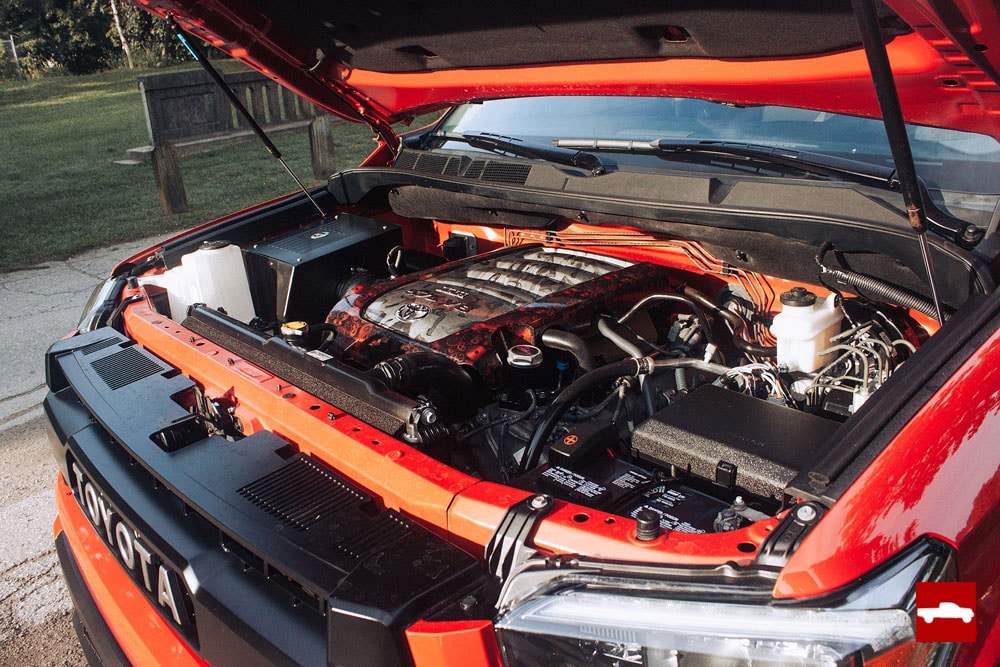
Toyota 5.7 Engine Overview
The Toyota 5.7L i Force V8, also known by its engine code 3UR FE, is widely considered one of the most dependable truck engines Toyota has ever built. Introduced in 2007, this naturally aspirated V8 was designed primarily for heavy duty performance, towing capability, and long term durability rather than aggressive fuel efficiency targets.
Toyota used the 5.7 engine in several of its most popular body on frame vehicles, including the Toyota Tundra, Toyota Sequoia, and certain international versions of the Toyota Land Cruiser. The engine quickly became known for delivering strong low end torque and exceptional reliability under demanding driving conditions.
From a technical standpoint, the Toyota 5.7 produces around 381 horsepower and 401 lb ft of torque. While those numbers may not seem revolutionary by modern standards, the engine’s true strength lies in its conservative engineering philosophy. Toyota avoided excessive turbocharging complexity and focused on building an engine capable of handling years of towing, hauling, and highway driving.
One major advantage is the use of a timing chain instead of a timing belt. Timing chains typically last much longer and reduce major maintenance costs over the life of the vehicle. The engine block itself is also built with durability in mind, allowing many owners to push well beyond 200,000 miles without internal engine failure.
Another reason the Toyota 5.7 engine gained such a loyal following is its predictable ownership experience. Unlike some modern truck engines that develop expensive turbocharger or cylinder deactivation issues, the 3UR FE remains mechanically straightforward. That simplicity is a huge reason why so many mechanics and long term truck owners trust it.
Even though Toyota officially discontinued the V8 Tundra after the 2021 model year, demand for used Toyota 5.7 powered trucks remains extremely strong. Many buyers specifically search for older Tundra models because they prefer the proven durability of the V8 over newer turbocharged alternatives.
How Long Does the Toyota 5.7 Engine Last?
So, how long does the Toyota 5.7 engine actually last in real world conditions?
For most owners who follow proper maintenance schedules, the Toyota 5.7 engine can realistically last between 250,000 and 350,000 miles. In many cases, the engine continues running reliably beyond that point with only routine repairs and maintenance. Some well maintained examples have even surpassed 400,000 or 500,000 miles without requiring a complete engine rebuild.
That kind of longevity does not happen by accident. The lifespan of the Toyota 5.7 depends heavily on how the truck was maintained throughout its life. Regular oil changes, proper cooling system care, transmission servicing, and responsible towing habits all play a major role in determining how long the engine survives.
One reason the Toyota 5.7 performs so well over time is its relatively low stress design. Since the engine is naturally aspirated, it avoids many of the heat and pressure related problems commonly associated with smaller turbocharged engines. Lower stress levels often translate into better long term durability.
Driving style also matters more than many people realize. Trucks that spend most of their lives on highways often age much better than vehicles constantly used for short trips or aggressive towing. Frequent cold starts, neglected maintenance, and excessive heavy hauling can shorten the lifespan of even the most reliable engines.
Compared to competitors like the Ford EcoBoost V6, Ram 5.7 HEMI, or Chevy 5.3 Vortec, the Toyota 5.7 has built a reputation for requiring fewer catastrophic repairs over high mileage ownership. While other engines may offer better fuel economy or more modern technology, the Toyota V8 often wins when long term dependability becomes the priority.
Many used truck buyers become nervous when they see a Toyota Tundra with 180,000 or 200,000 miles on the odometer. Normally, high mileage numbers raise concerns about expensive engine failure. However, with the Toyota 5.7, mileage alone does not necessarily indicate the truck is near the end of its life. A properly maintained Tundra with 200k miles may still have years of reliable service remaining.
Real World High Mileage Examples
The reputation of the Toyota 5.7 engine is not based only on marketing claims or manufacturer promises. Real world ownership experiences have played a huge role in building its legendary status among truck enthusiasts.
Across owner forums, mechanic discussions, and truck communities, countless Toyota Tundra drivers report crossing 250,000 miles with relatively few major mechanical issues. Some owners have even documented trucks reaching 400,000 miles while still using the original engine and transmission.
One commonly discussed example involves commercial fleet vehicles used for long distance highway driving. These trucks often accumulate mileage much faster than privately owned vehicles, making them excellent long term durability tests. Many fleet maintained Toyota Tundras powered by the 5.7 V8 continue operating reliably after years of heavy use.
There are also numerous stories of owners using their Tundras for towing boats, campers, and construction equipment over hundreds of thousands of miles. Despite the demanding workload, the engine frequently proves capable of handling serious stress when maintenance is performed consistently.
Interestingly, many high mileage Toyota 5.7 owners share similar maintenance habits. Most follow strict oil change intervals and avoid delaying repairs. They also pay close attention to transmission servicing and cooling system maintenance, which are critical factors in extending overall drivetrain life.
Another common trait among long lasting Toyota 5.7 engines is responsible driving behavior. Owners who allow the engine to warm up properly and avoid excessive abuse often experience fewer long term reliability problems.
Stories like these help explain why the Toyota 5.7 remains one of the most trusted truck engines on the used market today. For buyers worried about purchasing a high mileage truck, these real world examples provide reassurance that mileage numbers alone do not always tell the full story.
Common Toyota 5.7 Engine Problems
Although the Toyota 5.7 engine is widely respected for its durability, no engine is completely free from problems. Understanding the most common issues can help buyers avoid expensive surprises and extend the lifespan of the engine significantly.
One of the most well known problems involves the secondary air injection pump system. This issue is especially common on older Toyota Tundra and Sequoia models equipped with the 5.7 V8. When the system fails, the truck may enter limp mode, reducing power dramatically and triggering multiple warning lights on the dashboard.
Unfortunately, repairing the secondary air injection system can be expensive. In some cases, dealership repair bills can exceed several thousand dollars. This is one reason why many used truck buyers carefully inspect maintenance records before purchasing a high mileage Toyota 5.7 vehicle.
Another issue owners occasionally report is cam tower oil leaks. These leaks usually appear on higher mileage engines and may become more noticeable as the truck ages. While not always catastrophic, ignoring oil leaks for long periods can eventually lead to more serious engine wear.
Exhaust manifold problems are also relatively common. Some owners hear a ticking noise during cold starts caused by cracked manifolds or leaking exhaust components. Although the issue may not immediately damage the engine, repairs can become costly if ignored.
Fuel economy is another pain point frequently mentioned by Toyota 5.7 owners. The large naturally aspirated V8 delivers excellent reliability and towing capability, but it is not known for efficiency. Many drivers report fuel economy numbers that are significantly lower than newer turbocharged competitors.
Despite these concerns, the important thing to remember is that most Toyota 5.7 problems are manageable when caught early. The engine’s overall reputation remains extremely strong because catastrophic internal engine failures are relatively uncommon compared to many competitors.
For buyers considering a used Toyota Tundra or Sequoia, a thorough pre purchase inspection is critical. Paying attention to warning signs early can save thousands of dollars and help ensure the truck continues running reliably for years.
Maintenance Tips to Reach 300k Plus Miles
The biggest factor separating a 150,000 mile Toyota 5.7 from a 350,000 mile Toyota 5.7 is maintenance consistency. Even the most reliable engines eventually wear out if owners ignore basic service intervals.
Regular oil changes are arguably the single most important maintenance habit. Many experienced Toyota truck owners recommend changing the oil every 5,000 to 7,000 miles using high quality synthetic oil. Clean oil helps reduce internal engine wear and keeps critical components properly lubricated over long periods.
Transmission maintenance is equally important but often overlooked. Some truck owners focus heavily on engine care while neglecting the transmission entirely. Since many Toyota 5.7 powered trucks are used for towing and hauling, transmission fluid changes can significantly improve long term drivetrain reliability.
Cooling system maintenance also plays a major role in engine longevity. Overheating can destroy even the toughest V8 engines. Replacing coolant at recommended intervals and checking for leaks helps prevent expensive damage later.
Spark plugs, air filters, and serpentine belts should also be replaced according to Toyota’s maintenance schedule. While these items may seem minor, ignoring them can gradually reduce engine performance and efficiency over time.
Driving habits matter more than many people expect. Constantly towing heavy loads with a cold engine places tremendous stress on internal components. Allowing the engine to warm up properly before aggressive driving can reduce wear significantly.
Ignoring warning lights is another mistake that shortens engine life. Small problems rarely stay small forever. A simple sensor issue or minor fluid leak can eventually develop into a major repair if neglected for too long.
Many high mileage Toyota 5.7 owners follow a preventative maintenance mindset rather than waiting for problems to appear. That proactive approach is one of the biggest reasons some trucks continue operating reliably well past 300,000 miles.
At the end of the day, the Toyota 5.7 engine rewards owners who take care of it consistently. While maintenance costs still exist, they are often far lower than the repair bills associated with major engine failure on less reliable trucks.
Is a High Mileage Toyota 5.7 Worth Buying?
For many truck shoppers, seeing a vehicle with 180,000 or 200,000 miles immediately raises concerns. Most buyers assume high mileage automatically means high risk. However, the Toyota 5.7 engine changes that conversation because of its unusually strong reputation for long term durability.
A well maintained Toyota Tundra or Sequoia with high mileage can still be an excellent purchase. In many cases, maintenance history matters far more than the number displayed on the odometer. A truck with 220,000 highway miles and complete service records may actually be a safer investment than a poorly maintained truck with half the mileage.
When evaluating a used Toyota 5.7 vehicle, service records are extremely important. Buyers should look for evidence of regular oil changes, transmission servicing, coolant maintenance, and previous repairs. Trucks owned by responsible long term owners tend to age much better.
It is also important to inspect the vehicle carefully for oil leaks, rust, unusual engine noises, and transmission problems. Some high mileage trucks may have spent years towing heavy loads or operating in harsh climates, which can accelerate wear on multiple systems.
One advantage of the Toyota 5.7 platform is the availability of replacement parts and widespread mechanic familiarity. Since the engine has been around for many years, most experienced truck mechanics understand its common issues and maintenance needs.
Still, buyers should avoid assuming every high mileage Toyota is automatically reliable. Poor maintenance can destroy even the best engines. Signs of neglect such as sludge buildup, rough shifting, overheating history, or excessive rust should never be ignored.
Compared to many modern turbocharged trucks, the Toyota 5.7 often provides a more predictable ownership experience over the long term. While fuel economy may not be impressive, many buyers gladly accept higher gas costs in exchange for proven reliability and fewer catastrophic failures.
For shoppers prioritizing durability, towing capability, and long term dependability, a properly maintained high mileage Toyota 5.7 can still represent excellent value in today’s used truck market.
Toyota 5.7 vs Other Reliable Truck Engines
The Toyota 5.7 V8 has earned a reputation as one of the most durable truck engines ever produced, but how does it compare to other popular full size truck engines on the market?
One of the most common comparisons is the Ford 5.0 Coyote V8. Ford’s engine delivers impressive performance, modern technology, and better fuel efficiency in many situations. However, some long term owners still view the Toyota 5.7 as the safer option for extreme high mileage reliability. The simpler naturally aspirated design of the Toyota engine reduces the complexity that sometimes creates expensive repair concerns in newer powertrains.
Another major competitor is the Chevrolet 5.3 Vortec. The Chevy engine is known for strong reliability and lower operating costs, making it one of the most popular truck engines in North America. Still, some owners report issues related to cylinder deactivation systems over time. The Toyota 5.7 avoids many of those complications by sticking to a more traditional V8 setup.
The Ram 5.7 HEMI also deserves mention because of its strong towing performance and aggressive power delivery. Many truck enthusiasts love the sound and driving experience of the HEMI engine. However, long term reliability concerns such as lifter problems and exhaust manifold bolt failures can become expensive as mileage increases.
Where the Toyota 5.7 often stands out is consistency. It may not always lead the segment in horsepower, fuel economy, or advanced technology, but it has built a reputation for dependable long term operation with fewer catastrophic failures.
Another important advantage is owner confidence. Many Toyota truck buyers specifically search for older V8 powered Tundra models because they trust the engine’s track record more than newer turbocharged alternatives. That level of consumer trust is difficult to achieve and reflects years of positive ownership experiences.
Of course, every engine has strengths and weaknesses. Some competitors may offer better fuel efficiency, smoother ride quality, or more advanced towing technology. However, when the conversation focuses strictly on durability and long term dependability, the Toyota 5.7 consistently ranks among the best truck engines ever built.
Conclusion
So, how long does the Toyota 5.7 engine last in real world conditions?
For most owners who follow proper maintenance schedules, reaching 250,000 to 350,000 miles is completely realistic. In many cases, the Toyota 5.7 V8 continues running well beyond that point with only routine repairs and preventative maintenance. Some exceptional examples have even crossed the 500,000 mile mark, proving just how durable the 3UR FE engine can be.
What makes the Toyota 5.7 special is not just its lifespan, but the consistency of its reliability. Many modern engines deliver impressive performance numbers, but fewer engines have earned the same level of long term trust among truck owners, mechanics, and high mileage drivers.
That does not mean the engine is perfect. Fuel economy remains one of its biggest weaknesses, and repairs like secondary air injection system failures can become expensive if ignored. However, compared to the potential repair costs associated with many modern turbocharged engines, the Toyota 5.7 often provides a far more predictable ownership experience.
For used truck buyers, mileage alone should not automatically be viewed as a deal breaker. A well maintained Toyota Tundra or Sequoia with 200,000 miles may still offer years of reliable service ahead. Maintenance history, driving habits, and overall vehicle condition matter far more than the number on the odometer.
In a market where many vehicles struggle to survive long term ownership without major repairs, the Toyota 5.7 engine continues to stand out as one of the most trusted V8 truck engines ever made.
How many miles does your Toyota 5.7 have today? Would you still buy a Toyota Tundra with over 200k miles? Share your experience and thoughts in the comments below.