The Ford Wrench Light is a powertrain warning that indicates the vehicle has detected a problem affecting engine performance, transmission operation, or electronic throttle control. Unlike the Check Engine Light, which monitors a wide range of emissions and engine-related issues, the wrench light focuses on systems that directly influence how the vehicle accelerates, shifts, and responds while driving. Ignoring this warning can reduce vehicle performance and, in some cases, cause the vehicle to enter Limp Mode to protect critical components from further damage.
Many Ford owners search for a way to perform a Ford Wrench Light reset as soon as the warning appears. However, resetting the light without identifying the underlying fault rarely provides a permanent solution. If the Powertrain Control Module continues to detect the same malfunction, the warning light will return after the next ignition cycle or while driving. For this reason, understanding why the light appears is just as important as knowing how to clear it.
This guide explains what the Ford Wrench Light means, the most common causes that trigger it, and the safest methods to reset it. You will also learn when a reset is appropriate, when diagnostic equipment is required, and how to prevent the warning from returning. By following the correct troubleshooting process, you can restore normal vehicle operation while avoiding unnecessary repairs and repeated warning lights.
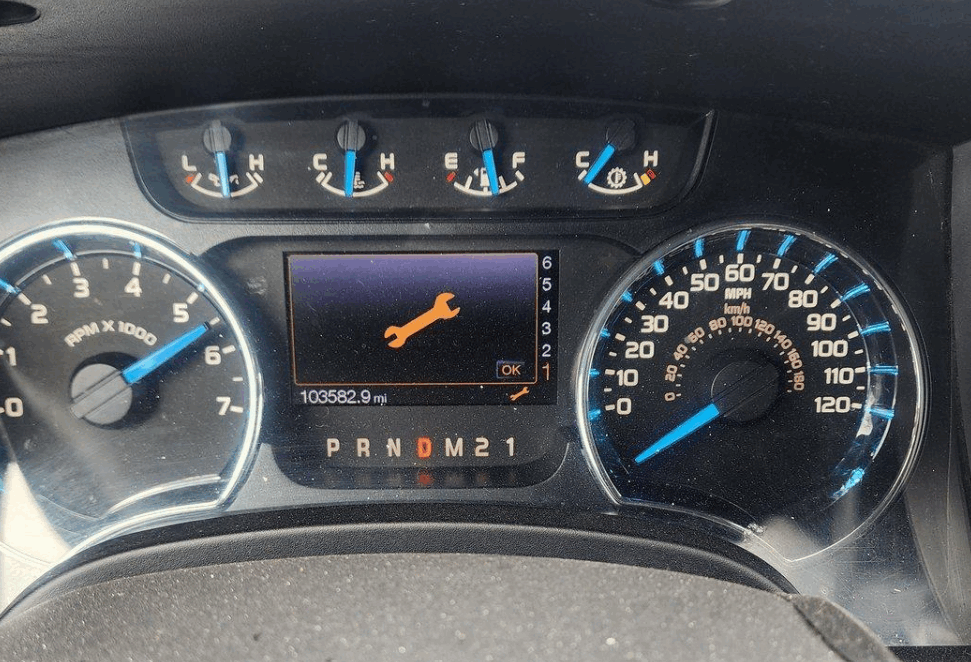
What Does the Ford Wrench Light Mean?
The Ford Wrench Light is a warning indicator for a powertrain problem. It appears when the vehicle detects an issue with systems that control engine power, throttle response, or transmission performance. The Powertrain Control Module (PCM) monitors these systems and activates the warning when it finds abnormal data.
The wrench light mainly relates to the powertrain system. This system includes the engine, transmission, electronic throttle control, and related sensors. When one of these components sends incorrect information, the PCM records a diagnostic trouble code (DTC) and alerts the driver.
Ford vehicles may reduce engine power after the wrench light appears. The vehicle enters a protective mode called Limp Mode. This mode limits performance to prevent further damage. Drivers may notice slower acceleration, delayed throttle response, or unusual shifting behavior.
The Ford Wrench Light does not mean the same thing as the Check Engine Light. The Check Engine Light mainly focuses on engine emissions and general performance issues. The wrench light focuses on power delivery and electronic control problems. For example, a faulty oxygen sensor can trigger the Check Engine Light. A failing electronic throttle body can trigger the wrench light.
Understanding this difference helps drivers choose the correct repair approach. A simple reset may remove the warning temporarily, but it does not repair the cause. If the PCM detects the same fault again, the wrench light will return. Proper diagnosis requires checking the stored DTCs and inspecting the related powertrain components.
What Causes the Ford Wrench Light to Turn On?
The Ford Wrench Light turns on when the vehicle detects a powertrain or electronic control problem. The PCM monitors hundreds of signals from sensors and control modules. When the system detects data outside the expected range, it stores a diagnostic trouble code and activates the warning light.
One of the most common causes is an electronic throttle body problem. Modern Ford vehicles use an electronic throttle control system instead of a traditional mechanical throttle cable. The throttle body controls airflow into the engine, while sensors monitor throttle position. A dirty throttle body, failed motor, or inaccurate sensor signal can interrupt throttle response and trigger the wrench light.
Transmission problems also frequently cause this warning. The Transmission Control Module manages gear changes, pressure control, and communication with the PCM. A faulty transmission sensor, solenoid issue, or communication error can make the vehicle detect abnormal operation. In some cases, the vehicle limits shifting performance to protect the transmission.
Sensor failures create another common trigger. Ford vehicles rely on components such as the accelerator pedal position sensor and throttle position sensor to calculate driver input. When these sensors send incorrect signals, the PCM cannot accurately control engine power. The system may activate the wrench light as a safety response.
Electrical problems can also cause the warning to appear. Low battery voltage, damaged wiring, loose connections, or communication problems between control modules can interrupt normal operation. For example, a weak battery may create temporary communication errors between the PCM and other vehicle systems.
Software-related issues can trigger the wrench light as well. Ford periodically releases updates for control modules to improve system operation and correct known problems. If a module has outdated software, it may misinterpret sensor information and create unnecessary warnings.
The exact cause depends on the vehicle model and stored diagnostic codes. Reading the DTCs with an OBD-II scanner provides the fastest way to identify the affected system. Resetting the light before checking the codes can remove important diagnostic information and make the repair process more difficult.
How Do You Perform a Ford Wrench Light Reset?
The Ford Wrench Light Reset process depends on the cause of the warning and the diagnostic tools available. A reset can clear the warning after a temporary fault, but it cannot repair a damaged component. The correct approach starts with identifying the stored diagnostic trouble code (DTC) before clearing the light.
The most reliable method uses an OBD-II scanner. This tool connects to the vehicle’s diagnostic port and communicates with the Powertrain Control Module. First, turn off the ignition and connect the scanner. Next, read the stored trouble codes and check the related system information. After repairing the underlying issue, use the scanner to clear the codes and reset the wrench light.
Some Ford owners use FORScan to reset the warning. FORScan is a diagnostic software platform designed for Ford vehicles. It provides access to manufacturer-specific modules, including the PCM, TCM, and other electronic systems. Unlike basic OBD-II scanners, FORScan can display deeper information and help identify Ford-specific faults.
Disconnecting the battery is another common reset method. Removing the negative battery cable for around 15 to 30 minutes can clear temporary electronic errors in some Ford models. However, this method does not always erase permanent diagnostic codes. The PCM may turn the wrench light back on if it detects the same fault after reconnecting the battery.
An ignition cycle can also remove temporary warnings. Turn the vehicle off, wait several minutes, and restart the engine. This method works when the system detects a temporary condition that no longer exists. However, it does not replace a proper diagnostic procedure.
A Ford Wrench Light Reset should always follow diagnosis, not replace it. Clearing the warning without checking the cause may hide an important problem. If the light returns after a reset, the vehicle needs further inspection of the powertrain system, sensors, wiring, or control modules.
Why Does the Ford Wrench Light Return After Resetting?
The Ford Wrench Light returns after resetting when the vehicle still detects the original powertrain problem. A reset only clears the stored warning message and diagnostic codes. It does not repair damaged components, restore faulty sensors, or fix communication problems between control modules.
One common reason the light returns is an unresolved throttle system issue. The electronic throttle body controls airflow and engine response through signals from the PCM. If the throttle motor, throttle position sensor, or related wiring still sends incorrect information, the PCM detects the same fault again and activates the wrench light.
Transmission-related problems can also cause repeated warnings after a reset. The TCM monitors gear selection, hydraulic pressure, and transmission performance. A faulty sensor, damaged solenoid, or internal transmission problem continues to create abnormal data. When the TCM reports the issue again, the PCM restores the warning.
Another reason involves stored or recurring diagnostic codes. Ford vehicles may record different types of DTCs, including temporary, pending, and confirmed codes. A temporary error may disappear after a restart, while a confirmed fault usually returns after the system completes another monitoring cycle. For example, a loose electrical connection may trigger an intermittent warning that appears only during certain driving conditions.
A battery reset can also create confusion because it may remove useful diagnostic information. The vehicle may temporarily operate normally after the reset, but the PCM continues monitoring every major system. If the original fault remains, the module detects the problem again.
A returning wrench light indicates that the vehicle needs diagnosis instead of another reset. Checking the stored codes, inspecting affected components, and repairing the actual cause provide a permanent solution. This approach prevents repeated warnings and reduces the risk of additional powertrain damage.
Can You Drive With the Ford Wrench Light On?
The Ford Wrench Light does not always mean you must stop driving immediately, but it indicates a powertrain issue that requires attention. The level of risk depends on the symptoms, the vehicle’s performance, and the diagnostic codes stored in the control module. A vehicle that still drives normally may allow short-distance driving, but ignoring the warning can increase repair costs.
You can usually drive a short distance if the vehicle shows no major performance problems. The engine should accelerate normally, the transmission should shift correctly, and the warning should not appear with severe symptoms. For example, a temporary electronic communication error may trigger the wrench light while the vehicle continues to operate normally.
However, you should stop driving if the vehicle enters Limp Mode or shows signs of serious powertrain failure. Reduced acceleration, harsh transmission shifts, engine hesitation, unusual noises, or sudden loss of power indicate a higher risk situation. These symptoms show that the vehicle has detected a condition that may affect safe operation.
The wrench light becomes more urgent when it appears together with other warning indicators. A combination of the wrench light, Check Engine Light, overheating warning, or transmission warning can indicate a larger system failure. Continuing to drive under these conditions may damage expensive components such as the transmission, throttle system, or engine control modules.
The safest approach depends on the reason behind the warning. Drivers should check the diagnostic codes as soon as possible to identify the affected system. An OBD-II scanner can provide the first step in diagnosis, while a professional inspection may be necessary for complex electrical or mechanical faults.
A Ford Wrench Light Reset may temporarily remove the warning, but driving safety depends on fixing the cause. If the light returns after resetting, the vehicle requires further troubleshooting before regular use.
Does the Reset Procedure Differ Between Ford Models?
The Ford Wrench Light Reset procedure follows the same basic diagnostic process across most Ford models, but the underlying cause can differ between vehicles. Ford uses similar powertrain control systems across many models, including the F-150, Escape, Explorer, Focus, Fusion, and Ranger. However, each model has different engines, transmissions, software versions, and common failure points.
The Ford F-150 often triggers the wrench light because of electronic throttle control problems, transmission issues, or sensor communication faults. Models with advanced transmission systems may require a detailed scan because the warning can involve multiple control modules. A basic reset may clear the light temporarily, but the vehicle still needs diagnosis if the fault returns.
The Ford Escape commonly experiences wrench light warnings related to throttle body operation, electronic sensors, and powertrain communication errors. Hybrid and newer Escape models may require additional diagnostic steps because they use more complex electronic control systems.
The Ford Explorer, Focus, and Fusion can also display the wrench light when the PCM detects throttle, transmission, or electrical problems. Some Focus and Fusion models have specific transmission-related issues that require code analysis before attempting a reset. Clearing the warning without identifying the stored codes may delay the correct repair.
The Ford Ranger follows the same general reset approach as other Ford vehicles. Owners can use an OBD-II scanner or compatible diagnostic software to read and clear fault codes. However, the specific DTCs determine whether the reset solves the issue or only removes the warning temporarily.
Although the reset method remains similar, the diagnostic process changes between models. The vehicle year, engine type, transmission design, and installed modules affect the final repair procedure. Checking the exact DTCs for the specific Ford model provides the most accurate path to solving the wrench light problem.
How Can You Prevent the Ford Wrench Light From Coming Back?
The best way to prevent the Ford Wrench Light from returning is to maintain the powertrain system and address warning signs early. The wrench light often appears after a component develops a performance problem. Regular maintenance helps reduce the chance of throttle, transmission, electrical, and sensor failures.
Following the recommended maintenance schedule is one of the most effective prevention methods. Ford service intervals include inspections and replacements that protect important powertrain components. Regular oil changes, transmission servicing, battery checks, and system inspections help the vehicle maintain stable operation. A neglected maintenance schedule increases stress on electronic and mechanical systems.
Keeping the electronic throttle system clean also helps prevent common wrench light triggers. The throttle body controls airflow into the engine and depends on accurate sensor readings. Carbon buildup can affect throttle movement and create incorrect signals. Cleaning the throttle body during appropriate service intervals can improve throttle response and reduce electronic control problems.
Checking battery health is another important prevention step. Modern Ford vehicles depend on stable electrical power for communication between the PCM, TCM, and other control modules. A weak battery or charging system problem can create voltage fluctuations. These fluctuations may produce false warnings or communication errors between vehicle systems.
Scanning the vehicle before problems become severe can also prevent repeated wrench light warnings. An OBD-II scanner can identify stored DTCs and reveal early system issues. For example, an intermittent sensor error may appear before a complete component failure occurs. Early diagnosis allows owners to repair smaller problems before they affect major powertrain components.
Ford owners should also pay attention to changes in vehicle behavior. Delayed acceleration, unusual shifting, reduced power, or inconsistent throttle response often appear before the warning light activates. Responding to these symptoms early reduces repair costs and improves long-term vehicle reliability.
Preventing the Ford Wrench Light is not about avoiding the warning completely. It is about maintaining the systems that control vehicle performance and fixing problems before they develop into larger failures.
Frequently Asked Questions About Ford Wrench Light Reset
Can I reset the Ford Wrench Light without a scanner?
You can reset the Ford Wrench Light without a scanner in some situations, but this method does not provide a complete diagnosis. Disconnecting the battery or performing an ignition cycle may clear temporary electronic errors on certain Ford models. However, these methods do not always remove stored diagnostic trouble codes from the PCM.
An OBD-II scanner provides a more accurate approach because it shows the exact fault code that triggered the warning. For example, a scanner can identify whether the problem involves the throttle body, transmission system, sensor network, or electrical communication. Without this information, resetting the light may only hide the symptom temporarily.
Does disconnecting the battery erase the Ford Wrench Light?
Disconnecting the battery can remove some temporary warnings, but it does not guarantee a permanent reset. The PCM continuously monitors vehicle systems after power returns. If the original problem still exists, the module detects the fault again and activates the wrench light.
Battery disconnection can also reset adaptive settings in some Ford vehicles. These settings help the PCM adjust engine and transmission operation over time. Because of this, owners should use battery resets carefully and avoid treating them as a replacement for proper diagnosis.
Will resetting the Ford Wrench Light fix the problem?
Resetting the Ford Wrench Light does not fix the underlying mechanical or electrical problem. A reset only clears the warning message and stored codes. If a faulty component continues to send incorrect information, the warning will return.
A permanent repair requires identifying the cause first. For example, replacing a damaged throttle position sensor or repairing a transmission communication problem addresses the source of the warning. Clearing the code alone does not restore normal operation.
Does the Ford Wrench Light always indicate a transmission problem?
The Ford Wrench Light does not always indicate a transmission problem. Transmission faults are one possible cause, but the warning can also come from electronic throttle issues, sensor failures, battery problems, or communication errors between control modules.
The diagnostic trouble code determines which system requires attention. Reading the code before replacing parts prevents unnecessary repairs and helps locate the actual failure.
Can a weak battery trigger the Ford Wrench Light?
A weak battery can trigger the Ford Wrench Light because modern Ford vehicles depend on stable electrical power. Low voltage can interrupt communication between the PCM, TCM, and other electronic modules.
When control modules receive unstable power, they may record incorrect signals or communication faults. Testing battery voltage and the charging system should be part of the diagnostic process, especially if multiple electronic warnings appear together.
How much does it cost to diagnose a Ford Wrench Light?
The cost of diagnosing a Ford Wrench Light depends on the diagnostic method and the repair facility. A basic OBD-II scan may cost little or nothing at some automotive stores, while professional diagnostic services may charge a service fee.
The final repair cost depends on the failed component. A sensor replacement usually costs less than repairing a transmission or replacing an electronic control module. Accurate diagnosis helps avoid unnecessary parts replacement and reduces overall repair expenses.
Conclusion
The Ford Wrench Light Reset process works best when you identify and repair the underlying cause first. The warning does not simply indicate a dashboard issue. It shows that the vehicle detected a problem within the powertrain system, electronic throttle control, transmission operation, or related electrical components.
A reset can remove the warning temporarily, especially when the vehicle experiences a temporary communication error or minor electronic fault. However, the light often returns when the PCM detects the same problem again. Reading diagnostic trouble codes with an OBD-II scanner provides the most reliable way to understand what triggered the warning.
Ford owners should treat the wrench light as an early warning signal. Checking throttle components, maintaining the transmission system, monitoring battery health, and addressing unusual driving symptoms can prevent repeated problems. A correct diagnosis saves time, reduces unnecessary repairs, and protects important vehicle systems.
If the Ford Wrench Light returns after a reset, the next step is not another reset. The next step is finding the failed component or system that caused the warning. Proper troubleshooting helps restore normal performance and keeps the vehicle reliable for long-term use.