The Ford H9 Axle Code identifies a specific rear axle configuration installed at the factory. This code provides valuable information about the axle ratio and drivetrain setup, helping owners, buyers, and technicians determine how a vehicle is designed to perform. Whether you are purchasing a used Ford truck, replacing drivetrain components, or verifying towing specifications, understanding the H9 axle code is an important first step.
Many Ford owners assume that an axle code only identifies the differential. In reality, it is part of a broader identification system that supports vehicle servicing, parts compatibility, and performance evaluation. The axle ratio influences engine speed, towing capability, fuel efficiency, and overall driving characteristics. As a result, knowing the correct axle code helps prevent incorrect parts selection and costly repairs.
This guide explains what the Ford H9 Axle Code means, the gear ratio associated with it, the Ford models that may use it, and the methods used to verify the code through the door jamb label, axle tag, or factory records. It also explores how the H9 axle configuration affects towing performance, highway driving, off-road capability, and daily usability. By the end of this article, you will understand how to identify the H9 axle correctly and determine whether it matches your vehicle’s intended purpose.
What Does the Ford H9 Axle Code Mean?
The Ford H9 Axle Code identifies the rear axle configuration installed on a Ford vehicle. Ford uses axle codes to classify different axle ratios and differential setups during vehicle production. The code helps owners and technicians find the correct drivetrain specifications without opening the axle housing.
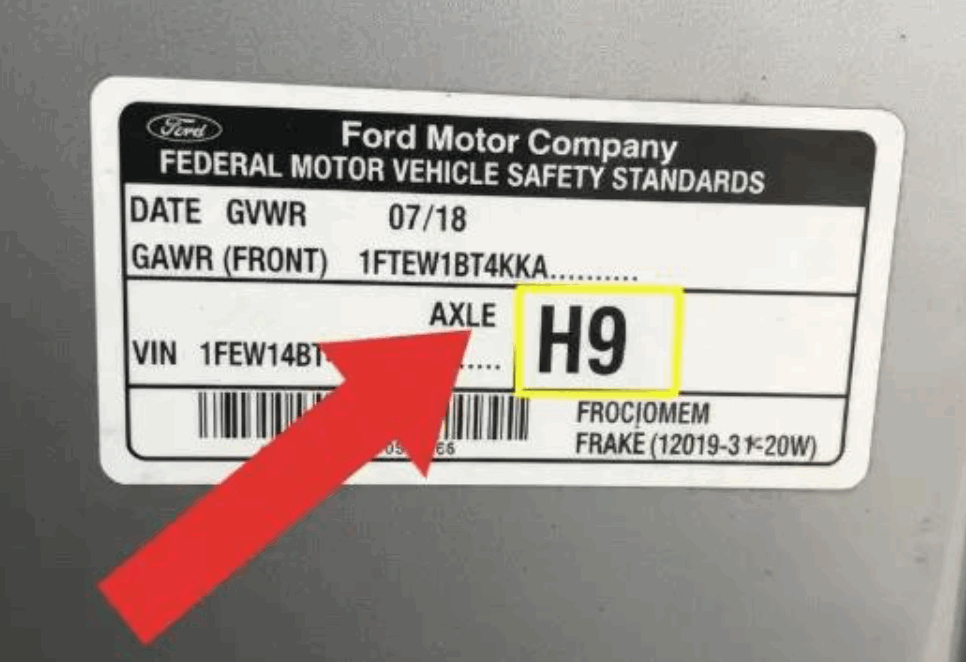
The axle code appears on the Safety Compliance Certification Label inside the driver’s side door jamb. Some Ford vehicles also display an axle tag on the differential housing. These locations provide direct information about the rear axle assembly. They help technicians select compatible gears, bearings, seals, and differential components.
The Ford H9 Axle Code does not represent the entire vehicle specification. The VIN identifies the complete vehicle, while the axle code focuses on the rear axle system. The axle code shows important drivetrain details that affect how power reaches the wheels.
The H9 code belongs to Ford’s axle identification system. However, the exact axle specification depends on the vehicle model, production year, drivetrain package, and factory options. A Ford F-150 with an H9 code may not have identical axle characteristics to another Ford model with the same code.
Understanding the Ford H9 Axle Code helps vehicle owners make better decisions about repairs and upgrades. The axle ratio affects acceleration, towing ability, engine RPM, and fuel efficiency. Checking the correct axle information prevents incorrect part selection and ensures that replacement components match the original factory design.
What Gear Ratio Does the Ford H9 Axle Code Represent?
The Ford H9 Axle Code represents a specific rear axle configuration that includes a factory-selected gear ratio. The gear ratio controls how many times the driveshaft turns compared with one rotation of the vehicle wheels. This ratio directly affects torque delivery, acceleration, engine speed, and towing performance.
A lower numerical axle ratio reduces engine RPM during highway driving and can improve fuel efficiency. A higher numerical ratio increases torque multiplication at the wheels and helps vehicles move heavier loads. Ford selects axle ratios based on the vehicle’s intended use, including passenger comfort, towing requirements, payload capacity, and off-road capability.
The exact gear ratio linked to the Ford H9 Axle Code depends on the vehicle model, production year, and factory configuration. Ford has used different axle codes across multiple generations of trucks and SUVs. Therefore, owners should confirm the H9 specification through the door jamb label, factory build sheet, or official service information before replacing axle components.
The axle ratio plays an important role when modifying a Ford vehicle. Larger tires, towing upgrades, or performance changes can alter the way the factory gear ratio performs. For example, installing larger tires increases the effective gearing and may reduce acceleration. Many owners choose a different gear ratio after major modifications to restore torque and maintain drivability.
Checking the H9 axle specification before making drivetrain changes helps prevent compatibility problems. The correct axle ratio ensures that the transmission, engine output, differential, and wheels work together as Ford designed.
Which Ford Vehicles Use the H9 Axle Code?
The Ford H9 Axle Code appears on specific Ford vehicles that use a matching rear axle configuration from the factory. The code does not apply to every Ford model because axle specifications change according to vehicle platform, engine option, drivetrain layout, and production year.
Ford trucks often use axle codes to separate different drivetrain setups within the same model range. For example, a Ford F-150 can have different axle ratios depending on whether the vehicle focuses on daily driving, towing, payload, or off-road performance. The same model can include multiple axle configurations across different trim levels and packages.
The H9 axle code may appear on Ford trucks and SUVs that require a specific balance between torque delivery and driving efficiency. Models such as the Ford F-150, Ford Ranger, and Ford Super Duty have used various axle codes throughout different generations. However, the presence of the H9 code depends on the exact production year and factory equipment package.
Vehicle owners should verify the H9 axle code instead of assuming compatibility based on the vehicle model alone. Two Ford vehicles with the same body style can have different rear axle assemblies. Engine type, transmission option, four-wheel-drive system, and towing package can all influence the selected axle configuration.
The most reliable way to confirm whether a Ford vehicle uses the H9 axle code is to check the factory door jamb label, axle identification tag, or official build information. These sources provide the original axle details assigned when Ford manufactured the vehicle. This verification process helps owners choose the correct replacement parts and understand the vehicle’s original performance characteristics.
How Does the Ford H9 Axle Ratio Affect Vehicle Performance?
The Ford H9 axle ratio affects vehicle performance by changing how the engine transfers power to the wheels. The axle ratio determines the balance between torque multiplication and wheel speed. This relationship influences acceleration, towing ability, fuel consumption, and highway driving behavior.
A higher numerical axle ratio gives the wheels more turning force. This setup helps a vehicle accelerate faster and handle heavier loads. Trucks that regularly tow trailers or carry heavy payloads often benefit from axle ratios that provide stronger low-speed torque. The additional torque helps the engine move weight more efficiently during starts, climbs, and difficult terrain.
A lower numerical axle ratio reduces engine speed at higher speeds. This setup improves highway comfort because the engine does not need to operate at higher RPM during cruising. Lower RPM can also reduce fuel consumption during long-distance driving. However, the vehicle may feel less responsive when carrying heavy loads or accelerating from a stop.
The Ford H9 axle configuration affects towing performance because the axle ratio changes the amount of torque available at the wheels. A vehicle with the correct axle ratio can maintain speed more easily when towing. It also reduces unnecessary strain on the engine and transmission during demanding conditions.
Axle ratio changes become especially important when owners modify their vehicles. Larger tires reduce effective gearing because they increase wheel diameter. A truck that receives oversized tires may lose acceleration and towing performance unless the owner selects a different gear ratio.
Understanding the relationship between the Ford H9 Axle Code and vehicle performance helps owners choose suitable upgrades. The correct axle setup allows the engine, transmission, differential, and wheels to operate together efficiently.
How Can You Identify the Ford H9 Axle Code?
The Ford H9 Axle Code can be identified by checking the vehicle identification labels and factory records. Ford provides axle information through several locations, including the door jamb label, axle tag, VIN records, and build sheet. These sources help owners confirm the original rear axle specification without removing drivetrain components.
The easiest method is checking the Safety Compliance Certification Label on the driver’s side door jamb. This label contains factory information about the vehicle, including the axle code. The code usually appears in the section marked “AXLE” or a similar designation. Owners can compare this code with Ford axle information to determine the original axle configuration.
The second method involves inspecting the axle identification tag. Ford attaches a small metal tag to many differential housings. This tag can provide information about the axle assembly, gear ratio, and manufacturing details. However, dirt, corrosion, or previous repairs can make the tag difficult to read.
VIN lookup provides another way to confirm axle information. A VIN decoder or Ford factory database can reveal the original equipment installed on the vehicle. This method works best when the door label is missing or damaged.
The factory build sheet provides the most complete vehicle history. It shows the original options, drivetrain components, and axle specifications selected during production. Owners should use multiple sources when possible because previous axle replacements can change the current configuration.
Accurate identification of the Ford H9 Axle Code prevents incorrect repairs and upgrades. Confirming the axle specification before purchasing gears, differentials, or replacement parts ensures compatibility with the vehicle’s existing drivetrain.
Is the Ford H9 Axle Code a Limited-Slip Differential?
The Ford H9 Axle Code does not automatically confirm that a vehicle has a Limited-Slip Differential (LSD). The axle code identifies a specific axle configuration, but the differential type depends on the vehicle model, production year, and factory equipment package. Owners must verify the complete axle specification before assuming the vehicle uses a limited-slip system.
A Limited-Slip Differential improves traction by transferring power between the drive wheels when one wheel loses grip. This system helps vehicles maintain better control during acceleration on slippery roads, uneven surfaces, and off-road conditions. Unlike an open differential, an LSD reduces the amount of power lost through a spinning wheel.
An open differential sends power through the path with the least resistance. This design works well for normal driving because it provides smooth operation and simple maintenance. However, it can reduce traction when one wheel has significantly less grip than the other.
Ford vehicles use different differential systems depending on their purpose. Some trucks prioritize towing strength, while others focus on off-road capability or daily driving comfort. Features such as electronic locking differentials, limited-slip units, and open differentials may appear across different Ford models and trim levels.
The best way to confirm the differential type on a Ford vehicle with the H9 Axle Code is to check the factory build sheet, axle tag, or original equipment documentation. Visual inspection alone may not provide accurate results because similar axle housings can contain different internal components.
Understanding the difference between an axle code and a differential type helps owners avoid incorrect assumptions. The H9 code provides important axle information, but it represents only one part of the complete rear drivetrain system.
What Are the Most Common Ford Axle Codes Compared with H9?
The Ford H9 Axle Code is one of many axle identifiers that Ford uses to describe rear axle configurations. Each axle code connects to specific drivetrain characteristics, including gear ratio, differential type, and vehicle application. Comparing H9 with other Ford axle codes helps owners understand how different axle setups affect performance.
| Ford Axle Code | Common Gear Ratio Range | Typical Purpose |
|---|---|---|
| H9 | Depends on model year and vehicle configuration | Balanced performance and factory drivetrain setup |
| L9 | Varies by production configuration | Alternative axle option for specific Ford vehicles |
| 19 | Commonly used for efficiency-focused applications | Lower engine RPM during highway driving |
| 27 | Often selected for general driving conditions | Balanced acceleration and fuel economy |
| 31 | Frequently used for stronger torque delivery | Improved towing and payload capability |
| 41 | Designed for higher torque multiplication | Heavy-duty applications |
| 43 | Used for performance and load-focused setups | Increased wheel torque |
Ford selects axle codes based on the vehicle’s intended purpose. A truck designed for frequent towing needs a different axle setup than a vehicle designed mainly for highway commuting. Higher numerical ratios usually provide stronger acceleration and towing capability, while lower numerical ratios support quieter highway operation and improved efficiency.
The H9 Axle Code should not be judged only by comparing numbers. The complete drivetrain system determines real-world performance. Engine torque, transmission gearing, tire size, vehicle weight, and differential type all influence how an axle configuration performs.
When comparing the H9 axle with another Ford axle code, owners should consider their driving needs first. A towing-focused driver may prefer an axle setup that increases low-speed pulling power. A daily commuter may benefit from a configuration that reduces engine RPM and improves cruising efficiency.
Understanding Ford axle codes allows owners to make better decisions when buying vehicles, replacing drivetrain components, or planning modifications. The correct axle configuration depends on how the vehicle will be used rather than choosing the highest or lowest gear ratio available.
What Should You Know Before Replacing or Modifying an H9 Axle?
The Ford H9 Axle Code requires careful consideration before replacement or modification because axle changes affect the entire drivetrain system. The axle ratio, differential type, tire size, transmission, and engine output must work together to maintain proper vehicle performance. A modification that ignores these factors can reduce drivability and create additional mechanical problems.
Many Ford owners change axle components after installing larger tires, lift kits, or towing equipment. Larger tires increase the distance traveled with each wheel rotation. This change effectively reduces the vehicle’s torque at the wheels and can make acceleration feel slower. Replacing the axle gears with a different ratio can restore the original driving characteristics.
Owners should also consider towing requirements before changing an H9 axle configuration. A vehicle that regularly pulls trailers needs enough torque multiplication to move heavy loads efficiently. The wrong axle ratio can increase transmission stress, reduce acceleration, and make uphill driving more difficult.
Changing an axle requires more than replacing the gear set. Technicians must check the differential compatibility, ring and pinion measurements, axle shafts, bearings, seals, and electronic systems. Modern Ford vehicles may also require speedometer calibration or computer adjustments after changing tire size or gear ratio.
A proper axle modification starts with accurate identification of the original H9 specification. Owners should record the factory axle code, current gear ratio, tire size, and vehicle usage before selecting new components. This information helps determine whether a modification will improve performance or create unnecessary issues.
The best axle setup depends on the vehicle’s purpose. A daily driver, towing truck, and off-road vehicle each require different drivetrain characteristics. Understanding the Ford H9 Axle Code allows owners to make informed decisions and protect the reliability of their vehicle.
Frequently Asked Questions About Ford H9 Axle Code
What does the Ford H9 Axle Code mean?
The Ford H9 Axle Code identifies a specific rear axle configuration installed by Ford at the factory. It provides information about the axle assembly and helps owners verify compatible drivetrain components. The code does not replace the VIN because it only describes the axle system rather than the entire vehicle.
What gear ratio does the Ford H9 Axle Code have?
The gear ratio linked to the Ford H9 Axle Code depends on the vehicle model, production year, and factory configuration. Ford has used different axle specifications across multiple vehicles and generations. Owners should confirm the exact ratio through the door jamb label, axle tag, build sheet, or official Ford documentation.
Can I identify the Ford H9 Axle Code from the VIN?
The VIN can help identify the original vehicle configuration, but it does not always display the axle code directly. Owners usually need a VIN lookup service, factory build sheet, or Ford database to retrieve the original axle information. The door jamb label remains one of the fastest methods for checking the axle code.
Is the Ford H9 Axle Code a limited-slip differential?
The Ford H9 Axle Code does not automatically indicate a limited-slip differential. The code identifies the axle configuration, while the differential type depends on the specific vehicle package. Owners should check factory records or axle documentation to confirm whether the vehicle uses an open differential, limited-slip differential, or another traction system.
Can I change the Ford H9 axle ratio?
The Ford H9 axle ratio can be changed, but the modification requires proper drivetrain planning. Gear changes affect engine RPM, torque delivery, fuel economy, and towing performance. Owners should consider tire size, transmission type, vehicle usage, and differential compatibility before selecting a new axle ratio.
Is the Ford H9 Axle Code important when buying a used Ford vehicle?
The Ford H9 Axle Code provides useful information when evaluating a used Ford vehicle. It helps buyers confirm the original drivetrain setup and understand the vehicle’s intended performance characteristics. Checking the axle code can reveal whether the vehicle matches specific needs such as towing, hauling, or daily driving.
Conclusion: What You Should Know About the Ford H9 Axle Code
The Ford H9 Axle Code provides important information about a vehicle’s rear axle configuration and drivetrain design. This code helps owners identify the original axle setup, select compatible replacement parts, and understand how the vehicle performs under different driving conditions.
The axle ratio connected to the H9 configuration influences several performance factors, including acceleration, towing capability, engine RPM, and fuel efficiency. However, owners should always verify the exact axle specification because Ford axle codes can vary depending on the vehicle model, production year, and factory options.
Checking the Ford H9 Axle Code before repairing or modifying a vehicle prevents incorrect component selection. The door jamb label, axle tag, VIN records, and factory build sheet provide reliable ways to confirm the original axle information. This verification becomes especially important when changing gear ratios, installing larger tires, or upgrading a vehicle for towing or off-road use.
Understanding axle codes is part of understanding the complete Ford drivetrain system. The H9 code represents one component of a larger system that includes the engine, transmission, differential, and wheels. By identifying the correct axle specifications, Ford owners can maintain reliability, improve performance, and make better decisions about future modifications.