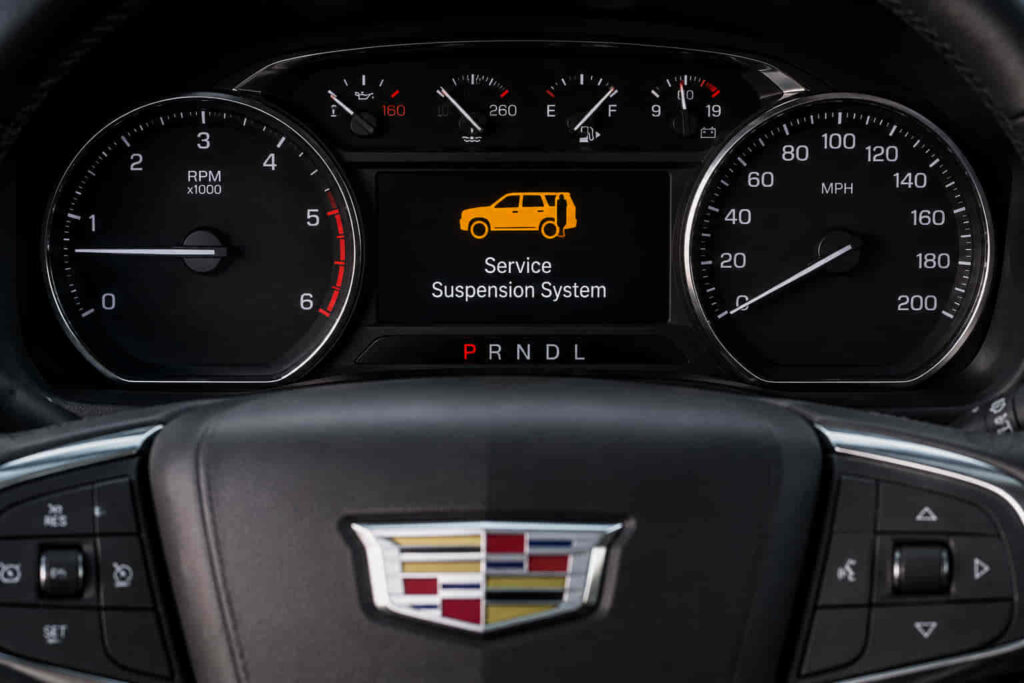
A Cadillac Escalade Service Suspension System warning appears when the vehicle detects a problem with the electronic suspension system, air suspension components, suspension sensors, or suspension control module. Unlike a traditional mechanical suspension system, the Cadillac Escalade uses advanced electronic controls to monitor ride height, damping performance, and vehicle movement to provide a smoother and more stable driving experience.
The suspension control system continuously receives information from sensors and adjusts components such as air suspension systems or electronically controlled dampers. When the system detects abnormal data, a failed component, or communication problems between modules, it may activate the Service Suspension System message to alert the driver that suspension adjustment may not operate correctly.
Common causes of this warning include air compressor failure, air leaks, faulty ride height sensors, electrical problems, suspension module communication errors, and calibration issues. The message does not always mean the entire suspension system requires replacement because many failures come from individual components or electrical connections.
Proper diagnosis is important because suspension components on the Cadillac Escalade can be expensive, and replacing parts without confirming the failure source may lead to unnecessary repairs. This guide explains the most effective ways to diagnose and fix Cadillac Escalade Service Suspension System problems by identifying how each component affects suspension performance.
How Do You Diagnose Cadillac Escalade Service Suspension System Problems?
Diagnosing Cadillac Escalade Service Suspension System problems requires identifying which suspension component has failed instead of replacing parts based only on the warning message. The electronic suspension system connects multiple components, including sensors, control modules, air suspension parts, and electrical circuits, so a single warning can be caused by different failures.
The first step in diagnosis is understanding the symptoms that appear with the warning. A Cadillac Escalade with a suspension fault may show uneven vehicle height, a rougher ride, delayed suspension adjustment, unusual compressor operation, or a suspension warning that appears immediately after startup. These symptoms provide important information about which part of the system may not be operating correctly.
A proper diagnostic process starts with scanning suspension-related fault codes using a diagnostic tool that can communicate with the suspension control module. Standard engine codes may not reveal the actual suspension problem because many suspension failures are stored inside dedicated electronic modules. The stored codes help identify whether the issue involves sensors, air pressure, electrical communication, or mechanical suspension components.
After retrieving fault information, the affected system needs to be tested physically. This includes checking electrical connections, verifying sensor signals, inspecting air suspension components, and confirming module communication. For example, if a Cadillac Escalade displays a suspension warning because of a failed ride height sensor, replacing the air compressor would not solve the problem because the compressor is not the original cause.
Accurate diagnosis prevents unnecessary repairs and helps restore the suspension system efficiently. Since Cadillac Escalade suspension components can be expensive, identifying the exact failure point before replacement is the most effective repair strategy.
Can Checking Suspension Fault Codes Fix Cadillac Escalade Suspension Problems?
Checking suspension fault codes is an essential step in fixing Cadillac Escalade suspension problems because these codes provide information about which part of the electronic suspension system is not operating correctly. The suspension control module monitors various components and records errors when sensor signals, electrical communication, or mechanical operation fall outside expected conditions.
Suspension fault codes can indicate problems related to air suspension pressure, ride height sensors, compressor operation, suspension actuators, or communication between control modules. These codes do not always mean a specific component has completely failed, but they provide a direction for further testing.
For example, a fault code related to vehicle height adjustment may be caused by a damaged ride height sensor, an air leak, or a wiring issue. Replacing the sensor immediately without checking the entire system may not solve the problem if the actual failure exists elsewhere.
After reading fault codes, technicians need to verify the related components through additional testing. This may include measuring electrical signals, checking air pressure, inspecting connectors, and confirming that the suspension module receives accurate information from sensors.
Clearing fault codes without repairing the underlying issue usually provides only a temporary solution. If the original problem remains, the Cadillac Escalade Service Suspension System warning will return because the control module continues detecting the same abnormal condition.
Read more: Cadillac Escalade Service Stability System
Can a Faulty Air Compressor Cause Cadillac Escalade Suspension Warning?
A faulty air compressor can cause a Cadillac Escalade Service Suspension System warning because the compressor is responsible for creating the air pressure required to adjust and maintain vehicle height in the air suspension system. When the compressor cannot generate enough pressure or fails to operate correctly, the suspension system may not be able to maintain the designed ride height.
The air compressor works together with air springs, valves, and the suspension control module to regulate the amount of compressed air sent to each suspension component. The module activates the compressor when it detects that the vehicle height needs adjustment. If the compressor operates too slowly, overheats, or stops working completely, the system may record a fault and display a suspension warning.
Common compressor-related failures include worn internal components, electrical motor problems, overheating caused by excessive operation, and reduced air pressure output. A compressor that runs continuously can also indicate another problem, such as an air leak, because the system keeps trying to restore lost pressure.
Drivers may notice symptoms such as one side of the Cadillac Escalade sitting lower than the other, delayed height adjustment, a compressor running for extended periods, or the vehicle remaining in a fixed suspension position. For example, if the rear of the Escalade stays low after parking overnight, the compressor may be unable to compensate for pressure loss elsewhere in the system.
Before replacing the compressor, the entire air suspension system should be inspected. A weak compressor may be the result of another failure, and replacing it without fixing the original cause can lead to repeated suspension problems.
Can Air Leaks Cause Cadillac Escalade Service Suspension System?
Air leaks can cause Cadillac Escalade Service Suspension System warnings because the air suspension system requires a sealed circuit to maintain proper pressure and vehicle height. Even a small leak can prevent the suspension from holding the correct position and force the compressor to operate more frequently than normal.
The air suspension system depends on components such as air springs, air lines, seals, and solenoid valves to store and distribute compressed air. When any of these components develop damage, air escapes from the system and changes the pressure balance required for suspension adjustment.
Common sources of air leaks include aging air springs, cracked air lines, damaged seals, and faulty valve blocks. These problems often become more noticeable after the vehicle has been parked for several hours because the system gradually loses pressure while not operating.
Typical symptoms include uneven vehicle height, one corner of the vehicle sitting lower, frequent compressor activation, and suspension warnings appearing after startup. For example, a Cadillac Escalade that appears normal while driving but lowers overnight may have a slow air leak rather than a compressor failure.
Finding air leaks requires a detailed inspection of the entire air suspension system. Repairing the leak restores pressure stability and reduces unnecessary compressor operation, which helps protect other suspension components from premature failure.
Can Ride Height Sensor Problems Trigger Suspension Warning?
Ride height sensor problems can trigger a Cadillac Escalade Service Suspension System warning because the suspension control module depends on accurate height measurements to adjust the vehicle’s suspension position correctly. The ride height sensor monitors the distance between the vehicle body and suspension components, allowing the control module to determine whether the vehicle needs to raise, lower, or maintain its current height.
The Cadillac Escalade electronic suspension system uses ride height information to control air suspension operation and maintain proper balance between the front and rear suspension. When a sensor sends incorrect data, loses communication, or becomes unable to measure suspension position accurately, the control module may disable automatic adjustment and display a warning message.
Common causes of ride height sensor problems include internal sensor failure, damaged sensor linkage, corrosion around electrical connections, and incorrect calibration after suspension repairs. Because these sensors are located near suspension components, they can be affected by road debris, moisture, and physical damage during vehicle operation.
Drivers may notice symptoms such as uneven vehicle height, incorrect suspension adjustment, a warning message appearing after repairs, or the vehicle remaining in a fixed ride height position. For example, a Cadillac Escalade that sits higher or lower than normal after replacing suspension components may require ride height sensor calibration rather than a complete suspension replacement.
Proper diagnosis involves checking suspension fault codes, comparing sensor readings with actual vehicle height, and verifying sensor calibration. Replacing a ride height sensor should only be considered after confirming that the sensor signal is inaccurate or the component has physically failed.
Can Electrical Problems Affect Cadillac Escalade Suspension System?
Electrical problems can affect the Cadillac Escalade suspension system because electronic suspension components require stable power and reliable communication between sensors, control modules, and adjustment systems. The suspension system depends on electrical signals to control components such as the air compressor, suspension actuators, and ride height sensors.
Low battery voltage, damaged wiring, poor grounding, and corroded connectors can interrupt communication between suspension components. When the suspension control module receives incomplete or incorrect information, it may activate the Service Suspension System warning to prevent improper suspension operation.
Electrical issues are often difficult to identify because they may appear intermittently. A Cadillac Escalade may operate normally in certain conditions but display the suspension warning after temperature changes, vibration, moisture exposure, or battery voltage fluctuations. These situations often indicate a connection or communication problem rather than a failed mechanical suspension component.
Checking the electrical system should include inspecting battery condition, charging system performance, wiring connections, and module communication. For example, a weak battery may cause suspension warnings during startup because the control modules do not receive enough voltage to complete their initialization process.
Repairing electrical faults can restore normal suspension operation without replacing expensive suspension components. Accurate electrical testing helps determine whether the problem comes from the power supply, wiring network, sensor connection, or suspension control module.
How Do You Reset Cadillac Escalade Service Suspension System Warning?
You can reset a Cadillac Escalade Service Suspension System warning only after identifying and repairing the original suspension problem because resetting the message does not repair a failed component. The warning appears because the suspension control module has detected abnormal operation, and the system will continue generating the message if the underlying issue remains unresolved.
The correct reset process begins with reading suspension fault codes and repairing the component responsible for the failure. After the repair is completed, a diagnostic scanner can be used to clear stored codes from the suspension control module. In some cases, the system may also require calibration or a relearn procedure to ensure that sensors and suspension components operate with accurate reference values.
Disconnecting the battery may temporarily remove some warning messages, but this method does not provide a complete repair. It can also remove useful diagnostic information stored in the control modules, making it harder to identify the original failure if the problem returns.
A proper suspension reset restores normal operation only when the control module receives correct information again. For example, if a Cadillac Escalade displays a Service Suspension System warning because of a failed ride height sensor, clearing the warning without replacing or calibrating the sensor will only hide the symptom temporarily.
When Should You Replace Cadillac Escalade Suspension Components?
You should replace Cadillac Escalade suspension components only after diagnosis confirms that the specific part has failed because many suspension warnings are caused by related issues rather than complete component failure. The electronic suspension system contains expensive components, including air compressors, air springs, sensors, and control modules, so accurate testing is essential before replacement.
Some suspension problems require replacing individual parts, such as a damaged air spring, failed ride height sensor, or malfunctioning compressor. Other situations may only require repairs such as fixing an electrical connection, repairing an air leak, or recalibrating the suspension system.
The decision to replace a component depends on several factors, including the severity of the failure, vehicle mileage, repair cost, and the overall condition of the suspension system. For example, a Cadillac Escalade with a leaking air spring may only need that specific component replaced, while a vehicle with multiple aging suspension components may require a broader repair approach.
Professional diagnosis helps prevent unnecessary expenses because replacing a compressor or suspension module without confirming the failure can result in the same warning returning. A complete inspection ensures that repairs address the actual cause of the Service Suspension System message.
Maintaining the suspension system through regular inspections, addressing warning signs early, and repairing small issues before they affect other components can improve long-term Cadillac Escalade suspension reliability.
How Can You Restore Cadillac Escalade Suspension System Performance?
You can restore Cadillac Escalade suspension system performance by identifying the exact cause of the Service Suspension System warning and repairing the affected component instead of replacing parts without proper diagnosis. The electronic suspension system depends on the cooperation between sensors, control modules, air suspension components, and electrical systems to maintain the correct ride height and driving comfort.
A suspension warning does not always indicate a complete suspension failure. Problems such as air leaks, weak compressors, faulty ride height sensors, electrical connection issues, or calibration errors can create similar symptoms. Understanding how each component works together helps determine the correct repair approach and prevents unnecessary replacement of expensive parts.
The most effective troubleshooting process starts with reading suspension fault codes, inspecting related components, testing electrical signals, and confirming that the suspension control module receives accurate information. This approach identifies the root cause instead of only clearing the warning message temporarily.
Regular maintenance also plays an important role in preventing future suspension problems. Checking suspension components, maintaining proper battery voltage, addressing unusual ride height changes, and repairing small air leaks early can improve system reliability.
A Cadillac Escalade Service Suspension System warning should not be ignored because the suspension system affects vehicle stability, comfort, and safety. With accurate diagnosis and timely repairs, the electronic suspension system can return to normal operation and continue providing the performance expected from the Cadillac Escalade.