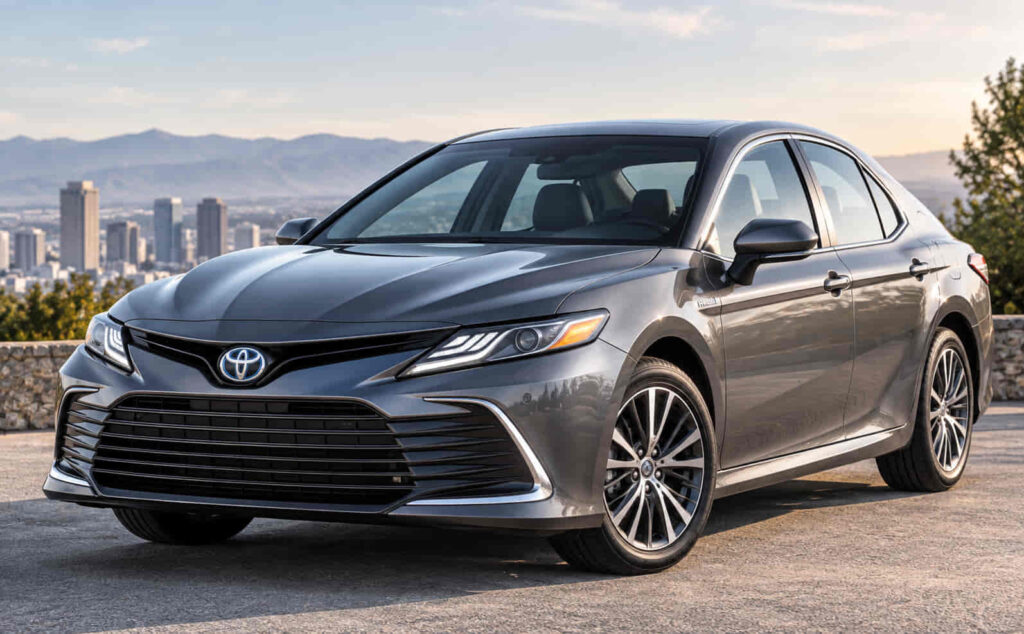
Toyota Camrys are generally reliable cars, especially when they are maintained on schedule and have a documented service history. Their reputation for long-term durability comes largely from dependable powertrains, predictable maintenance requirements, and the ability of many well-maintained examples to remain usable at high mileage. However, reliability is not identical across every Camry because model year, engine type, transmission, mileage, previous ownership, and maintenance quality can significantly change how dependable an individual vehicle is.
A Toyota Camry with 100,000 miles and consistent maintenance can be a lower-risk purchase than a lower-mileage example that has missed oil changes, suffered overheating, or received poor-quality repairs. The same distinction applies to older gasoline models and Camry Hybrids: overall platform reliability may be strong, but specific components and age-related wear still need to be evaluated before judging the condition of one car.
This guide examines Toyota Camry reliability through lifespan, high-mileage durability, engine and transmission performance, hybrid-system reliability, common problems, maintenance costs, and model-year differences. It also explains what to check before buying a used Camry so that the reliability of the individual vehicle can be separated from the reputation of the Camry nameplate as a whole.
Read more: Toyota RAV4 Power Back Door Not Working
Are Toyota Camrys Reliable?
Toyota Camrys are generally reliable cars, with above-average repair reliability and strong long-term durability compared with many midsize sedans. However, this reliability applies to the Camry nameplate as a whole rather than guaranteeing that every model year or individual vehicle will be equally dependable. Model year, powertrain, maintenance history, mileage, previous repairs, and how the vehicle was driven all influence the reliability of a specific Camry.
Repair data supports the Camry’s overall reliability reputation. RepairPal currently gives the Toyota Camry a reliability rating of 4.0 out of 5.0 and ranks it third among 24 midsize cars. Its data shows an average annual repair and maintenance cost of $388, compared with $526 for the average midsize car. Camry owners average about 0.3 unscheduled repair-shop visits per year, while approximately 11% of repairs are classified as severe. These measures are useful because reliability is being evaluated through repair cost, repair frequency, and repair severity rather than owner perception alone. RepairPal notes that its reliability methodology uses vehicles from the 2010–2019 model years, so the rating should not be treated as a prediction for every newer Camry.
Long-term vehicle data points in the same direction. iSeeCars’ current Camry reliability analysis, based on more than 300 million vehicle data points, gives the model a 7.6 out of 10 reliability score and ranks it first among 11 midsize cars in its reliability comparison. Its methodology focuses heavily on vehicle longevity and the probability of reaching high mileage, which makes the result particularly relevant for buyers interested in keeping a Camry for many years rather than only during the warranty period.
Reliability still varies substantially between individual cars. A Camry with consistent oil changes, properly serviced cooling and braking systems, and records showing that problems were repaired promptly can remain dependable even with substantial mileage. A lower-mileage Camry can represent a greater ownership risk when oil changes were neglected, the engine was allowed to overheat, collision damage was repaired poorly, or transmission and cooling-system problems were ignored. Mileage therefore measures how far the vehicle has traveled, while maintenance history indicates how that mileage was accumulated.
Model year also matters because the Camry has passed through multiple generations, engines, transmissions, electronics packages, and hybrid-system designs. iSeeCars identifies separate generations including 2007–2011, 2012–2017, 2018–2024, and the redesigned hybrid-only 2025–2026 generation. A reliability statement about the entire Camry lineup should therefore not be interpreted as evidence that each generation has the same failure patterns or ownership risk.
The current generation illustrates why reliability claims need to be qualified by model year. J.D. Power gives the 2025 Camry a Quality & Reliability score of 80 out of 100, categorized as average, while noting that previous-year data was used until sufficient current-year owner data became available. This does not contradict the Camry’s long-term reliability record; it shows that a nameplate’s historical durability and the measured quality of one recent model year are different reliability questions.
Toyota Camry reliability is therefore best described as strong at the model level but condition-dependent at the individual-vehicle level. The Camry has favorable repair-frequency, repair-cost, and longevity data, but a used-car buyer should still evaluate the exact model year, powertrain, maintenance record, mileage, and current mechanical condition before assuming that a specific Camry will be trouble-free.
How Long Do Toyota Camrys Usually Last?
A Toyota Camry has an estimated average lifespan of about 172,000 miles, while a substantial share of Camrys can reach 200,000 miles when their condition and maintenance support continued use. iSeeCars’ current analysis estimates the Camry’s average lifespan at 172,479 miles, equivalent to approximately 13.1 years based on observed usage patterns, and calculates a 31.8% probability of a Camry reaching at least 200,000 miles during its usable life.
These figures should be interpreted as population-level estimates rather than a retirement point for an individual vehicle. A Camry does not automatically become unreliable at 172,479 miles, just as buying one with substantially less mileage does not guarantee years of problem-free ownership. The average reflects vehicles that leave service at different mileages for different reasons, including mechanical condition, accidents, corrosion, repair economics, and owner decisions. An individual Camry can therefore remain viable beyond the average lifespan when its major systems are maintained and the cost of continued repairs remains reasonable.
Reaching 200,000 miles requires more than a durable engine. Long-term reliability depends on the entire vehicle remaining economically serviceable. Engine lubrication, cooling-system performance, transmission condition, suspension wear, wheel bearings, brakes, engine mounts, seals, electrical components, and climate-related deterioration can all influence whether a high-mileage Camry remains practical to own. A vehicle can have a healthy engine at 200,000 miles but still become expensive if several age-related systems require replacement at the same time.
Maintenance affects this lifespan because small service failures can develop into major reliability problems. Regular engine-oil service protects internal engine components from accelerated wear, while maintaining the cooling system reduces the risk of overheating that can damage an otherwise durable engine. Worn suspension components, leaking seals, deteriorated hoses, or developing drivetrain problems are less likely to threaten the vehicle’s useful life when they are corrected before secondary damage occurs. Long-term reliability is therefore the cumulative result of many maintenance decisions rather than one major service performed at high mileage.
Age also matters independently of mileage. iSeeCars estimates that the Camry averages roughly 13.1 years of usable life in its dataset, but two 13-year-old Camrys can have very different conditions. A vehicle driven in a region with significant road salt may accumulate corrosion that a similarly aged Camry in a dry climate does not experience. A low-mileage car that sits unused for long periods can develop age-related deterioration in rubber components, seals, tires, fluids, and the 12-volt battery despite showing a low odometer reading.
The Camry’s potential for high mileage is also supported by broader longevity research. In an iSeeCars study of vehicles with the greatest potential lifespan, Toyota placed 10 models among the top 20, and the Camry Hybrid was one of three Toyota hybrids represented. The study analyzed more than two million vehicles produced and sold for at least 10 of the previous 20 model years and specifically examined vehicles reaching very high mileage. This does not prove that every Camry will reach the same threshold, but it supports Toyota’s broader pattern of producing vehicles capable of extended service life.
A realistic expectation is therefore not that every Toyota Camry will last a predetermined number of miles, but that a well-maintained Camry has a credible path into high-mileage ownership, including 200,000 miles in a meaningful portion of vehicles. For a used-car buyer, documented maintenance and current mechanical condition are more useful predictors of the remaining lifespan than the Camry badge or odometer reading alone.
Are Toyota Camrys Reliable After 100,000 Miles?
Toyota Camrys can remain reliable well beyond 100,000 miles, and reaching that mileage does not by itself indicate that a Camry is near the end of its useful life. At this stage, maintenance history, engine and transmission condition, previous repairs, driving environment, and age-related wear become more important than the odometer reading alone. A properly maintained Camry with 120,000 miles can therefore present less ownership risk than a neglected example with substantially lower mileage.
Long-term durability data supports treating 100,000 miles as a high-mileage checkpoint rather than an automatic reliability limit. iSeeCars currently estimates the Camry’s average usable lifespan at approximately 172,479 miles and calculates a 31.8% probability of reaching at least 200,000 miles. Its reliability model analyzes more than 300 million vehicle data points and currently ranks the Camry among the strongest midsize cars for longevity. A Camry at 100,000 miles has therefore not necessarily exhausted most of its useful life, although the remaining lifespan of an individual vehicle cannot be predicted from model-level statistics alone.
Maintenance history becomes increasingly valuable at this mileage because cumulative wear exposes the consequences of previous servicing decisions. Regular oil service protects internal engine components, while cooling-system maintenance reduces the risk that overheating will damage the engine. Brake components, suspension parts, engine mounts, wheel bearings, belts, hoses, seals, and other wear items may also require attention as mileage accumulates. Replacing these components does not automatically mean the Camry has become unreliable. Many are normal age- or mileage-related expenses that allow the vehicle’s major systems to continue operating normally.
Toyota’s own maintenance documentation illustrates why 100,000 miles should be viewed as a maintenance milestone rather than a vehicle expiration point. Toyota states that many vehicles follow maintenance visits at approximately 5,000-mile or six-month intervals, while the exact schedule is personalized by vehicle. Camry maintenance guides also continue well beyond 100,000 miles; for example, Toyota’s 2018 Camry guide specifies a detailed 120,000-mile service involving engine oil, filters, inspections and, for applicable engines, spark plug replacement. The precise service requirements differ by model year and powertrain, so the maintenance guide for the specific Camry is more useful than applying one universal high-mileage schedule to every generation.
A 100,000-mile Camry should also be evaluated by how its mileage was accumulated. Highway mileage generally places different loads on brakes, transmission operation, suspension, and engine warm-up cycles than repeated short urban trips. Toyota’s maintenance documentation specifically recognizes severe-use conditions such as repeated short trips in cold temperatures, extensive idling, low-speed operation, towing, and heavy loading because these conditions can require additional maintenance. Two Camrys with identical odometer readings can therefore have significantly different levels of mechanical wear.
Engine condition is one of the most important checks at this mileage, but it should not be judged only by whether the engine starts. Oil consumption, leaks, cooling-system condition, abnormal noises, warning lights, exhaust behavior, and documented service history provide more information about remaining reliability. A Camry that has received consistent engine maintenance and shows no signs of overheating or lubrication problems has a different risk profile from one with missing records and evidence of neglected repairs.
Transmission condition should be evaluated in the same way. Smooth operation under different speeds and temperatures is more meaningful than assuming the transmission is healthy because Camrys generally have a reputation for durability. Any delayed engagement, unusual slipping, harsh behavior, fluid leakage, or previous transmission repair deserves investigation. The specific powertrain also matters because Toyota has used different conventional automatic transmissions and hybrid transaxle designs across Camry generations.
Age-related components become increasingly important because 100,000 miles may correspond to very different vehicle ages. A newer Camry used extensively on highways can reach 100,000 miles while still relatively young, whereas an older Camry may reach the same mileage after more than a decade of exposure to heat, moisture, road salt, and repeated thermal cycles. Rubber seals, bushings, hoses, electrical connectors, paint, corrosion protection, and interior electronics can deteriorate with time even when annual mileage is low.
For a used-car buyer, 100,000 miles should therefore trigger a deeper condition assessment rather than an automatic rejection of the Toyota Camry. Service records, current mechanical condition, accident history, evidence of fluid leaks, cooling-system health, transmission behavior, and a pre-purchase inspection provide more useful information than the six-digit odometer reading by itself.
Can a Toyota Camry Last 200,000 Miles or More?
A Toyota Camry can last 200,000 miles or more, and current longevity data shows that reaching this mileage is realistic for a meaningful share of Camrys rather than being an exceptional outcome. iSeeCars estimates that the Camry has a 31.8% probability of reaching at least 200,000 miles during its usable life. This figure does not mean that one specific Camry has a 31.8% chance of surviving from its current mileage to 200,000 miles; it is a population-level estimate derived from vehicle-longevity data.
The Camry Hybrid shows similarly strong high-mileage potential. iSeeCars currently estimates an average lifespan of approximately 181,736 miles for the Camry Hybrid and a 37.9% probability of reaching at least 200,000 miles. Its current reliability score is 7.8 out of 10. These figures are particularly useful because they show that hybrid-system complexity does not automatically prevent long-term Camry ownership, although an individual high-mileage hybrid still needs its battery, cooling, drivetrain, and service history evaluated.
Reaching 200,000 miles depends on more than keeping the original engine running. A high-mileage Camry remains useful only when its engine, transmission or hybrid transaxle, cooling system, suspension, brakes, steering, electrical system, body, and supporting components remain economically repairable. A mechanically sound engine does not make the whole vehicle reliable if corrosion is severe, suspension repairs have accumulated, or electrical faults are becoming frequent. Vehicle lifespan is therefore better understood as the durability of the entire system rather than the survival of one major component.
Preventive maintenance has a larger effect as mileage accumulates because deferred problems can create secondary failures. A cooling-system problem that would have been inexpensive to correct early can become an engine reliability issue after overheating. A fluid leak that remains untreated can reduce lubrication and damage a component that otherwise could have lasted substantially longer. Worn suspension parts can also affect tires and vehicle stability if they remain unrepaired. Long-term Camry reliability comes from preventing these smaller faults from becoming major failures.
The economics of repair also influence whether a 200,000-mile Camry remains in service. Reliability and economic viability are related but not identical. A vehicle may be mechanically repairable yet no longer make financial sense if several expensive systems require work simultaneously. Conversely, replacing normal wear components on a structurally sound Camry can be financially reasonable when the engine, transmission, body, and electrical system remain healthy. This is why a high-mileage Camry should be evaluated by the condition and cost of its upcoming repairs rather than by mileage alone.
Generation differences also prevent 200,000-mile expectations from being applied identically to every Camry. The nameplate has moved through numerous generations with different engines, transmissions, electronic systems, and hybrid designs. iSeeCars identifies distinct modern generations including 2007–2011, 2012–2017, 2018–2024, and the hybrid-only generation beginning with the 2025 model year. The failure patterns and maintenance priorities of a 2009 Camry are therefore not necessarily the same as those of a 2019 or 2026 Camry.
A Camry approaching 200,000 miles should consequently be judged by evidence of continued mechanical health. A documented maintenance history, stable engine operation, normal transmission behavior, a healthy cooling system, manageable oil and fluid leakage, structurally sound suspension, limited corrosion, and absence of persistent warning lights all support continued ownership. Missing service records, repeated overheating, major fluid consumption, severe corrosion, or several unresolved drivetrain problems indicate greater risk even when the vehicle has not yet reached 200,000 miles.
The practical conclusion is that 200,000 miles is an achievable longevity threshold for Toyota Camrys, but maintenance and vehicle condition determine whether reaching that mileage remains reliable and economical. The Camry’s model-level longevity data provides a favorable starting point, while the condition of the individual vehicle determines whether that reputation applies to the car being owned or purchased.
Are Toyota Camry Engines Reliable?
Toyota Camry engines are generally reliable, but engine reliability varies by generation, engine design, maintenance history, and whether known model-specific problems have already been addressed. The Camry has used several four-cylinder, V6, and hybrid gasoline engines over multiple generations, so reliability should not be judged as if every Camry uses the same powertrain. A well-maintained engine from a strong generation can remain dependable at high mileage, while an engine with a documented problem pattern requires more careful inspection even if the vehicle has relatively low mileage.
The strongest reason Camry engines are considered reliable is their ability to remain serviceable for high mileage when lubrication and cooling are maintained correctly. Engine durability depends on controlling friction, heat, combustion pressure, and contamination over thousands of operating cycles. Regular oil service protects bearings, cylinder surfaces, timing components, and other internal parts, while a healthy cooling system prevents excessive temperatures from damaging gaskets, cylinder heads, and lubrication performance. A Camry engine that has avoided overheating and received consistent oil changes therefore has a stronger reliability profile than one with incomplete maintenance records.
However, Toyota has documented specific engine problems in certain Camry generations. One important example involves the 2AZ-FE four-cylinder engine used in some 2007–2009 Camrys. Toyota issued technical service information stating that some vehicles equipped with the 2AZ-FE could exhibit excessive engine oil consumption and that the piston assembly had been changed to reduce the condition. Toyota documentation also included Camry Hybrid applications using the related 2AZ-FXE engine in broader oil-consumption inspection guidance. This is a good example of why the statement “Camry engines are reliable” must be qualified by engine and model year rather than applied equally to every vehicle.
Excessive oil consumption affects reliability because an engine that burns oil faster than expected requires closer monitoring to maintain the correct lubrication level. The immediate problem is not simply the cost of adding oil. If the engine is repeatedly operated with insufficient oil, internal components can experience accelerated wear or lubrication failure. A used Camry from an affected engine family should therefore be evaluated for oil-consumption history, previous repairs, current oil level, exhaust behavior, and evidence that the issue was addressed rather than being rejected solely because of its model year.
The V6 and later four-cylinder engines have different reliability considerations, which reinforces the need to identify the actual powertrain before making a buying decision. A Camry buyer should confirm the engine installed in the vehicle and then evaluate the known service history and model-specific technical information for that engine. A V6 with excellent maintenance history should not be judged by a four-cylinder oil-consumption bulletin that does not apply to it, just as a newer four-cylinder should not automatically inherit the reliability problems of an earlier engine generation.
Cooling-system condition becomes increasingly important as the engine ages. A durable engine can still suffer major damage if coolant leaks, a failing water pump, radiator problems, or another cooling fault causes repeated overheating. High-mileage reliability therefore depends on supporting systems as well as the core engine. A buyer evaluating a used Camry should treat evidence of previous overheating as more significant than minor cosmetic wear because thermal damage can shorten the life of otherwise durable internal engine components.
Oil leakage and oil consumption should also be separated. An engine can lose oil externally through seals or gaskets or consume oil internally during combustion. Both conditions reduce oil level, but they point to different mechanisms and repair requirements. Simply seeing a low oil level does not establish why the oil disappeared. Service records, inspection, exhaust behavior, leak evidence, and oil-consumption monitoring provide a stronger diagnosis than assuming that all high-mileage Camrys consume oil.
Engine reliability is also affected by how quickly developing problems are repaired. A minor coolant leak, small oil leak, ignition fault, or warning light may remain manageable when corrected early but can contribute to more expensive damage when ignored. This is one reason maintenance history becomes increasingly valuable on older Camrys. The record shows not only whether routine services were performed but also whether the owner responded to faults before they affected other components.
The most accurate conclusion is that Toyota Camry engines have strong long-term reliability overall, but an individual engine should be judged by its generation, known problem history, maintenance records, oil and cooling condition, and current mechanical health. Camry reliability is strongest when the vehicle’s general reputation is supported by evidence that the specific engine has been properly maintained.
Are Toyota Camry Transmissions Reliable?
Toyota Camry transmissions are generally reliable, but transmission behavior and known issues vary by model year, transmission design, software calibration, maintenance history, and driving conditions. The Camry has used several automatic transmissions across its generations, while Camry Hybrids use a different hybrid transaxle design. A reliability verdict therefore needs to distinguish a complete transmission failure from drivability problems such as hesitation, shift shock, delayed response, or calibration behavior.
One documented example appears in the 2018 Toyota Camry. Toyota issued Technical Service Bulletin T-SB-0330-17 for some 2018 Camrys equipped with the A25A-FKS engine after vehicles exhibited a shift shock when moving from Park to Reverse during initial startup or a delay and shock when accelerating again after slowing to a stop or near stop. Toyota identified updated Engine Control Module logic as the remedy for the specified condition. This matters because a harsh shift does not always prove that the internal transmission hardware has failed; software calibration can create drivability symptoms that resemble a mechanical transmission problem.
That distinction is important when evaluating a used Camry. A transmission that shifts harshly because it requires an applicable software update represents a different repair risk from one that slips under load, loses a gear, leaks heavily, or contains internal mechanical damage. The symptom should therefore be diagnosed before the transmission is labeled unreliable. Toyota’s 2018 bulletin demonstrates how model-specific technical information can identify a narrow problem without implying that every transmission in that generation is defective.
Transmission reliability also depends on the consistency of operation. A healthy automatic transmission should engage predictably and transfer engine torque without repeated slipping, severe hesitation, abnormal noises, or uncontrolled changes in engine speed. A single unusual shift during a test drive is less informative than behavior that repeatedly appears under the same conditions. Cold operation, normal operating temperature, low-speed acceleration, highway driving, and repeated stop-and-go use can expose different symptoms.
Fluid leakage deserves particular attention on a high-mileage Camry because adequate lubrication and hydraulic control are essential to automatic transmission operation. A transmission can initially continue working despite a developing leak, but continued fluid loss can lead to overheating, pressure problems, and internal wear. Inspection should therefore consider leaks and prior repair history in addition to how the vehicle feels during a short road test.
Maintenance history remains important, although service requirements differ across Camry generations and powertrains. A buyer should use the maintenance information for the specific model rather than applying one universal transmission-fluid interval to every Camry. Evidence that the vehicle has been serviced appropriately for its generation is more useful than assuming that the transmission is maintenance-free because the car has not yet displayed a warning light.
High mileage alone does not establish that a Camry transmission is near failure. A transmission with 150,000 miles that has predictable operation, no major leaks, and a documented service history can represent less risk than a lower-mileage unit with repeated harsh shifting or an uncertain repair history. The odometer indicates accumulated use, but current behavior and previous care reveal how well the transmission has tolerated that use.
The exact transmission type also changes the reliability discussion. Conventional gasoline Camrys use automatic transmissions with physical gear ratios, while Camry Hybrids use Toyota’s hybrid transaxle architecture. Hybrid drivetrains should therefore not be evaluated using the same failure assumptions as conventional stepped automatics. Their long-term reliability needs to be considered together with the electric motors, power electronics, gasoline engine, and hybrid battery rather than treating the transaxle as an isolated conventional transmission.
The practical conclusion is that Toyota Camry transmissions are generally dependable, but model-specific symptoms should be diagnosed before being interpreted as transmission failure. A used Camry is a stronger candidate when its transmission operates consistently, shows no evidence of major leakage or slipping, has an appropriate service history, and has had any applicable software-related drivability issues addressed.
Are Toyota Camry Hybrids Reliable?
Toyota Camry Hybrids are generally reliable, and current longevity data indicates that the hybrid version can remain serviceable for high mileage rather than becoming unreliable simply because it uses a more complex gasoline-electric powertrain. iSeeCars currently gives the Camry Hybrid a reliability score of 7.8 out of 10, estimates an average lifespan of approximately 181,736 miles, and calculates a 37.9% probability of reaching at least 200,000 miles. Its current analysis places the model among the stronger hybrid cars for long-term durability.
The hybrid powertrain should be evaluated as an integrated system rather than judging reliability only by the high-voltage battery. A Camry Hybrid combines a gasoline engine, electric motor-generators, hybrid transaxle, high-voltage battery, power electronics, cooling systems, and electronic controls. Reliability therefore depends on how these components work together over time. A battery replacement can be one significant ownership expense, but battery condition alone does not determine whether the entire vehicle is dependable.
Toyota’s warranty coverage also provides useful context for battery durability. For Toyota hybrid vehicles beginning with the 2020 model year, Toyota states that the hybrid battery is covered for 10 years or 150,000 miles from the original date of first use, whichever comes first, subject to warranty terms and conditions. Toyota also specifies coverage for other hybrid-related components under its applicable warranty provisions. This warranty does not prove that every battery will last a specific number of miles, but it establishes that the high-voltage battery is designed and supported as a long-term vehicle component rather than a routine replacement item.
Long-term data provides additional evidence that hybrid complexity does not automatically reduce durability. In iSeeCars’ study of vehicles with the greatest probability of reaching 250,000 miles, the Camry Hybrid had an estimated 10.2% chance of reaching that threshold, slightly above the 9.6% average for hybrids included in the study. The Camry Hybrid ranked fourth among the hybrid models with sufficient historical data for that analysis. This does not mean one in ten individual Camry Hybrids is guaranteed to reach 250,000 miles, but it demonstrates measurable high-mileage survival within the model population.
The hybrid battery becomes a more relevant buying consideration as a used Camry Hybrid ages because battery condition depends on calendar age as well as mileage. A low-mileage older hybrid has experienced fewer driving miles but still has years of chemical aging in the battery cells. A newer high-mileage hybrid may have accumulated substantially more road use while its battery is younger in calendar years. For this reason, odometer mileage alone is insufficient when comparing used Camry Hybrids.
Hybrid cooling also matters because electrical components and the high-voltage battery must operate within appropriate temperature ranges. Maintenance and inspection should therefore include the cooling systems and air pathways associated with the hybrid components according to the specific model’s maintenance requirements. Restricted cooling or neglected maintenance can increase thermal stress even when the gasoline engine itself remains mechanically healthy.
The gasoline portion of the hybrid powertrain still requires conventional engine maintenance. Engine oil, coolant, filters, ignition components, and other service items do not disappear because electric motors assist propulsion. A Camry Hybrid that has a strong battery but neglected engine maintenance is not automatically a reliable vehicle. The most dependable high-mileage examples combine healthy hybrid components with a documented record of conventional maintenance.
The hybrid transaxle should also be distinguished from the conventional automatic transmissions used in gasoline-only Camrys from earlier generations. Toyota’s hybrid system uses an electrified transaxle architecture rather than a conventional stepped automatic transmission operating in the same manner as many non-hybrid Camrys. Concerns about shift behavior or failure patterns from one conventional transmission generation should therefore not automatically be applied to a Camry Hybrid.
The practical reliability verdict is that Toyota Camry Hybrids have strong evidence of long-term durability, but the condition of the high-voltage battery, gasoline engine, hybrid cooling system, electrical components, and maintenance history still determines the risk of an individual used car. Hybrid complexity adds components that need to be evaluated, but available longevity data does not support treating the Camry Hybrid as inherently less reliable than a conventional Camry.
What Are the Most Common Toyota Camry Problems?
The Toyota Camry does not have one common problem that applies to every generation; the most important reliability issues are model-year and powertrain specific, with documented examples including excessive engine oil consumption on certain older four-cylinder cars, transmission calibration problems on some 2018 Camrys, and heat-related dashboard deterioration on selected older models. These issues should be used to identify higher-risk configurations rather than as evidence that all Camrys suffer from the same defects.
Excessive oil consumption is one of the better-documented engine problems associated with certain older Camrys. Toyota issued technical service information covering some Camrys equipped with the 2AZ-FE engine after reports of engine oil consumption and stated that the piston assembly had been changed to minimize the condition. The bulletin covered specific production ranges rather than every Toyota Camry, which is why engine identification and model year matter when evaluating this risk.
Oil consumption matters to reliability because the engine depends on maintaining sufficient lubricant between services. An affected engine that consumes oil but is monitored and kept at the correct level presents a different risk from one that has repeatedly operated with insufficient oil. For a used Camry from the applicable engine family, evidence of oil-level monitoring, previous corrective work, current consumption, and maintenance history provides more diagnostic value than assuming every car from the generation has suffered internal damage.
Transmission-related drivability is another example of a problem that must be scoped correctly. Toyota issued a technical service bulletin for some 2018 Camrys describing conditions including shift shock from Park to Reverse during initial startup and delay or shock during acceleration after slowing to a stop or near stop. Toyota’s specified repair involved updated ECM logic for the applicable vehicles. The existence of this bulletin shows that an unpleasant shift symptom can originate from control calibration rather than proving that the transmission has suffered an internal mechanical failure. A used-car inspection should therefore establish what the transmission is doing and whether applicable updates were performed before assigning the symptom to hardware failure.
Interior deterioration affected a different group of Camrys without necessarily threatening the drivetrain. Toyota established warranty and customer-support programs for cracked, sticky, or melting dashboards on certain older Camry and Camry Hybrid model years after receiving reports that heat, humidity, and light exposure could affect the instrument-panel surface. Toyota documentation includes certain 2007–2011 Camry and Camry Hybrid vehicles in these programs. This problem can materially affect ownership quality and repair expense, but it should not be presented as an engine or transmission reliability failure because its mechanism and consequences are different.
Age-related suspension and chassis repairs become another practical ownership concern even when they are not evidence of a Camry-specific defect. Struts, bushings, wheel bearings, engine mounts, brake components, steering parts, and rubber components accumulate wear as mileage and age increase. A 15-year-old Camry that requires suspension work can still have a reliable powertrain. Reliability analysis should distinguish predictable wear from premature component failure because the two conditions create different ownership expectations.
Cooling-system problems deserve greater weight because they can affect otherwise durable engines. Coolant leaks, a deteriorating water pump, damaged hoses, radiator problems, or neglected coolant service can lead to overheating. Overheating is significant because it can convert a repairable supporting-system fault into expensive engine damage. Evidence that an older Camry has repeatedly overheated should therefore influence a buying decision more strongly than many cosmetic or minor electrical defects.
Electrical and infotainment problems can also occur, particularly as vehicle electronics become more complex, but they should be evaluated by generation rather than described as a universal Camry weakness. An intermittent switch or infotainment fault does not have the same effect on long-term reliability as engine oil starvation or transmission failure. Grouping every complaint under “common problems” without ranking its mechanical significance would make the reliability assessment less useful.
Recalls and technical service bulletins also need to be interpreted correctly. A recall identifies a safety-related defect or regulatory noncompliance within a defined population, while a technical service bulletin provides service information for a known condition and does not automatically mean every vehicle in the stated model range will develop that condition. Neither should be treated as proof that all Camrys of a generation are unreliable. For a specific used vehicle, the VIN should be checked for applicable recall status and the service history should be reviewed for relevant repairs.
The strongest way to use common-problem information is therefore to match the exact model year, engine, transmission, hybrid configuration, and vehicle history to documented problem patterns. A problem affecting one engine family or one production period should not be generalized across more than four decades of Toyota Camry production. This distinction preserves the Camry’s strong overall reliability record while still identifying configurations that deserve additional inspection.
Do Toyota Camrys Have Expensive Problems?
Toyota Camrys can develop expensive problems, but major repairs are less common than their overall reliability reputation might suggest, and most owners do not face severe repairs frequently. RepairPal reports that approximately 11% of Toyota Camry repairs are classified as severe, compared with 12% for midsize cars and 12% across all vehicle models. Camry owners also average about 0.3 unscheduled repair visits per year, which indicates that expensive failures are possible without being the normal ownership experience.
Repair severity matters more than simply counting how many parts can fail. Every aging vehicle can eventually require components such as sensors, suspension parts, cooling-system components, seals, or electrical equipment. A Camry should not be considered unreliable simply because one of these parts eventually needs replacement. Reliability becomes more concerning when failures occur frequently, disable the vehicle, affect major powertrain components, or cost enough to materially change the economics of continued ownership.
RepairPal’s methodology is useful because it evaluates reliability through cost, frequency, and severity together rather than using repair cost alone. Its current Camry data shows an average annual repair and maintenance cost of $388, compared with $526 for midsize cars and $652 across all vehicle models. This means the Camry combines relatively low average ownership expense with a slightly lower probability of severe repairs than the midsize-car average.
An expensive individual repair can still occur. Current RepairPal estimates illustrate the difference between routine ownership expenses and major component work: a Camry radiator replacement can approach or exceed $1,000 in some cases, while an oil-pump replacement can cost several thousand dollars depending on the vehicle and repair conditions. These examples do not represent typical annual spending, but they demonstrate why the cost of one failure should be distinguished from the probability of experiencing that failure.
Powertrain problems create the greatest reliability concern because their repair cost can exceed the value of an older high-mileage vehicle. This is why documented problems such as excessive oil consumption on certain older four-cylinder Camrys deserve more attention than minor interior or electronic defects. Oil consumption itself may initially require monitoring rather than a major repair, but continued operation with insufficient oil can create more serious internal engine damage. The economic risk therefore depends not only on the original fault but also on whether the owner identifies and manages it before secondary damage occurs.
Transmission problems should be interpreted in the same way. A harsh shift or hesitation does not necessarily mean that a complete transmission replacement is required. Toyota’s documented software-related drivability condition on some 2018 Camrys is an example of a symptom that could feel mechanically serious but was addressed through updated control logic on applicable vehicles. Accurate diagnosis prevents a moderate software or calibration problem from being confused with a much more expensive internal transmission failure.
Age changes the repair equation because several wear items can become due within a relatively short period. A 15-year-old Camry may need suspension components, engine mounts, cooling-system repairs, wheel bearings, brakes, seals, or other age-related parts even when its engine and transmission remain healthy. None of these repairs individually proves poor reliability, but their combined cost can make continued ownership less economical. This is why a high-mileage Camry should be judged by upcoming repair needs rather than simply by whether it currently starts and drives.
The vehicle’s market value also determines whether an expensive repair is reasonable. Spending several thousand dollars on a mechanically strong Camry with a good body, healthy transmission, and years of potential service remaining may make financial sense. The same repair may be difficult to justify on a heavily corroded vehicle with multiple unresolved problems. Reliability therefore describes how consistently the vehicle operates, while repair economics determine whether maintaining that reliability remains financially worthwhile.
The strongest conclusion is that Toyota Camrys are not immune to expensive repairs, but available repair data shows that severe problems occur relatively infrequently compared with the broader vehicle population. A specific Camry becomes a higher financial risk when major faults, poor maintenance history, high mileage, and several deferred repairs occur together rather than because one expensive component exists somewhere in the vehicle.
Are Toyota Camrys Expensive to Maintain?
Toyota Camrys are generally inexpensive to maintain relative to comparable vehicles, with current repair data showing lower average annual costs and long-term cost projections below the broader sedan average. Maintenance is still required throughout the vehicle’s life, but predictable servicing is one of the reasons a properly maintained Camry can remain economical at high mileage.
RepairPal currently estimates average Toyota Camry repair and maintenance spending at $388 per year. That compares with $526 for the average midsize car and $652 across all vehicle models in its reliability dataset. RepairPal notes that actual cost varies with vehicle age, mileage, location, and repair facility, so the $388 figure should be interpreted as an average across Camrys rather than a fixed annual budget for every owner.
Longer-term estimates show a similar pattern. CarEdge currently projects approximately $4,580 in maintenance and repair expenses during a Camry’s first 10 years of service, which it estimates is $1,385 below the sedan-industry average used in its model. CarEdge also estimates a 12.28% probability of a major repair during those first 10 years, compared with a higher probability for similar vehicles in its dataset. These numbers are projections rather than a guarantee of what one owner will spend, but they support the broader conclusion that Camry maintenance costs tend to be competitive within the sedan segment.
Scheduled maintenance should not be confused with unexpected repairs. Oil and filter service, tires, brakes, filters, inspections, fluids, and other normal wear items are expenses required to preserve reliability rather than evidence that the car is unreliable. An owner who delays maintenance may temporarily spend less but increase the probability of larger repairs later. Low maintenance cost is therefore most valuable when it results from straightforward preventive servicing, not from skipping required work.
Maintenance expenses also increase as the vehicle ages. CarEdge’s current cost model projects lower annual expenses during the Camry’s early years and progressively higher costs later in the first decade as additional maintenance and repair needs emerge. This pattern is normal because components accumulate mileage and wear over time. A 10-year-old Camry should not be expected to require the same annual spending as a nearly new example even when both are considered reliable.
Powertrain choice changes some maintenance requirements as well. A gasoline Camry has a conventional gasoline drivetrain, while a Camry Hybrid adds a high-voltage battery, electric motor-generators, power electronics, and hybrid cooling requirements. The hybrid architecture can also reduce dependence on certain conventional components, but it creates its own inspection and long-term replacement considerations. Maintenance cost should therefore be evaluated for the specific powertrain rather than assuming gasoline and hybrid Camrys have identical ownership requirements.
Driving conditions can change the service burden even within the same model year. Frequent short trips, heavy stop-and-go operation, extreme temperatures, towing where applicable, and other severe-use conditions can increase component wear or require additional attention under Toyota’s maintenance guidance. A Camry driven mostly under moderate highway conditions can therefore accumulate the same mileage with a different maintenance profile from one used for repeated short urban trips.
Service history becomes especially valuable when buying a used Camry because deferred maintenance does not disappear when ownership changes. A vehicle offered at an attractive purchase price can become expensive if it immediately needs tires, brakes, suspension work, cooling-system repairs, fluids, and overdue services. A higher-priced Camry with comprehensive service records can represent the lower total ownership cost when those expenses have already been managed.
The practical conclusion is that Toyota Camrys are generally inexpensive to maintain, but low ownership cost depends on performing routine service before neglect creates larger repairs. The Camry’s relatively low average repair cost supports its reliability reputation, while an individual owner’s actual spending will still depend on age, mileage, powertrain, driving conditions, previous maintenance, and the mechanical condition of the specific vehicle.
Which Toyota Camry Years Are the Most Reliable?
The 2014–2017 Toyota Camry model years stand out as strong used-car choices for reliability, with particularly favorable dependability data for 2014, 2015, and 2016. These years fall within the 2012–2017 Camry generation, which currently has an iSeeCars generation-level reliability rating of approximately 8.7 out of 10. This makes the generation a useful starting point for buyers who want an older Camry with substantial long-term ownership data rather than a newer model whose full lifespan has not yet been observed.
The 2014 Camry has especially strong historical evidence. J.D. Power’s 2017 Vehicle Dependability Study evaluated problems experienced by original owners of 2014 model-year vehicles during their third year of ownership. The Camry recorded the lowest number of problems per 100 vehicles of any model in the entire study and ranked highest in the midsize-car segment. J.D. Power currently gives the 2014 Camry a Quality & Reliability score of 92 out of 100. These results make the 2014 model year one of the strongest evidence-based choices when reliability is the primary purchase criterion.
The 2015 Camry also performs strongly in owner-based reliability data. J.D. Power currently rates its Quality & Reliability at 90 out of 100, while the 2016 Camry receives 89 out of 100. The 2017 model remains strong at 86 out of 100. These scores measure owner-reported defects, malfunctions, and design problems across the entire vehicle rather than evaluating only the engine or transmission. The consistency across these consecutive model years supports treating the later portion of the 2012–2017 generation as a particularly strong reliability period for the Camry.
The 2015–2017 cars also benefit from being later in the same generation. This does not automatically make every later model year more reliable, but manufacturers often have more time to address early production issues, calibration problems, and component revisions as a generation matures. In the Camry’s case, current reliability evidence aligns with that general pattern because these later seventh-generation cars combine strong owner-reported quality scores with substantial real-world aging data.
The 2012 and 2013 Camrys should not automatically be excluded. They belong to the same generation that receives strong overall longevity data, and J.D. Power currently rates the 2013 Camry’s Quality & Reliability at 84 out of 100. The reason 2014–2017 stand out more clearly is not that the earlier cars are inherently unreliable, but that the later years have stronger dependability scores and, in the case of 2014, unusually strong third-year reliability evidence.
Newer Camrys require a different type of judgment. iSeeCars currently reports insufficient long-term reliability data to assign a generation reliability rating to the 2018–2024 Camry generation. That does not mean those vehicles are unreliable. It means fewer of them have accumulated enough age and mileage to support the same longevity analysis available for the 2012–2017 generation. The 2025–2026 hybrid-only generation is even newer, so it should not be declared more reliable than older Camrys simply because it has fewer years of reported problems.
A reliable model year still does not guarantee a reliable individual car. A neglected 2016 Camry with missing maintenance records, previous overheating, collision damage, or poor transmission behavior can be a greater ownership risk than a well-maintained vehicle from a statistically weaker model year. Model-year reliability should narrow the search, while service records, mechanical condition, mileage, accident history, and a pre-purchase inspection should determine whether a specific Camry is worth buying.
For buyers prioritizing proven long-term reliability, 2014 through 2017 represent the strongest group to investigate first based on the currently available generation-level and owner-reported dependability data. The 2014 model has the clearest historical dependability evidence, while 2015, 2016, and 2017 continue the generation with strong Quality & Reliability scores.
Which Toyota Camry Years Have More Reliability Problems?
Certain 2007–2009 four-cylinder Camrys and some 2018 Camrys deserve more careful inspection because Toyota documented specific engine or transmission-related conditions affecting portions of those model years. These years should not be described as universally unreliable because the documented problems apply to particular engines, production ranges, or operating conditions rather than every Camry built during those years.
The clearest concern among older Camrys involves certain vehicles equipped with the 2AZ-FE four-cylinder engine. Toyota issued a technical service bulletin stating that some 2006–2011 vehicles using the 2AZ-FE could exhibit engine oil consumption and that the piston assembly had been changed to minimize the condition. The Camry applicability information identifies affected production ranges before specified 2009 production-change VINs. This makes certain 2007, 2008, and early-production 2009 four-cylinder Camrys more important to inspect for oil-consumption history than later Camrys using different engine designs.
Excessive oil consumption does not mean every affected Camry suffered engine failure. The reliability risk depends on how much oil the engine consumed and whether previous owners maintained the correct oil level. A Camry that received the appropriate repair or was consistently monitored can have a different long-term outcome from one that was repeatedly driven with insufficient oil. For a used vehicle from this group, service documentation and present oil consumption are therefore more valuable than rejecting the car solely because it is a 2008 or 2009 model.
The 2018 Camry deserves additional scrutiny for a different reason. It was the first model year of a redesigned generation, and Toyota issued a technical service bulletin for some 2018 Camrys equipped with the A25A-FKS engine. Toyota documented a shift shock when moving from Park to Reverse during initial startup and a delay or shock during reacceleration after slowing to a stop or near stop. Toyota identified updated ECM logic as the repair for affected vehicles produced before specified production-change VINs. This means the symptom could result from software calibration rather than internal transmission damage, but a used 2018 Camry showing that behavior should still be checked to determine whether the applicable update was completed.
The 2018 Camry also has more recall history than many buyers may expect. Current NHTSA-derived records list eight recall campaigns for the model year, including fuel-pump-related campaigns. Recall count should not be used as a standalone reliability score because recalls vary widely in severity, affected production population, and whether the repair has already been completed. It does, however, make a VIN-specific recall check particularly important before purchasing a 2018 Camry.
Recall history is also relevant to older Camrys, but it should remain separate from mechanical reliability. Some 2007 and 2008 Camrys were involved in safety campaigns related to issues such as accelerator-pedal or floor-mat interference, while other recalls across older Toyota vehicles involved equipment supplied by third parties. A recalled vehicle that received the manufacturer-specified repair is not automatically less mechanically reliable afterward. The correct used-car process is to check the VIN for open recalls rather than treating the total number of historical campaigns as proof that one vehicle should be avoided. Toyota and NHTSA both provide VIN-based recall lookup systems for this purpose.
The newest model years should also not automatically be labeled the “best years” simply because they have accumulated fewer complaints. A 2025 or 2026 Camry has not been exposed to the same decade of mileage, thermal cycles, corrosion, and component aging as a 2014 Camry. Low complaint volume early in a vehicle’s life measures a different reliability stage from proven long-term durability. This is why the current lack of long-term generation-level data for the 2018–2024 and 2025–2026 Camrys should be interpreted as insufficient evidence rather than evidence of superior reliability.
The practical distinction is that 2007–2009 four-cylinder Camrys with the applicable 2AZ-FE engine and some 2018 Camrys deserve additional model-specific checks, but neither group should be universally rejected. Engine identification, production date, applicable technical bulletins, completed recalls, maintenance history, current symptoms, and mechanical condition determine whether an individual Camry represents an elevated reliability risk.
What Should You Check Before Buying a Used Toyota Camry?
Before buying a used Toyota Camry, check the maintenance history, engine and transmission condition, cooling system, warning lights, suspension, accident history, recall status, and overall condition of the specific vehicle rather than relying on the Camry’s general reliability reputation. A reliable model can still become a poor purchase when previous owners neglected maintenance, ignored overheating, delayed repairs, or failed to correct accident damage.
Maintenance records provide one of the strongest indicators of how the Camry has been treated. Toyota allows owners to access vehicle-specific service information through its ownership resources, and its maintenance schedules are tied to mileage, time, and vehicle configuration. Records showing regular oil service, inspections, and repairs provide more evidence of responsible ownership than a verbal claim that the vehicle was “well maintained.” Missing documentation does not prove neglect, but it increases uncertainty because the buyer cannot confirm whether important maintenance was performed at the appropriate intervals.
The engine should be evaluated from a cold start when possible because some mechanical symptoms are easier to identify before the engine reaches operating temperature. The engine should start predictably without persistent abnormal noises, excessive smoke, warning lights, overheating symptoms, or evidence of significant fluid leakage. Oil level and condition also deserve attention, particularly on model years and engine families with documented oil-consumption concerns. A clean exterior does not compensate for evidence that the engine has repeatedly operated with low oil or excessive temperature.
Transmission behavior should be assessed throughout the test drive rather than during one short acceleration. Engagement from Park or Reverse, low-speed acceleration, stop-and-go operation, and higher-speed driving can expose different problems. Delayed engagement, repeated slipping, abnormal noises, or severe and reproducible shift behavior requires diagnosis before purchase. A seller’s statement that unusual transmission behavior is “normal for the car” is not a substitute for determining whether the symptom is characteristic, software-related, or mechanical.
The cooling system deserves particular attention because overheating can shorten the life of an otherwise durable Camry engine. Coolant leakage, signs of previous overheating, damaged hoses, radiator problems, or evidence of repeated coolant loss increase ownership risk. A used vehicle that has suffered significant overheating may have underlying engine damage even when it appears to drive normally during a short inspection. Cooling-system condition therefore has greater reliability significance than many cosmetic defects.
Suspension, steering, brakes, tires, mounts, and wheel bearings become increasingly important as mileage rises. These components are normal wear items, but several overdue repairs occurring together can substantially change the true purchase cost. Uneven tire wear can also provide information about alignment, suspension condition, or previous damage. A low asking price becomes less attractive when the vehicle immediately requires substantial mechanical work.
Accident history should be evaluated together with the physical condition of the car. A history report can reveal useful information about reported collisions, title events, or other incidents, but the Federal Trade Commission specifically advises that a vehicle history report is not a substitute for an independent mechanical inspection because history reports typically do not disclose every mechanical problem. The FTC recommends an independent inspection even when a used vehicle has been certified by the dealer or comes with a warranty.
A pre-purchase inspection is especially valuable for a high-mileage Camry because it converts general reliability concerns into vehicle-specific evidence. An independent mechanic can evaluate leaks, suspension wear, brake condition, drivetrain behavior, corrosion, previous repairs, and other problems that may not be obvious during a buyer’s test drive. The FTC recommends obtaining a written inspection report and repair-cost estimate, which allows the buyer to compare the asking price with the vehicle’s actual near-term repair needs.
Recall status should also be checked using the vehicle’s 17-digit VIN. Toyota’s official recall lookup provides information on open safety recalls and service campaigns, while NHTSA’s VIN lookup can identify unrepaired safety recalls for a specific vehicle. Recall history should not be interpreted as proof that the Camry is unreliable, but an open recall represents unfinished manufacturer-required work that should be identified before purchase.
Hybrid Camrys require the same basic inspection plus attention to the hybrid system. Battery condition, warning messages, hybrid cooling, gasoline-engine maintenance, and drivetrain behavior should all be evaluated. The existence of a high-voltage battery should not automatically discourage a buyer, but its age and condition matter because replacement cost can be significant if a battery reaches the end of its service life.
The strongest used Camry is therefore not simply the vehicle with the lowest mileage or newest model year. A better purchase is the Camry whose model-year reliability, service history, current mechanical condition, recall status, and inspection results all support continued dependable operation. This approach converts Toyota Camry reliability from a brand-level assumption into evidence about the individual vehicle being purchased.
Is a Toyota Camry More Reliable Than Similar Sedans?
The Toyota Camry is one of the more reliable midsize sedans, but current data does not establish that it is universally more reliable than every direct competitor. The Honda Accord, in particular, produces comparable or slightly stronger results under some reliability methodologies, while the Camry retains advantages under other measures such as average repair cost and estimated probability of reaching 200,000 miles. The correct conclusion is that both belong among the stronger reliability choices in the segment.
RepairPal currently gives the Toyota Camry a reliability rating of 4.0 out of 5.0 and ranks it third among 24 midsize cars. The Honda Accord receives 4.5 out of 5.0 and ranks first. Both average approximately 0.3 unscheduled repair-shop visits per year, but RepairPal reports a severe-repair probability of 11% for the Camry compared with 9% for the Accord. On this methodology, the Accord has the higher overall reliability rating.
The Camry has a slight cost advantage in the same dataset. RepairPal estimates average annual repair and maintenance spending of $388 for the Camry compared with $400 for the Accord. The difference is small, and both figures are well below RepairPal’s $526 midsize-car average. This means the useful conclusion is not that one vehicle is inexpensive and the other is costly, but that both have relatively favorable ownership costs.
A different methodology produces an even closer comparison. iSeeCars currently gives both the Toyota Camry and Honda Accord a reliability rating of 8.0 out of 10 in its direct comparison. Its data estimates the Camry’s probability of reaching 200,000 miles at 31.9%, compared with 30.3% for the Accord. The Accord receives a longer estimated average life expectancy by years in that comparison, while the Camry has the slightly higher modeled probability of crossing the 200,000-mile threshold. These results illustrate why reliability cannot be reduced to one ranking without considering how the metric is calculated.
Hybrid comparisons also show that the differences can be narrow rather than categorical. iSeeCars currently rates the Toyota Camry Hybrid at 8.1 out of 10 for reliability compared with 8.0 for the Honda Accord Hybrid. It estimates a 35.5% probability of the Camry Hybrid reaching 200,000 miles compared with 26.4% for the Accord Hybrid in that specific comparison. These figures support the Camry Hybrid’s long-term reliability reputation, but they should still be applied to the model population rather than used to predict the remaining life of one individual hybrid.
Comparing reliability ratings also requires attention to model year. A 2015 Camry should not automatically be compared with the reliability record of every Honda Accord ever produced, and the reverse is equally true. Engines, transmissions, hybrid systems, recalls, known problem patterns, and production changes vary within both nameplates. A buyer choosing between two used vehicles should therefore compare the exact model years and powertrains rather than relying only on current nameplate-level rankings.
Vehicle condition can ultimately outweigh a small statistical advantage between competing models. A poorly maintained Accord with unresolved mechanical problems is not a better purchase because one reliability source ranks the Accord above the Camry. Likewise, a neglected Camry does not become a good long-term vehicle simply because Camrys have favorable average repair costs. Maintenance documentation, current condition, mileage, accident history, and pre-purchase inspection remain more important once the choice has been narrowed to two specific used cars.
The most accurate comparison is therefore that the Toyota Camry is among the most dependable midsize sedans rather than unquestionably the single most reliable option. Current datasets place it close to the Honda Accord, with different methodologies giving each vehicle specific advantages. For a long-term buyer, choosing a well-maintained example from a reliable model year is more important than treating a small difference in an aggregate reliability score as decisive.
Is a Toyota Camry a Good Car to Buy for Long-Term Ownership?
A Toyota Camry is generally a good car to buy for long-term ownership because the model combines strong powertrain durability, relatively low repair frequency, manageable maintenance costs, and demonstrated high-mileage potential. The strongest purchase, however, is not simply the newest or lowest-mileage Camry. Long-term reliability depends on choosing a suitable model year and powertrain, verifying maintenance history, and confirming that the individual vehicle does not already have expensive mechanical or electrical problems.
A used Camry becomes a stronger long-term choice when its reliability reputation is supported by evidence from the actual vehicle. Consistent oil changes, proper cooling-system maintenance, predictable transmission operation, limited corrosion, completed repairs, and documented service reduce uncertainty about how the vehicle was treated before purchase. A Camry with higher mileage but comprehensive maintenance records can therefore offer a better ownership outlook than a lower-mileage car with missing records and signs of deferred maintenance.
Model year should influence the search without becoming the only buying criterion. Camrys from years with strong dependability records provide a useful starting point, while vehicles associated with documented engine, transmission, or other model-specific conditions deserve additional inspection. A known problem does not automatically make an individual Camry a poor purchase when the relevant repair has already been completed and the vehicle currently operates correctly. The objective is to identify unresolved risk rather than reject every vehicle that belongs to a particular production year.
High mileage also becomes less important when it is evaluated alongside mechanical condition. A Camry above 100,000 miles can still have substantial usable life remaining when the engine, transmission or hybrid system, cooling system, suspension, and electrical components are healthy. Conversely, a lower-mileage Camry can become expensive to own when previous overheating, poor oil maintenance, collision damage, or neglected repairs have shortened the life of major components. Remaining reliability is determined by the condition created during those miles, not by the odometer number alone.
Camry Hybrid models can also be suitable for long-term ownership rather than being excluded because of their additional electrical components. The hybrid battery, cooling system, gasoline engine, transaxle, and power electronics should be assessed as a complete system. Battery age and condition deserve attention on an older hybrid, but hybrid complexity alone does not establish that the vehicle will be less dependable than a gasoline Camry.
Ownership cost reinforces the Camry’s suitability for drivers planning to keep a vehicle for many years. Routine maintenance remains necessary, and age-related components will eventually require replacement, but predictable maintenance is different from repeated major failure. A reliable long-term vehicle is not one that never needs repair. It is one whose required maintenance and repairs remain sufficiently predictable and economical that continued ownership makes sense.
A pre-purchase inspection becomes particularly valuable when selecting an older or high-mileage Camry. The inspection can identify cooling-system faults, leaks, suspension wear, transmission concerns, accident-related problems, corrosion, overdue maintenance, and other conditions that broad reliability ratings cannot reveal. This step converts the Camry’s model-level reputation into vehicle-specific evidence and gives the buyer a clearer estimate of near-term repair requirements.
The final buying decision should therefore be based on model-year reliability plus individual vehicle condition. Toyota Camrys have enough long-term durability evidence to be considered strong candidates for extended ownership, but the badge alone does not guarantee reliability. A Camry from a suitable generation with documented maintenance, a healthy powertrain, manageable wear, completed recalls, and a satisfactory inspection is the type of vehicle most likely to translate the Camry’s reliability reputation into dependable long-term ownership.