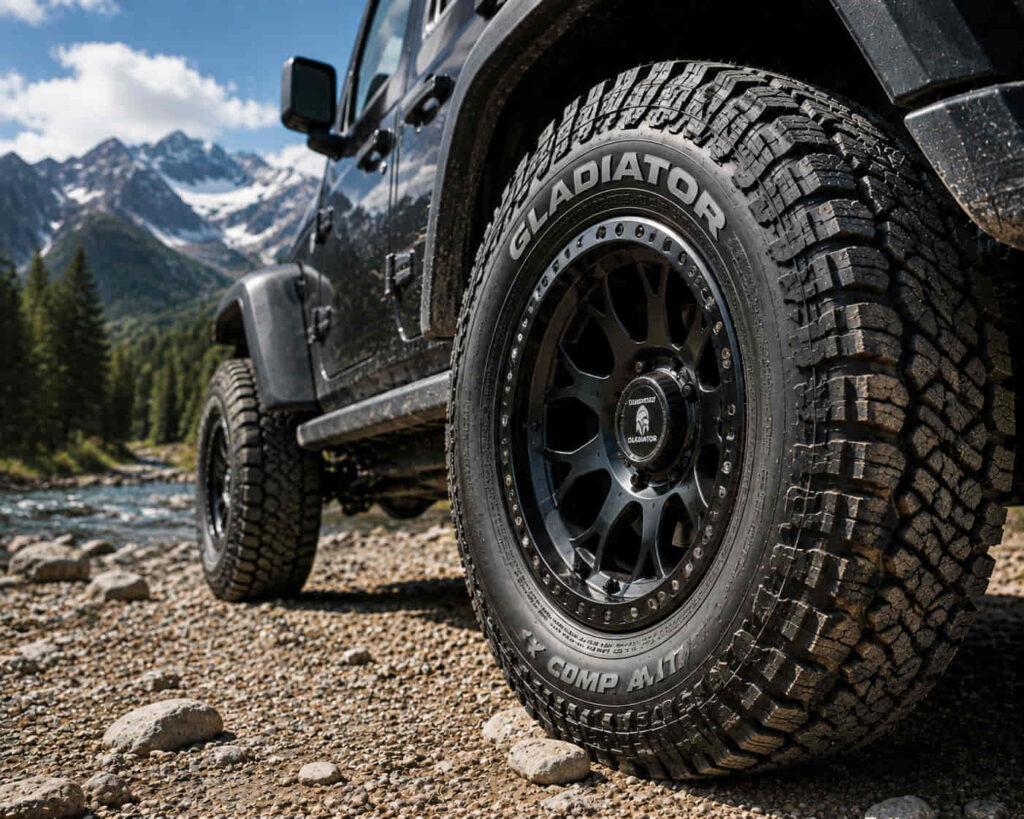
Gladiator tires can be a good option for drivers who need affordable all-terrain and mud-terrain tires with dependable traction, durable construction, and practical off-road capability. The brand focuses primarily on SUV, Jeep, pickup truck, and light truck applications, making it a popular consideration among drivers who want stronger tire performance without paying premium prices.
Unlike premium tire manufacturers that compete through advanced technology, extensive research, and luxury positioning, Gladiator focuses on providing functional performance for drivers who need capability across different surfaces. The brand’s product range is designed around common off-road requirements, including traction, durability, and resistance to demanding road conditions.
The quality of Gladiator tires depends on the specific model and intended use. An all-terrain tire designed for mixed highway and off-road driving will provide a different experience compared with a mud-terrain tire built for more aggressive terrain. Choosing the correct tire type is essential because off-road performance often involves trade-offs in areas such as road noise, comfort, and fuel efficiency.
Gladiator tires are especially relevant for Jeep owners, truck drivers, and outdoor enthusiasts who need additional traction on gravel, dirt, mud, and uneven surfaces. However, they should be evaluated based on real driving needs rather than only their aggressive appearance.
For example, a Jeep Wrangler owner who regularly explores trails may find Gladiator tires a practical choice, while a commuter who mainly drives highways may prefer a quieter highway-focused tire.
This guide explains Gladiator tire quality, performance, safety, durability, Jeep and truck compatibility, advantages, limitations, and whether Gladiator tires are worth buying.
Who Makes Gladiator Tires?
Gladiator tires are produced under the Gladiator Tires brand, a tire line focused on SUV, Jeep, pickup truck, and light truck applications with an emphasis on off-road capability and value performance. The brand is positioned within the replacement tire market, where many drivers look for durable tires that can handle different surfaces without the higher cost associated with premium off-road brands.
Gladiator specializes in tire categories designed for vehicles that require stronger traction and construction. Its product lineup includes all-terrain and mud-terrain tires, which are developed around requirements such as aggressive tread patterns, improved surface grip, and durability for heavier vehicles.
Understanding the brand position is important when evaluating Gladiator tires because the company focuses on a different market segment compared with premium manufacturers such as BFGoodrich, Toyo, or Michelin. Gladiator’s goal is not to compete primarily through advanced racing technology or luxury comfort but to provide practical off-road capability at a more accessible price point.
The manufacturing quality of any Gladiator tire depends on the specific model, construction design, and intended application. Factors such as tread pattern, sidewall strength, rubber compound, and load rating influence how the tire performs on different vehicles and surfaces.
For example, a Jeep Wrangler owner looking for an affordable all-terrain upgrade may consider Gladiator tires because they provide a more aggressive design and additional traction capability, while a luxury SUV owner focused on quiet highway comfort may prefer a touring-focused tire.
How Do Gladiator Tires Perform on Different Road Conditions?
Gladiator tires are designed to provide versatile performance across different surfaces, especially for drivers who need traction on gravel, dirt, mud, and uneven terrain. Their strongest performance area is off-road driving, where aggressive tread designs and durable construction help improve vehicle capability.
On dirt and gravel surfaces, Gladiator tires provide additional grip compared with standard highway tires. The deeper tread patterns and wider grooves help maintain traction when the road surface becomes loose or inconsistent.
Mud performance is another area where Gladiator tires are commonly evaluated. Mud-terrain models use more aggressive tread blocks designed to help clear mud from the tire surface and maintain forward movement in challenging conditions.
On paved roads, Gladiator tires provide acceptable performance for daily driving, but drivers should understand that off-road-focused designs often involve compromises. More aggressive tread patterns can create additional road noise and a firmer ride compared with highway-focused tires.
Wet-road performance depends on the specific model and tread design. All-terrain tires must balance off-road capability with water evacuation, meaning drivers should select a model that matches their typical environment.
For example, a pickup truck owner who drives between highways and construction sites may benefit from Gladiator all-terrain tires because they provide a balance between road usability and off-road traction, while a driver who spends nearly all of their time on highways may prefer a quieter highway-terrain option.
Read more: Who Makes Lexani Tires
Are Gladiator Tires Safe in Wet and Dry Conditions?
Gladiator tires can provide safe performance in normal dry and wet driving conditions when they are selected correctly and maintained properly. Like other all-terrain and mud-terrain tire brands, their safety depends on factors such as tread design, tire condition, vehicle weight, driving environment, and how the tires are used.
On dry roads, Gladiator tires are designed to provide stable traction and vehicle control for SUVs, Jeeps, and pickup trucks. The aggressive tread patterns found on many Gladiator models help maintain grip on loose surfaces while still providing predictable handling during normal street driving.
For off-road vehicles, traction is a major safety factor because drivers often encounter changing surfaces such as gravel, dirt, rocks, and uneven terrain. Gladiator tires are developed with deeper tread blocks and durable construction to help vehicles maintain control when road conditions become less predictable.
Wet-road performance requires additional consideration because aggressive off-road tread designs often need to balance mud traction with water evacuation. Gladiator tires are designed to move water away from the contact area, helping maintain traction during normal rainfall conditions.
However, drivers should understand that all-terrain and mud-terrain tires are built with different priorities compared with highway tires. A more aggressive tread pattern may increase road noise and may not provide the same level of refinement as a dedicated touring tire.
Proper maintenance also plays an important role in safety. Correct tire pressure, regular inspections, proper rotation, and replacing worn tires are necessary to maintain traction and braking performance.
For example, a Jeep owner using Gladiator all-terrain tires for weekend trails and daily driving may find the balance between capability and safety suitable, while a driver who frequently travels in severe winter conditions may need a tire specifically designed for snow and ice.
How Long Do Gladiator Tires Last?
Gladiator tires can provide reasonable durability for off-road and truck applications, but their lifespan depends on the tire model, driving conditions, maintenance habits, and terrain exposure. Tires designed for rugged use experience different wear patterns compared with standard passenger tires because they are often exposed to heavier loads and harsher surfaces.
All-terrain Gladiator tires are generally designed to balance off-road capability with everyday driving. Their tread designs aim to provide durability while maintaining acceptable performance on paved roads.
Mud-terrain models typically prioritize maximum traction in challenging environments. The aggressive tread blocks and stronger construction help improve performance in mud and uneven terrain, but these characteristics may result in different wear behavior compared with highway-focused tires.
Driving habits have a major effect on tire lifespan. Frequent high-speed highway driving, aggressive acceleration, heavy towing, and repeated off-road use can increase wear and reduce the service life of any tire.
Maintenance is also essential for maximizing durability. Maintaining proper inflation pressure helps prevent uneven wear, while regular rotation ensures the tread wears more evenly across all tires.
Vehicle type also influences longevity. Pickup trucks carrying heavy loads and Jeeps used for off-road adventures place greater stress on tires compared with lighter vehicles used mainly for commuting.
For example, a truck owner using Gladiator all-terrain tires for occasional trails and regular highway driving may achieve strong value, while a driver frequently navigating rocky terrain or deep mud may experience faster wear because of more demanding conditions.
Are Gladiator Tires Good for Jeep and Trucks?
Gladiator tires are a suitable option for many Jeep and truck owners because they are designed around the needs of vehicles that require additional traction, durability, and off-road capability. This application is one of the strongest areas for the brand because SUVs and pickup trucks often require stronger tire construction than standard passenger vehicles.
Jeep Wrangler owners, Jeep Gladiator owners, and pickup truck drivers often look for tires that can handle both everyday roads and outdoor environments. Gladiator’s all-terrain and mud-terrain options are designed to provide this type of versatility.
For Jeep vehicles, tire performance depends heavily on the intended use. Drivers who spend most of their time on highways may prefer an all-terrain tire that offers a balance between comfort and capability. Drivers who frequently explore trails may prefer a more aggressive mud-terrain design.
Pickup truck owners also benefit from tires with stronger construction because trucks often carry heavier loads or tow equipment. Gladiator tires can provide additional traction and durability for drivers who use their vehicles for work, recreation, or mixed driving conditions.
However, not every truck or SUV owner needs an aggressive off-road tire. Drivers who mainly commute on paved roads may experience unnecessary road noise and reduced comfort compared with highway-focused tires.
For example, a Jeep Wrangler owner who regularly travels on trails and gravel roads may find Gladiator tires a practical upgrade, while a pickup truck used only for highway commuting may benefit more from a quieter all-season or highway-terrain tire.
What Are the Advantages of Gladiator Tires?
The main advantages of Gladiator tires are affordable pricing, aggressive off-road capability, durable construction, and suitability for Jeep, SUV, and pickup truck applications. The brand provides a practical option for drivers who want stronger traction and rugged performance without moving into higher-priced premium off-road tire categories.
One of Gladiator’s biggest strengths is value. Off-road tires can become expensive, especially for larger truck and SUV sizes. Gladiator offers an alternative for drivers who need additional capability but want to control replacement costs. This makes the brand attractive to outdoor enthusiasts, truck owners, and drivers who use their vehicles for mixed road conditions.
Another advantage is the aggressive tread design used on many Gladiator models. Deeper tread blocks and stronger patterns help improve traction on loose surfaces such as gravel, dirt, and mud. These characteristics are especially valuable for drivers who regularly leave paved roads or encounter inconsistent terrain.
Durability is also an important benefit. SUVs and pickup trucks place greater demands on tires because of their heavier weight and higher load requirements. Gladiator tires are designed with stronger construction to support these vehicle types and provide additional confidence in demanding conditions.
The brand also offers versatility through different tire categories. Drivers can choose between all-terrain and mud-terrain options depending on whether they prioritize daily driving comfort or maximum off-road traction.
For example, a Jeep owner who uses their vehicle for weekend adventures and daily transportation may find Gladiator all-terrain tires provide a practical balance between capability, durability, and cost.
What Are the Limitations of Gladiator Tires?
The main limitations of Gladiator tires are increased road noise, reduced highway refinement compared with touring tires, and fewer premium features compared with established off-road brands. These limitations are common among aggressive off-road tires because their designs prioritize traction and durability over maximum comfort.
One limitation is highway comfort. Tires with deeper tread blocks and more aggressive patterns can create additional road noise, especially at higher speeds. Drivers who spend most of their time on smooth highways may notice that Gladiator tires feel less refined compared with highway-terrain or touring tires.
Another consideration is brand recognition. Premium off-road tire brands such as BFGoodrich, Toyo, and Falken have built stronger reputations through extensive testing, motorsport involvement, and long-term market presence. Some buyers may prefer these brands because of their established reputation.
Performance differences between tire models are also important. An all-terrain Gladiator tire may provide a different driving experience compared with a mud-terrain model. Choosing the wrong category can lead to unnecessary compromises in comfort, noise, or fuel efficiency.
Gladiator tires are also not designed for every type of driver. Someone who only drives in urban environments may not benefit from the additional off-road capability and may prefer a quieter, more fuel-efficient tire.
For example, an off-road enthusiast may appreciate the aggressive design of Gladiator tires, while a family SUV owner who mainly drives highways may prefer a tire focused more on comfort and low noise.
Are Gladiator Tires Worth Buying?
Gladiator tires are worth buying for drivers who need affordable off-road capability, durable construction, and reliable performance for Jeeps, SUVs, and pickup trucks. The brand provides strong value for customers who want practical performance without paying premium prices for well-known off-road tire brands.
The best use case for Gladiator tires is for drivers with active lifestyles, outdoor hobbies, or vehicles that regularly experience mixed driving conditions. Jeep owners, truck users, and drivers who travel on gravel roads, trails, or rough surfaces can benefit from the brand’s focus on traction and durability.
However, the buying decision should depend on actual driving needs. A driver who spends almost all of their time on highways may not receive enough benefit from an aggressive off-road tire design. In that situation, a highway-focused tire may provide better comfort, lower noise, and improved efficiency.
Selecting the correct Gladiator model is also important. An all-terrain tire may be the best choice for drivers who combine street driving with occasional off-road use, while a mud-terrain tire is more suitable for drivers who regularly face challenging terrain.
For example, a Jeep Wrangler owner who frequently explores trails may find Gladiator tires provide excellent value, while a commuter driving a pickup truck only on city roads may prefer a more road-focused tire.
Overall, Gladiator tires offer a strong combination of affordability, durability, and off-road capability. They are a practical choice for drivers who prioritize function and performance over premium comfort and brand reputation.
Are Gladiator Tires Good?
Gladiator tires can be a good choice for drivers who need affordable off-road capability, durable construction, and practical performance for Jeeps, SUVs, and pickup trucks. The brand focuses on providing functional tire solutions for drivers who want improved traction and stronger performance on different surfaces without paying the higher prices associated with premium off-road tire manufacturers.
Gladiator’s strongest advantage is its focus on capability and value. The brand is designed for drivers who need tires that can handle gravel, dirt, mud, and mixed road conditions while still providing usable performance for everyday driving. This makes Gladiator especially relevant for outdoor enthusiasts, truck owners, and Jeep drivers.
However, Gladiator tires are not the best choice for every situation. Drivers who prioritize a quiet ride, luxury comfort, maximum fuel efficiency, or the most advanced tire technology may prefer highway-focused or premium alternatives. The aggressive characteristics that improve off-road ability can also create compromises in areas such as road noise and refinement.
The best decision depends on matching the tire with the vehicle and driving environment. A Jeep used for weekend adventures requires different capabilities compared with a pickup truck used mainly for commuting.
Overall, Gladiator tires provide a practical balance of traction, durability, and affordability. For drivers who want dependable off-road performance and do not need premium-level refinement, Gladiator offers a worthwhile tire option for SUVs, trucks, and adventure-focused vehicles.