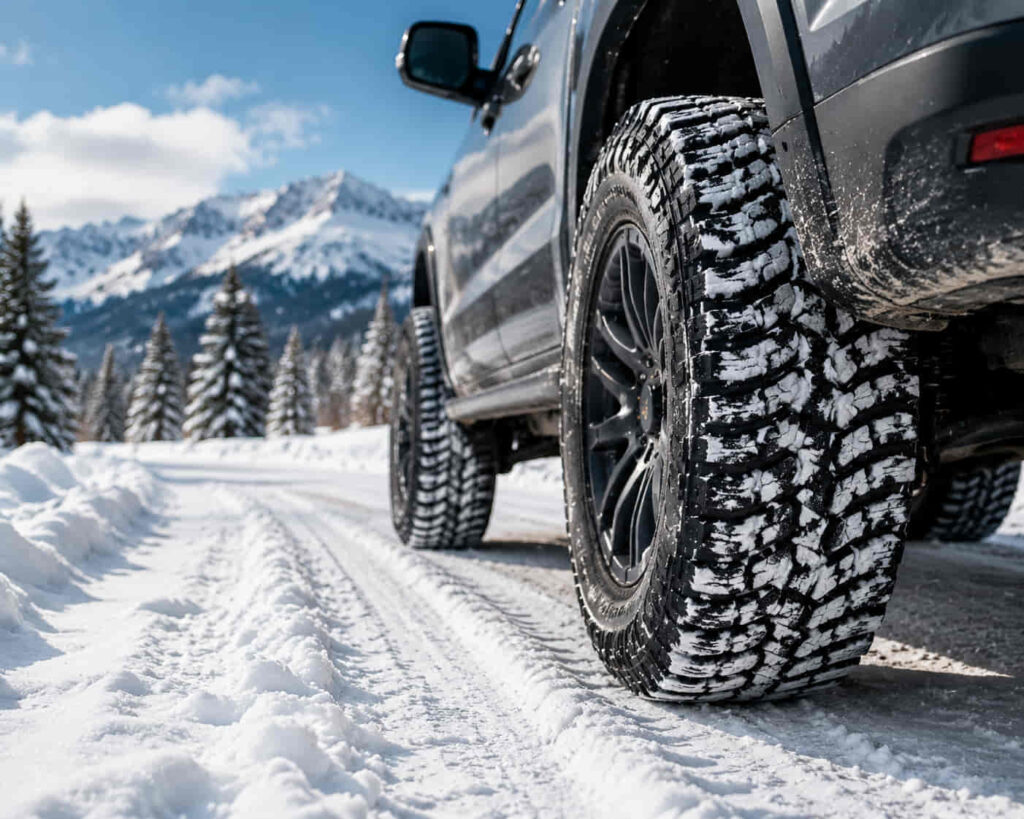
All-terrain tires can be good for snow because their aggressive tread designs provide stronger traction than many standard highway and all-season tires in winter conditions. However, they are not always a complete replacement for dedicated winter tires, especially in areas with heavy snowfall, frequent ice, and consistently freezing temperatures.
All-terrain tires are designed as a compromise between multiple driving environments. Unlike highway tires that focus mainly on smooth pavement performance or mud-terrain tires that prioritize extreme off-road capability, A/T tires are engineered to provide balanced performance on roads, gravel, dirt, and moderate off-road surfaces.
Their ability to handle snow comes mainly from their tread design. Larger tread blocks, deeper grooves, and additional biting edges help the tire maintain contact with loose snow and move through winter surfaces more effectively. Some all-terrain tires also include the Three-Peak Mountain Snowflake (3PMSF) certification, which indicates improved performance in severe snow conditions.
However, snow performance depends on more than tread pattern alone. Temperature, ice conditions, tire compound, vehicle type, and driving habits all influence how well an A/T tire performs in winter.
For drivers who experience occasional snow, own an SUV or truck, and want a tire that works throughout the year, all-terrain tires can provide a practical balance. For drivers facing extreme winter conditions with frequent ice and deep snow, dedicated winter tires may still provide better safety and control.
This guide explains how all-terrain tires perform in snow, their advantages and limitations, how they compare with winter tires, and whether they are the right choice for winter driving.
Why Do All-Terrain Tires Perform Well in Snow?
All-terrain tires perform well in snow because their tread design creates more contact points and traction edges that help the tire grip loose winter surfaces. The structure of an A/T tire is developed to handle changing terrain, which gives it an advantage over many standard highway tires when driving through moderate snow.
The most important factor is the tread pattern. All-terrain tires typically use larger tread blocks with wider grooves compared with traditional all-season or highway tires. These open spaces allow snow to move through the tread instead of becoming trapped and reducing traction.
Snow traction depends heavily on the tire’s ability to create mechanical grip. When a tire rolls through snow, the tread blocks need to push into the snow surface and create resistance against slipping. A/T tires are designed with stronger tread elements that provide more biting edges during acceleration, braking, and cornering.
Another advantage is their ability to clear snow from the tread area. Deep grooves and open channels help reduce snow packing, allowing the tire to continue generating traction as conditions change. This is particularly useful when driving through fresh snow, unplowed roads, or mixed surfaces.
However, not every all-terrain tire performs the same way in winter conditions. Some models are designed mainly for off-road durability, while others include winter-focused features such as flexible rubber compounds and the 3PMSF certification.
For example, an SUV equipped with a snow-rated all-terrain tire can often maintain better control on a snowy rural road compared with the same vehicle using a standard highway tire, because the A/T tire has a tread design better suited for loose snow and changing surfaces.
Are All-Terrain Tires Safe on Ice and Packed Snow?
All-terrain tires can provide acceptable performance on packed snow, but they are generally less capable than dedicated winter tires on ice and extremely cold surfaces. Snow and ice require different tire characteristics, and the advantages of A/T tires become more limited as conditions become more severe.
Packed snow creates a surface where traction depends on the tire’s ability to maintain contact and prevent sliding. A/T tires with strong tread patterns can provide useful grip because their tread blocks create additional traction points.
Ice presents a greater challenge because the surface becomes extremely smooth and offers very little friction. In these conditions, the rubber compound becomes more important than tread depth alone. Winter tires use specialized rubber compounds designed to remain flexible at low temperatures, allowing them to maintain better contact with icy surfaces.
All-terrain tires often use compounds designed to balance multiple purposes, including durability, off-road resistance, and year-round performance. This means they may become less flexible in extremely cold temperatures compared with dedicated snow tires.
Braking performance is another important difference. While A/T tires may provide improved snow traction compared with standard tires, winter tires are specifically engineered to shorten braking distances in freezing conditions.
For example, a driver using a 3PMSF-rated all-terrain tire in a region with occasional snowfall may experience safe and reliable performance. However, someone driving daily on icy roads in northern winter conditions may benefit more from a dedicated winter tire designed specifically for low-temperature traction.
Read more: Are Walmart Tires Good
Do All-Terrain Tires Need the 3PMSF Symbol for Snow?
All-terrain tires do not always need the 3PMSF symbol to operate in snow, but tires with this certification generally provide more reliable performance in severe winter conditions. The Three-Peak Mountain Snowflake (3PMSF) symbol indicates that a tire has passed specific performance testing for snow traction under standardized conditions.
The 3PMSF certification is different from the M+S (Mud and Snow) rating. Many tires with the M+S marking can provide some level of snow capability because of their tread design, but the rating does not require the same level of snow performance testing as 3PMSF.
For drivers who experience occasional winter weather, an all-terrain tire without 3PMSF may still provide acceptable performance, especially compared with standard highway tires. However, drivers who regularly encounter snow-covered roads should prioritize A/T tires that carry the 3PMSF symbol because they are designed and tested for more demanding winter conditions.
The certification is especially important for SUV and truck owners who want one tire that can handle multiple environments throughout the year. A snow-rated all-terrain tire can provide a balance between daily driving, off-road capability, and winter traction.
However, the 3PMSF symbol does not mean an all-terrain tire performs identically to a dedicated winter tire. The certification confirms improved snow capability, but winter tires still have advantages in extreme cold, ice, and severe winter environments.
For example, a pickup truck owner living in an area with occasional snowfall may benefit from a 3PMSF-rated A/T tire because it provides year-round flexibility without requiring seasonal tire changes.
Are All-Terrain Tires Better Than Winter Tires for Snow?
All-terrain tires are more versatile than winter tires, but winter tires generally provide better performance in severe snow and icy conditions. The two tire types are designed with different priorities, which means the better option depends on the driver’s environment and usage requirements.
All-terrain tires focus on versatility. They are built to handle multiple surfaces, including pavement, gravel, dirt, mud, and moderate snow. This makes them attractive for drivers who need one set of tires that can perform throughout the year.
Winter tires are specifically designed for cold-weather performance. Their rubber compounds remain flexible at low temperatures, and their tread patterns are optimized for snow, ice, and winter braking. These characteristics give them an advantage when temperatures remain consistently below freezing.
The biggest difference appears during emergency situations. Winter tires typically provide shorter braking distances and better control on icy surfaces because their design focuses entirely on cold-weather traction.
However, winter tires have limitations. They are not designed for year-round use because their softer compounds can wear faster in warm weather. Drivers who experience mild winters may prefer all-terrain tires because they avoid the need for seasonal tire changes.
For example, a Jeep owner who drives through occasional snow, dirt roads, and highways may find a snow-rated all-terrain tire more practical. A driver living in a region with months of ice and heavy snowfall may achieve better safety with dedicated winter tires.
Are All-Terrain Tires Better Than All-Season Tires in Snow?
All-terrain tires generally perform better than standard all-season tires in snow because they have more aggressive tread designs and stronger traction characteristics. While all-season tires are designed for year-round driving, they usually prioritize comfort, efficiency, and quiet operation rather than maximum snow capability.
The main difference comes from tread structure. All-terrain tires typically have deeper grooves, larger tread blocks, and more open patterns that help them move through snow. These features create additional traction points and improve performance on loose or uneven winter surfaces.
All-season tires are designed for a wider range of normal conditions, including dry roads, rain, and light winter weather. They can handle mild snow, but their tread design may not provide the same level of grip when snow becomes deeper or roads become less maintained.
However, all-season tires and all-terrain tires serve different vehicle owners. A sedan driver who mostly travels on city roads may find a quality all-season tire sufficient, while an SUV or truck owner who faces snow and rough terrain may benefit from an all-terrain tire.
The choice depends on the driving environment. All-terrain tires provide additional capability but may create more road noise and slightly different handling characteristics compared with comfort-focused all-season tires.
For example, a truck used for outdoor activities, rural driving, or snowy roads can benefit from the stronger traction of an A/T tire, while a commuter vehicle used mainly on cleared city streets may not require that additional capability.
What Are the Best All-Terrain Tires for Snow?
The best all-terrain tires for snow are models that combine aggressive tread designs, winter-focused compounds, and the 3PMSF certification for improved severe snow performance. Choosing the right A/T tire is important because not every all-terrain tire provides the same level of winter capability.
Snow performance depends on several tire characteristics, including tread depth, siping, rubber flexibility, and traction design. Tires with larger tread blocks can create stronger mechanical grip, while additional sipes create more edges that help maintain traction on snowy surfaces.
Many popular all-terrain tires designed for SUVs and trucks focus on balancing year-round usability with winter capability. Models such as BFGoodrich All-Terrain T/A KO2, Falken Wildpeak A/T3W, and other snow-rated A/T tires are developed for drivers who need both off-road capability and improved winter performance.
A snow-rated all-terrain tire is especially valuable for drivers who do not want to switch between summer and winter tires. These tires allow SUVs, trucks, and 4×4 vehicles to maintain capability across different seasons while providing better snow performance than many standard tires.
However, the “best” all-terrain tire depends on the vehicle and driving conditions. A truck used for towing, off-road travel, and winter roads may require a different tire compared with an SUV used mainly for commuting.
For example, a pickup truck owner who frequently travels on rural roads with snow accumulation may prioritize aggressive traction, while an urban SUV driver may prefer a quieter A/T tire that balances snow ability with comfortable highway driving.
What Are the Limitations of All-Terrain Tires in Snow?
All-terrain tires have limitations in snow because they are designed as a compromise between multiple driving conditions rather than as dedicated winter tires. While A/T tires can provide better snow capability than many standard tires, they cannot match winter tires in every cold-weather situation.
The biggest limitation appears on ice and extremely cold surfaces. Ice traction depends heavily on rubber flexibility, and many all-terrain tires use compounds designed to balance durability, off-road strength, and year-round performance rather than maximum cold-weather grip.
Another limitation is braking performance in severe winter conditions. A/T tires with snow capability can handle moderate snow effectively, but dedicated winter tires usually provide shorter stopping distances because they are specifically engineered for freezing temperatures and slippery surfaces.
Road comfort is another consideration. The aggressive tread patterns that help all-terrain tires move through snow and off-road surfaces can also create more road noise compared with highway or touring tires. Drivers who spend most of their time on paved roads may notice differences in ride comfort.
Fuel efficiency can also be affected. Larger tread blocks and heavier construction may create more rolling resistance compared with tires designed primarily for highway driving.
For example, a driver living in an area with occasional snowfall may find an all-terrain tire to be the ideal balance between winter capability and daily usability. However, someone driving through icy mountain roads every day during winter may need dedicated snow tires for maximum safety.
Are All-Terrain Tires Worth Buying for Snow?
All-terrain tires are worth buying for snow when drivers need a versatile tire that can handle winter conditions while maintaining performance on other surfaces. They provide strong value for SUV and truck owners who want one tire solution for multiple environments.
The biggest advantage of A/T tires is flexibility. A driver can use the same set of tires throughout the year while gaining better snow capability than many standard all-season or highway tires. This makes them practical for people who experience occasional or moderate winter weather.
All-terrain tires are particularly suitable for drivers who combine different driving conditions, such as highway commuting, outdoor activities, rural roads, and light off-road use. Their design provides a wider range of capability than specialized tires focused on only one environment.
However, the buying decision depends on winter severity. Drivers in regions with frequent ice, deep snow, and prolonged freezing temperatures may receive greater safety benefits from dedicated winter tires.
The correct choice should consider three factors: climate, vehicle type, and driving habits. An SUV owner in a region with occasional snow may benefit greatly from a quality 3PMSF-rated A/T tire, while a driver facing extreme winter conditions should prioritize maximum cold-weather traction.
Overall, all-terrain tires are a strong option for snow when the goal is balanced year-round performance. They provide a practical middle ground between standard tires and dedicated winter tires, making them valuable for drivers who need versatility without sacrificing winter capability.
Are All-Terrain Tires Good for Snow?
All-terrain tires can be a good choice for snow because they provide a practical balance between winter traction, year-round usability, and off-road capability. Their aggressive tread patterns, deeper grooves, and stronger construction allow them to perform better in snowy conditions compared with many standard highway or all-season tires.
For SUV, truck, and 4×4 owners, all-terrain tires offer an advantage because they are designed to handle multiple environments. Drivers can use the same set of tires for daily commuting, outdoor activities, rough roads, and moderate winter conditions without changing between different tire types throughout the year.
However, all-terrain tires are not a universal replacement for winter tires. In regions with severe winters, frequent ice, and long periods of freezing temperatures, dedicated winter tires usually provide better braking performance and cold-weather traction because they are specifically engineered for those conditions.
The best choice depends on how and where the vehicle is driven. Drivers who experience occasional snowfall and need a versatile tire often receive strong value from a high-quality, 3PMSF-rated all-terrain tire. Drivers facing extreme winter environments should consider whether maximum snow and ice performance is more important than year-round flexibility.
Overall, all-terrain tires are a strong winter option for drivers who need balanced capability across different surfaces. When selected based on climate, vehicle type, and driving habits, they can provide reliable snow performance while maintaining the versatility that makes them popular among SUV and truck owners.