Few engines in automotive history have earned the legendary status of Toyota’s 2JZ. Introduced in the early 1990s, this 3.0-liter inline-six powerplant quickly became a benchmark for performance, reliability, and tuning potential. Even decades after production ended, enthusiasts, tuners, and professional racers continue to seek out vehicles equipped with the iconic 2JZ engine.
What makes the 2JZ so special? Is it the incredibly durable cast-iron block, the robust internal components, or its ability to handle massive horsepower figures with relatively modest modifications? The answer is all of the above. While many engines have come and gone, the 2JZ remains one of the most respected platforms in the automotive world, capable of producing well over 1,000 horsepower in properly built applications.
In this complete technical guide, we will explore the full 2JZ engine specs, including displacement, bore and stroke, compression ratios, horsepower ratings, torque figures, engine dimensions, and key differences between the naturally aspirated 2JZ-GE and the turbocharged 2JZ-GTE. We will also examine the engine’s legendary reliability, tuning capabilities, and the vehicles that helped cement its reputation as one of the greatest performance engines ever built.
Whether you are a Toyota enthusiast, a prospective engine swap builder, or simply curious about this engineering icon, this guide covers everything you need to know about the legendary 2JZ engine.
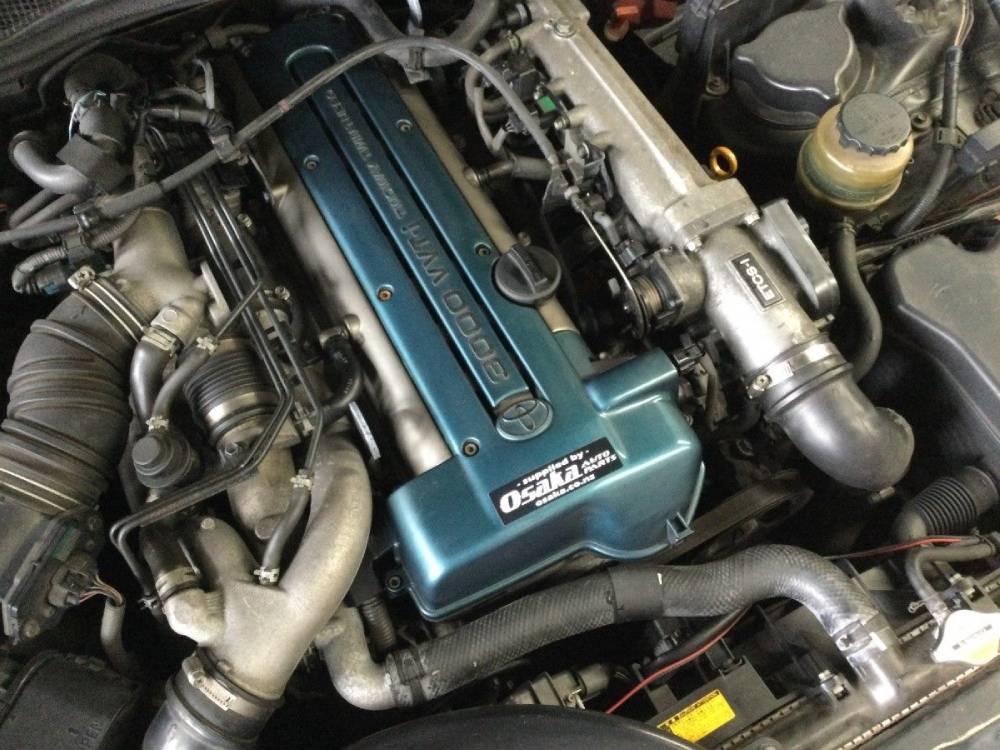
What Is the Toyota 2JZ Engine?
The Toyota 2JZ engine is a 3.0 liter inline six-cylinder engine developed by Toyota as part of the JZ engine family. Introduced in 1991, the 2JZ was designed to replace the aging 7M series and provide improved reliability, smoother power delivery, and greater performance potential. The engine quickly became one of Toyota’s most successful powerplants and remains highly regarded among automotive enthusiasts worldwide.
At its core, the 2JZ features a cast iron engine block paired with an aluminum cylinder head. This combination provides exceptional durability while maintaining reasonable weight. The engine utilizes a dual overhead camshaft design with four valves per cylinder, resulting in a total of 24 valves. Electronic fuel injection and advanced engine management systems helped the 2JZ deliver impressive performance and efficiency for its era.
The reputation of the 2JZ extends far beyond its factory specifications. Its robust construction allows the engine to withstand substantial increases in boost pressure and horsepower without requiring extensive internal modifications. This capability has made it one of the most popular engines in the tuning and motorsport communities.
The engine gained global recognition through its association with the fourth generation Toyota Supra. Featured in countless racing events, automotive magazines, and popular culture, the 2JZ became synonymous with high performance and limitless tuning potential. Today, it remains one of the most sought after Japanese engines ever produced.
Complete 2JZ Engine Specs
The Toyota 2JZ is known not only for its durability but also for its well engineered design. Understanding the engine’s technical specifications provides valuable insight into why it has remained relevant for more than three decades.
The engine features a displacement of 2,997 cubic centimeters, commonly referred to as 3.0 liters. Both the bore and stroke measure 86 millimeters, creating a perfectly square configuration that balances low end torque with high RPM capability. This design contributes to the engine’s smooth power delivery and broad performance range.
The cast iron block serves as the foundation of the engine’s legendary strength. Unlike many modern aluminum blocks, the iron construction provides exceptional rigidity and resistance to cylinder distortion under high boost conditions. The aluminum cylinder head improves heat dissipation while reducing overall engine weight.
Basic 2JZ Specifications
| Specification | Value |
|---|---|
| Engine Family | Toyota JZ |
| Configuration | Inline 6 |
| Displacement | 2,997 cc |
| Bore | 86 mm |
| Stroke | 86 mm |
| Block Material | Cast Iron |
| Head Material | Aluminum |
| Valvetrain | DOHC 24 Valve |
| Fuel System | Electronic Fuel Injection |
| Cooling System | Water Cooled |
| Compression Ratio | Varies by Model |
| Redline | Approximately 6,800 to 7,200 RPM |
The engine’s square bore and stroke design is often cited as one of the reasons for its excellent balance between responsiveness and durability. Combined with a forged steel crankshaft and strong connecting rods, the 2JZ was built to handle significant mechanical stress.
2JZ Engine Dimensions and Internal Components
One of the most important aspects of the 2JZ engine is its internal architecture. Toyota engineers designed the engine with durability as a primary objective, resulting in components that continue to impress modern performance builders.
The complete engine weighs approximately 500 to 600 pounds depending on configuration and accessories. While heavier than some modern aluminum engines, this additional mass contributes to the exceptional strength that has made the 2JZ famous.
Internally, the engine utilizes a forged steel crankshaft supported by seven main bearings. This design increases rigidity and improves stability under high load conditions. The connecting rods are known for their impressive strength, particularly in turbocharged variants where they are capable of supporting substantial horsepower levels.
The pistons vary between engine versions, with the turbocharged 2JZ GTE receiving lower compression pistons designed to accommodate boost pressure. Oil delivery is managed through a highly effective lubrication system that helps maintain reliability even during aggressive driving or motorsport applications.
Key internal features include:
• Cast iron closed deck style block construction
• Forged steel crankshaft
• Seven main bearing support design
• Aluminum crossflow cylinder head
• Four valves per cylinder
• Hydraulic lifters on selected variants
• High capacity oiling system
• Strong factory connecting rods
These components work together to create an engine platform capable of handling significant power increases while maintaining long term reliability. It is not uncommon to find well maintained 2JZ engines with more than 300,000 miles of service life, further reinforcing the engine’s legendary reputation.
2JZ GE Specs
The 2JZ GE is the naturally aspirated version of Toyota’s renowned 3.0 liter inline six engine. Although it often lives in the shadow of the turbocharged 2JZ GTE, the GE variant remains highly respected for its reliability, smooth operation, and strong foundation for performance upgrades.
Toyota engineered the 2JZ GE for luxury sedans and grand touring vehicles that prioritized refinement and longevity. The engine delivers linear power throughout the rev range and provides excellent daily driving characteristics. Thanks to its durable construction, many enthusiasts also use the 2JZ GE as a starting point for turbo conversion projects.
2JZ GE Technical Specifications
| Specification | 2JZ GE |
|---|---|
| Displacement | 2,997 cc |
| Configuration | Inline 6 |
| Bore x Stroke | 86 mm x 86 mm |
| Compression Ratio | 10.0:1 |
| Block Material | Cast Iron |
| Head Material | Aluminum |
| Valvetrain | DOHC 24 Valve |
| Aspiration | Naturally Aspirated |
| Horsepower | 220 to 230 HP |
| Torque | 210 to 220 lb ft |
Depending on the market and production year, output figures varied slightly. In North America, the engine typically produced around 220 horsepower, while certain Japanese market versions achieved higher ratings.
The 2JZ GE powered several popular Toyota and Lexus models, including the Lexus GS300, Lexus IS300, Toyota Crown, and Toyota Aristo. These vehicles benefited from the engine’s exceptional smoothness and proven durability.
One of the biggest advantages of the 2JZ GE is its longevity. Properly maintained examples regularly exceed 300,000 miles with minimal internal engine repairs. The downside is that the naturally aspirated configuration lacks the explosive performance associated with the turbocharged GTE version. However, for owners seeking reliability and lower maintenance costs, the GE remains an outstanding choice.
2JZ GTE Specs
The 2JZ GTE is widely considered one of the greatest production engines ever built. Developed as the high performance version of the 2JZ family, it gained worldwide recognition through its use in the Toyota Supra MK4 and quickly became a favorite among tuners and professional racers.
Unlike the GE variant, the GTE was equipped with turbochargers from the factory. Toyota designed the engine with lower compression pistons, upgraded fuel delivery systems, and reinforced components capable of handling significant boost pressure.
2JZ GTE Technical Specifications
| Specification | 2JZ GTE |
| Displacement | 2,997 cc |
| Configuration | Inline 6 |
| Bore x Stroke | 86 mm x 86 mm |
| Compression Ratio | 8.5:1 |
| Block Material | Cast Iron |
| Head Material | Aluminum |
| Valvetrain | DOHC 24 Valve |
| Aspiration | Sequential Twin Turbo |
| Horsepower | 276 to 320 HP |
| Torque | 318 to 333 lb ft |
Japanese market versions were officially rated at 276 horsepower due to the Japanese manufacturers’ gentleman’s agreement. In reality, many independent tests suggested actual output figures were significantly higher.
Export market versions, including those sold in North America, featured upgraded turbochargers and revised engine management systems. These models produced approximately 320 horsepower and 315 lb ft of torque, making them among the most powerful Japanese sports car engines of their era.
The true appeal of the 2JZ GTE lies in its extraordinary tuning potential. Many enthusiasts safely achieve 500 to 700 horsepower on largely stock internal components. With upgraded fuel systems, turbochargers, and proper tuning, four digit horsepower figures become attainable.
This remarkable capability has helped establish the 2JZ GTE as one of the most respected engines in motorsport, drag racing, drifting, and high performance street builds.
2JZ Horsepower and Torque Ratings
One of the most frequently searched topics related to 2JZ engine specs is horsepower and torque output. While factory figures provide a useful reference point, real world performance often exceeds official ratings.
Factory Horsepower Ratings
| Engine Variant | Horsepower |
| Early 2JZ GE | 220 HP |
| VVT i 2JZ GE | 230 HP |
| JDM 2JZ GTE | 276 HP |
| Export 2JZ GTE | 320 HP |
The Japanese market 2JZ GTE was subject to industry agreements that limited advertised power figures. Despite the official rating of 276 horsepower, dyno testing frequently revealed outputs closer to 300 horsepower or higher.
Factory Torque Ratings
| Engine Variant | Torque |
| 2JZ GE | 210 to 220 lb ft |
| JDM 2JZ GTE | 318 lb ft |
| Export 2JZ GTE | 333 lb ft |
Torque delivery is one of the engine’s strongest characteristics. The long inline six configuration creates smooth and consistent power throughout the rev range, making the engine exceptionally responsive under both daily driving and performance conditions.
Real World Dyno Performance
Most stock North American Supra Turbo models produce approximately 270 to 290 wheel horsepower on chassis dynamometers. Accounting for drivetrain losses, these figures align closely with Toyota’s published engine ratings.
With simple bolt on modifications such as an upgraded intake system, free flowing exhaust, intercooler improvements, and ECU tuning, many owners achieve power gains exceeding 400 horsepower while retaining factory reliability.
As boost levels increase, the engine continues to demonstrate remarkable durability. This ability to support massive horsepower increases without extensive engine modifications is one of the primary reasons the 2JZ remains legendary among performance enthusiasts worldwide.
2JZ Engine Reliability
The Toyota 2JZ is often described as one of the most reliable performance engines ever manufactured. While many high output engines require extensive maintenance or frequent rebuilds, the 2JZ earned its reputation by combining strong performance with exceptional long term durability.
One of the primary reasons behind the engine’s reliability is its cast iron block. Unlike lighter aluminum blocks that may flex under extreme stress, the 2JZ’s robust construction provides excellent rigidity and strength. This allows the engine to handle both factory power levels and significant performance upgrades without compromising structural integrity.
The forged steel crankshaft is another key factor contributing to the engine’s durability. Combined with strong connecting rods and a well engineered lubrication system, the bottom end of the engine is capable of withstanding substantial power increases while maintaining reliability.
Owners and mechanics frequently report examples surpassing 300,000 miles with only routine maintenance. In many cases, the engine remains mechanically sound even after decades of service.
Common 2JZ Problems
Although highly reliable, no engine is completely free from issues.
Oil leaks can develop around valve cover gaskets and cam seals as the engine ages. These problems are generally inexpensive to repair and rarely affect overall reliability.
Turbocharger wear may occur on high mileage 2JZ GTE models. Factory turbochargers can eventually develop shaft play or reduced efficiency after years of use.
Timing belt maintenance is essential. Toyota recommends periodic replacement to ensure continued reliability. While the 2JZ is a non interference engine in many applications, neglecting timing belt service can still lead to breakdowns and costly repairs.
Cooling system components such as radiators, hoses, and water pumps should also be inspected regularly, particularly on vehicles that are more than twenty years old.
When properly maintained, the 2JZ remains one of the most dependable performance engines ever produced.
2JZ Tuning Potential
If reliability made the 2JZ famous, tuning potential transformed it into an automotive legend. Few production engines have demonstrated the ability to support such enormous horsepower increases while retaining factory internals.
The stock 2JZ GTE bottom end is widely recognized as one of the strongest ever installed in a production vehicle. Many experienced tuners consider 600 to 700 horsepower achievable without opening the engine, provided supporting modifications and proper engine calibration are implemented.
Stage 1 Upgrades
For enthusiasts seeking moderate gains, entry level modifications can significantly improve performance.
Common upgrades include:
• High flow air intake
• Performance exhaust system
• Larger intercooler
• ECU remapping
• Boost control adjustments
These modifications typically increase output into the 400 horsepower range while preserving daily drivability and reliability.
Stage 2 Upgrades
The next level focuses on increased airflow and fuel delivery.
Popular modifications include:
• Single turbo conversion
• Larger fuel injectors
• Upgraded fuel pump
• Performance camshafts
• Enhanced engine management systems
At this stage, power levels between 600 and 800 horsepower become realistic depending on turbocharger selection and tuning quality.
Stage 3 Builds
Serious performance enthusiasts often pursue four digit horsepower goals.
These builds commonly feature:
• Forged pistons
• Forged connecting rods
• Ported cylinder heads
• Large frame turbochargers
• Advanced fuel systems
• E85 or race fuel compatibility
Properly built 2JZ engines have produced more than 1,500 horsepower in drag racing applications, demonstrating the extraordinary engineering behind Toyota’s legendary powerplant.
Vehicles Equipped With the 2JZ Engine
The 2JZ engine powered a variety of Toyota and Lexus vehicles throughout the 1990s and early 2000s. While the Toyota Supra receives most of the attention, several other models benefited from this remarkable engine.
Toyota Supra MK4
The fourth generation Supra remains the most famous vehicle powered by the 2JZ GTE. Its combination of performance, styling, and tuning potential helped establish the engine’s legendary status.
The Supra Turbo became one of the most iconic Japanese sports cars ever produced and remains highly desirable among collectors and enthusiasts today.
Toyota Aristo
Known as the Lexus GS in international markets, the Toyota Aristo offered luxury sedan comfort combined with impressive performance.
Certain Aristo models were equipped with the twin turbocharged 2JZ GTE, creating a sophisticated high performance sedan that often surprised sports car owners.
Lexus GS300
The GS300 utilized the naturally aspirated 2JZ GE and earned praise for its smooth power delivery, reliability, and refinement.
Many enthusiasts continue to use GS300 models as affordable platforms for engine modifications and turbo conversions.
Lexus IS300
The IS300 introduced the 2JZ GE to a compact rear wheel drive chassis. Its balanced handling and strong aftermarket support have made it a favorite among drifting and tuning communities.
Toyota Crown
Several generations of the Toyota Crown featured the 2JZ engine, providing executive sedan buyers with excellent reliability and smooth performance.
The versatility of the 2JZ allowed it to excel in both luxury and performance applications.
2JZ vs Other Legendary Engines
The 2JZ is frequently compared with other iconic performance engines. Each platform offers unique strengths, but few have achieved the same balance of durability, tunability, and global recognition.
2JZ vs Nissan RB26
The Nissan RB26DETT is perhaps the closest rival to the 2JZ.
The RB26 features advanced racing heritage through the Nissan Skyline GT R and delivers exceptional high RPM performance.
However, many builders consider the 2JZ block stronger in extreme horsepower applications. Parts availability and aftermarket support also tend to favor the Toyota platform in many markets.
2JZ vs GM LS
The GM LS family dominates the V8 performance world.
LS engines are generally lighter, more compact, and less expensive than the 2JZ. They also provide excellent low end torque.
The 2JZ, however, offers smoother inline six operation and remains one of the most respected turbocharged platforms available.
2JZ vs BMW B58
The BMW B58 represents modern turbocharged inline six engineering.
Compared with the 2JZ, the B58 delivers superior fuel efficiency, advanced electronics, and modern emissions compliance.
The 2JZ maintains an advantage in simplicity, proven durability, and decades of aftermarket development.
Which Engine Is Best?
There is no universal answer.
The RB26 excels in motorsport heritage.
The LS dominates affordable V8 performance.
The B58 showcases modern engineering.
The 2JZ stands apart because it successfully combines reliability, strength, tuning capability, and legendary status in a single package. Even more than thirty years after its introduction, it remains one of the most admired engines ever created.
Frequently Asked Questions
What Does 2JZ Mean?
The name 2JZ follows Toyota’s engine naming convention. The number “2” indicates that it is the second generation within the JZ engine family, while “JZ” identifies the engine series itself. The JZ family includes both the 1JZ and 2JZ engines, which were developed for performance and luxury applications during the 1990s and early 2000s.
Is the 2JZ Really Bulletproof?
While no engine is completely indestructible, the 2JZ is often considered one of the most durable production engines ever built. Its cast iron block, forged steel crankshaft, and exceptionally strong bottom end allow it to withstand significant power increases and long-term use. With proper maintenance, many examples have exceeded 300,000 miles while remaining mechanically sound.
How Much Horsepower Can a Stock 2JZ Handle?
The exact limit depends on the engine version, tuning quality, fuel type, and supporting modifications. Many experienced tuners consider 600 to 700 horsepower a realistic target for a stock internal 2JZ GTE. Beyond this range, upgrading internal components becomes increasingly important for long-term reliability.
What Is the Difference Between the 2JZ GE and 2JZ GTE?
The primary difference is forced induction.
The 2JZ GE is naturally aspirated and designed for smooth daily driving, reliability, and lower ownership costs.
The 2JZ GTE features factory turbochargers, lower compression pistons, upgraded fuel systems, and significantly higher performance potential. It is the preferred choice for enthusiasts seeking maximum power.
Why Is the 2JZ So Expensive Today?
Demand has increased dramatically over the past decade. Enthusiasts, collectors, and builders continue to pursue authentic 2JZ powered vehicles and engine swaps. At the same time, production ended years ago, limiting supply. This combination of high demand and shrinking availability has driven prices upward across the global market.
Is the 2JZ Better Than Modern Turbocharged Engines?
Modern engines often offer improved fuel efficiency, lower emissions, and advanced electronic systems. However, the 2JZ remains highly desirable because of its simplicity, durability, and unmatched tuning reputation. Many enthusiasts still view it as the benchmark for high horsepower inline six performance.
Conclusion
The Toyota 2JZ has earned its place among the greatest engines in automotive history. From its robust cast iron block and perfectly balanced inline six configuration to its incredible tuning potential, every aspect of the engine reflects Toyota’s commitment to engineering excellence.
When examining the complete 2JZ engine specs, it becomes clear why the platform remains so highly respected. The engine’s 3.0 liter displacement, square bore and stroke design, strong internal components, and proven reliability create a foundation that few competitors have matched. Whether in naturally aspirated 2JZ GE form or the legendary twin turbocharged 2JZ GTE configuration, the engine delivers a unique combination of performance and longevity.
Another major factor behind the 2JZ’s lasting popularity is its versatility. It performs exceptionally well as a daily driver, a track car, a drift machine, or a dedicated drag racing platform. Few engines can claim success across such a wide range of automotive disciplines.
More than three decades after its debut, the 2JZ continues to inspire enthusiasts around the world. Its reputation for reliability, power, and tunability remains unmatched by many modern alternatives. As a result, the engine is likely to remain a cornerstone of performance culture for years to come.
For anyone researching 2JZ engine specs, the conclusion is simple. The 2JZ is not just a great engine. It is a true automotive icon whose influence continues to shape the performance world today.
What is your favorite 2JZ powered vehicle? Do you prefer the naturally aspirated 2JZ GE or the legendary 2JZ GTE? Share your thoughts and experiences in the comments below.