Rubbing alcohol does not typically damage fully cured automotive paint when used correctly, but high concentrations, prolonged exposure, and improper application can increase the risk of surface damage. Isopropyl alcohol (IPA), the main ingredient in rubbing alcohol, is commonly used in automotive detailing to remove polishing oils, grease, and certain adhesive residues. However, its compatibility depends on the paint’s condition, the alcohol concentration, and the cleaning method.
Modern automotive paint generally consists of a primer, base coat, and protective clear coat. A fully cured, intact clear coat can tolerate brief contact with appropriately formulated IPA cleaning solutions. Freshly repainted, deteriorated, or compromised finishes require greater caution because their chemical resistance may differ. Rubbing alcohol can also affect certain waxes and paint sealants without necessarily damaging the underlying clear coat.
The difference between 70% and 91% rubbing alcohol matters because concentration influences solvent strength and exposure conditions. Using a higher concentration does not automatically improve cleaning results or make the process safer.
This guide explains how rubbing alcohol affects car paint and clear coat, compares common IPA concentrations, and outlines safer cleaning methods. It also covers potential damage, adhesive removal, paint protection, and alternatives for maintaining automotive finishes.
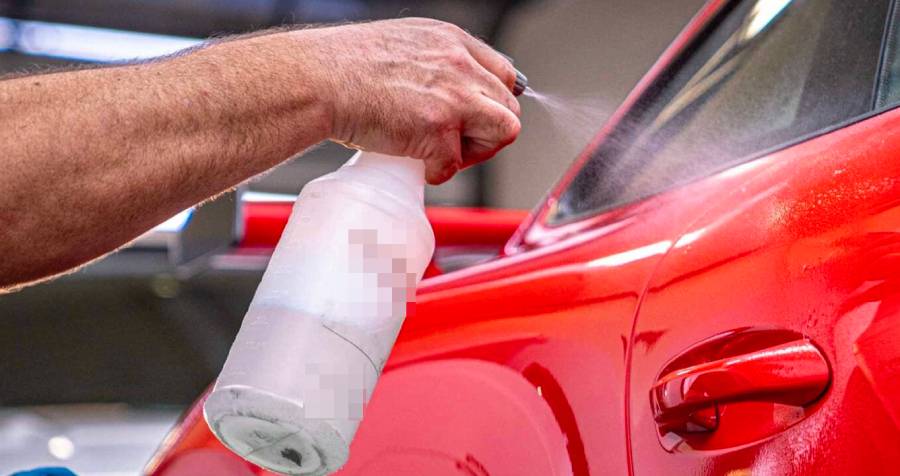
Will Rubbing Alcohol Damage Car Paint?
Rubbing alcohol generally does not damage intact, fully cured factory car paint when applied briefly and correctly. However, concentrated isopropyl alcohol, prolonged contact, and aggressive wiping can increase the risk of surface deterioration. The outcome depends on the paint system, its condition, and how the alcohol is applied.
Isopropyl alcohol is a solvent that dissolves certain oils, grease, and adhesive residues. Automotive detailers use IPA-based panel preparation products to remove polishing oils before inspecting paint defects or applying protective coatings. Unlike aggressive paint strippers, IPA does not normally dissolve a properly cured automotive clear coat during brief, controlled cleaning. However, rubbing alcohol products may contain additional ingredients, so their suitability cannot be determined by alcohol concentration alone.
Three conditions increase the risk of paint damage: incomplete paint curing, existing coating deterioration, and excessive mechanical friction. Freshly repainted panels may not have developed their intended chemical resistance, while oxidized or peeling finishes already have compromised protective layers. Rubbing contaminated surfaces with a dry or dirty towel can also produce fine scratches that become visible under direct sunlight.
Rubbing alcohol can additionally affect waxes and certain paint sealants. Removing these protective products may change water beading or surface gloss without damaging the underlying paint. Persistent discoloration, haze, or coating softening requires closer inspection to determine whether actual paint damage has occurred.
Does Rubbing Alcohol Damage Car Clear Coat?
Rubbing alcohol does not normally damage a fully cured, intact automotive clear coat during brief, controlled application, but weakened or incompatible coatings may react differently. Clear coat is the transparent protective layer applied over the colored base coat on most modern vehicles. It provides gloss, environmental resistance, and protection against ultraviolet exposure.
Modern factory clear coats are generally formulated from chemically resistant coating systems, including polyurethane and acrylic-based technologies. Once properly cured, these coatings resist brief contact with various cleaning chemicals. However, resistance varies by formulation, curing process, and coating condition. A product that is compatible with one factory finish may not be appropriate for freshly applied aftermarket paint or an aging clear coat.
Rubbing alcohol can leave a clear coat looking dull without permanently damaging it. Three possible causes are remaining cleaning residue, removal of surface protection, and micro-marring from wiping. For example, using a contaminated microfiber towel can drag abrasive particles across the surface and create fine scratches. These scratches scatter reflected light, making the paint appear hazy even when the clear coat has not been chemically degraded.
Actual clear-coat deterioration may involve persistent cloudiness, discoloration, or surface softening. These symptoms require assessment because oxidation, previous chemical exposure, and existing coating failure can produce similar appearances. IPA exposure alone does not establish the cause.
To reduce risk, use a paint-compatible cleaning product, test an inconspicuous area, and avoid prolonged soaking or repeated aggressive wiping. Freshly repainted panels should be cleaned according to the paint manufacturer’s or repair shop’s curing and maintenance instructions.
Is 70% Rubbing Alcohol Safe for Car Paint?
70% rubbing alcohol can be used on some fully cured automotive paint finishes, but it is not universally safe for every clear coat or paint system. The solution contains approximately 70% isopropyl alcohol and 30% water by volume, although commercial rubbing alcohol products may include additional ingredients. Its suitability depends on the paint’s chemical resistance, surface condition, and application method.
A 70% IPA solution dissolves certain oils, grease, and adhesive residues without requiring the stronger solvent concentration found in 91% or 99% alcohol. However, lower concentration does not guarantee paint compatibility. Freshly repainted panels, deteriorated clear coats, and specialty finishes may react differently from intact factory coatings. Commercial rubbing alcohol may also contain fragrances or other additives that leave residue on painted surfaces.
For occasional spot cleaning, a manufacturer-approved automotive panel cleaner is generally preferable to household rubbing alcohol. When using a compatible IPA solution, apply it to a clean microfiber towel, test a small inconspicuous area, and wipe gently without allowing the liquid to pool or remain on the surface unnecessarily.
Is 91% Rubbing Alcohol Safe for Car Paint?
91% rubbing alcohol is more concentrated than 70% IPA and should not be assumed safe for direct application to automotive paint. It contains approximately 91% isopropyl alcohol and 9% water, giving it a higher solvent concentration that may increase compatibility concerns with sensitive coatings and certain paint protection products.
The higher concentration can dissolve some oily contaminants effectively, but cleaning performance depends on the contaminant and product formulation. It does not automatically provide better results than 70% alcohol. A stronger solution may also affect waxes, sealants, or vulnerable painted surfaces, particularly with repeated application or extended contact.
For example, removing polishing oils from a fully cured clear coat requires a cleaning product compatible with that coating, not necessarily the highest available IPA concentration. Professional panel preparation products use formulations intended for automotive surfaces, making them a more predictable choice than applying household 91% rubbing alcohol directly.
Should You Dilute Rubbing Alcohol Before Using It on Car Paint?
Diluting concentrated isopropyl alcohol reduces its alcohol concentration, but no single dilution ratio guarantees safety for every automotive paint finish. The appropriate concentration depends on the coating manufacturer’s recommendations, the cleaning task, and the condition of the surface.
Water dilution changes the proportion of alcohol in the solution. For example, mixing equal volumes of 70% IPA and distilled water produces a solution containing approximately 35% alcohol by volume, assuming additive volumes. Similarly, equal volumes of 91% IPA and distilled water produce approximately 45.5% alcohol. These calculations illustrate concentration changes rather than establish universally safe automotive cleaning formulas.
Distilled water is preferable to mineral-rich tap water when preparing a compatible cleaning solution because it reduces the possibility of mineral residue. However, dilution does not eliminate the effects of fragrances, oils, or other additives in commercial rubbing alcohol.
Before applying any IPA mixture, verify that the paint or coating manufacturer permits its use. Test the solution on an inconspicuous area, avoid hot panels and direct sunlight, and use a clean microfiber towel with minimal pressure. Do not use IPA on freshly repainted surfaces without approval from the paint manufacturer or repair shop.
Does Rubbing Alcohol Remove Car Wax or Paint Sealant?
Rubbing alcohol can remove certain car waxes, polishing oils, and paint sealant residues, but it does not reliably strip every protective coating from automotive paint. Its effectiveness depends on the protection product’s chemical composition, the alcohol concentration, and the duration of contact with the surface.
Car waxes and synthetic paint sealants protect automotive finishes by forming a layer over the clear coat. Natural wax products commonly contain carnauba wax blended with oils, solvents, and synthetic ingredients, while polymer sealants use formulated compounds designed to bond or adhere to painted surfaces. Isopropyl alcohol dissolves certain oils and organic residues, which can alter the appearance and performance of these protective layers.
For example, wiping a waxed panel with an IPA solution may reduce its slickness or change its water-beading behavior. However, reduced water beading does not necessarily indicate that the entire wax or sealant layer has been removed. Some durable synthetic sealants resist brief alcohol exposure, and complete removal may require a dedicated paint preparation product or an approved decontamination process.
Ceramic coatings respond differently because their cured protective layers typically contain silicon-based structures designed for greater chemical resistance. Brief exposure to a compatible IPA cleaner does not necessarily remove a properly cured ceramic coating. However, coating formulations differ, and repeated cleaning with unsuitable chemicals can affect surface performance or maintenance layers.
Removing paint protection is not the same as damaging automotive paint. A clear coat can remain structurally intact after wax or sealant performance declines. If alcohol cleaning compromises the protective layer, wash and inspect the surface before applying a compatible wax or sealant according to the product manufacturer’s instructions.
How Do You Safely Use Rubbing Alcohol on Car Paint?
The safest way to use rubbing alcohol on car paint is to confirm chemical compatibility, clean the surface first, test a small area, and apply the solution with minimal pressure and contact time. These precautions reduce the risks associated with concentrated solvents, abrasive contaminants, and vulnerable paint finishes.
Rubbing alcohol should be used for a specific cleaning purpose, such as removing compatible adhesive residues or polishing oils, rather than as a routine substitute for automotive shampoo. Fully cured factory clear coats generally tolerate controlled cleaning better than freshly repainted or deteriorated surfaces. However, compatibility must be established before applying any alcohol-based solution.
Follow these six steps when using a manufacturer-approved IPA solution on automotive paint.
- Wash the painted surface. Remove dust, road grit, and loose contaminants using automotive shampoo and clean water. Abrasive particles trapped beneath a towel can scratch the clear coat during wiping.
- Inspect the paint condition. Check for peeling clear coat, oxidation, exposed base coat, or recent repainting. Avoid IPA cleaning on compromised finishes unless the paint manufacturer or a qualified professional confirms compatibility.
- Select a compatible cleaning solution. Use an automotive panel preparation product or an IPA formulation approved for the specific finish. Do not assume that household rubbing alcohol is suitable simply because its concentration is 70% or lower.
- Test an inconspicuous area. Apply a small amount of the cleaner to a hidden painted section using a clean microfiber towel. Check for discoloration, unusual softening, persistent haze, or other changes before treating a visible panel.
- Wipe gently with a clean microfiber towel. Apply the approved cleaner according to its instructions, preferably to the towel when the product permits. Use light, controlled strokes without aggressive scrubbing, soaking, or repeated rubbing. Work on a cool surface away from direct sunlight.
- Inspect and restore protection when necessary. Check the cleaned area for residue, streaking, or changes in surface appearance. Follow the cleaner manufacturer’s directions for any required final wipe or rinse. Reapply compatible paint protection if the cleaning process has reduced or removed the existing wax or sealant.
Contact time is an important part of safe application. There is no universal number of seconds or minutes that makes rubbing alcohol safe for every automotive paint system. A fully cured factory clear coat and a recently refinished panel can have different chemical resistance. Follow the cleaner’s specified application and removal instructions rather than allowing alcohol to remain on the surface for an arbitrary period.
Freshly painted vehicles require additional precautions. Aftermarket automotive paints undergo curing processes that depend on the coating chemistry, hardener, application conditions, and repair procedures. A surface may feel dry before it has achieved its intended chemical resistance. Applying an unapproved solvent during this period can interfere with the finish or create surface defects.
For recently repainted panels, follow the body shop’s maintenance instructions and the paint manufacturer’s technical guidance. Avoid using rubbing alcohol until the coating is sufficiently cured and the cleaning product has been confirmed compatible. When compatibility is uncertain, a suitable automotive shampoo is the better choice for routine cleaning.
Can Rubbing Alcohol Remove Adhesive From Car Paint?
Rubbing alcohol can remove certain adhesive residues from car paint, including residue left by stickers, labels, and some automotive tapes. Isopropyl alcohol dissolves or softens specific adhesive components, making the residue easier to remove without aggressive scraping. However, its effectiveness depends on the adhesive formulation, age, and compatibility with the painted surface.
Pressure-sensitive adhesives used in stickers and automotive decals commonly contain acrylic or rubber-based polymers combined with tackifying ingredients. IPA can loosen some adhesive formulations by interacting with soluble components, but it does not dissolve every type of adhesive. Aged adhesive exposed to sunlight and heat may become harder to remove because its chemical and physical properties change over time.
For example, removing a dealership sticker may leave a thin layer of sticky residue on the trunk lid. A paint-compatible IPA cleaner can help loosen that residue when applied according to the manufacturer’s instructions. Start by washing the area to remove abrasive particles, then test the cleaner on an inconspicuous section. Use a clean microfiber towel and gentle wiping motions rather than scraping the surface with metal tools.
A dedicated automotive adhesive remover is preferable for stubborn residue that does not respond to gentle cleaning. These products are formulated for specific adhesive-removal applications, although their compatibility with clear coat, plastic trim, and protective coatings must still be verified. Avoid prolonged solvent exposure or repeated aggressive rubbing, especially on freshly repainted or deteriorated surfaces.
What Should You Do If Rubbing Alcohol Damages Car Paint?
Stop using rubbing alcohol immediately, remove any remaining product according to its instructions, and inspect the affected paint before attempting repairs. The appropriate treatment depends on whether the visible change results from cleaning residue, removed paint protection, mechanical scratches, or actual coating deterioration.
Three common surface problems can appear after cleaning automotive paint with an unsuitable alcohol solution.
- Surface streaking or residue: Remaining cleaning ingredients can create uneven reflections or visible marks. Washing the area with a compatible automotive shampoo may remove the residue without requiring paint correction.
- Reduced gloss or water repellency: Alcohol exposure may affect existing waxes, sealants, or maintenance products. If the clear coat remains intact, applying compatible paint protection after proper surface preparation may restore the desired appearance and water-repellent performance.
- Persistent haze, discoloration, or surface defects: These symptoms may indicate mechanical abrasion, existing clear-coat deterioration, or chemical incompatibility. They require closer inspection because ordinary washing or wax application will not repair damaged paint layers.
Avoid applying stronger solvents, abrasive compounds, or additional rubbing alcohol to investigate the problem. These actions can worsen existing defects or remove more material from an already compromised finish.
Minor clear-coat scratches may be correctable through professional machine polishing when sufficient clear-coat thickness remains. However, polishing removes a small amount of coating material and is unsuitable for every defect. Peeling clear coat, exposed base coat, or substantial chemical deterioration may require professional refinishing rather than polishing.
How Can You Tell If Rubbing Alcohol Has Damaged Car Paint?
You can identify possible rubbing alcohol damage by checking for persistent discoloration, unusual haze, surface softening, or visible coating defects after the area has been properly cleaned. These symptoms suggest that the finish needs further evaluation, but they do not prove that isopropyl alcohol caused the problem.
Start by examining the affected panel under consistent lighting. Compare the treated area with an adjacent untreated section of the same panel. Changes in gloss, color uniformity, or reflected light can help identify surface differences. For example, fine circular scratches that become visible under a bright inspection light are consistent with mechanical marring, which may result from wiping contaminated paint rather than from alcohol’s chemical action.
Next, distinguish removable residue from persistent defects. A compatible automotive shampoo can remove some leftover cleaning ingredients. If the marks disappear after washing and drying, the problem was likely surface contamination rather than permanent paint damage. If water repellency has changed but the finish remains visually intact, the cleaning process may have affected the protective wax or sealant.
Persistent cloudiness, peeling, discoloration, or an unusually soft surface warrants professional assessment. A qualified automotive detailer or paint technician can examine the coating condition and determine whether paint correction is appropriate. Do not attempt to diagnose coating softness by scratching, pressing, or applying additional solvents, as these tests can create further damage.
Read more: Does Tuning a Car Void Warranty? What to Know
What Can You Use Instead of Rubbing Alcohol on Car Paint?
The best alternatives to rubbing alcohol for car paint are automotive shampoo, dedicated panel preparation cleaners, and paint-compatible adhesive removers. Each product serves a different cleaning purpose, so the appropriate choice depends on the contaminant, paint condition, and existing protective coating.
Automotive shampoo is the preferred option for routine cleaning because it is formulated to remove common road contaminants, including dust, dirt, and traffic film, without requiring strong solvent action. Many pH-neutral car shampoos are designed for use on waxed, sealed, or ceramic-coated surfaces. However, pH neutrality alone does not guarantee compatibility with every protective coating. For example, a maintenance shampoo approved for ceramic-coated vehicles can remove accumulated road grime while preserving the coating when used according to its instructions.
Automotive panel preparation cleaners are designed to remove polishing oils, fingerprints, and certain surface residues before applying waxes, sealants, or ceramic coatings. These products may contain isopropyl alcohol or other solvents, but their formulations are developed for specific surface preparation tasks. A manufacturer-approved panel cleaner provides clearer application instructions than household rubbing alcohol, including guidance on compatible surfaces and wiping methods. Some panel preparation products intentionally remove or affect existing paint protection, making them unsuitable for routine maintenance.
Paint-compatible adhesive removers are intended to loosen residues left by stickers, decals, and adhesive tapes. Their cleaning performance depends on the adhesive chemistry and the product’s solvent formulation. For example, removing residue from a dealership decal may require an adhesive remover specifically labeled for cured automotive paint. These products should not automatically be used on fresh paint, plastic trim, or protective films without checking compatibility.
Choosing the correct cleaner also reduces unnecessary mechanical friction. A product that effectively loosens the intended contaminant allows residue to be removed with less wiping pressure. However, even a paint-compatible cleaner can cause problems when applied to a hot surface, left beyond its recommended contact time, or used with a contaminated towel.
For general maintenance, start with automotive shampoo. Use a dedicated panel preparation cleaner for coating preparation and a suitable adhesive remover for stubborn adhesive residue. Follow the product manufacturer’s instructions rather than substituting household rubbing alcohol for every cleaning task.
Is Rubbing Alcohol Better Than Automotive Paint Cleaner?
Rubbing alcohol is not generally better than a dedicated automotive paint cleaner because cleaning performance and paint safety depend on the intended application and product formulation. Isopropyl alcohol is effective at dissolving certain oils and residues, while automotive cleaners are formulated for specific tasks such as routine washing, surface preparation, or adhesive removal.
The first difference is cleaning purpose. Rubbing alcohol acts primarily as a solvent for compatible contaminants. Automotive shampoos use surfactants to lift and suspend dirt so it can be rinsed away. Panel preparation products target polishing oils and surface residues, while adhesive removers address sticky deposits. For example, IPA may help remove fingerprints or polishing oils, but it is not an appropriate replacement for car shampoo when washing a dusty vehicle because it does not provide the same dirt-removal and lubrication properties.
The second difference is surface compatibility. Household rubbing alcohol is not necessarily formulated or tested for automotive coatings. Dedicated automotive cleaners provide product-specific guidance about their intended surfaces, although compatibility still varies between products. A cleaner designed for cured factory paint may not be suitable for matte finishes, freshly repainted panels, or certain protective coatings.
The third difference is paint protection preservation. Some automotive maintenance cleaners are formulated to preserve existing waxes and sealants, whereas IPA and panel preparation products may affect certain protective residues. This distinction matters when the objective is to maintain the vehicle’s finish rather than prepare it for a new coating.
For routine washing, a compatible automotive shampoo is the better choice. For paint preparation, use a cleaner approved for the coating and application process. For adhesive removal, select a paint-safe adhesive remover suited to the residue. Rubbing alcohol remains useful for specific cleaning tasks when its compatibility has been confirmed, but it should not be treated as a universal automotive paint cleaner.