Car speakers crackle because of loose wiring connections, damaged speaker components, amplifier problems, electrical interference, faulty stereo equipment, or distorted audio signals. These problems interrupt sound reproduction and produce crackling, popping, or static noises. The exact cause depends on whether the noise occurs at high volume, during acceleration, or through a specific speaker.
Crackling does not always mean your car speakers are blown. Loose speaker wires can interrupt the electrical signal when the vehicle moves over bumps, while an amplifier operating beyond its clean output capacity can produce distortion at higher volumes. Damaged speaker cones or voice coils can also create persistent crackling, even when the audio system operates at moderate volume.
Identifying when the crackling occurs helps narrow down the problem before replacing any components. For example, crackling from only one speaker suggests a localized speaker, wiring, or audio channel fault, while noise affecting multiple speakers may indicate an issue with the head unit, amplifier, or audio source.
This guide explains eight common causes of car speaker crackling, how to diagnose the source of the noise, and practical ways to fix it. It also covers when speaker replacement is necessary and how to prevent the problem from returning.
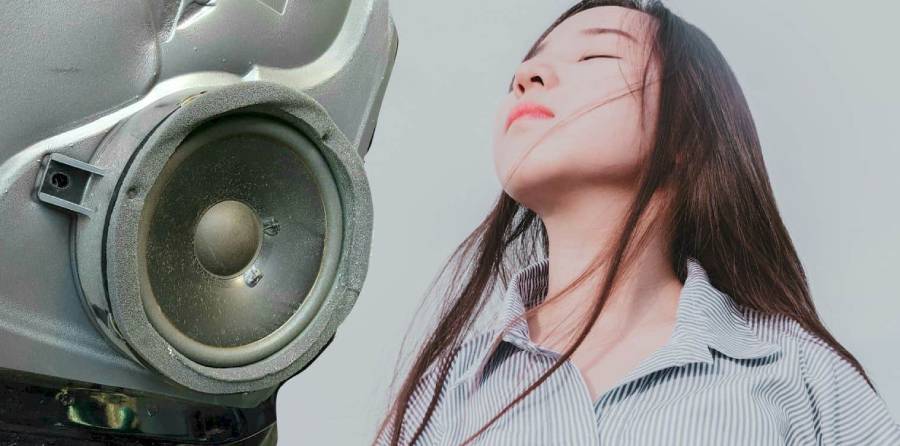
Why Are My Car Speakers Crackling?
Car speakers crackle when electrical signal interruptions, damaged speaker components, or distorted audio signals interfere with normal sound reproduction. The problem can originate from the speakers themselves or other parts of the car audio system, including the amplifier, head unit, wiring, and audio source.
A car speaker produces sound by converting electrical signals into mechanical vibrations. The amplifier sends an alternating electrical signal through the speaker’s voice coil, causing the cone to move and generate sound waves. When this signal becomes distorted or the speaker cannot reproduce it correctly, the output may contain crackling, popping, or other unwanted noises.
The timing and location of the noise help identify its source. Crackling that increases with volume can indicate amplifier clipping or speaker damage, while intermittent crackling over bumps suggests loose electrical connections. Noise from one speaker points toward a localized fault, whereas crackling from multiple speakers may indicate a shared component or audio source problem.
What Are the 8 Most Common Causes of Car Speaker Crackling?
The eight common causes of car speaker crackling are loose speaker connections, damaged speakers, amplifier problems, faulty head units, electrical interference, damaged wiring, audio source problems, and incorrect audio settings. Each cause affects a different part of the audio system and produces symptoms that help narrow down the fault.
1. Loose Speaker Connections
Loose speaker connections cause crackling by interrupting the electrical signal between the amplifier and speaker. When a terminal or connector loses consistent contact, the speaker receives an unstable signal that produces intermittent noise.
Vehicle vibrations can make this problem more noticeable. For example, a loose terminal inside a car door may cause a speaker to crackle when driving over bumps or closing the door. The sound may disappear temporarily when the connection becomes stable again.
2. Blown or Damaged Speakers
Damaged speakers can produce crackling when their mechanical or electrical components no longer reproduce sound correctly. Common faults include torn speaker cones, damaged voice coils, and deteriorated suspension components.
A damaged voice coil may rub against the magnetic assembly as the speaker moves, creating scratching or distorted sounds. A torn cone can also introduce unwanted vibrations, particularly during bass-heavy playback. For example, a speaker that crackles consistently during low-frequency music may have physical damage that requires inspection.
3. Amplifier Clipping or Malfunction
An amplifier can cause speaker crackling when it produces a distorted output signal or develops an internal fault. Amplifier clipping occurs when the requested output exceeds the amplifier’s available voltage range, causing the audio waveform to become flattened.
Clipping introduces distortion that becomes more noticeable as volume increases. Incorrect gain settings, excessive bass boost, and insufficient amplifier power can contribute to this problem. For example, an amplifier with its gain set too high may produce harsh crackling during loud musical passages even when the speakers are physically undamaged.
4. Faulty Car Stereo or Head Unit
A faulty car stereo can produce crackling when its internal audio circuitry or output connections fail to deliver a clean signal. Problems with the head unit’s built-in amplifier, wiring harness, or audio output stage can affect one or multiple speakers.
The number of affected speakers provides a useful diagnostic clue. For example, crackling from every speaker across radio, Bluetooth, and USB playback suggests checking shared audio components, including the head unit. However, amplifier and power connection faults must also be ruled out before replacing the stereo.
5. Electrical Interference
Electrical interference can introduce unwanted noise into a car’s audio system when disturbances from electrical components affect sensitive audio circuits. Charging-system components, poor grounding, and improperly routed signal cables can contribute to this interference.
The resulting noise depends on the electrical source and the affected circuit. Alternator-related interference commonly produces a whining sound that changes with engine speed, while switching disturbances or unstable connections may produce clicks and crackling. For example, noise that appears only while the engine is running suggests checking the audio system’s grounding and electrical connections.
6. Damaged Speaker Wiring
Damaged speaker wiring causes crackling when broken conductors, corrosion, or compromised insulation disrupt the electrical connection. Unlike a loose terminal, wiring damage may occur anywhere along the cable between the amplifier or head unit and the speaker.
Repeated movement can gradually damage wires, particularly where cables pass between a car door and the vehicle body. For example, a partially broken conductor inside a door wiring boot may cause intermittent crackling whenever the door opens, closes, or vibrates during driving.
7. Bluetooth or AUX Connection Problems
Bluetooth and AUX connection problems can create crackling or distorted audio before the signal reaches the car speakers. The underlying cause depends on the connection type and the device supplying the audio.
A damaged AUX cable or contaminated audio jack can produce intermittent crackling when the connector moves. Bluetooth playback may experience interruptions caused by wireless interference, connection instability, or source-device problems. For example, crackling that occurs through Bluetooth but disappears when playing the radio indicates that the speaker hardware is less likely to be responsible.
8. Incorrect Audio Settings
Incorrect audio settings can cause crackling when excessive signal amplification pushes the head unit, amplifier, or speakers beyond their clean operating limits. Bass boost, equalizer adjustments, loudness enhancement, and amplifier gain settings can increase distortion when configured improperly.
Boosting bass frequencies places additional demands on the amplifier and speaker drivers. For example, applying a large bass boost while listening at high volume can cause an amplifier to clip or a speaker to exceed its mechanical limits. Returning the equalizer to neutral settings and reducing excessive gain can help determine whether audio configuration is contributing to the crackling.
Why Do My Car Speakers Crackle at High Volume?
Car speakers crackle at high volume primarily because of amplifier clipping, speaker overload, or existing speaker damage. These problems become more noticeable as the audio system demands greater electrical power and increased speaker cone movement.
Amplifier clipping occurs when an amplifier cannot produce the voltage required to reproduce an audio signal without distortion. Instead of delivering the original waveform, the amplifier produces a clipped signal containing additional harmonic frequencies. This distortion can create harsh, crackling sounds during loud music playback. For example, an underpowered amplifier driven beyond its clean output capacity may distort bass-heavy tracks before the speakers reach their rated power limits.
Speaker overload creates a different problem. When a speaker receives excessive power or attempts to reproduce frequencies beyond its mechanical capabilities, its cone and suspension may move outside their intended operating range. This can produce rattling, buzzing, or crackling, particularly during deep bass passages. Existing voice coil damage can make these symptoms more noticeable at higher volumes.
To identify the cause, reduce the volume and return bass boost and equalizer settings to neutral. If the crackling disappears, check the amplifier gain, speaker power handling, and audio settings before assuming the speakers are damaged. Persistent distortion at moderate volume may indicate a hardware fault requiring further inspection.
Why Do My Car Speakers Crackle at Low Volume?
Car speakers crackle at low volume because of unstable electrical connections, damaged speaker components, faulty audio sources, or problems within the head unit or amplifier. Unlike high-volume distortion, low-volume crackling does not necessarily indicate that the audio system is being overloaded.
Loose wiring is a common cause of intermittent crackling at low volume. A partially disconnected speaker terminal or corroded connector can interrupt the electrical signal regardless of the volume setting. For example, a speaker may produce brief crackling sounds while driving over uneven roads, even when music is playing quietly.
Damaged voice coils and faulty amplifier components can also generate distortion at low listening levels. A misaligned voice coil may rub against the speaker’s magnetic assembly during cone movement, while a defective amplifier channel may introduce unwanted noise into the output signal.
Start troubleshooting by playing a familiar audio track through a different source, such as switching from Bluetooth to FM radio. If the crackling occurs across multiple sources, inspect the speaker connections and audio system components. If it occurs through only one source, investigate that device or connection before replacing any speakers.
Why Do My Car Speakers Crackle When I Accelerate?
Car speakers may crackle when accelerating because of electrical interference, poor grounding, or loose connections affected by engine vibration. Acceleration changes engine speed, charging-system operating conditions, and vehicle vibration, which can expose existing audio system faults.
Electrical interference occurs when unwanted electrical disturbances enter the audio signal path. A charging-system problem, inadequate grounding connection, or poorly shielded signal cable can allow noise from vehicle electrical components to reach the amplifier. Alternator-related interference typically produces a high-pitched whine that changes with engine RPM, although other electrical disturbances may create clicking or crackling sounds.
Engine vibration can also disturb loose speaker terminals, amplifier connections, and damaged wiring. For example, a poorly secured amplifier ground connection may produce intermittent noise as engine vibration changes the electrical contact. In this situation, the crackling may occur during acceleration without following engine RPM in a consistent pattern.
Compare audio playback with the engine off and running while keeping the volume and audio source unchanged. If the noise appears only when the engine runs, check the charging-system connections, amplifier grounding, and signal cable routing. If the sound occurs mainly during vehicle movement, inspect vibration-sensitive wiring and connectors. Persistent engine-related noise should be diagnosed before replacing the speakers.
Why Is Only One Car Speaker Crackling?
Only one car speaker crackles when the problem affects that speaker, its wiring, or the amplifier channel supplying its audio signal. A localized fault is more likely than a shared audio source problem when the remaining speakers reproduce the same audio without distortion.
A damaged speaker driver is one possible cause. Torn cone material, deteriorated suspension components, or a damaged voice coil can create unwanted mechanical noises during playback. For example, a front-left door speaker that crackles during bass-heavy music while the other speakers remain clear may have physical damage or a loose mounting component.
Faulty wiring can produce similar symptoms. Corroded terminals, damaged door harnesses, and loose connectors may interrupt the signal to an individual speaker. A defective head unit or amplifier output channel can also introduce distortion into only one speaker.
Use the stereo’s balance and fade controls to isolate the affected speaker. Play the same audio at a moderate volume through each speaker and compare the results. If crackling remains limited to one location, inspect that speaker and its connections with the audio system powered off. If the speaker and wiring appear intact, further testing of the corresponding amplifier or head unit channel can help identify the fault.
How Can I Diagnose Crackling Car Speakers?
To diagnose crackling car speakers, isolate the affected speaker, compare different audio sources, inspect wiring connections, and test the head unit or amplifier. This process helps determine whether the noise originates from a damaged speaker, an unstable electrical connection, or a distorted audio signal.
Begin with tests that do not require removing vehicle components. Play a familiar audio track at moderate volume, note when the crackling occurs, and check whether the noise changes with volume, engine speed, or vehicle movement. These observations help narrow down the possible causes before inspecting the audio system.
How Can I Test Which Car Speaker Is Crackling?
To identify a crackling car speaker, use the stereo’s balance and fade controls to play audio through each speaker individually. This method isolates the sound output and helps determine whether the problem affects one speaker or multiple speakers.
Follow these four steps:
- Play a consistent audio source. Choose a familiar song or test track with clear vocals and moderate bass. Keep the volume at a comfortable level to avoid introducing additional distortion.
- Adjust the balance control. Move the audio output toward the left speakers, then toward the right speakers. Listen for crackling on each side.
- Adjust the fade control. Direct the audio toward the front speakers, then toward the rear speakers. Combine balance and fade adjustments to isolate individual speaker locations.
- Compare the results. Record which speaker crackles and whether the noise changes with volume or specific audio frequencies.
For example, if the front-right speaker crackles while the other three speakers produce clear sound, the problem is likely associated with that speaker, its wiring, or its amplifier channel.
Next, turn off the audio system and inspect accessible connections at the affected speaker. Look for loose terminals, corrosion, damaged insulation, and frayed wires. Pay particular attention to door wiring harnesses, where repeated opening and closing can damage conductors. Avoid touching exposed electrical connections while the system is powered.
How Can I Check Whether the Problem Comes From the Stereo or Amplifier?
To determine whether crackling originates from the stereo or amplifier, compare multiple audio sources, examine how distortion changes with volume, and identify whether the noise affects one or several output channels.
Start by switching between available audio sources, such as FM radio, Bluetooth, USB, and AUX. If crackling occurs only through Bluetooth, investigate the connected device and wireless connection. If the noise appears across every source, the fault is more likely within a shared audio component, speaker circuit, or electrical connection.
Next, reduce the volume and return the equalizer, bass boost, and loudness settings to neutral. Crackling that disappears after these adjustments may indicate signal clipping or excessive output demands. Distortion that remains at low volume requires further investigation because it may originate from a faulty amplifier channel, head unit output, or speaker connection.
Check whether the vehicle has a separate external amplifier or relies on the head unit’s built-in amplifier. An external amplifier introduces additional components, including power cables, grounding connections, signal inputs, and speaker outputs. Loose or corroded connections at these points can cause intermittent noise.
For example, if every speaker crackles through multiple audio sources, inspect shared components such as the head unit, amplifier, and their power and grounding connections. If only one speaker crackles, focus on its individual output channel and wiring.
Turn off the vehicle and audio equipment before inspecting accessible wiring. Do not disconnect speaker wires, probe powered amplifier terminals, or swap amplifier outputs without confirming the equipment’s wiring configuration. If basic testing cannot isolate the fault, a car audio technician can perform electrical measurements and component-level tests safely.
How Do I Fix Crackling Car Speakers?
To fix crackling car speakers, repair loose electrical connections, replace damaged wiring, correct amplifier settings, eliminate audio source problems, or replace defective speakers. The appropriate repair depends on which component causes the noise. Replacing a speaker will not resolve crackling caused by a faulty amplifier, head unit, or audio connection.
Start with the least invasive repairs, such as adjusting audio settings and testing different playback sources. If the crackling continues, inspect accessible speaker connections and wiring with the system powered off. Physical speaker damage and internal amplifier faults require more extensive repairs.
How Do I Fix Crackling Caused by Wiring or Audio Settings?
To fix crackling caused by wiring or audio settings, restore secure electrical connections, repair damaged conductors, and reduce excessive signal amplification. These repairs address interruptions and distortion without requiring speaker replacement.
Repair loose speaker connections. Turn off the vehicle and audio system before accessing speaker terminals. Inspect connectors for corrosion, loose fittings, or damaged contact surfaces. Reconnect loose terminals securely and replace connectors that cannot maintain reliable electrical contact. For example, a loose terminal inside a door panel may stop producing intermittent crackling once its connection is properly restored.
Replace damaged speaker wiring. Inspect accessible cables for frayed conductors, cracked insulation, corrosion, and damage near door hinges. Replace compromised wiring with appropriately sized automotive-grade cable. Use secure, insulated connections and route repaired wires away from moving components and sharp edges. If the wiring is part of a complex factory harness, professional repair helps prevent damage to adjacent vehicle circuits.
Correct amplifier and equalizer settings. Return bass boost, loudness enhancement, and equalizer adjustments to neutral settings. Reduce the listening volume and check whether distortion disappears. If the system uses an external amplifier, set its input gain according to the manufacturer’s instructions. Amplifier gain controls input sensitivity rather than acting as an additional volume control, and excessive gain can cause clipping.
Fix Bluetooth and AUX audio problems. Test another audio source to determine whether the crackling originates from the connected device. For AUX connections, inspect the audio jack and replace damaged cables. For Bluetooth playback, remove the existing pairing, reconnect the device, and check for software updates. If crackling disappears when switching to FM radio or USB playback, investigate the original audio source before modifying the speakers.
Address electrical interference. Inspect accessible grounding connections for looseness or corrosion with the vehicle powered off. Poor amplifier grounding and improperly routed signal cables can allow unwanted electrical noise into the audio system. Persistent noise that changes with engine operation may require professional inspection of the charging system and audio wiring.
After completing each repair, play the same audio track at a moderate volume and compare the results. Testing one change at a time helps identify which correction eliminated the crackling.
How Do I Fix Crackling Caused by Damaged Speakers?
To fix crackling caused by damaged speakers, identify the defective component and determine whether repair or replacement is practical. Torn speaker cones, damaged voice coils, and deteriorated suspension components can produce distortion even when the amplifier and wiring operate correctly.
Begin by inspecting the affected speaker with the audio system powered off. Look for visible cone tears, detached suspension material, loose mounting hardware, and debris contacting the moving speaker components. A loose speaker mounting screw or vibrating door panel can produce noises resembling speaker damage, so these problems should be ruled out before replacing the driver.
Minor physical problems may be repairable. For example, a small tear in a paper speaker cone may be repaired using materials designed for speaker cones, provided the voice coil and suspension remain functional. However, repairs can change the cone’s mechanical properties, and replacement is generally more practical for inexpensive factory speakers.
A damaged voice coil presents a more serious problem. Excessive heat can deform the coil, damage its insulation, or cause it to rub against the magnetic assembly. Repairing this damage typically requires specialized reconing or voice coil replacement, which is rarely economical for standard automotive speakers.
Replace the speaker when its driver is permanently damaged or when repair costs approach the price of a compatible replacement. Match the replacement speaker’s physical dimensions, mounting depth, impedance, and power-handling requirements to the vehicle’s audio system. Factory premium audio systems may use speakers with unusual impedance ratings, so compatibility must be verified before installation.
Before installing a replacement, confirm that the original speaker was not damaged by amplifier clipping, incorrect settings, or wiring faults. Otherwise, the same underlying problem may damage the new speaker. After installation, test the replacement at low volume before gradually increasing the output to a normal listening level.
How Can I Prevent My Car Speakers From Crackling Again?
To prevent car speakers from crackling, maintain secure electrical connections, avoid excessive amplifier output, protect speaker components from moisture, and correct audio system faults before they cause permanent damage. These preventive measures reduce the risk of intermittent electrical signals, speaker distortion, and premature component failure.
Maintain speaker wiring and connections. Inspect accessible speaker terminals, amplifier connections, and wiring harnesses when servicing the audio system. Loose connectors and corroded terminals can interrupt electrical signals, especially in vehicles exposed to vibration and moisture. For example, checking the wiring inside frequently used doors can help identify damaged insulation before a conductor breaks.
Avoid excessive volume and bass boost. Keep amplifier gain and equalizer settings within the audio system’s operating limits. Excessive bass boost increases the demands placed on speaker drivers and amplifiers, particularly during loud playback. Reduce the volume immediately when audible distortion occurs to limit the risk of voice coil overheating or mechanical damage.
Protect speakers from moisture and physical damage. Maintain door seals, moisture barriers, and speaker mounting hardware. Water entering a door panel can corrode electrical terminals and damage speaker components. Secure mounting also prevents unwanted vibrations that resemble crackling or rattling.
Address recurring electrical problems. Investigate crackling that appears after starting the engine, driving over bumps, or connecting external audio devices. Identifying these patterns early helps prevent minor wiring or connection faults from developing into persistent audio problems.
Read more: Why Does My Car Shake at Idle? Causes and Fixes
Should I Repair or Replace Crackling Car Speakers?
Repair crackling car speakers when the problem comes from loose connections, damaged wiring, incorrect audio settings, or other faults that do not require replacing the speaker driver. Replace a speaker when its internal components are permanently damaged and repair is technically impractical or more expensive than installing a compatible replacement.
The decision depends on the source of the crackling, the condition of the speaker, and the cost of restoring normal audio performance. A speaker that crackles because of a loose terminal may only need a secure electrical connection. In contrast, a speaker with a burned voice coil or severely damaged cone generally requires replacement.
Repair is appropriate when the speaker itself remains functional. Common repairable problems include loose terminals, corroded connectors, damaged external wiring, and insecure mounting hardware. Correcting these faults restores the electrical or mechanical conditions needed for normal sound reproduction without replacing the driver.
Replacement is more appropriate when the speaker has sustained irreversible mechanical or electrical damage. For example, a voice coil that has overheated and become deformed may rub against the magnetic assembly, producing distortion during playback. Rebuilding the driver requires specialized equipment and may cost more than replacing a standard factory speaker.
Before purchasing replacement speakers, verify that the amplifier, head unit, and wiring are operating correctly. A new speaker connected to a clipping amplifier or faulty output channel may reproduce the same crackling or suffer additional damage. Correct diagnosis prevents unnecessary replacement costs and repeated failures.
When Should I Take Crackling Car Speakers to a Professional?
Take crackling car speakers to a professional when basic troubleshooting fails to identify the cause, electrical faults persist, or repairs require accessing complex vehicle wiring and audio components. A qualified car audio technician can test speaker circuits, amplifier outputs, and electrical connections using appropriate diagnostic equipment.
Professional diagnosis is particularly important when crackling affects multiple speakers across different audio sources. This pattern may indicate a shared amplifier, head unit, power supply, or grounding problem. Testing these components often requires electrical measurements that go beyond basic visual inspection.
Seek professional assistance in the following situations:
- Repeated fuse failures: A fuse that blows repeatedly may indicate a short circuit, damaged wiring, or defective audio equipment. Replacing the fuse without correcting the underlying fault can create additional electrical hazards.
- Burning smells or overheating: Unusual heat, smoke, or burning odors near the stereo or amplifier indicate a potentially dangerous electrical problem. Stop using the audio system and arrange an inspection before operating it again.
- Persistent crackling across multiple speakers: Distortion that continues after changing audio sources and correcting settings may require amplifier output testing or head unit diagnosis.
- Damaged factory wiring harnesses: Modern vehicles integrate audio wiring with other electrical systems. Incorrect modifications can damage connectors or interfere with vehicle functions.
- Crackling after an audio system upgrade: Newly installed amplifiers, speakers, or head units may have incompatible connections, incorrect gain settings, or installation-related grounding problems.
A technician can use a multimeter, oscilloscope, and suitable audio test equipment to check circuit continuity, speaker impedance, amplifier distortion, and grounding integrity. These measurements help distinguish damaged speakers from upstream electrical faults.
Professional repair is also appropriate when the vehicle has a factory premium audio system with integrated amplifiers, digital signal processing, or manufacturer-specific speaker configurations. These systems may require specialized diagnostic procedures and compatible replacement components.
Resolving the underlying fault before replacing equipment is the most reliable way to restore clear sound and prevent car speaker crackling from returning.