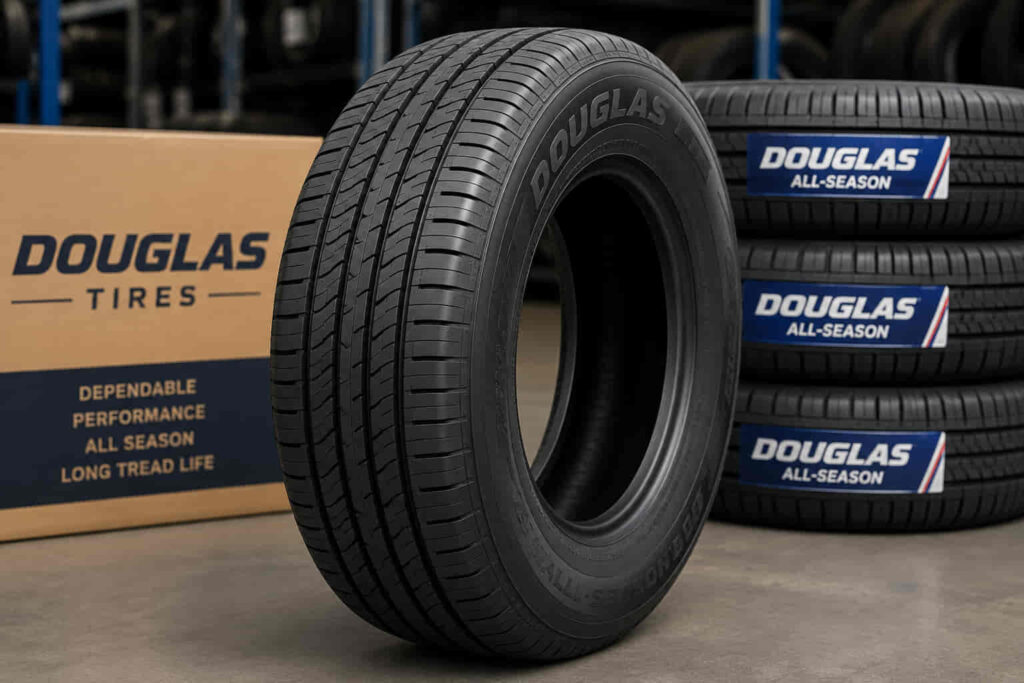
Douglas Tires is a budget-focused tire brand commonly associated with Walmart, and many buyers want to understand who makes these tires before deciding whether they are a reliable choice. Unlike premium tire brands that have strong independent identities, Douglas is positioned as an affordable replacement tire option designed for drivers who need practical performance for everyday transportation.
Understanding who makes Douglas Tires helps explain the brand’s place in the tire market. Tire ownership, manufacturing relationships, and retail distribution all influence how a tire brand is positioned, including its pricing, availability, and target customers. Douglas Tires is widely recognized as a value-oriented option available through Walmart’s automotive retail network.
The quality of a tire should not be judged only by its price or brand recognition. Factors such as vehicle type, driving conditions, maintenance habits, tread design, and expected performance all affect whether a tire is suitable for a specific driver.
Douglas Tires is mainly designed for consumers who need dependable tires for regular commuting, family vehicles, and normal road conditions. This article explains who makes Douglas Tires, how the brand is positioned, what vehicles use these tires, their advantages and limitations, and whether Douglas Tires are a suitable choice for your vehicle.
Are Douglas Tires Made by Goodyear?
Douglas Tires are closely associated with Goodyear through a manufacturing relationship, which allows Douglas to be positioned as a value-focused tire brand while benefiting from established tire production expertise. This relationship is one of the main reasons many buyers search for Douglas Tires before purchasing because they want to understand whether the brand has connections to a major tire manufacturer.
Douglas Tires is primarily known as a private-label style tire brand sold through Walmart’s automotive network. Instead of competing directly with premium brands such as Michelin or Goodyear under their main product lines, Douglas focuses on providing affordable replacement tires for drivers who prioritize cost efficiency and everyday usability.
The connection between Douglas and Goodyear does not mean Douglas tires are identical to Goodyear-branded tires. Premium tire brands and value-oriented brands typically have different product strategies, technologies, target customers, and performance expectations. A budget tire line is designed to meet practical transportation needs, while premium products often include more advanced engineering features and specialized performance characteristics.
For example, a driver replacing worn tires on an older commuter vehicle may prioritize affordability and availability, making a value-focused brand like Douglas a practical option. However, a driver seeking maximum performance, advanced handling, or specialized conditions may compare Douglas with higher-tier tire brands.
Understanding this relationship helps buyers evaluate Douglas Tires based on their intended purpose rather than assuming that a connection to a major manufacturer automatically makes all tire models equivalent.
What Types of Vehicles Use Douglas Tires?
Douglas Tires are mainly designed for passenger vehicles, SUVs, and light trucks that require affordable replacement tires for everyday driving conditions. The brand focuses on common vehicle applications rather than specialized performance categories, making it suitable for drivers who need reliable transportation rather than extreme driving capability.
Passenger cars are one of the primary applications for Douglas Tires because many drivers need economical replacements for commuting, errands, and normal highway use. These vehicles typically require tires that provide acceptable traction, comfort, and durability without requiring premium-level performance technology.
Douglas Tires are also available for certain SUVs and light trucks where drivers need practical tire options for regular road use. These vehicles require stronger construction because of their increased weight, but the intended use remains focused on daily transportation rather than demanding off-road or high-performance conditions.
The suitability of Douglas Tires depends on matching the tire characteristics with the vehicle’s purpose. A sedan used for daily commuting may benefit from an affordable all-season tire, while a heavy-duty truck used for towing or difficult terrain may require a tire specifically engineered for higher loads and more demanding conditions.
For example, a family SUV used mainly for school runs and highway driving may find Douglas Tires suitable, while an owner of a performance vehicle or off-road truck may need a more specialized tire category.
Read more: Does AAA Patch Tires for Free
Are Douglas Tires Good for Daily Driving?
Douglas Tires can be a suitable choice for daily driving when drivers need affordable replacement tires for normal road conditions, commuting, and regular vehicle use. The brand is designed around practical transportation needs rather than premium performance, which means its value comes from providing basic reliability at a lower cost.
For everyday driving, important tire characteristics include predictable traction, acceptable ride comfort, reasonable tread life, and consistent performance during normal weather conditions. Douglas Tires are generally positioned to meet these basic requirements for drivers who use their vehicles for commuting, shopping, family transportation, and routine highway driving.
However, Douglas Tires are not designed to compete directly with premium brands in areas such as advanced handling, extreme weather performance, or specialized driving conditions. Drivers who frequently operate vehicles at high speeds, drive in severe winter climates, tow heavy loads, or require maximum cornering performance may need tires developed specifically for those situations.
The suitability of Douglas Tires depends heavily on the driver’s expectations. For example, an owner of an older sedan that is mainly used for daily commuting may find Douglas Tires provide sufficient value and reliability. In contrast, someone driving a luxury vehicle or performance car may notice differences in handling response, road noise, and overall refinement compared with premium tire options.
Choosing Douglas Tires is therefore less about finding the highest-performing tire and more about selecting a tire that matches the vehicle’s purpose and the driver’s priorities.
How Long Do Douglas Tires Usually Last?
The lifespan of Douglas Tires depends on factors such as tire model, driving habits, maintenance, road conditions, and vehicle alignment rather than the brand name alone. Like any tire, proper maintenance plays a major role in determining how long Douglas Tires can maintain safe and effective performance.
Tread wear is influenced by driving behavior, tire inflation, rotation frequency, and the type of roads a vehicle regularly travels on. A tire used for gentle highway commuting may last significantly longer than the same tire used for aggressive acceleration, frequent braking, or rough road conditions.
Regular maintenance helps maximize tire life. Maintaining correct air pressure, rotating tires at recommended intervals, checking wheel alignment, and monitoring tread condition can reduce uneven wear and improve overall performance.
Because Douglas Tires are positioned in the value tire category, drivers should evaluate expected lifespan based on intended use rather than comparing them directly with premium long-mileage tire models. A budget tire may provide good value when its lower purchase price matches the driver’s transportation needs.
For example, a commuter driving moderate distances each day with proper tire care may achieve satisfactory service life from Douglas Tires. However, a vehicle carrying heavy loads or operating in demanding conditions may experience faster wear and benefit from a more specialized tire designed for those requirements.
What Are the Advantages and Limitations of Douglas Tires?
Douglas Tires provide value through affordability and accessibility, but their limitations become more noticeable when compared with premium tire brands designed for advanced performance. The brand is positioned for drivers who need practical tires for everyday transportation rather than specialized driving requirements.
One of the main advantages of Douglas Tires is their lower purchase cost. For drivers replacing worn tires on an older vehicle or maintaining a vehicle with a limited budget, Douglas offers a more affordable option while still providing basic functions such as traction, comfort, and road stability. Their availability through Walmart’s automotive network also makes them convenient for many consumers who prefer purchasing and servicing tires in one location.
Another advantage is that Douglas Tires are designed for common driving situations. Drivers who mainly use their vehicles for commuting, local transportation, and normal highway conditions often need dependable performance rather than advanced tire technologies developed for extreme conditions.
However, Douglas Tires have limitations because they are not positioned as premium performance products. Drivers may find differences in areas such as handling response, road noise, wet-weather performance, and long-term refinement when compared with higher-end brands. Vehicles that require maximum grip, enhanced stability, or specialized tire capabilities may benefit from premium alternatives.
For example, a driver looking for affordable replacement tires for a daily commuter may find Douglas a practical solution, while a performance vehicle owner who values precise handling and maximum traction may require a more specialized tire.
Understanding both the advantages and limitations allows buyers to determine whether Douglas Tires match their actual driving needs rather than judging the brand only by price.
Should You Buy Douglas Tires for Your Vehicle?
You should consider Douglas Tires if your priority is affordable, practical transportation performance, but you should evaluate other options if your vehicle requires advanced performance, extreme durability, or specialized capabilities. The right tire choice depends on how the vehicle is used, where it is driven, and what characteristics matter most to the owner.
Douglas Tires can be a reasonable option for drivers who need replacement tires for daily commuting, family vehicles, and normal road conditions. Their value-focused positioning makes them suitable for consumers who want functional tires without paying premium prices for features they may not need.
However, drivers should consider alternatives when their vehicles operate in demanding situations. Performance cars, heavy-duty trucks, vehicles frequently driven in severe weather, or vehicles used for long-distance high-speed driving may require tires with more advanced engineering and stronger performance characteristics.
The best tire decision comes from matching the product with the driving environment. A budget-focused tire can provide excellent value when it meets the requirements of the vehicle and driver. At the same time, choosing a cheaper tire for an application that requires higher performance may create compromises in handling, comfort, or safety.
Douglas Tires are designed for a specific market segment: drivers seeking dependable everyday tires at an accessible price. When used within that purpose, they can be a practical choice for many vehicles and driving situations.
What Should You Know Before Buying Douglas Tires?
Douglas Tires are a value-focused tire option designed for drivers who need practical performance, affordable pricing, and reliable everyday transportation. Understanding who makes Douglas Tires, how the brand is positioned, and what type of driving it is designed for helps buyers determine whether these tires match their needs.
Douglas Tires can provide a suitable solution for commuters, family vehicles, and drivers who mainly operate on normal roads. Their affordability and availability make them attractive for consumers who want dependable replacement tires without investing in premium tire categories.
However, choosing Douglas Tires requires realistic expectations. The brand is not designed to replace high-performance or premium tire options that focus on advanced handling, extreme weather capability, or maximum long-term durability. Drivers should consider their vehicle type, driving conditions, climate, and performance requirements before making a purchase decision.
A tire’s value comes from how well it matches the purpose of the vehicle. For a daily commuter that needs affordable and functional transportation, Douglas Tires may provide a practical balance between cost and performance. For vehicles used in demanding conditions, a more specialized tire may be a better choice.
By understanding the manufacturer relationship, product positioning, strengths, and limitations of Douglas Tires, drivers can make a more informed decision and select a tire that fits their actual driving requirements.