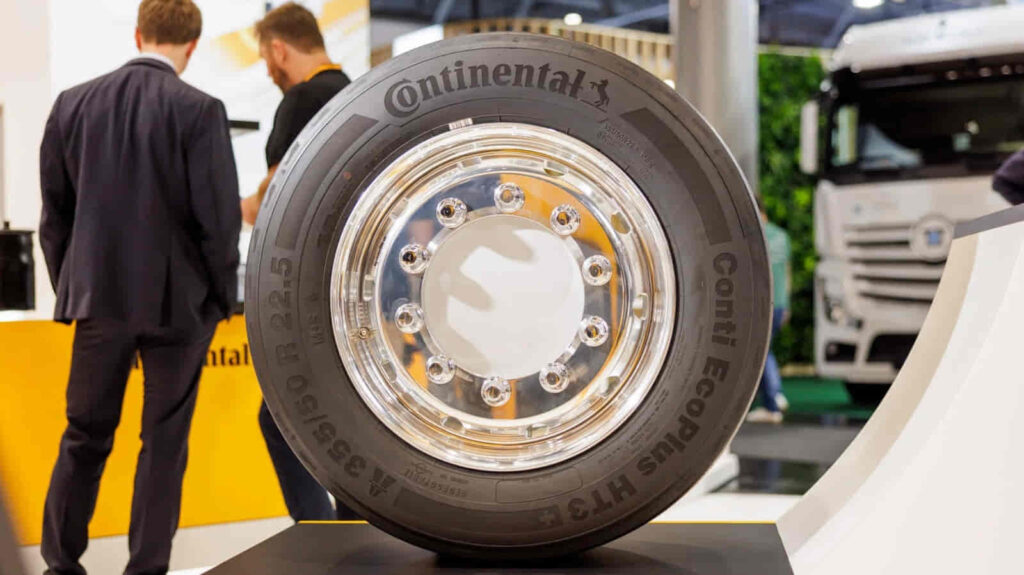
Continental Tires are made by Continental AG, a German technology company that has become one of the world’s leading tire manufacturers and automotive technology providers. The company develops and produces premium tires for passenger vehicles, SUVs, performance cars, commercial vehicles, and electric vehicles while also supplying original equipment tires for many global automotive manufacturers.
Understanding who makes Continental Tires helps explain why the brand has earned a strong reputation for safety, engineering quality, and advanced tire technology. The company behind a tire brand influences important factors such as research and development, manufacturing standards, product innovation, and relationships with vehicle manufacturers.
Unlike many tire brands that compete mainly through affordability, Continental operates in the premium tire segment. The company focuses on technologies designed to improve braking performance, handling stability, driving comfort, rolling efficiency, and overall vehicle safety.
Continental is especially recognized among European vehicle owners because many German and European automakers have selected Continental tires as original equipment. Product families such as PremiumContact, ExtremeContact, CrossContact, and EcoContact demonstrate the company’s focus on different driving conditions and vehicle categories.
This guide explains who makes Continental Tires, the company’s history, ownership structure, manufacturing locations, technology development, OEM partnerships, product range, and why Continental has become one of the most respected premium tire manufacturers in the automotive industry.
What Is Continental AG Known For?
Continental AG is known as a German technology company that develops premium tires and automotive systems for global vehicle manufacturers and consumers. The company operates across multiple areas of mobility technology, with tires being one of its most recognized and important business segments.
Continental’s reputation is built around engineering, safety, and innovation. Unlike manufacturers that focus mainly on producing replacement tires at competitive prices, Continental positions itself as a premium tire brand by investing heavily in research, testing, and technology development.
The company is particularly recognized for creating tires that focus on safety-related performance characteristics, including wet braking, handling stability, ride comfort, and rolling efficiency. These areas are important because tires are one of the main components connecting a vehicle to the road surface.
Continental also has a strong presence in original equipment manufacturing. Vehicle manufacturers select tire suppliers based on strict technical requirements, including performance consistency, durability, noise levels, and compatibility with specific vehicle designs. Continental’s OEM relationships demonstrate its ability to develop tires that meet demanding automotive standards.
The company’s product portfolio covers multiple driving applications. PremiumContact products are designed for everyday passenger vehicles, ExtremeContact products target performance-oriented drivers, CrossContact and TerrainContact lines serve SUV applications, while EcoContact and EV-focused products address efficiency and electric mobility needs.
For example, a European vehicle manufacturer selecting Continental tires for a new vehicle model requires more than a standard tire supplier. The tire must be engineered to work with the vehicle’s suspension, braking system, and overall driving characteristics.
Where Did Continental Tires Start?
Continental Tires started in Germany in 1871 and developed from a domestic rubber manufacturer into one of the world’s largest automotive technology companies. The company’s German origin remains a central part of its identity and contributes to its reputation for precision engineering and technical innovation.
Continental was founded in Hanover, Germany, originally producing rubber products before expanding into tire manufacturing. As the automotive industry grew during the 20th century, Continental developed its expertise in tire technology and became increasingly involved in vehicle mobility solutions.
Germany’s strong automotive industry played an important role in Continental’s development. The company grew alongside major vehicle manufacturers and gained experience creating products designed for increasingly advanced vehicles.
Over time, Continental expanded beyond Germany by establishing manufacturing facilities, research centers, and business operations around the world. This international growth allowed the company to compete with other major premium tire manufacturers while maintaining its German engineering identity.
The brand’s history reflects a transition from a traditional rubber manufacturer into a global mobility technology company. Today, Continental combines tire manufacturing with automotive technologies related to safety, efficiency, and future vehicle systems.
For example, Continental’s development of advanced passenger and electric vehicle tires shows how the company has adapted its expertise to changing automotive requirements rather than relying only on traditional tire production.
Read more: Who Makes Fullway Tires
Who Owns Continental Tires?
Continental Tires is owned and operated by Continental AG, a German publicly traded technology company that manages the brand’s tire development, manufacturing, and global business operations. Continental AG is not only a tire manufacturer but also a major automotive technology company involved in systems that support vehicle safety, mobility, and efficiency.
The ownership structure of Continental is important because it explains why the brand has access to extensive engineering resources and automotive expertise. Unlike companies that focus only on replacement tires, Continental combines tire development with broader automotive technology knowledge, allowing it to create products designed around modern vehicle requirements.
Continental AG manages several business areas, with the tire division remaining one of its most recognized operations. The company invests in research and development to improve tire performance in areas such as braking safety, handling control, fuel efficiency, and electric vehicle compatibility.
This structure has helped Continental maintain a strong position in the premium tire market. The company’s ability to work closely with vehicle manufacturers has contributed to its reputation as an OEM supplier for many European and international automotive brands.
Continental’s relationship with the automotive industry is one of its key advantages. Developing an original equipment tire requires cooperation between tire engineers and vehicle manufacturers to ensure that the tire supports the intended driving characteristics of the vehicle.
For example, a luxury sedan equipped with Continental tires from the factory uses a tire that was selected based on factors such as ride comfort, braking performance, noise control, and handling balance.
Where Are Continental Tires Made?
Continental Tires are manufactured through a global production network that includes facilities in Germany and other countries around the world. The company uses international manufacturing operations to supply different markets while maintaining consistent engineering standards and quality requirements.
Germany remains an important center for Continental’s engineering expertise and brand identity. The company’s German heritage continues to influence its approach to product development, testing procedures, and technical innovation.
As a global manufacturer, Continental operates production facilities in multiple regions to serve local markets efficiently. These facilities allow the company to produce tires closer to customers while supporting global demand for passenger, SUV, commercial, and specialty tires.
The exact manufacturing location of a Continental tire depends on the specific model, market requirements, and production planning. However, production location alone does not determine tire quality. Factors such as engineering design, material technology, manufacturing processes, and quality control systems have a greater impact on tire performance.
Continental applies strict development and testing standards across its products. The company evaluates tires for important characteristics such as wet braking, handling stability, durability, rolling resistance, and comfort.
For example, a Continental winter tire developed for European markets must meet different performance requirements compared with a high-performance summer tire designed for vehicles requiring maximum handling capability.
What Types of Tires Does Continental Manufacture?
Continental manufactures a wide range of tires for passenger cars, SUVs, performance vehicles, commercial vehicles, and electric vehicles. The company’s product portfolio reflects its position as a premium manufacturer serving different driving environments and vehicle categories.
The PremiumContact series represents Continental’s focus on everyday passenger vehicles. These tires are designed around safety, comfort, and balanced performance, making them suitable for drivers who want reliable handling and braking performance in normal driving conditions.
The ExtremeContact series targets performance-oriented drivers who prioritize responsive handling, high-speed stability, and driving control. These products are commonly associated with sports cars and vehicles where performance characteristics are important.
Continental also produces SUV and crossover tires through product lines such as CrossContact and TerrainContact. These tires are developed for larger vehicles that require stability, durability, and versatility across different road conditions.
The company has also expanded its focus on electric vehicle tires. EVs create different engineering challenges because they are heavier, produce instant torque, and require lower rolling resistance to improve efficiency. Continental develops tires specifically designed to address these requirements.
Winter tires are another important part of Continental’s product range. Products such as VikingContact are designed for cold-weather conditions where traction, braking control, and stability become critical factors.
The variety of Continental’s products demonstrates the company’s ability to serve different automotive segments while maintaining its premium positioning.
For example, a driver of a BMW sedan may choose Continental PremiumContact for comfort and safety, while an electric vehicle owner may select a Continental EV tire designed to improve efficiency and reduce road noise.
Why Do Car Manufacturers Use Continental Tires as OEM Equipment?
Car manufacturers use Continental Tires as original equipment because the company has developed the engineering capability, testing standards, and manufacturing consistency required for modern vehicle production. OEM tire selection is not based only on brand recognition or price; vehicle manufacturers evaluate whether a tire can support the vehicle’s safety, handling, comfort, and efficiency characteristics.
An original equipment tire must be designed around the specific requirements of a vehicle platform. Engineers consider factors such as suspension tuning, braking performance, steering response, vehicle weight, noise levels, and intended driving conditions when selecting a tire.
Continental has established OEM relationships with many international automotive manufacturers, especially European vehicle brands. This position has strengthened the company’s reputation because supplying factory-installed tires requires manufacturers to meet strict technical and quality requirements.
Continental’s OEM experience also influences its replacement tire development. Technologies created for vehicle manufacturers often contribute to consumer products by improving areas such as braking performance, driving stability, and efficiency.
The company’s involvement with premium vehicles has helped create a strong association between Continental and European automotive engineering. Many drivers recognize the brand because they encounter Continental tires as factory equipment on new vehicles.
For example, a vehicle manufacturer selecting Continental tires for a luxury sedan may require a product that provides quiet operation, precise steering response, and strong wet braking performance rather than simply focusing on the lowest production cost.
How Has Continental Developed Tire Technology?
Continental has developed tire technology by focusing on safety, performance, efficiency, and new mobility requirements such as electric vehicles. The company’s technology strategy centers on improving how tires interact with vehicles and road surfaces.
One of Continental’s strongest technology areas is braking performance. Since tires directly affect how quickly a vehicle can stop, the company invests in tread designs, rubber compounds, and testing methods that improve traction, especially in wet conditions.
Continental also focuses on handling and driving stability. Performance tires in the ExtremeContact family are designed to provide responsive steering and controlled behavior during higher-speed driving, while touring products prioritize comfort and balanced everyday performance.
Electric vehicle development has become another important area for Continental. EVs produce instant torque and often have greater weight due to battery systems, creating different demands for tire durability, efficiency, and noise reduction. Continental develops EV-specific tire solutions to address these challenges.
Sustainability is also becoming part of Continental’s technology approach. The company continues exploring ways to improve rolling resistance, material efficiency, and environmentally responsible tire development.
The combination of safety engineering, performance development, and mobility technology helps Continental maintain its position as a premium tire manufacturer.
For example, an electric vehicle using Continental tires benefits from tire characteristics designed to support lower energy consumption, improved comfort, and the unique driving behavior of EV systems.
How Does Continental Compare With Other Premium Tire Brands?
Continental competes with other premium tire manufacturers by combining German engineering, safety-focused technology, OEM experience, and advanced product development. The brand operates in the same competitive category as Michelin, Bridgestone, Goodyear, and Pirelli.
Compared with Michelin, Continental is often recognized for strong wet braking performance, handling precision, and European vehicle applications. Michelin has a broader global reputation and extensive product coverage, while Continental is particularly respected for safety-focused engineering.
Compared with Bridgestone and Goodyear, Continental maintains a strong premium position through technology and OEM relationships. These brands all compete across passenger, SUV, performance, and commercial tire categories, but each company has different areas of expertise.
Continental’s advantage is its close connection with automotive engineering. The company’s products are often developed with consideration for specific vehicle characteristics, which helps explain its popularity among European manufacturers.
However, choosing between premium tire brands depends on the driver’s priorities. Some drivers may value maximum tread life, others may prioritize performance handling, comfort, winter capability, or electric vehicle efficiency.
For example, a sports car owner may compare Continental ExtremeContact with another performance tire based on grip and steering response, while a family vehicle owner may prioritize comfort, braking safety, and long-term value.
Is Continental a Reliable Tire Brand?
Continental is considered a reliable tire brand because of its long manufacturing history, premium engineering reputation, OEM partnerships, and focus on safety-related performance. The company has more than a century of experience developing tires and automotive technologies.
Reliability comes from more than the brand name alone. Tire selection, vehicle compatibility, maintenance practices, and driving conditions all influence real-world performance. A premium tire performs best when it is matched with the vehicle and intended usage.
Continental is especially suitable for drivers who prioritize safety, refined driving characteristics, and advanced tire technology. The brand’s products are commonly chosen by customers who want premium performance rather than simply the lowest purchase price.
The company’s reputation is supported by its presence in multiple automotive segments, including passenger vehicles, SUVs, performance cars, commercial vehicles, and electric vehicles.
While Continental tires typically cost more than budget alternatives, the higher price reflects investment in engineering, testing, and technology development.
For example, a driver who frequently travels on highways, owns a premium vehicle, or wants strong wet-weather performance may consider Continental a suitable choice because the brand’s strengths align with those driving requirements.