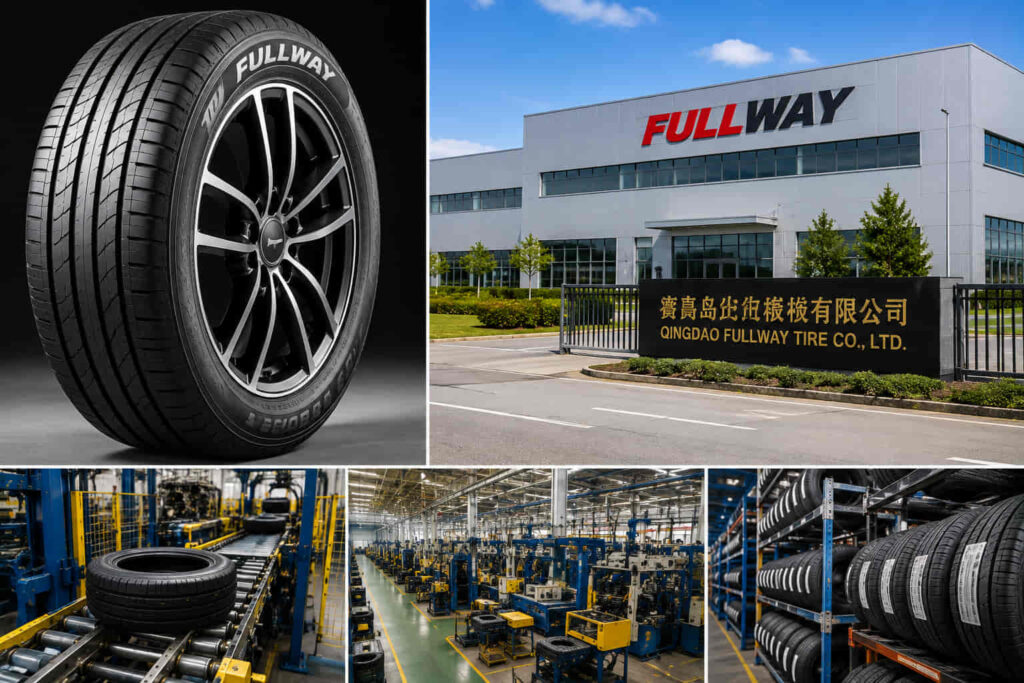
Fullway Tires are a budget tire brand designed to provide affordable replacement options for passenger vehicles, performance applications, and everyday driving needs. The brand focuses on drivers who want functional tire performance at a lower purchase cost while serving common vehicle categories such as sedans, coupes, crossovers, and SUVs.
Understanding who makes Fullway Tires is important because many consumers evaluate lesser-known tire brands before making a purchase decision. The manufacturer background, production approach, and market position behind a tire brand can influence factors such as expected performance, durability, and overall value.
Unlike established premium tire manufacturers that compete through decades of research, advanced technology, and extensive OEM partnerships, Fullway operates in the value tire segment. The brand’s primary appeal comes from offering accessible replacement tires that meet basic driving requirements without the higher cost associated with premium alternatives.
Fullway is best known for products such as the HP108 series, which target drivers looking for affordable performance-oriented tires. These products are commonly considered by customers who prioritize appearance, price, and everyday road capability for their vehicles.
However, understanding a budget tire brand requires looking beyond price alone. Factors such as manufacturing origin, product design, intended vehicle use, and realistic performance expectations determine whether a tire is suitable for a specific driver.
This guide explains who makes Fullway Tires, where they are produced, what types of tires the brand offers, how Fullway compares with other budget tire brands, and whether the brand is a reliable choice for everyday driving.
What Is Fullway Tires Known For?
Fullway Tires is known as a budget tire brand that provides affordable replacement tires for passenger vehicles, performance-oriented cars, and everyday driving applications. The brand focuses on delivering basic tire functions such as traction, handling stability, and road comfort while maintaining a lower price point compared with premium tire manufacturers.
Fullway operates within the value tire segment, where customers often prioritize affordability and accessibility over advanced tire technology. This market includes drivers who need replacement tires for daily transportation, older vehicles, or situations where reducing maintenance costs is an important consideration.
The brand is commonly associated with performance-style passenger tires, especially products such as the Fullway HP108 series. These tires are designed with wider tread patterns and sport-oriented appearances that appeal to drivers looking for an affordable option for sedans, coupes, and modified vehicles.
However, Fullway’s market position is different from established manufacturers such as Michelin, Bridgestone, Continental, or Goodyear. Premium brands typically invest heavily in proprietary technology, extensive testing programs, and original equipment partnerships. Fullway competes mainly through price accessibility and availability rather than premium-level engineering.
The value of Fullway Tires depends largely on matching expectations with the product category. A driver looking for affordable tires for normal commuting may evaluate Fullway differently from a driver who requires maximum wet-weather performance, long tread life, or specialized driving capability.
For example, a vehicle owner replacing tires on an older sedan used mainly for city driving may consider Fullway because the lower purchase price helps reduce ownership costs while still providing the basic functions required for everyday transportation.
Where Did Fullway Tires Start?
Fullway Tires developed as a budget tire brand serving the global replacement tire market, with products commonly distributed through online tire retailers and aftermarket channels. Unlike long-established tire manufacturers with publicly recognized histories spanning many decades, Fullway has built its presence primarily through availability in the value tire category.
The growth of brands like Fullway reflects a broader change in the tire industry. As online tire purchasing became more common, consumers gained access to a larger number of international tire brands beyond traditional manufacturers. This created opportunities for value-focused brands to compete by offering lower-cost alternatives.
Fullway’s expansion has been connected to demand for affordable replacement tires, particularly among drivers who compare multiple options based on price, tire size availability, and basic performance specifications.
The brand’s identity is centered around accessibility rather than premium positioning. Instead of competing through motorsport programs, OEM partnerships, or advanced research facilities, Fullway focuses on supplying replacement tires for common consumer applications.
Because Fullway belongs to the budget tire segment, evaluating the brand requires considering factors beyond its origin. Tire specifications, manufacturing standards, driving conditions, and maintenance practices all influence the real-world experience.
For example, a driver purchasing Fullway tires for occasional highway driving may have different expectations compared with someone who regularly drives long distances in heavy rain or requires maximum performance handling.
Read more: Who Makes Hercules Tires
Where Are Fullway Tires Made?
Fullway Tires are manufactured through international tire production networks, with products typically sourced from overseas manufacturing facilities serving the global replacement tire market. Like many budget tire brands, Fullway focuses on product distribution and market availability rather than operating as a large vertically integrated tire manufacturer with a worldwide factory network.
The manufacturing location of a Fullway tire can vary depending on the specific model, production arrangement, and market supply chain. For consumers, the country of production is only one factor when evaluating tire quality. Other elements, including tire design, rubber compounds, manufacturing controls, testing standards, and product specifications, have a direct impact on real-world performance.
Budget tire brands often use global manufacturing partnerships because this approach allows them to provide competitive pricing. By producing tires in regions with established tire manufacturing capabilities, these brands can supply replacement products at lower costs while meeting required industry standards.
However, a lower price does not automatically determine whether a tire is suitable or unsuitable. The important factor is whether the tire matches the vehicle type, driving conditions, and user expectations. A passenger tire designed for regular commuting has different performance requirements compared with a tire used for aggressive driving or heavy-duty applications.
For example, a driver choosing Fullway tires for a daily-use sedan may focus on affordability and basic road performance, while a driver who frequently drives in severe weather or carries heavy loads may need a tire designed for more demanding conditions.
What Types of Tires Does Fullway Manufacture?
Fullway manufactures replacement tires primarily designed for passenger vehicles, performance applications, and everyday driving needs. The brand’s product range focuses on common consumer applications rather than specialized categories such as commercial trucking, extreme off-road driving, or high-performance motorsport.
The Fullway HP108 series is one of the brand’s most recognized products. These tires are designed for drivers who want a sportier appearance and affordable performance characteristics for sedans, coupes, and other passenger vehicles. The tread design and performance-oriented positioning appeal to consumers looking for a balance between style and everyday usability.
Fullway also offers touring and all-season tire options designed around general transportation needs. These products focus on characteristics such as predictable handling, basic traction, and comfortable driving for regular road conditions.
The brand’s product approach reflects the needs of value-conscious consumers. Many buyers in this segment are not searching for maximum track performance or premium comfort technology. Instead, they want replacement tires that fit their budget and provide acceptable performance for normal driving.
Fullway’s product range is therefore best understood within the context of the budget tire market. The brand provides options for drivers who need affordable replacements, but selecting the correct tire model remains important because different vehicles and driving habits require different performance characteristics.
For example, a compact sedan used mainly for commuting may be well matched with a Fullway passenger tire, while a high-performance vehicle used for aggressive driving may require a more specialized tire category.
What Is Fullway Tire Known For?
Fullway Tires is known primarily for affordability, accessibility, and providing budget-friendly replacement options for everyday drivers. The brand’s main appeal comes from offering lower-cost tires that allow vehicle owners to replace worn tires without significantly increasing maintenance expenses.
One of Fullway’s strongest characteristics is its price positioning. Tire replacement can represent a significant vehicle ownership cost, especially for drivers who need multiple tires at the same time. Value-oriented brands like Fullway attract customers who want to control expenses while maintaining basic driving capability.
The brand is also recognized for its availability through online tire marketplaces. Digital tire shopping has made it easier for consumers to compare specifications, prices, and customer reviews across a wide range of brands, allowing lesser-known tire manufacturers to reach more buyers.
However, Fullway’s value proposition comes with realistic expectations. The brand is not positioned as a direct competitor to premium manufacturers that offer advanced engineering, extensive OEM relationships, and specialized performance technology.
The best use case for Fullway is for drivers who prioritize cost efficiency and understand the limitations of budget tire products. Proper maintenance, correct tire selection, and appropriate driving habits remain essential factors in achieving satisfactory performance.
For example, a commuter looking for affordable replacement tires on a daily-use vehicle may find Fullway offers reasonable value, while a driver seeking maximum durability, quiet operation, or extreme performance may prefer a higher-tier tire brand.
How Does Fullway Compare With Other Budget Tire Brands?
Fullway competes with other budget tire brands by offering affordable replacement tires for drivers who prioritize purchase price and basic everyday performance. In the value tire segment, consumers usually compare brands based on factors such as cost, availability, tire specifications, expected durability, and whether the product matches their driving needs.
Compared with other budget brands such as Lionhart, Lexani, Milestar, and Westlake, Fullway follows a similar market approach. These brands focus on providing lower-cost alternatives to premium tires while serving drivers who need replacement products for common vehicle applications.
Fullway’s advantage is often its affordability and product availability. Drivers looking for performance-style passenger tires may find options such as the HP108 attractive because they provide a sport-oriented appearance and basic handling characteristics at a lower price than many premium alternatives.
However, budget tire comparisons should consider more than the initial purchase price. Premium brands typically have advantages in areas such as advanced tread technology, extensive testing, longer development cycles, and refined performance characteristics. These differences may become more noticeable in demanding conditions, including heavy rain, aggressive driving, or long-distance highway use.
The best choice depends on the driver’s priorities. A vehicle owner who mainly uses a car for commuting may value affordable replacement costs, while someone seeking maximum traction, comfort, or long-term tread performance may consider a higher-tier option.
For example, a driver comparing Fullway with another budget performance tire may focus on tire size availability and price, while a driver comparing tires for frequent highway travel may place greater importance on noise levels, durability, and wet-weather performance.
Is Fullway a Reliable Tire Brand?
Fullway can be a suitable tire brand for drivers who understand its budget positioning and choose products that match their driving requirements. The brand provides affordable replacement options, but reliability depends on selecting the correct tire model, maintaining proper tire care, and having realistic expectations.
A tire’s reliability is influenced by several factors beyond the brand name. Proper inflation, regular rotation, wheel alignment, driving habits, and road conditions all affect tread wear and overall performance. A correctly maintained tire can provide better service life than a poorly maintained tire from any category.
Fullway is generally most suitable for drivers with normal transportation needs. Daily commuters, owners of older vehicles, and drivers looking for affordable replacement options may find value in the brand because the main requirement is dependable basic performance rather than premium-level capability.
However, Fullway may not be the best choice for drivers with demanding requirements. Those who frequently drive in severe weather, participate in performance driving, carry heavy loads, or need maximum tread durability should consider tires specifically developed for those conditions.
The reliability of Fullway therefore depends on the relationship between the product and the user’s expectations. A budget tire can provide good value when it is used within its intended purpose.
For example, a commuter replacing worn tires on a sedan used for city and highway driving may find Fullway provides an acceptable balance between cost and performance, while a performance enthusiast may require a more specialized tire designed for higher demands.