The 6.7L Cummins turbo diesel engine produces different horsepower and torque ratings depending on the model year and engine configuration. Introduced in Ram Heavy Duty trucks in 2007, the engine initially delivered 350 horsepower and 650 lb-ft of torque. By 2025, the updated 6.7L Cummins produced 430 horsepower and 1,075 lb-ft of torque, making it one of the most powerful diesel engines offered in heavy-duty pickup trucks.
The 6.7 Cummins has undergone several performance upgrades, including changes to its turbocharger, fuel injection system, engine calibration, and transmission pairing. Earlier models offered lower output ratings, while later Standard Output (SO) and High Output (HO) configurations delivered different levels of horsepower and torque. These differences affect acceleration, pulling performance, and the engine’s ability to maintain power under heavy loads.
Horsepower measures how quickly an engine performs work, while torque represents the rotational force generated at the crankshaft. The 6.7 Cummins is particularly known for producing substantial torque at relatively low engine speeds, an advantage when towing heavy trailers or hauling equipment.
This guide covers 6.7 Cummins horsepower and torque specifications by model year, differences between engine configurations, peak power RPM, and performance comparisons with Duramax and Power Stroke diesel engines.
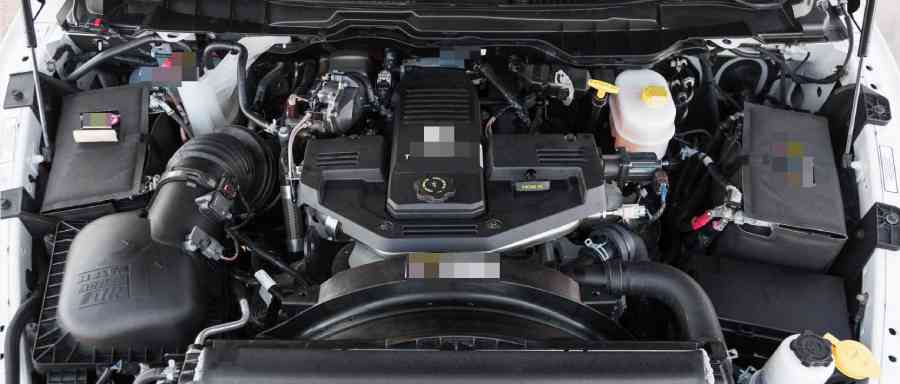
How Much Horsepower and Torque Does a 6.7 Cummins Have?
The 6.7L Cummins turbo diesel engine produces between 350 and 430 horsepower and 650 to 1,075 lb-ft of torque across its factory configurations in Ram Heavy Duty pickup trucks from 2007 through 2025. The exact output depends on the model year, engine calibration, and transmission pairing. The original 2007.5 engine generated 350 hp and 650 lb-ft, while the redesigned 2025 engine delivers 430 hp and 1,075 lb-ft.
The 2024 Ram Heavy Duty lineup illustrates how engine configurations affect these ratings. Its Standard Output 6.7L Cummins produces 370 hp and 850 lb-ft of torque, while the High Output version generates 400 hp and 1,075 lb-ft. This represents a 30 hp and 225 lb-ft advantage for the High Output engine. In 2025, Ram introduced an updated 430-hp version with 1,075 lb-ft of torque, replacing the previous two-output arrangement for its heavy-duty pickups.
The 6.7 Cummins generates substantial pulling force through its turbocharged inline-six design, high-pressure common-rail fuel injection, and diesel combustion characteristics. Its long-stroke engine architecture contributes to strong low-speed torque delivery, while turbocharger boost and electronic fuel management help sustain power under demanding operating conditions. These characteristics make the engine suitable for heavy-duty applications, including towing large trailers and hauling construction equipment.
All horsepower and torque figures refer to manufacturer-rated crankshaft output rather than wheel horsepower measured on a chassis dynamometer. Actual wheel output is lower because the transmission, driveshaft, differential, and other drivetrain components absorb part of the engine’s power. For accurate comparisons, factory ratings should always be matched to the same model year and engine configuration.
The 2024 Ram Heavy Duty lineup illustrates how engine configurations affect these ratings. Its Standard Output 6.7L Cummins produces 370 hp and 850 lb-ft of torque, while the High Output version generates 420 hp and 1,075 lb-ft. This represents a 50 hp and 225 lb-ft advantage for the High Output engine. For 2025, Ram introduced an updated 430-hp version delivering 1,075 lb-ft of torque, paired with a new TorqueFlite HD eight-speed automatic transmission.
What Are the 6.7 Cummins Horsepower and Torque Specs by Year?
The 6.7L Cummins horsepower and torque ratings have increased significantly since the engine debuted in Ram Heavy Duty trucks in 2007.5. Early versions produced 350 horsepower and 650 lb-ft of torque, while the 2025 engine delivers 430 horsepower and 1,075 lb-ft. These improvements resulted from changes to the fuel injection system, turbocharger, engine calibration, and drivetrain components.
The table below summarizes factory-rated horsepower and torque figures for major 6.7 Cummins configurations. Ratings refer to Ram pickup applications rather than every commercial or industrial version of the Cummins B6.7 engine.
| Model Year | Horsepower | Torque (lb-ft) |
|---|---|---|
| 2007.5–2009 | 350 hp | 650 |
| 2010–2011 | 350 hp | 650–800 |
| 2012 | 350 hp | 800 |
| 2013–2014 | 350–385 hp | 660–850 |
| 2015–2016 | 350–385 hp | 660–900 |
| 2017 | 350–385 hp | 660–900 |
| 2018 | 350–385 hp | 660–930 |
| 2019–2020 | 370–400 hp | 850–1,000 |
| 2021–2022 | 370–420 hp | 850–1,075 |
| 2023–2024 | 370–420 hp | 850–1,075 |
| 2025 | 430 hp | 1,075 |
Historical overview. Ratings vary by transmission, configuration, and model year; exact figures require matching the specific truck and factory specification sheet.
How Much HP and Torque Did the 2007.5–2012 6.7 Cummins Produce?
The 2007.5–2012 6.7 Cummins produced 350 horsepower and between 610 and 800 lb-ft of torque, depending on the transmission and production date. When introduced in 2007, the engine generated 650 lb-ft with the 68RFE six-speed automatic transmission and 610 lb-ft with the G56 six-speed manual transmission. Peak horsepower occurred at approximately 3,013 RPM, while maximum torque was available at 1,500 RPM.
In February 2011, Ram increased the automatic-transmission version’s torque rating to 800 lb-ft at 1,600 RPM without increasing its 350-hp rating. This represented a 150 lb-ft improvement over the previous automatic configuration. The manual-transmission version retained its 610 lb-ft rating through 2012. These early upgrades established the 6.7 Cummins as a strong towing engine while maintaining the same basic 6.7-liter displacement and inline-six architecture.
How Much HP and Torque Did the 2013–2018 6.7 Cummins Produce?
The 2013–2018 6.7 Cummins delivered 350–385 horsepower and 660–930 lb-ft of torque across three main factory configurations. The manual-transmission version produced 350 hp and 660 lb-ft, while the 68RFE automatic version generated 370 hp and 800 lb-ft. The High Output engine, paired with the Aisin AS69RC automatic transmission in the Ram 3500, delivered 385 hp and initially 850 lb-ft.
High Output torque increased to 865 lb-ft in 2015, 900 lb-ft in 2016, and 930 lb-ft in 2018. Despite these increases, peak horsepower remained at 385 hp for the High Output configuration. Ram achieved these improvements through engine calibration and supporting powertrain developments, allowing the truck to deliver greater pulling force without increasing engine displacement.
How Much HP and Torque Did the 2019–2024 6.7 Cummins Produce?
The 2019–2024 6.7 Cummins produced 370–420 horsepower and 850–1,075 lb-ft of torque, depending on the year and engine version. The redesigned 2019 High Output engine delivered 400 hp and 1,000 lb-ft, making it the first Cummins-powered Ram pickup engine to reach a four-digit factory torque rating.
By 2021, the High Output configuration had increased to 420 hp and 1,075 lb-ft, while the Standard Output version was rated at 370 hp and 850 lb-ft. These ratings continued through the 2024 model year. The High Output engine was associated with the Ram 3500 and Aisin automatic transmission, whereas the Standard Output configuration used the 68RFE automatic. This distinction is essential when comparing trucks from the same model year because identical engine displacement does not guarantee identical power output.
How Much HP and Torque Do the 2025–2026 6.7 Cummins Engines Produce?
The 2025 and 2026 Ram Heavy Duty 6.7 Cummins High Output engines are rated at 430 horsepower and 1,075 lb-ft of torque. Compared with the 2024 High Output engine, horsepower increased by 10 hp while peak torque remained unchanged. The updated engine is paired with the TorqueFlite HD eight-speed automatic transmission, replacing the previous six-speed automatic arrangements in the diesel-powered heavy-duty pickup lineup.
The updated powertrain also expanded High Output availability to the Ram 2500, rather than reserving it for the Ram 3500. This allows both heavy-duty pickup models to use the same factory-rated diesel output, although their towing and payload capacities still depend on vehicle configuration, axle ratios, and weight ratings. Ram’s 2026 technical documentation confirms the continued 430-hp and 1,075-lb-ft specifications.
What Is the Difference Between 6.7 Cummins Standard Output and High Output?
The main difference between the 6.7 Cummins Standard Output (SO) and High Output (HO) engines is their factory horsepower, torque, and transmission configuration. In the 2024 Ram Heavy Duty lineup, the Standard Output engine produces 370 horsepower and 850 lb-ft of torque, while the High Output version delivers 420 horsepower and 1,075 lb-ft of torque. The High Output configuration provides 50 additional horsepower and 225 lb-ft more torque, making it better suited for demanding towing applications.
| Specification | Standard Output (2024) | High Output (2024) |
|---|---|---|
| Engine displacement | 6.7 liters | 6.7 liters |
| Engine configuration | Turbocharged inline-six | Turbocharged inline-six |
| Horsepower | 370 hp | 420 hp |
| Torque | 850 lb-ft | 1,075 lb-ft |
| Transmission | 68RFE 6-speed automatic | Aisin AS69RC 6-speed automatic |
| Truck availability | Ram 2500 and Ram 3500 | Ram 3500 |
| Primary application | General heavy-duty use | Higher-demand towing |
Both engines share the same basic 6.7-liter inline-six architecture, but their powertrain configurations differ. The High Output version uses engine calibration and supporting hardware designed to deliver greater torque under heavy loads. Its Aisin AS69RC transmission is also engineered for the higher torque demands associated with heavy-duty towing. The Standard Output engine uses the 68RFE automatic transmission, which is paired with a lower factory torque rating.
The additional torque of the High Output engine is particularly useful when accelerating with a heavy trailer, climbing grades, or maintaining speed under load. For example, the 2024 High Output version produces approximately 26.5% more peak torque than the Standard Output engine. However, higher engine torque does not automatically translate into an equivalent increase in towing capacity. Maximum trailer weight also depends on the truck’s axle ratio, drivetrain, cab configuration, gross combined weight rating (GCWR), and other manufacturer-specified limits.
The Standard Output and High Output distinction also changed with the 2025 model year. Ram introduced an updated 6.7L Cummins High Output engine producing 430 hp and 1,075 lb-ft of torque, paired with the TorqueFlite HD eight-speed automatic transmission. This configuration became available in both the Ram 2500 and Ram 3500, replacing the previous Standard Output and High Output choices in the heavy-duty pickup lineup. As a result, buyers comparing 6.7 Cummins engines must consider the model year rather than assuming the same SO and HO configurations are available across every generation.
At What RPM Does the 6.7 Cummins Produce Peak Horsepower and Torque?
The 6.7L Cummins turbo diesel engine typically produces peak horsepower between 2,800 and 3,013 RPM, while peak torque occurs at approximately 1,500–1,800 RPM, depending on the model year and engine configuration. For example, the 2024 High Output 6.7 Cummins delivers 420 horsepower at 2,800 RPM and 1,075 lb-ft of torque at 1,800 RPM. These different peak engine speeds allow the Cummins to generate substantial pulling force at low RPM while maintaining horsepower as engine speed increases.
| Engine Configuration | Peak Horsepower | Peak Torque |
|---|---|---|
| 2007.5 Cummins 6.7L | 350 hp @ 3,013 RPM | 650 lb-ft @ 1,500 RPM |
| 2024 Standard Output | 370 hp @ 2,800 RPM | 850 lb-ft @ 1,700 RPM |
| 2024 High Output | 420 hp @ 2,800 RPM | 1,075 lb-ft @ 1,800 RPM |
| 2025 High Output | 430 hp @ 2,800 RPM | 1,075 lb-ft @ 1,800 RPM |
Peak torque represents the engine speed at which maximum crankshaft rotational force is available. The 6.7 Cummins reaches this point at relatively low RPM because its turbocharged diesel design generates high cylinder pressure and substantial torque without requiring high engine speeds. For instance, the 2024 High Output engine develops its maximum 1,075 lb-ft at just 1,800 RPM, allowing the truck to accelerate heavy loads without operating near its maximum engine speed.
Horsepower depends on both torque and engine speed, following the relationship Horsepower = Torque × RPM ÷ 5,252 when torque is measured in lb-ft. As RPM increases, horsepower can continue rising even after torque has passed its peak. This explains why the 2024 High Output Cummins reaches maximum torque at 1,800 RPM but does not produce its rated 420 horsepower until 2,800 RPM. The engine’s torque curve and horsepower curve therefore reach their maximum values at different points in the operating range.
The separation between peak torque and peak horsepower affects how the 6.7 Cummins performs during towing and acceleration. When pulling a heavy trailer uphill, the engine can use its strong low-RPM torque to maintain pulling force without excessive engine speed. During acceleration or when additional power is required, the transmission selects a gear that allows the engine to operate at a higher RPM and produce more horsepower. Actual performance depends on the available torque across the operating range, transmission gearing, vehicle weight, and road conditions rather than peak ratings alone.
Does the Ram 2500 Have the Same 6.7 Cummins HP and Torque as the Ram 3500?
The Ram 2500 and Ram 3500 have the same 6.7 Cummins horsepower and torque ratings for the 2025 and 2026 model years, but earlier models offered different engine configurations. In 2024, the Ram 2500 used a Standard Output 6.7L Cummins producing 370 horsepower and 850 lb-ft of torque, while the Ram 3500 offered an optional High Output version generating 420 horsepower and 1,075 lb-ft of torque. Starting in 2025, both trucks received the updated 430-hp, 1,075-lb-ft Cummins engine.
| Model Year | Ram 2500 | Ram 3500 |
|---|---|---|
| 2024 | 370 hp / 850 lb-ft | 370 hp / 850 lb-ft (SO) or 420 hp / 1,075 lb-ft (HO) |
| 2025 | 430 hp / 1,075 lb-ft | 430 hp / 1,075 lb-ft |
| 2026 | 430 hp / 1,075 lb-ft | 430 hp / 1,075 lb-ft |
The difference between the 2024 Ram 2500 and Ram 3500 came primarily from engine and transmission availability. The Ram 2500 paired its Standard Output Cummins with the 68RFE six-speed automatic transmission. The Ram 3500 could also be equipped with the High Output Cummins and Aisin AS69RC six-speed automatic transmission, providing an additional 50 horsepower and 225 lb-ft of torque. This higher-output configuration was designed for more demanding heavy-duty applications, particularly when pulling large trailers.
For the 2025 model year, Ram standardized the updated High Output 6.7L Cummins across diesel-powered Ram 2500 and Ram 3500 pickups. Both models use the TorqueFlite HD eight-speed automatic transmission, which replaces the previous diesel transmission options. The new powertrain delivers the same factory-rated horsepower and torque in both trucks, eliminating the earlier output difference between the Ram 2500 and Ram 3500.
Despite having identical engine ratings, the Ram 2500 and Ram 3500 do not have identical towing or payload capacities. The Ram 3500 is available with heavier-duty suspension configurations, higher vehicle weight ratings, and dual rear wheels, depending on the model. These differences allow certain Ram 3500 configurations to support substantially heavier trailers than comparable Ram 2500 models. Maximum towing capacity also depends on axle ratio, cab style, drivetrain, hitch configuration, and gross combined weight rating (GCWR).
For buyers comparing Cummins-powered Ram trucks, engine horsepower and torque should be evaluated separately from vehicle towing capacity. A 2025 Ram 2500 and Ram 3500 can deliver the same 430 horsepower and 1,075 lb-ft at the crankshaft, but their manufacturer-rated towing limits differ because of chassis design and vehicle configuration. The Ram 3500 is generally the more suitable platform for maximum towing demands, while the Ram 2500 provides the same diesel engine output in a lighter-duty truck configuration.
How Does 6.7 Cummins Torque Affect Towing Performance?
The 6.7L Cummins engine’s high torque output improves towing performance by providing substantial pulling force at low engine speeds. The 2025 Ram Heavy Duty 6.7 Cummins produces 1,075 lb-ft of torque at 1,800 RPM, allowing the engine to move heavy loads without requiring high RPM. This low-speed torque delivery is particularly valuable when accelerating with a trailer, climbing steep grades, or maintaining momentum under demanding driving conditions.
Engine torque reaches the drive wheels through the transmission, driveshaft, and differential. The transmission and axle gearing multiply crankshaft torque before it reaches the wheels, increasing the force available to move the vehicle. For example, a transmission first-gear ratio of 3.5:1 combined with a 3.73:1 axle ratio produces approximately 13.06 times the engine’s crankshaft torque at the driven axle before drivetrain losses. At 1,075 lb-ft, this theoretical multiplication equals approximately 14,040 lb-ft. Actual wheel torque is lower because mechanical components absorb energy, and the force available at the tire contact patch also depends on tire radius.
The Cummins engine’s low-RPM torque characteristics also help reduce the need for frequent downshifts during towing. When sufficient torque is available within the engine’s operating range, the transmission can maintain a suitable gear while the truck climbs moderate grades or accelerates under load. However, sustained hill climbing also requires adequate horsepower because maintaining speed against gravity and aerodynamic resistance demands continuous power. Torque determines rotational force, while horsepower describes how quickly the engine can perform work.
Higher engine torque does not automatically mean greater maximum towing capacity. A truck’s manufacturer-rated towing limit depends on several additional specifications, including gross combined weight rating (GCWR), gross vehicle weight rating (GVWR), axle ratings, suspension design, braking capability, and cooling capacity. For example, a Ram 2500 and Ram 3500 equipped with the same 430-hp, 1,075-lb-ft Cummins engine can have different towing ratings because their chassis and weight-carrying capabilities differ.
The 6.7 Cummins therefore supports heavy-duty towing through a combination of low-speed torque, usable horsepower, and appropriate transmission gearing. Its peak torque rating helps explain how the engine delivers pulling force, but the truck’s official towing chart determines the maximum trailer weight permitted for a specific vehicle configuration. Owners should use the manufacturer-rated towing and payload limits rather than calculating towing capacity from engine torque alone.
Read more: 7.3 Powerstroke Injector Torque Specs & Install Guide
What Determines the Horsepower and Torque Output of a 6.7 Cummins?
The horsepower and torque output of a 6.7L Cummins engine depends primarily on four factors: turbocharger boost pressure, fuel injection, engine calibration, and mechanical durability limits. These systems control how much air and fuel enter the cylinders, how efficiently combustion occurs, and how much power the engine can safely produce. Although different 6.7 Cummins generations share the same 6.7-liter displacement and inline-six layout, changes to these systems explain why factory ratings increased from 350 hp and 650 lb-ft in 2007.5 to 430 hp and 1,075 lb-ft in 2025.
The turbocharger increases engine output by compressing intake air, allowing more oxygen to enter the cylinders during each combustion cycle. Additional oxygen supports the combustion of more diesel fuel, increasing cylinder pressure and the torque produced at the crankshaft. The 6.7 Cummins uses turbocharging to maintain strong torque delivery at relatively low engine speeds. However, higher boost pressure does not automatically produce more horsepower. Fuel delivery, intake air temperature, exhaust backpressure, and combustion efficiency must also support the increased airflow. Excessive boost can raise mechanical and thermal stress without delivering proportional performance gains.
The high-pressure common-rail fuel injection system determines how precisely diesel fuel enters the combustion chamber. Injection pressure, timing, duration, and the number of injection events influence combustion efficiency, torque development, emissions, and engine noise. For example, increasing injected fuel quantity can raise torque when sufficient oxygen is available for combustion. Poorly matched fuel delivery, however, increases exhaust gas temperatures and particulate formation. Modern Cummins engine management systems coordinate injection events with turbocharger operation to balance power output, fuel consumption, and emissions compliance.
Engine calibration establishes the operating limits and performance characteristics of each factory configuration. The electronic control module (ECM) manages fuel delivery, boost control, torque requests, and protective functions according to engine speed, load, and operating temperature. In earlier Ram Heavy Duty applications, Standard Output and High Output versions used different calibrations and supporting powertrain configurations. For example, the 2024 Standard Output Cummins generated 370 hp and 850 lb-ft, while the High Output version produced 420 hp and 1,075 lb-ft. These differences reflect complete factory powertrain specifications rather than displacement alone.
Mechanical durability also determines how much horsepower and torque a 6.7 Cummins can reliably deliver. Cylinder pressure places loads on the pistons, connecting rods, crankshaft, cylinder head, and head gasket, while higher power output increases demands on engine cooling and lubrication. The transmission must also withstand the torque transferred from the crankshaft. Manufacturers establish factory output ratings around these mechanical, thermal, and drivetrain requirements to maintain reliability under sustained operating conditions.
Aftermarket tuning can increase 6.7 Cummins horsepower and torque by changing fuel delivery and boost-related calibration, but the results depend on the engine’s condition, supporting hardware, and operating limits. Higher output can increase stress on the turbocharger, transmission, cooling system, and internal engine components. Unauthorized emissions-system modifications can also violate applicable regulations. Factory horsepower and torque ratings therefore provide the most consistent basis for comparing different 6.7 Cummins model years and configurations.
How Does 6.7 Cummins HP and Torque Compare With Duramax and Power Stroke?
The 2025 6.7L Cummins competes directly with the 6.6L Duramax and 6.7L Power Stroke diesel engines used in American heavy-duty pickup trucks. All three engines use turbocharging and high-pressure fuel injection to generate substantial torque for towing and hauling. However, their cylinder configurations, factory calibrations, and powertrain designs produce different horsepower and torque ratings.
| Engine | 2025 Horsepower | 2025 Torque | Engine Configuration |
|---|---|---|---|
| 6.7L Cummins Turbo Diesel | 430 hp | 1,075 lb-ft | Inline-six |
| 6.6L Duramax Turbo Diesel | 470 hp | 975 lb-ft | V8 |
| 6.7L Power Stroke Turbo Diesel (Standard Output) | 475 hp | 1,050 lb-ft | V8 |
| 6.7L Power Stroke Turbo Diesel (High Output) | 500 hp | 1,200 lb-ft | V8 |
The Cummins produces 100 lb-ft more peak torque than the Duramax but 40 fewer horsepower. This difference reflects their respective engine output characteristics rather than a direct measurement of towing capability. The Duramax delivers greater peak horsepower, while the Cummins provides a higher maximum crankshaft torque rating. Both engines rely on transmission gearing and vehicle-specific powertrain calibration to translate engine output into usable pulling performance.
The Power Stroke High Output produces 70 more horsepower and 125 lb-ft more torque than the Cummins. Its higher factory ratings give it an advantage in peak engine output, particularly when substantial horsepower is needed to maintain speed under heavy loads. However, peak horsepower and torque figures alone cannot establish which truck accelerates faster, climbs grades more effectively, or tows the heaviest trailer. Vehicle weight, axle ratios, transmission gearing, cooling capacity, and manufacturer towing limits must also be considered.
Which Diesel Engine Produces the Most Horsepower and Torque?
The 2025 6.7L High Output Power Stroke produces the most horsepower and torque among these factory diesel pickup engines, delivering 500 hp at 2,600 RPM and 1,200 lb-ft at 1,600 RPM. The Standard Output Power Stroke follows with 475 hp and 1,050 lb-ft, while the Duramax produces 470 hp and 975 lb-ft. The 6.7 Cummins delivers the lowest peak horsepower of the group at 430 hp but exceeds both the Duramax and Standard Output Power Stroke in maximum torque.
Each engine has a distinct performance profile. The Cummins emphasizes substantial torque from its inline-six architecture, while the Duramax and Power Stroke use turbocharged V8 configurations. The Cummins reaches peak torque at 1,800 RPM, compared with 1,600 RPM for the Duramax and both Power Stroke variants. These differences affect engine operating characteristics, but real-world towing performance also depends on how effectively each truck’s transmission and axle gearing use the available power.
For truck buyers, the Power Stroke High Output leads in factory-rated engine performance, the Cummins delivers more torque than the Duramax, and the Duramax provides more peak horsepower than the Cummins. The best engine for a specific towing application ultimately depends on the complete truck configuration, manufacturer towing ratings, and intended operating conditions rather than horsepower or torque figures alone.