The VEVOR diesel heater is a budget-friendly heating option for camper vans, RVs, trucks, and other vehicles that need cabin warmth without running the engine. It offers adjustable heating, diesel-powered combustion, and relatively low fuel consumption at a lower purchase price than premium brands such as Webasto and Espar. However, its overall value depends on heating performance, installation quality, electrical requirements, and long-term reliability.
VEVOR offers several diesel air heater configurations, including models advertised with 5KW and 8KW heating capacities. These heaters use diesel fuel to generate heat while drawing electrical power from a vehicle battery to operate the fan, fuel pump, and control system. Their performance varies with vehicle insulation, outdoor temperature, heater configuration, and installation conditions.
For budget-conscious RV owners and van-life travelers, a VEVOR diesel heater can be a practical alternative to more expensive heating systems. However, potential drawbacks include fuel pump noise, maintenance requirements, inconsistent component quality, and the need for careful exhaust installation to prevent carbon monoxide exposure.
This VEVOR diesel heater review examines heating performance, fuel efficiency, electricity consumption, noise, reliability, installation, and safety. It also compares VEVOR with Webasto and Espar to help determine whether the lower upfront cost justifies the potential trade-offs.
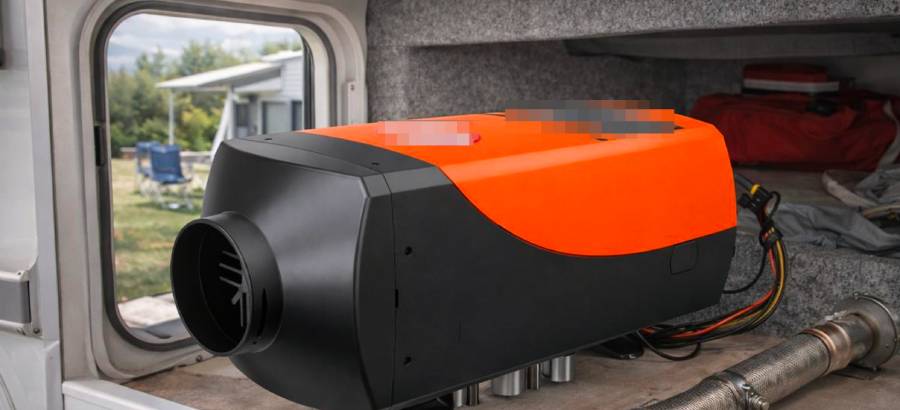
Is the VEVOR Diesel Heater Worth Buying?
The VEVOR diesel heater is worth buying for budget-conscious RV owners, camper van travelers, and truck drivers who need affordable auxiliary heating and can handle installation and routine maintenance. Its main advantage is a lower upfront cost than premium diesel heating systems from Webasto and Espar. However, buyers should consider differences in component quality, service support, and long-term reliability before choosing it for regular winter use.
VEVOR diesel heaters offer several practical features, including adjustable heat settings, electronic temperature controls, and compact installation options. Depending on the model, additional features include LCD displays, remote controls, and integrated fuel tanks. These configurations make the heaters suitable for different vehicle layouts. All-in-one units provide a more self-contained arrangement, while split-component kits allow greater flexibility when positioning the heater, fuel tank, and exhaust system.
The primary disadvantages involve installation quality, operating noise, and uncertainty about long-term durability. Fuel pump ticking and fan noise can disturb occupants in small sleeping areas, while improper fuel delivery or combustion conditions can contribute to ignition failures and soot buildup. Unlike premium heating systems with established service networks, VEVOR owners may need to perform more troubleshooting and verify the availability of replacement components.
A VEVOR diesel heater offers the strongest value when purchase price matters more than premium service support and documented long-term reliability. It is a reasonable option for technically confident owners who can install and maintain the system correctly. Buyers who depend on uninterrupted heating in remote or extremely cold environments should place greater importance on verified reliability, professional installation, and accessible technical support.
How Well Does the VEVOR Diesel Heater Perform?
A VEVOR diesel heater can provide effective cabin heating in an insulated camper van, RV, or truck, but its actual performance depends on heater output, outdoor temperature, vehicle insulation, and airflow. VEVOR markets diesel air heaters with different advertised heating capacities, including 5KW and 8KW configurations. These ratings should be treated as manufacturer specifications rather than independently verified heat output because actual performance can differ between models and operating conditions.
Diesel air heaters generate heat through fuel combustion and transfer that energy to cabin air through a heat exchanger. A fan circulates interior air across the heated surface and returns warm air to the vehicle. This process allows the heater to warm the cabin without relying on engine operation. However, the rate of temperature increase depends on the vehicle’s heat loss and the amount of heated air distributed throughout the interior.
Warm-up time is particularly sensitive to cabin volume and insulation quality. A compact, well-insulated camper van requires less heating energy than a large RV with extensive windows, poorly sealed doors, and exposed metal surfaces. For example, two vans equipped with the same heater can experience different temperature increases because one retains heat more effectively. Air outlet placement also matters because restricted airflow or poorly positioned ducts can create uneven temperatures between sleeping and living areas.
Cold-weather performance depends on whether the heater can replace heat faster than the vehicle loses it. As outdoor temperatures fall, heat escapes through windows, doors, flooring, and body panels. A heater with sufficient usable output can maintain a comfortable interior temperature, while an undersized system may run continuously without reaching the desired setting. Proper insulation, suitable heater sizing, and unobstructed airflow therefore matter as much as the advertised heating capacity.
The VEVOR diesel heater is best evaluated by its ability to maintain the desired cabin temperature under realistic operating conditions, not by its advertised kilowatt rating alone. Buyers should compare model-specific specifications with vehicle dimensions, insulation, expected winter temperatures, and available installation space. Reliable performance also requires adequate fuel delivery, stable electrical power, and correct combustion air and exhaust installation.
How Much Diesel Does a VEVOR Diesel Heater Use?
A VEVOR diesel heater typically has an advertised fuel consumption range of approximately 0.1–0.5 liters per hour, depending on the model and heating setting. Fuel consumption increases when the heater operates at higher output and decreases when it runs at lower settings. Actual consumption depends on fuel pump calibration, operating conditions, and the specific heater configuration.
Diesel heaters regulate fuel delivery through an electronic metering pump that supplies small quantities of diesel to the combustion chamber. When the controller requests more heat, the system increases fuel delivery and combustion airflow within its operating range. Once the cabin reaches the desired temperature, compatible controllers reduce heating output or adjust operation according to their control logic. This allows the heater to maintain warmth without continuously consuming fuel at its maximum advertised rate.
A VEVOR diesel heater running for eight hours would consume approximately 0.8–4 liters of diesel using the illustrative 0.1–0.5 L/h range. At an assumed diesel price of $1.20 per liter, the corresponding overnight fuel cost would be $0.96–$4.80. These figures illustrate how fuel consumption affects operating expenses rather than representing verified measurements from a particular VEVOR model.
| Operating condition | Fuel consumption | Fuel used in 8 hours |
|---|---|---|
| Low fuel-use scenario | 0.1 L/h | 0.8 L |
| Moderate fuel-use scenario | 0.3 L/h | 2.4 L |
| High fuel-use scenario | 0.5 L/h | 4.0 L |
Fuel tank capacity determines how long a diesel heater can operate between refills. For example, a 5-liter tank provides a theoretical runtime of 10 hours at 0.5 L/h or 25 hours at 0.2 L/h. Actual usable runtime depends on the fuel level, tank arrangement, operating settings, and whether the fuel pickup can access the remaining diesel.
Fuel efficiency should be evaluated using the heater’s average consumption while maintaining a comfortable cabin temperature. A heater operating at a higher setting in a poorly insulated vehicle can consume more fuel than the same model heating a smaller, insulated cabin. Improving insulation and reducing drafts can lower heating demand without requiring changes to the fuel system.
How Much Electricity Does a VEVOR Diesel Heater Use?
A VEVOR diesel heater uses electricity to power its glow plug, combustion fan, fuel pump, and electronic controller, even though diesel provides most of the heating energy. Electrical consumption is highest during startup when the glow plug heats the combustion chamber to initiate ignition. Once combustion becomes stable, the glow plug normally switches off, reducing electrical demand during continuous operation.
Electrical requirements vary by model, operating voltage, and heating setting. Many VEVOR diesel heaters are designed for 12V vehicle electrical systems, while other configurations support different supply voltages. Buyers should verify the exact model’s rated voltage, startup current, and operating power before connecting the heater to a vehicle battery or portable power station. Using an incompatible power supply can cause startup failures, controller errors, or electrical damage.
For illustration, a heater drawing 3 amps continuously from a 12V supply consumes approximately 36 watts of electrical power. Over eight hours, this equals 24 amp-hours or 288 watt-hours, excluding the additional energy required during startup and shutdown. These are example calculations, not independently measured electrical specifications for a VEVOR heater.
| Electrical parameter | Illustrative value |
|---|---|
| Supply voltage | 12V |
| Running current | 3A |
| Running power | 36W |
| Energy used in 8 hours | 288Wh |
| Battery capacity consumed | 24Ah |
A VEVOR diesel heater can drain a 12V battery overnight when the battery has insufficient usable capacity for the heater and other connected equipment. For example, an illustrative 100Ah battery supplying 24Ah to the heater would lose 24% of its nominal amp-hour capacity over eight hours, excluding startup energy and other electrical loads. The percentage of usable capacity consumed depends on battery chemistry, temperature, age, and discharge limits. A lead-acid battery generally has less practically usable capacity than a comparable lithium iron phosphate battery when preserving battery longevity is a priority.
Voltage stability is especially important during ignition. The glow plug requires substantial current for a short period, and voltage drops caused by undersized wiring, poor connections, or a discharged battery can prevent successful startup. Repeated failed ignition attempts may increase battery consumption and leave unburned fuel in the combustion system. Correct cable sizing, suitable circuit protection, and a healthy power supply help reduce these problems.
A properly sized auxiliary battery is preferable to relying on a vehicle’s starter battery for overnight diesel heater operation. An independent house battery allows the heater to operate without unnecessarily reducing the electrical reserve needed to start the engine. Battery capacity should account for the heater’s startup demand, expected operating duration, other electrical appliances, and sufficient remaining energy for the heater’s controlled shutdown cycle.
How Loud Is the VEVOR Diesel Heater?
The VEVOR diesel heater produces noise from three main sources: the combustion fan, the circulating air fan, and the fuel metering pump. Noise levels vary with heater model, operating speed, mounting location, and installation quality. The heater is generally more noticeable during startup and high-output operation because the fans operate at higher speeds and the fuel pump delivers fuel more frequently.
The fuel pump produces a repetitive ticking sound as its electromagnetic mechanism meters diesel into the combustion chamber. This ticking can become noticeable at night, particularly when the pump is mounted directly against a metal vehicle panel. Vibrations travel through the mounting surface and amplify the sound inside a camper van or truck cabin. Installing the pump with an appropriate vibration-isolating mount and following the manufacturer’s mounting requirements can reduce transmitted noise.
Fan noise depends on airflow demand and duct configuration. Higher heating settings require increased airflow, producing more audible fan noise. Restricted ducts, sharp bends, and poorly positioned air outlets can also increase turbulence and create additional sound. For example, a heater installed beneath a sleeping platform may be more noticeable than one positioned in a separate, properly ventilated equipment compartment.
A VEVOR diesel heater can be suitable for overnight use when its noise is acceptable to occupants and the installation meets safety requirements. Buyers who are sensitive to repetitive ticking or fan noise should consider the heater’s mounting location, vibration isolation, and airflow design before installation. Model-specific decibel measurements under comparable testing conditions are needed to establish how its noise output compares with competing heaters.
How Reliable Are VEVOR Diesel Heaters?
VEVOR diesel heater reliability depends on component quality, installation accuracy, fuel condition, electrical stability, and maintenance. These heaters use relatively straightforward combustion and air circulation systems, but their operation depends on several interconnected components. A malfunctioning fuel pump, glow plug, temperature sensor, or controller can prevent ignition or interrupt heating. Publicly available information does not establish a verified average lifespan or failure rate across all VEVOR diesel heater models.
Installation quality has a direct effect on operating reliability. Incorrect fuel line routing can introduce air into the fuel supply, while inadequate electrical connections can cause voltage drops during startup. Improper combustion air intake or exhaust installation can also interfere with combustion and create serious safety hazards. A correctly installed heater with stable fuel and electrical supplies is better positioned to operate consistently than one installed with unsuitable components or connections.
Combustion conditions influence long-term maintenance requirements. Diesel heaters can accumulate carbon deposits when combustion is incomplete, particularly during repeated unsuccessful ignition attempts or prolonged operation under unfavorable conditions. These deposits can interfere with airflow, ignition, and heat transfer. Following model-specific operating instructions, inspecting the combustion system when symptoms develop, and addressing fuel delivery problems promptly can help maintain dependable operation.
Replacement parts and technical support are additional considerations. Components such as glow plugs, fuel pumps, controllers, and sensors may require replacement during ownership. However, compatibility should be verified against the exact heater model rather than assumed from the appearance of similar diesel heater parts. Buyers should also confirm current warranty coverage, replacement-part availability, and service arrangements before relying on the heater for frequent winter travel.
What Are the Most Common VEVOR Diesel Heater Problems?
The main problems to investigate in VEVOR diesel heaters are ignition failure, fuel delivery faults, carbon buildup, electrical problems, and controller errors. These are recognized diesel air heater failure categories, not a verified ranking of defect frequency for VEVOR products. Each problem affects a different part of the heating process and requires an appropriate diagnosis.
Ignition failure occurs when the combustion system cannot establish a stable flame. Potential causes include insufficient battery voltage, a defective glow plug, interrupted fuel delivery, or restricted combustion airflow. A heater that repeatedly attempts to start without producing heat should be shut down and inspected according to the manufacturer’s troubleshooting instructions. Repeated restart attempts without correcting the underlying fault can worsen combustion-related problems.
Fuel delivery problems can result from air entering the fuel line, incorrect pump installation, blocked filters, or inadequate fuel supply. Because the metering pump delivers measured quantities of diesel, interruptions can prevent stable combustion or cause the heater to stop unexpectedly. Checking fuel availability, approved line routing, and electrical connections helps identify external supply issues before component replacement is considered.
Carbon buildup develops when diesel combustion leaves deposits inside the combustion system. Excessive deposits can restrict airflow, interfere with ignition, and reduce heating efficiency. Symptoms may include difficult starting, abnormal exhaust smoke, or repeated shutdowns. Persistent smoke, exhaust leakage, or unusual combustion behavior requires stopping operation until the cause has been identified and corrected.
Electrical faults and controller errors can occur when battery voltage falls below the heater’s operating requirements or when wiring, sensors, or control components malfunction. Error codes differ between controller versions, so their meanings should be checked against the manual supplied with the specific heater. For example, a low-voltage fault requires checking battery condition and voltage at the heater during startup rather than immediately replacing the controller.
Long-term reliability is best protected through correct installation, stable power delivery, clean fuel, and timely maintenance. A VEVOR diesel heater may provide practical heating for regular vehicle use, but its durability should not be assumed equivalent to premium systems without comparable long-term testing. Buyers planning remote winter travel should also consider the consequences of a heater failure and maintain an appropriate backup heating or emergency plan.
How Difficult Is It to Install a VEVOR Diesel Heater?
Installing a VEVOR diesel heater requires intermediate mechanical and electrical skills because the process involves mounting the heater, connecting a diesel fuel supply, wiring the controller, and routing combustion exhaust outside the vehicle. Installation difficulty depends on the heater configuration, vehicle layout, and available mounting space. An all-in-one unit reduces the number of separately mounted components, while a split-system kit provides greater installation flexibility but requires additional planning.
The first consideration is selecting a suitable mounting location. The heater needs a stable, heat-resistant mounting surface with sufficient clearance around its components and unobstructed cabin air circulation. In camper vans, common installation areas include under-seat compartments and dedicated equipment spaces. However, the selected location must comply with the specific model’s mounting instructions, ventilation requirements, and restrictions on nearby combustible materials. The heater’s combustion air intake and exhaust must remain separated from the heated cabin air circuit.
Fuel system installation requires correctly routing the diesel supply line between the fuel tank, metering pump, and heater. The pump must be positioned according to the manufacturer’s specified mounting angle and fuel line requirements. Incorrect routing can introduce air bubbles, interrupt fuel delivery, or contribute to ignition problems. Electrical installation also requires appropriately sized wiring, manufacturer-specified circuit protection, secure connections, and a power source capable of supporting the glow plug’s startup demand.
Exhaust installation is the most safety-critical part of the process. The combustion exhaust must discharge outdoors, away from windows, doors, ventilation openings, and other potential paths into the occupied vehicle. Exhaust components must withstand operating temperatures and remain clear of combustible materials, fuel lines, and vulnerable vehicle components. Connections must be secured using approved parts, and the installation must follow the heater manufacturer’s instructions and applicable vehicle safety requirements.
Professional installation is preferable for owners who lack experience with vehicle fuel systems, electrical wiring, or combustion exhaust routing. Incorrect installation can cause fuel leaks, electrical faults, overheating, or carbon monoxide exposure. Before regular use, the completed system should undergo the manufacturer’s required inspections and operational checks, including verification of fuel connections, exhaust integrity, electrical operation, and safe shutdown.
Is the VEVOR Diesel Heater Safe to Use Overnight?
A VEVOR diesel heater can be used for overnight vehicle heating only when the specific model is approved for that application, installed correctly, maintained properly, and operated according to its safety instructions. Diesel air heaters generate heat through combustion, making exhaust management, electrical protection, and ventilation essential. A functioning carbon monoxide alarm provides an additional safety measure but does not replace proper installation or eliminate the possibility of equipment failure.
Unlike heaters that release combustion products directly into an occupied space, a correctly installed diesel air heater uses a heat exchanger to separate combustion gases from the air circulated inside the vehicle. The combustion system draws in air, burns diesel, transfers heat through the exchanger, and expels exhaust outdoors. This separation is fundamental to safe operation because diesel exhaust contains hazardous combustion products that must not enter the living area.
Overnight operation also depends on reliable electrical power and unobstructed airflow. The heater requires electricity for its controller, fuel pump, and fans, including during its controlled shutdown sequence. A sudden loss of power can interrupt normal cooling and shutdown procedures. Owners should therefore use a suitable battery system, maintain secure electrical connections, and avoid disconnecting power while the heater is completing its shutdown cycle. Heated air outlets and return air openings must also remain unobstructed to prevent overheating.
A carbon monoxide alarm and appropriate smoke detection should be installed in accordance with the alarm manufacturers’ instructions and applicable RV safety requirements. The heater, fuel lines, exhaust connections, and surrounding surfaces should be inspected regularly for damage, leaks, overheating, or unusual operating behavior. Any exhaust smell inside the cabin, unexplained shutdown, persistent smoke, or suspected combustion leakage requires stopping heater use until the problem is professionally evaluated.
Can a VEVOR Diesel Heater Cause Carbon Monoxide Poisoning?
A VEVOR diesel heater can cause carbon monoxide poisoning if combustion exhaust enters an occupied vehicle because of improper installation, damaged components, exhaust leakage, or unsuitable exhaust discharge placement. Carbon monoxide is a colorless, odorless gas produced during fuel combustion. Exposure can interfere with the body’s ability to transport oxygen, creating a potentially life-threatening situation, particularly when occupants are asleep and unable to recognize early symptoms.
Carbon monoxide can enter a camper van through several pathways, including leaking exhaust connections, damaged exhaust pipes, openings near the exhaust outlet, or failures that allow combustion gases to reach the cabin air system. Exhaust gases discharged beneath a vehicle can also accumulate or re-enter through nearby openings under unfavorable conditions. This is why exhaust routing must follow the manufacturer’s installation requirements rather than simply terminating outside the vehicle body.
Early symptoms of carbon monoxide poisoning include headache, dizziness, nausea, weakness, and confusion. More serious exposure can cause loss of consciousness and death. These symptoms are not reliable warning indicators during sleep, making a properly installed and maintained carbon monoxide alarm particularly important. If an alarm activates or carbon monoxide exposure is suspected, occupants should immediately move to fresh air, contact emergency services, and avoid re-entering the vehicle until qualified personnel confirm it is safe.
Preventing carbon monoxide exposure requires correct exhaust installation, intact combustion components, regular inspections, and working detection equipment. A carbon monoxide alarm cannot compensate for defective exhaust routing or an unsafe heater installation. Owners should never operate a heater with known exhaust damage, unexplained combustion faults, or suspected leakage, regardless of whether the controller continues to function normally.
How Does the VEVOR Diesel Heater Compare With Webasto and Espar?
VEVOR diesel heaters are generally more affordable than comparable Webasto and Espar heating systems, but Webasto and Espar offer more established automotive heating product lines and professional service networks. The main differences involve purchase price, documented performance, installation support, replacement parts, and long-term ownership expectations. VEVOR is primarily suited to budget-conscious buyers, while Webasto and Espar target customers who prioritize professional integration and manufacturer-backed technical support.
Webasto and Espar, the North American brand associated with Eberspächer, manufacture diesel air heaters designed for automotive and commercial applications. Their product ranges include heating systems used in camper vans, commercial vehicles, and truck sleeper cabins. These manufacturers provide model-specific technical documentation, installation requirements, and service resources. VEVOR offers lower-cost diesel heater configurations, including all-in-one units and separate-component kits, making auxiliary heating accessible to owners with smaller equipment budgets.
| Comparison factor | VEVOR | Webasto | Espar |
|---|---|---|---|
| Market positioning | Budget-oriented | Premium | Premium |
| Upfront equipment cost | Generally lower | Generally higher | Generally higher |
| Heating applications | RVs, camper vans, trucks | RVs, vans, commercial vehicles | RVs, vans, commercial vehicles |
| Installation options | DIY-oriented kits and integrated units | Professional and approved installation options | Professional and approved installation options |
| Technical documentation | Model-dependent | Established manufacturer documentation | Established manufacturer documentation |
| Service support | Depends on seller, model, and region | Established service network | Established service network |
| Replacement parts | Compatibility requires verification | Model-specific parts support | Model-specific parts support |
| Long-term reliability | Limited comparable independent data | Established commercial applications | Established commercial applications |
Heating performance should be compared using specific models rather than advertised power ratings alone. For example, a VEVOR heater marketed as an 8KW unit cannot automatically be considered more powerful in real-world operation than a premium heater with a lower nominal rating. Verified heat output, fuel consumption, temperature regulation, and operating conditions are necessary for a meaningful comparison. Without standardized independent testing, advertised capacity alone does not establish which heater delivers more usable heat.
Reliability and service availability are important differences for frequent travelers. Webasto and Espar have established product support systems, although actual warranty coverage, repair availability, and service costs vary by model and location. VEVOR owners should verify the seller’s warranty terms and confirm access to compatible replacement components. A lower purchase price can lose some of its advantage when troubleshooting, replacement parts, or repeated repairs create additional expenses.
VEVOR is the stronger budget option for owners who accept greater responsibility for installation, troubleshooting, and maintenance, while Webasto and Espar are better suited to buyers seeking established professional support. For occasional camper van trips, VEVOR’s lower initial cost may justify the trade-offs. For commercial vehicles, frequent winter travel, or situations where heating failure would create significant disruption, service accessibility and documented equipment suitability deserve greater weight than purchase price alone.
How Does a VEVOR Diesel Heater Work?
A VEVOR diesel heater works by burning diesel fuel inside a sealed combustion chamber and transferring the generated heat to cabin air through a metal heat exchanger. The system uses a fuel metering pump, glow plug, combustion fan, heat exchanger, and electronic controller to produce adjustable heating without running the vehicle’s engine. Combustion gases and heated cabin air travel through separate airflow paths when the heater is correctly installed and functioning properly.
The heating process begins when the controller activates the startup sequence. A glow plug heats the combustion chamber while the fuel pump delivers measured quantities of diesel through the fuel line. The combustion fan supplies air to support ignition and maintain combustion. Once a stable flame develops, the heater transfers thermal energy through the heat exchanger, and the cabin air fan circulates warmed air into the vehicle. The glow plug normally switches off after successful ignition, reducing electrical consumption during continuous operation.
Temperature regulation depends on the heater’s controller and operating mode. Compatible VEVOR models allow users to adjust heating output or select a target temperature through an LCD controller or remote control. The system regulates fuel delivery and fan operation according to its control settings. For example, increasing the requested heating output generally increases fuel consumption and airflow, while reducing the output lowers heating demand and fuel usage within the heater’s supported operating range.
The heat exchanger is the component that allows a diesel air heater to warm a vehicle without intentionally mixing combustion exhaust with cabin air. The combustion intake supplies air for burning diesel, while the exhaust system directs combustion products outdoors. The separate cabin air circuit draws interior air across the heat exchanger and returns it to the living space. Maintaining this separation is essential because exhaust leakage can expose occupants to carbon monoxide and other harmful combustion products.
What Maintenance Does a VEVOR Diesel Heater Need?
A VEVOR diesel heater requires regular inspection of its fuel system, combustion air intake, exhaust connections, electrical wiring, and heating components to maintain reliable operation. Maintenance requirements depend on the model, operating hours, fuel quality, and installation conditions. Owners should follow the maintenance procedures and service intervals specified in the manual supplied with their heater rather than applying a universal schedule to every VEVOR model.
Fuel system maintenance focuses on preventing contamination, air leaks, and interrupted diesel delivery. Fuel lines should be inspected for cracks, loose connections, abrasion, and leakage. The metering pump and any fitted fuel filter should also be checked when the heater experiences ignition difficulties or inconsistent operation. For example, air entering a poorly secured fuel connection can interrupt fuel delivery and cause repeated startup failures. Damaged fuel components should be repaired or replaced with parts compatible with the specific heater.
The combustion air intake and exhaust system require particular attention because restrictions or leaks can affect both performance and safety. Owners should inspect accessible components for damage, corrosion, loose connections, and obstructions. Exhaust outlets must remain clear of snow, mud, debris, and other materials that could restrict gas discharge. Persistent exhaust smoke, unusual combustion noise, or suspected leakage indicates a problem requiring inspection before further operation.
Carbon deposits can accumulate inside diesel combustion systems and interfere with ignition or airflow. The rate of buildup depends on combustion conditions, operating patterns, and fuel delivery. Repeated unsuccessful starts and improper fuel-air regulation can contribute to excessive deposits. When carbon buildup is suspected, internal cleaning or component servicing should follow the manufacturer’s instructions and may require a qualified technician. Owners should not dismantle combustion components or modify fuel pump calibration without the necessary technical knowledge.
Electrical maintenance includes checking battery connections, wiring insulation, connectors, and circuit protection. Poor electrical connections can create voltage drops during startup, when the glow plug draws more current than the heater typically requires during steady operation. Owners should also keep cabin air inlets and outlets free from obstructions to maintain proper circulation and prevent overheating.
Consistent maintenance helps reduce preventable ignition failures, heating interruptions, and safety risks, but it does not guarantee a specific service life. Before extended winter travel, owners should confirm that the heater starts normally, maintains stable combustion, delivers warm air, and completes its shutdown sequence without errors. Any unresolved fuel leak, exhaust defect, or abnormal combustion behavior should be corrected before the heater is used again.
Read more: Who Accepts Synchrony Car Care? Stores & Locations
Should You Choose a VEVOR 5KW or 8KW Diesel Heater?
A VEVOR 5KW diesel heater is generally the more sensible starting point for smaller camper vans, while an 8KW model deserves consideration for larger vehicles with greater heating requirements. However, the correct choice depends on actual heating capacity, vehicle insulation, cabin volume, and expected outdoor temperatures. Advertised 5KW and 8KW ratings should not be treated as independently verified heat output, and a higher rating does not automatically guarantee better heating performance.
Vehicle heat loss is the most important factor when selecting heater capacity. A compact, well-insulated camper van retains heat more effectively than a large RV with extensive windows, uninsulated flooring, and multiple ventilation openings. For example, a small converted van used in moderate winter conditions may require less heating output than a larger motorhome operating in freezing temperatures. Selecting a heater based only on vehicle length can therefore result in an unsuitable system.
Fuel consumption and operating behavior also influence the decision. A heater with greater actual maximum output may consume more diesel when operating at full capacity, but fuel consumption at lower settings depends on its combustion system and controller. An oversized heater that cannot reduce output sufficiently may produce excessive cabin heat or operate inefficiently under light heating loads. Buyers should compare verified minimum and maximum output, fuel consumption, and electrical requirements for the exact models being considered.
Installation space is another practical difference. VEVOR offers multiple heater configurations, and physical dimensions, fuel tank arrangements, duct connections, and mounting requirements vary between products. An integrated heater may be convenient for certain applications, while a separate-component kit offers more flexibility in a permanent camper van installation. Buyers should verify component dimensions and installation clearances before purchasing.
Choose a VEVOR 5KW or 8KW heater based on the vehicle’s calculated heating demand and the specific model’s documented performance rather than the advertised capacity alone. For a small insulated camper van, a lower-output configuration may provide sufficient heating with better temperature control. Larger or poorly insulated vehicles may require greater usable heating capacity, although improving insulation can sometimes be more effective than selecting a heater with a higher advertised rating.
Who Should Buy a VEVOR Diesel Heater?
A VEVOR diesel heater is best suited to budget-conscious camper van owners, RV travelers, truck owners, and DIY enthusiasts who need auxiliary heating and are prepared to manage installation and maintenance requirements. Its lower upfront cost makes diesel-powered cabin heating accessible without the equipment expense associated with premium systems. However, the value depends on selecting a suitable model, installing it safely, and accepting the limitations of available long-term reliability evidence.
Camper van owners who travel in cold weather are a primary audience because diesel air heaters provide cabin warmth without requiring the vehicle engine to remain running. The heater can operate from a suitable auxiliary electrical system while consuming diesel from an approved fuel supply. This arrangement is particularly useful for off-grid camping, where access to external electrical hookups may be limited. A properly sized battery, adequate ventilation, and correctly routed combustion exhaust remain essential.
RV owners and truck drivers may also benefit from VEVOR heaters when their vehicles require supplemental heating. The suitability of a particular model depends on cabin dimensions, insulation, installation space, and heating demand. For example, a truck sleeper compartment has different heating requirements from a large motorhome with several living areas. Buyers should evaluate these differences before selecting a heater based on advertised power output.
Who Should Avoid Buying a VEVOR Diesel Heater?
Buyers who require verified long-term reliability, extensive professional service coverage, or dependable heating in remote winter environments should consider established alternatives such as Webasto and Espar. These manufacturers offer automotive heating systems with established technical documentation and service resources, although support availability varies by region and model. Their higher purchase prices may be justified when equipment downtime creates significant safety or operational consequences.
VEVOR is also a less suitable choice for owners who cannot safely install or maintain a diesel combustion system and do not have access to qualified installation services. Incorrect fuel connections, electrical wiring, or exhaust routing can create serious hazards, including fire and carbon monoxide exposure. Buyers should not treat a low equipment price as a reason to compromise installation quality or omit required safety equipment.
The VEVOR diesel heater is worth considering when affordability, practical heating capability, and installation flexibility are the main priorities. It is less compelling when professional support, documented durability, and predictable long-term ownership are more important than initial cost. For most buyers, the final decision should depend on vehicle heating requirements, verified model specifications, installation costs, and the availability of maintenance support rather than purchase price alone.