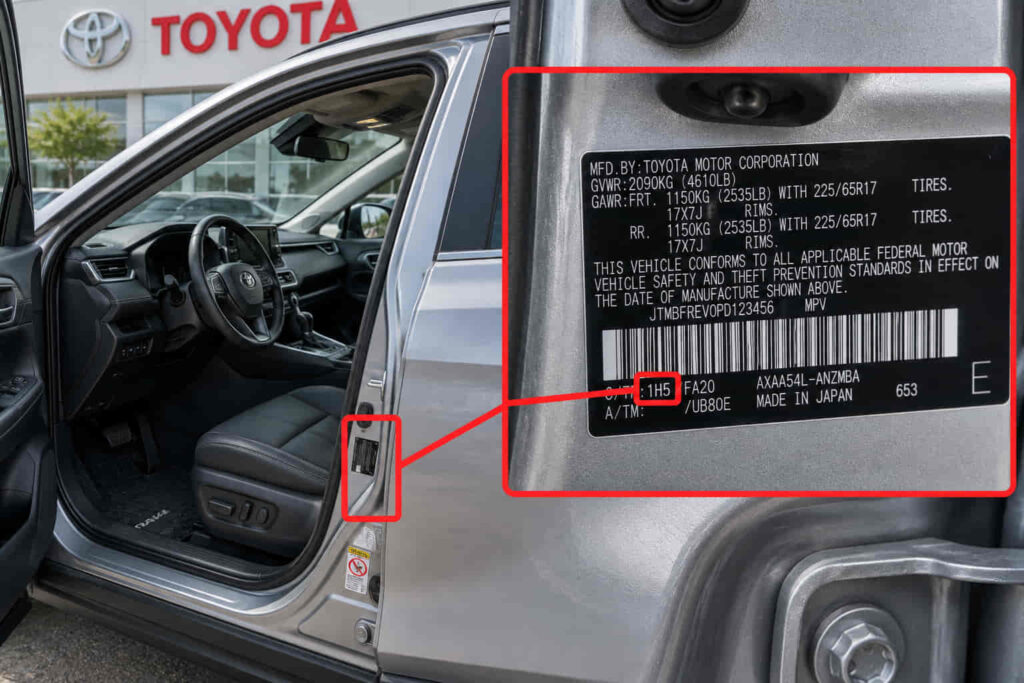
The Toyota paint code is typically found on the vehicle information label, commonly located around the driver-side door or door jamb area. The label contains several pieces of vehicle identification information, so finding the label is only the first step. You also need to identify the correct color or paint information instead of confusing it with the VIN, model, trim, or other codes printed nearby.
The exact Toyota paint code location and label format can vary by vehicle model and model year. For that reason, a label location shown for one Toyota should not automatically be assumed to apply to every Corolla, Camry, RAV4, Highlander, Tacoma, Tundra, or other Toyota model. Checking the identification label on the specific vehicle provides a more reliable starting point.
This guide explains where to look for a Toyota paint code, how to recognize and read the correct code, and what to do when the label or paint information cannot be found. It also explains the relationship between the paint code, VIN, and paint color name so you can identify the correct exterior color before ordering matching or touch-up paint.
Where Is the Paint Code Located on a Toyota?
The Toyota paint code is commonly located on the vehicle information label around the driver-side door or door jamb. Open the driver’s door and inspect the door frame, door pillar, and surrounding jamb area for the manufacturer’s vehicle information label. The paint information appears alongside other identification details, so the code may not be immediately recognizable even after you find the correct label.
Finding the label is more reliable than identifying the exterior color by sight. Two Toyota paint finishes can appear similar under daylight but use different factory color specifications, while age, fading, previous paintwork, and lighting can further change how the exterior color looks. The code provides a specific identifier that can be used when determining the original paint specification for the vehicle.
The exact label position should not be assumed to be identical across every Toyota. Models and model years can use different label layouts or locations, which is why instructions for another vehicle should be treated as a reference rather than definitive proof of where the label is located on your Toyota. If the expected driver-side door area does not contain a readable label, the vehicle’s model and model year should be used to verify the correct identification-label location before selecting a paint color.
The paint code also needs to be read from the correct field once the label has been located. A Toyota vehicle label contains information for purposes other than paint identification, and copying an unrelated sequence can result in the wrong color being selected. Location and identification therefore form two separate steps: first find the correct vehicle label, then identify the field that represents the Toyota’s exterior paint specification.
What Does a Toyota Paint Code Look Like?
A Toyota paint code is an alphanumeric color identifier shown as part of the vehicle’s identification information rather than the full marketing name of the exterior color. This distinction allows a specific factory paint specification to be identified without relying on descriptions such as white, silver, gray, black, red, or blue, which are too broad to distinguish individual Toyota finishes.
The code should be identified by its relationship to the color information on the vehicle label rather than by choosing any short sequence of letters or numbers that appears there. Toyota labels can contain multiple identifiers associated with the vehicle, including information unrelated to exterior paint. The VIN should not be mistaken for the paint code simply because both are vehicle identifiers. They serve different purposes: the VIN identifies the vehicle, while the paint code identifies its paint specification.
Paint code and paint color name should also remain separate concepts. A Toyota exterior finish can have a descriptive color name used in vehicle marketing, while the paint code functions as the more specific identifier needed for paint matching. For example, knowing that a Toyota is visually “white” is not sufficient when more than one factory white finish exists across Toyota vehicles and model years. The corresponding paint code provides the more precise reference.
Correctly identifying this code becomes especially important when paint needs to be matched for a repair or touch-up. Selecting paint from a general color description introduces unnecessary uncertainty, whereas using the vehicle’s specified paint information narrows the match to the intended factory finish. The code should still be checked against the specific vehicle before paint is ordered because a code copied from another Toyota of a similar color does not establish that both vehicles use the same paint specification.
Read more: Toyota Supplier Purchase Program
How Do You Read the Paint Code on a Toyota Vehicle Label?
To read a Toyota paint code correctly, locate the color information on the vehicle label and identify the code associated with the exterior paint rather than copying another vehicle identifier from the label. The label contains multiple pieces of information, and each serves a different identification purpose. The correct paint code is the value connected to the vehicle’s color specification.
This distinction prevents the VIN, model information, trim information, or another alphanumeric identifier from being mistaken for the paint code. A VIN identifies the individual vehicle and contains substantially different information from a paint specification. The paint code has a narrower function: it identifies the factory color specification associated with the vehicle. Reading the label according to the field associated with color is therefore more reliable than selecting a code based only on its length or appearance.
Toyota paint information may also appear in combination with other specification information on the label. When multiple codes appear close together, the position and field designation provide the context needed to determine which value represents the exterior color. Copy the complete paint identifier exactly as displayed because changing, omitting, or substituting a character can point to a different paint specification.
The code should then be verified against the specific Toyota before matching or ordering paint. This is especially important when the vehicle’s visible color has changed because of sunlight exposure, aging, previous repairs, or refinishing. The label identifies the vehicle’s specified factory paint information, while the current appearance of an older paint surface can differ from that original finish. Using both the code and the vehicle itself gives a paint supplier or repair professional a stronger basis for matching the required finish.
Is the Toyota Paint Code Location Different by Model?
The Toyota paint code location can differ between vehicle configurations, so the driver-side door or door-jamb area should be treated as the primary place to check rather than as a guaranteed location for every Toyota. Toyota produces vehicles across different body styles and generations, and label placement should be verified for the specific vehicle when it cannot be found in the expected area.
This matters when instructions found for one Toyota model are used for another. A Corolla, Camry, RAV4, Highlander, Tacoma, and Tundra do not share the same body structure, and an image showing the information label on one model does not prove that another model places it in exactly the same position. The same principle applies across different generations of a single model. The vehicle being inspected remains the primary reference.
The search should therefore begin with the driver’s door area because it provides a practical starting point for many Toyota vehicles. If the label is visible there, identify the color information directly from it. If no relevant label is present or the information cannot be read, verify the label location using information specific to the Toyota model rather than expanding the search randomly across unrelated components of the vehicle.
Model-specific paint code pages can also serve a different search intent from a general Toyota paint code location guide. A Toyota Corolla owner, for example, may need instructions specific to the Corolla generation being inspected, while a Tacoma owner may need information for a different vehicle configuration. Those model-specific questions can be addressed separately without turning a general location guide into a long catalogue of Toyota models.
Keeping the model context attached to the paint code also reduces identification errors. A paint code obtained from another Toyota that appears to have the same exterior color does not establish that the two vehicles share the same factory finish. The paint information should come from, or be verified against, the specific vehicle for which matching paint is required.
Is the Toyota Paint Code Location Different by Model Year?
The Toyota paint code location and vehicle-label layout can differ by model year, so instructions for one model year should not automatically be applied to another. Toyota vehicles change across generations, and changes to body design, labeling, and vehicle information can affect where identification information appears. The driver-side door or door-jamb area remains an appropriate starting point, but the specific vehicle should determine which label and paint information are used.
Model year becomes particularly important when a Toyota nameplate has been produced across multiple generations. Two vehicles can carry the same model name while having different body structures and label layouts because they were manufactured years apart. Instructions or photographs showing the paint code location on an older version therefore provide useful context but do not establish the exact location on a newer generation.
The same principle applies when using online images to identify a Toyota paint code. A photograph may accurately show the label on the vehicle used for the example while still being unsuitable for another model year. The model name, model year, and label information should be considered together before a code from an external reference is used to identify the vehicle’s paint.
The vehicle’s own information remains the strongest starting point when the original label is present and readable. Once the correct label has been found, the paint information should be taken from that vehicle rather than copied from a similar Toyota found online. This prevents a model-year assumption from turning into an incorrect paint match.
What Should You Do If You Cannot Find the Toyota Paint Code?
If you cannot find the Toyota paint code, first verify that you are checking the correct vehicle information label before using another method to identify the original paint specification. A missing code does not necessarily mean that the vehicle has no paint information available. The label may be in a different position for the model or model year, may be difficult to read, or may no longer provide a usable reference because of its condition.
When the expected label cannot be found around the driver-side door or door jamb, the next step is to verify the label location for the specific Toyota model and model year. This is more precise than searching unrelated areas of the vehicle or copying a code from another Toyota with a similar exterior color. Model-specific information narrows the search while preserving the relationship between the code and the vehicle being identified.
A damaged or unreadable label creates a different problem. Guessing the paint specification from the visible exterior color is unreliable because Toyota can use multiple finishes within the same general color family. White, silver, gray, black, red, and other broad color descriptions do not identify a specific factory finish. Paint can also change visually as it ages, which further reduces the reliability of identification by appearance alone.
Vehicle identification information can provide another route when the original paint label cannot be used. The VIN identifies the specific vehicle and can support a vehicle-specific lookup through an appropriate Toyota or dealership information source. The VIN should not, however, be treated as if the paint code were simply a visible section of the VIN itself. The two identifiers serve different purposes, and a vehicle lookup is different from reading the paint code directly from the label.
If the paint code still cannot be established confidently, verification through a Toyota dealer or an appropriate automotive paint professional is preferable to ordering paint based on an assumed match. Providing accurate vehicle information gives them a stronger basis for identifying the original specification. This is particularly important when the paint will be used for a visible repair, where an incorrect code can result in a noticeable color difference.
The objective is to identify the paint specification associated with the actual Toyota rather than merely find a color that looks similar. When the original label is unavailable, vehicle-specific verification should replace visual guessing. This maintains the connection between the Toyota, its identification information, and the paint selected for matching or repair.
Can You Find a Toyota Paint Code Using the VIN?
A Toyota VIN can help identify the specific vehicle when the paint code cannot be found, but the VIN and paint code are separate identifiers. The VIN identifies the vehicle, while the paint code identifies its exterior paint specification. For this reason, a Toyota owner should not assume that a particular group of characters within the VIN can simply be extracted and used as the paint code.
The distinction is important when the original vehicle information label is missing, damaged, or unreadable. In that situation, the VIN provides vehicle-specific identification that can support a lookup through an appropriate Toyota or dealership information source. The lookup uses the identity of the vehicle to establish relevant vehicle information; it is different from decoding a paint specification directly from the visible VIN characters.
Using the VIN as a vehicle reference is also more reliable than selecting a paint code from another Toyota that appears to have the same exterior color. Two vehicles with visually similar finishes can have different paint specifications, particularly when they belong to different model years or generations. Identifying the actual vehicle reduces the risk of transferring paint information from an unrelated Toyota.
The vehicle label should therefore remain the first place to obtain the Toyota paint code when it is present and readable. VIN-based verification becomes useful when that direct source cannot provide the required information. Keeping these two methods separate creates a clear identification sequence: read the paint information from the vehicle when possible, and use vehicle-specific identification to support further verification when it is not.
Is a Toyota Paint Code the Same as a Paint Color Name?
A Toyota paint code and a paint color name are not the same type of identifier. The paint code identifies a specific paint specification, while the color name provides a descriptive name for an exterior finish. Both can refer to the same vehicle color, but they serve different functions when the exact paint needs to be identified.
A descriptive color name alone can be insufficient for paint matching because broad color categories contain numerous distinct finishes. Describing a Toyota as white, gray, silver, black, blue, or red does not identify the exact factory specification. Even a more specific marketing color name should not replace vehicle-specific code verification when accurate matching is required.
The paint code provides a more precise reference because it connects the vehicle to a defined paint specification rather than to visual interpretation. This becomes important when ordering touch-up paint or preparing a repair. A paint selected because it appears similar on a screen, sample image, or another Toyota may not correspond to the specification assigned to the vehicle being repaired.
Visible paint condition introduces another distinction between the original specification and the color a person sees on the vehicle today. Exposure to sunlight, environmental conditions, aging, and previous refinishing can affect appearance over time. The Toyota paint code identifies the specified finish associated with the vehicle, but an automotive paint professional may still need to account for the condition of the existing paint when achieving a close repair match.
For this reason, the paint code should be used as the primary specification reference, while the paint color name provides descriptive context. Keeping the two entities separate helps prevent a general color description from being mistaken for the exact information needed to identify matching paint.
Why Do You Need the Correct Toyota Paint Code?
The correct Toyota paint code is needed to identify the exterior paint specification associated with the vehicle before selecting paint for touch-up or repair work. A general color description is not precise enough for this purpose because Toyota vehicles can use different factory finishes within the same color family. The paint code narrows the identification from a visual description to a specific paint reference.
This precision becomes important when repairing visible paint damage. A Toyota that appears silver, white, gray, black, red, or blue cannot be matched reliably from that description alone because each color family can contain different shades and finishes. Selecting paint according to appearance without verifying the code increases the risk of choosing a specification that does not correspond to the vehicle.
The paint code is particularly useful when purchasing touch-up paint for small chips and scratches because the repair is applied directly beside the existing finish. A difference between the selected paint and the surrounding color can become visible once the new paint dries. Using the vehicle’s paint code provides a more specific starting point than selecting a product based only on a photograph, generic color name, or another Toyota with a similar appearance.
The code also provides useful information when communicating with a parts department, paint supplier, body shop, or other repair professional. Instead of describing the vehicle simply by its exterior color, the owner can provide a specific identifier associated with the paint specification. The vehicle model, model year, and VIN can provide additional identification context when verification is required.
The original paint code does not guarantee that newly mixed paint will appear visually identical to every area of an older vehicle. Existing paint can change in appearance because of age, environmental exposure, previous refinishing, and other conditions. The code identifies the intended specification, while matching the current appearance of the vehicle can require additional assessment during a professional repair. These are two related but separate parts of paint matching.
For this reason, the Toyota paint code should be established before paint is selected rather than after a color mismatch occurs. The code provides the vehicle-specific reference needed to move from identifying a general exterior color to identifying the appropriate paint specification for the Toyota.
How Do You Use a Toyota Paint Code to Find Matching Paint?
Use the Toyota paint code as the primary specification reference when searching for matching touch-up or automotive paint for the vehicle. Once the code has been read from the vehicle information label or verified through an appropriate vehicle-specific source, it can be used to identify paint associated with that specification instead of choosing a product solely by color appearance.
The code should be copied exactly before searching for paint. Letters, numbers, and any relevant formatting need to correspond to the information verified for the vehicle because a different identifier can represent a different specification. The Toyota model and model year can then provide additional context, particularly when a paint supplier or parts department needs to confirm that the selected product corresponds to the vehicle.
A matching product should also be verified against the complete paint code rather than only the advertised color name. Two products can have descriptions that sound similar without representing the same specification. Conversely, a paint product associated with the verified code provides a stronger connection to the vehicle than a product selected because its sample image resembles the exterior.
The type and size of the repair also affect what happens after the paint has been identified. A small touch-up and a larger refinishing repair require different application processes, even when both begin with the same paint specification. The purpose of the Toyota paint code is to identify the relevant color reference; it does not replace the repair procedures needed to reproduce the surrounding finish.
Existing paint condition should be considered when visual accuracy is important. A factory specification represents the original color reference, while the paint currently visible on the Toyota may have changed with age or exposure. For a highly visible or larger repair, a professional paint match can use the vehicle-specific paint information as the starting reference and account for the current finish when necessary.
The practical sequence is therefore straightforward: identify the Toyota, locate and verify its paint code, use that code to identify the corresponding paint specification, and confirm the match before beginning the repair. Using the paint code preserves the connection between the specific Toyota and the paint being selected instead of relying on visual similarity alone.
Can a Toyota Dealer Help You Find Your Paint Code?
A Toyota dealer can be an appropriate verification source when you cannot locate or confidently identify the paint code on your vehicle. This is particularly useful when the vehicle information label is missing, damaged, difficult to read, or does not provide enough information for the owner to determine which identifier corresponds to the exterior paint.
Vehicle-specific information is important when requesting this assistance. The Toyota model, model year, and VIN help identify the vehicle for which the paint information is needed. The VIN should be used as a vehicle identifier in this context rather than treated as the paint code itself. Keeping those two identifiers separate reduces the risk of confusing vehicle identification with the exterior paint specification.
Dealer assistance can also be useful when a code has been found but the owner wants to verify it before ordering paint. A short alphanumeric sequence copied incorrectly from a label can lead to the wrong specification, while selecting paint according to a general color description creates additional uncertainty. Confirming the code before purchasing touch-up paint or arranging a repair provides a stronger connection between the vehicle and the paint being selected.
The original paint specification and the appearance of the vehicle’s current finish should still be treated separately. A verified code identifies the specified paint associated with the Toyota, but paint can change visually as a vehicle ages or is exposed to environmental conditions. Previous body repairs or refinishing can create further differences between the original specification and the finish currently visible on a body panel. For a larger or highly visible repair, identifying the factory code can therefore be the starting point rather than the entire paint-matching process.
Dealer verification is most valuable when it resolves uncertainty that cannot be addressed reliably from the vehicle label. If the Toyota paint code is clearly displayed and can be identified correctly, that vehicle-specific information provides the direct reference. If the label cannot provide a reliable answer, using the VIN and other vehicle details to request verification is preferable to guessing the paint color from appearance alone.