Your Toyota suddenly feels different. The Check Engine light comes on, the engine starts idling roughly, acceleration feels sluggish, or fuel economy drops without warning. After plugging in an OBD2 scanner, one code appears on the screen: P1349.
For many Toyota owners, that moment immediately raises concerns. Is the engine failing? Is this an expensive repair? Should you stop driving right away?
The confusing part is that the P1349 Toyota code does not always behave the same way across different models. A Toyota Camry may begin shaking at idle. A Corolla might struggle during cold starts. Meanwhile, a RAV4 can feel underpowered only when climbing hills or carrying passengers and cargo.
Although this code is commonly linked to Toyota’s VVT i (Variable Valve Timing intelligence) system, the actual symptoms and root causes often vary depending on the model, engine type, and maintenance history. Unfortunately, many owners make the mistake of replacing sensors or expensive components before identifying the true problem.
In this guide, we will explain what the P1349 Toyota code means and explore how it differs on the Camry, Corolla, and RAV4. You will also learn the common symptoms, likely causes, and practical diagnostic steps that can help save time and repair costs.
What Does Toyota P1349 Code Mean?
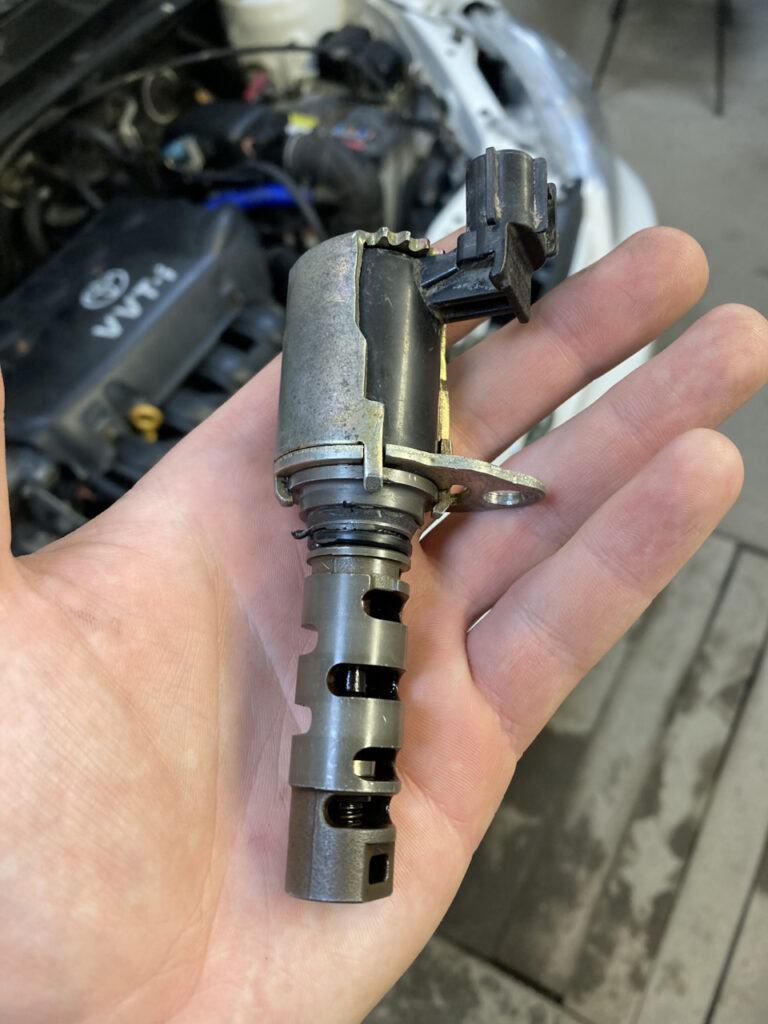
The P1349 Toyota code usually indicates a malfunction involving the Variable Valve Timing system, commonly known as VVT i. Toyota designed this technology to adjust valve timing dynamically based on driving conditions, improving engine performance, fuel efficiency, and responsiveness.
The system depends heavily on engine oil pressure to operate correctly. A component called the Oil Control Valve (OCV) regulates oil flow to the camshaft actuator, allowing timing adjustments to occur in real time.
The engine control unit continuously monitors camshaft position and compares actual timing data with expected values. When the computer detects timing that falls outside the acceptable range, it triggers the P1349 code.
Several issues can cause this condition:
• Dirty or degraded engine oil
• Clogged VVT oil filter
• Faulty Oil Control Valve
• Restricted oil passages
• Timing system issues
• Electrical faults affecting VVT operation
Many drivers assume the issue starts with a bad sensor. In reality, the problem often develops gradually because of poor maintenance habits or oil-related issues. This explains why two Toyota vehicles can display the same code while showing very different symptoms.
Understanding the code before replacing parts can prevent unnecessary repairs and significantly reduce expenses.
Toyota Camry P1349 Symptoms and Common Causes
Among Toyota models, the Camry is one of the vehicles where P1349 appears relatively frequently, especially in older generations equipped with VVT i engines.
Camry owners often first notice a rough idle. The vehicle may vibrate more than usual while sitting at traffic lights or idling in park. Some drivers report delayed acceleration, hesitation during throttle input, or inconsistent power delivery.
Fuel consumption may also increase unexpectedly. Because these symptoms resemble ignition or fuel system issues, many people initially suspect spark plugs or injectors.
However, several VVT-related issues commonly trigger P1349 in the Camry.
Dirty engine oil is one of the leading causes. When oil changes are delayed for too long, sludge can begin forming inside the engine. Over time, that buildup restricts oil flow and interferes with the VVT system’s ability to operate properly.
Common Camry causes include:
• Oil sludge buildup
• Faulty Oil Control Valve
• Clogged VVT oil filter
• Incorrect oil viscosity
• Restricted oil passages
• Camshaft timing irregularities
One reason the Camry can be difficult to diagnose is that many vehicles continue driving relatively normally in the early stages. Drivers often ignore small symptoms until performance noticeably worsens or the Check Engine light becomes persistent.
Toyota Corolla P1349 Differences
The P1349 Toyota code can appear differently on the Corolla compared to the Camry. While both vehicles use Toyota’s VVT i technology, the Corolla’s smaller engine configurations and different driving characteristics often produce a unique set of symptoms.
Many Corolla owners first notice problems during startup rather than while driving. The engine may struggle during cold starts, crank longer than usual, or run roughly during the first few minutes after ignition. In some cases, the vehicle feels normal at highway speeds but becomes hesitant during stop and go traffic.
Another common complaint involves reduced throttle response. Drivers may press the accelerator and notice a slight delay before the vehicle reacts. The issue can feel subtle at first, which often causes owners to postpone diagnostics.
Common Corolla symptoms include:
• Hard starting, especially during cold conditions
• Rough idle after startup
• Delayed throttle response
• Mild engine hesitation
• Reduced fuel efficiency
• Intermittent Check Engine light
One reason Corolla owners sometimes spend unnecessary money is because P1349 symptoms can resemble other common issues. Mechanics may initially suspect ignition coils, spark plugs, fuel delivery problems, or airflow sensors before considering the VVT system.
Typical Corolla causes include:
• Oil Control Valve malfunction
• Dirty engine oil
• VVT filter restriction
• Electrical connection issues
• Early timing component wear
Compared with the Camry, Corolla symptoms often feel less severe initially. However, ignoring the issue for too long can eventually lead to reduced performance and larger repair costs.
Toyota RAV4 P1349 Differences Explained
The Toyota RAV4 presents P1349 symptoms differently because of its vehicle design and driving demands. Unlike sedans, SUVs frequently operate under heavier loads, carry passengers and cargo, and experience greater stress during climbing or acceleration.
Because of these conditions, many RAV4 owners do not immediately notice rough idling or startup problems. Instead, they often describe a noticeable reduction in engine power.
The vehicle may feel weaker during uphill driving or while merging onto highways. Drivers sometimes report sluggish acceleration or delayed power delivery, especially when carrying extra weight.
Common RAV4 symptoms include:
• Loss of power under load
• Hesitation during acceleration
• Sluggish hill climbing performance
• Increased fuel consumption
• Reduced engine responsiveness
• Check Engine light activation
Several VVT related issues can trigger these symptoms.
Common RAV4 causes include:
• Restricted VVT oil flow
• Dirty engine oil
• Oil pressure irregularities
• Faulty Oil Control Valve
• Timing actuator problems
• Blocked oil passages
The challenge with diagnosing RAV4 vehicles is that drivers often assume the issue comes from transmission performance or overall engine wear. Because power loss under load can feel similar to many other mechanical problems, the VVT system may be overlooked during early troubleshooting.
Quick Comparison: Camry vs Corolla vs RAV4
| Model | Common Symptoms | Frequent Causes | Repair Difficulty |
|---|---|---|---|
| Camry | Rough idle, hesitation, poor fuel economy | Oil sludge, clogged VVT filter | Medium |
| Corolla | Hard starting, throttle delay | Solenoid issues, electrical faults | Easy to Medium |
| RAV4 | Power loss under load, weak acceleration | Oil flow restriction, VVT actuator problems | Medium |
Although all three vehicles may trigger the same P1349 Toyota code, the driving experience can feel completely different. Understanding these distinctions can dramatically shorten diagnostic time and help avoid replacing parts that are still functioning properly.
Can You Continue Driving With P1349?
One of the most common questions Toyota owners ask after seeing the P1349 Toyota code is whether the vehicle can still be driven safely. The short answer is yes in some situations, but continuing to drive without proper diagnosis can create larger problems over time.
In the early stages, many vehicles remain drivable. The engine may still start normally and performance losses might seem minor. Some drivers only notice occasional hesitation, a rough idle, or slightly reduced fuel economy. Because the symptoms can appear mild, it becomes easy to ignore the warning signs.
However, the underlying issue usually does not disappear on its own.
Since the P1349 code is frequently associated with the VVT i system, restricted oil flow or improper camshaft timing can gradually affect engine operation. As the condition worsens, valve timing may become increasingly inaccurate, reducing combustion efficiency and placing additional stress on internal components.
Potential risks of continuing to drive include:
• Reduced fuel economy
• Poor acceleration performance
• Increased engine vibration
• Rough idle conditions
• Additional stress on timing components
• Possible long term engine damage
If the vehicle begins stalling, losing significant power, making unusual engine noises, or displaying multiple trouble codes, immediate diagnosis becomes much more important.
A short drive to a repair shop is usually acceptable if symptoms remain minor. However, using the vehicle for long trips or continuing daily driving without inspection can increase repair costs later.
Recommended Diagnostic Steps Before Replacing Parts
Many vehicle owners immediately replace sensors or expensive VVT components after seeing the P1349 Toyota code. Unfortunately, this often leads to unnecessary expenses because the root cause may be much simpler.
Before replacing parts, follow these basic diagnostic steps:
Step 1: Check engine oil level
Low oil levels can affect pressure inside the VVT system and create timing irregularities.
Step 2: Inspect oil condition
Dirty oil, sludge buildup, or oil that has exceeded its service interval frequently contributes to VVT related problems.
Step 3: Verify oil viscosity
Using oil that does not match Toyota specifications can affect system operation.
Step 4: Inspect and clean the VVT oil filter
A partially clogged filter can restrict oil flow and trigger P1349 symptoms.
Step 5: Test the Oil Control Valve
A sticking or malfunctioning OCV may prevent proper camshaft timing adjustments.
Step 6: Scan live engine data
Reviewing camshaft timing values and VVT operation through an advanced scanner can reveal abnormal behavior.
Step 7: Inspect timing components if necessary
If previous steps reveal no obvious issue, additional inspection of timing chains, actuators, or related components may be required.
Following these steps can save hundreds of dollars by identifying simple maintenance issues before replacing major components.
Conclusion
Although the P1349 Toyota code appears across the Camry, Corolla, and RAV4, the symptoms and underlying causes are not always identical. A Camry may develop rough idle conditions caused by sludge buildup. A Corolla can struggle with hard starts and delayed throttle response. Meanwhile, a RAV4 may primarily show reduced power under heavier loads.
The shared connection between all three models is the VVT i system and its dependence on clean oil, proper pressure, and healthy timing operation.
Many owners make the costly mistake of replacing parts immediately after seeing a trouble code. In reality, basic maintenance items such as oil condition, filter restrictions, or an Oil Control Valve issue may be responsible.
Taking a structured approach to diagnosis can reduce repair costs, prevent unnecessary parts replacement, and help restore performance more efficiently.
Are you dealing with P1349 on a Camry, Corolla, or RAV4? What symptoms did your vehicle show first? Sharing your experience may help other Toyota owners facing the same issue.