Have you discovered a scratch, paint chip, or faded spot on your Subaru and wondered how to find the exact paint color for a flawless repair? Before ordering touch-up paint or scheduling bodywork, the first thing you need is your Subaru paint code. This small but important code identifies the precise factory color applied to your vehicle and helps ensure an accurate color match.
Many Subaru owners make the mistake of choosing paint based solely on the color name. Unfortunately, this can lead to noticeable differences in shade, finish, or tone, especially with metallic and pearl colors. Even vehicles that appear identical can use different paint formulations depending on the model year and production specifications.
Fortunately, locating your Subaru paint code is usually quick and straightforward. In most cases, the code can be found on a vehicle information label located inside the driver’s side door jamb. If the sticker is missing or damaged, there are still several reliable ways to identify the correct paint code using your VIN or dealership records.
In this comprehensive guide, you’ll learn exactly where to find your Subaru paint code, how to read the label correctly, what to do if the sticker is missing, and how to use the code when purchasing touch-up paint. Whether you own a Forester, Outback, Crosstrek, WRX, Impreza, Legacy, or Ascent, this guide will help you find the information you need quickly and accurately.
What Is a Subaru Paint Code?
A Subaru paint code is a unique combination of letters and numbers assigned to a specific factory paint color. This code allows dealerships, body shops, and vehicle owners to identify the exact paint formulation used when the vehicle was manufactured.
While many people refer to their vehicle’s color by its commercial name, such as Crystal White Pearl or Crystal Black Silica, these names are not always sufficient when ordering paint. Subaru may produce similar shades over different model years, and some colors can vary slightly despite having nearly identical names. The paint code eliminates guesswork by providing a precise identifier for the original finish.
For example, the paint code K1X corresponds to Crystal White Pearl, one of Subaru’s most popular colors. Similarly, D4S identifies Crystal Black Silica, while G1U represents Ice Silver Metallic. These codes are commonly used when purchasing touch up paint, repainting body panels, or performing collision repairs.
Using the correct paint code is essential for maintaining your vehicle’s appearance. Even a small mismatch can become obvious under sunlight, especially with pearl and metallic finishes. By locating and verifying your Subaru paint code before ordering paint, you can significantly improve the chances of achieving a seamless repair.
Where Is the Subaru Paint Code Located?
The Subaru paint code is typically found on a manufacturer information label attached to the vehicle. Although the exact placement can vary slightly depending on the model and production year, Subaru generally uses consistent locations across its lineup.
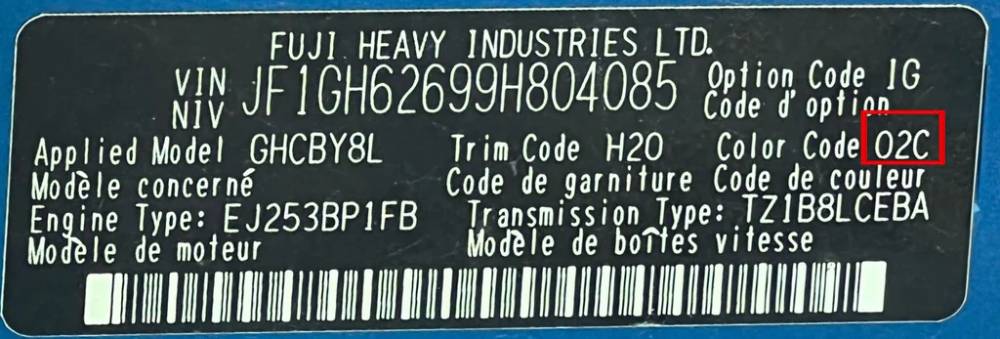
The most common location is the driver’s side door jamb. Open the driver’s door and look for a white or silver information sticker attached to the door frame. This label contains various vehicle details, including the VIN, production information, and paint code. On many Subaru models, the paint code is listed beside the word “Color” or “Paint.”
Some older Subaru vehicles may display the information plate inside the engine compartment. In these cases, the paint code is often stamped onto a metal plate mounted near the firewall or strut tower area. Although less common on modern vehicles, it remains worth checking if the door jamb label is missing.
Vehicle documentation can also provide clues. Certain service records, original sales paperwork, and dealership databases may contain paint code information linked to the vehicle’s VIN.
Because label designs differ slightly between model years, owners should carefully inspect all manufacturer identification stickers before assuming the paint code is unavailable.
How to Read a Subaru Paint Code Sticker
Once you have located the vehicle information label, the next step is identifying the paint code among the various numbers and specifications displayed on the sticker.
A typical Subaru label includes several pieces of information. You may see the Vehicle Identification Number, gross vehicle weight ratings, trim codes, manufacturing details, and paint information. The paint code is usually presented as a short sequence of three or four characters consisting of letters, numbers, or a combination of both.
For example, a sticker may display K1X, D4S, P8Y, or 61K. These identifiers correspond to specific Subaru paint colors and are the codes you will use when purchasing touch up paint or requesting repair work.
One of the most common mistakes is confusing the trim code with the paint code. The trim code identifies interior materials and colors, while the paint code refers exclusively to the exterior finish. Carefully reading the label can prevent costly ordering errors.
If the sticker is dirty or difficult to read, gently clean the surface and use a flashlight to improve visibility. Taking a clear photo with your smartphone can also help you zoom in and verify the information.
Before placing an order for paint, always double check the code and compare it with the vehicle’s model year and color description. This extra step can save both time and money while ensuring the most accurate color match possible.
Subaru Paint Code Location by Model
Although Subaru generally places the paint code in the same area across its vehicle lineup, there can be slight differences depending on the model and production year. Knowing where to look for your specific Subaru model can help you find the code more quickly.
Subaru Forester Paint Code Location
On most Subaru Forester models, the paint code can be found on the driver’s side door jamb. Open the driver’s door and inspect the manufacturer label attached to the door frame. The code is typically listed alongside other vehicle specifications and may be labeled as “Color” or “Paint.”
Subaru Outback Paint Code Location
The Subaru Outback uses a similar identification sticker located inside the driver’s side door opening. Depending on the model year, the paint code may appear near the VIN section or in a dedicated field for color information. Owners should carefully inspect the entire label if the code is not immediately visible.
Subaru Crosstrek Paint Code Location
For the Crosstrek, the paint code is usually positioned on the driver’s side door jamb sticker. Newer models often feature clearly printed identification labels, making the code easier to locate. If the sticker has become damaged or faded over time, a VIN lookup may be necessary.
Subaru WRX Paint Code Location
The WRX follows the same general layout as other Subaru models. Because WRX owners frequently customize or repair exterior components, confirming the correct paint code before purchasing paint products is especially important. The code can typically be found on the driver’s side door frame label.
Subaru Impreza Paint Code Location
Most Impreza models display the paint code on the driver’s side door jamb sticker. Some older generations may also have identification plates under the hood, although this is less common on modern vehicles.
Subaru Legacy and Ascent Paint Code Location
Legacy and Ascent models generally use the same sticker placement as the Forester and Outback. Owners should inspect the driver’s side door opening first, as this remains the most reliable location for locating factory paint information.
Regardless of the model you own, the driver’s side door jamb should always be the first place you check when searching for your Subaru paint code.
What If the Subaru Paint Code Sticker Is Missing?
It is not uncommon for older vehicles to have missing, damaged, or unreadable paint code stickers. Previous repairs, replacement doors, weather exposure, and normal wear can all contribute to label deterioration. Fortunately, several alternative methods can help you identify the correct paint code.
One of the most reliable solutions is using the Vehicle Identification Number. Subaru dealerships can often access factory records associated with your VIN and determine the original exterior color applied to the vehicle. This method is particularly useful when the factory sticker is no longer available.
Another option is contacting an authorized Subaru dealer directly. In many cases, the dealership can verify the paint code using the VIN and provide recommendations for touch up paint or repair products. Having your vehicle registration and ownership information available may help streamline the process.
Professional body shops can also assist through computerized color matching technology. Modern paint scanners analyze the existing finish and compare it against extensive paint databases. This approach is especially useful for older vehicles where paint may have faded over time.
While these alternatives can be highly effective, locating the original factory paint code remains the most accurate way to ensure a perfect color match. Whenever possible, verify the code before purchasing any paint products.
Common Subaru Paint Codes and Color Names
Subaru has produced a wide variety of paint colors over the years, but several factory finishes remain consistently popular among owners. Understanding the relationship between paint codes and color names can make ordering touch up paint much easier.
One of the most common Subaru paint codes is K1X, which corresponds to Crystal White Pearl. This elegant pearl finish is widely used across the Forester, Outback, Crosstrek, and other Subaru models. Because pearl paints contain multiple layers, accurate color matching is particularly important.
Another frequently seen code is D4S, representing Crystal Black Silica. This deep black finish offers a sophisticated appearance but can make scratches and swirl marks more noticeable if repairs are not properly matched.
G1U identifies Ice Silver Metallic, a versatile silver color that remains popular among Subaru owners. Metallic finishes require precise matching techniques because reflective particles influence how the paint appears under different lighting conditions.
The code 61K refers to Dark Gray Metallic, while P8Y corresponds to Magnetite Gray Metallic. Both colors are commonly found on newer Subaru vehicles and provide a modern, refined look.
Other notable Subaru paint codes include CWP for Cool White Pearl, H3Q for Deep Cherry Pearl, and M7Y for Pure Red. These colors are often selected by drivers seeking a more distinctive appearance.
When ordering touch up paint, always use the factory paint code rather than relying solely on the color name. Multiple shades can share similar names, but the paint code ensures you receive the exact formulation originally applied to your Subaru.
How to Order Touch Up Paint Using Your Subaru Paint Code
Once you have identified your Subaru paint code, the next step is purchasing the correct touch up paint for your repair project. Whether you are fixing a small stone chip, a minor scratch, or a larger cosmetic blemish, using the correct paint code is essential for achieving professional looking results.
Begin by locating and verifying the paint code on your vehicle. Carefully compare the code on the identification sticker with the information provided by the paint supplier. Even a single incorrect character can result in a completely different color.
Next, determine whether you want genuine OEM paint or a high quality aftermarket alternative. OEM paint is formulated to match factory specifications and is often preferred for the most accurate repairs. Aftermarket options can also provide excellent results when sourced from reputable manufacturers.
Before applying paint to a visible area, perform a test application on a hidden section of the vehicle or a spare panel if possible. This allows you to verify color accuracy and evaluate how the paint appears under different lighting conditions.
For best results, thoroughly clean the damaged area before beginning the repair. Dirt, wax, and road contaminants can affect paint adhesion and reduce the quality of the finished repair. Depending on the extent of the damage, you may also need primer and clear coat to recreate the original factory finish.
When working with pearl or metallic colors, patience is especially important. These finishes often require multiple thin coats to achieve a smooth and consistent appearance. Rushing the process can lead to uneven coverage or noticeable color variation.
By using the correct Subaru paint code and following proper application techniques, you can significantly improve the appearance of your vehicle while helping preserve its value over time.
Frequently Asked Questions
Where is the paint code on a Subaru?
In most Subaru vehicles, the paint code is located on the manufacturer information label inside the driver’s side door jamb. Some older models may also display paint information on an identification plate in the engine compartment.
Can I find my Subaru paint code using the VIN?
Yes. If the factory sticker is missing or unreadable, a Subaru dealership can often retrieve paint information using the vehicle’s VIN. This is one of the most reliable alternatives when the paint code cannot be found directly on the vehicle.
Are Subaru paint codes the same across all model years?
No. Subaru regularly introduces new paint colors and updates existing finishes. Similar color names may have different paint codes depending on the model year, making it important to verify the exact code before purchasing paint.
What happens if I use the wrong paint code?
Using the wrong paint code can result in a noticeable color mismatch. Differences may be especially visible on pearl, metallic, and multi stage paint finishes. Even a small variation can affect the overall appearance of the repair.
How many characters are Subaru paint codes?
Most Subaru paint codes contain three or four alphanumeric characters. Examples include K1X, D4S, G1U, and P8Y. The exact format may vary depending on the color and model year.
Can paint fade over time even if I use the correct code?
Yes. Exposure to sunlight, weather conditions, and environmental contaminants can gradually alter the appearance of automotive paint. In some cases, professional color blending may be required to achieve a seamless repair on older vehicles.
Conclusion
Finding your Subaru paint code is one of the most important steps when repairing paint damage, ordering touch up paint, or restoring your vehicle’s original appearance. Fortunately, Subaru makes this information relatively easy to locate, with the driver’s side door jamb serving as the most common location across nearly all models.
Understanding how to identify and interpret the paint code can save you from costly mistakes and frustrating color mismatches. Whether you own a Subaru Forester, Outback, Crosstrek, WRX, Impreza, Legacy, or Ascent, verifying the correct code before purchasing paint helps ensure the best possible results.
If the factory sticker is missing, alternative solutions such as VIN lookups, dealership records, and professional paint matching services can still help you identify the original factory color. Taking a few extra minutes to confirm the correct paint code can make a significant difference in the quality and appearance of the final repair.
The next time you notice a scratch, stone chip, or faded area on your Subaru, start by locating your paint code. This simple step can save time, reduce expenses, and help maintain the clean, factory fresh appearance that Subaru owners value. Whether you are performing a minor touch up or a complete panel repaint, the correct Subaru paint code is the key to achieving an accurate and professional color match.